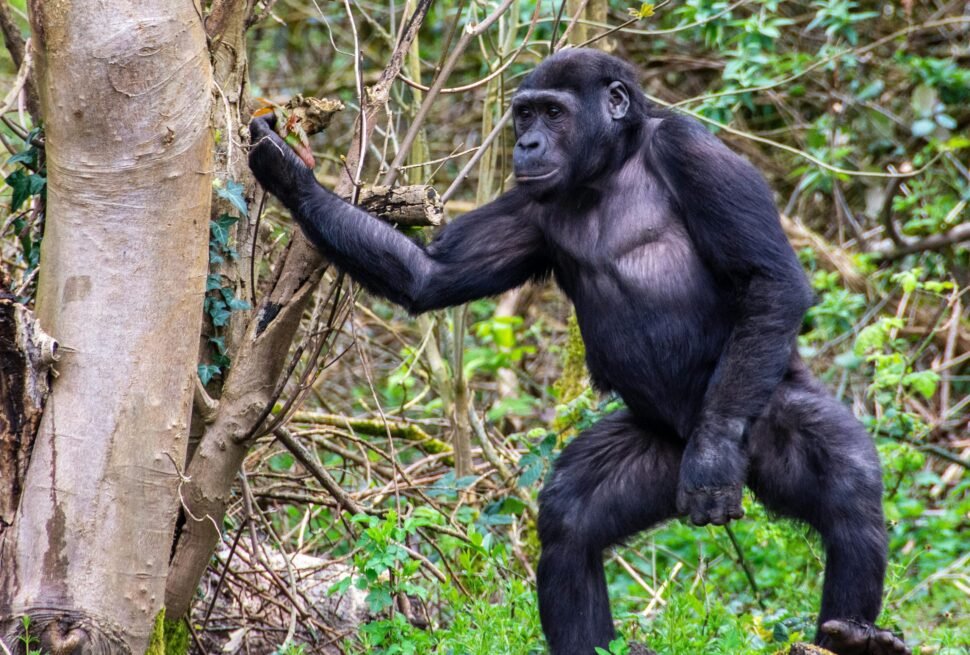
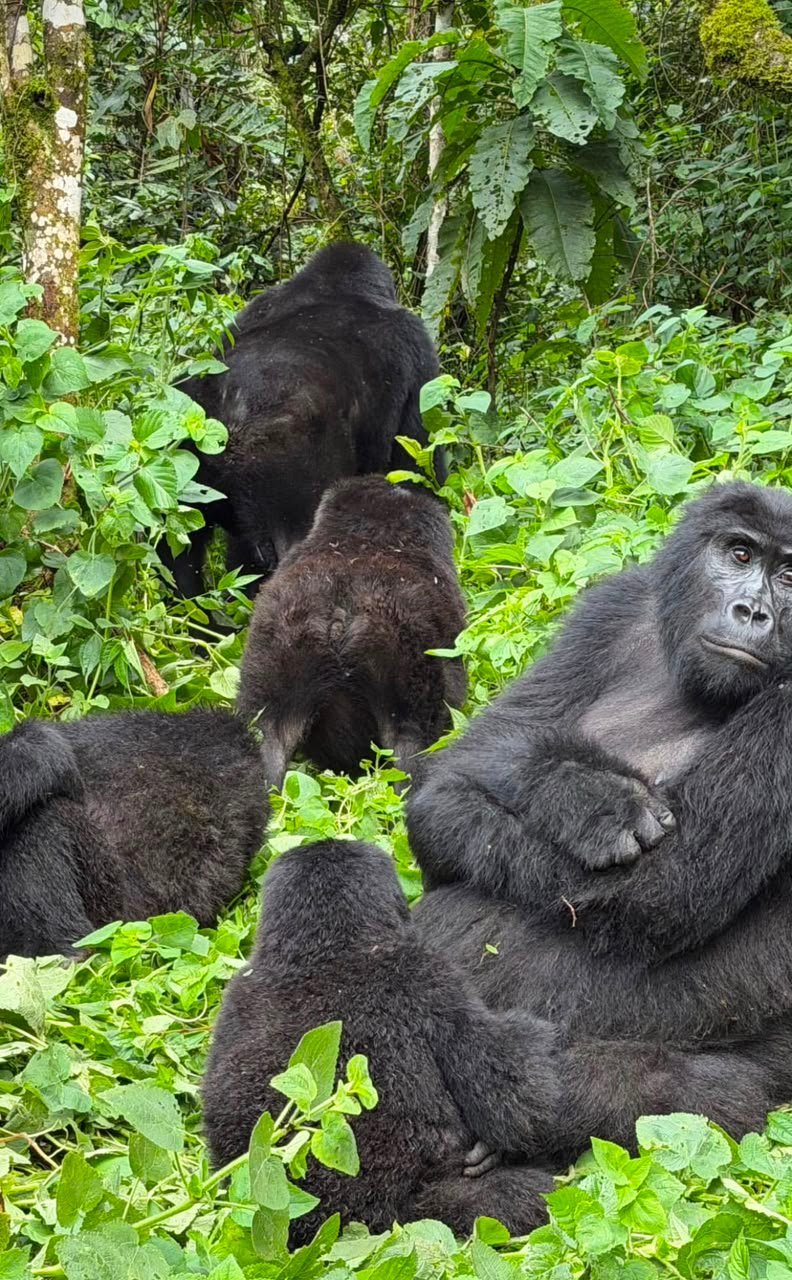
Quick answer: The gorilla habituation experience lets you spend up to four hours with a gorilla family that is still being prepared for regular tourism, instead of the usual one hour on a standard trek. It is offered only in the Rushaga sector of Bwindi Impenetrable National Park, and in 2027 the permit costs US$1,800 per foreign non-resident. For AFCON 2027 visitors who have a free week between matches, it is the most immersive way to see mountain gorillas in Uganda.
- Where
- Rushaga sector, southern Bwindi Impenetrable National Park
- Time with gorillas
- Up to about 4 hours
- 2027 permit fee
- US$1,800 foreign non-resident, US$1,600 foreign resident
- Group size
- Maximum 4 visitors per session
- Minimum age
- 15 years
- Best for
- Photographers, wildlife researchers, travellers with extra days after their matches
Most visitors to Bwindi see mountain gorillas on a standard trek, which allows one hour of observation with a fully habituated family. The gorilla habituation experience is fundamentally different. You join a team of Uganda Wildlife Authority (UWA) researchers and rangers whose job is to help a gorilla family gradually get comfortable around human beings. The process takes several years, and during that time a very small number of visitors are allowed to participate. For fans who travel to East Africa for the Africa Cup of Nations in 2027 and want a once-in-a-lifetime wildlife encounter, the habituation experience is worth serious consideration.
What is gorilla habituation?
Gorilla habituation is the scientific process of getting a wild mountain gorilla family accustomed to the presence of human observers. When a new family is identified for tourism, UWA assigns a team of trackers, researchers and veterinary staff who visit the group daily over a period of two to three years. Over time the gorillas learn that humans are not a threat, and they begin to behave naturally even when people are nearby.
During the habituation process, a limited number of paying visitors — currently a maximum of four per day — are allowed to join the research team. You follow the same trackers, observe the same behaviours and walk the same forest trails, but you get dramatically more time with the gorillas than on a standard trek. The experience is closer to what researchers and filmmakers get than what typical tourists see.
Habituation has been running in Bwindi’s Rushaga sector since 2014, and the families rotated through the programme change as groups graduate to full tourism status. As of 2026, the family being habituated is in one of the more remote areas of the Rushaga forest, which means longer walks and a more adventurous day.
How habituation differs from standard gorilla trekking
| Feature | Standard gorilla trek | Gorilla habituation experience |
|---|---|---|
| Time with gorillas | Strictly 1 hour | Up to about 4 hours |
| Location | All four Bwindi sectors and Mgahinga | Rushaga sector only |
| 2027 permit (foreign non-resident) | US$800 | US$1,800 |
| Group size | Maximum 8 visitors | Maximum 4 visitors |
| Gorilla behaviour | Fully habituated, predictable | Semi-habituated, more unpredictable |
| Photography time | Limited to 1 hour window | Extended, multiple opportunities |
| Physical demand | Moderate to hard | Hard — longer forest time |
| Availability | 96 permits per day across Bwindi | Only 4 permits per day |
The biggest practical difference is time. On a standard trek you have exactly 60 minutes from the moment the guide says “start” to the moment they say “time.” On a habituation experience those constraints are much looser. You might watch the family wake up, follow them as they forage through the undergrowth, sit with them during a midday rest and observe silverback displays — all in a single session. For photographers especially, that extra time is transformative.
Why the habituation experience suits an AFCON 2027 trip
AFCON 2027 runs from June to July across Uganda, Kenya and Tanzania. A long tournament means many fans will spend two weeks or more in East Africa, with gaps of several days between their team’s matches. Instead of rushing a quick 2-day gorilla trek and hurrying back to Kampala, you can dedicate four or five days to the habituation experience and still return for the knockout rounds.
June and July are part of Uganda’s dry season, which means firmer trails in Bwindi and generally better trekking conditions. Morning mist is common but the heavy rains that make the forest floor treacherous typically ease by mid-May. For more detail on what to expect, see our guide to Uganda weather in June and July 2027.
Rushaga is also close to the Rwanda border. If your AFCON schedule allows, you could do the habituation experience in Bwindi and then cross into Rwanda to visit Volcanoes National Park for a second gorilla encounter — a rare double-country primate trip.
Getting to Rushaga from Kampala
Rushaga is in the far south of Bwindi, roughly 470 kilometres from Kampala by road. There are two main ways to get there during AFCON 2027:
By road (7–9 hours)
Most visitors travel by private 4×4 with a driver-guide. The route follows the Kampala–Mbarara highway to Ntungamo, then south through Kabale and Kisoro district to Rushaga. Road conditions are good on the tarmac sections but the final stretch into the park is unpaved. Our private safari with driver-guide page explains how this works.
By charter flight (1.5 hours)
Aerolink Uganda and other charter operators fly from Entebbe or Kajjansi airstrip to Kisoro airstrip, the closest landing point to Rushaga. From Kisoro it is about 1.5 hours by road. A fly-in option saves a full day of driving each way and is especially appealing if you have limited time between AFCON matches.
What the habituation day looks like
- Early morning briefing (7:00–8:00 AM): You arrive at the Rushaga park office where UWA rangers explain the rules, the family’s recent behaviour and what to expect. Groups are assigned based on fitness levels and the family’s location.
- Forest walk to the gorillas: Trackers who left at dawn radio in the family’s position. The walk to reach them can take anywhere from 30 minutes to 3 hours depending on where the gorillas moved overnight. The terrain in Rushaga is steep, with dense undergrowth and occasional stream crossings.
- Time with the gorilla family: Once you reach the group, you spend up to four hours watching them feed, play, groom and rest. The semi-habituated family may be more cautious or curious than a fully habituated group, which makes the encounter feel rawer and more genuine. Researchers take notes and you watch real conservation science at work.
- Return hike: After the session you walk back to the trailhead, usually arriving in the early-to-mid afternoon. Total time in the forest can be 6–8 hours.
Expect steep slopes, dense vegetation and mud even during the dry season. Sturdy waterproof boots with ankle support are essential — see our guide to the best boots for gorilla trekking in Bwindi.
Photography during the habituation experience
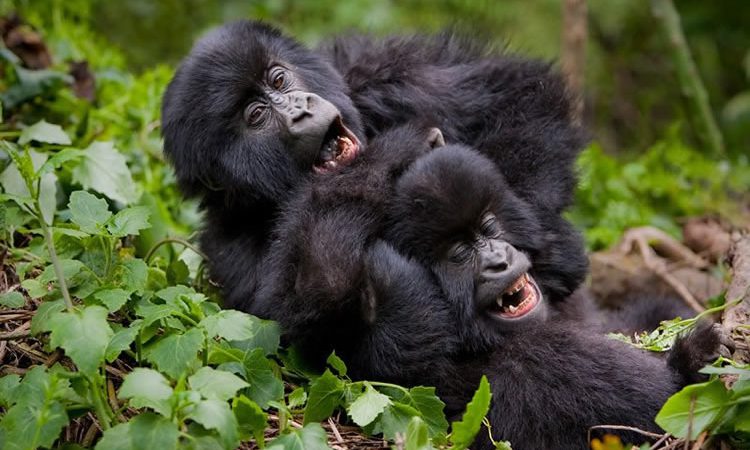
Four hours with gorillas gives you far more photographic opportunities than a standard one-hour trek. You will see a wider range of behaviours: silverback chest-beating, juveniles wrestling, mothers nursing infants and the family moving through different types of vegetation and light conditions.
Key photography tips for the habituation experience:
- Lens: A fast 70–200mm f/2.8 is ideal for the forest light. Longer lenses are harder to use in thick vegetation. See our camera lens guide for gorilla photography.
- ISO: Expect to shoot at ISO 3200–6400 under the canopy. A camera with good high-ISO performance makes a significant difference.
- Flash: Flash photography is strictly prohibited. It disturbs the gorillas.
- Tripod: Not practical on the steep terrain. Use a monopod or brace against trees.
- Battery and memory: Four hours is a long session. Bring at least two fully charged batteries and plenty of memory cards.
Where to stay near Rushaga
Rushaga has a range of accommodation from budget to luxury, all within a short drive of the park office:
- Budget: Gorilla Valley Lodge, Rushaga Gorilla Camp — basic but clean rooms close to the trailhead.
- Mid-range: Ichumbi Gorilla Lodge, Nkuringo Bwindi Gorilla Lodge — comfortable lodges with good food and guides.
- Luxury: Clouds Mountain Gorilla Lodge — a premium property with stunning views of the Virunga volcanoes and butler service.
During AFCON 2027, accommodation in the gorilla trekking regions may be busier than usual. Book well in advance, especially if you are targeting June or July permits.
Habituation permit costs and booking for AFCON 2027
The 2027 gorilla habituation experience permit costs:
- Foreign non-resident: US$1,800
- Foreign resident: US$1,600
- East African citizen: UGX 500,000
Only four permits are available per day. During the June–July AFCON period, demand will be high because it coincides with Uganda’s peak dry season when gorilla trekking conditions are best. Permits can sell out three to six months in advance for these months.
Book through UWA directly or through a licensed Uganda tour operator like Afraeka Adventures. Our guide to gorilla permits during AFCON 2027 explains the current fees and how early you should book. For a broader look at timing your trek around the fixture list, see AFCON 2027 and gorilla trekking.
Physical fitness and preparation
The habituation experience is more physically demanding than a standard trek because you spend longer in the forest and follow a semi-habituated family that may move more unpredictably through difficult terrain.
How to prepare:
- Cardiovascular fitness: Start walking or hiking regularly at least six weeks before your trip. Aim for walks of 2–3 hours on hilly terrain.
- Leg strength: Squats, lunges and step-ups help with the steep ascents and descents in Bwindi.
- Altitude: Rushaga sits at about 1,800–2,300 metres above sea level. If you are coming from sea level, arrive a day early to acclimatise.
- Hydration: Carry at least 2 litres of water. The forest is humid and you will sweat more than expected.
Porters are available at the trailhead for a small fee (US$15–20) and are highly recommended. They carry your daypack and help on steep sections, and the fee supports the local community. For general fitness advice, see our gorilla trekking rules and fitness guide for AFCON 2027.
Combining habituation with other AFCON activities
A practical itinerary for an AFCON fan wanting the habituation experience might look like this:
- Day 1: Watch your team’s group-stage match in Kampala or Hoima.
- Day 2: Drive or fly to Rushaga (arriving evening).
- Day 3: Gorilla habituation experience (full day).
- Day 4: Optional second activity — Lake Mburo safari on the way back, or a community walk around Rushaga.
- Day 5: Return to Kampala for the next match.
If you have more time, consider adding Queen Elizabeth National Park for tree-climbing lions and a Kazinga Channel boat cruise on the way to or from Bwindi.
Frequently asked questions
Is gorilla habituation worth the higher price?
For many travellers, absolutely. Four hours gives far more time for close observation and photography than a standard one-hour trek. You also see more natural behaviour because you are with the gorillas through different parts of their day — feeding, resting, playing and travelling. If you can afford the premium, the experience is significantly deeper.
Is habituation harder than a normal trek?
Yes, it is generally more physically demanding. You spend more time in the forest (6–8 hours total), the terrain around semi-habituated families can be rougher, and the gorillas may lead you through thicker vegetation. A reasonable level of hiking fitness is important. Porters make a big difference.
Can I combine habituation with a standard trek?
Yes. Some travellers do the habituation experience one day and a standard trek with a different fully habituated family on another day. This gives you both the extended immersive experience and the more predictable close encounter. You will need separate permits for each. For a full comparison, see our guide to gorilla habituation vs standard trekking.
How many gorilla habituation permits are available per day?
Only four. This is one of the most limited wildlife permits in Africa, which is part of what makes the experience special but also means you must book well in advance, especially for AFCON 2027 dates.
Can children do the habituation experience?
The minimum age is 15, the same as for standard gorilla trekking. Children under 15 are not permitted in the forest with gorillas. See the gorilla trekking minimum age rule for alternatives for families with younger children.
What if I am not fit enough for the full 4 hours?
You can leave the group early with a ranger escort. However, since you are paying US$1,800 for the permit, it is worth preparing physically so you can enjoy the full experience.
Interested in gorilla habituation during AFCON 2027? Our team can check permit availability for your match-day schedule and build a trip around it.
Check availability on WhatsApp View gorilla trekking packages