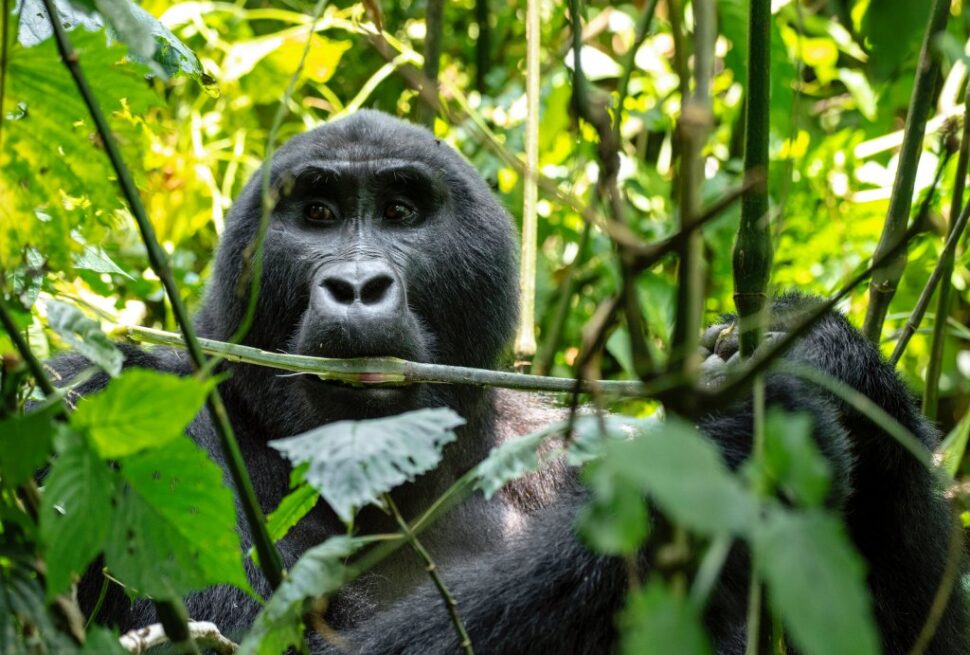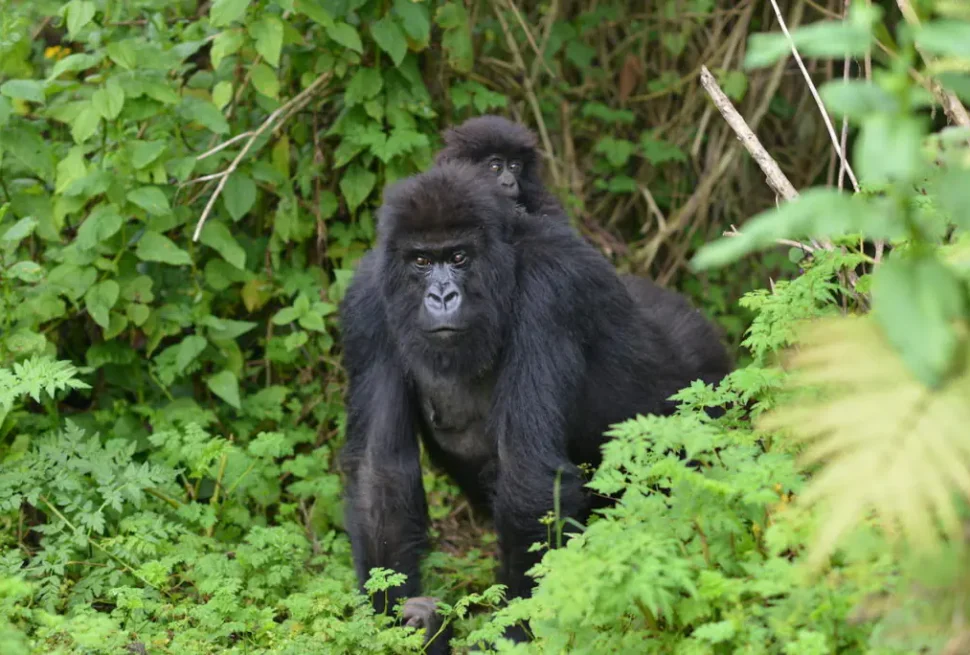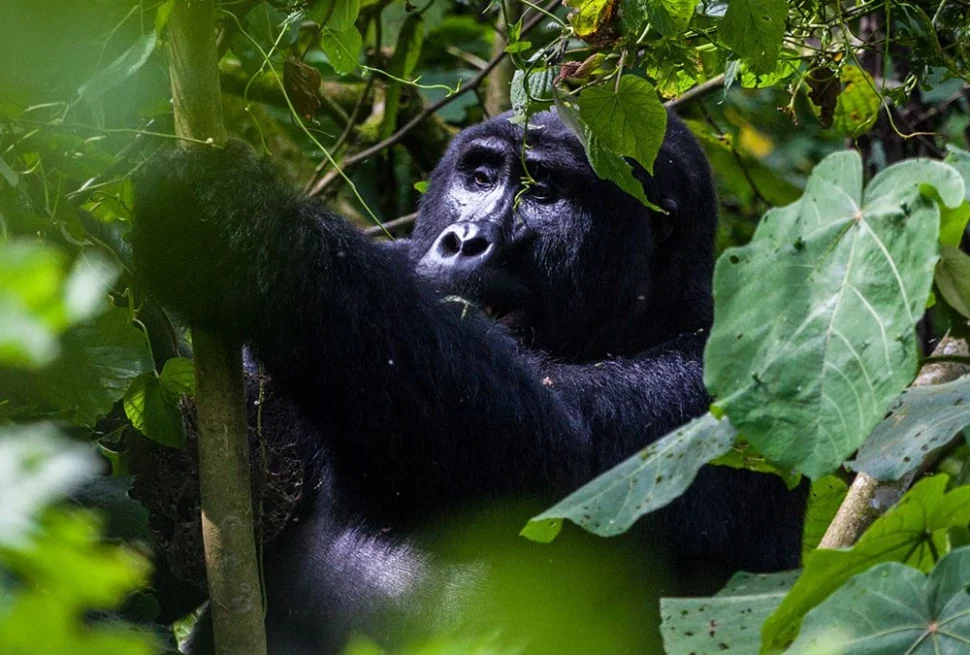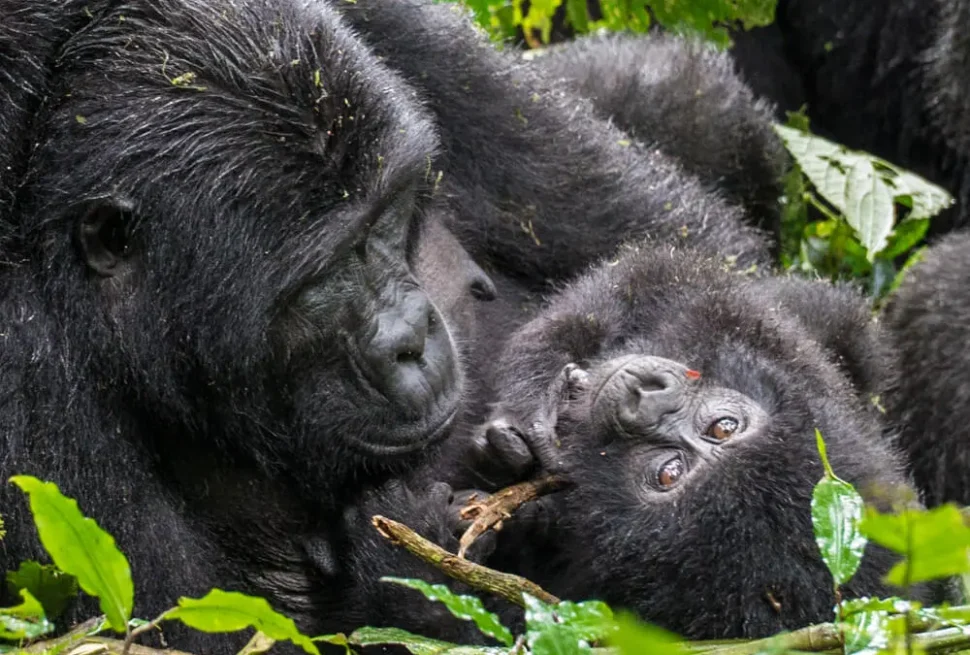
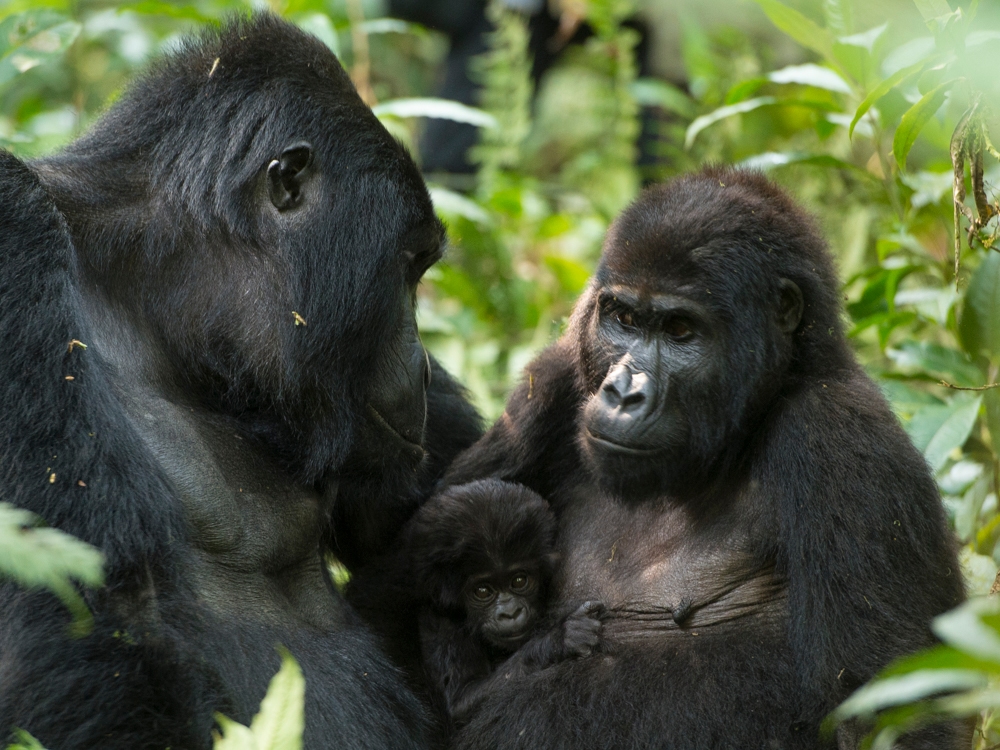
Choosing the best camera lens for gorilla photography in Bwindi is essential for capturing stunning images of mountain gorillas in their natural habitat. Bwindi Impenetrable Forest presents unique challenges for wildlife photographers – low light, dense vegetation, fast-moving subjects, and unpredictable weather. This comprehensive guide covers everything you need to know about the best camera lens for gorilla photography in Bwindi, including recommended lenses, camera settings, and essential photography tips. As a trusted local safari operator specializing in gorilla trekking safaris and photography safaris, we’ve helped countless photographers capture incredible images in Bwindi Impenetrable National Park, a UNESCO World Heritage Site.
Quick Facts: Gorilla Photography Lens Guide
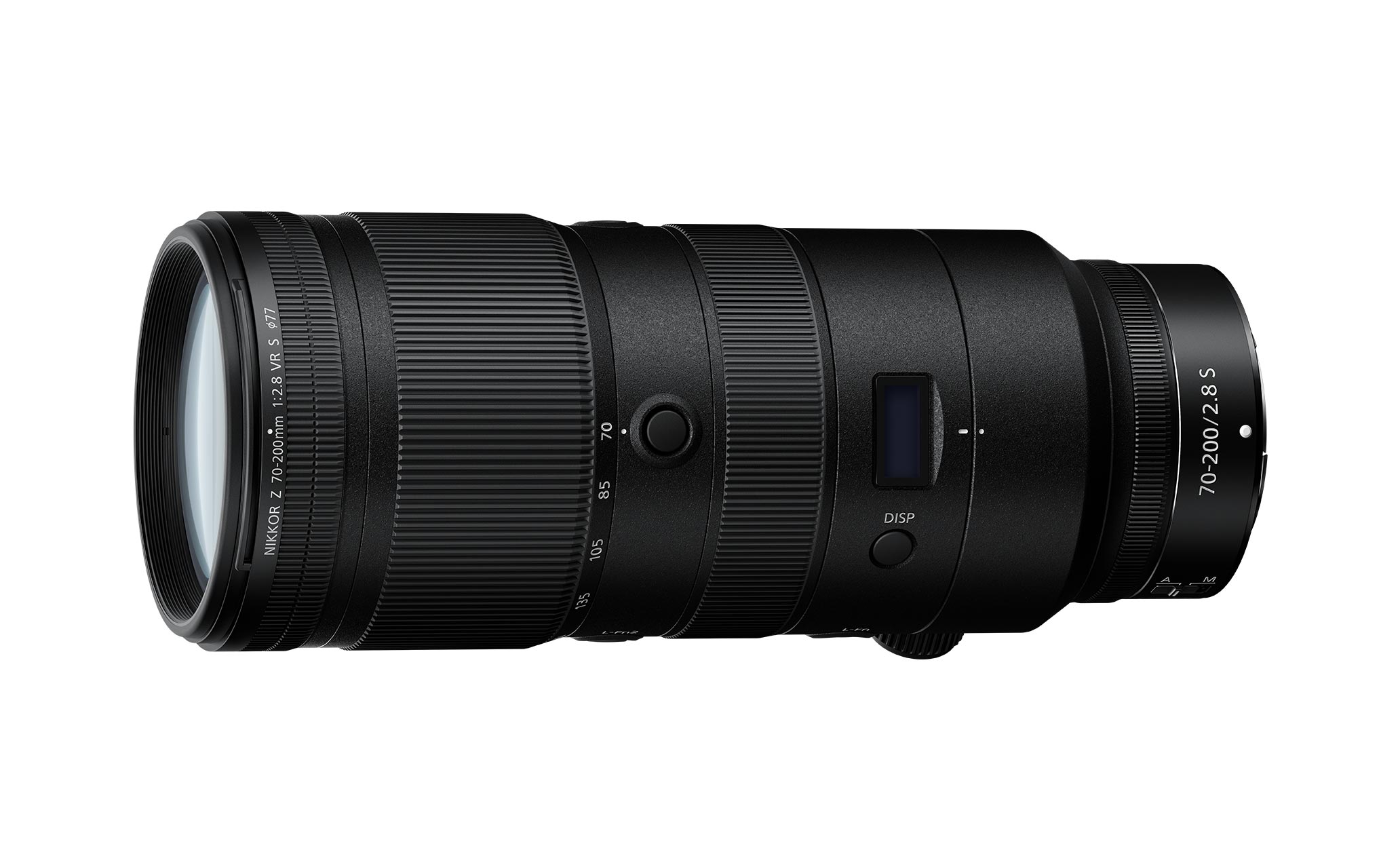
- Best All-Rounder: 70-200mm f/2.8
- Best for Low Light: 24-70mm f/2.8 or 50mm f/1.8
- Best for Portraits: 85mm f/1.4 or 70-200mm f/2.8
- Best for Action: 100-400mm f/4.5-5.6
- Recommended Focal Length: 70-200mm (most versatile)
- Max Weight: 5-7 kg camera equipment (porter recommended)
- Best Fast Lens: f/2.8 or wider for low-light conditions
Understanding Gorilla Photography in Bwindi
Before diving into the best camera lens for gorilla photography in Bwindi, it’s important to understand the unique challenges of photographing mountain gorillas in their natural habitat:
Low Light Conditions
Bwindi is a dense, tropical rainforest with a thick canopy that filters out most direct sunlight. Even during the day, light levels are low, often requiring high ISOs and fast lenses. The best camera lens for gorilla photography in Bwindi must perform well in low light.
Close Encounters
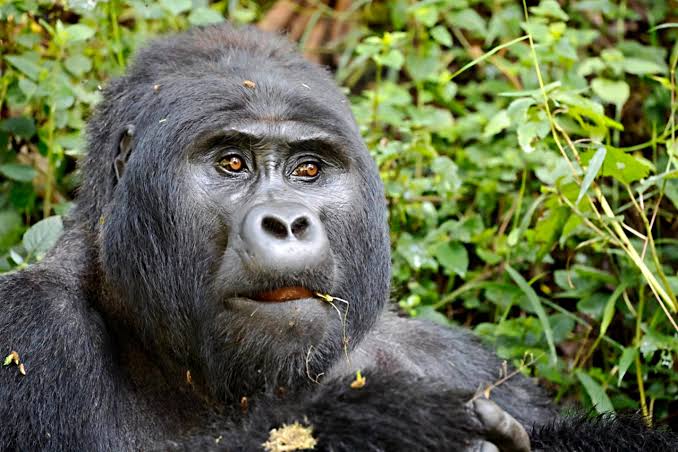
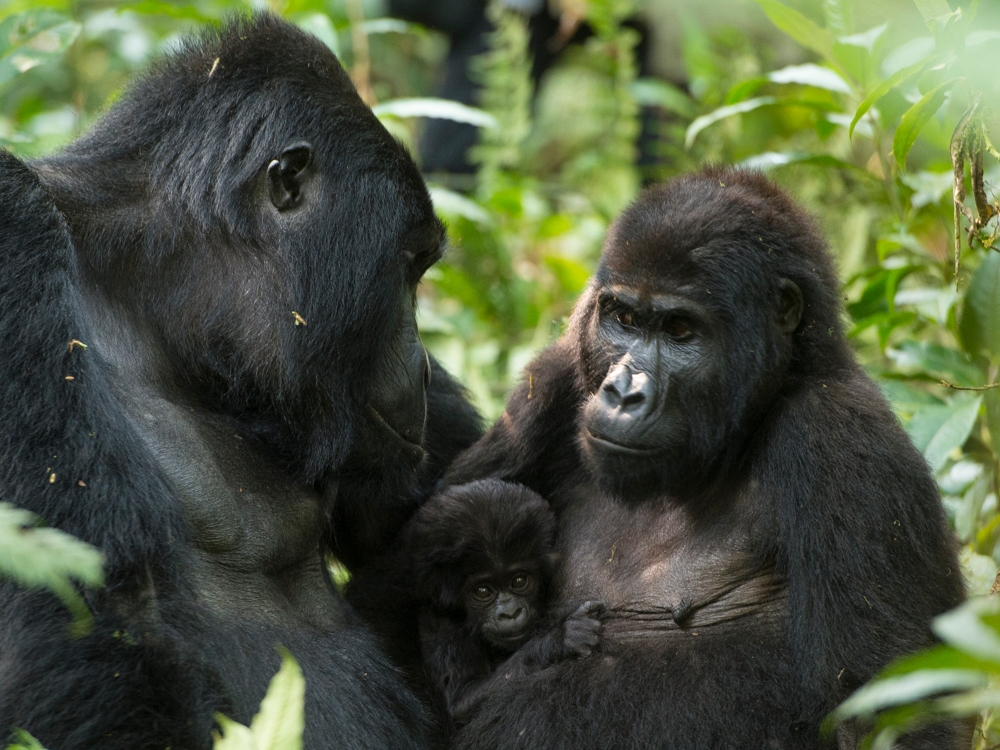
During gorilla trekking, you will be within 7 meters (about 20 feet) of the gorillas. This close proximity means you don’t need extremely long telephoto lenses. A 70-200mm lens is often ideal for framing portraits and full-body shots.
Fast-Moving Subjects
Gorillas are constantly moving – feeding, playing, grooming, and interacting. The best camera lens for gorilla photography in Bwindi needs fast autofocus to keep up with the action.
Changing Weather
Bwindi’s weather can change quickly, with rain showers common even during the dry season. Your lens should be weather-sealed, and you should have protective gear for your equipment.
Trekking Challenges
Reaching the gorillas requires hiking through steep, muddy terrain. Consider the weight of your equipment – the best camera lens for gorilla photography in Bwindi should balance image quality with portability.
Recommended Camera Lenses for Gorilla Photography in Bwindi
1. Best All-Rounder: 70-200mm f/2.8
The 70-200mm f/2.8 is widely considered the best camera lens for gorilla photography in Bwindi. This lens offers exceptional versatility, allowing you to capture everything from intimate portraits to environmental shots.
- Pros: Versatile focal range, fast f/2.8 aperture for low light, excellent image quality, fast autofocus.
- Cons: Heavy (1.5-2 kg), expensive.
- Best For: All-around gorilla photography – portraits, full-body shots, and environmental images.
- Top Models: Canon EF 70-200mm f/2.8L IS III, Nikon AF-S 70-200mm f/2.8E FL ED VR, Sony FE 70-200mm f/2.8 GM OSS II.
2. Best for Portraits: 85mm f/1.4 or f/1.8
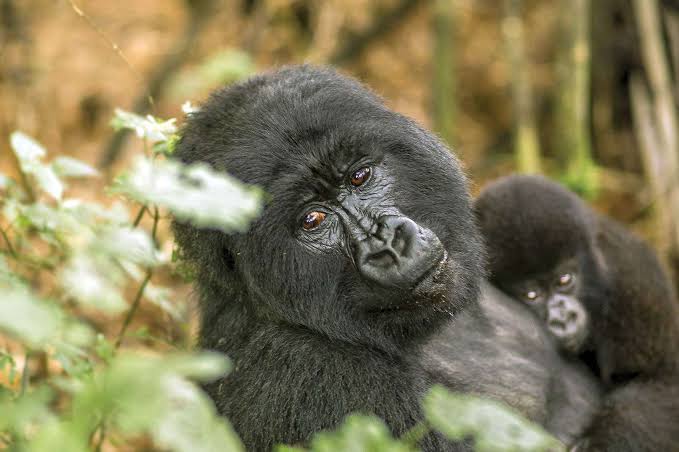
For stunning close-up portraits of gorillas, a 85mm prime lens is an excellent choice. The wide aperture creates beautiful background blur (bokeh) and isolates the subject.
- Pros: Exceptional image quality, wide aperture for low light, beautiful bokeh, lightweight.
- Cons: Fixed focal length (less versatile), no zoom capability.
- Best For: Gorilla portrait photography, low-light situations.
- Top Models: Canon EF 85mm f/1.4L IS, Nikon AF-S 85mm f/1.4G, Sony FE 85mm f/1.4 GM.
3. Best for Low Light: 24-70mm f/2.8
A 24-70mm f/2.8 is another excellent option, especially when gorillas come very close or you want to capture environmental shots with the forest as a backdrop.
- Pros: Wide aperture for low light, versatile wide-angle to mid-range zoom, excellent image quality.
- Cons: Limited reach for distant subjects, less compression for portraits.
- Best For: Environmental portraits, close-up encounters, landscape shots.
- Top Models: Canon EF 24-70mm f/2.8L II, Nikon AF-S 24-70mm f/2.8E ED VR, Sony FE 24-70mm f/2.8 GM II.
4. Best for Action: 100-400mm f/4.5-5.6
If you want to capture gorillas from a distance or photograph skittish primates, a 100-400mm zoom provides the reach you need.
- Pros: Excellent reach, good for wildlife action shots, versatile.
- Cons: Slower aperture (f/4.5-5.6), heavier, less effective in low light.
- Best For: Distant subjects, action photography, bird photography.
- Top Models: Canon EF 100-400mm f/4.5-5.6L IS II, Nikon AF-S 100-400mm f/4.5-5.6G VR, Sony FE 100-400mm f/4.5-5.6 GM OSS.
5. Budget-Friendly Option: 55-250mm or 70-300mm
For photographers on a budget, a 55-250mm or 70-300mm zoom lens can still produce excellent results.
- Pros: Affordable, lightweight, good reach.
- Cons: Slower aperture (f/4-5.6), less sharp than professional lenses, slower autofocus.
- Best For: Budget-conscious travelers, beginners.
- Top Models: Canon EF-S 55-250mm f/4-5.6 IS STM, Nikon AF-S 70-300mm f/4.5-5.6G VR, Tamron 70-300mm f/4-5.6.
Camera Bodies for Gorilla Photography in Bwindi
The best camera lens for gorilla photography in Bwindi works best with a camera body that performs well in low light. Here are our recommendations:
- Full-Frame: Canon EOS R5, Nikon Z8, Sony A7 IV, Canon 5D Mark IV, Nikon D850.
- APS-C: Canon EOS R7, Nikon Z50, Sony A6700, Fujifilm X-T5.
- Key Features: Low-light performance, fast autofocus, weather-sealing, high burst rate.
Camera Settings for Gorilla Photography in Bwindi
Even with the best camera lens for gorilla photography in Bwindi, you need the right settings to capture sharp, well-exposed images:
Recommended Settings:
- Aperture: f/2.8 to f/5.6 for portraits, f/5.6 to f/8 for group shots.
- Shutter Speed: 1/250 to 1/1000 (1/500 minimum for active subjects).
- ISO: 800 to 3200 (or higher in low light).
- Focus Mode: Continuous AF (AI Servo or AF-C).
- Focus Points: Single point or zone focusing (on the gorilla’s eyes).
- Drive Mode: Continuous high (burst mode).
- Exposure Compensation: +0.3 to +0.7 (to brighten dark fur).
- White Balance: Auto or Cloudy/Shade.
- File Format: RAW (for post-processing flexibility).
What to Pack for Gorilla Photography
In addition to the best camera lens for gorilla photography in Bwindi, here’s what to pack:
- Camera Body: With excellent low-light performance.
- Lenses: 70-200mm f/2.8 (primary), 24-70mm f/2.8 (secondary), 85mm f/1.4 (optional).
- Camera Bag: Waterproof and comfortable to carry.
- Extra Batteries: At least 3-4 fully charged batteries.
- Memory Cards: High-speed, high-capacity cards (64-128 GB each, 4-6 cards).
- Cleaning Kit: Lens cloth, blower, and sensor cleaning tools.
- Rain Cover: Essential for protecting your gear from rain.
- Lens Hood: Reduces glare and protects the lens.
- Circular Polarizer: Reduces glare and enhances colors.
- Bean Bag: For stabilizing your camera on the ground or rocks.
- Lens Filters: UV filter for protection.
Gorilla Photography Tips for Bwindi
1. Focus on the Eyes
Sharp, clear eyes are essential for compelling gorilla portraits. Use single-point autofocus and place the focus point on the gorilla’s eye.
2. Use a Fast Shutter Speed
Gorillas move quickly. Use a shutter speed of at least 1/500 to freeze action and avoid motion blur.
3. Shoot in RAW
RAW files give you much more flexibility for adjusting exposure, white balance, and noise reduction in post-processing.
4. Bracket Your Exposures
In challenging lighting, bracket your exposures to ensure you capture the best possible image.
5. Watch the Background
Look for clean backgrounds that won’t distract from your subject. The best camera lens for gorilla photography in Bwindi helps blur the background for beautiful bokeh.
6. Be Patient
Great wildlife photography requires patience. Wait for the perfect moment – a gaze, a gesture, or a playful interaction.
7. Respect the Gorillas
Maintain a distance of at least 7 meters, avoid loud noises, and never use flash photography.
8. Anticipate Action
Watch for signs of activity – grooming, playing, feeding – and be ready to capture the moment.
9. Use a Monopod or Tripod
A monopod can help stabilize your camera in low light, but be aware of space constraints in the forest.
10. Post-Process Carefully
Gorilla photos often need adjustments to exposure, contrast, and color. Use software like Adobe Lightroom or Capture One for best results.
Gorilla Habituation Experience for Photographers
For photographers seeking more time with the gorillas, the gorilla habituation experience is the ultimate opportunity. Offered exclusively in the Rushaga sector of Bwindi, this experience allows you to spend up to four hours with a gorilla family that is still being habituated. This extended time provides unparalleled photography opportunities.
Book a gorilla habituation photography safari with Afraeka Adventures.
What’s Included in Our Photography Safari Packages
Included:
- Gorilla Permit: One guaranteed gorilla trekking permit per person.
- Habituation Permit: Available for extended photography sessions.
- Transport: Private 4×4 safari vehicle with pop-up roof.
- Accommodation: As per your chosen package.
- Meals: As specified in the itinerary.
- Photography Guide: Expert guidance on settings and composition.
- Park Entry Fees: All national park entrance fees.
- Porter Assistance: Porters available to carry camera gear.
- Post-Processing Tips: Guidance on editing your gorilla images.
Excluded:
- International Flights: Airfare to and from Uganda.
- Visas: Entry visa for Uganda.
- Travel Insurance: Comprehensive travel and medical insurance.
- Camera Equipment: You must bring your own gear.
- Personal Expenses: Souvenirs, laundry, phone calls.
- Alcoholic & Soft Drinks: Beverages at lodges.
Why Choose Afraeka Adventures for Your Photography Safari?
Afraeka Adventures is a trusted local safari guide company based in Uganda, specializing in unforgettable Uganda gorilla trekking, photography safaris, and tailor-made East Africa adventures. Our team, led by Victoria Kayaga, is passionate about creating authentic safari experiences for photographers of all levels. With transparent pricing, permits assistance, and 24/7 travel support, we ensure your best camera lens for gorilla photography in Bwindi choice leads to stunning images.
Frequently Asked Questions About the Best Camera Lens for Gorilla Photography in Bwindi
What is the best camera lens for gorilla photography in Bwindi?
The 70-200mm f/2.8 is widely considered the best camera lens for gorilla photography in Bwindi due to its versatility, fast aperture, and excellent image quality.
Do I need a telephoto lens for gorilla photography?
Not necessarily. Gorillas can be very close (within 7 meters). A 70-200mm lens is ideal. For distant subjects, a 100-400mm can be useful.
What aperture is best for gorilla photography?
A fast aperture (f/2.8 or wider) is best for low-light conditions and creating beautiful background blur. This is why the best camera lens for gorilla photography in Bwindi often has an f/2.8 aperture.
Should I use a prime or zoom lens for gorilla photography?
A zoom lens offers more flexibility in the field, allowing you to frame different compositions quickly. Prime lenses offer sharper images and wider apertures.
What camera settings should I use for gorilla photography?
Use Shutter Priority (Tv) or Aperture Priority (Av) with a fast shutter speed (1/500 minimum), wide aperture (f/2.8-5.6), and Auto ISO (800-6400).
Can I use a flash for gorilla photography?
No. Flash photography is prohibited as it can disturb and harm the gorillas.
Is a monopod or tripod useful for gorilla photography?
A monopod can help stabilize your camera in low light, but be aware of space constraints in the forest. A beanbag is often more practical.
What is the best camera for gorilla photography in Bwindi?
Any modern camera with excellent low-light performance, fast autofocus, and weather-sealing is suitable. Full-frame cameras like the Canon EOS R5, Nikon Z8, and Sony A7 IV are excellent choices.
How many batteries should I bring for gorilla photography?
Bring at least 3-4 fully charged batteries as you won’t have access to charging during the trek.
How do I book a photography safari with Afraeka Adventures?
Simply click here to request a free quote or contact our team directly. We can tailor a photography safari to your specific needs.
Book Your Gorilla Photography Safari Today
Ready to capture stunning images of mountain gorillas in Bwindi? Book your gorilla photography safari with Afraeka Adventures today and get expert guidance on the best camera lens for gorilla photography in Bwindi.
Click Here to Get a Free Quote
Need help choosing the best camera lens for gorilla photography in Bwindi or planning your photography safari? Chat directly with our local team or email us at info@afraekaadventures.com.
About the Author: Victoria Kayaga
Victoria Kayaga is a Ugandan-born safari expert and the founder of Afraeka Adventures. With over 15 years of experience in the East African tourism industry, Victoria is passionate about creating authentic, sustainable, and life-changing safari experiences for travelers from around the world. She specializes in gorilla trekking, wildlife safaris, and multi-country itineraries across Uganda, Rwanda, Kenya, and Tanzania. Victoria is committed to conservation, community empowerment, and showcasing the beauty of her homeland. When she’s not guiding or planning safaris, she enjoys birdwatching, photography, and spending time with her family in Kampala.
Explore More Photography Safari Options
- 5 Day Photography Safari Itinerary for Mountain Gorillas and Chimps
- 8 Day Uganda Photography Safari Big Five and Primate Package
- 8 Day Exclusive Gorilla Photography Safari with Private Guide and Porters
- 4 Day Bwindi Gorilla Habituation Experience Itinerary and Cost
- 10 Day Private Photographic Hide Safari Uganda Wildlife and Birds
- Bigodi Wetlands Walk
All itineraries are fully customizable. Contact our team to design your dream photography safari.