Last updated: 2 October 2026. Route conditions, hut arrangements and permit requirements are managed by UWA and licensed Rwenzori operators — confirm before you book.
Short answer: The Rwenzori central circuit trek is the classic seven-day loop through the Rwenzori Mountains National Park in western Uganda, culminating in a summit attempt on Margherita Peak (roughly 5,109 m) — the highest point in Uganda and the third-highest in Africa. The route starts at Nyakalengija near Kasese, follows a chain of mountain huts through the Bujuku Valley, and returns via the Kitandara Lakes and Guy Yeoman. It is a serious alpine trek requiring altitude fitness, glacier equipment and a licensed guide, not a casual hike.
The Rwenzori Mountains are unlike anywhere else in Africa. They sit on the border between Uganda and the DRC, rise to nearly 5,110 metres, and hold glaciers within sight of the equator. They are a UNESCO World Heritage Site, and they receive a fraction of the visitors of Kilimanjaro or Mount Kenya, largely because the approach is longer, wetter and muddier than either. For trekkers who want a genuinely wild high-mountain experience without the crowds, the Rwenzori is one of the best options in Africa.
This guide covers the Rwenzori central circuit trek — what it is, the route and hut stages, the summit day on Margherita Peak, difficulty and altitude, equipment, permits, and when to go. It is written for trekkers who are seriously considering the route and need to understand what they are signing up for. The wider country picture is on our Uganda destinations page, and the park is managed by the Uganda Wildlife Authority.
Rwenzori central circuit trek — key facts
- Location: Rwenzori Mountains National Park, western Uganda, near Kasese
- Duration: Typically 7 days; 6–9 days with variations
- Highest point: Margherita Peak, roughly 5,109 m — Uganda’s highest
- Start point: Nyakalengija trailhead, near Kasese
- Route shape: A loop through the Bujuku Valley, returning via Kitandara
- Accommodation: Mountain huts — not camping
- Terrain: Bog, bamboo forest, alpine rock, glacier
- Difficulty: Serious alpine trek — altitude, mud, glacier crossing
- Best time: Dry seasons — December to February and June to August
- Permits: Required, through UWA and a licensed operator
- UNESCO status: World Heritage Site
What is the Rwenzori central circuit trek?
The Rwenzori central circuit trek is a seven-day loop through the heart of the Rwenzori Mountains, following a chain of mountain huts up the Bujuku Valley to the foot of Mount Stanley, then over the Scott Elliott Pass to the Kitandara Lakes, and back down the Mubuku Valley. The optional summit day adds an attempt on Margherita Peak, the highest point in Uganda.
Three things define the route:
- It is a hut-based trek, not a camping trek. The central circuit uses a series of mountain huts — Nyabitaba, John Matte, Bujuku, Elena, Kitandara and Guy Yeoman. Trekkers sleep in the huts on bunk beds and eat in a communal dining area. This is unusual for a trek of this length in Africa and makes the logistics simpler than a fully camping-based route.
- It is a loop, not an out-and-back. The route ascends via the Bujuku Valley and descends via the Kitandara Lakes and Guy Yeoman. That means the scenery changes on the return leg — you are not retracing the same trail.
- It is a serious alpine trek. The Rwenzori is not a walk-up. The terrain includes deep bog, steep rock, and — on the summit day — glacier and snow. Altitude, mud and weather make this a significantly harder trek than its total distance suggests.
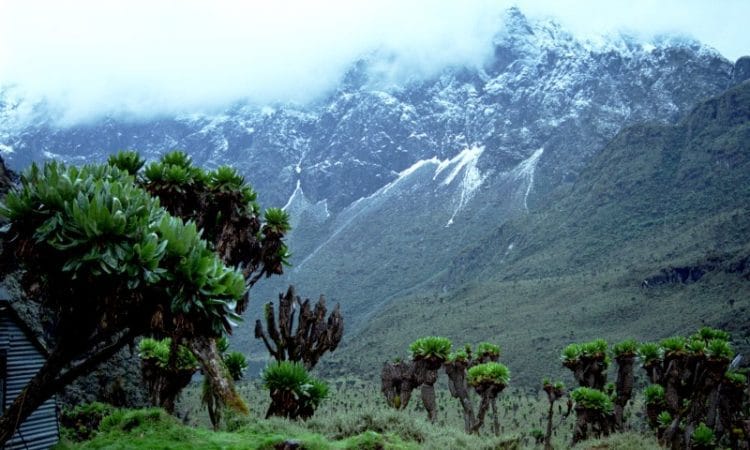
The Rwenzori range is also home to a unique ecosystem — giant heathers, lobelias and groundsels that grow to tree height on the upper slopes. The vegetation is one of the reasons the range is a UNESCO World Heritage Site, and it is unlike anything else in East Africa.
Afraeka tip: Do not treat the Rwenzori central circuit trek as a shorter or easier alternative to Kilimanjaro. It is a different kind of trek entirely — muddier, wetter, more technical on the summit day, and with more variable weather. Trekkers who arrive expecting a comparable experience to Kilimanjaro often underestimate it. Prepare for wet conditions and deep mud from day one.
What does the route look like?
The Rwenzori central circuit trek runs as a loop over seven days. The day-by-day shape is well established, though exact timings vary by group pace and conditions. The standard itinerary is:
| Day | Route | Hut / camp | Approx. altitude |
|---|---|---|---|
| 1 | Nyakalengija to Nyabitaba | Nyabitaba Hut | ~2,650 m |
| 2 | Nyabitaba to John Matte | John Matte Hut | ~3,415 m |
| 3 | John Matte to Bujuku | Bujuku Hut | ~3,960 m |
| 4 | Bujuku to Elena (via Scott Elliott Pass) | Elena Hut | ~4,540 m |
| 5 | Elena — summit attempt on Margherita Peak, then to Kitandara | Kitandara Hut | ~4,025 m |
| 6 | Kitandara to Guy Yeoman | Guy Yeoman Hut | ~3,505 m |
| 7 | Guy Yeoman to Nyakalengija | — | ~1,650 m |
Altitudes and hut names should be verified with UWA or a licensed Rwenzori operator before publishing. Some itineraries add a rest day or split the summit day differently.
Two structural points on the route. First, day four over the Scott Elliott Pass is the toughest non-summit day — it crosses high ground and usually involves snow or ice. Second, the summit day is long and exposed, and it starts before dawn. Trekkers who are not attempting the summit can continue directly to Kitandara while the summit group makes the attempt.
The final descent on day seven is a long drop back down through the bamboo forest to the trailhead. It is a full day on the feet, and many trekkers find it harder than expected because the legs are tired by then.
What does the summit day involve?
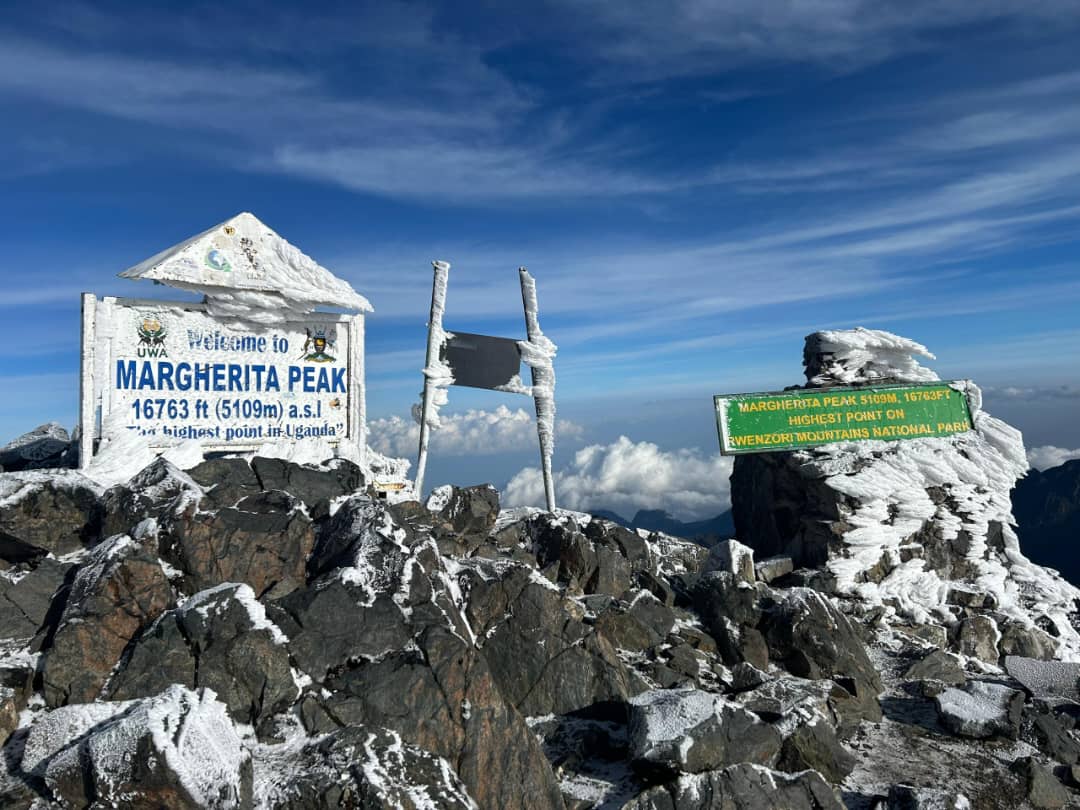
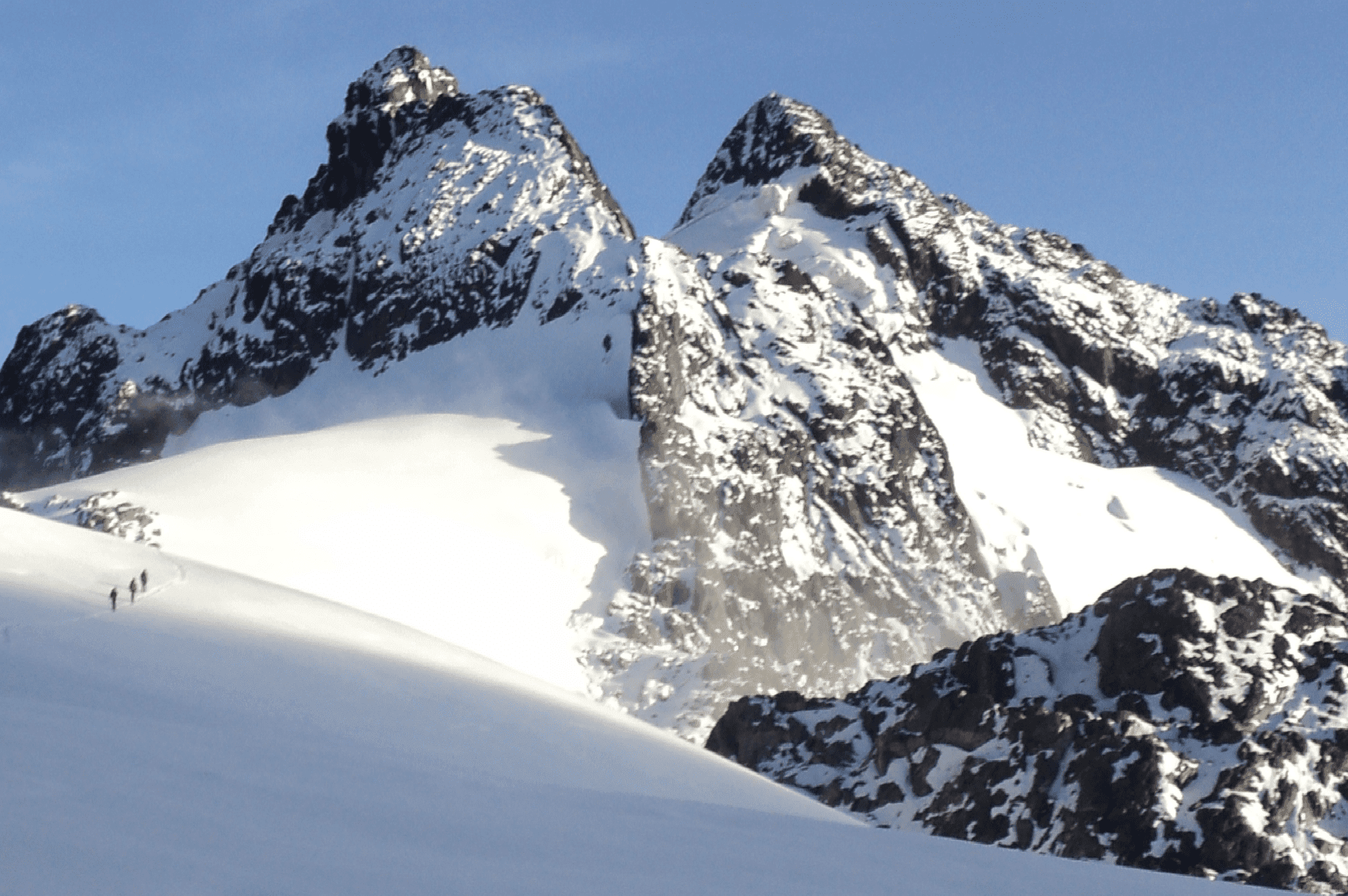
The summit day on Margherita Peak is the crux of the Rwenzori central circuit trek. It starts before dawn from Elena Hut, climbs through rock and ice to the Stanley Glacier, crosses the glacier to the summit ridge, and finishes with a scramble to the summit. It is a long, exposed and technically demanding day.
Three things travellers need to know:
- Glacier equipment is required. The summit route crosses glacier and snow. Crampons, an ice axe and a climbing rope are required, and the guide leads the glacier crossing. This is not a walk-up summit.
- It is weather-dependent. Snow, ice and high wind can make the summit unsafe. Guides make the call on the day, and summit success is not guaranteed. Travellers should go in accepting that.
- It is a full day and then some. The summit climb begins around 4:00–5:00am and, once descended to Elena, the group continues down to Kitandara Hut. It is a long day combining high-altitude climbing with a substantial descent.
Travellers who do not want to attempt the summit can skip the glacier section and continue with the main group from Bujuku directly to Kitandara. That option removes the highest technical demands of the trek but also removes the summit itself — a real decision, not a minor variation.
How difficult is the trek?
The Rwenzori central circuit trek is difficult — significantly harder than Kilimanjaro’s standard routes on a day-to-day basis, though at a lower maximum altitude. Three factors combine to make it demanding: mud, altitude and weather.
Three points on difficulty:
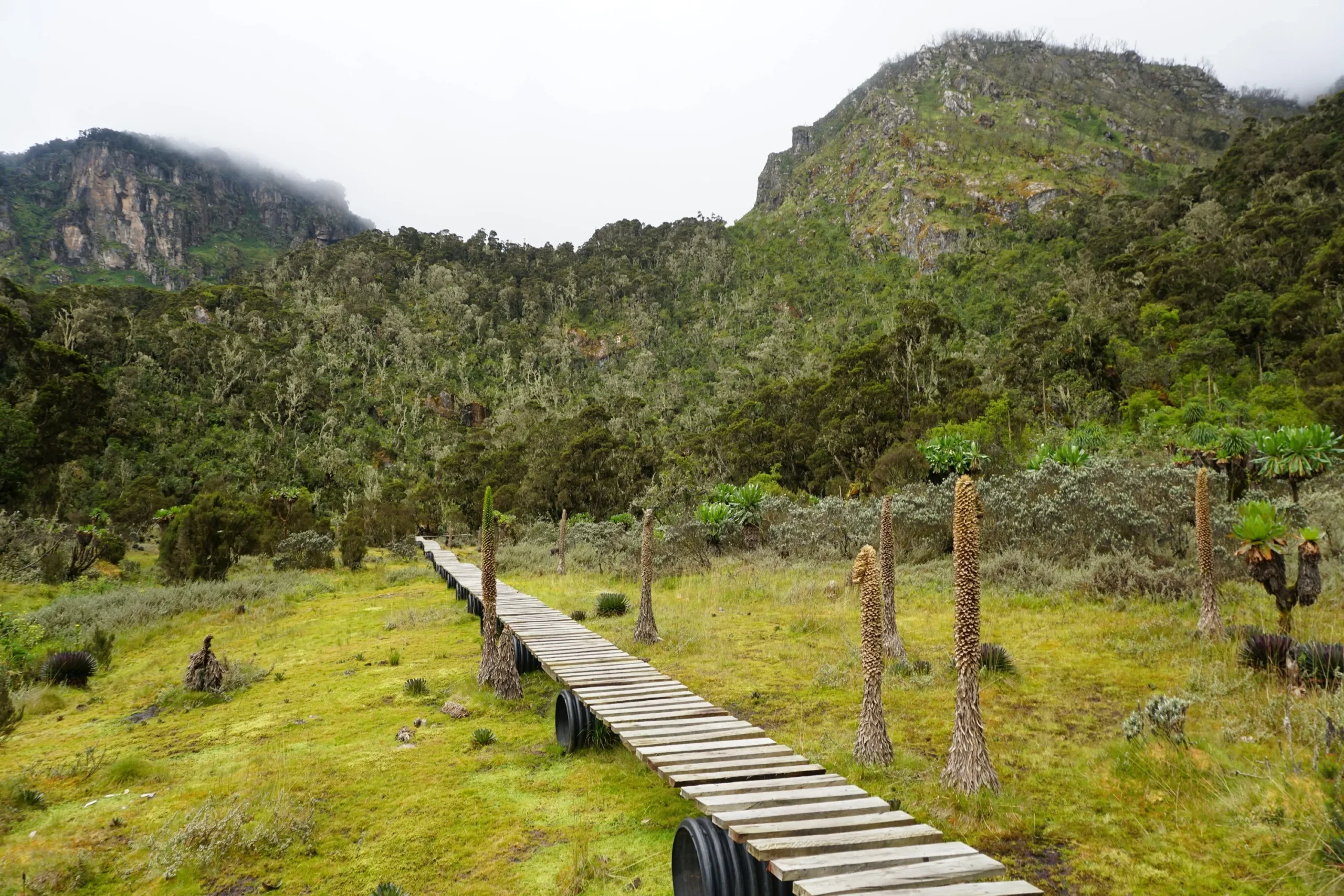
- The mud is serious. The lower Rwenzori trails cross deep, persistent bog. This is not dry-season mud — the Rwenzori is one of the wettest mountain ranges in Africa, and sections of the trail remain boggy year-round. Gaiters and proper boots are essential, and the mud is the single most common complaint from trekkers.
- The altitude is real. The trek goes from roughly 1,650 m at the trailhead to over 4,500 m at Elena, with the summit at 5,109 m. Altitude sickness is a genuine risk, and trekkers need to be prepared for headaches, fatigue and reduced performance on the upper sections.
- The weather is unpredictable. The Rwenzori can rain at any time of year. Clear summit views are not guaranteed, and the wet and cold conditions add a layer of difficulty to every day.
The practical implication is that trekkers should be physically fit before arrival and should not treat the Rwenzori as a first high-altitude trek. Previous trekking experience at altitude, decent cardiovascular fitness and a tolerance for wet conditions are the baseline requirements.
Where do you sleep on the trek?
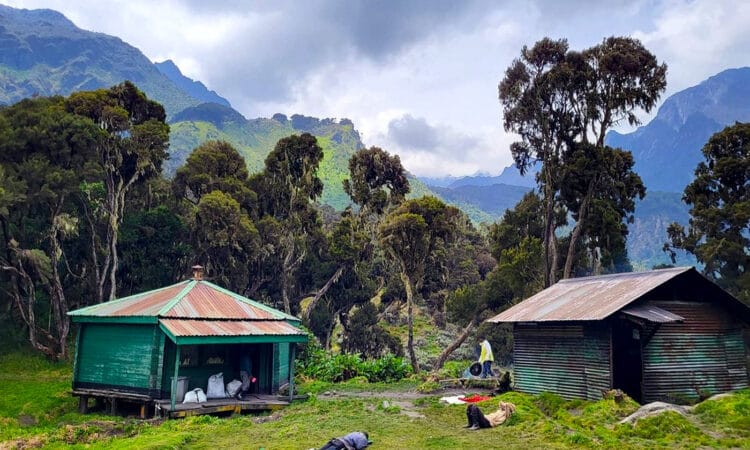
Accommodation on the Rwenzori central circuit trek is in mountain huts, not tents. The huts are basic — bunk beds with mattresses, a communal dining area, and shared washing facilities. They are unheated and the upper huts are cold.
What to expect in the huts
- Bunk beds with foam mattresses — you bring your own sleeping bag
- Communal dining area — meals are cooked by the trek crew
- No heating — upper huts are cold, particularly at night
- Basic shared washing facilities — not hot showers
- Pit latrines — standard for high-mountain huts
- No electricity at most huts — bring a headlamp and spare batteries
- Porters carry food and cooking gear — your personal gear is carried by a porter or by you
Two things are worth flagging. First, huts are allocated as part of the permit and are shared with other trekking groups. Groups are usually small on the Rwenzori, but the huts are not private. Second, the hut-based format is what makes the central circuit manageable over seven days — a fully camping-based trek of the same length would be a significantly bigger logistical undertaking.
Permits, guides and cost
The Rwenzori central circuit trek requires a UWA permit, a licensed guide, and — for a seven-day trek — a support crew of porters and cooks. The trek is not self-guided, and the logistics are managed by licensed Rwenzori operators.
Three practical points:
- Permits are booked through UWA or a licensed operator. The permit covers park entry, hut fees and the mandatory guide. Rates vary by group size and by the number of days.
- A support crew is standard. For a seven-day trek, trekkers usually have a guide, a cook and one or more porters per person. The crew carries food, cooking equipment and — depending on the arrangement — part of your personal gear.
- Equipment can be rented locally. Crampons, ice axes, sleeping bags and other technical gear can usually be rented through the operator. Confirm this in advance, especially if you are travelling without your own gear.
Current permit categories and rates for the Rwenzori are set by UWA, and booking is handled by licensed operators. Travellers comparing the Rwenzori with the gorilla trekking circuit should note that the two are entirely separate permits and separate logistics — the gorilla permits Uganda page covers the primate side, not the Rwenzori.
When is the best time for the trek?
The best time for the Rwenzori central circuit trek is the drier months — December to February and June to August. Trails are firmer, summit conditions are more stable, and the mud is less extreme. The wet seasons of March to May and September to November make the trek significantly harder.
Three practical points on timing:
- Dry season is easier but not dry. The Rwenzori is wet year-round, and even in the dry months you should expect rain. The dry months are simply less wet, which makes the bog sections more manageable.
- Summit conditions vary. Glacier conditions are best in the dry months, but they can change week to week. Summit success depends on weather on the day, not just the season.
- The trek runs year-round. There is no closed season, but the wet months are significantly harder. If you can only travel in the wet season, plan extra buffer days and prepare for mud.
The wider country season picture sits with the Uganda Tourism Board. Trekkers combining the Rwenzori with gorilla trekking should note that the two activities share the same dry-season windows, which makes a combined trip easier to plan.
Common mistakes with the Rwenzori central circuit trek
Most of what goes wrong on the Rwenzori comes down to underestimating the conditions and the altitude. The route itself is well established, and the logistics are handled by the operator — but the physical and weather demands catch trekkers out.
- Underestimating the mud. The bog sections are the single most common complaint. Prepare for wet, muddy conditions from the first day, and bring gaiters and waterproof boots.
- Underestimating the altitude. The trek goes above 4,500 m, and altitude sickness is a genuine risk. Trekkers should not attempt the Rwenzori as their first high-altitude trek.
- Expecting summit success guaranteed. The summit day is weather-dependent, and guides can and do turn groups around. Accept this before you go.
- Pack too much. Porters carry the loads, but you carry your day pack. Excess weight slows you down on the bog and on the summit day.
- Skip acclimatisation. Coming straight from Kampala to the trailhead and starting the ascent immediately is a bad idea. A night at altitude before the trek helps.
- Bring the wrong boots. The Rwenzori demands waterproof, well-broken-in boots. Rental boots are available but should be tested before the trek.
- Not budgeting for the crew tip. Tips for guides, porters and cooks are standard and expected. They are not always included in the quoted trek cost.
- Treating it as a short trip. The Rwenzori central circuit trek is a full week of serious trekking. It is not a side activity on a safari itinerary — it is the trip.
Frequently asked questions
What is the Rwenzori central circuit trek?
The Rwenzori central circuit trek is a seven-day loop through the Rwenzori Mountains National Park, ascending the Bujuku Valley to the foot of Mount Stanley and returning via the Kitandara Lakes. It includes an optional summit attempt on Margherita Peak, Uganda’s highest point at roughly 5,109 m.
How long does the Rwenzori central circuit trek take?
Typically seven days. Six-day versions exist for faster groups, and eight or nine-day versions add rest days or split the summit day. The seven-day format is the standard.
How difficult is the Rwenzori central circuit trek?
Difficult. The trek crosses deep bog in the lower sections, goes above 4,500 m, and includes a glacier crossing on the summit day. It is significantly harder day-to-day than Kilimanjaro’s standard routes, though at a lower maximum altitude.
Do you need climbing equipment for the Rwenzori?
For the summit attempt on Margherita Peak, yes — crampons, an ice axe and a climbing rope are required. The guide leads the glacier crossing. Equipment can usually be rented through the operator.
Can you do the Rwenzori central circuit trek without a guide?
No. The trek requires a UWA permit and a licensed guide. It is not a self-guided route, and the permit is issued through UWA or a licensed Rwenzori operator.
Where do you sleep on the Rwenzori central circuit trek?
In mountain huts — Nyabitaba, John Matte, Bujuku, Elena, Kitandara and Guy Yeoman. The huts have bunk beds, communal dining areas and basic facilities. They are not heated, and the upper huts are cold.
When is the best time for the Rwenzori central circuit trek?
The drier months — December to February and June to August. Trails are firmer and summit conditions are more stable. The Rwenzori is wet year-round, so rain is possible in any month.
Is the Rwenzori central circuit trek worth it?
For trekkers who want a wild, uncrowded high-mountain experience in Africa, yes. The Rwenzori receives a fraction of the visitors of Kilimanjaro or Mount Kenya, the scenery is unique, and the summit is one of the most rewarding in Africa. It is not the right choice for trekkers wanting an easier or more comfortable high-altitude trek.
Planning a Rwenzori trek?
Send us your dates, trekking experience and group size, and we will tell you honestly whether the central circuit suits you — and if a shorter Rwenzori route or a different mountain would suit you better. We work with licensed Rwenzori operators and can build the trek into a wider Uganda itinerary.
About the author: Victoria Kayaga is a Ugandan-born safari expert and founder of Afraeka Adventures, with 15+ years in East African tourism. Based in Kampala, she has arranged Rwenzori treks and western Uganda itineraries for years, and advises travellers on the practical demands of high-altitude trekking in Uganda. More about Victoria.
Keep planning
- 7-day Uganda and Rwanda primate safari
- 16-day Rwanda and Uganda gorilla trekking and big five safari
- 18-day Uganda safari
- All Afraeka trips