
Last updated: 22 September 2026
Short answer: You can book a last minute gorilla permit Uganda trekkers secure most often happens inside the thirty-day window, and it becomes genuinely difficult below seven days. The permit itself is rarely the impossible part — the UWA system accepts bookings right up to the morning of the trek if a permit is still unissued. What usually breaks a short-notice trek is flights, lodges and drive times, not permit availability.
Most gorilla treks are planned six months out. A meaningful minority are booked within thirty days, and a smaller group still is booked inside a week. All three can work, but they work very differently — and the travellers who succeed at short notice are almost always the ones who understand two things clearly: how the permit system behaves when a date is close, and which parts of the trip flex and which do not.
This guide is about the second one as much as the first. Permit availability is only half the short-notice question. The International Gorilla Conservation Programme sets out the conservation logic behind the fixed daily cap, which is why the system is tight by design rather than by accident. Everything below is about working within that design at speed.
Last minute gorilla permit — key facts
- Issuing authority: Uganda Wildlife Authority (UWA)
- Permit pools: Five — Buhoma, Ruhija, Rushaga, Nkuringo and Mgahinga — each allocated separately
- Maximum visitors: 8 people per habituated gorilla group per day
- UWA system hold: Roughly seven days, then automatic release if the fee has not cleared
- Booking cut-off: Subject to availability, permits can be issued right up to the morning of the trek
- Practical outer limit: 48–72 hours from decision to trekking day, in most cases
- Best short-notice sectors: Rushaga, Nkuringo and Mgahinga
- Time with gorillas: 1 hour
- Minimum age: 15 years
- Permit conditions: Subject to UWA’s current booking, cancellation and rescheduling rules
Permit fees are set by UWA and vary by traveller category. Current rates are updated on our gorilla permits Uganda page, and UWA periodically revises its tariff structure.
What counts as “last minute” in Uganda gorilla trekking?
In permit terms, “last minute” means booking inside the thirty-day window, and the difficulty scales steeply as you move from thirty days out to seventy-two hours out. The permit system itself does not impose a hard cut-off — it is availability, and the operational chain around the trek, that narrows your options.
Four bands make this easier to reason about:
| Lead time | What it feels like | Realistic outcome |
|---|---|---|
| 30–21 days | Late but calm | Usually workable with reasonable sector choice |
| 20–8 days | Genuinely tight | Workable if you accept whichever sector has space |
| 7 days or fewer | Short notice | Possible but sector choice is largely gone; logistics become the bottleneck |
| 72 hours or fewer | Exceptional | Occasionally works when a hold releases; usually fails on flights or lodges |
Patterns reflect typical demand, not a guarantee. Availability changes daily as holds lapse.
The thirty-day band is the one most travellers treat as “last minute” and it usually is not. That is where short-notice booking is still comfortable, because the UWA system has enough slack in mid-tier and low-demand sectors to accommodate a decision made three or four weeks ahead. Below seven days, the dynamics change — the permit may be available but the flights and lodges around it may not be, and you end up choosing between two bad compromises.
How late can you book a last minute gorilla permit in Uganda?
Technically, a last minute gorilla permit Uganda travellers secure can be issued up to the morning of the trek if a permit remains unissued in the UWA system. Practically, the workable outer edge is 48 to 72 hours, and even that assumes you are already in Uganda or can be inside the country on short notice.
The permit side of the equation is more forgiving than most travellers assume. The UWA system does not shut a date at a fixed number of days before departure. It accepts bookings subject to what is genuinely available, which means a permit that has been held but unpaid — and therefore not yet issued — can be converted at very short notice, including on the day of the trek in exceptional cases.
What tightens at 72 hours is everything around the permit:
- Domestic flights. Entebbe to Kihihi or Kisoro flights on scheduled light aircraft carry limited seats and are usually the first thing to sell out.
- Lodges. Not because Bwindi lacks beds, but because the specific lodge near your specific sector may be full even when another area has space.
- Road transfer times. A full day’s drive from Kampala to the south-west is not something you can compress at short notice, and a permit for tomorrow morning is worthless if you are still nine hours away.
- Permit-to-sector matching. If the only permit left is in Rushaga and your lodge is in Buhoma, you have a permit but a bad plan.
So the honest answer is that the permit system will usually meet you somewhere inside seventy-two hours. Whether the trip itself works is decided by the logistics around it.
Afraeka tip: If you are already in Uganda and can move freely, a short-notice permit is realistic inside 48 hours, because flights and lodges become far less constraining when you are road-based and flexible. If you are still overseas, work backwards from your arrival day and build in one buffer night before any trekking day. Never plan to land and trek the following morning.
What makes a last minute gorilla permit possible at all?
Four things create short-notice openings, and all four work in your favour if you know to look for them.
Why late permits appear
- The UWA seven-day hold release. When a permit is placed on hold, it sits in the UWA system for roughly seven days while the fee is being arranged. If the fee does not clear, the hold is released automatically and the permit returns to general availability. This is the single largest source of late openings.
- Low-season slack. April, May and November rarely fill completely, and permits are frequently bookable at two to three weeks’ notice even in popular sectors. The reduced UWA tariff in those months applies alongside the better availability.
- Sector imbalance. Demand concentrates on Buhoma because it is the most written about. Rushaga, Nkuringo and Mgahinga consistently hold late space that Buhoma does not.
- Non-transferable permit rule. Because issued permits cannot be transferred, individual cancellations do not return permits to the pool — but they do move group itineraries, which shifts demand away from specific weeks and indirectly opens dates elsewhere.
The seven-day release is the mechanism people underestimate most. It means availability is never fixed. A date that appeared full a week ago can be open today, and a date that is open this morning can close by lunchtime if a hold converts. For short-notice travellers, this is the difference between giving up after one query and getting a permit after the third.
Which sectors are most likely to have last minute space?
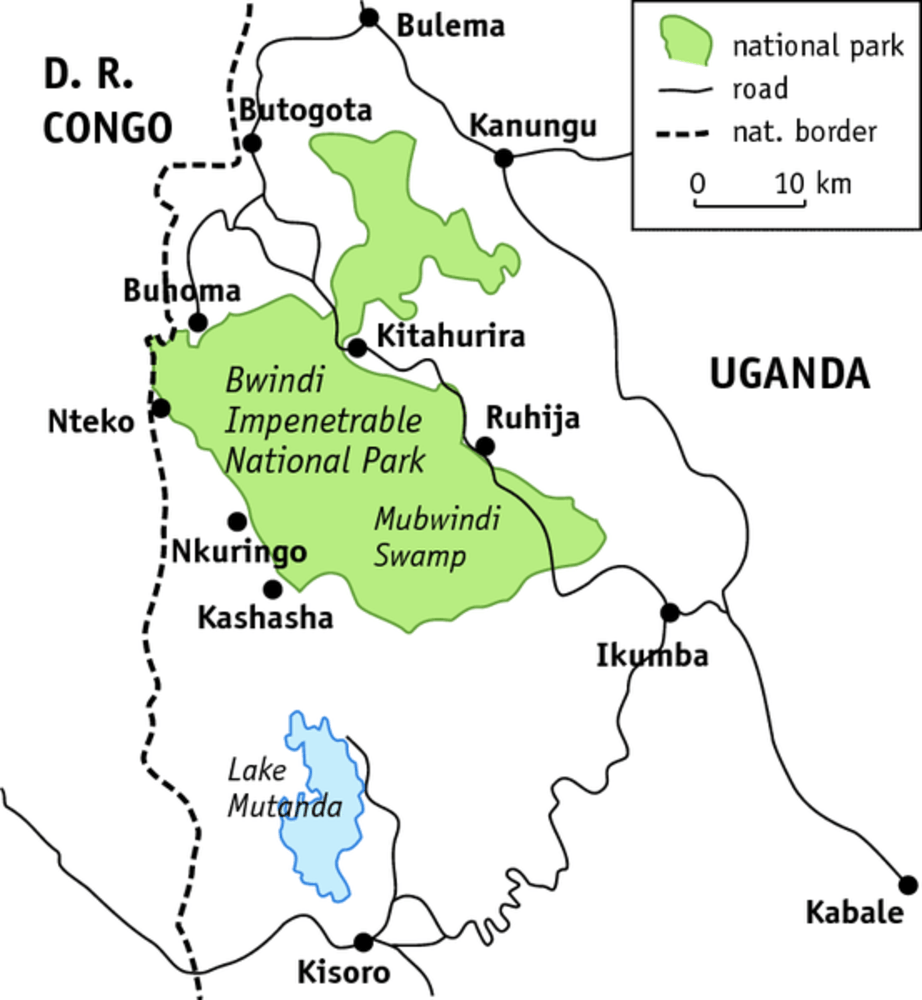
Rushaga, Nkuringo and Mgahinga hold late space far more often than Buhoma. Rushaga has the largest concentration of habituated gorilla groups in Bwindi, which means more individual permit slots per day. Nkuringo has a smaller allocation but lower demand, and its steeper terrain keeps some travellers away. Mgahinga, in the far south-west, has its own separate allocation and the lowest demand of the five pools.
Buhoma is the hardest. It is the most-requested sector, the closest to the main road, and it fills first in every season. If you are booking late and Buhoma is your only acceptable sector, your odds drop sharply. If you are willing to accept Rushaga, Nkuringo or Mgahinga, your odds improve immediately.
The Uganda Tourism Board maintains a national overview of Uganda’s parks if you want to see how the sectors sit geographically, and our Uganda destinations section maps how each region connects for route planning at short notice.
What logistics break a last minute gorilla trek?
Flights break more short-notice treks than permits do. If you are flying from Entebbe to Kihihi or Kisoro on the scheduled light aircraft that serve Bwindi and Mgahinga, seats sell out quickly — and there is no equivalent of a standby list that works inside seventy-two hours. A permit for Friday is not useful if the only flight is Monday.
Lodges are more flexible than travellers expect. Bwindi has a wide spread of accommodation across the four sectors, and while the specific lodge you wanted may be full, somewhere reasonable usually has space within driving distance of your trekking sector. The constraint is fit, not availability.
Road transfer is the third piece. From Kampala, the drive to Bwindi is a full day. From Kigali, the drive to Kisoro or the southern Bwindi sectors is shorter, which makes a Kigali entry a legitimate option for short-notice trips if your flights allow it. From Entebbe, a short-notice road trip means a long first day and a tired arrival, which is not ideal before a trek that starts at dawn.
The fourth piece is your own readiness. A gorilla trek is a hike at altitude on uneven forest ground, and the travellers who struggle most are usually the ones who did not build in a buffer day after long-haul flights. If you are booking at short notice, plan to arrive a day early, sleep properly, and start the trek rested rather than jet-lagged.
If your dates are genuinely last minute, a compact itinerary is easier to rebuild around whichever sector has space than a long, heavily-booked route. Our 3-day Uganda gorilla safari is built around a single confirmed trekking day and is the simplest format for a short-notice trip. The 5-day Bwindi and Lake Mburo safari adds a savannah stop and remains flexible on the Bwindi side.
What should you do in the first hour after deciding to go?
Speed matters more than sequence. The first hour after deciding to travel at short notice is where most of the recovery happens, and a short, focused checklist beats a long, cautious one.
First-hour checklist for a short-notice trek
- Confirm your trekking date and every alternative date you could accept
- Send passport details for every trekker — exact name as printed, passport number, nationality, date of birth
- Ask the operator to check all five permit pools in one pass, not one sector
- Confirm whether you can reach the trailhead in time, given your current location
- Ask about domestic flight seats on your intended dates before assuming the permit is the constraint
- Be ready to pay 100% of the permit fee the same day — holds are short
- Confirm your minimum age compliance if any trekker is under 16
Two of these are non-negotiable. Paying the full permit fee the same day is what converts a hold into a permit, and passport details matching your travel documents is what prevents a permit being invalid at the briefing. Everything else has some flexibility; those two do not.
When a last minute permit is not worth pursuing
There are situations where chasing a short-notice permit creates more risk than the trek is worth, and it is worth naming them plainly.
- You are flying long-haul and want to trek the next morning. Jet lag plus a dawn start on uneven ground is a bad combination, and it is the single most common reason a short-notice trek goes badly.
- Your party includes children under 15. The minimum age is enforced, and it is not negotiable at the gate.
- Your dates are immovable and your group is large. A party of six at 72 hours’ notice needs six permits in one sector on one date. That is a hard ask, and the odds fall quickly.
- You need Buhoma specifically. Late availability in Buhoma is rare. If you cannot accept another sector, you are working against the system.
- You need a specific lodge as well as a specific sector. Match both at short notice is genuinely difficult, and it is where most short-notice plans fail quietly.
None of these make the trek impossible. They make the trip structurally harder, and the honest answer at that point is to either accept a sector you had not considered, or wait until you can plan with a proper lead time.
Common mistakes with last minute permits
The same handful of errors appear on almost every short-notice booking, and all of them are avoidable with one careful conversation before money changes hands.
- Checking one sector. Bwindi has four permit pools, and Mgahinga has a fifth. A single query is not a real availability check.
- Waiting to “think about it” when a permit releases. The hold window is short and the traveller who can pay the same day usually wins the slot.
- Booking a lodge before a permit. Lodges and permits run on separate systems. Confirm both together or risk a lodge that no longer matches your sector.
- Ignoring flight seats. Permits can be flexible; scheduled light aircraft are not. Check flights before you commit to a trekking date.
- Assuming a permit is a ticket. It is a named document for a specific sector and date. Names, dates and sectors must all be right at the briefing.
- Planning to trek the day after arrival. Build a buffer night. Every trekking day starts at dawn with a briefing before the forest walk begins.
- Not checking the minimum age. Trekkers must be 15 or older, and this affects group composition, especially for families.
Can one permit cover two people?
No. One permit covers one person for one trek. This is why short-notice bookings have to be understood at party size, not just at date. A party of four needs four permits in the same sector on the same date — a materially harder ask than a single spot, and the constraint that most often turns an apparent “yes, there is space” into a “no, not for your group.”
The eight-visitor daily cap per habituated gorilla group is a headcount, not a group booking. A party of eight fills an entire day’s allocation for one gorilla group, and there is no flexibility on that ceiling. This is where splitting the party — two groups of three, or a four-and-two split — does its real work at short notice.
Once you have your permits, the gorilla group you actually visit is allocated according to the trekking sector, with final group allocation managed by UWA on the day. You will know your sector in advance; you will learn your group at the morning briefing, alongside everyone else.
Afraeka field note: A solo traveller once emailed on a Thursday evening asking to trek on Saturday. We ran the full check across all five pools and found one permit left in Rushaga for the Saturday, nothing in Buhoma, and two in Mgahinga. The permit was not the problem. The problem was that she was still in the Netherlands. She flew into Entebbe on Friday afternoon, took a scheduled light aircraft to Kihihi on Saturday morning, and made the briefing with twenty minutes to spare — but only because her flight arrived on time, the aircraft was not delayed by weather, and the trek started on schedule rather than early. Three things could have gone wrong and none did. The trek was memorable. The lesson is simpler than the story: at short notice, always arrive one day early if you can. We do not encourage same-morning logistics, and we only built that itinerary because everything else on her dates was genuinely closed.
A question that comes up regularly on TripAdvisor’s Uganda forum and on r/Uganda is some version of: “I’m in Kampala next week — can I just show up and get a permit?” The honest answer is: sometimes, if you can move on sector and date, and if you are willing to accept whatever is still unissued in the system. What almost never works is expecting Buhoma specifically, on a specific weekend, from a standing start. Sector flexibility is the single most useful thing you can bring to a short-notice booking.
Frequently asked questions about last minute gorilla permits
How late can I book a gorilla permit in Uganda?
Subject to availability, permits can be issued right up to the morning of the trek if a permit remains unissued in the UWA system. In practice, the workable outer edge is 48 to 72 hours, and that assumes you can reach the trailhead in time and that flights and lodges are available. Below seven days, logistics become the constraint far more often than permit availability does.
Is a last minute gorilla permit actually possible?
Yes, and it happens regularly — but usually in Rushaga, Nkuringo or Mgahinga rather than Buhoma. The UWA seven-day hold releases unpaid permits back into general availability on a rolling basis, and low-season months in particular see genuine short-notice openings. What breaks most last minute attempts is not the permit but the flights, lodges and drive times around it.
What is the best time of year for a last minute gorilla permit?
April, May and November are the most forgiving months, because demand is lower and the reduced UWA tariff applies. Shoulder weeks — late May into early June, late November into early December — are also strong, combining reasonable weather with softer demand. Peak weeks in June to September and December to February are the hardest for short-notice bookings.
Which sector has the best chance of last minute availability?
Mgahinga usually has the best odds, followed by Nkuringo and Rushaga. Mgahinga has its own habituated gorilla group and its own permit allocation, separate from Bwindi’s four sectors, and its lower demand makes it the most reliable fallback at short notice. Buhoma is the hardest sector for late bookings.
Can I get a gorilla permit for tomorrow?
Occasionally, if a permit remains unissued in the UWA system and you are already positioned close enough to reach the trailhead. A permit for tomorrow morning is worthless if you are still several hours away, and trekking days begin with a dawn briefing. If you are already in Uganda and can move freely, a next-day permit is realistic; if you are still overseas, it is not.
Do I need a buffer day before my trekking day?
Yes, and it matters more on a short-notice trip than a well-planned one. Bwindi is a full day’s drive from Kampala or a short flight plus a road transfer, and trekking days start at dawn. Arriving the night before your trek, rested, is the single most reliable way to avoid a missed trek due to transport delays.
What details do I need ready for a short-notice booking?
Each trekker’s full name exactly as it appears in their passport, passport number, nationality, date of birth, and the exact trekking dates you can accept. You also need to be ready to pay the full UWA permit fee the same day, because holds are short and the traveller who converts first gets the permit.
Can I split my group to get last minute permits?
Yes, and it often works when a single block does not. Permits are issued per individual, so a party of six needs six permits in the same sector on the same date, not one six-permit block. Two gaps of three frequently exist where a single block does not, and all sub-groups can trek the same day with different gorilla group assignments at the briefing.
What happens if my last minute permit date falls through?
You should always hold a fallback. If a date collapses, the realistic options are to shift your trekking day by one or two days, accept a different sector such as Mgahinga, or build the Uganda trip around other experiences such as chimpanzee trekking, Murchison Falls or Kidepo Valley. Having the fallback decided in advance is what keeps a short-notice trip from turning into a wasted week.
Need a permit inside the next week?
Send us your dates, your party size and your current location, and we will run a full check across all four Bwindi sectors plus Mgahinga in one pass — including a split-party query if you are travelling as a group. You will get a straight answer per date, plus a fallback plan if your first choice is gone. No price figures until we know your route, because the permit is only one line of the total.
Check short-notice availability
About the author: Victoria Kayaga is a Ugandan-born safari specialist and the founder of Afraeka Adventures, based in Kampala. She has planned gorilla trekking itineraries across Bwindi, Mgahinga and the wider East African circuit for years, and she handles short-notice permit requests for clients throughout the year. More about Victoria.
Keep planning
- Gorilla permits Uganda — fees and booking
- Uganda gorilla trekking hub
- Primate tracking experiences
- All Afraeka trips