Last updated: 26 September 2026. Rates and availability are set by UWA and subject to change — confirm before booking.
Short answer: A 5 day Uganda family safari is a five-day road itinerary designed around shorter driving days, age-appropriate activities, and lodges with family-friendly facilities. The standard route runs Kampala → Lake Mburo → Queen Elizabeth → Kampala, using game drives and boat cruises (no minimum age) as the main activities. If the family includes teenagers aged 12 to 14, golden monkey trekking at Mgahinga is the only proper primate trek they can do — gorilla and chimpanzee treks both require all trekkers to be 15 or older. The five-day format gives enough time for the parks without the long drives and physical demands of the primate circuit.
Uganda is one of the more family-friendly safari destinations in East Africa, but the country’s two headline experiences — gorilla trekking and chimpanzee trekking — are off-limits to children under 15. That single rule shapes how family safaris in Uganda are planned. The good news is that the country has an excellent range of age-appropriate activities that require no minimum age at all: game drives, boat cruises, walking safaris at Lake Mburo, and cultural visits to villages and shrines. A 5 day Uganda family safari is built around these experiences.
This guide covers what a 5 day Uganda family safari actually involves — the day-by-day route, which parks work best for different age groups, what activities fit for children of different ages, how to choose a family-friendly lodge, and the pacing adjustments that make the trip work for families rather than adults. It is a companion to the shorter wildlife-only format covered in our guide on the 5 day cultural and wildlife safari, and to the wider savannah context on the big game safaris page. Permit categories and rates sit on the gorilla permits Uganda page for families whose teenagers are eligible. The regulatory framework for Uganda’s protected areas is published by the Uganda Wildlife Authority.
5 day Uganda family safari — key facts
- Route: Kampala → Lake Mburo → Queen Elizabeth → Kampala
- Driving: 3–7 hours per day, with breaks
- Activities with no minimum age: Game drives, boat cruises, walking safari at Lake Mburo, cultural visits, Ngamba Island
- Only proper primate trek for children 12–14: Golden monkey trekking at Mgahinga
- Minimum age for chimp and gorilla trekking: 15 years
- Best season: Dry months (Dec–Feb, June–Sept) for easier travel and firmer roads
- Best for: Families with children of any age
- Lodge features to look for: Family rooms, gardens, flexible meal times, child-friendly menus
What is a 5 day Uganda family safari?
A 5 day Uganda family safari is a five-day road itinerary built specifically around the needs of families — shorter driving days, rest breaks, activities that suit children of different ages, and lodges with family-friendly facilities. It is not simply a standard safari with children added; it is a different format, planned around the realities of travelling with younger travellers.
Three things define the format:
- The driving days are shorter. A standard adult wildlife safari might include a six- to seven-hour driving day. A family safari breaks the same route with more frequent stops, shorter segments, and earlier arrival times at lodges. The Lake Mburo and Queen Elizabeth corridor is well suited to this because the distances are moderate and the road is mostly tarmac.
- The activities have no minimum age. Game drives, boat cruises, walking safaris, and cultural visits all work for children of any age. The format concentrates on these rather than on the primate treks, which have a 15-year minimum.
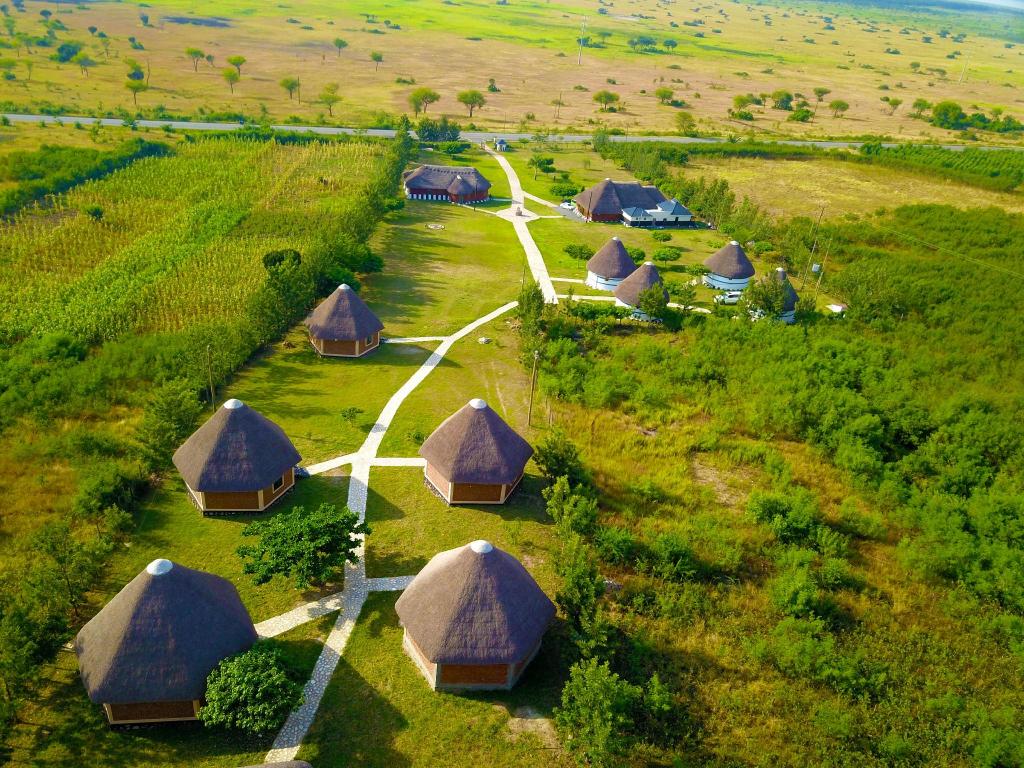
- The lodges are chosen for family fit. Family rooms, interconnected rooms, gardens for children to run around in, pools where available, flexible meal times, and child-friendly menus. The lodge is often the difference between a good family trip and a difficult one.
The practical consequence is that the 5 day Uganda family safari is one of the easier Uganda formats to plan. There are no permits, no age restrictions on the main activities, and no fitness requirements. The main constraint is the driving, which is managed by choosing parks that sit closer to Kampala. The wider range of Uganda activities is on the safari destinations page linked below.
Afraeka tip: If you are booking a 5 day Uganda family safari with children of different ages, plan the activities so everyone has something to do on every day. The format works best when there are no days where one child is stuck at the lodge while the others are out. Game drives, boat cruises and cultural visits can be done together; the harder activities (primate treks) may need a split arrangement if some children are eligible and others are not.
Which parks work best for families?
The parks that work best for a 5 day Uganda family safari are Lake Mburo and Queen Elizabeth National Park. Both are on the western corridor, both are road-accessible from Kampala without excessive driving, and both offer a range of activities that suit children of different ages.
| Park | Distance from Kampala | Why it suits families |
|---|---|---|
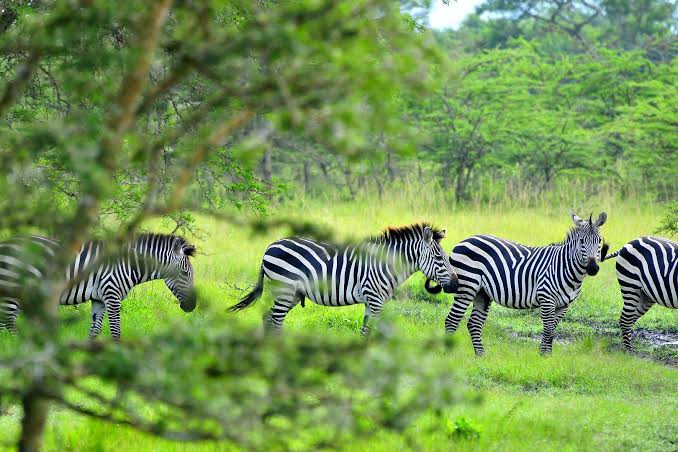
| Lake Mburo National Park | 3.5–4 hours | Small, gentle, zebras and impala, walking safari, no minimum age |
| Queen Elizabeth National Park | 6–7 hours | Game drives, Kazinga Channel boat safari, crater lakes, no minimum age |
| Murchison Falls | 5–6 hours north | Boat safari, top-of-the-falls walk, big game; longer drive but manageable |
| Kidepo Valley | 10–12 hours | Too far for a five-day family trip |
| Bwindi / Mgahinga | 8–9 hours | Primates only — minimum age 15 excludes younger children |
| Kibale Forest | 5–6 hours | Chimpanzee trekking has a 15-year minimum |
Lake Mburo and Queen Elizabeth are the two closest parks with the widest range of no-minimum-age activities.
Three practical points on the park choice. First, Lake Mburo is the smallest and easiest introduction to Uganda’s savannah. The park is compact, the driving inside it is short, and the walking safari is one of the few in Uganda that children can do. Second, Queen Elizabeth offers the widest range of activities for families — game drives on the Kasenyi plains, the Kazinga Channel boat safari, the crater lakes drive, and the fishing villages around Lake Katwe. Third, Murchison Falls is a viable alternative if the family wants the Nile and the top-of-the-falls walk, but the drive is longer and the park is larger, which means more time in the vehicle.
The wider savannah-park comparison across Uganda is on the 4 day Uganda wildlife safari guide, which covers the adult-focused version of the same route.
What does the day-by-day route look like?
The five-day family route runs west from Kampala to Lake Mburo, then south-west to Queen Elizabeth, then back to Kampala. The driving days are split so that no day has more than four hours of driving unless it is the return leg, and the activities are chosen for the age range of the family.
The 5-day family route, day by day
- Day 1 — Kampala to Lake Mburo. Depart at 8:00am (a later start than the standard safari). Drive west via Masaka (3.5–4 hours) with a lunch stop and a short photo break at the equator. Arrive at your Lake Mburo lodge by mid-afternoon. Short sunset game drive or a lodge-based activity for the children.
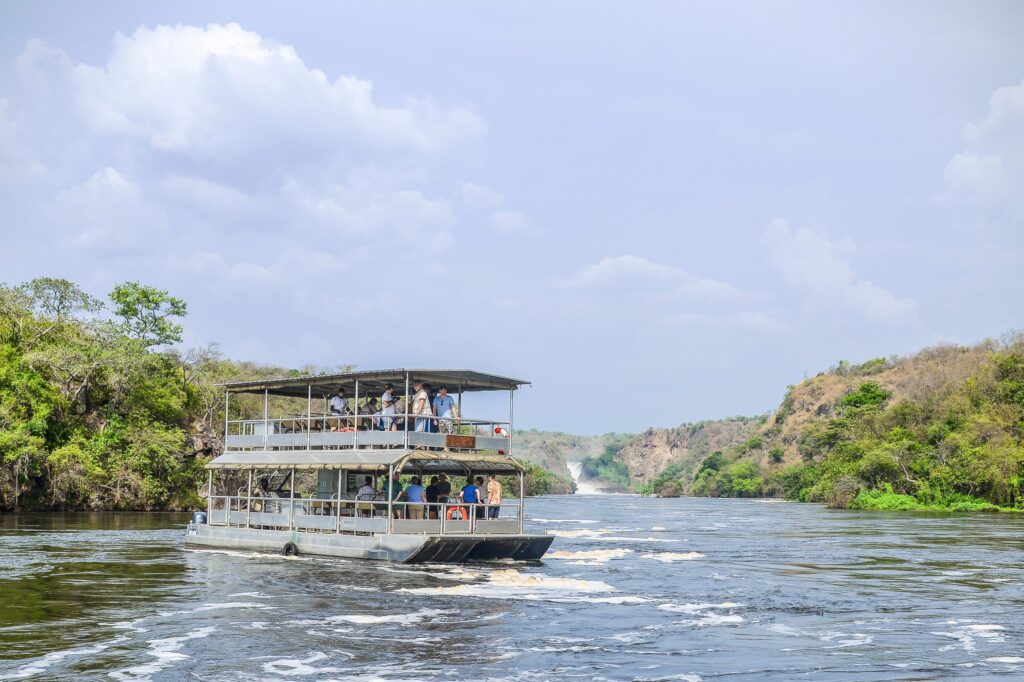
- Day 2 — Lake Mburo family activities. Morning walking safari with a ranger (2–3 hours) — children can join, and it is one of the few walking safaris in Uganda open to all ages. Afternoon boat cruise on Lake Mburo (2 hours) for hippos, crocodiles and birdlife. Evening at the lodge.
- Day 3 — Lake Mburo to Queen Elizabeth. Depart at 9:00am. Drive west to Queen Elizabeth (3 hours). Stop at the Igongo Cultural Centre for a museum visit and lunch (1.5 hours). Arrive in Queen Elizabeth by mid-afternoon. Short evening game drive or lodge time.
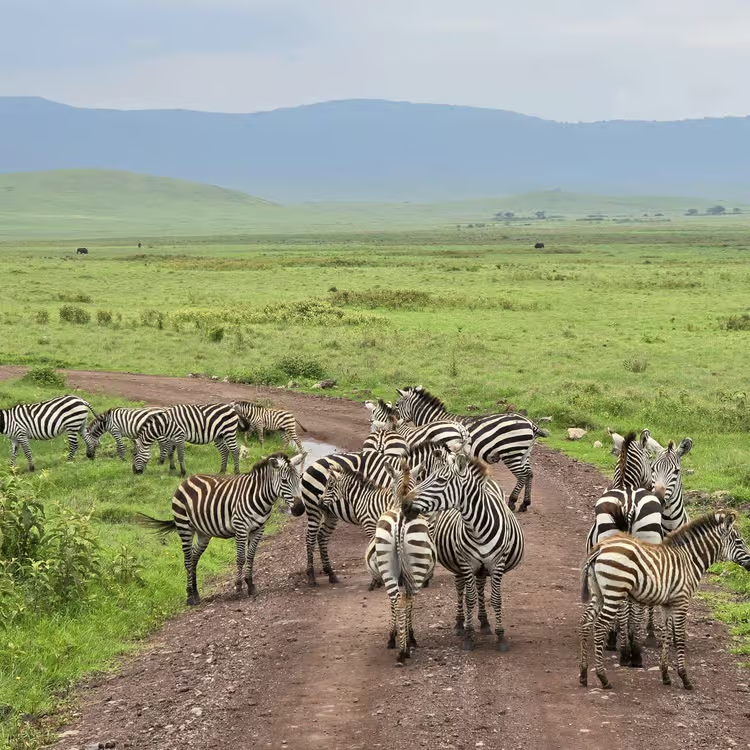
- Day 4 — Queen Elizabeth family day. Morning game drive on the Kasenyi plains (3 hours) for lions, elephants, buffalo and antelope. Afternoon Kazinga Channel boat safari (2–3 hours) for hippos, crocodiles and birdlife. Evening at the lodge.
- Day 5 — Queen Elizabeth to Kampala. Depart at 8:00am. Drive back to Kampala via Mbarara (6–7 hours), with a lunch stop and rest breaks. Arrive back in Kampala by late afternoon.
Two structural notes on this route. First, the drive on day one starts later than the standard safari and includes a lunch stop. This is deliberate — families with children do better with a gentler start. Second, the walking safari at Lake Mburo and the boat cruises are the two activities that most reliably engage children of all ages. Both have no minimum age and both are short enough to hold attention.
The lake activities at Lake Mburo are covered in our guide on the 2 day Lake Mburo safari from Kampala, which includes the walking safari in detail.
What activities fit for different age groups?
The activities that fit a 5 day Uganda family safari depend on the ages of the children. Uganda’s wildlife activities fall into three age bands: no minimum age, minimum age 12, and minimum age 15. Understanding which activities fall into which band is the key to planning a family itinerary.
| Activity | Minimum age | Notes |
|---|---|---|
| Game drives | None | Vehicle-based; suitable for all ages |
| Boat cruises | None | Kazinga Channel, Lake Mburo, Nile — all suitable for children |
| Walking safari at Lake Mburo | None (with ranger) | One of the few walking safaris open to all ages in Uganda |
| Cultural visits | None | Villages, shrines, museums |
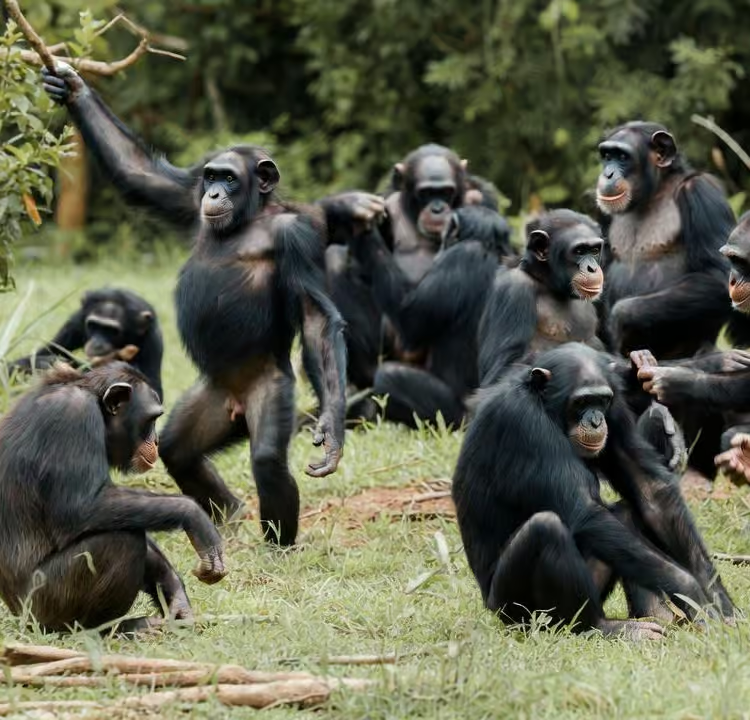
| Ngamba Island sanctuary | None | Boat trip and chimpanzee viewing from platforms |
| Golden monkey trekking | 12 | Mgahinga only — the only proper primate trek open to under-15s |
| Chimpanzee trekking | 15 | Kibale, Budongo, Kyambura, Kalinzu |
| Gorilla trekking | 15 | Bwindi, Mgahinga |
The no-minimum-age activities cover the majority of a family safari. The 12+ and 15+ activities are add-ons for older children.
Three categories of activity cover most family safaris:
- For families with children under 12: Game drives, boat cruises, the Lake Mburo walking safari, cultural visits and the Ngamba Island sanctuary. All have no minimum age and all work well for younger children. The Ngamba Island day trip is particularly well suited — the boat crossing is an adventure in itself, and the sanctuary is designed for visitors of all ages. Full details sit on the Ngamba Island day trip guide.
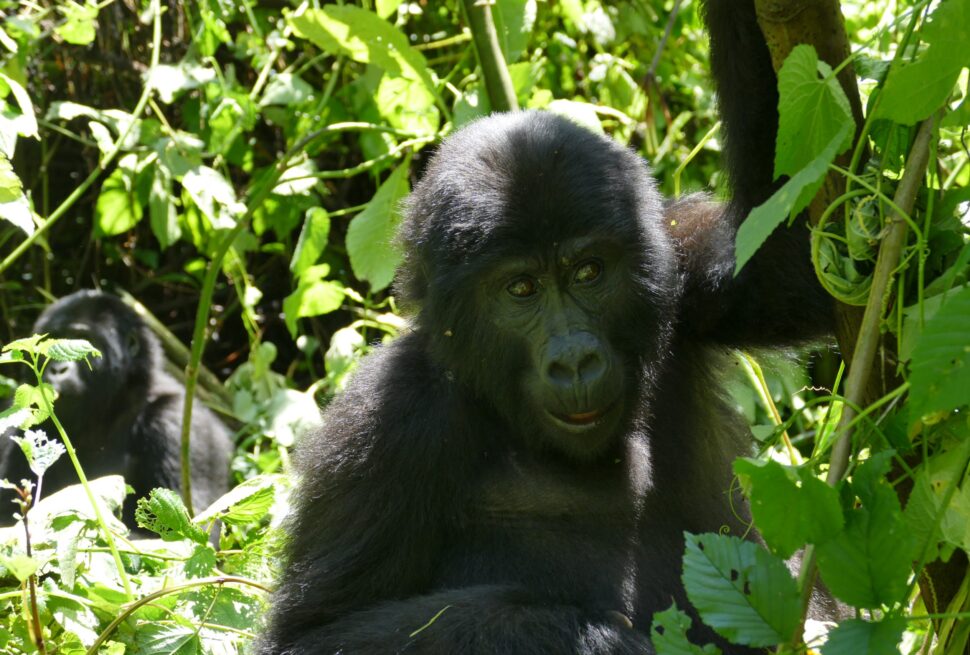
- For families with children aged 12–14: Everything above, plus golden monkey trekking at Mgahinga. The golden monkey trek is the only proper primate trek available to this age group, and it is short, gentle and full of monkeys at close range. The full guide is on the golden monkey trekking at Mgahinga page.
- For families with children aged 15 and over: Everything above, plus chimpanzee and gorilla trekking. Families whose youngest child is 15 or older can do the full primate circuit. The split-day model is covered in our guide on chimpanzee trekking with kids, and the age rules are on the chimp trekking age limit page.
The wider activity range that includes boat-based experiences is on the boat and water safaris page linked from the safari destinations hub.
What should you look for in a family lodge?
The lodge choice matters more for a family trip than for an adult one. Families staying at a lodge with family rooms, gardens, flexible meal times and child-friendly menus have a much easier trip than families who book a lodge designed primarily for couples or small groups.
Family-friendly lodge features
- Family rooms or interconnected rooms — a single room for four is rarely comfortable
- Gardens or outdoor space where children can run around safely
- A pool where available — good for downtime between activities
- Flexible meal times — children often eat earlier than adults
- Child-friendly menu items available on request
- Staff who are used to families and can arrange split activities
- Proximity to the park circuits and the boat safari launch points
- Willingness to prepare packed breakfasts for early game drives
Two practical points on lodge choice. First, lodges inside the park boundary have direct access to the game drive circuits, which saves time on the driving days. Lodges just outside the gate can work but add a short drive to every activity. Second, ask about the lodge’s laundry service — families with children often need it, and it is not always available at smaller properties.
The wider range of lodges across Uganda’s parks sits on the safari destinations page. The cultural and wildlife version of the same route is on the cultural and wildlife safari guide linked above.
When is the best time for a family safari?
The best time for a 5 day Uganda family safari is the drier months — December to February and June to September. Game viewing is easier in the thinner vegetation, the murram road sections are firmer, and the whole trip runs more smoothly. The wet months of April, May and November are workable but slower, and travelling with children in the rain is harder than travelling with adults.
Three practical points on timing:
- Dry season is easier with children. Firmer roads, easier game viewing, and less time stuck in the vehicle waiting out rain. The whole trip flows better.
- School holidays overlap with peak season. December to February and June to September overlap with northern hemisphere school holidays, which is when most families travel. Book lodges and activities early for those windows.
- Low season is quieter and cheaper. April, May and November are less crowded and often less expensive. If your family can travel outside school holidays, the trade-off is wetter weather in exchange for lower prices and quieter parks.
The wider season picture sits with the Uganda Tourism Board. The family format is genuinely year-round, and the trade-offs between seasons are about comfort and price rather than whether the trip works.
Who is the family format best for?
The 5 day Uganda family safari is best for families with children of any age who want a savannah experience without the physical demands or age restrictions of the primate circuit. It also works for multigenerational families and for travellers who want a slower pace than the standard safari format.
Book the format if you are…
- Travelling with children under 15 — the format avoids the primate minimum-age rules entirely
- Travelling with a mixed-age family — the game drives, boat cruises and cultural visits work for everyone
- Wanting a slower pace with shorter driving days
- Travelling with older relatives who want less physical demand
- Wanting a first introduction to Uganda’s wildlife before committing to a longer trip
- Looking for a family-friendly route that stays on tarmac roads
Consider a different format if you are…
- Travelling with only adults — the standard wildlife or primate itineraries are deeper
- Wanting gorillas or chimpanzees — those require the primate parks and all trekkers must be 15+
- Wanting the classic East Africa safari experience — Kenya or Tanzania offer a wider savannah circuit
- On a three-day window — the family format is best at five days or more
The family format is one of the most accessible Uganda itineraries. It has no permits, no minimum age on the main activities, and no fitness requirements. The whole trip is designed around the reality that travelling with children means shorter days, more breaks, and a slower pace. The country map for all Uganda routes is on the Uganda destinations page.
How do you book a 5 day Uganda family safari?
You book a 5 day Uganda family safari by confirming the lodges first — family rooms are the tightest constraint — then the activities, and the vehicle and driver-guide for the full route. No UWA permits are required unless you are adding a primate trek for eligible teenagers.
What to arrange before the trip
- Family rooms or interconnected rooms at each lodge — book early
- Lake Mburo walking safari confirmed with a ranger
- Boat cruises at Lake Mburo and Queen Elizabeth booked in advance
- Kazinga Channel boat safari confirmed — limited capacity per departure
- Igongo Cultural Centre stop booked for the transfer day
- Vehicle and driver-guide for the full five-day route — request a family-friendly vehicle
- Child seats or boosters if needed — confirm with the operator
- Any dietary requirements shared with the lodges in advance
Two things are worth confirming when you book. First, whether the lodges can accommodate the whole family in one room or in interconnected rooms — this is the single biggest constraint on family trips. Second, whether the vehicle is set up for children — some operators provide child seats or booster seats on request, others do not.
The wider trip options that work for families are on the trips page linked below. For families whose teenagers are 15 or older, the gorilla and chimpanzee permits can be added — those are booked through the permits page linked in the introduction.
Common mistakes with the 5 day Uganda family safari
Most of what goes wrong with a 5 day Uganda family safari comes down to a small set of avoidable mistakes, and all of them can be prevented with one careful planning conversation.
- Booking a standard adult safari with children added. The family format is different — shorter driving days, more breaks, and activities chosen for the age range. A standard safari will exhaust children.
- Assuming the chimp or gorilla trek is available to children under 15. Both have a minimum age of 15 that is enforced at booking and at the trailhead. Plan the trip around the golden monkeys or the no-minimum-age activities instead.
- Not booking family rooms in advance. Family rooms are the tightest lodge constraint on a family trip. Book them at the same time as the trip, not later.
- Underestimating the driving on the return leg. The Queen Elizabeth to Kampala drive is six to seven hours. Break it with a lunch stop and rest breaks, and do not book anything with a fixed start time that evening.
- Skipping the Lake Mburo walking safari. It is one of the few walking safaris in Uganda open to all ages, and it is one of the most engaging activities for children.
- Not checking the vehicle setup. Family-friendly vehicles with child seats or boosters make a real difference on long driving days. Confirm at the time of booking.
- Travelling with a child who is close to the golden monkey minimum age. The golden monkey minimum is 12, and it is enforced. If your child is 11 and will turn 12 before the trekking day, check the exact date before assuming.
- Booking a lodge without a garden or pool. Downtime at the lodge matters more for families than for adults. A garden or pool makes the whole trip easier.
Can one permit cover two people?
Neither Lake Mburo nor Queen Elizabeth uses permits for game drives, boat cruises, walking safaris or cultural visits. Both parks operate on entry fees paid at the gate and per-activity fees paid through the lodge or at the ranger post. Each adult and each child pays their own entry fee, with children’s rates applying at most parks. There is no shared entry and no advance permit allocation. The permit-based system applies to the primate parks — Bwindi, Mgahinga and Kibale — and current permit categories for those sit on the gorilla permits Uganda page.
Two practical points about the family booking structure. First, park entry fees are per person per day with children’s rates that vary by park. Confirm the current rates at the time of booking. Second, boat cruises and walking safaris have per-person fees and limited capacity per departure, so they should be booked in advance for family groups.
Once the lodges and activities are confirmed, the five-day format runs to a fixed schedule with no permits or allocations on the day. The regulatory framework for Uganda’s protected areas is set by the Uganda Wildlife Authority, and the wider country map is on the destinations page linked above.
Afraeka field note: A family of five once booked a 5 day Uganda family safari with three children aged 17, 13 and 8. The parents had originally planned to trek gorillas at Bwindi, but the youngest two were too young for the trek and the trip would have split the family for two days. They pivoted to the family format instead, staying at Lake Mburo and Queen Elizabeth. On the day the parents would have been in Bwindi, the family did the walking safari at Lake Mburo together — the 8-year-old leading the group, the 13-year-old asking the ranger about tracks, and the 17-year-old photographing impala at close range. The parents told us afterwards that the trip had been a better use of five days than a split trip to Bwindi would have been. That is the honest case for the family format. It keeps everyone together, and it builds the trip around what children of all ages can genuinely enjoy.
A question that comes up occasionally on TripAdvisor’s Uganda forum and on r/Uganda is some version of: “Can I do a Uganda safari with young children?” The honest answer is yes — the game drives, boat cruises, walking safaris and cultural visits have no minimum age, and the family format is built around them. What you cannot do with children under 15 is the gorilla or chimpanzee trekking. Travellers whose priority is the primates should either wait until their children are older or split the group. Travellers whose priority is a varied, engaging Uganda experience will find the family format delivers it well.
Frequently asked questions
Is Uganda good for a family safari?
Yes — Uganda’s savannah parks are family-friendly. Game drives, boat cruises, walking safaris and cultural visits have no minimum age, and the western route from Kampala is on tarmac roads. The main constraint is the primate trekking, which requires all trekkers to be 15 or older.
Can children do gorilla or chimpanzee trekking in Uganda?
No — both gorilla trekking and wild chimpanzee trekking have a minimum age of 15, set by UWA and enforced at booking and at the trailhead. Families with children under 15 cannot do these treks. Golden monkey trekking at Mgahinga has a minimum age of 12 and is the only proper primate trek open to under-15s.
What activities can young children do on a Uganda safari?
Game drives, boat cruises (Kazinga Channel, Lake Mburo, the Nile), the Lake Mburo walking safari, cultural visits to villages and shrines, and the Ngamba Island chimpanzee sanctuary. None of these have a minimum age.
Where should I take my family in Uganda?
Lake Mburo and Queen Elizabeth National Park are the two best parks for families. Both are road-accessible from Kampala without excessive driving, both offer a range of no-minimum-age activities, and both have family-friendly lodges. Murchison Falls is a viable alternative if you want the Nile and the top-of-the-falls walk.
How long should a Uganda family safari be?
Five days is the minimum for a proper family safari. It covers two parks with driving days broken sensibly. Three or four days is possible but tight. Families with more time can extend to seven days and add a third park or a lake stop.
What should I look for in a family lodge?
Family rooms or interconnected rooms, gardens or outdoor space for children, a pool where available, flexible meal times, child-friendly menus, and staff who are used to families. Proximity to the park circuits also helps on driving days.
When is the best time for a family safari in Uganda?
The drier months of December to February and June to September. Game viewing is easier in the thinner vegetation, and the murram road sections are firmer. The wet months of April, May and November are workable but slower, and harder to manage with young children.
Do I need permits for a family safari?
No. The savannah parks — Lake Mburo, Queen Elizabeth, Murchison Falls — operate on entry fees, not permits. The UWA permit system applies only to the primate parks: Bwindi, Mgahinga and Kibale. If your family includes eligible teenagers doing a primate trek, those permits are booked in advance.
Can I combine a family safari with a primate trek?
Yes, but only for family members aged 15 or over. The split-day model — one parent treks with eligible children, the other stays with younger children on a family-friendly activity — is covered in our guide on chimpanzee trekking with kids. Everyone reunites for the rest of the day.
Planning a family safari?
Send us your dates, the ages of everyone in your party, and how many days you have, and we will recommend the parks and activities that suit your family, match lodges with family rooms, and outline how the days fit together. If a primate trek is possible for some family members, we will say so. No price figures until we know your route, because the activities are only part of the total.
About the author: Victoria Kayaga is a Ugandan-born safari expert and founder of Afraeka Adventures, with 15+ years in East African tourism. Based in Kampala, she has planned family safaris across Uganda’s savannah parks for years, and she advises parents on how to structure a family trip around the primate age rules and the activities children can do together. More about Victoria.
Keep planning