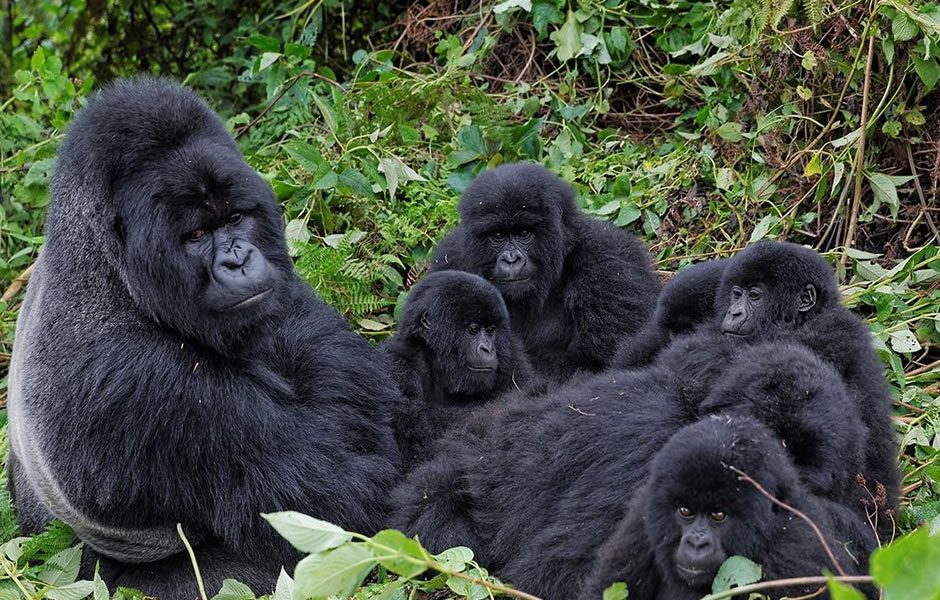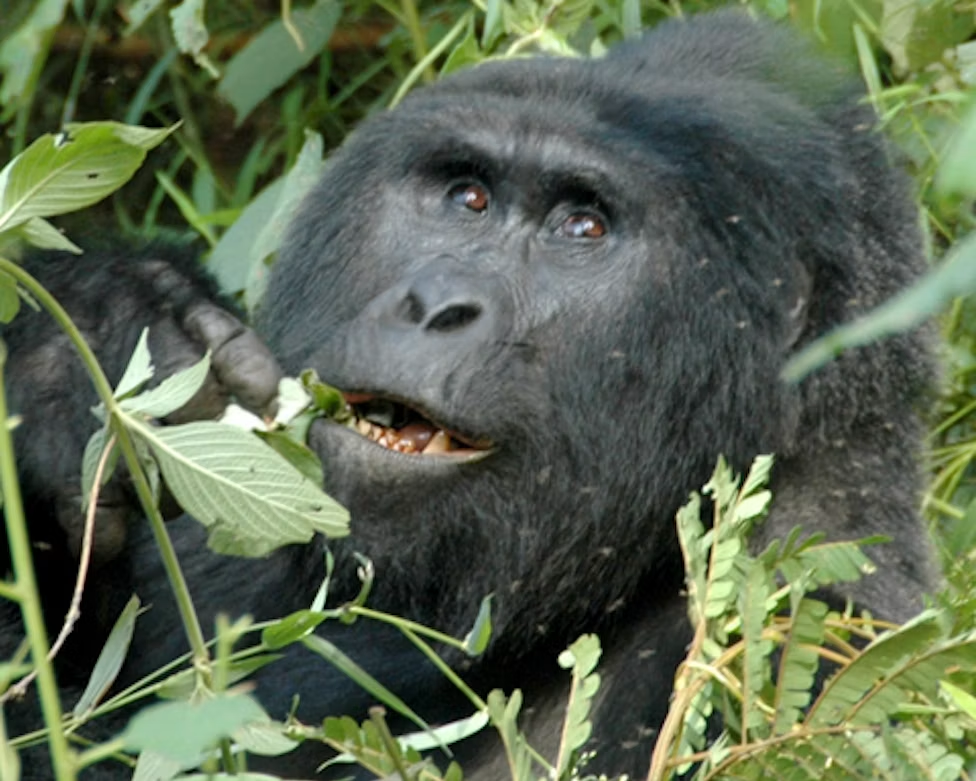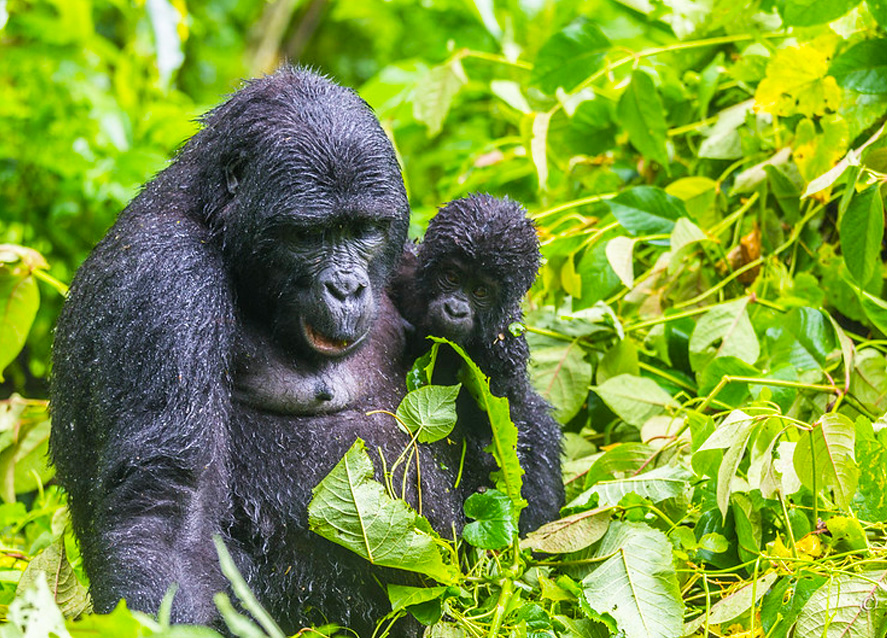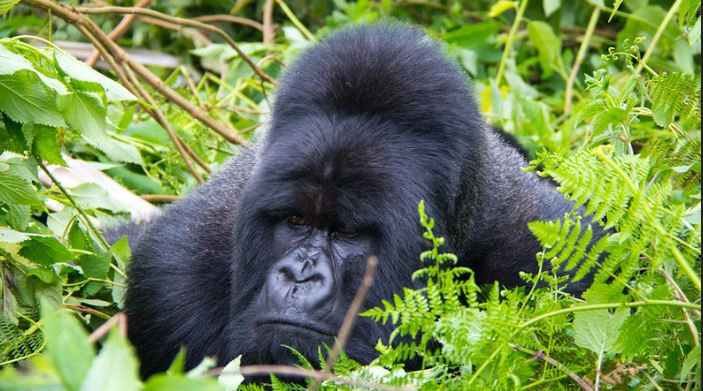
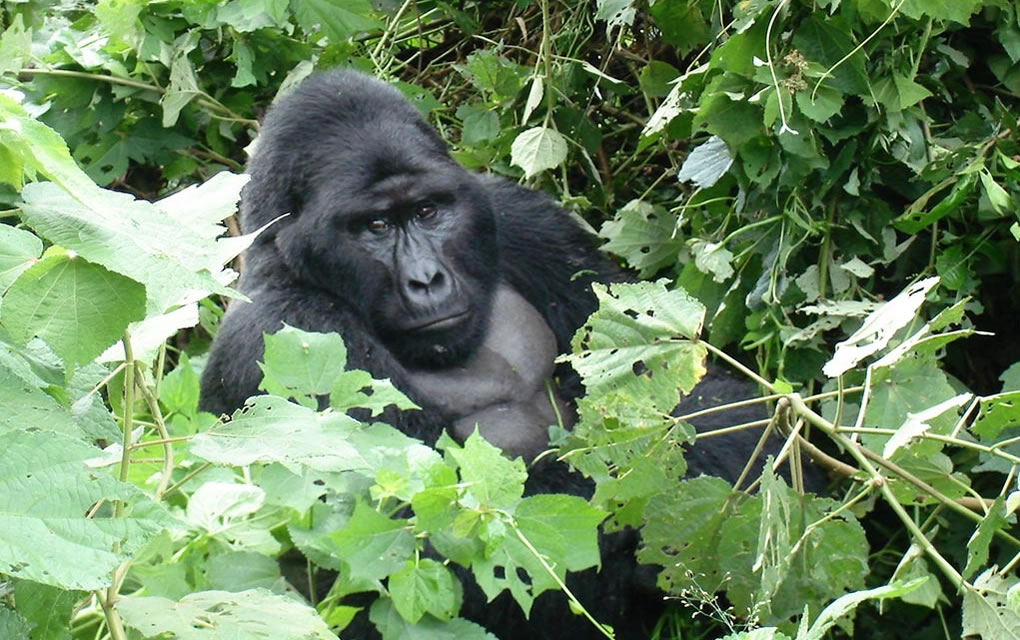
Short answer: The Mubare gorilla group is the first habituated mountain gorilla family in Bwindi Impenetrable National Park, opened to tourism in 1993 — three years before Habinyanja, the park’s second family. It lives in the Buhoma sector and takes its name from Mubare hill, where the group was originally located. For much of its history it was led by the silverback Ruhondeza, whose death in 2012 marked a turning point for the family. Trekking with Mubare is done through a Buhoma permit, and the family is allocated by UWA on the morning of the trek.
Every habituated gorilla family in Bwindi today traces its programme back to Mubare. When UWA began habituating wild mountain gorillas for tourism in the early 1990s, Mubare was the first family to complete the process, and the success of that effort is what made the park’s gorilla tourism industry possible. Twenty-five years and many habituated families later, the group remains one of the most historically significant in Uganda.
Its story is also one of the more sobering in Bwindi. Mubare’s long-standing silverback, Ruhondeza, led the family for years before his death in 2012, and the family’s composition changed significantly afterwards. That arc — from the park’s founding habituated group to a smaller, more fragile family — is part of what makes Mubare worth understanding before you trek. This guide covers the family’s history, its home range within Buhoma, what a trek with Mubare involves, and how it relates to the other two Buhoma families, Habinyanja and Rushegura. If you have not yet chosen a sector, the Uganda gorilla trekking hub covers the wider picture, and permit fees are kept current on the gorilla permits Uganda page.
Mubare gorilla group at a glance
- Park: Bwindi Impenetrable National Park, Uganda — a UNESCO World Heritage Site
- Sector: Buhoma, on the northern edge of the park
- Issuing authority: Uganda Wildlife Authority (UWA)
- Habituation: Completed in the early 1990s; opened to tourism in 1993 — the first habituated family in Bwindi
- Name origin: Mubare hill, near where the group was first located
- Best-known silverback: Ruhondeza, who led the family for years before his death in 2012
- Notable history: The founding habituated family of Bwindi’s gorilla tourism programme; reduced in size following Ruhondeza’s death
- Maximum visitors: 8 people per habituated gorilla group per day
- Time with gorillas: 1 hour
- Minimum age: 15 years
- Group allocation: Managed by UWA according to the trekking sector and operational arrangements
- Permit conditions: Subject to UWA’s current booking, cancellation and rescheduling rules
Permit fees are set by UWA and vary by traveller category. Current rates are updated on our gorilla permits Uganda page, and UWA periodically revises its tariff structure.
Where does the Mubare group live?
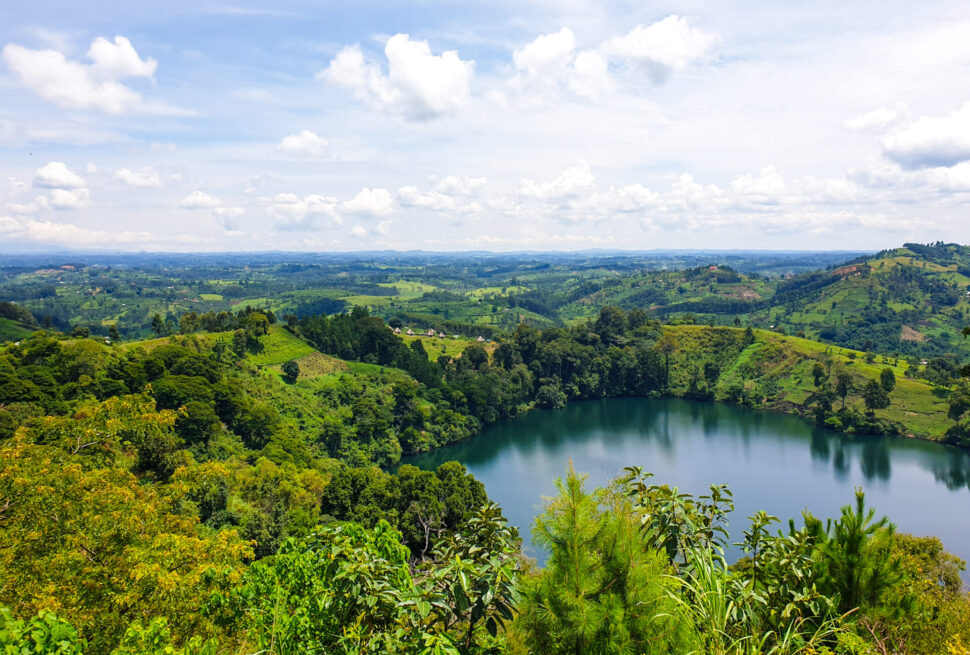
The Mubare gorilla group lives in the Buhoma sector of Bwindi Impenetrable National Park, on the park’s northern edge. Its home range sits within the sector’s broader allocation, in forest that runs through the hills and river valleys immediately around Mubare hill — the feature that gave the family its name. Like every habituated family, its exact location on any given day depends on where the group nested the night before, which is why UWA trackers go out before dawn to locate each family.
Buhoma’s geography is gentler than Bwindi’s eastern or southern sectors, with lower average altitude and fewer sustained gradients. Treks with Mubare therefore tend to involve moderate terrain, though the length of the walk depends entirely on where the family has moved. Approaches can range from under an hour to several hours, and the descent back to the trailhead is usually faster than the walk in.
The Mubare family shares the Buhoma sector with two other habituated groups — Habinyanja and Rushegura — which between them form the original core of Bwindi’s gorilla tourism programme. Habinyanja was the second family habituated, and Rushegura later split from it. All three operate within the same sector and are allocated by UWA on the morning of the trek, which means a Buhoma permit gives you access to whichever of the three the rangers assign.
Buhoma’s access routes are the most established in Bwindi. The sector is closest to the main Kabale road and to Kihihi airstrip, and it is the only Bwindi sector within a two-hour drive of Queen Elizabeth National Park’s Ishasha sector. Our Uganda destinations section maps how the parks connect for route planning.
What is the Mubare group’s history?
Mubare’s history runs in three phases: habituation and the founding of Bwindi’s tourism programme, the long leadership of silverback Ruhondeza, and the family’s reduction following his death. Each phase has shaped both the family itself and the park’s approach to gorilla conservation more broadly.
Three phases in Mubare’s history
- Habituation and the founding of gorilla tourism. In the early 1990s, UWA and its conservation partners began habituating wild mountain gorilla families in Bwindi for tourism. The process takes years of daily contact — researchers and trackers gradually accustoming a wild family to human presence without causing stress or altering its natural behaviour. Mubare was the first to complete this process, and the family opened to tourism in 1993.
- Ruhondeza’s leadership. For much of Mubare’s modern history, the family was led by the silverback Ruhondeza, whose name and calm temperament became well known among researchers, rangers and early visitors. His leadership brought stability to the group during the earliest years of tourism, and he is one of the more widely documented individual gorillas in Bwindi’s history.
- Ruhondeza’s death and the family’s reduction. Ruhondeza died in 2012, and his death marked a turning point. Following the loss of a long-standing dominant silverback, the family’s composition changed — as it often does in such circumstances, some members dispersed or joined other groups, and Mubare reduced in size. The family continued as a habituated group, but with a smaller and more fragile structure than it had held previously.
Mubare’s arc is a reminder that habituated gorilla families are not static. They grow, split, lose members and re-form, and the tracking and research teams who follow them adapt constantly to these changes. The conservation lesson from Mubare is that success in gorilla tourism is never permanent — it depends on individual animals and the social structures that hold families together. The International Gorilla Conservation Programme tracks this broader picture across the Virunga and Bwindi landscapes and is a useful reference for understanding how habituated families evolve.
What is a Mubare trek actually like?
A Mubare gorilla group trek is a Buhoma trek — moderate terrain, forest walking on established trails, and a one-hour viewing with one of the park’s historically significant families. The walk in follows the same rhythm as any other family trek, guided by rangers following directions from trackers who have located the family earlier that morning.
The day follows the standard Bwindi structure, identical in form to any other family trek:
The Mubare trekking day
- Early morning briefing. You arrive at the Buhoma trailhead before dawn, register, and meet your ranger guide. Family allocation is confirmed here, and this is when you learn whether you have been assigned Mubare, Habinyanja, Rushegura or another group in the sector.
- Ranger-led forest walk. The trackers have gone ahead at first light. Walking time varies with how far the family has moved from the previous night’s nest site.
- One hour with the family. A strict maximum of one hour in the family’s presence. Cameras, no flash, seven-metre minimum distance, and no visiting if you have a cold or other infectious illness.
- Return to the trailhead. The walk back is usually faster, though wet-season mud can slow the descent through valley sections.
- Certificate and debrief. UWA issues a trekking certificate, and your guide will often share background on the family you visited.
Mubare’s current composition means the trekking experience today is different from what it was in the family’s earlier years, when it operated with a larger group and a long-standing dominant silverback. Rangers who track the family regularly can speak to this history in detail, and their briefing often covers how Mubare’s social structure has changed since Ruhondeza’s time. It is one of the more rewarding briefings in Bwindi, particularly for travellers interested in gorilla behaviour and conservation.
Afraeka tip: If your Buhoma trek is assigned to Mubare, ask your ranger guide about Ruhondeza at the briefing. His history — his leadership of the group through the earliest years of Bwindi’s gorilla tourism, and the changes that followed his death — is one of the more substantial stories any Ugandan ranger can tell you about a single gorilla. Ten minutes of context at the trailhead will reframe everything you observe during your hour with the family.
How does Mubare differ from Habinyanja and Rushegura?
Mubare, Habinyanja and Rushegura are the three habituated families in Buhoma, and between them they represent the original core of Bwindi’s gorilla tourism programme. Each has a distinct history and character, and understanding the differences is useful background whether or not you can influence which one you are assigned.
| Family | Distinguishing feature | Trekking character |
|---|---|---|
| Mubare | Bwindi’s first habituated family, opened to tourism in 1993; led for years by silverback Ruhondeza until his death in 2012 | Moderate terrain within Buhoma; family composition has changed over time |
| Habinyanja | Bwindi’s second habituated family, opened in 1999; well-documented silverback succession | Moderate terrain; often found in the sector’s central forest |
| Rushegura | Split from Habinyanja following a leadership dispute; independently habituated | Similar terrain; sometimes found closer to the trailhead |
Family composition and home ranges change over time. Trekking character reflects typical patterns, not a guarantee for any specific date.
The relationship between the three families is partly genealogical. Mubare and Habinyanja were habituated in parallel as Bwindi’s first two families, and Rushegura is a direct offshoot of Habinyanja. Together they form a lineage that goes back to the earliest years of gorilla tourism in Uganda, and the rangers who track them have been following these family lines for decades.
If your Buhoma trek is assigned to any of the three, you are visiting a family whose modern history has been shaped by human observation from the beginning. The tracking teams who work the Buhoma sector carry detailed knowledge of each family’s individuals, their relationships and their movements, and this is one of the reasons Buhoma trekking briefings are usually the richest in the park. More detailed profiles of the other two families are covered separately in this cluster, and the wider primate context sits under primate tracking experiences.
Can you choose to trek with the Mubare group?
No. UWA allocates gorilla families on the morning of the trek, and travellers cannot pre-book a specific family. This applies across all Bwindi sectors and to every habituated group, including Mubare. What you choose is the sector — Buhoma, in this case — and even that is subject to availability at the time of booking.
The reason is operational. Trackers locate each family at first light on the day of the trek, and rangers then match trekking parties to families based on where each group is, how far the approach is, and the fitness and composition of each party. Pre-booking a family would break this system entirely, because nobody knows on Tuesday where Mubare will be on Friday morning.
Three practical points follow:
- Your permit is for a sector, not a family. A Buhoma permit gives you access to whichever Buhoma family UWA assigns on the day — Mubare, Habinyanja, Rushegura, or another group in the sector’s allocation.
- You can mention a preference at the briefing. Rangers will take requests into consideration when the day’s logistics allow, but the allocation is ultimately theirs to make. Any operator promising a specific family as a guarantee is misrepresenting the process.
- All Buhoma families are worth trekking. If your priority is seeing mountain gorillas in the wild, the family name matters far less than the hour itself. Every habituated group delivers the same rules, the same duration and the same quality of sighting.
If you want to trek with Mubare specifically, the practical approach is to book a Buhoma permit and mention at the briefing that Mubare is your preference. It is a request, not a guarantee — but on days when the family is accessible and there is flexibility, rangers do try to accommodate reasonable preferences. Details on how family allocation works across all sectors sit on the Uganda gorilla trekking hub.
How do you combine a Mubare trek with the rest of a Uganda safari?
A Mubare trek fits naturally into a Buhoma-based itinerary, and Buhoma’s central position on the northern edge of Bwindi makes it the most flexible sector for combining with other parks. Three combinations stand out.
- Buhoma and Queen Elizabeth National Park. The Ishasha sector, known for its tree-climbing lions, is roughly two hours from Buhoma by road. This is Uganda’s classic trek-plus-savannah route, and it is the combination Buhoma is best positioned for.
- Buhoma and Ruhija. A second trek in Ruhija, roughly two hours away, gives you a different sector and a different family. This is one of the few practical ways to trek two Bwindi sectors on a single trip.
- Buhoma and Kibale Forest. Chimpanzee trekking at Kibale is roughly a full day’s drive from Buhoma, but the two combine well on a longer western Uganda route that also includes Queen Elizabeth.
Our 3-day Uganda gorilla safari is built around a single confirmed trekking day and works well as a Buhoma itinerary. The 5-day Bwindi and Lake Mburo safari adds a savannah stop at Lake Mburo and remains flexible on the Bwindi sector. For a longer route that combines primates and big game, the 18-day Uganda safari covers the full spread of parks.
Primate-focused itineraries that combine Bwindi with Kibale, Kyambura or Mgahinga sit under primate tracking experiences, and the wider trail and forest options in the south-west are covered under adventure hiking.
Common mistakes when planning a Mubare trek
Most of what goes wrong with family-specific expectations comes down to the same handful of errors, and all of them are avoidable with one careful planning conversation.
- Expecting to pre-book Mubare specifically. UWA allocates families on the morning of the trek. Any operator promising a specific family as a guarantee is misrepresenting the process.
- Confusing Mubare with Habinyanja or Rushegura. All three are separate families with separate tracking histories, even though they share the Buhoma sector. You cannot book one family and trek another.
- Assuming a specific group size. Mubare’s composition has changed over the years, and the family is smaller today than in its earlier decades. Rangers will brief you on the current group at the morning meeting.
- Booking the lodge before the permit. Lodges and permits run on separate systems. Confirm both together, and confirm your sector before finalising accommodation.
- Skipping the porter. The single most common regret after a wet-season trek. A porter steadies you on muddy descents and carries your pack.
- Not building in a buffer night. The drive from Kampala is a full day. Arriving the night before your trekking day is what keeps a delayed flight from becoming a missed trek.
- Forgetting the minimum age. Trekkers must be 15 or older. This is enforced and affects group composition for families.
- Overlooking the extra day. Buhoma has more non-trek activities than any other Bwindi sector — the waterfall trail, community walk, Batwa cultural experience and birding walks. Most travellers who add the extra day say it was worth it.
Can one permit cover two people?
No. One permit covers one person for one trek, and this applies to Mubare treks the same as any other. A party of four needs four Buhoma permits on the same date. With Buhoma’s high demand, that becomes a materially harder ask than a solo traveller’s single permit.
The eight-visitor daily cap per habituated gorilla group is a headcount. Buhoma has a moderate number of families within its allocation, and the demand on the sector means large parties should book early or consider Rushaga, which has more habituated families and therefore more daily permits. Details on that comparison sit on the Uganda gorilla trekking hub.
Once you have your permits, the gorilla group you actually visit is allocated according to the trekking sector, with final group allocation managed by UWA on the morning of the trek. You will know your sector in advance because it is on your permit; you will learn your family at the briefing alongside everyone else.
Afraeka field note: A returning client who had trekked in Buhoma in the late 1990s asked us to arrange a second Buhoma trek on a recent trip, hoping to be assigned to Mubare again. He had visited the family during Ruhondeza’s years and remembered the experience vividly. He was assigned to Mubare — genuinely by chance — and spent the walk in telling his son about how different the family had been two decades earlier, and how much of the family’s story had changed since. His guide filled in the rest. What he said afterwards stayed with us: that the trek itself is never just about the hour you spend with the gorillas, but about the whole arc of a family’s life, and the specific moment in that arc when you happen to be standing there. Mubare’s arc is longer than most. That is what makes trekking with the family so distinctive.
A question that shows up occasionally on TripAdvisor’s Uganda forum and on r/Uganda is some version of: “I read that Mubare was Bwindi’s first habituated family — is it still worth trekking?” The honest answer is yes, and for reasons that go beyond the family’s history. Every habituated family delivers the same one hour with the same species under the same rules, and Mubare’s rangers are among the most experienced in the park. What makes Mubare distinctive is the depth of context available at the briefing — the family’s founding role, Ruhondeza’s leadership, and the changes that followed. For travellers interested in gorilla behaviour and conservation, it is one of the more rewarding families to be assigned.
Frequently asked questions about the Mubare gorilla group
Which sector is the Mubare gorilla group in?
Mubare lives in the Buhoma sector of Bwindi Impenetrable National Park, on the park’s northern edge. Trekking with Mubare therefore requires a Buhoma permit. The family’s home range sits within the sector’s broader allocation, and its exact location varies daily depending on where the group nested the night before.
When was the Mubare family habituated?
Mubare was habituated in the early 1990s and opened to tourism in 1993, making it the first habituated mountain gorilla family in Bwindi Impenetrable National Park. The habituation process itself took several years of daily contact by researchers and trackers before the family tolerated close human observation without stress.
Who was Ruhondeza?
Ruhondeza was the long-standing dominant silverback of the Mubare gorilla group, and one of the more widely documented individual gorillas in Bwindi’s history. He led the family for years during the earliest period of gorilla tourism in Uganda. He died in 2012, and his death marked a turning point for the family, which subsequently reduced in size.
Can I book a trek with the Mubare group specifically?
No. UWA allocates gorilla families on the morning of the trek, not at the time of booking. You can mention a preference for Mubare at the briefing, and rangers will take it into consideration when the day’s logistics allow, but the allocation is ultimately theirs to make. Any operator promising a specific family as a guarantee is misrepresenting the process.
What is the relationship between Mubare, Habinyanja and Rushegura?
All three are habituated families in the Buhoma sector and together form the original core of Bwindi’s gorilla tourism programme. Mubare was the first family habituated, opening to tourism in 1993. Habinyanja was the second, opening in 1999. Rushegura split from Habinyanja following a silverback succession dispute and was subsequently habituated as its own family.
How difficult is a trek with the Mubare family?
Mubare treks are moderate in difficulty, comparable to other Buhoma sector treks. Buhoma has lower average altitude and gentler gradients than Ruhija or Nkuringo, which makes approaches generally shorter and less steep. Difficulty on any given day depends on where the family nested the night before, and the walk can range from under an hour to several hours.
How long do you spend with the Mubare family?
The viewing time is a strict maximum of one hour, the same as every other habituated gorilla family in Uganda. Trekking groups must maintain a seven-metre minimum distance from the gorillas, cameras must not use flash, and trekkers with colds or other infectious illnesses are not permitted to visit on the day.
What should you pack for a Mubare trek?
Waterproof hiking boots with good tread, gaiters, long trousers and sleeves, gardening gloves for nettles, a light waterproof shell, a warm layer for the morning briefing, a small daypack with water and a snack, and a camera with a strap. Hire a porter and let them carry the pack on steep or muddy sections. Buhoma’s forest is humid, so layers work better than a single heavy jacket.
Can you combine a Mubare trek with Queen Elizabeth National Park?
Yes, and it is one of Uganda’s most popular combinations. The Ishasha sector of Queen Elizabeth National Park, known for its tree-climbing lions, is roughly two hours by road from Buhoma. Many travellers build a Queen Elizabeth to Buhoma route that pairs savannah game drives with the gorilla trek, which makes Buhoma the most convenient sector for a trek-plus-savannah itinerary.
Want to trek in Buhoma?
Send us your dates and party size, and we will check Buhoma availability alongside Ruhija, Rushaga, Nkuringo and Mgahinga in one pass. We can also explain how UWA’s family allocation works and what to expect at the briefing — including how to mention a preference for Mubare if that is what you are hoping for. No price figures until we know your route, because the permit is only one line of the total.
About the author: Victoria Kayaga is a Ugandan-born safari specialist and the founder of Afraeka Adventures, based in Kampala. She has planned gorilla trekking itineraries across Bwindi’s four sectors and Mgahinga for years, and she has trekked in Buhoma across multiple seasons. More about Victoria.
Keep planning
- Gorilla permits Uganda — fees and booking
- Uganda gorilla trekking hub
- Uganda destinations
- Primate tracking experiences
- Adventure hiking
- 3-day Uganda gorilla safari
- 5-day Bwindi and Lake Mburo safari
- 18-day Uganda safari
- All Afraeka trips