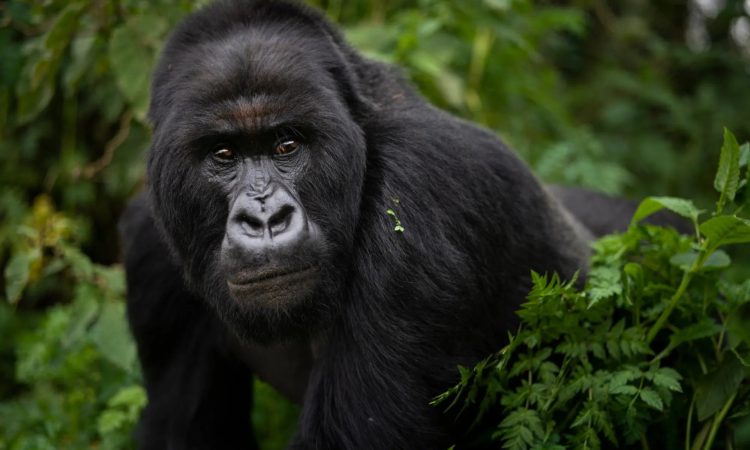
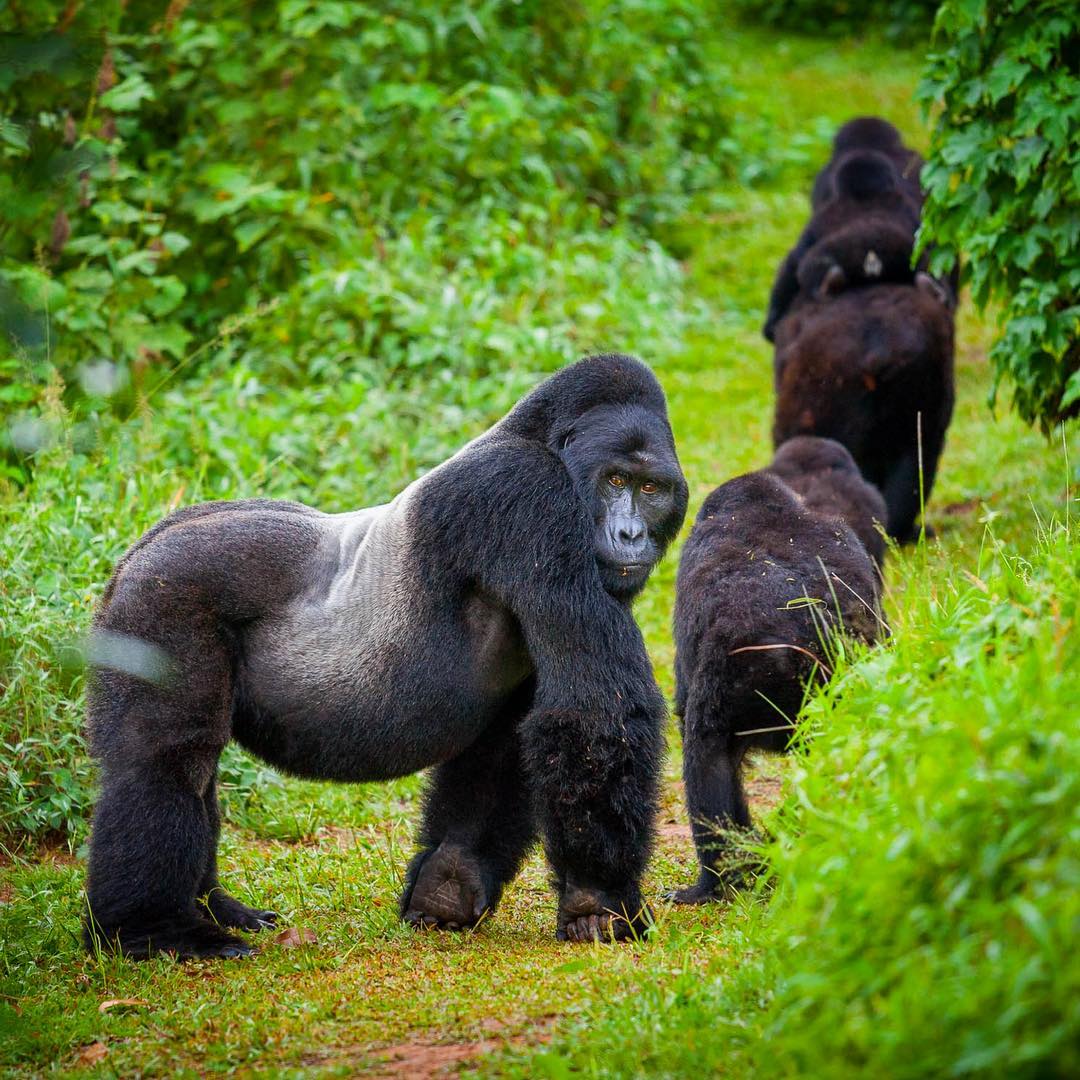
Short answer: Ruhija sector gorilla trekking is Bwindi’s highest-altitude and least-visited sector, perched on the park’s eastern boundary at over 2,300 metres. Treks here are more demanding than in Buhoma or Rushaga — steep ridges, bamboo zones, cooler misty forest — and the reward is a quieter trailhead, exceptional birding, and a genuine sense of wilderness. It suits fit trekkers and birders more than casual visitors.
Ruhija is the sector travellers discover after they have looked at the obvious options. Buhoma draws the first-timers, Rushaga holds the most gorilla groups, Nkuringo has the reputation for sheer physical difficulty — and Ruhija quietly offers something none of the others quite match: the same one hour with the same habituated mountain gorillas, in the most atmospheric forest in Bwindi, with fewer people around you.
That trade-off is the whole story of this sector. Ruhija gives you altitude, mist, birds and solitude. It asks for fitness and a willingness to accept that the access road is one of the more demanding in the park. This guide covers what trekking here is actually like, which gorilla families live in the sector, why birders treat it as a destination in its own right, and who should choose Ruhija over the alternatives. If you are still deciding between sectors, start with the Uganda gorilla trekking hub for the wider comparison. Permit fees, categories and low-season tariffs are kept current on the gorilla permits Uganda page.
Ruhija sector at a glance
- Park: Bwindi Impenetrable National Park, eastern sector
- Issuing authority: Uganda Wildlife Authority (UWA)
- Altitude: Over 2,300 metres — the highest of Bwindi’s four trekking sectors
- Gorilla families: Multiple habituated groups within the sector’s allocation, including Bitukura and Oruzogo
- Terrain: Moderate to strenuous — steep ridges, bamboo zones, high-altitude forest
- Nearest airstrip: Kihihi, roughly 1.5–2 hours by road
- Road access from Kabale: Approximately 1.5–2 hours on an unpaved climbing road
- Lodge range: Limited compared with Buhoma and Rushaga, mostly mid-range and community-run
- Birding: One of Africa’s premier forest birding sites, with Albertine Rift endemics
- Maximum visitors: 8 people per habituated gorilla group per day
- Time with gorillas: 1 hour
- Minimum age: 15 years
- Group allocation: Managed by UWA according to the trekking sector and operational arrangements
- Permit conditions: Subject to UWA’s current booking, cancellation and rescheduling rules
Permit fees are set by UWA and vary by traveller category. Current rates are updated on our gorilla permits Uganda page, and UWA periodically revises its tariff structure.
Where is Ruhija and how do you get there?
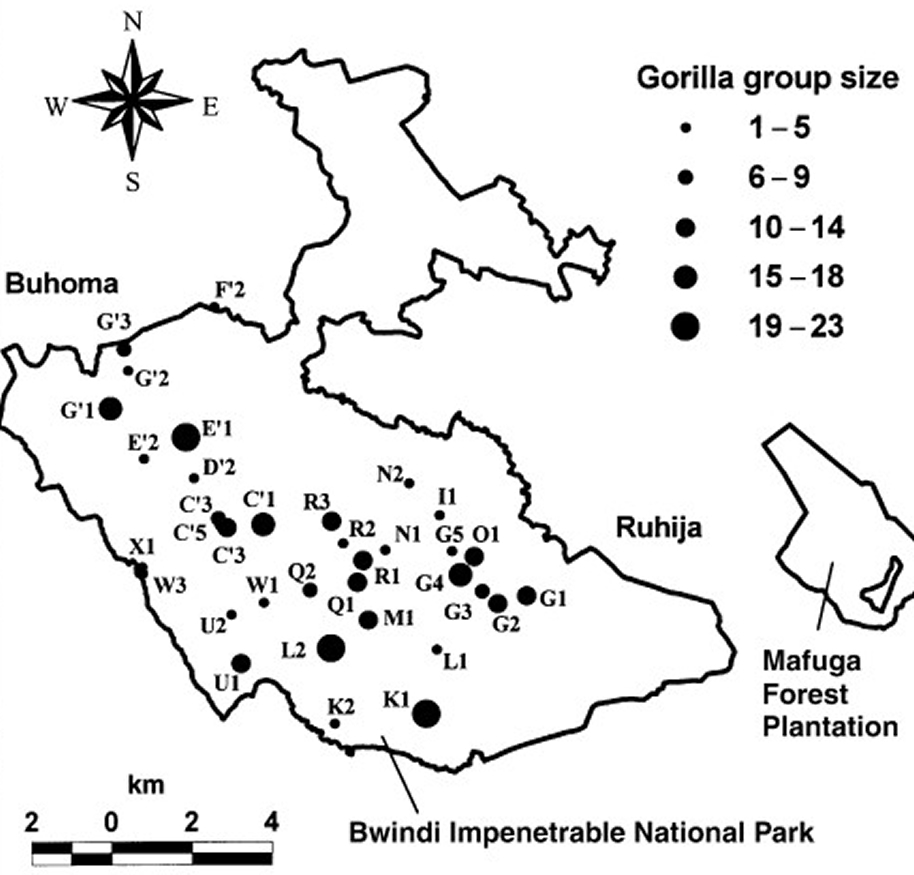
Ruhija sits on the eastern boundary of Bwindi Impenetrable National Park in Kabale District, reached via an unpaved road that climbs north from the main Kabale highway through highland farmland and into the forest. It is roughly 50 to 60 kilometres from Kabale town, and the drive takes approximately 1.5 to 2 hours depending on conditions.
Three practical routes lead to the sector:
- From Kabale by road. The most direct approach — a two-hour drive through the rolling, densely terraced hills of Kigezi. The road is scenic but the surface climbs steeply and turns slippery in the wet season, so a capable 4WD is essential and a driver who knows the route is worth the cost.
- From Kihihi airstrip. Kihihi serves both Buhoma and Ruhija. Transfer from Kihihi to Ruhija takes roughly 1.5 to 2 hours via a forest-edge route, though the connecting road has a reputation for becoming difficult in heavy rain. Flying in is the fastest option but does not avoid the final rough stretch.
- From Buhoma. Roughly two hours by road. Some travellers trek in Buhoma one day and Ruhija the next, which is one of the few ways to see two different Bwindi sectors in a single trip.
There is no shortcut on the final approach. Ruhija is the most demanding sector in Bwindi to reach by road, and this is one of the reasons it stays quiet — the effort filters out casual traffic. If you are building a full Uganda route around a Ruhija trek, our Uganda destinations section maps how the parks connect geographically, and the 5-day Uganda safari shows how a highland trek sits inside a compact itinerary.
What is a Ruhija gorilla trek actually like?
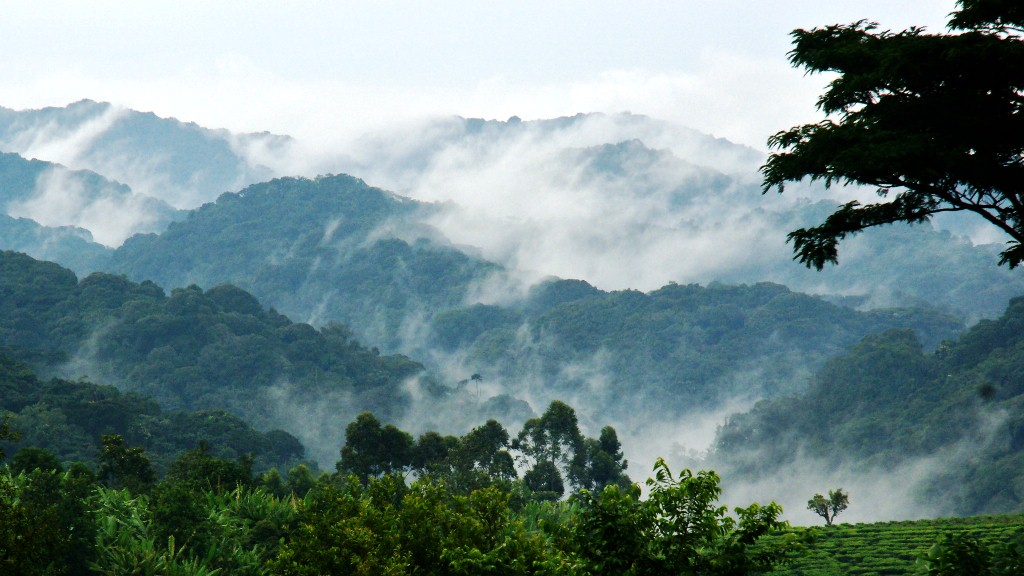
A Ruhija sector gorilla trekking day is the most physically demanding of Bwindi’s four sectors alongside Nkuringo, and the difference is altitude as much as gradient. Treks here often involve significant climbing before reaching the gorilla family, through bamboo zones and along steep forest ridges, in cooler and damper conditions than the lower sectors.
The day follows the standard Bwindi rhythm, but with a harder edge:
The Ruhija trekking day
- Early morning briefing. You arrive at the Ruhija trailhead in cold, often misty conditions, register, and meet your ranger guide. Gorilla group allocation is confirmed here for the day.
- Ranger-led forest climb. The trackers go ahead at first light. Walking time varies from under an hour to several hours, and the approach in Ruhija is more likely to involve sustained ascent than in Buhoma.
- One hour with the gorillas. A strict maximum of one hour in the family’s presence. Cameras, no flash, seven-metre minimum distance, no visiting if you have a cold or other infectious illness.
- Descent to the trailhead. The walk back is usually faster, but wet clay on steep sections demands care. This is where a porter earns their fee.
- Certificate and debrief. UWA issues a trekking certificate, and your guide will often share background on the family you visited.
Three things make Ruhija harder than the average Bwindi trek. First, the altitude — over 2,300 metres means less oxygen and a quicker fatigue curve for anyone arriving from sea level. Second, the vegetation — dense bamboo and highland forest slow the pace considerably. Third, the family locations — Ruhija’s groups are found at higher elevations than Buhoma’s, which means more climbing before you reach them. None of this is extreme mountaineering, but it is a genuine hike rather than a stroll.
Afraeka tip: Bring a warm layer even in the dry season. Ruhija’s altitude means morning temperatures can sit in the low teens Celsius while Kampala is in the high twenties, and the mist does not burn off until mid-morning. A light waterproof shell and a fleece in your daypack make the briefing far more comfortable, and you will be glad of both if the weather turns during the descent.
Which gorilla families live in Ruhija?
Ruhija holds multiple habituated gorilla families within its sector allocation — the most frequently cited being Bitukura and Oruzogo, with Kyaguliro and Mukiza also present in the sector’s broader group structure. The sector’s families are fewer in number than Rushaga’s, which is why daily permit numbers are more limited and early booking matters more here.
Two of Ruhija’s families are worth knowing by character, because they shape the trekking experience:
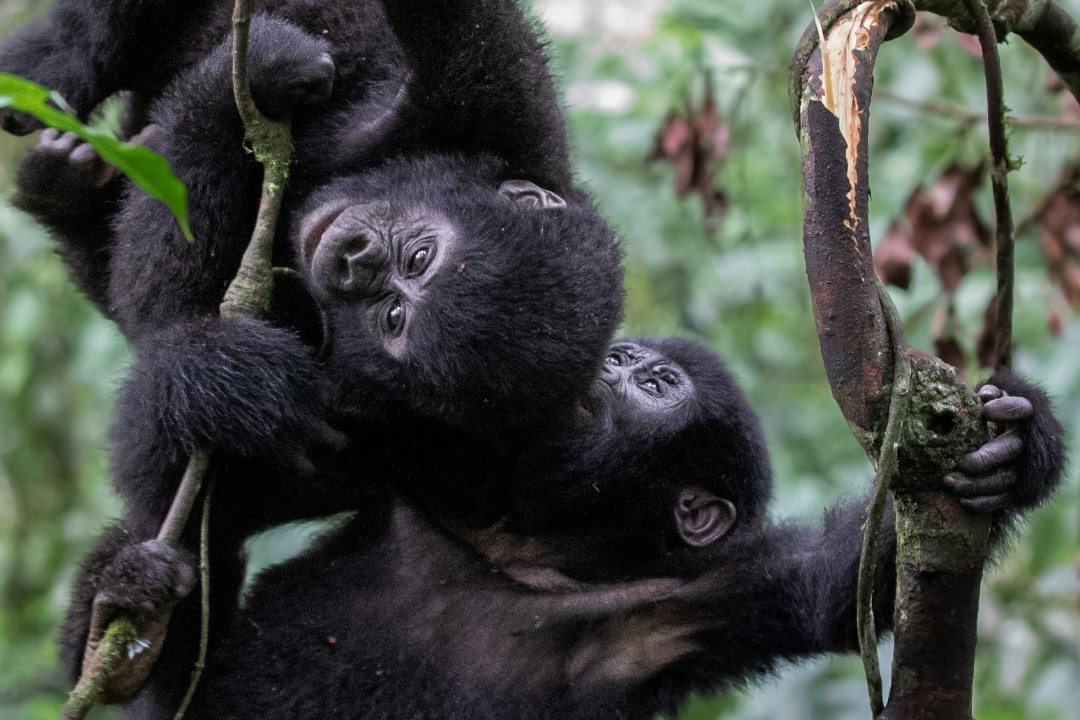
- Bitukura. Named after the Bitukura River where the group was first sighted, habituated between 2007 and 2008. It is widely described as one of the calmer gorilla families in Bwindi, with several silverbacks living alongside each other — a relatively unusual dynamic that researchers have followed closely.
- Oruzogo. Led by silverback Tibirikwata, opened to tourism in 2011, and known for its energetic juveniles and larger group size. It is frequently described as one of the livelier families in the park, which makes for excellent photographic opportunities when the younger gorillas are active.
What matters practically is not which family you are assigned to but how the assignment process works. Groups are allocated by UWA according to the trekking sector and operational arrangements, and the final group is confirmed at the morning briefing. You will know your sector in advance because it is on your permit; you will learn your group on the day. Ruhija’s smaller family count means fewer parallel trekking groups on the trail, which is part of why the sector feels quieter.
If you want broader detail on how families differ across Bwindi, our primate tracking experiences section covers the wider picture.
Why do birders choose Ruhija?
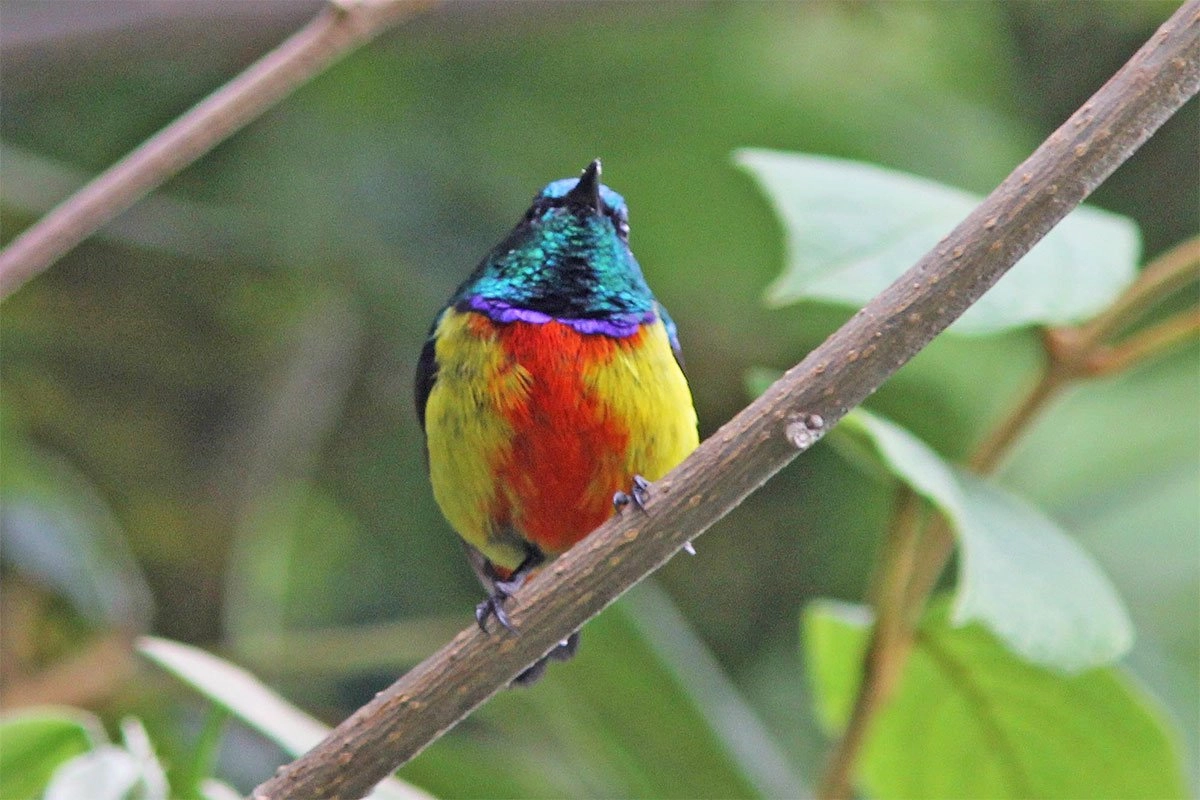
Ruhija is one of the premier forest birding sites in Uganda and one of the top birding destinations in Africa, and this is not a secondary benefit to the sector — for many visitors it is the primary reason to come. The sector’s altitude and forest type support species that do not occur lower in Bwindi, which makes it the only place in Uganda to reliably find several key targets.
The species birders come for include Shelley’s crimsonwing, Grauer’s rush warbler, and the African green broadbill, alongside a broader list of Albertine Rift endemics. The Bwindi Birding Centre operates from the sector and provides guides specifically trained in forest birding, which matters because many of these species are heard far more often than they are seen without a specialist’s ear.
Practically, this makes Ruhija the strongest sector for a combined trek-and-birding trip. Two nights in the sector allows a full morning of birding before or after your gorilla trek, and the Uganda Tourism Board maintains country-level information on Uganda’s birding regions if you want the wider context. If you are building a birding-focused itinerary, our adventure hiking section covers the wider trail and forest options in south-western Uganda.
Where should you stay in Ruhija?
Accommodation in Ruhija is more limited than in Buhoma or Rushaga, and this is the sector’s clearest practical constraint. There is no equivalent of Buhoma’s wide lodge spread, so if you want a specific property you should confirm it at the same time you confirm your permit.
The options fall into three groups:
- Mid-range forest camps. Several well-run camps sit along the forested hills of the sector, offering en-suite cottages, grass-thatched roofs, and views toward the Virunga Volcanoes on clear days. These are typically a 10–15 minute transfer from the Ruhija briefing point.
- Community-run facilities. Ruhija Gorilla Friends Camp and similar community properties offer basic but comfortable accommodation at the sector boundary. These are the value option and put money directly into the local community.
- Small lodges and guesthouses. A handful of smaller properties operate in and around Ruhija village, some with the option of assisting guests with permit organisation and trekking preparation.
Because Ruhija is sometimes used as a one-night stop on a larger Bwindi circuit — a night for birding before moving to another sector for trekking — some properties are geared toward short stays rather than multi-night comfort. If you are staying two or three nights, it is worth confirming what the lodge offers in the way of meals, hot water and power, because the sector’s infrastructure is thinner than Buhoma’s.
Our 3-day Uganda gorilla safari is built around a confirmed permit and can be adapted to a Ruhija trek, and the trips page shows the full range of formats if you want to see how a Ruhija stay fits into a longer route.
Is Ruhija the right sector for you?
Ruhija is the right sector if you want fewer people at the trailhead, the most atmospheric highland forest in Bwindi, and the strongest birding of any sector. It is also the right sector if you are a fit, experienced traveller who values wilderness over infrastructure and is willing to trade an easier drive for a quieter trek.
It may not be the right sector if:
- You want the least demanding terrain. That is Buhoma. Ruhija’s altitude and gradients are closer to Nkuringo.
- You want a wide choice of lodges. Ruhija’s accommodation is limited. Buhoma and Rushaga both offer far more.
- You are travelling as a large group. Ruhija has fewer habituated families than Rushaga, so the eight-visitor daily cap bites sooner. Large parties have better odds in Rushaga.
- You want the easiest access. The final road into Ruhija is the most demanding in the park, particularly in the wet season.
- You are booking at short notice in peak season. Fewer families means fewer permits, and Ruhija’s allocation can close early for specific dates.
There is no wrong sector in Bwindi. Each delivers the same one hour with the same habituated mountain gorillas under the same UWA rules. The differences are terrain, access, lodging, demand and atmosphere — and for travellers who have already trekked once and want a different experience the second time, Ruhija is often the answer.
Common mistakes when planning a Ruhija trek
Most of what goes wrong with Ruhija bookings comes down to the same handful of errors, and all of them are avoidable with one careful planning conversation.
- Underestimating the access road. The final climb into Ruhija is steep, unpaved and slippery in rain. A 4WD is not optional, and a driver unfamiliar with the route will slow the journey considerably.
- Assuming Buhoma-level lodges. Ruhija’s accommodation is thinner. Confirm your lodge at the same time as your permit.
- Not preparing for altitude. Over 2,300 metres means less oxygen. Build in a buffer day if you are arriving from sea level, and do not plan a Ruhija trek the morning after a long-haul flight.
- Skipping the porter. Ruhija’s descents are where porters matter most. Wet clay on steep gradients is where unassisted trekkers fall.
- Not building in a birding morning. Ruhija’s birding is world-class and the sector’s guides are specialists. If you are coming this far, an extra morning is rarely regretted.
- Assuming a short trek. Ruhija’s families are found at higher elevations. The approach is often longer and steeper than in Buhoma.
- Forgetting the minimum age. Trekkers must be 15 or older. This is enforced and it affects group composition for families.
Can one permit cover two people?
No. One permit covers one person for one trek, and this is why Ruhija’s smaller family count has practical consequences. With fewer habituated groups than Rushaga and the same eight-visitor daily cap per group, a party of four needs four permits in Ruhija on the same date — a harder ask than in a sector with more parallel trekking groups.
The eight-visitor daily cap per habituated gorilla group is a headcount. Ruhija’s limited allocation means a party of six or more is usually advised to consider Rushaga, which has the largest concentration of habituated groups in Bwindi. Staying in a sector with more groups is almost always preferable to splitting a family across two trekking days.
Once you have your permits, the gorilla group you actually visit is allocated according to the trekking sector, with final group allocation managed by UWA on the morning of the trek. You will know your sector in advance because it is on your permit; you will learn your group at the briefing alongside everyone else.
Afraeka field note: A couple who had trekked in Buhoma the previous year asked us to arrange a second trek and specifically requested Ruhija. They were experienced hikers and knew what they were taking on. What they had not anticipated was the birding. They added a morning with a Bwindi Birding Centre guide before their trek, expecting it to be a pleasant extra. They came back describing the four hours of forest birding as the best part of the whole trip — not instead of the gorillas, but alongside them. We now suggest a birding morning to every Ruhija client, and roughly half take it. Almost none regret it. The sector’s altitude and forest type mean species you simply will not see lower in Bwindi, and the guides hear birds the rest of us walk straight past.
A question that shows up regularly on TripAdvisor’s Uganda forum and on r/Uganda is some version of: “Is Ruhija worth the harder drive, or should I just go to Buhoma?” The honest answer depends on what you want. If you want the easiest trek, the widest lodge choice and the shortest transfer, Buhoma wins. If you want a quieter trailhead, highland forest atmosphere and birding that justifies the trip on its own, Ruhija is the better sector — and the harder road is part of what keeps it that way.
Frequently asked questions about Ruhija sector gorilla trekking
How difficult is gorilla trekking in Ruhija?
Ruhija is one of Bwindi’s two most demanding sectors, alongside Nkuringo. Treks involve significant climbing through bamboo zones and high-altitude forest, often before reaching the gorilla family. The altitude of over 2,300 metres reduces oxygen and quickens fatigue. It is a genuine hike rather than a stroll, and a reasonable level of cardiovascular fitness is recommended.
How do you get to Ruhija sector?
The most direct route is by road from Kabale, roughly 1.5 to 2 hours on an unpaved climbing road. Kihihi airstrip serves the sector with a transfer of roughly 1.5 to 2 hours via a forest-edge route. Ruhija can also be reached from Buhoma in about two hours by road, which makes a two-sector trek possible on a single trip.
Which gorilla families are in Ruhija?
Ruhija holds multiple habituated families within its sector allocation, most commonly cited as Bitukura and Oruzogo, with Kyaguliro and Mukiza also present in the sector’s broader group structure. Bitukura is known for its calm temperament and multiple silverbacks, while Oruzogo is known for its energetic juveniles and larger group size.
Why is Ruhija good for birding?
Ruhija’s altitude and forest type support species that do not occur lower in Bwindi, making it one of Africa’s premier forest birding sites. Key targets include Shelley’s crimsonwing, Grauer’s rush warbler and the African green broadbill, alongside a broader list of Albertine Rift endemics. The Bwindi Birding Centre operates from the sector with specialist forest guides.
How far in advance should you book Ruhija?
Ruhija has fewer habituated families than Rushaga, so daily permit numbers are more limited. Book three to six months ahead for peak-season dates, and six to twelve months ahead if you are travelling as a group of four or more. Early booking matters more here than in sectors with larger allocations.
What should you pack for a Ruhija gorilla trek?
Bring a warm layer and a waterproof shell regardless of season — Ruhija’s altitude means cold, misty mornings even when the rest of Uganda is warm. Sturdy waterproof boots, gaiters, long trousers, gardening gloves for nettles, a daypack with water, and binoculars if you intend to bird. Hire a porter and let them carry the pack on the steeper sections.
Is Ruhija suitable for older travellers?
Ruhija is better suited to trekkers with reasonable fitness, because of the altitude and gradients. Older travellers who hike regularly often do well here, but anyone with heart or respiratory conditions should discuss the altitude with a doctor before booking. Buhoma is the more forgiving sector for trekkers who want a less demanding day.
Can I combine Ruhija with Buhoma trekking?
Yes, and it is one of the few ways to see two different Bwindi sectors on a single trip. The drive between Buhoma and Ruhija takes roughly two hours, so a two-night stay split across the sectors is workable. Note that each trek requires its own permit, and permits are non-transferable between sectors.
Where should you stay in Ruhija?
Ruhija’s accommodation is more limited than Buhoma or Rushaga. Options include mid-range forest camps along the sector’s hills, community-run facilities such as Ruhija Gorilla Friends Camp, and a handful of smaller lodges and guesthouses in and around Ruhija village. Confirm your lodge at the same time as your permit, because the sector’s capacity is thinner.
Considering Ruhija?
Send us your dates and party size, and we will check Ruhija availability alongside Buhoma, Rushaga, Nkuringo and Mgahinga in one pass — so you can see whether the highland sector fits your fitness, your itinerary and your dates. We can also add a birding morning with a specialist forest guide. No price figures until we know your route, because the permit is only one line of the total.
About the author: Victoria Kayaga is a Ugandan-born safari specialist and the founder of Afraeka Adventures, based in Kampala. She has planned gorilla trekking itineraries across Bwindi’s four sectors and Mgahinga for years, and she has walked the Ruhija trail in every season. More about Victoria.
Keep planning
- Gorilla permits Uganda — fees and booking
- Uganda gorilla trekking hub
- Uganda destinations
- 5-day Uganda safari
- 3-day Uganda gorilla safari
- Primate tracking experiences
- Adventure hiking
- All Afraeka trips