Quick answer: Murchison Falls National Park is Uganda’s premier sport fishing destination. Anglers target Nile perch — which can exceed 100 kg — tigerfish, Nile catfish and several other species on the Victoria Nile below the thundering falls. You need a UWA sport fishing permit (US$50/day or US$150 for four days) plus park entry, and all fishing inside the park is strictly catch and release. The fishing can be combined with game drives, the famous Nile boat cruise to the falls, and chimpanzee tracking in Budongo Forest.
- Location
- Northwestern Uganda, Victoria Nile within Murchison Falls NP
- Target species
- Nile perch, tigerfish, vundu catfish, semutundu catfish, tilapia, barbel
- Best fishing areas
- Below the falls, Paraa area, Nile delta toward Lake Albert
- Permit
- US$50/day or US$150 for 4 days + US$40/day park entry
- Method
- Catch and release only (rod and line)
- From Kampala
- 5–6 hours by road, or charter flight to Pakuba airstrip
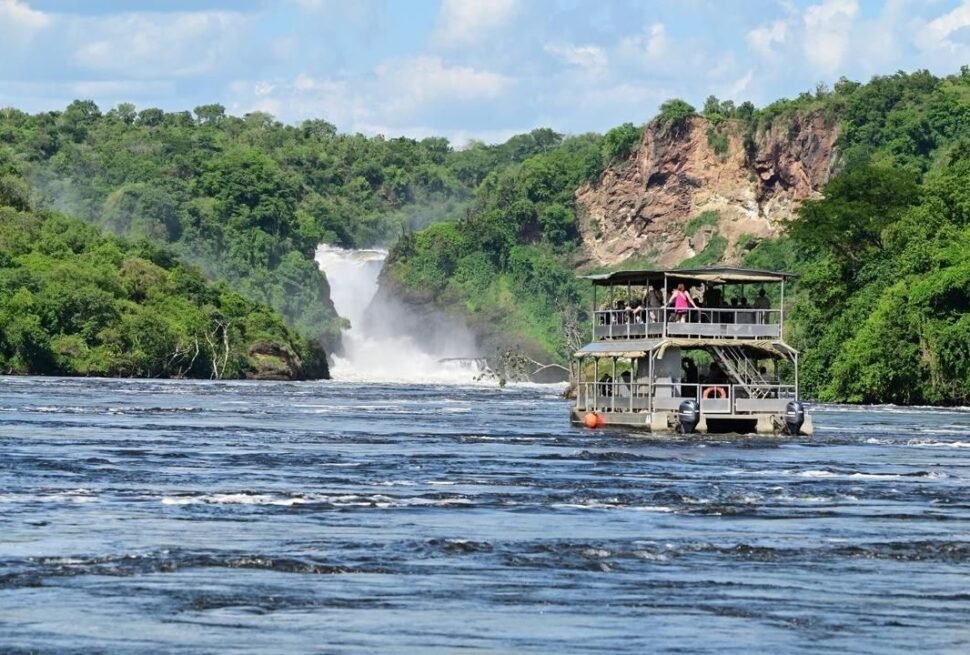
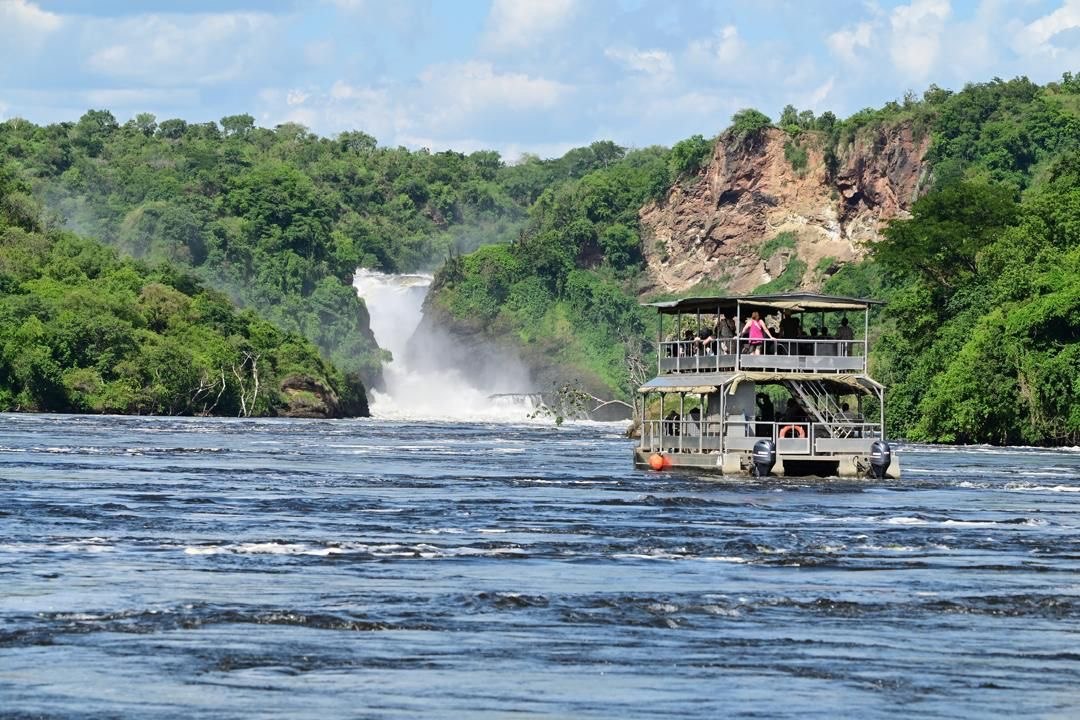
At Murchison Falls, the entire Victoria Nile forces itself through a 7-metre gap in the rock and plunges 43 metres into a churning pool. The fast, oxygen-rich water below the falls attracts large predatory fish in concentrations rarely found elsewhere in Africa. Nile perch, some exceeding 100 kg, feed in the turbulent water alongside aggressive tigerfish and powerful catfish. Add elephants, giraffes and lions on the riverbanks and hippos surfacing near your boat, and you have one of the most extraordinary fishing settings on the continent.
The fishing areas
Below the falls (the plunge pool)
The water immediately below the falls is the most famous fishing spot in Uganda. The violent current creates deep, aerated pools where Nile perch grow very large. Fishing here is typically from rocks or the bank on the north side, guided by a UWA ranger who knows the safe casting positions. The spray from the falls keeps everything wet, so wear waterproof gear and shoes with excellent grip.
This is heavy-tackle territory. Nile perch in this area are powerful and the current is fierce. Bring your strongest rod, heavy braided line and a shock leader. For lure selection, large deep-diving plugs, heavy spoons and big soft plastics all produce results. Live bait is generally not used in the catch-and-release programme.
The Paraa area
Around Paraa — where the main ferry crossing and park headquarters are located — the Nile is broader and calmer. This area offers more relaxed fishing with opportunities to catch Nile perch, catfish, tilapia and barbel. It is easily accessible from the lodges on both the north and south banks.
Fishing from a boat in the Paraa area lets you cover more water and target structure (submerged trees, rock ledges, current breaks) where fish hold. This is a good option for anglers who prefer boat-based fishing or who find the terrain below the falls too challenging.
The Nile delta (toward Lake Albert)
Downstream of Paraa, the Nile broadens into a wetland delta before entering Lake Albert. This is quieter fishing — fewer visitors, different habitat (papyrus channels, lily pads, sandy banks) and good numbers of tigerfish and catfish. Access is usually by boat from Paraa. It is an excellent area for anglers who want variety and solitude.
Lake Albert shore (within the park)
The park boundary extends to the Lake Albert shore in some areas. Lake Albert holds large Nile perch and tigerfish, and its waters are less fished than the river itself. Shore-based fishing or a boat trip on the lake can be arranged through park guides, though this is less common than the river fishing.
Species guide
Nile perch (Lates niloticus)
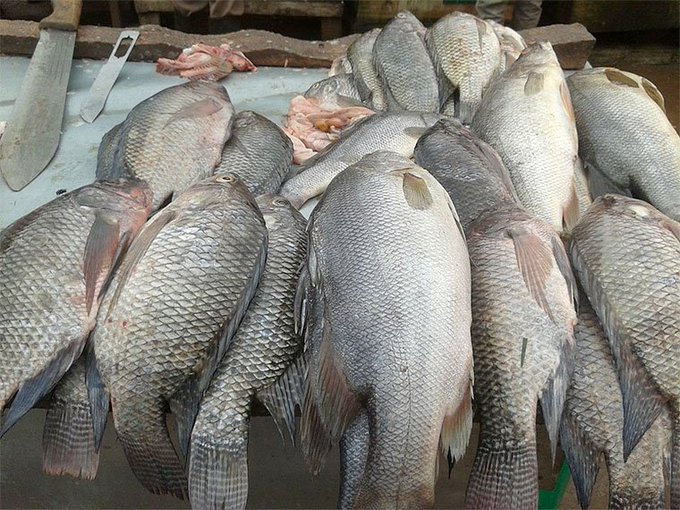
The headline species. Nile perch in the waters below Murchison Falls can exceed 100 kg, though fish of 10–40 kg are more common catches. They are powerful fighters, especially in fast current. Below the falls, perch feed aggressively in the turbulent water, making it one of the most exciting freshwater lure-fishing experiences in Africa. Heavy tackle is essential.
Tigerfish (Hydrocynus vittatus)
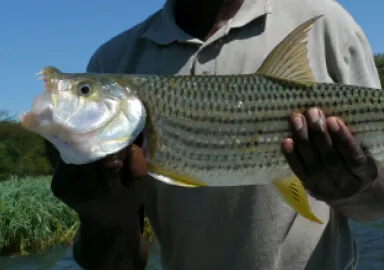
Tigerfish are fast, explosive and famous for their sharp teeth. They fight hard for their size (typically 1–5 kg in the Nile, occasionally larger) and often leap clear of the water when hooked. Wire traces are essential — their teeth cut through monofilament and fluorocarbon easily. Tigerfish are found throughout the Nile within the park, particularly in faster stretches and around structure.
Catfish
Several catfish species inhabit the Nile at Murchison Falls:
- Vundu catfish (Heterobranchus longifilis): Can grow very large — over 50 kg. Strong, bottom-hugging fighters.
- Semutundu catfish (Bagrus docmak): A sleek, predatory catfish that takes lures and bait.
- Electric catfish (Malapterurus electricus): Present but rarely targeted — they deliver an electric shock when handled.
Tilapia, barbel and other species
Various tilapia species, barbus and smaller fish provide action on lighter tackle and are often caught while targeting the bigger species. They are fun on a light spinning or fly rod and can keep you busy between perch strikes.
Best time to fish at Murchison Falls
Fishing at Murchison Falls is possible year-round, but conditions vary:
- Dry season (December–February, June–September): Lower, clearer water levels improve fishing below the falls. Fish concentrate in deeper pools. Easier bank access. This is the peak fishing season.
- Wet season (March–May, October–November): Higher water levels and stronger current. The river carries more sediment, reducing visibility. Fishing is still possible but harder. The delta area can be very productive as fish spread into flooded areas.
Tackle recommendations for Murchison Falls
For detailed gear advice, see our complete fishing gear guide for Uganda. In brief:
- Nile perch: Heavy spinning or baitcasting rod (30–80 lb class). Strong braided line (50–80 lb) with a heavy fluorocarbon or mono shock leader (80–100 lb). Large lures: deep-diving plugs (Rapala X-Rap Magnum or similar), heavy spoons, large soft plastics.
- Tigerfish: Medium-heavy spinning rod. Braided line (20–40 lb) with wire trace. Spinners, small plugs and spoons.
- Catfish: Heavy rod. Dead bait (where permitted) or large lures fished deep.
Safety on the Nile
The Nile at Murchison Falls is a wild river with real hazards:
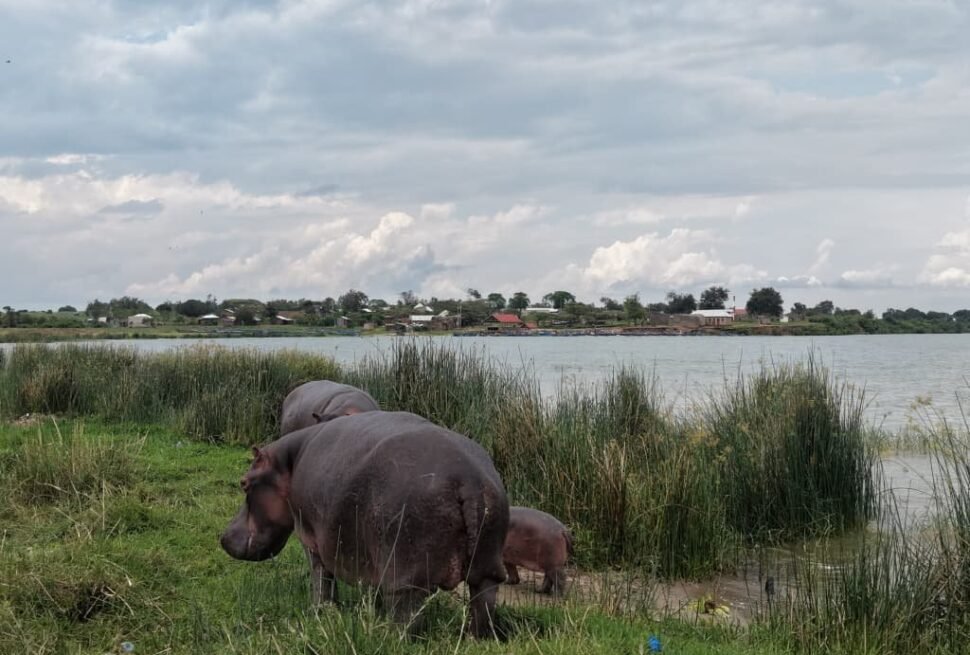
- Hippos: Large pods inhabit the river. Never approach hippos in a boat or on foot. Your guide will keep safe distances.
- Crocodiles: Nile crocodiles are present throughout. Never wade into the water, even at the edge. Fish from boats, rocks or the bank.
- Fast current: Below the falls, the current is extremely powerful. Do not attempt to wade or swim. Secure all loose equipment.
- Slippery rocks: The rocks below the falls are perpetually wet from spray. Wear shoes with excellent grip (no flip-flops).
- Always fish with a ranger or licensed guide. This is mandatory inside the park and essential for your safety.
Combining fishing with a Murchison Falls safari
Murchison Falls is one of Uganda’s top wildlife parks. A typical fishing safari combines:
- Morning fishing session (5:30–10:00 AM, when fish are most active).
- Afternoon Nile boat cruise to the base of the falls — hippos, crocodiles, elephants, buffaloes and spectacular birdlife along the way.
- Game drives on the north bank for lions, giraffes, elephants, hartebeest and Uganda kob.
- Chimpanzee tracking in Budongo Forest (on the park’s southern edge).
- Top-of-the-falls hike — walk to the cliff edge and look down into the gorge.
See our 3-Day Murchison Falls Safari and Murchison Falls safari guide.
Where to stay
- Budget: Red Chilli Rest Camp (north bank), UWA bandas. From US$30–60.
- Mid-range: Paraa Safari Lodge (historic lodge at the ferry crossing), Pakuba Safari Lodge. From US$150–300.
- Luxury: Chobe Safari Lodge, Baker’s Lodge (both on the south bank with direct Nile access). From US$350–600.
Some lodges (notably Baker’s Lodge) can arrange fishing directly from the lodge, which is very convenient for dawn sessions.
Permits and fees
You need two permits: a UWA park entry permit and a UWA sport fishing permit. For full details, fees and how to buy, read our Uganda sport fishing permit guide.
Frequently asked questions
How far is Murchison Falls from Kampala?
About 305 km, which takes 5–6 hours by road. Most visitors stop at Ziwa Rhino Sanctuary (for rhino tracking) on the way. Charter flights to Pakuba airstrip take about 1.5 hours from Entebbe.
Can beginners fish at Murchison Falls?
Yes. Experienced guides will help with technique, casting and tackle. The terrain below the falls is physically demanding (wet rocks, steep paths), but the Paraa area is more accessible. Let your operator know your experience level and they will match the day to your ability.
Is fishing equipment available at the park?
Some guides provide basic tackle, but serious anglers should bring their own. Confirm with your operator what is included. For gear advice, see our fishing gear guide.
Can I eat the fish I catch?
No. All fishing inside Murchison Falls National Park is strictly catch and release. Fish must be handled carefully and returned to the water as quickly as possible.
Want to fish the Nile at Murchison Falls? We arrange permits, guides, lodges and game drives for fishing safaris from 3 to 7 days.