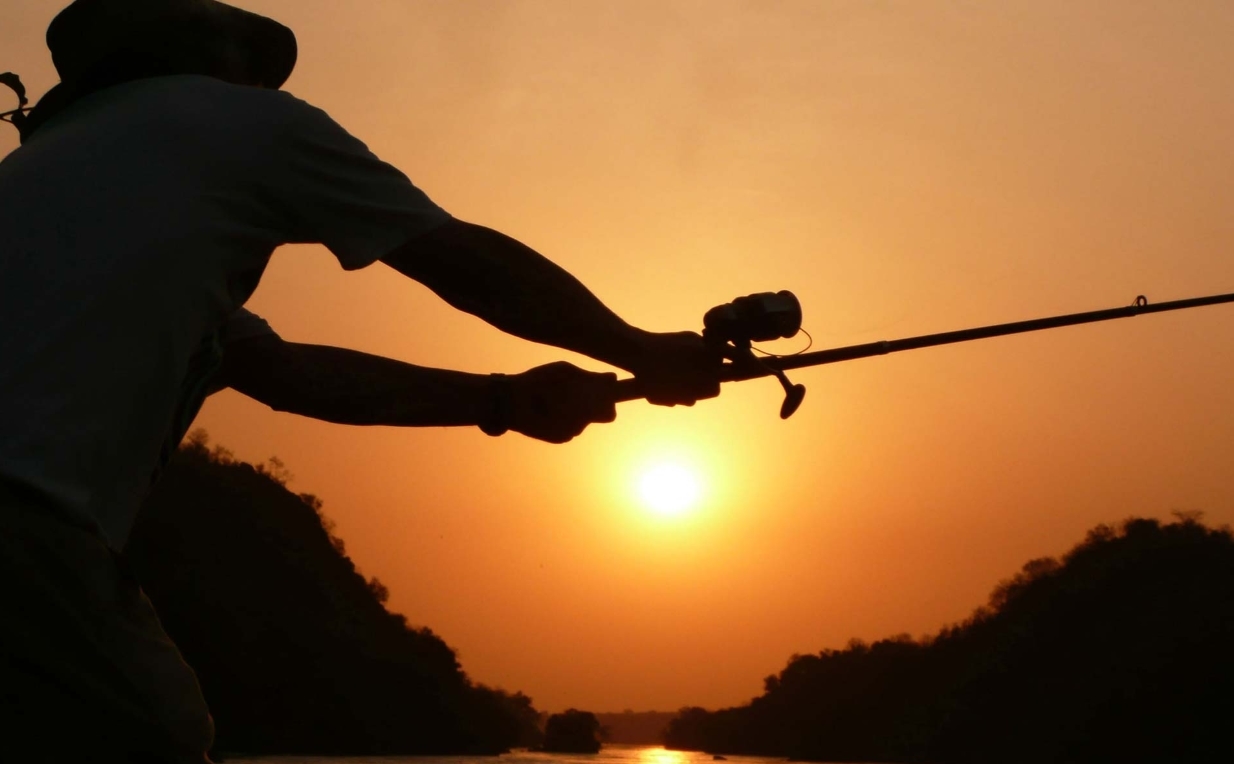
Quick answer: For Nile perch fishing in Uganda, bring a heavy spinning or baitcasting setup rated for 30–80 lb class with strong braided line and a shock leader. Add a lighter rod for tigerfish and tilapia, wire traces for all toothy species, long-nose pliers, a lip grip, and sturdy shoes for wet rocks. Pack sun protection, long-sleeved clothing and a rain jacket. Some charter operators provide tackle (especially on Lake Victoria), but for Murchison Falls and upcountry fishing, bringing your own gear is strongly recommended.
- Primary rod
- Heavy spinning or baitcasting, 30–80 lb class
- Main line
- Braided, 50–80 lb for Nile perch; 20–40 lb for tigerfish
- Leader
- Heavy fluorocarbon or mono shock leader (80–100 lb) for perch; wire for tigerfish
- Lures
- Large plugs, heavy spoons, big soft plastics, spinners
- Essential tools
- Long-nose pliers, lip grip, hook cutters, wire traces
- Footwear
- Sturdy shoes with excellent grip for wet rocks and boat decks
Uganda’s freshwater fisheries range from the thundering rapids below Murchison Falls to the calm, island-dotted waters of Lake Victoria and the highland lakes of the southwest. Each environment demands different tackle, and the fish themselves — powerful Nile perch, razor-toothed tigerfish, massive catfish — test equipment in ways that familiar European or North American freshwater species rarely do. This guide covers everything you need to pack, species by species and water by water, so you arrive prepared.
Tackle for Nile perch
Nile perch are the main attraction for most visiting anglers. Fish of 10–40 kg are common catches, and specimens exceeding 100 kg are caught at Murchison Falls. They fight hard, especially in fast current, and will destroy light tackle.
Rod
A strong spinning rod or baitcasting rod rated for 30–80 lb class. Length: 6.5–7.5 feet is a good all-round choice. You need backbone to turn a big perch in current, but enough tip sensitivity to feel takes on lures. A two-piece rod packs more easily for air travel.
Reel
A heavy-duty spinning reel (size 6000–10000 depending on brand) or a baitcasting reel with a strong, smooth drag system. You need at least 200 metres of line capacity. The drag must handle sustained runs from heavy fish in fast water. Saltwater-grade reels work well — they are built for the punishment.
Line
Braided main line in the 50–80 lb range. Braid’s thin diameter cuts through current and gives direct contact with heavy fish. Always add a shock leader — 80–100 lb fluorocarbon or monofilament, 1.5–2 metres long — to protect against abrasion from rocks, submerged timber and the rough mouth plates of big perch.
Lures
- Deep-diving plugs: Rapala X-Rap Magnum, Halco Laser Pro or similar deep-running hard lures. Size 14–20 cm. Natural baitfish colours (silver, blue-silver, green-gold) work well. These are the go-to for trolling and casting into deep pools.
- Heavy spoons: 60–120 g casting spoons. Chrome and gold are reliable colours. Spoons are versatile — cast them into rapids or retrieve them through calm water.
- Large soft plastics: Paddle-tail shads in 15–20 cm sizes on heavy jig heads (40–100 g). Effective when fish are holding deep or in slower current.
- Poppers and stick baits: For surface action in calmer areas. Exciting strikes, but less consistent than subsurface lures at Murchison.
Terminal tackle
- Heavy-duty swivels and split rings (rated 80 lb+).
- Replacement treble hooks (strong, corrosion-resistant).
- Extra leader material.
- Crimps and crimping tool if using wire or heavy leader.
Tackle for tigerfish
Tigerfish are found throughout the Nile system and in Lake Albert. They are explosive fighters that leap, shake and cut lines with razor-sharp teeth. Typical catches are 1–5 kg, with larger fish possible.
- Rod: Medium-heavy spinning rod, 6–7 feet. Fast action for sharp hook sets.
- Reel: Spinning reel size 3000–5000 with a responsive drag.
- Line: Braided line 20–40 lb.
- Leader: Wire trace — absolutely essential. Tigerfish teeth cut through everything else. Use 20–30 lb single-strand wire or knottable wire, 20–30 cm long.
- Lures: Spinners (Mepps Aglia, Blue Fox), small plugs (Rapala Countdown 7–9 cm), small spoons. Bright colours (red, yellow, chrome) often work well.
Tackle for catfish
Vundu and semutundu catfish in the Nile can exceed 50 kg. They are bottom feeders and powerful fighters that test heavy tackle.
- Rod: Heavy spinning or baitcasting rod (same as Nile perch setup works well).
- Line: Heavy braid (50–80 lb) with a strong leader.
- Method: Large lures fished deep, or dead/cut bait where permitted. Heavy jigs and large soft plastics bounced along the bottom.
Tackle for tilapia and lighter species
Tilapia, barbus, lungfish and other smaller species provide excellent sport on light tackle. They are found throughout Uganda’s lakes and rivers.
- Rod: Light to medium spinning rod, 5.5–6.5 feet.
- Line: Mono or braid in the 6–15 lb range.
- Methods: Small hooks with bread, worm or maize for bait fishing. Small spinners and flies for lure fishing. Fly fishing with a 5–7 weight rod works well in clear streams and lake margins.
Essential tools and accessories
- Long-nose pliers: For removing hooks safely, especially from toothy species.
- Hook cutters or side cutters: For cutting hooks that are deeply embedded — safer than forcing them out.
- Lip grip / fish gripper: For safely holding fish during unhooking and photography (essential for catch and release).
- Landing net or cradle: Not always practical in all locations but useful on boats.
- Tackle bag or waterproof box: Keep lures, hooks, swivels and leaders organised and dry.
- Polarised sunglasses: Essential for seeing fish and structure in the water. They also protect your eyes from glare and stray hooks.
- Head torch: For early-morning starts and late packing. LED with red-light mode is ideal.
- Scales and measuring tape: For recording catches. Many anglers photograph big fish with a measure for identification.
- Camera or waterproof phone case: You will want photos. Protect electronics from spray, rain and submersion.
Clothing and personal items
- Lightweight long-sleeved shirts: UPF-rated if possible. Protects from sun and insects.
- Long trousers: Quick-drying, lightweight. Neutral or khaki colours for the parks.
- Wide-brimmed hat: Essential on the water. A chin strap prevents losses in wind.
- High-factor sunscreen (SPF 50+): Water reflection intensifies UV. Reapply regularly.
- Rain jacket: Lightweight and packable. Weather changes quickly, especially near the falls.
- Insect repellent (DEET-based): Mosquitoes and other biting insects are present near all water bodies.
- Sturdy shoes with excellent grip: Closed-toe, non-slip soles. For wet rocks below the falls, shoes with aggressive rubber grip (trail runners or wading boots) are ideal. No flip-flops, no smooth soles.
- Buff or neck gaiter: Sun and spray protection.
Avoid blue and black clothing in savannah parks — these colours attract tsetse flies. Read our safari clothing colour guide for the science behind this.
Travelling with fishing gear
- Rod tube: A hard-shell travel rod tube protects rods in checked luggage. Multi-piece rods (2-piece or 4-piece) are much easier to transport. Some airlines charge an oversized baggage fee for rod tubes — check in advance.
- Airline rules: Hooks, knives and pliers must go in checked luggage, not carry-on. Lures with treble hooks should be stored in a tackle box in checked bags.
- Weight limits on bush flights: Domestic charter flights to airstrips near Murchison Falls (Pakuba, Bugungu) typically have a 15 kg luggage limit per passenger. Pack light fishing gear in a soft bag that fits under the seat. Leave heavy tackle boxes for road trips.
- Customs: There is no duty on personal fishing equipment entering Uganda. Carry gear in its original bag or case with a reasonable quantity of tackle.
Gear by fishing destination
| Destination | Primary target | Key gear |
|---|---|---|
| Murchison Falls | Nile perch, tigerfish, catfish | Heavy rod, strong braid, shock leader, large lures, wire traces, grip shoes |
| Lake Victoria (Entebbe/Ssese) | Nile perch | Heavy trolling rod and reel, deep-diving lures, boat-fishing essentials |
| Jinja / Source of the Nile | Nile perch, tilapia | Medium-heavy rod, lures and bait, boat-fishing essentials |
| Lake Albert | Nile perch, tigerfish | Similar to Murchison — heavy and medium setups |
| Lake Mburo | Tilapia, catfish, barbel | Light-medium rod, small lures and bait, basic tackle |
| Lake Bunyonyi | Tilapia, crayfish | Light rod or hand line, simple bait setup |
Frequently asked questions
Can I rent fishing gear in Uganda?
Some Lake Victoria charter operators provide rods, reels and basic tackle as part of the charter fee. At Murchison Falls and Lake Mburo, most guides have some equipment available, but the quality varies. If you are a serious angler, bring your own gear for the best experience.
Do I need wire traces?
For tigerfish, absolutely — their teeth slice through monofilament, fluorocarbon and even light braid. For Nile perch, a heavy fluorocarbon shock leader usually suffices, but wire can add insurance when fishing around structure.
What line strength should I use for Nile perch?
50–80 lb braided main line with an 80–100 lb shock leader for Murchison Falls and Lake Albert. On Lake Victoria, where fish are often fought from boats in open water, you can go slightly lighter (40–60 lb braid) but still need a strong leader.
Is fly fishing possible in Uganda?
Yes, though it is niche. Tigerfish and tilapia take flies well in the right conditions. A 7–9 weight fly rod covers most situations. The Nile at Jinja and some streams near the parks offer fly-fishing opportunities. Nile perch on fly gear is possible but requires extremely heavy equipment and is not for the faint-hearted.
Not sure what to pack for your fishing trip? Tell us where you plan to fish and we will send specific gear recommendations.