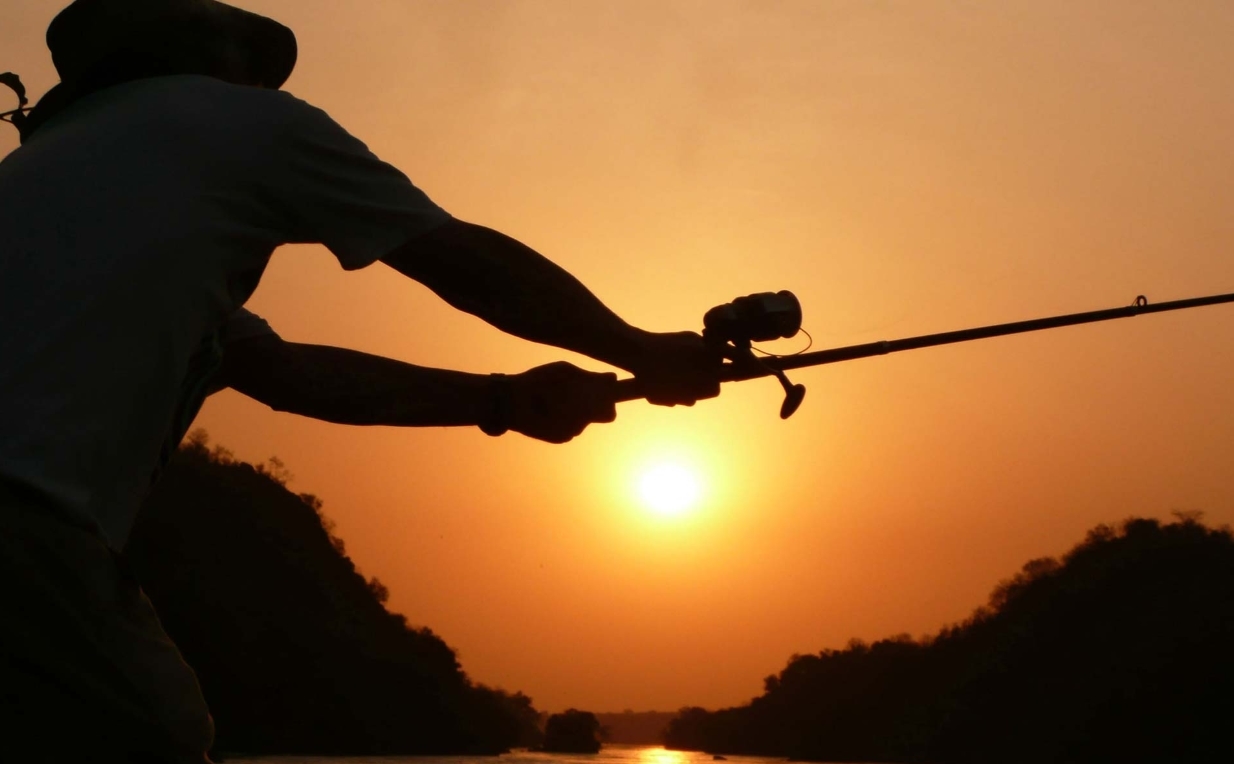
Quick answer: Sport fishing in Uganda’s national parks — including Murchison Falls — is strictly catch and release. All fish must be returned to the water alive so the fishery stays healthy for future anglers and the ecosystem. Good catch-and-release practice means using strong tackle to shorten fights, crushing or removing barbs, keeping fish in or near the water, handling them with wet hands, removing hooks quickly with pliers, and supporting the fish in the current until it swims away strongly. Outside the national parks, catch-and-release practices vary by operator, but responsible anglers and guides increasingly follow the same principles everywhere.
- Where mandatory
- National parks: Murchison Falls, Lake Mburo
- Why
- Protects breeding fish and the fishery’s long-term health
- Key tools
- Long-nose pliers, lip grip, barbless/crushed-barb hooks
- Golden rule
- Minimise time out of water
- Photos
- Quick, horizontal hold, fish supported
- Outside parks
- Varies — most responsible operators practise C&R for large fish
Big Nile perch are old fish. A 50 kg perch might be 20 years old or more, and it produces far more eggs than a younger, smaller fish. Every large fish returned to the water represents thousands of potential offspring and years of accumulated growth that cannot be replaced quickly. That is the fundamental reason sport fishing in Uganda’s protected areas follows a catch-and-release policy: it ensures the same rivers and lakes can provide memorable fishing experiences for decades to come, while supporting the commercial fisheries that millions of Ugandans depend on.
Where catch and release applies
National parks (mandatory)
All sport fishing inside Uganda’s national parks is catch and release. This includes:
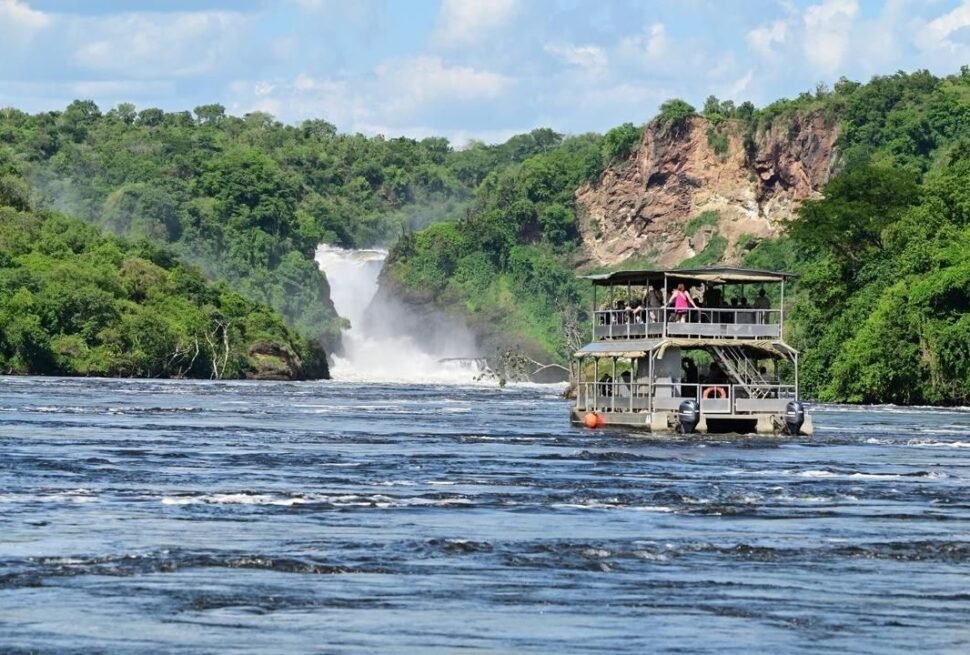
- Murchison Falls National Park: All species (Nile perch, tigerfish, catfish) on the Victoria Nile and the delta area.
- Lake Mburo National Park: All species at the designated fishing sites on Lake Mburo.
The UWA sport fishing permit explicitly requires catch and release. Keeping fish caught inside a national park is illegal and can result in penalties. See our permit guide.
Outside national parks (voluntary but encouraged)
On Lake Victoria, Lake Albert, at Jinja and on other open waters, catch-and-release is not legally required for all species. However, responsible operators and guides increasingly practise it, especially for large Nile perch. The reasoning is simple: big breeding fish are the foundation of the fishery. Removing them weakens the population for everyone — commercial fishermen and sport anglers alike.
Why catch and release matters
- Protects breeding stock: Large fish are the most productive breeders. A single big Nile perch female produces vastly more eggs than several smaller fish combined.
- Maintains the fishery: Healthy fish populations attract sport anglers, who bring tourism revenue that supports local communities and conservation.
- Respects the ecosystem: National parks protect entire ecosystems, including aquatic ones. Fish are part of the food web that supports eagles, kingfishers, crocodiles, otters and other wildlife.
- Enables repeat experiences: A fish released today is a fish that another angler — or you on a return visit — can catch tomorrow.
- Supports Uganda’s reputation: Well-managed catch-and-release fisheries attract international anglers who travel specifically for the fishing, spending money on guides, permits, lodges and safaris.
How to release a fish properly
- Use appropriately strong tackle. Heavy tackle means shorter fights. A fish fought for 2 minutes is far less exhausted than one fought for 15 minutes on light gear. At Murchison Falls, use heavy spinning tackle (30–80 lb class) for Nile perch — see our gear guide.
- Prepare your tools before you cast. Have pliers, a lip grip, unhooking mat (if available) and camera ready before you make the first cast. When a fish comes to hand, every second counts.
- Land the fish quickly. Once hooked, apply steady pressure and bring the fish to hand as efficiently as possible. Prolonged fights exhaust the fish and reduce its survival chances after release.
- Keep the fish in or near the water. If possible, unhook the fish while it is still in the water. If you must lift it out (for unhooking or a photo), minimise the time. A general guideline: no longer out of water than you could hold your own breath.
- Wet your hands before touching the fish. Fish are covered in a protective slime coat that prevents infection. Dry hands strip this coating. Wet your hands thoroughly before any contact.
- Remove the hook quickly with pliers. Long-nose pliers are essential. Grip the hook shank and twist it out in the direction it went in. If the hook is deeply embedded or in a dangerous position (gills, throat), cut the line as close to the hook as possible — the hook will corrode and fall out naturally, which is better than causing internal damage by forcing removal.
- Support the fish horizontally. Never hold a large fish vertically by its jaw — the weight can damage internal organs. Support the fish under the belly and behind the head. For Nile perch, a lip grip controls the fish while you support its body.
- Take photos quickly. Have your camera ready. Lift the fish for the photo, take 2–3 shots, and get it back in the water immediately. If you are fishing with a partner, have them ready with the camera before the fish is lifted.
- Revive the fish before release. Hold the fish gently in the water, facing into the current (or moving it slowly forward in still water). Water flowing over the gills helps the fish recover oxygen. Wait until the fish begins to kick and swim strongly before letting go. Do not just drop it back — it may sink and die if it has not recovered.
Tackle choices that help fish survive
Hooks
- Barbless hooks: The gold standard for catch and release. They penetrate easily, come out cleanly and cause minimal tissue damage. Some lure manufacturers offer barbless versions of their treble hooks.
- Crushed barbs: If barbless hooks are not available, crush the barb flat with pliers. This achieves most of the benefit. Do this before you fish, not after you hook a fish.
- Single hooks vs trebles: Where practical (e.g., on spoons and some soft plastics), replace treble hooks with strong single hooks. Fewer hook points mean less damage and easier release.
Line and leader
- Strong line: Heavy braided line (50–80 lb for Nile perch) allows you to apply pressure and land fish quickly. Light line extends fights and increases exhaustion.
- Strong leader: A heavy shock leader (80–100 lb fluorocarbon or mono) reduces break-offs. A broken-off fish trailing line and a lure is at greater risk than one properly released.
Landing tools
- Lip grip / fish gripper: Controls the fish’s head safely (for both fish and angler) during unhooking. Essential for large Nile perch and absolutely essential for tigerfish (never put fingers near a tigerfish’s mouth).
- Landing net: A knotless mesh net is gentler on fish than a knotted one. Where practical on boats, a net or cradle minimises handling.
Species-specific release tips
| Species | Key release considerations |
|---|---|
| Nile perch | Support horizontally. They are heavy and internal damage from vertical holds is a real risk. Revive in current or moving water. Large perch may need several minutes of revival. |
| Tigerfish | Handle with pliers and lip grip only — never fingers near the mouth. They are resilient and usually revive quickly. Return them promptly. |
| Catfish | Watch for sharp pectoral spines. Hold behind the spines. They are tough fish that generally survive release well. |
| Tilapia | Gentle handling on light tackle. They are delicate compared to predators. Quick release is important. |
Safety when releasing fish
At Murchison Falls, releasing fish near the water brings you close to hippo and crocodile habitat. Follow these rules:
- Always release fish from the bank or rocks, never by wading into the water.
- Follow your ranger’s or guide’s instructions about safe positions.
- If a hippo or crocodile is nearby, move the fish along the bank to a safer spot rather than releasing in a dangerous area.
- On boats, release fish over the side while the boat is stable and the area is clear.
Frequently asked questions
Is all fishing in Uganda catch and release?
Inside national parks (Murchison Falls, Lake Mburo), yes — mandatory. Outside parks (Lake Victoria, Jinja, Lake Albert), rules vary. Most responsible operators encourage catch and release for large fish. Ask your operator before the trip.
Do released Nile perch survive?
When handled properly — short fight, minimal air exposure, careful handling, proper revival — survival rates are high. Studies on catch-and-release mortality in similar species suggest that the vast majority survive when best practices are followed. The biggest risk factors are extended fights on light tackle and prolonged time out of water.
Can I take a photo with my catch?
Yes — quick photos are part of the experience. Have your camera ready, lift the fish horizontally with support, take 2–3 shots and get it back in the water. The whole process should take under 30 seconds out of water.
What if the hook is too deep to remove?
Cut the line as close to the hook as possible. Do not try to pull a deep hook out through the gills or throat — this causes severe, often fatal, internal damage. The hook will corrode and fall out within days or weeks.
Fish responsibly in Uganda. Our guides follow catch-and-release best practice on every trip.