Vaccinations for Uganda are a travel health decision, not a safari planning decision. A licensed operator can tell you what the practical travel picture looks like — what a trekking day involves, what health facilities exist near the parks, and how the trip is structured. It cannot tell you which vaccinations you should have, because that depends on your health history, your itinerary and your risk tolerance — all of which are matters for a travel health professional.
This article is written on that basis. It sets out the process (what to do, when, and what to expect from a travel clinic), the recent change to Uganda’s yellow fever entry requirement, the distinction between vaccinations and malaria medication, and what to carry on the trip. Every health point in what follows should be confirmed with a doctor or travel health clinic — not with an operator, and not with this article.
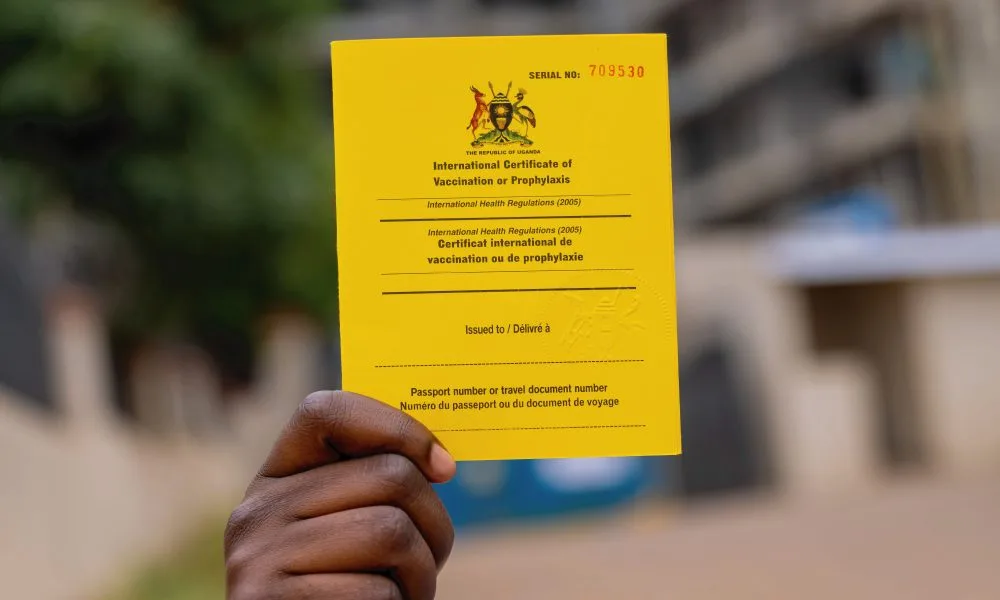
The site’s dedicated post on the yellow fever card at Entebbe Airport covers the documentation side in more detail. This article is the broader picture.
The Short Answer: Book a Travel Clinic
The practical first step is to book an appointment at a travel health clinic, ideally four to six weeks before departure. That window exists for a reason: some vaccination courses require multiple doses spaced over weeks, and some take time to become effective. Leaving it until the week before travel rules out some options and reduces the effectiveness of others.
A travel clinic will typically ask:
- Where you are going in Uganda, and in what order (this matters — risk varies by region and altitude)
- When you are going, and for how long
- What you will be doing (gorilla trekking, safari drives, boating, city time)
- Your vaccination history, including whether you have had yellow fever vaccination before
- Any medications you take, allergies, or health conditions (particularly immune conditions, pregnancy, or anything affecting your response to vaccination)
- Whether you are travelling with children or older travellers, whose needs may differ
The clinic will then discuss what is recommended for your specific trip. What follows is the framework for that conversation, not a substitute for it.
Yellow Fever: A Health Decision, Not Currently an Entry Requirement
Yellow fever is worth understanding clearly, because the rules have recently changed. Uganda has removed the yellow fever certificate entry requirement. As of November 2026, travellers arriving in Uganda are no longer required to show a yellow fever certificate at the border, regardless of the country they are arriving from. This is a change from the previous policy, under which travellers from yellow fever-risk countries were typically required to show a valid certificate.
That change does not make yellow fever irrelevant. A travel clinic may still recommend yellow fever vaccination for your trip on health grounds, depending on your itinerary and risk assessment. Some travellers also choose to carry a valid certificate because certain onward destinations — other countries you may travel to after Uganda — require a yellow fever certificate for entry from a country with yellow fever risk. If you are continuing to another East African country or flying onward, confirm that country’s entry rules separately.
If you do get vaccinated, two practical points apply to the certificate itself.
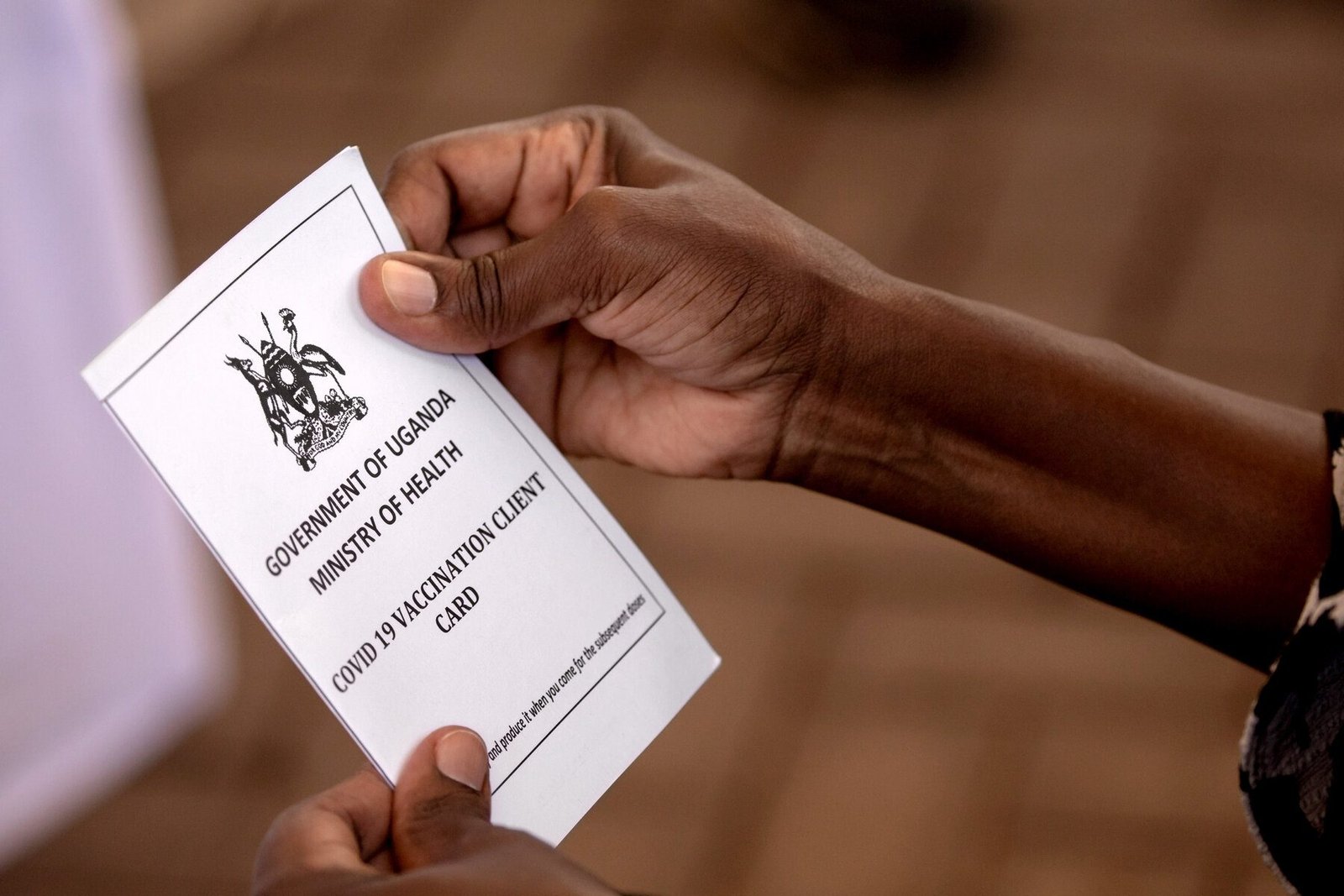
It is a physical document. The certificate is a yellow booklet or card issued by an approved vaccination centre, with the vaccination details filled in and stamped. A digital scan is useful as a backup but is not a substitute for the physical certificate if it is requested at a border.
It should be obtained from an approved centre. Yellow fever vaccination can only be given at designated yellow fever vaccination centres, and the certificate is only valid if issued by one. A travel clinic will confirm this.
Whether you actually need the yellow fever vaccination is a medical decision. Some travellers have medical reasons not to receive it (pregnancy, certain immune conditions, age considerations). In those cases a travel clinic may issue a medical exemption letter. This is a specific question to confirm with the clinic.
The Uganda immigration portal is the authority for current entry rules. The site’s dedicated post on the yellow fever card at Entebbe Airport covers the practical documentation side at Uganda’s main international gateway — note that the entry requirement it described has since been removed.
Malaria: Prevention Is Medication, Not Vaccination
Malaria is a separate question from vaccination and is worth understanding on its own terms.
Uganda is a malaria-risk country, though the risk varies by region and altitude. Lower-altitude areas — including the lake shores and parts of eastern Uganda — are generally higher risk than the high-altitude south-west where the gorilla parks are. That does not mean the gorilla parks are risk-free, and it does not mean the east requires different medication. It means the risk varies and the decision about prophylaxis should be made with a travel clinic that understands your specific itinerary.
Malaria prevention for travellers is medication, not vaccination. There is a malaria vaccine, but its use for travellers is limited and is a specialist decision, not a standard travel clinic recommendation. The standard approach for visitors is antimalarial tablets (prophylaxis), taken before, during and after the trip, plus bite-prevention measures — repellent, long sleeves and trousers in the evening, and mosquito nets where provided.
The choice of antimalarial medication depends on several factors: your health history, any medication you take, your itinerary, and local resistance patterns. Different drugs have different dosing schedules, side effects and contraindications. This is a doctor’s decision, not a general recommendation, and the site does not recommend one drug over another.
The common mistake travellers make is treating malaria as a single question (“do I need malaria tablets?”) rather than a two-part question (“is my specific itinerary in a risk area, and if so, which drug suits me?”). A travel clinic answers both.
Other Vaccinations a Travel Clinic May Discuss
Beyond yellow fever and malaria, a travel clinic will typically discuss a broader set of vaccinations for Uganda. Which of these you actually receive depends on your health history, your itinerary and the clinic’s assessment — they are commonly discussed, not universally required.
Routine vaccinations. Confirming that your routine vaccinations (tetanus, diphtheria, polio, measles-mumps-rubella, and others depending on age and country) are up to date is standard travel clinic practice. This is the baseline before travel-specific vaccines are discussed.
Hepatitis A. Commonly discussed for travel to Uganda because of food and water exposure. Hepatitis A vaccination is typically given as a course, and the clinic will confirm whether you have prior immunity.
Typhoid. Also commonly discussed for the same reason — food and water exposure. Typhoid vaccination is available in both injectable and oral forms, and the choice depends on timing and preference.
Hepatitis B. Considered for longer trips, healthcare workers, or travellers likely to have close contact with local populations over an extended period. For a short safari trip, it is less commonly recommended — but it is a clinical judgment.
Rabies. Considered for travellers spending significant time in remote areas, working with animals, or doing activities where animal contact is likely. Standard safari travel (gorilla trekking with guides, game drives) does not typically involve high rabies risk, but this is a clinic assessment. Pre-exposure rabies vaccination does not eliminate the need for post-exposure treatment if a bite occurs — it simplifies it.
Meningitis. Sometimes discussed depending on the season and region, particularly for northern Uganda. A travel clinic will confirm whether it is relevant for your itinerary.
The specific vaccination schedule depends on the combination the clinic recommends and how much lead time you have. Some can be given in a single visit; others require a course over weeks. This is the strongest argument for booking the clinic appointment early.
Timing: When to Book and When to Go
The timing of a travel clinic appointment matters more than most travellers realise, and it interacts with the safari booking timeline.
Four to six weeks before departure is the standard recommendation. That window allows for multi-dose vaccination courses, gives time for any side effects to settle, and covers the period during which vaccines become effective.
Some vaccinations can be given closer to departure, and a clinic can prioritise if you are short on time. But the more time you have, the more options remain open.
Malaria prophylaxis typically starts before travel — the exact timing depends on the drug, and ranges from a few days to a couple of weeks before departure, continuing through the trip and for a period afterwards. The clinic will specify the schedule for whatever medication is prescribed.
The clinic appointment should come before final safari booking if possible, because a medical issue could affect the itinerary. This is particularly relevant for gorilla trekking, which requires a certain level of fitness and where altitude and physical exertion are real considerations. Anyone with a heart condition, a lung condition, or concerns about altitude should discuss the trek with a doctor before committing a permit date.
The Uganda gorilla trekking guide covers what the trek physically involves. The clinic conversation should happen with that in mind.
Documentation to Carry
Health documentation is part of what makes a trip run smoothly at borders and in remote areas. The list below is what to carry, not what to obtain — the obtaining is a clinic matter.
- Yellow fever certificate — the physical booklet or card if you have been vaccinated. It is no longer required for entry to Uganda, but carry it if you have one: some onward destinations require it, and it forms part of your vaccination record. A digital scan is a useful backup, not a substitute.
- Prescription copies for any medication you take, including malaria prophylaxis, in case you need to replace it or explain it at a border
- Medication in original packaging — particularly for anything controlled or unusual
- A medical summary or doctor’s letter for any significant health condition, in case you need medical care while travelling
- Travel insurance details including the emergency contact number, on paper as well as on your phone
- Vaccination record showing your broader vaccination history, useful if you need care abroad
Two practical notes. First, keep paper copies of critical documents separately from the originals and from your phone — phones can be lost, stolen or run out of battery. Second, if you are travelling with medication, check Uganda’s customs rules on what can be brought in, particularly for controlled substances.
What It Costs
Vaccination and medication costs are matters for the travel clinic and vary by country of residence, insurance coverage and what is prescribed. The table separates the verified Uganda trip costs from the health preparation costs that must be confirmed.
| Element | Where | Price (per person) |
|---|---|---|
| Uganda e-visa | Applied for at visas.immigration.go.ug before travel | $50 |
| East African Tourist Visa | Uganda + Kenya + Rwanda, 90 days multi-entry | $100 |
| Gorilla trekking permit — Uganda | Bwindi Impenetrable NP and Mgahinga Gorilla NP | From $800 (From $600 in April, May and November) |
| Gorilla habituation experience — Uganda | Rushaga sector, Bwindi only | From $1,500 |
| Chimpanzee trekking permit | Kibale Forest and other forests | Confirm current rate when booking |
| Travel clinic consultation and vaccinations | Varies by country, clinic and insurance | Confirm current rates with your clinic |
| Malaria prophylaxis | Prescribed by your clinic | Confirm current rates with your clinic or pharmacy |
| Travel insurance with medical evacuation | Varies by insurer and trip | Confirm current rates with your insurer |
The health rows are deliberately unquantified. Vaccination and medication costs vary enormously by country, by whether the travel clinic is private or public, and by what is prescribed. A specific figure in an article would mislead.
Uganda trip costs — permits, visas and park fees — are set by the relevant authorities and revised periodically. Verify current rates before travel. Official sources are the Uganda Wildlife Authority for permits and the immigration portal at visas.immigration.go.ug for the e-visa (verify current requirements before travel — rules change).
One clarification worth repeating because it circulates widely: the Uganda–Russia visa waiver announced in October 2026 covers diplomatic and service passports only. It does not apply to ordinary tourist passports and has not yet entered into force.
Frequently Asked Questions
Do I need vaccinations for Uganda?
That depends on your health history, your itinerary and the recommendation of a travel health professional. Uganda no longer requires a yellow fever certificate for entry, but yellow fever vaccination may still be recommended by a clinic for health reasons. Other vaccinations are typically discussed with a clinic. Book an appointment four to six weeks before departure and follow the clinic’s advice for your specific trip.
Is yellow fever vaccination required for Uganda?
No — Uganda removed the yellow fever certificate entry requirement in 2026. Travellers are no longer required to show a certificate at the border, regardless of country of origin. A travel clinic may still recommend yellow fever vaccination for health reasons, and some onward destinations require the certificate for entry from a yellow fever-risk country. Confirm current rules with your travel clinic and through the Uganda immigration portal before travel — the requirement and enforcement change periodically.
Do I need malaria tablets for Uganda?
Uganda is a malaria-risk country, with risk varying by region and altitude. Most travel clinics recommend antimalarial medication for visitors, but the specific drug and dose depend on your health history and itinerary. This is a doctor’s decision, not a general recommendation.
How far in advance should I get travel vaccinations?
Four to six weeks before departure is the standard recommendation. Some courses require multiple doses spaced over weeks, and some vaccines take time to become effective. Leaving it until the week before travel rules out some options.
Can I get vaccinated on arrival in Uganda?
No. Travel vaccinations should be arranged before departure through a travel clinic. Arranging them on arrival is not practical. The yellow fever certificate, if you need one for onward travel or personal record, must be obtained from an approved centre before travel.
What documentation should I carry for Uganda?
Yellow fever certificate if you have been vaccinated (no longer an entry requirement but useful for onward travel and as a record), prescription copies for any medication, medication in original packaging, a medical summary if you have a significant health condition, travel insurance details including emergency contact, and a general vaccination record. Keep paper copies separate from the originals.
Is Uganda a malaria-risk country?
Yes, with regional variation. Lower-altitude areas are generally higher risk than the high-altitude south-west where the gorilla parks are. The specific risk for your itinerary should be assessed by a travel clinic, which can then recommend appropriate prophylaxis.
Should I worry about altitude sickness for gorilla trekking?
Gorilla trekking in Bwindi and Mgahinga involves walking at altitude, and travellers arriving from sea level may notice it. If you have any concerns about how you respond to altitude, discuss them with a doctor before booking. The Uganda gorilla trekking guide covers what the trek physically involves.
How to Book
The most useful sequence is: book a travel clinic appointment first, then confirm the safari dates once you have the clinic’s advice. That order avoids committing a permit date before knowing whether any health consideration affects the plan. Afraeka Adventures is a licensed Ugandan operator based in Entebbe and Kampala, running safaris and primate trekking in Uganda, Rwanda, Kenya and Tanzania since 2018.
Contact Afraeka Adventures at info@afraekaadventures.com or use the enquiry form on our website with your dates, group size and any health or mobility considerations that should shape the trip. Useful starting points:
- Yellow fever card at Entebbe Airport — the documentation post (being revised following the change in Uganda’s entry requirement)
- Uganda gorilla trekking — the main trekking guide
- Uganda safari packages — itineraries across the country
- Uganda visa requirements — the e-visa and EATV arithmetic
- East Africa multi-country safaris
- All tour packages
- Enquiry form