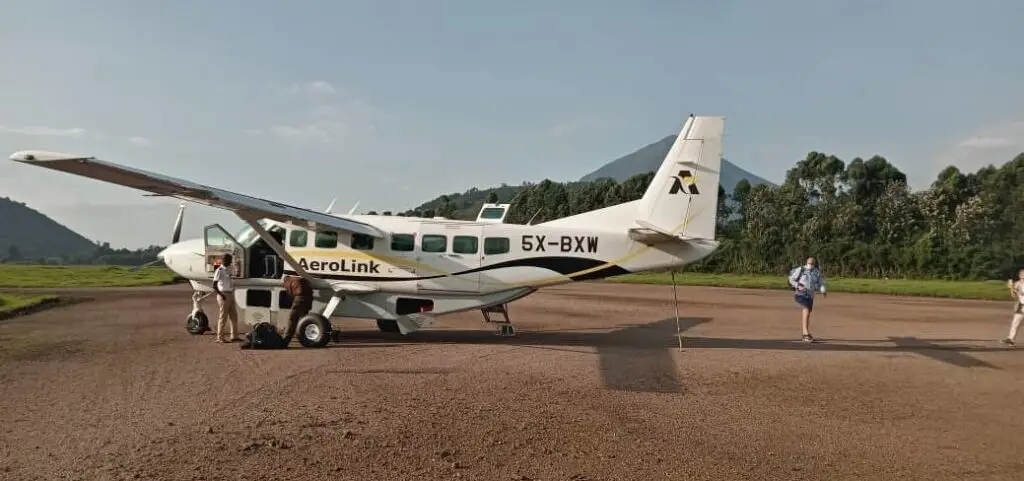
If you are flying into Bwindi from the Kampala side, the most likely departure point is Kajjansi Airfield, a small strip about 20 km south of the city centre on the Entebbe road. From there, the scheduled light aircraft service runs south-west to Kihihi Airstrip, the arrival point for the Buhoma and Ruhija sectors of Bwindi Impenetrable National Park.
The Kajjansi to Kihihi flight schedule is not published as a fixed timetable the way international airline schedules are. It shifts with demand, season, weather, and aircraft allocation. This guide explains how the schedule actually works, what determines your departure time, and how to confirm live availability before you book.
Why Kajjansi Rather Than Entebbe
Uganda’s two main departure points for domestic safari flights are Entebbe International Airport and Kajjansi Airfield. They serve different travellers.
Entebbe is the international gateway. If you are arriving on a long-haul flight and connecting straight through, your domestic leg will usually leave from Entebbe because you are already there and you have cleared immigration.
Kajjansi is the more practical option if you are already staying in Kampala. It saves you the 40 km drive south to Entebbe, often in heavy traffic, and the check-in process is far simpler. Most light aircraft operators base their fleet at Kajjansi, which means more departure options and easier rebooking if the weather turns.
Where Kihihi Airstrip Is
Kihihi sits in the far south-west of Uganda, close to the border with the Democratic Republic of Congo, in the Kanungu district. It serves the northern and central sectors of Bwindi Impenetrable National Park.
- Buhoma trailhead: roughly 1 hour 30 minutes by road from Kihihi
- Ruhija trailhead: roughly 1 hour 45 minutes by road
Kihihi is also the standard arrival point if you are combining Bwindi with the Ishasha sector of Queen Elizabeth National Park, which sits on the road between Kihihi and the main Queen Elizabeth park area.
If your gorilla permit is for Rushaga or Nkuringo, you would normally fly to Kisoro instead, not Kihihi. The Uganda Wildlife Authority allocates permits by sector, so your permit determines your arrival point. Check it before you book a flight.
How the Schedule Actually Works
There is no single published timetable that covers every Kajjansi to Kihihi departure. Instead, the schedule is a live, seasonal, demand-driven list maintained by each operator. That is not a flaw, it is simply how light aircraft charter and semi-scheduled flying works in the region.
What that means in practice:
- Departures are concentrated in the morning. Most flights leave between early morning and late morning. Afternoon departures exist but are less common because highland cloud builds up through the day.
- There are usually one to three flights per day on the corridor in high season, and fewer in low season. Some days in quiet periods have no scheduled departure at all, and you would need to charter privately.
- Flight times shift seasonally. The pattern that applies in July is not the pattern that applies in April. Operators adjust to match inbound demand from tour operators and lodges.
- Some flights are direct, some are not. A direct Kajjansi to Kihihi leg is short. A flight that stops at Mbarara or Kasese to drop or pick up passengers adds time to your journey even though you are not getting off.
Departure Time Patterns
While specific times change, the structural pattern is fairly stable. There are generally two slots to be aware of.
Early morning departures
The first wave typically leaves Kajjansi in the early hours of the morning. This is the most reliable slot because the air is calm and the highland cloud has not yet formed. It also lines up well with a same-day onward transfer: you land at Kihihi mid-morning and reach your lodge in time for a late lunch.
If you are connecting from an international arrival at Entebbe the same morning, an early departure is usually too tight. You would normally overnight in Entebbe or Kampala and fly the following morning, or fly from Entebbe rather than Kajjansi.
Mid-morning to late-morning departures
The second common slot leaves later in the morning. This is often used by travellers who need a slightly later start, or by flights that are combining multiple pickups along the route. You still arrive at Kihihi before the afternoon cloud build-up, but you have less buffer if anything runs late.
Which Operators Fly This Corridor
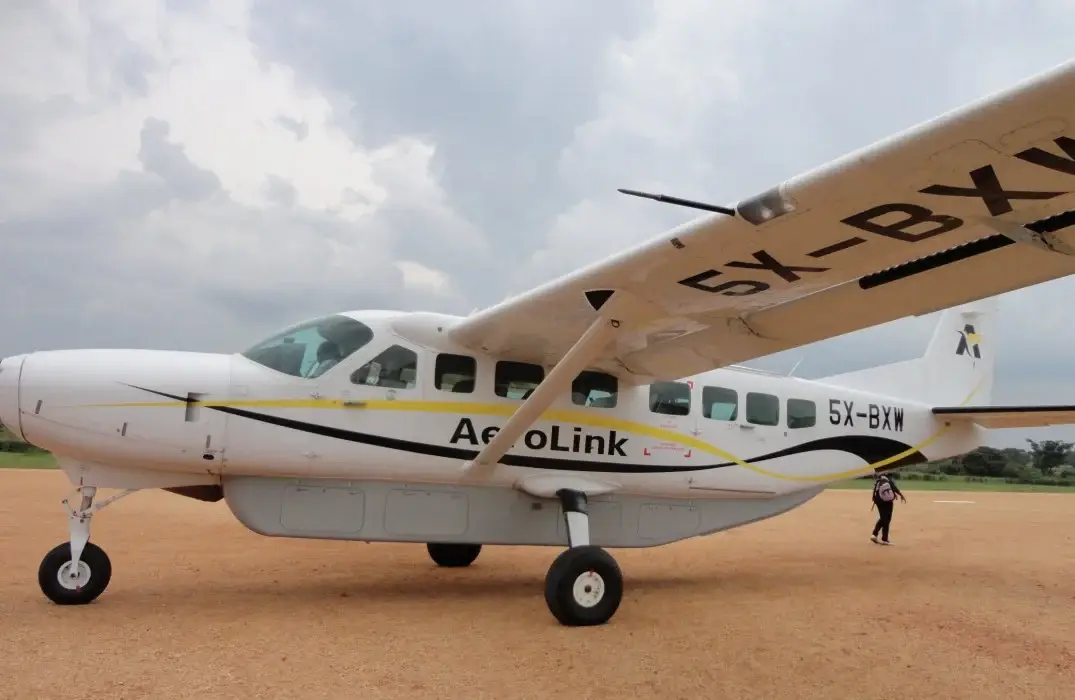
Several licensed Ugandan domestic operators have historically served the Kajjansi to Kihihi corridor. These include Aerolink Uganda, Bar Aviation, and Fly Uganda, among others. Operator rosters change, and new operators enter the market, so the current list is best confirmed directly.
All commercial air operators in Uganda must be licensed by the Civil Aviation Authority of Uganda. If you are booking independently, that is the right place to verify an operator’s licence status before you pay a deposit.
How to Check the Live Schedule
Because the schedule is live rather than published, checking it means going to the source. There are three practical ways.
- Contact the operator directly. Email or call the domestic operators who serve the corridor and ask for their current Kajjansi to Kihihi departures for your dates. Ask specifically whether the flight is direct or has intermediate stops.
- Ask your tour operator. If you are booking a fly-in safari package, this is what you are paying your operator to handle. They know which flights are running on your dates and which lodges they connect to.
- Cross-check with the lodge. Bwindi lodges work with specific flight operators every day of the season, so they can often tell you exactly which departure you should be targeting for the smoothest arrival.
The Uganda Tourism Board also maintains a directory of licensed operators and travel businesses, which is useful for cross-referencing whether a company you are considering is registered.
How Far in Advance to Book
Light aircraft have small passenger capacities, typically between five and twelve seats depending on the aircraft type. Peak season flights to Kihihi fill quickly, particularly in the June to August and December to February windows.
As a general rule:
- Peak season: book as soon as your gorilla permit is confirmed, ideally three to six months ahead
- Shoulder season: two to three months ahead is usually sufficient
- Low season: four to six weeks can work, but confirm availability before finalising your lodge dates
Because your permit already fixes your trekking date, the flight needs to slot around it. Book the permit first, then the flight, then the lodge. Doing it in that order avoids the worst scheduling headaches.
What Affects Your Departure Time Once Booked
Even after your booking is confirmed, the departure time can shift. This is normal on light aircraft and not a sign anything is wrong. Common reasons include:
- Additional passengers booked onto the same aircraft after your reservation
- An extra pickup stop added at another airstrip on the route
- Weather delays earlier in the day pushing everything back
- Aircraft substitution, where a smaller or larger plane changes the routing
Most operators reconfirm the departure time with you 24 to 48 hours before the flight. If you have not heard from them the day before, call to confirm.
Check-In at Kajjansi
Kajjansi is informal compared to a commercial airport. There is no large terminal, no long security queue, and no baggage belt. The usual check-in window is short, often 45 to 60 minutes before departure.
You will typically be asked to:
- Confirm your identity and booking reference at the operator’s desk
- Weigh your bags, which is standard for light aircraft
- Sign a passenger manifest and safety briefing form
Bring a soft-sided bag. Hard-shell suitcases cannot be loaded into most light aircraft cargo holds, and this is the single most common problem at check-in. If you only have a hard case, contact the operator in advance to arrange storage.
Arriving at Kihihi
Kihihi Airstrip is a grass and murram strip with a small shelter. There is no terminal building. You walk off the aircraft, collect your bag from the wing, and meet your driver.
Your lodge or safari operator will arrange a pick-up. The drive from Kihihi to Buhoma is roughly one and a half hours, and to Ruhija closer to one hour forty-five minutes. The road is murram and can be rough after rain, so vehicles are usually 4x4s with good clearance.
If you are flying in the morning and trekking the next day, you will typically arrive at your lodge in time for lunch, with the afternoon free to rest or take a community walk before an early dinner and your briefing the following morning.
Timing Around Your Gorilla Trek
Gorilla trekking briefings at Bwindi usually start at 8:00 AM at the trailhead for your sector. That means most trekkers need to be at their trailhead by 7:30 AM, which in turn means leaving their lodge by 6:30 AM or earlier if the lodge is a long way from the gate.
Plan your flight so that you arrive at Kihihi at least one full day before your trekking date. Flying in on the morning of the trek is risky. A single weather delay can cost you the permit, and permits are non-refundable and non-transferable in most cases.
Frequently Asked Questions
Is there a fixed Kajjansi to Kihihi flight schedule?
No. The schedule is live and seasonal rather than a published fixed timetable. Departures are concentrated in the morning, with one to three flights per day in high season and fewer in low season. Confirm the current times directly with the operator.
How long is the flight from Kajjansi to Kihihi?
Roughly one hour fifteen minutes to one hour thirty minutes for a direct flight. Add thirty to forty-five minutes if the flight has an intermediate stop at Mbarara or Kasese.
Which operators fly from Kajjansi to Kihihi?
Several licensed Ugandan domestic operators have historically served this corridor. Operator rosters change, so confirm the current list directly with the operators or with your tour operator.
Can I book the flight the same day as my trek?
You can, but it is strongly discouraged. Weather delays are common, and permits are generally non-refundable. Arrive at least one day before your trekking date.
What is the luggage allowance on this flight?
Operators set their own limits, which are usually well under a commercial airline allowance. Soft-sided bags are mandatory. Confirm the exact figure with your operator before you fly.
Does the flight go to Kihihi for all Bwindi sectors?
No. Kihihi serves Buhoma and Ruhija in the north and centre of the park. The southern sectors, Rushaga and Nkuringo, are normally served by Kisoro Airstrip. Check your permit for the sector.
Planning a Fly-In Bwindi Safari
We arrange flights, permits, lodges, and ground transfers as a single itinerary, so the schedule, the permit sector, and the lodge location all line up without you having to coordinate them separately.
Whether you are flying into Kihihi for Buhoma or Ruhija, or flying into Kisoro for Rushaga and Nkuringo, we will build the route around your dates and your permit.
Get a free safari quote
Browse Uganda safari itineraries
Learn about gorilla and primate trekking