Mountain gorillas are one of the rarest great apes on Earth, and Uganda is one of only three countries where they live in the wild. Around half of the world’s mountain gorillas live in Uganda’s Bwindi Impenetrable National Park, with more in Mgahinga Gorilla National Park. This guide explains what makes them special, how many remain, how gorilla families work and why gorilla tourism helps protect them.
Quick facts about mountain gorillas
| Fact | Detail |
|---|---|
| Scientific name | Gorilla beringei beringei |
| Where they live | Virunga volcanoes region (Uganda, Rwanda, DR Congo) and Bwindi Impenetrable National Park in Uganda |
| Population | Just over 1,000 individuals in the wild, based on recent surveys |
| Conservation status | Endangered (IUCN), improved from Critically Endangered in 2018 |
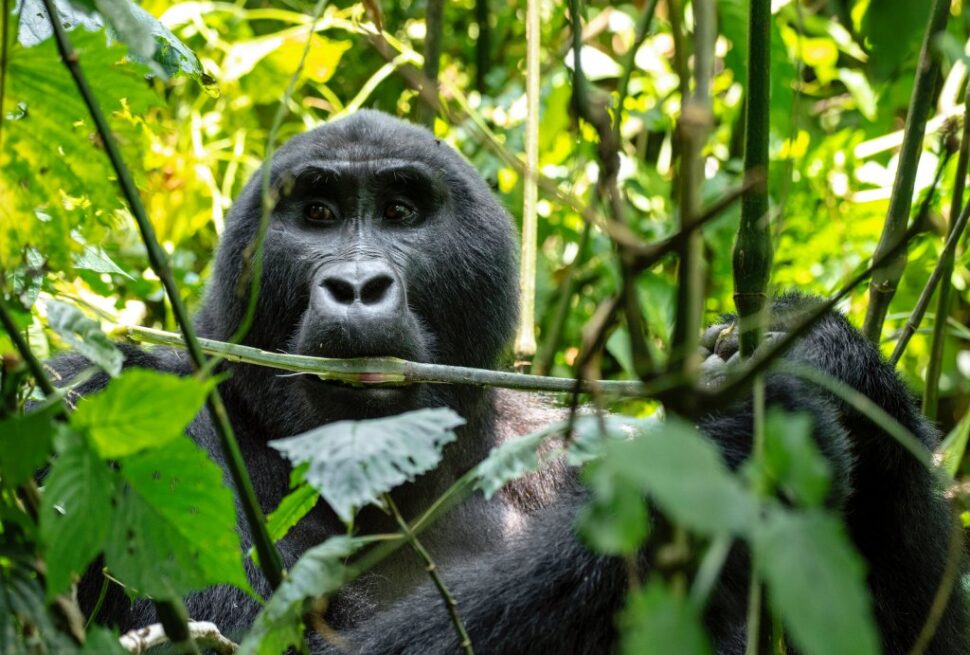
| Diet | Mainly leaves, stems and shoots, with some fruit |
| In zoos? | No. There are no mountain gorillas in zoos |
How many mountain gorillas are left?
Surveys of the two wild populations have counted slightly more than 1,000 mountain gorillas in total, split roughly evenly between the Virunga region and Bwindi. That figure is a big improvement from the low numbers recorded in the 1980s, and in 2018 the species moved from Critically Endangered to Endangered. It is still a small population that depends on continued protection.
Where mountain gorillas live in Uganda
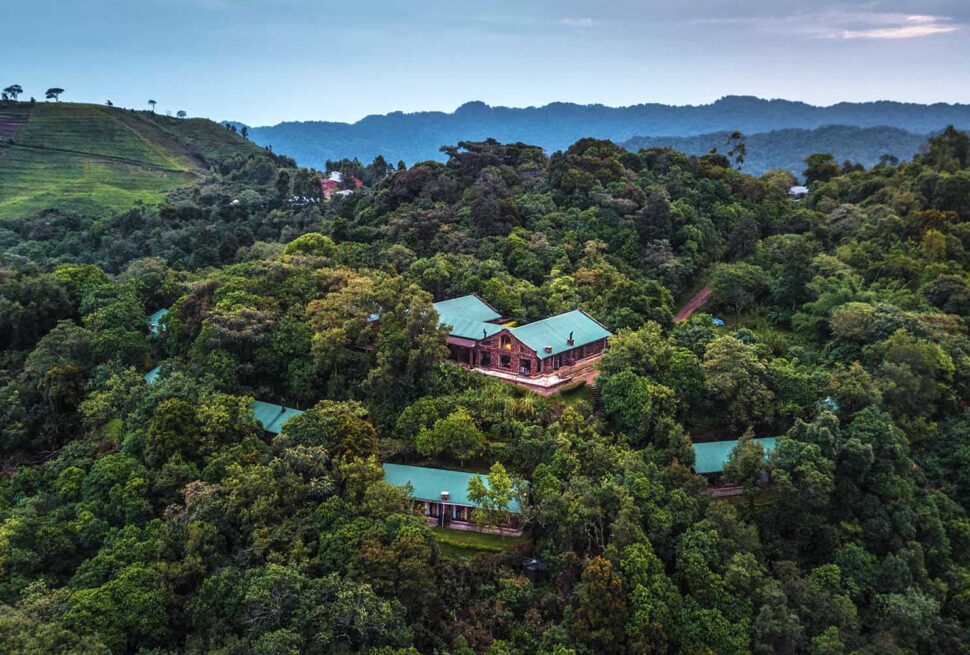
- Bwindi Impenetrable National Park: an ancient, dense forest and UNESCO World Heritage Site in southwestern Uganda, with several trekking sectors. See our guide to the best Bwindi gorilla sector.
- Mgahinga Gorilla National Park: part of the Virunga volcanoes, on the border with Rwanda and DR Congo.
Gorilla family life
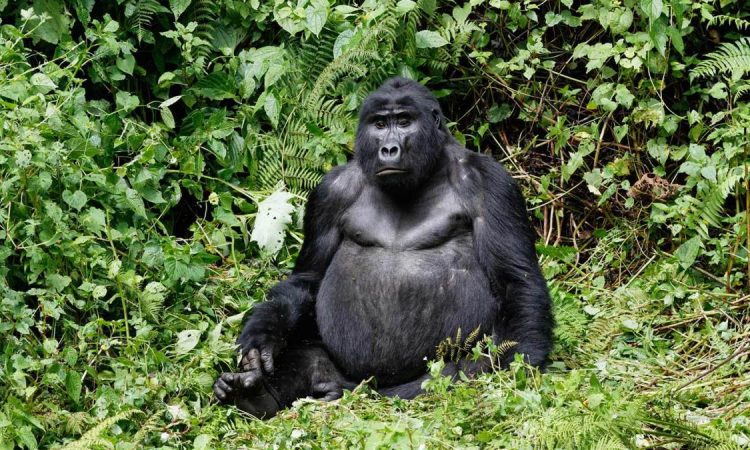
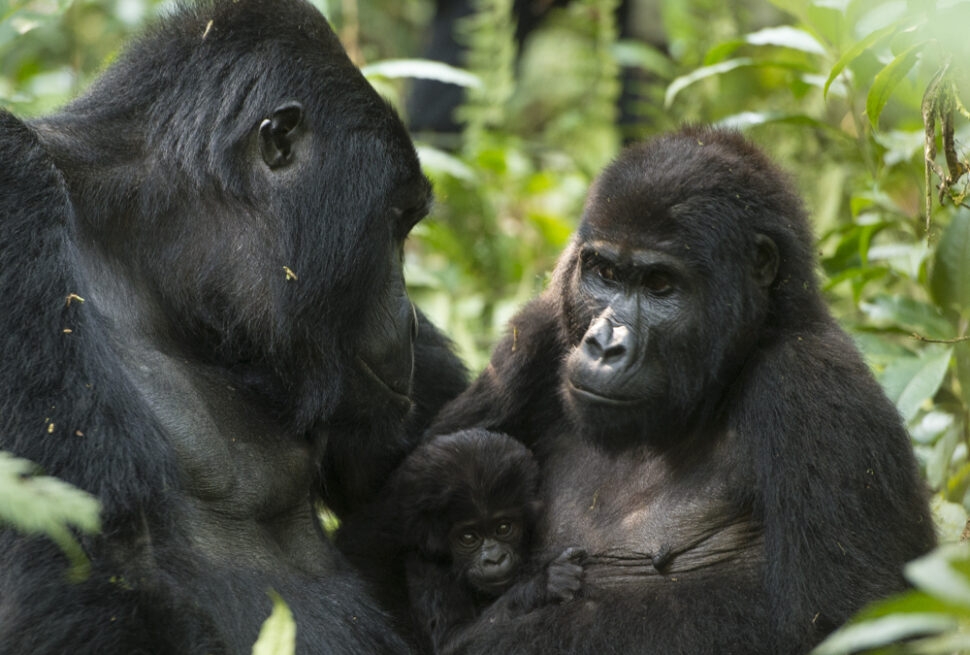
Mountain gorillas live in family groups led by a dominant adult male called a silverback, named for the band of silver hair on his back. A group usually includes several adult females, their young and sometimes younger males called blackbacks. The silverback makes decisions about where the group feeds and rests and protects it from threats.
- Daily routine: they feed for much of the morning, rest at midday and move on to feed again before building a simple nest of leaves for the night.
- Communication: gorillas use a range of sounds, postures and the well-known chest beat, which is often a display rather than aggression.
- Growing up: infants stay close to their mothers and play with other young gorillas while the adults rest.
Threats to mountain gorillas
- Habitat loss: the forests are surrounded by farmland and dense human populations.
- Disease: gorillas share most of their DNA with humans and can catch human illnesses, which is why trekkers must keep their distance and avoid trekking when sick.
- Snares: traps set for other animals can injure gorillas.
- Small population size: a limited number of animals makes the species vulnerable to shocks.
How tourism helps protect gorillas
Regulated tourism is a major part of the gorilla’s conservation story. Permit fees support park management and anti-poaching patrols, and a share of park revenue goes to neighbouring communities, giving local people a stake in protecting the forest. Habituated groups are visited by small numbers of people, for a limited time each day, under strict rules.
If you plan to see them, read our guides to gorilla permits, gorilla trekking in Uganda and the habituation experience versus a standard trek.
How many mountain gorillas are there in Uganda?
Roughly half of the world’s mountain gorillas live in Uganda, mostly in Bwindi Impenetrable National Park, with a smaller group in Mgahinga. The total world population is just over 1,000.
Are mountain gorillas dangerous?
Habituated gorillas used to visitors are generally calm, but they are wild animals. Follow your ranger’s instructions, keep your distance and do not make sudden movements.
Why must visitors stay about seven metres away?
Distance protects gorillas from human diseases and avoids stressing them. Rangers will tell you what to do if a gorilla comes closer.
Can I see mountain gorillas in a zoo?
No. Mountain gorillas do not survive in captivity, so the only way to see them is in the wild in Uganda, Rwanda or DR Congo.
What is the difference between mountain gorillas and lowland gorillas?
They are different subspecies. Mountain gorillas live at higher altitude and have longer, thicker fur, while lowland gorillas live in lower tropical forests in central and west Africa.
Plan This Trip With Afraeka Adventures
Turn this guide into a real itinerary. Our local team plans your dates, permits and lodges around your budget.
Official sources and further reading
About the author: Victoria Kayaga
Victoria Kayaga is a Ugandan-born safari expert and the founder of Afraeka Adventures, with over 7 years of experience in the East African tourism industry. She specializes in gorilla trekking, wildlife safaris and multi-country itineraries across Uganda, Rwanda, Kenya and Tanzania.