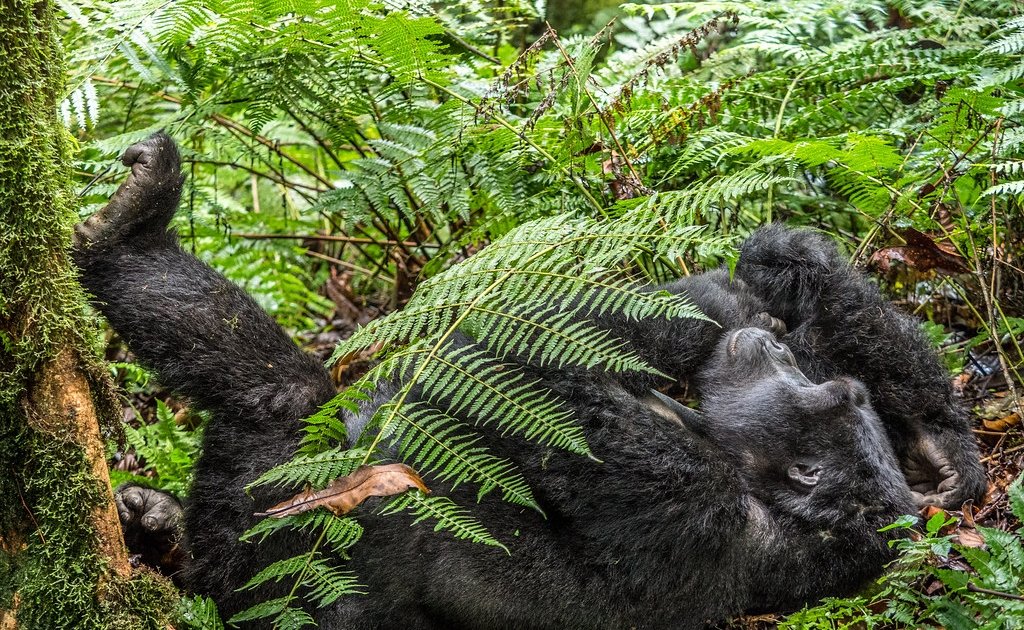
Short answer: Buhoma is Bwindi’s oldest and most requested gorilla trekking sector, sitting at the park’s northern edge and the closest sector to the main road from Kabale. It offers the gentlest terrain of Bwindi’s four sectors, the widest choice of lodges, and the easiest combination with Queen Elizabeth National Park. It also fills first. If you want Buhoma specifically, book earlier than you would for any other sector.
Buhoma is where gorilla trekking in Uganda began. It is the site of the first habituated gorilla family in Bwindi, the location of the original park headquarters, and the sector almost every first-time trekker has heard of. That reputation cuts both ways — it delivers a reliably excellent trek, and it also means Buhoma fills earlier than any other sector and carries more demand pressure than the rest of Bwindi combined.
This guide covers what trekking Buhoma is actually like, why it earns its demand, and where it may not be the right choice. If you are still deciding which sector to target, start with the Uganda gorilla trekking hub for the wider picture, then come back here for the Buhoma specifics. Permit fees, categories and low-season tariffs are kept current on the gorilla permits Uganda page.
Buhoma sector at a glance
- Park: Bwindi Impenetrable National Park, northern sector
- Issuing authority: Uganda Wildlife Authority (UWA)
- Gorilla families: Multiple habituated families within the sector’s allocation
- Terrain: The gentlest of Bwindi’s four sectors, with lower average altitude
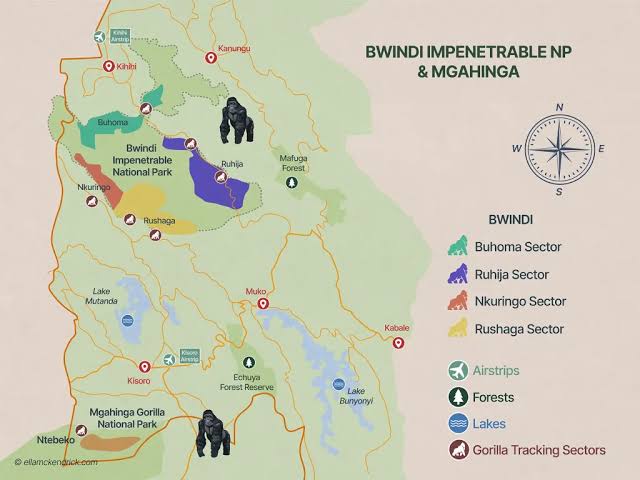
- Nearest airstrip: Kihihi, roughly 1–1.5 hours by road
- Road access from Kampala: Approximately 8–9 hours via Kabale
- Lodge range: The widest in Bwindi, from mid-range to high-end
- Maximum visitors: 8 people per habituated gorilla group per day
- Time with gorillas: 1 hour
- Minimum age: 15 years
- Group allocation: Managed by UWA according to the trekking sector and operational arrangements
- Permit conditions: Subject to UWA’s current booking, cancellation and rescheduling rules
Permit fees are set by UWA and vary by traveller category. Current rates are updated on our gorilla permits Uganda page, and UWA periodically revises its tariff structure.
Where is Buhoma and how do you get there?
Buhoma sits at the northern edge of Bwindi Impenetrable National Park, in Kanungu District, close to the Democratic Republic of Congo border to the west and roughly two hours from the Ishasha sector of Queen Elizabeth National Park. It is the most accessible of Bwindi’s four sectors from the main Kabale–Kampala road, and the reason it became the original trekking hub.
There are three practical ways to arrive:
- By road from Kampala. Approximately 8–9 hours via Mbarara and Kabale. Most travellers break the drive with an overnight at Lake Mburo or Mbarara, which turns it into a comfortable two-day journey rather than a single long haul.
- By scheduled light aircraft. Fly from Entebbe to Kihihi airstrip, then roughly 1–1.5 hours by road to Buhoma. This is the fastest option and the one short-notice travellers usually take when permits are only available here.
- From Queen Elizabeth National Park. Via the Ishasha sector, roughly two hours. This makes Buhoma the natural add-on to a Queen Elizabeth safari, and the combination is one of Uganda’s most popular routes.
Buhoma’s other advantage is proximity to the park gate itself. The trailhead for the morning briefing is at Buhoma, which means most lodges in the sector are a short drive — or a walk — from where the trekking day begins. That saves an early-morning transfer that other sectors sometimes require.
If you are building a full Uganda route around a Buhoma trek, our Uganda destinations section maps how the parks connect geographically, and the 5-day Bwindi and Lake Mburo safari shows how a Buhoma permit slots into a compact itinerary with a savannah stop.
What is a Buhoma gorilla trek actually like?
A Buhoma sector gorilla trekking day is the gentlest of the four Bwindi sectors, though “gentle” is relative — this is still a forest hike on uneven ground at altitude, and the trail can turn steep or muddy depending on where the gorilla group moved overnight. What Buhoma offers is lower average elevation and generally shorter approach distances than Ruhija or Nkuringo, which makes it the most forgiving sector for trekkers who are fit but not regular hikers.
The day follows the standard Bwindi rhythm:
The Buhoma trekking day
- Early morning briefing. You arrive at the Buhoma trailhead before dawn, register, and meet your ranger guide. This is when gorilla group allocation is confirmed for the day, and when you learn which group you will visit.
- Ranger-led forest walk. The trackers go ahead of the group at first light to locate the family that was last seen the previous evening. Walking time varies from under an hour to several hours depending on how far the group has moved.
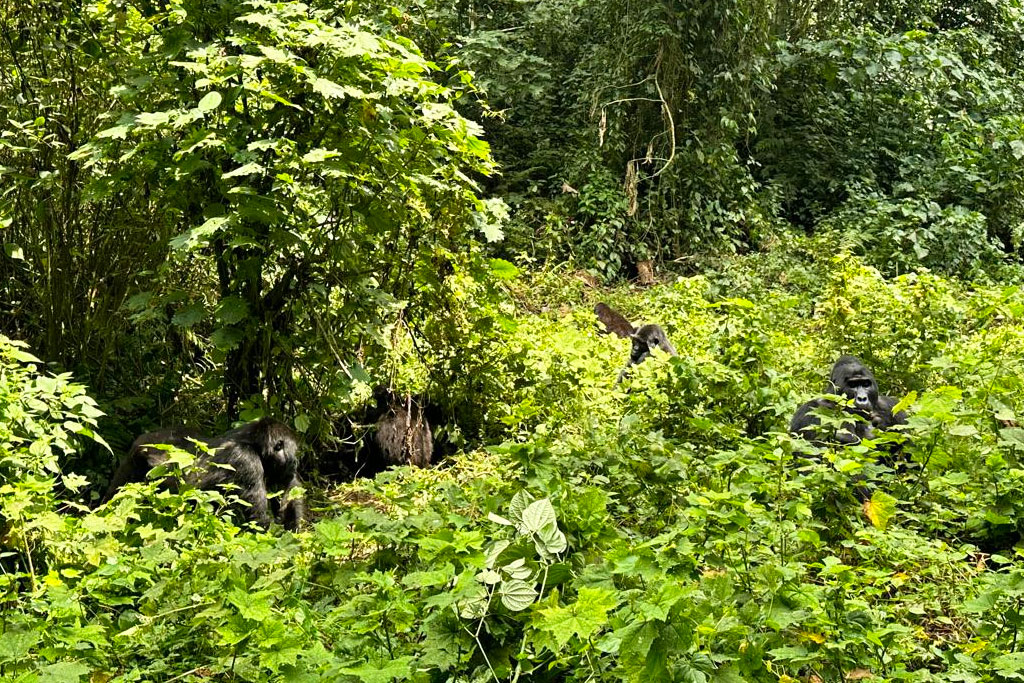
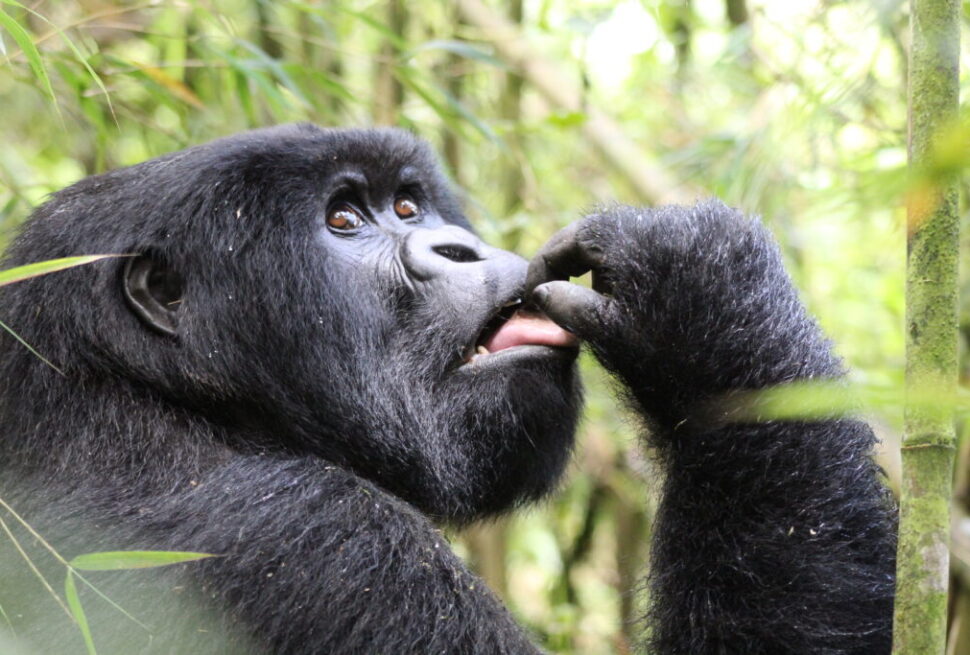
- One hour with the gorillas. Once contact is made, you have a strict maximum of one hour in the family’s presence. Cameras, quietly. No flash. Seven metres minimum distance.
- Return to the trailhead. The walk back is usually faster than the walk in, and most groups are out of the forest by early afternoon.
- Certificate and debrief. UWA issues a trekking certificate, and your guide will often share background on the family you visited.
Two things determine how hard the day feels: which gorilla family you are allocated to, and how far the family has moved from its previous nest site. Neither is under your control. This is why we advise travellers not to book Buhoma expecting a short or easy trek — you might get one, but the sector offers no guarantee of it.
Afraeka tip: Hire a porter even if you are fit. Porters cost very little, they carry your daypack so you can use both hands on steep sections, and the fee goes directly into the Buhoma community. On wet days the difference between enjoying the trek and enduring it usually comes down to whether your hands were free. Ask your lodge to arrange one the evening before.
Which gorilla families live in Buhoma?
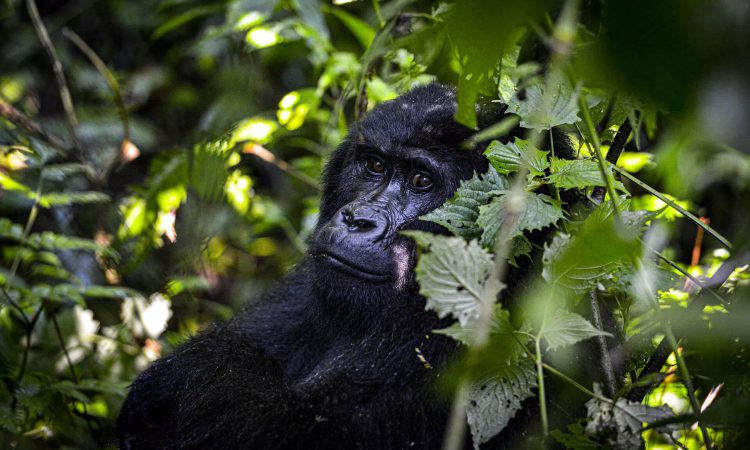
Buhoma holds multiple habituated gorilla families within its sector allocation, and UWA assigns them by operational arrangement on the morning of the trek rather than by pre-booking. The sector’s best-known families have been part of Bwindi’s trekking programme since the 1990s — Habinyanja and Mubare among them — and their histories are closely tied to the early years of gorilla tourism in Uganda.
What matters practically is not which family you are assigned to but how the assignment process works. Groups are allocated by UWA according to the trekking sector and operational arrangements, and the final group is confirmed at the morning briefing. You will know your sector in advance because it is on your permit; you will learn your group on the day. The reason is straightforward — trackers need to locate each family at first light before groups can be matched to them, and this only happens on the morning of the trek itself.
If you have a specific family you hope to see, mention it at the briefing but understand that UWA’s allocation is not a request system. Group assignments balance fitness across trekking parties, ranger availability, and how far each family has moved — factors that change daily and cannot be planned weeks in advance.
Detailed family histories, habitat notes and trekking dynamics for individual groups are covered in our primate tracking pages, which sit under primate tracking experiences.
Why does Buhoma fill first?
Buhoma fills first because it is the most accessible sector, it has the widest lodge choice, and it is the sector most first-time trekkers have already heard of before they start planning. All three reinforce each other, and the result is that Buhoma’s permit allocation is the first to close in every season.
There are three concrete pressures:
- Accessibility. Buhoma is the closest sector to the main road from Kabale and the closest to Kihihi airstrip. Travellers choosing on convenience arrive at Buhoma first.
- Lodge concentration. Buhoma has more lodges than the other three sectors combined, from community-run camps to high-end forest lodges. More beds means more bookings means more permit demand.
- Reputation. Bwindi’s trekking programme started here, and most published guides, books and magazine features describe Buhoma. First-time trekkers arrive already looking for it.
The consequence is practical: if you want Buhoma specifically, book three to six months ahead for peak-season dates, and six to twelve months ahead if you are travelling as a group of four or more. For a same-week booking, Buhoma is the hardest sector to secure and the one where you should expect to compromise on dates rather than on sector.
The Uganda Wildlife Authority operates the permit allocation system that governs this demand, and the Uganda Tourism Board maintains country-level information on parks and seasons if you want the wider context before committing.
Where should you stay in Buhoma?
Buhoma has the widest range of accommodation in Bwindi, from community-run camps at the budget end to forest lodges and boutique properties at the higher end. Almost all sit within a short drive of the trailhead, which is Buhoma’s structural advantage over Rushaga, Ruhija and Nkuringo — the morning transfer is short wherever you stay.
Three patterns are worth knowing before you choose:
- Forest-edge lodges. These sit closest to the park boundary and often have resident wildlife moving through the grounds. They trade some amenity for atmosphere, and they are the most requested category in the sector.
- Village and ridge lodges. Slightly further from the gate but often with better views across the forest and valley. Still within a fifteen-minute drive of the briefing point in most cases.
- Community and mid-range camps. A small number of well-run community properties and mid-range camps sit in and around Buhoma village. These offer genuine value and are the category most short-notice travellers end up in, because the higher-end lodges fill first.
If you are choosing on atmosphere rather than luxury, the forest-edge properties deliver a specific kind of experience — waking to bird calls from the park and eating dinner while a troop of black-and-white colobus moves through the trees outside. If you are choosing on budget, the community camps are the correct call, and they put money directly into the village that sits at the park gate.
Our 3-day Uganda gorilla safari is built around a confirmed Buhoma or Rushaga permit and includes lodge options at each tier, and the trips page shows the full range of formats if you want to see how a Buhoma stay sits inside a longer route.
What else is there to do in Buhoma?
Buhoma is the sector with the most to do outside the trek itself, and travellers who build in an extra day almost always find it worth the time. The non-trek activities are well organised and reasonably priced, and most are run directly by the community or by UWA.
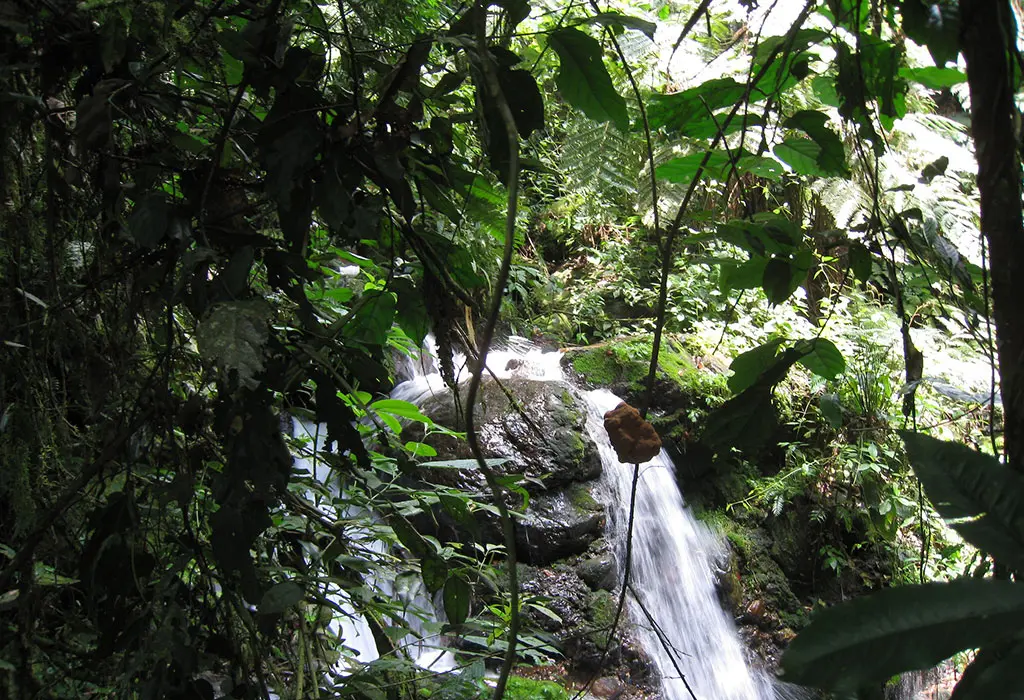
- Buhoma waterfall trail. A guided walk along the River Munyaga to a series of forest waterfalls. Three to four hours round trip, moderate difficulty, excellent birding.
- Buhoma community walk. A guided visit through Buhoma village, including a traditional healer, a local school, and a banana gin distillery. About three hours and the most popular non-trek activity in the sector.
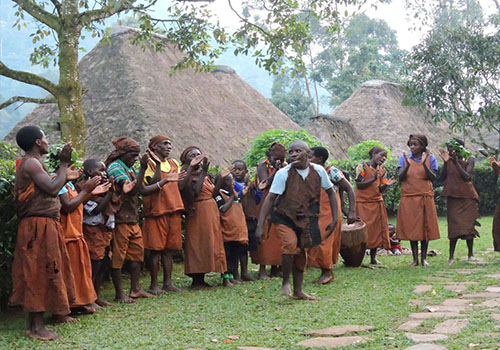
- Batwa cultural experience. A visit with Batwa community members who lived in Bwindi before the park was gazetted, covering traditional forest skills, music and oral history. Emotionally the most affecting activity in the sector.
- Birding walks. Buhoma sits in the Albertine Rift, one of Africa’s premier birding regions. Short guided walks can pick up endemics that are difficult to see elsewhere in Uganda.
- Village craft and coffee visits. Several small community enterprises run short visits that combine craft demonstrations with locally roasted coffee.
If you are already planning other activities in the region, our adventure hiking section covers the wider trail options in south-western Uganda, and the big game safaris page shows how Buhoma combines with Queen Elizabeth National Park for a trek-plus-savannah itinerary.
Is Buhoma the right sector for you?
Buhoma is the right sector if you want the gentlest terrain, the widest lodge choice, the shortest transfer from lodge to trailhead, and the easiest combination with Queen Elizabeth National Park. It is also the right sector if you want the sector almost every serious Uganda itinerary was built around — the one with the longest trekking history and the most established infrastructure.
It may not be the right sector if:
- You are booking late. Buhoma is the first to fill. If you are inside thirty days, expect to look at Rushaga, Nkuringo or Mgahinga instead.
- You want to trek as a large group. The eight-visitor daily cap means a party of eight fills a full gorilla group’s allocation, and Buhoma is the sector where that constraint bites first because its allocation is already under the most demand.
- You want the steepest, most physically demanding trek. That is Nkuringo. Buhoma’s trails are the most forgiving.
- You want a quieter, less-visited sector experience. Rushaga and Mgahinga both deliver the same quality of trek with less infrastructure and lower demand.
There is no wrong sector in Bwindi. Each delivers the same one hour with the same habituated mountain gorillas under the same UWA rules. The differences are terrain, access, lodging and demand pressure — and for many travellers, those differences matter less than simply having a permit on a date that works.
Common mistakes when planning a Buhoma trek
Most of what goes wrong with Buhoma bookings comes down to the same handful of errors, and all of them are avoidable with one careful planning conversation.
- Leaving Buhoma to the last minute. It is the sector most likely to be full on your target date. If you want it, book early.
- Booking the lodge before the permit. Lodges and permits run on separate systems. Confirm both together or you may end up with a lodge in a sector you cannot trek.
- Assuming a short trek. Buhoma has gentler terrain on average, but a family that moved overnight can still mean a multi-hour approach. Prepare for a full day.
- Skipping the porter. The single most common regret after a wet-season trek. Budget for one even if you do not think you need it.
- Not building in a buffer night. The drive from Kampala is a full day. Arriving the night before your trekking day is what keeps a delayed flight from becoming a missed trek.
- Underestimating the minimum age. Trekkers must be 15 or older. This is enforced and it affects group composition for families.
- Overlooking the non-trek activities. An extra night in Buhoma adds the waterfall trail, community walk and Batwa experience. Most travellers who build in the extra day say it was the highlight.
Can one permit cover two people?
No. One permit covers one person for one trek, and this is why Buhoma’s demand pressure has to be understood at party size. A party of four needs four permits in Buhoma on the same date. In a sector that already fills first, that becomes a materially harder ask than a single spot.
The eight-visitor daily cap per habituated gorilla group is a headcount. In practice, a party of six or more is usually advised to consider Rushaga, which has the largest concentration of habituated gorilla groups in Bwindi and therefore the best odds for a large booking at short notice. Travelling to a different sector is almost always preferable to splitting a family across two trekking days.
Once you have your permits, the gorilla group you actually visit is allocated according to the trekking sector, with final group allocation managed by UWA on the morning of the trek. You will know your sector in advance because it is on your permit; you will learn your group at the briefing alongside everyone else.
Afraeka field note: A traveller once asked us in an email whether Buhoma was “the best sector or just the most famous one.” It is a fair question, and the honest answer is that those two things are not the same. Buhoma is genuinely excellent — the terrain is gentler, the lodges are the widest choice, the trailhead is right there, and the sector has more than thirty years of trekking history behind it. But it also fills first, and a family of six who want Buhoma in peak season are working against demand in a way that a family of six in Rushaga are not. We now tell every client to decide in this order: dates, group size, sector. Buhoma is the reward for booking early. Rushaga is often the reward for booking smart.
A question that shows up regularly on TripAdvisor’s Uganda forum and on r/Uganda is some version of: “Everyone says Buhoma is the best sector — should I insist on it or consider Rushaga?” The honest answer is that for a solo traveller or a couple booking three to six months ahead, Buhoma is worth insisting on. For a group of five or more, or for anyone booking inside thirty days, Rushaga, Nkuringo and Mgahinga deliver the same quality of trek with materially better odds of getting a permit on a date that suits your flights.
Frequently asked questions about Buhoma sector gorilla trekking
Is Buhoma the best sector for gorilla trekking in Bwindi?
Buhoma is the most accessible and most established sector, with the gentlest terrain, the widest choice of lodges, and the shortest transfer from lodge to trailhead. Whether it is the “best” depends on your priorities. Rushaga has the largest concentration of habituated gorilla groups, Nkuringo has the steepest and most physically demanding trek, and Mgahinga has its own separate allocation with lower demand. Each delivers the same one hour with the same habituated mountain gorillas under the same UWA rules.
Why is Buhoma so popular with first-time trekkers?
Because it is Bwindi’s original trekking sector — the site of the first habituated gorilla family and the sector most published guides describe. It is also the closest sector to the main Kabale road and to Kihihi airstrip, and it has the widest range of accommodation in Bwindi. Those three factors reinforce each other and make Buhoma the default choice for travellers who have not yet researched the other sectors.
How difficult is the trekking in Buhoma?
Buhoma has the gentlest terrain of Bwindi’s four sectors and lower average altitude, which makes it the most forgiving option for trekkers who are fit but not regular hikers. That said, this is still a forest hike on uneven ground, and the walk can turn steep or muddy depending on where your assigned gorilla group has moved overnight. Prepare for a full day and hire a porter.
How do you get to Buhoma?
The main options are by road from Kampala (roughly 8–9 hours via Kabale, often broken with an overnight at Lake Mburo or Mbarara), by scheduled light aircraft from Entebbe to Kihihi airstrip followed by a 1–1.5 hour drive, or by road from Queen Elizabeth National Park via the Ishasha sector in roughly two hours.
Which gorilla families are in Buhoma?
Buhoma holds multiple habituated gorilla families within its sector allocation. UWA assigns the specific group on the morning of the trek rather than by pre-booking, because trackers need to locate each family at first light before groups can be matched to them. You will know your sector in advance because it is on your permit; you will learn your group at the briefing.
How far in advance should you book Buhoma?
Three to six months ahead for peak-season dates, and six to twelve months ahead if you are a group of four or more. Buhoma is the first sector to fill in every season because it carries the highest demand. If you are booking inside thirty days, expect to look at Rushaga, Nkuringo or Mgahinga instead.
What is there to do in Buhoma besides gorilla trekking?
Buhoma has the most non-trek activities of any Bwindi sector. The most popular are the Buhoma waterfall trail along the River Munyaga, the Buhoma community walk through the village, the Batwa cultural experience, guided birding walks in the Albertine Rift, and short visits to community craft and coffee enterprises. An extra night in Buhoma is usually worth it.
Can I combine Buhoma with Queen Elizabeth National Park?
Yes, and it is one of Uganda’s most popular combinations. The Ishasha sector of Queen Elizabeth National Park, known for its tree-climbing lions, is roughly two hours by road from Buhoma. Many travellers build a Queen Elizabeth to Buhoma route that pairs savannah game drives with the gorilla trek, which makes Buhoma the most convenient sector for a trek-plus-savannah itinerary.
Is Buhoma suitable for older travellers or those with limited mobility?
Buhoma is the most suitable of Bwindi’s four sectors for older travellers or those who want a less demanding trek, because the terrain is gentler and the average altitude is lower. A sedan chair service is available in Bwindi for trekkers who need assistance on the trail, and it must be arranged in advance. Trekking is still a full-day forest hike, so discuss fitness with your doctor before booking.
Want Buhoma specifically?
Send us your dates and party size, and we will check Buhoma availability alongside Rushaga, Nkuringo and Mgahinga in one pass — so you know whether your first choice is genuinely open or whether a quieter sector is the smarter plan. No price figures until we know your route, because the permit is only one line of the total.
About the author: Victoria Kayaga is a Ugandan-born safari specialist and the founder of Afraeka Adventures, based in Kampala. She has planned gorilla trekking itineraries across Bwindi’s four sectors and Mgahinga for years, and she has walked the Buhoma trail many times. More about Victoria.
Keep planning
- Gorilla permits Uganda — fees and booking
- Uganda gorilla trekking hub
- Uganda destinations
- 5-day Bwindi and Lake Mburo safari
- 3-day Uganda gorilla safari
- Primate tracking experiences
- Adventure hiking
- Big game safaris
- All Afraeka trips