Chimpanzee Trekking Age Limit Uganda: The 15-Year Rule
Last updated: 26 September 2026. Rates and availability are set by UWA and subject to change — confirm before booking.
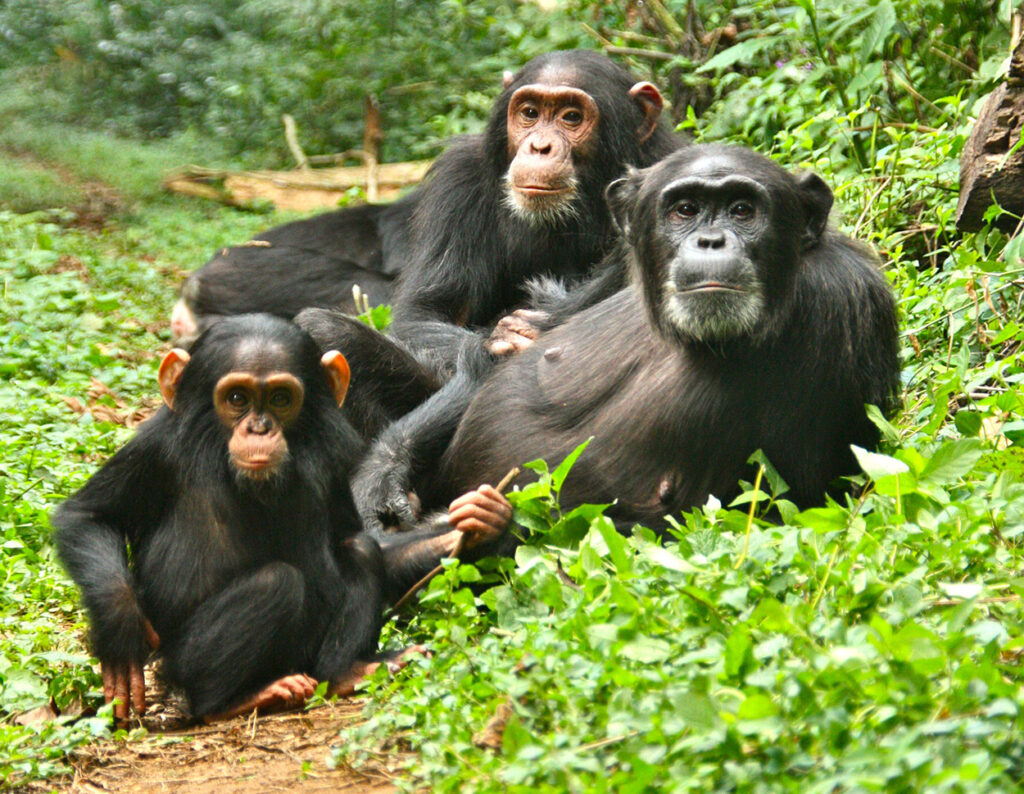
Short answer: The chimpanzee trekking age limit in Uganda is 15 years, set by the Uganda Wildlife Authority and enforced at the point of permit booking and again at the trailhead briefing. There are no exceptions for children who are nearly 15, tall for their age, or travelling with a large group. The same age limit applies at every chimpanzee trekking site in Uganda — Kibale, Budongo, Kyambura, Kalinzu and the others — and it is the same as the minimum age for gorilla trekking. Families with children under 15 can plan non-trek alternatives within Uganda, including the Bigodi Wetland Sanctuary walk, the Kibale night forest walk, Ngamba Island, and golden monkey trekking at Mgahinga, which has a minimum age of 12.
The chimpanzee trekking age limit comes up on every family trip that includes a chimp trek, and it is one of the few parts of a Uganda safari that genuinely does not flex. The rule is enforced at the point of booking — the trekker’s date of birth is recorded with their passport details — and it is checked again on the morning of the trek. No amount of pre-trip correspondence will change it, and the reason it does not flex is worth understanding before planning a family itinerary.
This guide is the reference for the chimpanzee trekking age limit in Uganda: what the rule is, where it applies, how it is enforced, and — most usefully — what families with children under 15 can do instead. It is a companion to our guide on the gorilla trekking minimum age, which covers the parallel rule for gorilla trekking. Permit categories and current rates sit on the gorilla permits Uganda page, and the wider primate picture across Uganda’s sites is on the primate tracking experiences page. The regulatory framework is published by the Uganda Wildlife Authority.
Chimpanzee trekking age limit — key facts
- Minimum age in Uganda: 15 years
- Set by: Uganda Wildlife Authority (UWA)
- Applies to: Every chimpanzee trekking site in Uganda — Kibale, Budongo, Kyambura, Kalinzu
- Also applies to: Gorilla trekking (15) and wild chimpanzee trekking
- Enforced at: Permit booking and the trailhead briefing
- Exceptions: None — no near-15 accommodations
- Age rule for golden monkeys: 12 — lower than chimps or gorillas
- Age rule for Ngamba Island: None — the sanctuary accepts children of any age
What is the chimpanzee trekking age limit in Uganda?
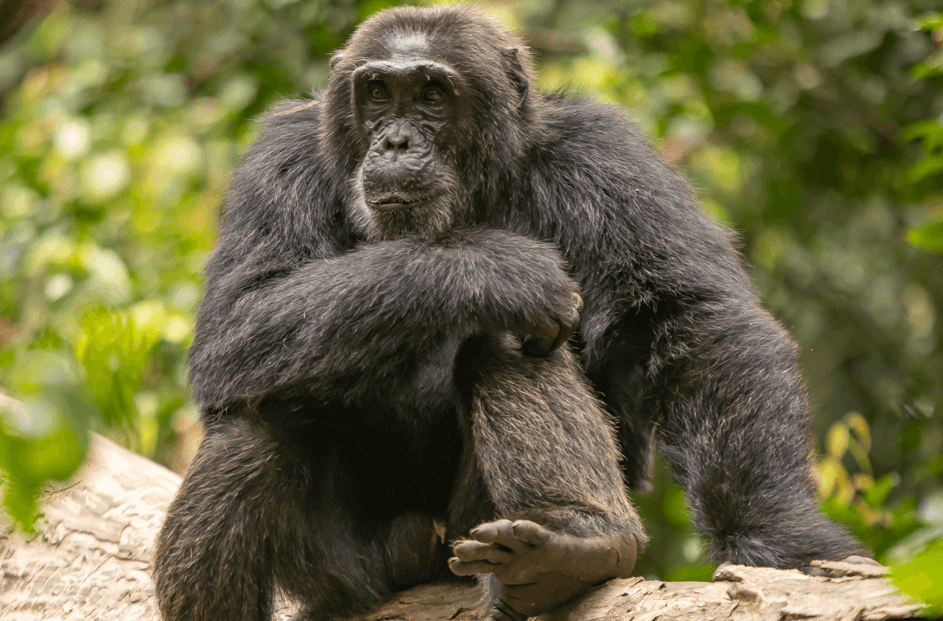
The chimpanzee trekking age limit in Uganda is 15 years. The rule is set by the Uganda Wildlife Authority and applies to every chimpanzee trekking permit issued in the country — whether the trek is at Kibale Forest, Budongo Forest, Kyambura Gorge, Kalinzu Forest, or any other site where chimpanzee trekking operates. There are no junior permits, no age exemptions for mature-looking teenagers, and no discretionary exceptions on the morning of the trek.
The age is recorded at booking. Passport details are submitted for every trekker, and the date of birth on the passport establishes the trekker’s age. Because permits are non-transferable and tied to a named individual, the age attached to a permit is not something that can be corrected later. A family that books a permit for a 14-year-old will have paid for a permit that cannot be used.
There is one important nuance about how the age is counted. The rule applies to the trekking day, not the booking day. A trekker who turns 15 between the date of booking and the date of the trek is eligible to trek — provided the passport shows they are 15 on the day of the trek itself. Most operators will confirm the exact date of birth at booking and will know whether the trekker will have reached 15 by the trekking day.
Afraeka tip: If you are travelling with a child who will turn 15 shortly before or during your trip, tell your operator the exact date of birth at the very start of planning. We check every trekker’s age against the trekking day, not the booking day, and we can tell you immediately whether the permit can be issued. It is far better to know in the first email than after lodges have been confirmed.
Why is the chimpanzee trekking age limit 15?
The chimpanzee trekking age limit is 15 because the trekking day involves a set of conditions that UWA has judged unsuitable for younger trekkers. The rule is not arbitrary — it reflects the same reasoning that sits behind the gorilla trekking minimum age, applied to a species with its own particular considerations.
Three considerations sit behind the rule:
- Safety on the trail. Chimpanzee trekking involves a forest walk of one to several hours on uneven ground, often at speed because chimpanzees move constantly. In some forests — Kyambura’s gorge being the most obvious — the terrain is genuinely demanding. The age threshold is intended to ensure that every trekker is physically capable of completing the day safely and of keeping up with the group’s pace.
- Animal welfare and behavioural risk. Chimpanzees are more excitable than gorillas around humans, particularly around children, and they can behave aggressively if they feel threatened or startled. The minimum age reduces the risk of a chimpanzee reacting badly to a younger trekker’s behaviour — sudden movement, noise, or an attempt to get closer than the required distance.
- Group management. Chimpanzee trekking groups are small, and the ranger is responsible for the group’s safety throughout the day. Adding a younger child to the group increases the ranger’s responsibility considerably, particularly when chimpanzees are moving through the forest and the group is following.
The same reasoning applies across Uganda’s chimpanzee sites, and it is mirrored in Rwanda, Tanzania and the Democratic Republic of Congo, where equivalent rules exist. The rule is not unique to Uganda; it is a regional standard for chimpanzee trekking across East Africa.
How is the chimpanzee trekking age limit enforced?
The chimpanzee trekking age limit is enforced at two points: at permit booking and again at the trailhead briefing. Both stages matter, and both are designed to make the rule impossible to sidestep accidentally.
Where the age check happens
- At permit booking. Every chimpanzee trekking permit is issued in the name of a specific traveller, with the passport number, nationality and date of birth recorded. The date of birth establishes the trekker’s age, and a permit will not be issued for a traveller under 15. This is the first check, and it happens weeks or months before the trek itself.
- At the briefing. On the morning of the trek, trekkers register at the trailhead. Passports are sometimes requested at this point, and rangers have the authority to refuse a trekker whose age is in doubt. Even if the permit was somehow issued, the briefing is the second check — and it is enforced.
- At any point during the trek. Ranger guides can, in principle, refuse to continue a trek if a rule is being broken. This is rare, but it exists as a final safeguard, and it is worth knowing that the rule is not just a formality.
In practice, the two-check system means there is no realistic way to trek chimpanzees with an under-15 child. Booking systems record the date of birth, rangers are trained to check ages against passports when there is any doubt, and there is no discretion built into the process. Families who have tried to book a permit for a 14-year-old have generally found that the booking is refused at the first step — which is better than discovering the problem at the briefing, after flights and lodges have been paid for.
Does the chimpanzee trekking age limit apply at every site?
Yes — the age limit is uniform across Uganda’s chimpanzee trekking sites. Whether you are trekking at Kibale Forest, Budongo Forest, Kyambura Gorge, or Kalinzu Forest, the minimum age is 15, set by UWA and enforced in the same way. The same applies to the full-day habituation experience at Kibale, which has the same age rule as the standard trek.
| Site | Minimum age | Notes |
|---|---|---|
| Kibale Forest (standard trek) | 15 | Standard morning or afternoon trek |
| Kibale Forest (habituation) | 15 | Full-day format; same age rule |
| Budongo Forest | 15 | Same rule |
| Kyambura Gorge | 15 | Same rule; trek involves steep gorge descent |
| Kalinzu Forest | 15 | Same rule |
| Ngamba Island | None | Sanctuary visit; not a trek; no minimum age |
| Golden monkey trekking (Mgahinga) | 12 | Different species; lower age rule |
Ngamba Island and golden monkey trekking are the two main alternatives for families with children who cannot do the chimpanzee trek.
Two consequences follow from this uniformity. First, families with children under 15 cannot solve the problem by shifting to a different chimpanzee site — the rule is the same everywhere. Second, the only way to include a chimpanzee experience for younger children is to book a sanctuary visit rather than a trek. Ngamba Island is the clearest option, and it operates with no minimum age.
What can families with younger children do instead?
Families travelling with children under 15 have a genuine range of strong alternatives across Uganda. The key is to plan the itinerary so that the adults can trek on one day while the younger children do something else — and then reunite for the parts of the trip that work for the whole family. Uganda is one of the better safari destinations in Africa for this kind of flexible planning, because the wildlife, landscape and cultural experiences are not concentrated in a single activity.
| Activity | Where | Why it works for younger children |
|---|---|---|
| Ngamba Island sanctuary visit | Entebbe, Lake Victoria | No minimum age; boat crossing and feeding sessions; family-friendly |
| Bigodi Wetland Sanctuary walk | Near Kibale | No minimum age; boardwalk; primates and birds |
| Kibale night forest walk | Kibale | No minimum age; children over 8 usually enjoy it |
| Golden monkey trekking | Mgahinga | Minimum age 12; opens the trek to younger teenagers |
| Game drives | Queen Elizabeth, Murchison, Lake Mburo | Vehicle-based, no minimum age |
| Boat safaris | Kazinga Channel, Nile, Lake Victoria | No minimum age; wildlife visible from the boat |
| Community and cultural walks | Buhoma, Batwa communities, Fort Portal | Shorter walks; no age restrictions |
Primate trekking has its own minimum age rules — 15 for chimps and gorillas, 12 for golden monkeys. Confirm when booking.
The most practical family model is often a two-track itinerary. On the chimp trekking day, one parent treks with the older children or with other adults in the party, while the other parent stays with the younger children on a lodge-based or non-trek activity. On other days, the whole family travels together on activities that have no age restriction. Our guides on the Bigodi Wetland Sanctuary walk and the Ngamba Island day trip cover two of the strongest family alternatives in more detail.
What is the minimum age for other Uganda primate experiences?
Uganda’s primate experiences have different minimum ages, and understanding them helps families build a realistic itinerary. The chimpanzee trekking age limit is 15, the same as gorilla trekking, but golden monkeys come in at 12, and some sanctuary experiences have no minimum age at all.
| Experience | Minimum age | Notes |
|---|---|---|
| Chimpanzee trekking | 15 | Same at every site |
| Gorilla trekking | 15 | Same across Bwindi and Mgahinga |
| Golden monkey trekking | 12 | Mgahinga only; lower age rule |
| Ngamba Island sanctuary visit | None | Not a trek; family-friendly |
| Bigodi Wetland Sanctuary walk | None | Community-run; not a trek |
| Kibale night forest walk | None | Family-friendly; children 8+ usually comfortable |
Ngamba Island and the community walks are the only primate experiences available to children under 12 in Uganda.
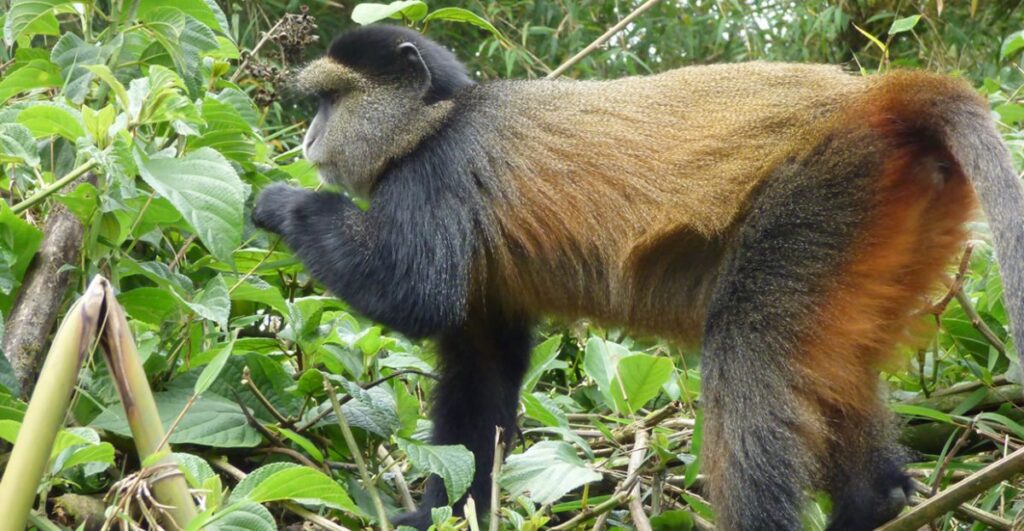
The most useful takeaway for families is that golden monkey trekking at Mgahinga is the only proper primate trek available to children aged 12, 13 and 14. That makes it the natural choice for families whose older children are close to the gorilla or chimp age but not yet there. Our guide on golden monkey trekking at Mgahinga covers the trek in detail, and the companion guide on golden monkey trekking permit booking covers the booking mechanics.
How does the age rule affect permit booking for families?
The chimpanzee trekking age limit shapes how family permits are booked in two ways. First, families with a child under 15 cannot book a chimpanzee permit for the child — the child simply cannot trek, and no permit will be issued. Second, families whose children are all 15 or older can book as a normal party, with no additional age-related complexity.
Three practical points about booking:
- Declare ages at the enquiry stage. Tell your operator the exact date of birth for every trekker when you first enquire. That way the permit eligibility is confirmed before any lodges or flights are committed.
- Plan the split itinerary in advance. If one child cannot trek, plan the alternative activity at the same time as you book the trek permits. Do not leave it to the morning of the trek.
- Confirm the exact age on the trekking day. A child who turns 15 between booking and the trek is eligible. Tell your operator the date of birth, and they will confirm whether the child will be 15 on the trekking day.
For families who plan carefully, the age rule is manageable rather than limiting. The two-track approach — older trekkers doing the chimp trek while younger children do a family-friendly alternative — means everyone gets a full and memorable day. The wider family travel options across Uganda are covered on the Uganda destinations page and the Uganda Tourism Board site.
Common mistakes with the chimpanzee trekking age limit
Most of what goes wrong with the age rule comes down to a small set of avoidable mistakes, and all of them can be prevented with one careful planning conversation.
- Assuming the rule bends for a nearly-15 child. The rule applies to the trekking day, not the booking day, and a child who turns 15 a week after the trek is not eligible on that date. Check the exact date of birth against the trekking day at the very start of planning.
- Booking flights and lodges before confirming the age rule. If a family plans a Uganda trip around a chimp trek with a 14-year-old, they may discover the problem after flights and lodges are paid for. Confirm ages first, then book.
- Assuming the rule applies only to gorillas. Chimpanzee trekking also has a 15-year minimum, at every site in Uganda. The rule is not gorilla-specific.
- Assuming the rule varies by site. Kibale, Budongo, Kyambura and Kalinzu all apply the same 15-year rule. There is no easier chimpanzee trek for younger children.
- Not declaring the age honestly at booking. If a permit is issued for a child whose age is later questioned, there is no refund and no transfer. The permit is lost.
- Not planning an alternative activity for younger children. Families who assume a younger child will simply “wait at the lodge” often end up with a bored child and a stressful trekking day. Uganda has strong alternatives — Ngamba Island, Bigodi, night walks — that suit younger children well.
- Confusing the chimp rule with the golden monkey rule. Golden monkeys have a minimum age of 12, not 15. Families with a 12- to 14-year-old can trek golden monkeys even if they cannot trek chimpanzees.
- Forgetting the passport. Age verification depends on passport details. Bring a copy of the passport’s photo page to the briefing.
Can one permit cover two people?
No. One permit covers one person for one trek, and this is directly relevant to the age rule. A chimpanzee permit is issued for a named individual, tied to a passport, and cannot be used by anyone else. If a family is travelling with a 14-year-old and a 16-year-old, the 16-year-old needs their own permit and the 14-year-old is not eligible for one at all. There is no way to share a permit, and no way to transfer a permit from one person to another. Current permit categories and rates sit on the gorilla permits Uganda page.
The eight-visitor daily cap per habituated gorilla group — and the equivalent cap for chimpanzee communities — is a headcount. A group of eight trekkers fills an entire day’s allocation, and each of those eight trekkers must be 15 or older. Because permits are also non-refundable and non-transferable once issued, a family that books a permit for a child who turns out not to be eligible cannot recover the cost.
Once you have your permits, the gorilla or chimpanzee community you visit is allocated on the morning of the trek, with final group allocation managed by UWA. You will know your sector or site in advance because it is on your permit; you will learn your specific family or community at the briefing alongside everyone else. The regulatory framework is set by the Uganda Wildlife Authority.
Afraeka field note: A family once contacted us with a Uganda trip already largely booked — flights, lodges, transfers — and mentioned almost in passing that their youngest child was 13. They had booked a Kibale chimp trek for the whole family and had not realised the age rule. We could not issue a permit for the 13-year-old; the booking had to be changed. The parents trekked with the older children while the 13-year-old did the Bigodi Wetland Sanctuary walk with a guide and — separately — a Kibale night forest walk. On the strength of those two activities, the 13-year-old ended up seeing more species than the trekkers did: red colobus, mangabeys, galagos, and a potto on the night walk. What the family told us afterwards was that the age rule had actually delivered a better trip than they had planned. That is worth knowing. The rule is fixed, and planning around it is not a compromise — it is often a genuine upgrade for the whole family.
A question that comes up regularly on TripAdvisor’s Uganda forum and on r/Uganda is some version of: “My child is 14 — can we do the chimpanzee trek anyway?” The honest answer is no. The rule is enforced at booking and again at the briefing, and there is no discretion built into the process for individual cases, however fit or mature the child appears. The better question is not “can my 14-year-old trek” but “what else can we plan so the whole family has a good trip.” Uganda offers plenty of answers to that second question — Ngamba Island, Bigodi, the Kibale night walk, and golden monkey trekking at Mgahinga — and starting from it produces a far better family safari than trying to argue around the first.
Frequently asked questions
What is the chimpanzee trekking age limit in Uganda?
15 years, set by the Uganda Wildlife Authority and enforced at permit booking and the trailhead briefing. The rule applies uniformly at every chimpanzee trekking site in Uganda — Kibale, Budongo, Kyambura and Kalinzu. There are no exceptions.
Is the age limit the same at every chimpanzee site in Uganda?
Yes. The minimum age for chimpanzee trekking is 15 at every site, whether you are trekking at Kibale, Budongo, Kyambura or Kalinzu. The full-day habituation experience at Kibale also has a minimum age of 15. There is no easier chimpanzee trek for younger children.
Does the age limit apply to the habituation experience at Kibale?
Yes. The chimpanzee habituation experience at Kibale has the same minimum age of 15 as the standard trek. The age rule is not different for the habituation format, even though the experience is longer and only a small number of trekkers can do it per day.
Is the minimum age for gorilla trekking the same?
Yes — gorilla trekking also has a minimum age of 15. The two rules mirror each other, and both are set and enforced by UWA. Golden monkey trekking at Mgahinga is the outlier, with a minimum age of 12.
What can families with children under 15 do instead?
Several options: Ngamba Island chimpanzee sanctuary (no minimum age), the Bigodi Wetland Sanctuary walk (no minimum age), the Kibale night forest walk (no minimum age; children 8+ usually comfortable), and golden monkey trekking at Mgahinga (minimum age 12). Game drives and boat safaris also have no minimum age.
How is the age limit enforced?
At permit booking — passport details including date of birth are recorded, and a permit will not be issued for a trekker under 15 — and again at the trailhead briefing, where passports may be requested and rangers have the authority to refuse a trekker whose age is in doubt. There is no way to trek with an under-15 child.
What happens if my child turns 15 just before the trek?
The rule applies to the trekking day, not the booking day. A child who turns 15 before the trekking day is eligible, provided the passport shows they are 15 on that date. Tell your operator the exact date of birth at the very start of planning so the permit can be issued with certainty.
Can I book a chimpanzee permit for a child under 15?
No. Permits are not issued for trekkers under 15. The booking system records date of birth, so a permit for an under-15 trekker will be refused at the first stage. Trying to book without declaring the correct age is likely to surface the problem at the briefing, after flights and lodges have been paid for, and there is no refund in that situation.
Is there a lower age limit for golden monkey trekking?
Yes — golden monkey trekking at Mgahinga has a minimum age of 12, lower than the chimpanzee and gorilla minimum of 15. This makes it the only proper primate trek available to children aged 12 to 14 in Uganda. Details are in our golden monkey trekking Mgahinga guide.
Planning a family trip with the chimp trek?
Send us your dates and the date of birth for every traveller, and we will confirm straight away whether chimpanzee permits can be issued for everyone in your party. If younger children are travelling, we will build an itinerary that gives the trekkers their chimpanzee day and gives the younger children a Uganda experience that suits them. No price figures until we know your route, because the permits are only one line of the total.
About the author: Victoria Kayaga is a Ugandan-born safari expert and founder of Afraeka Adventures, with 15+ years in East African tourism. Based in Kampala, she has planned chimpanzee and gorilla trekking itineraries across Uganda for years, and she advises families on the age rules and the alternatives that keep everyone included in the trip. More about Victoria.
Keep planning