Last updated: 2 October 2026. Access arrangements, ranger fees and walking conditions are set by Rhino Fund Uganda and can change — confirm before you travel.
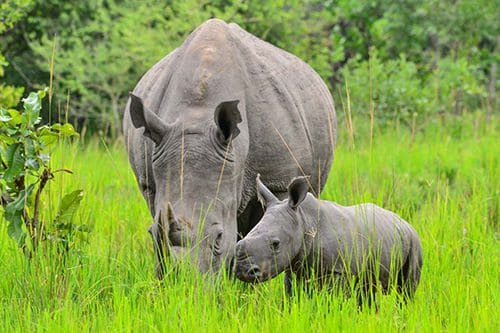
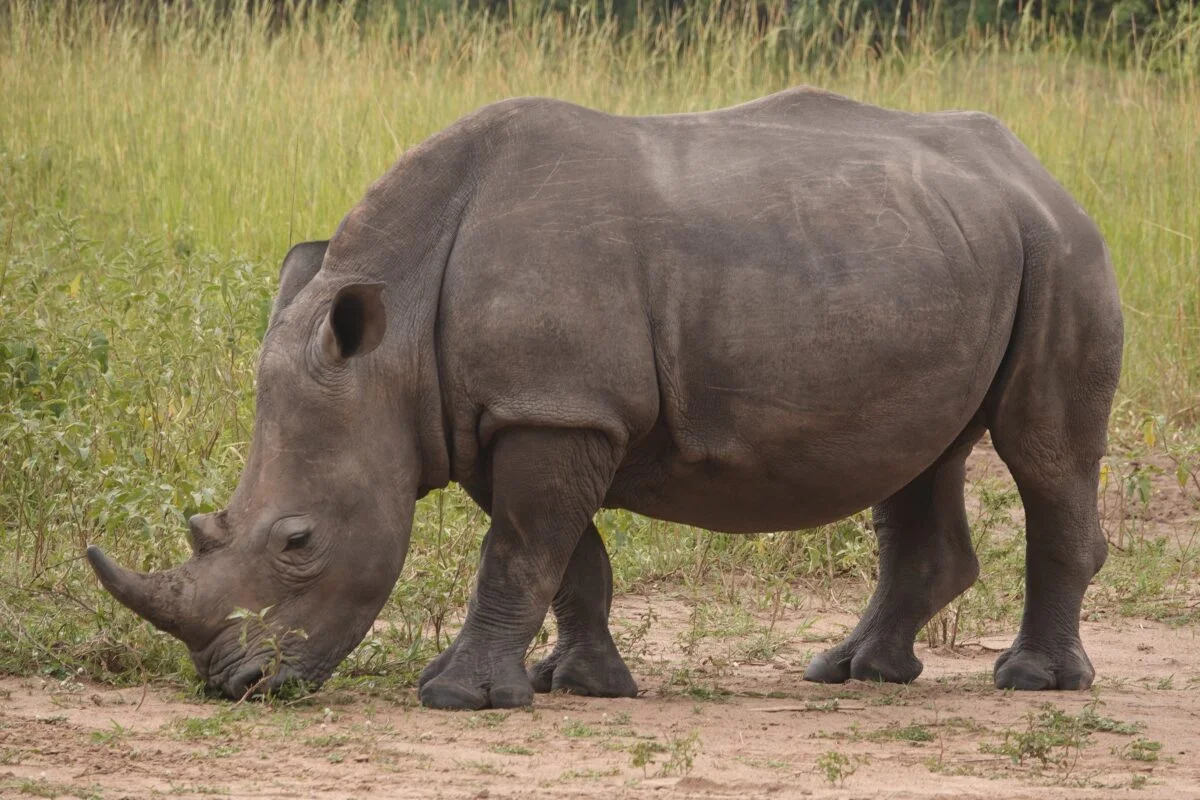
Short answer: Ziwa Rhino Sanctuary rhino tracking is a guided walk to see southern white rhinos on foot inside Uganda’s only rhino sanctuary. It sits on the Kampala–Gulu highway, about three hours from Kampala, and is the standard stop on the drive to Murchison Falls. The walk itself is one to two hours with a ranger, on flat ground, and is suitable for most fitness levels. It is the only place in Uganda where you can see rhinos, because the country’s native rhinos were poached out in the 1980s and the current population was reintroduced.
Uganda has the big five — lion, leopard, elephant, buffalo and rhino — but the rhino is the odd one out. The other four live in the national parks. The rhino does not. Uganda’s native rhino population was wiped out by poaching by the mid-1980s, and every rhino in the country today is part of a reintroduction programme centred on a single sanctuary in Nakasongola District. That sanctuary is Ziwa, and the walk to see its rhinos is one of the most popular activities in the country — partly because it is the only way to complete the big five on a Uganda trip, and partly because seeing a rhino on foot at close range is a genuinely different experience from a game drive.
This guide covers what the tracking walk actually involves, where Ziwa is, how to get there, how it fits into a Murchison Falls itinerary, and what to expect on the day. The wider set of Uganda activities is on our Uganda destinations page. The regulatory framework for Uganda’s national parks is published by the Uganda Wildlife Authority.
Ziwa Rhino Sanctuary rhino tracking — key facts
- Location: Nakasongola District, on the Kampala–Gulu highway
- Distance from Kampala: Roughly 180 km, about 3 hours by road
- Species: Southern white rhino — reintroduced, not native
- Population: Uganda’s only rhino population
- Walk duration: 1–2 hours with a ranger
- Terrain: Flat, open grassland; suitable for most fitness levels
- Minimum age: No strict limit, but young children need supervision
- Best time of day: Early morning or late afternoon — cooler and more active rhinos
- Fits with: Murchison Falls, which is another 3–4 hours north
- Managed by: Rhino Fund Uganda — a private sanctuary, not a UWA national park
What is Ziwa Rhino Sanctuary rhino tracking?
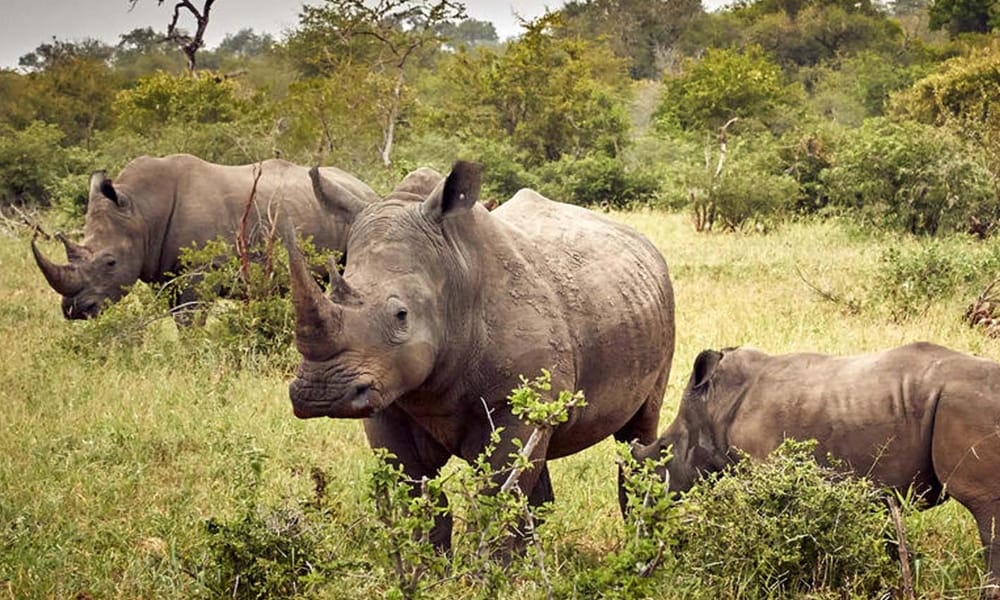
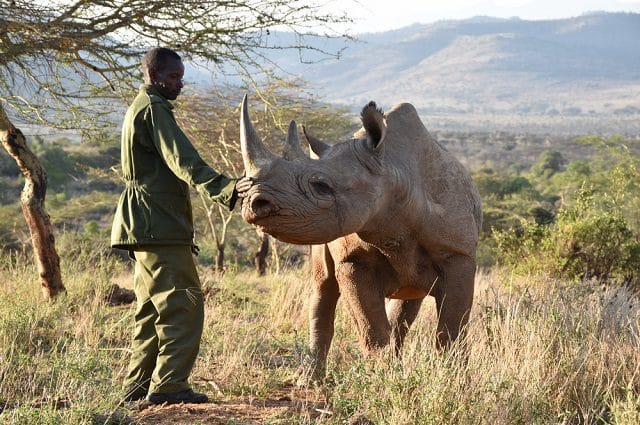
Ziwa Rhino Sanctuary rhino tracking is a guided walking activity inside a 70-square-kilometre fenced sanctuary in central Uganda, where a small population of southern white rhinos lives and breeds. The rhinos roam freely within the sanctuary, and visitors walk out with a ranger to find them on foot — usually a walk of one to two hours.
Three things define the experience:
- It is on foot, not from a vehicle. The tracking is done on foot, and the approach to the rhinos is on foot. This is what distinguishes it from a game drive. You are walking through the grassland with a ranger, and you stop at a respectful distance to watch.
- The rhinos are wild, but the sanctuary is fenced. The rhinos are not in enclosures and they are not tame. But the sanctuary has a perimeter fence, which controls the population and protects the animals. It is not a zoo, but it is also not an open national park.
- It is Uganda’s only rhino experience. Because the country’s native rhinos were poached out, Ziwa is the only place in Uganda to see rhinos. That makes it functionally different from every other wildlife activity in the country — it is not a matter of seeing them in one park or another, it is the only option.
The sanctuary was established in the early 2000s with rhinos brought in from Kenya and South Africa, and it has since bred successfully. The long-term goal is to reintroduce rhinos into Uganda’s national parks, which is why the sanctuary exists. Visitors who track rhinos at Ziwa are, in a small way, contributing to that programme through the fees paid.
Afraeka tip: Ziwa is the only place in Uganda where you can complete the big five — lion, leopard, elephant, buffalo and rhino. If completing the big five matters to you, plan Ziwa into the itinerary early, because it sits on the highway between Kampala and Murchison Falls and fits naturally into the northbound drive. Do not leave it as an afterthought.
What does the tracking walk involve?
The walk begins with a short briefing at the visitor centre, where a ranger explains the rules, the safety procedures and the background of the sanctuary. Then you head out on foot with the ranger, following the rhinos’ likely location for the day. The walk is on flat ground through open grassland, and the pace is slow — you are looking for animals, not hiking.
Three things travellers should expect:
- One to two hours total. The walk is usually done within an hour or two, depending on where the rhinos are and how long you spend with them. It is not a full-day activity, which makes it easy to fit into a travel day.
- Flat terrain, exposed to sun. The sanctuary is open grassland with very little shade. The walking itself is easy, but the sun is strong by mid-morning. Bring a hat, sunscreen and water.
- Close approach on foot. Once the rhinos are located, the ranger brings the group to within a safe viewing distance — typically 10 to 20 metres — and you watch for as long as the rhinos remain calm. The ranger manages the distance and direction.
The rhinos are the main focus, but the sanctuary also holds a variety of other wildlife — antelope, warthogs, and a good range of birdlife along the wetlands. Travellers who combine the walk with a birding stop often find the sanctuary more rewarding than the rhino walk alone.
Where is Ziwa and how do you get there?
Ziwa Rhino Sanctuary sits in Nakasongola District in central Uganda, directly on the Kampala–Gulu highway, roughly 180 kilometres north of Kampala. The drive from Kampala takes about three hours in normal traffic, and the turning for the sanctuary is clearly signposted off the highway.
Three practical points on access:
- It is on the main highway. Ziwa is not a detour. It sits directly on the road between Kampala and Gulu, which is the same road most travellers take to Murchison Falls. This makes it the most natural stop on the northbound drive.
- No internal flight access. Ziwa has no airstrip. The only way to reach it is by road, either self-drive or with a driver-guide.
- Parking and facilities are on site. The sanctuary has a visitor centre, parking, a small restaurant and basic facilities. It is set up for day visitors as well as overnight guests.
Travellers driving north to Murchison Falls will pass Ziwa on the way. Travellers on a tight schedule can do the walk as a two-hour stop on the drive, though the walk is more enjoyable if you are not rushing. There is accommodation at and near Ziwa for travellers who want to stay the night and do the walk in the cooler early morning.
How does Ziwa fit into a Murchison Falls itinerary?
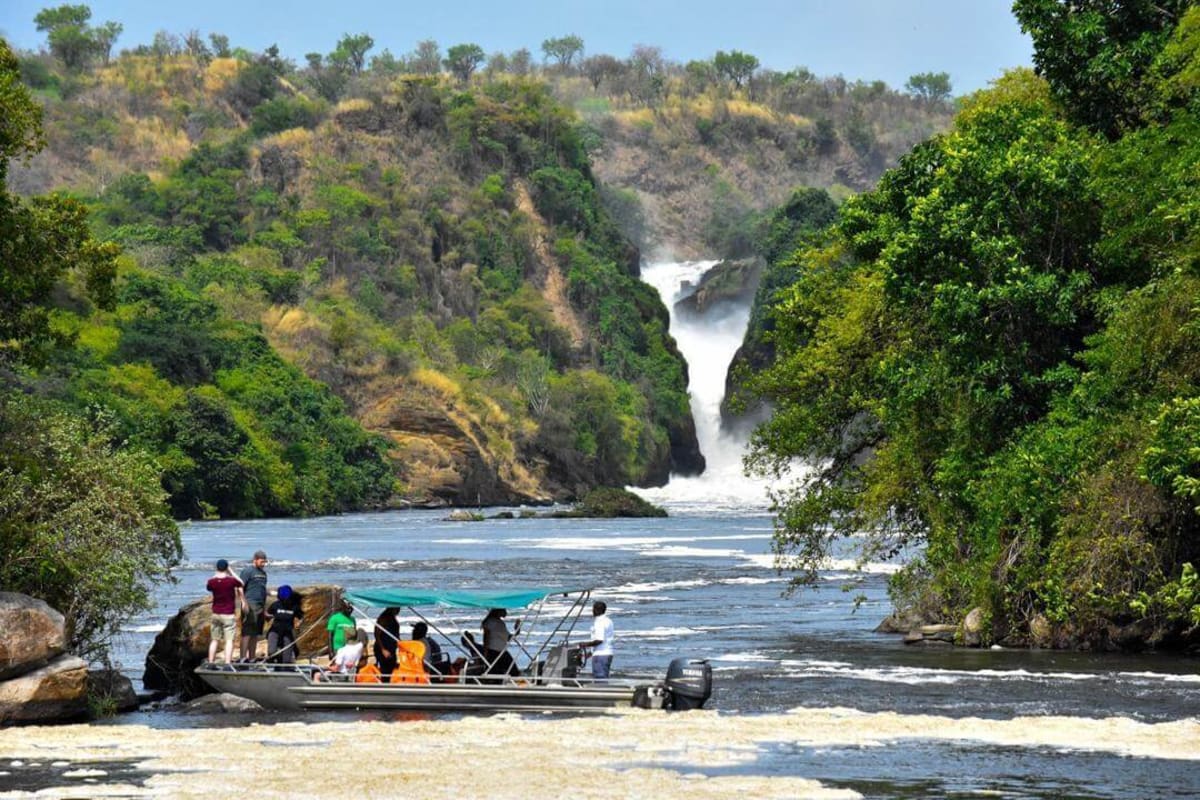
Ziwa pairs naturally with Murchison Falls, which sits another three to four hours north on the same road. Most travellers do the rhino walk on the way up, stop for lunch, and continue to Murchison the same day, arriving in the late afternoon. It is also common to do the walk on the return leg, which breaks the drive back to Kampala.
Three itinerary shapes work well:
- Ziwa as a same-day stop. Leave Kampala early, do the walk mid-morning, continue to Murchison and arrive in time for the evening. This is the most common pattern and works well for travellers with limited time.
- Ziwa as an overnight. Stay at Ziwa or nearby, do the walk at first light the next morning, then continue north. This is more relaxed and gives the best conditions for the walk.
- Ziwa on the return. Do Murchison first and stop at Ziwa on the drive back. This works if the northbound day is already full, but the walk is more pleasant on the way up when you are fresh.
The wider Murchison Falls picture — including the boat cruise, the top-of-the-falls hike and the game drives — is covered on our Uganda destinations page.
What should you expect on the day?
The day at Ziwa is straightforward. You arrive, check in at the visitor centre, pay the ranger fee, get a briefing, and walk out with a ranger to find the rhinos. The whole visit is usually two to three hours door to door, including the briefing and the walk itself.
What to bring for the walk
- Closed walking shoes — trainers or light hiking shoes are fine, the terrain is flat
- Hat and sunscreen — the grassland is exposed
- Water bottle — at least one litre per person
- Camera with a strap — you will want both hands free
- Long trousers — for grass and insects, not for the rhinos
- Insect repellent — for the wetland edges
- Cash in small notes for the ranger fee and any extras
- Binoculars — for the birdlife and other wildlife between rhino sightings
Two things are worth flagging. First, the walk is done with a ranger, and the ranger’s instructions must be followed without exception — this is a genuine safety requirement, not a formality. Rhinos are large, fast and can be unpredictable if they feel threatened. Second, the walk is on foot and the rhinos are wild, so sightings are not guaranteed to be at any specific distance — the ranger manages this. In practice, sightings are almost always close and the walk almost always delivers, but the exact encounter varies.
Who is Ziwa rhino tracking best for?
Ziwa Rhino Sanctuary rhino tracking suits a wide range of travellers, and it is one of the easier activities in Uganda to slot into a trip. It is short, close to Kampala, on the main highway, and suitable for most ages and fitness levels.
Ziwa is a strong choice if you are…
- Wanting to complete the big five on a Uganda trip
- Driving to Murchison Falls and looking for a stop en route
- Travelling with children or older family members who want a shorter, easier activity
- Interested in rhino conservation and reintroduction
- Short on time but wanting a wildlife experience close to Kampala
- Keen on birding — the sanctuary has strong wetland birdlife
Ziwa may not suit you if you are…
- Expecting a full-day safari — the walk is one to two hours
- Wanting a national park experience — Ziwa is a fenced private sanctuary
- Looking for big cats or elephants — those are in the national parks, not Ziwa
- Unable to walk on uneven grass for an hour — the terrain is easy but not paved
The clearest way to state it: Ziwa is a short, focused activity that delivers one thing — a rhino encounter on foot — very well. It is not a substitute for a park, and it is not a full-day activity. Travellers who understand that find it one of the highlights of a northern Uganda trip.
When is the best time to visit Ziwa?
Ziwa operates year-round. The best time to visit is the drier months — December to February and June to September — because the grass is shorter, the walking is easier, and the rhinos are typically more visible. The wet months of March to May and October to November make the grass taller and the ground muddier, but the walk remains doable.
Two practical points on timing:
- Morning or late afternoon. The walk is more comfortable in the cooler hours, and the rhinos are more active. Midday is hot and exposed, and the rhinos often stand still in shade.
- Dry season for easier walking. The difference is not dramatic, but the drier months are more comfortable and produce better photographs. The wet season has greener scenery and fewer visitors.
The wider country season picture sits with the Uganda Tourism Board. Ziwa is genuinely year-round, and travellers should not delay a trip for season reasons alone.
Common mistakes with Ziwa rhino tracking
Most of what goes wrong with a Ziwa visit comes down to underestimating what it is and how long it takes.
- Expecting a full-day safari. Ziwa is a one-to-two-hour activity. Travellers expecting a full day of game viewing will be disappointed.
- Arriving at midday. The walk is far more comfortable in the cooler hours, and the rhinos are more active. Plan for early morning or late afternoon.
- Not booking ahead in peak season. Ziwa is popular and slots fill up, especially on weekends and in the dry-season months. Book the walk in advance through your lodge or operator.
- Underestimating the sun. The sanctuary is exposed grassland with little shade. Bring a hat, sunscreen and water.
- Not carrying cash. The ranger fee is paid on site, and cards are not always accepted. Bring small notes.
- Assuming you will see rhinos guaranteed at a specific distance. The rhinos are wild within the sanctuary and the ranger manages the approach. Sightings are almost always close but the exact encounter varies.
- Skipping the birdlife. The sanctuary has strong wetland birding. Travellers who bring binoculars often find the visit richer than expected.
- Not combining with Murchison. Ziwa is on the way to Murchison Falls and works best as part of a broader itinerary, not as a standalone destination.
Frequently asked questions
What is Ziwa Rhino Sanctuary rhino tracking?
Ziwa Rhino Sanctuary rhino tracking is a guided walking activity to see southern white rhinos on foot inside Uganda’s only rhino sanctuary, in Nakasongola District. The walk is one to two hours with a ranger, on flat grassland.
Where is Ziwa Rhino Sanctuary?
Ziwa sits in Nakasongola District, directly on the Kampala–Gulu highway, roughly 180 kilometres north of Kampala. The drive takes about three hours. It is on the same road most travellers take to Murchison Falls.
How long does the rhino tracking walk take?
One to two hours, depending on where the rhinos are and how long you spend with them. The whole visit, including the briefing and check-in, is usually two to three hours.
Is Ziwa Rhino Sanctuary a national park?
No — Ziwa is a private sanctuary managed by Rhino Fund Uganda, not a UWA national park. The rhinos are wild within a fenced 70-square-kilometre area, but the sanctuary operates differently from a national park.
Are the rhinos at Ziwa wild?
The rhinos are wild in the sense that they roam freely, are not tame and behave naturally. They are not wild in the sense of being native to Uganda — the country’s native rhinos were poached out in the 1980s, and the current population was reintroduced from Kenya and South Africa.
Can you complete the big five at Ziwa?
Not at Ziwa alone. Ziwa has the rhino. The other four — lion, leopard, elephant and buffalo — are in the national parks, mainly Queen Elizabeth and Murchison Falls. Combining Ziwa with Murchison Falls is the standard way to complete the big five in Uganda.
Is Ziwa suitable for children?
Yes — the walk is short, the terrain is flat, and there is no strict minimum age. Young children need supervision, and the ranger’s safety instructions must be followed. It is one of the more child-friendly wildlife activities in Uganda.
Do you need to book Ziwa Rhino Sanctuary rhino tracking in advance?
Yes in peak season and on weekends, when slots fill up. Book through your lodge or operator. In quieter months, walk-in visits are usually possible, but advance booking is always the safer option.
Want to add Ziwa to your Uganda trip?
Send us your dates and route, and we will tell you whether Ziwa fits as a stop on the drive to Murchison Falls — and if a different combination would suit you better. We arrange both day stops and overnight stays at the sanctuary.
About the author: Victoria Kayaga is a Ugandan-born safari expert and founder of Afraeka Adventures, with 15+ years in East African tourism. Based in Kampala, she has arranged Ziwa stops and northern Uganda itineraries for years, and advises travellers on how to fit the sanctuary into a broader trip. More about Victoria.
Keep planning
- 7-day Uganda and Rwanda primate safari
- 16-day Rwanda and Uganda gorilla trekking and big five safari
- 18-day Uganda safari
- All Afraeka trips