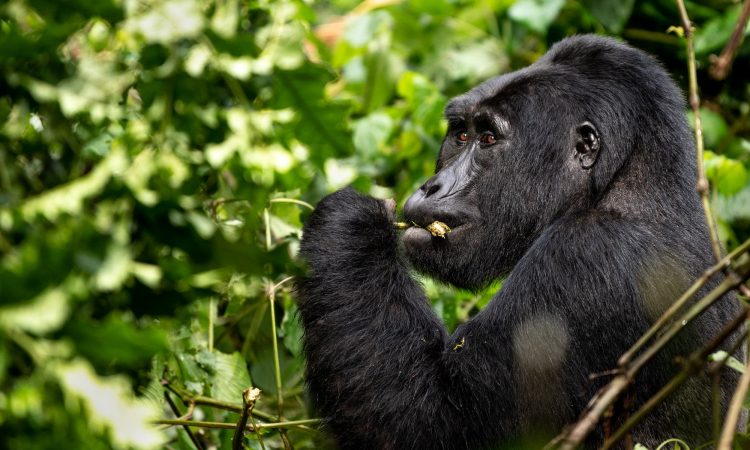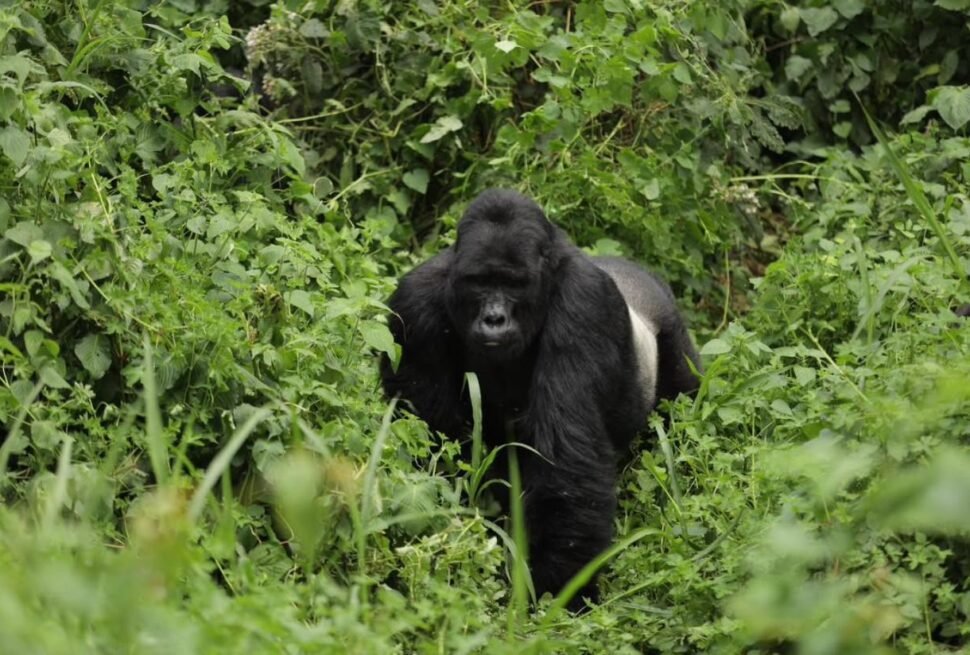
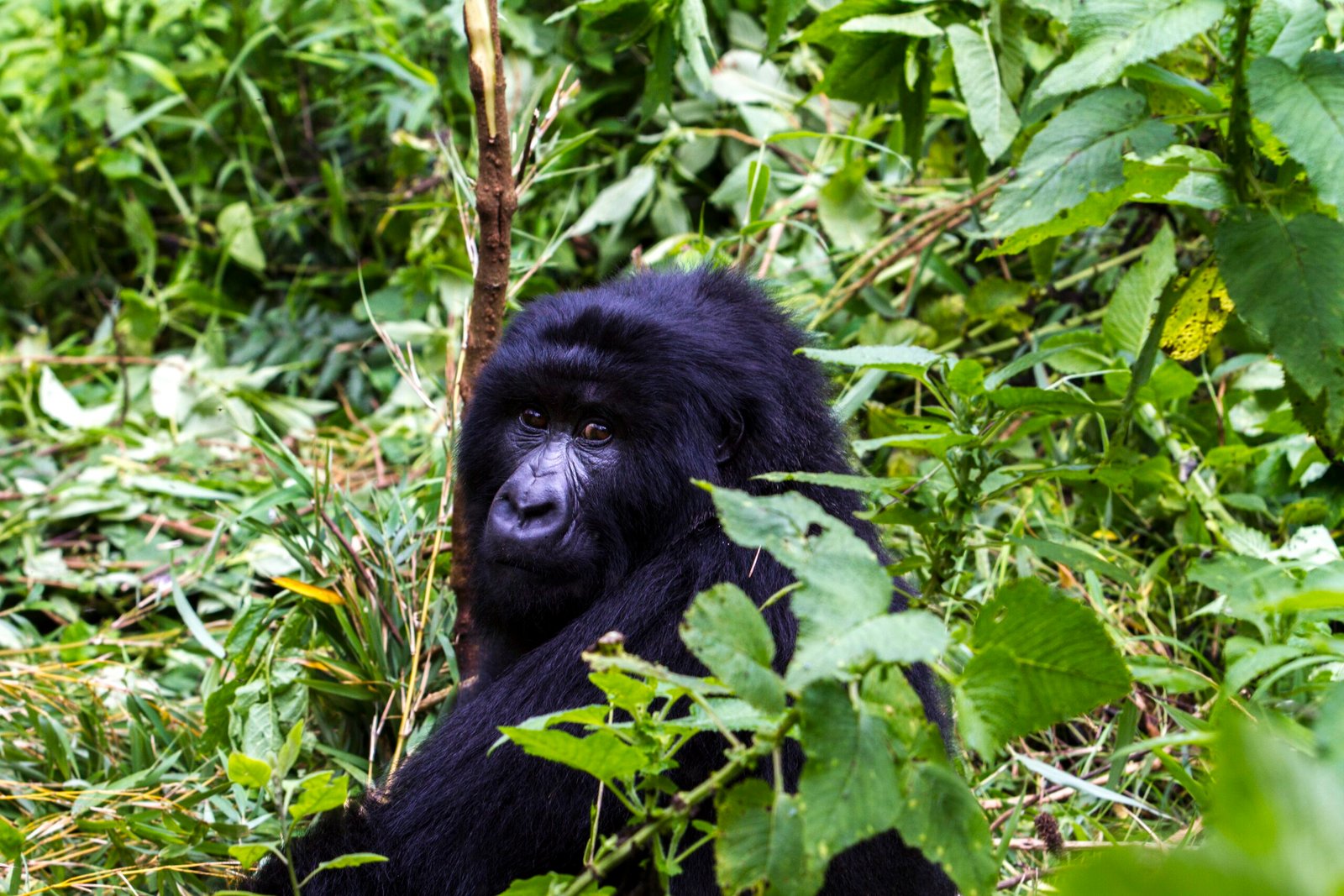
Quick answer: To trek gorillas during AFCON 2027 you must be at least 15 years old, healthy on the day, and able to walk for several hours on steep, muddy forest trails. Visitors keep a distance of about 7 metres, spend one hour with the gorillas, do not eat near them, and use no flash photography. Anyone with a cold, flu or other contagious illness may be asked not to trek, because gorillas can catch human diseases.
- Minimum age
- 15 years
- Distance from gorillas
- About 7 metres
- Time with gorillas
- 1 hour
- Group size
- Maximum 8 visitors per family
- Trek length
- From about 1 hour to most of the day, depending on where the gorillas are
- Health
- Visitors who are sick may be asked not to trek
Many AFCON 2027 visitors will be first-time trekkers. Gorilla trekking is not a technical climb, but it is a real hike in dense, hilly forest at altitude. Knowing the rules and preparing your fitness makes the day safer and more enjoyable for you and for the gorillas.
The complete gorilla trekking rules
These rules apply in Bwindi Impenetrable National Park, Mgahinga Gorilla National Park (Uganda) and Volcanoes National Park (Rwanda). They are set by the Uganda Wildlife Authority and the Rwanda Development Board and are non-negotiable:
- Keep your distance. Stay about 7 metres (roughly 23 feet) from the gorillas at all times. If a gorilla moves toward you — and they sometimes do — stay still and follow your ranger’s instructions. Do not reach out or attempt to touch them.
- One hour only. Your time with the gorilla family is strictly limited to one hour, timed from the moment the ranger says “start”. This protects the gorillas from excessive human exposure. Make the most of every minute.
- No flash photography. Turn off flash on all cameras and phones before you enter the forest. Flash startles gorillas, especially infants. Check your settings during the morning briefing.
- Keep your voice low. Speak in whispers or low tones. Avoid sudden movements, loud exclamations or gasping — even from excitement. The gorillas are habituated to calm human presence, not noise.
- No eating or drinking near the gorillas. Eat and drink before or after your hour. Food can attract insects and creates disease-transmission risk.
- Do not trek if you are sick. Mountain gorillas share about 98% of our DNA and are highly susceptible to human respiratory infections. A common cold that is mild for you can be fatal for a gorilla. If you have a cough, runny nose, fever, diarrhoea or any flu-like symptoms, you will be asked not to trek. There is no refund in this case — this is why travel insurance with gorilla trekking coverage matters.
- Face masks. Some rangers ask visitors to wear a surgical-style face mask when near the gorillas. Carry one in your daypack even if it is not required on the day.
- Leave nothing behind. Carry all rubbish out of the forest. If you need the toilet during the trek, tell your ranger — the guide will dig a hole and you must cover it afterwards.
- Maximum 8 visitors. Each habituated gorilla family receives one group of visitors per day. The group cannot exceed 8 people (plus guides and rangers). This rule cannot be negotiated. See our guide to group gorilla trekking during AFCON 2027.
- Minimum age 15. Children under 15 are not permitted on the trek. No exceptions. Read about the gorilla trekking minimum age and what younger family members can do instead.
How fit do you need to be?
Trek length depends on where the gorilla family spent the previous night. Gorillas move every day, building a new nest each evening. Some treks reach the gorillas in under an hour on relatively flat ground. Others take four to six hours each way on steep, muddy slopes at altitudes above 2,000 metres (6,500 feet).
The terrain in Bwindi is challenging: deep valleys, dense undergrowth, tree roots, mud and sometimes stinging nettles. Mgahinga is generally less steep but the bamboo forest can be thick and slippery. Volcanoes National Park in Rwanda has open volcanic slopes that are steep but less enclosed.
You do not need to be an athlete. If you can walk briskly for three to four hours with some uphill sections — think stair climbing or hill walking — you can manage most gorilla treks. Rangers set a steady, manageable pace, and they know the forest intimately. Porters are available at every trailhead to carry your daypack and give you a hand on difficult sections (a tip of US$10–15 is customary and well deserved).
Fitness levels by Bwindi sector
| Sector | Typical trek difficulty | Notes |
|---|---|---|
| Buhoma | Moderate | Good trails, relatively well-maintained paths. Often 2–4 hours round trip. |
| Ruhija | Moderate to hard | Higher altitude (2,300–2,500 m). Can be physically demanding, but scenery is spectacular. |
| Rushaga | Moderate | The most gorilla families, so the best chance of a shorter trek. Habituation experience treks (4 hours with gorillas) are here. |
| Nkuringo | Hard | Very steep terrain into and out of deep valleys. The most physically demanding sector. Rewarding views. |
When booking, tell your operator about any fitness or mobility concerns. They can request a sector and family that tends to have easier terrain, though nothing is guaranteed because gorillas move every day.
How to prepare before AFCON 2027
Start preparing at least 8–12 weeks before your trip:
- Walk regularly. Aim for 45–60 minutes of brisk walking at least three times a week. Include hills or stairs whenever possible. If you have access to a stair climber, use it — the sustained uphill motion closely mimics trekking terrain.
- Break in your boots. Never wear new boots on trek day. Buy or choose your boots at least 4 weeks before and walk in them on varied terrain. See our guide to the best boots for gorilla trekking in Bwindi for recommendations.
- Build leg strength. Squats, lunges and step-ups improve the muscles you will use most. Even two sessions a week makes a noticeable difference.
- Practice altitude. Bwindi sits between 1,160 and 2,607 metres. If you live at sea level, you may feel the altitude as mild breathlessness. Arriving a day early to acclimatise helps. Stay hydrated and avoid alcohol the night before.
- Plan your trek before late nights. A late match followed by an early drive is tiring. Give yourself a rest day between the last match and your trek departure if possible.
- Stay hydrated. Carry at least 2 litres of water on the trek. Start drinking water the day before, not just on trek morning.
What to wear and bring on the trek
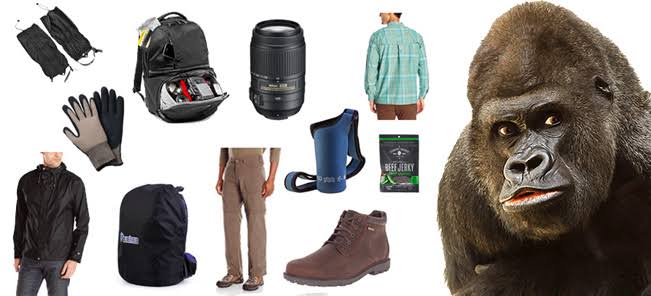
- Long trousers and long sleeves. Tuck trousers into socks to protect against stinging nettles and ants. Lightweight but durable fabric works best.
- Waterproof jacket. Even in the dry season, rain can arrive quickly in the forest.
- Sturdy waterproof boots. Ankle support is important on steep, slippery ground.
- Gardening-style gloves. Useful for grabbing vegetation to steady yourself on steep sections.
- Hat and sunscreen. For the open sections at higher altitudes.
- Daypack. Carry water, snacks (for before/after the gorilla hour), rain cover, camera and any medication.
- Camera with no flash. A good lens helps — see our best camera lens for gorilla photography guide.
For a complete packing list including AFCON match-day gear, read what to pack for AFCON 2027 and gorilla trekking.
Health and travel requirements
Vaccinations
A yellow fever vaccination certificate is required to enter Uganda. Carry the original certificate — airlines and immigration check it. Other recommended vaccinations include hepatitis A, hepatitis B, typhoid, tetanus and polio. Consult a travel health clinic at least 6 weeks before departure.
Malaria prevention
Uganda is a malaria zone. Take prophylaxis (atovaquone-proguanil, doxycycline or mefloquine — your doctor will advise), use insect repellent containing DEET, and sleep under a treated mosquito net. The forest itself has fewer mosquitoes than lowland areas, but you will pass through malaria zones on the drive.
Prescription medication
Bring any prescription medication in its original packaging with a doctor’s letter. Read our guide to bringing prescription medication through Uganda customs.
Altitude sickness
Mild altitude effects (breathlessness, slight headache) are possible in the higher sectors of Bwindi and on the Virunga volcanoes in Mgahinga. These are usually manageable by taking it slowly, staying hydrated, and allowing a day to acclimatise. Serious altitude sickness is extremely rare at gorilla trekking altitudes.
What happens on trek day
- Morning briefing (7:30–8:00 AM): Meet at the park headquarters. Rangers brief you on rules, assign you to a gorilla family, and check your permit and health.
- Enter the forest: Walk to the trailhead and enter the forest with your ranger, tracker and group. Porters join at the trailhead.
- The search: Trackers who set out at dawn follow the gorillas from their previous night’s nest. Your ranger communicates with them by radio to lead you in the right direction.
- Finding the gorillas: When you reach the family, leave your bags and walking sticks with a porter. Only take your camera.
- Your hour: Spend 60 minutes observing, photographing and being present with the gorillas. The ranger manages the group and explains gorilla behaviour.
- Return hike: Walk back to the trailhead. You receive a gorilla trekking certificate.
Gorilla trekking for seniors and people with mobility challenges
Gorilla trekking is possible for people in their 60s, 70s and even older, as long as they have reasonable fitness for walking. The key is choosing the right sector and hiring porters. Sedan chairs (carried stretchers) are also available in Bwindi for visitors who cannot walk the full distance — they are carried by teams of local porters along the forest trails. Read our full guide to gorilla trekking for seniors.
Frequently asked questions
Can children trek gorillas during AFCON 2027?
Only from age 15. The rule is strict and enforced at the briefing point. Younger family members can enjoy game drives in Queen Elizabeth National Park, boat trips on the Kazinga Channel, or community walks near Bwindi while the adults trek.
What happens if I cannot finish the trek?
Tell your ranger immediately. If you are struggling, the ranger will adjust the pace. If you truly cannot continue, a porter will help you back to the trailhead. In extreme cases, stretcher evacuation from the forest is possible but slow. Honest self-assessment before and during the trek is important.
Is gorilla trekking dangerous?
Habituated gorillas are used to visitors, and rangers know each family’s behaviour intimately. Silverbacks (dominant males) may chest-beat or charge — this is almost always a display, not an attack. Stand still, look at the ground, and follow your ranger’s calm instructions. Serious incidents are extremely rare.
What if it rains on trek day?
Treks proceed in rain. The forest is often wet regardless of the forecast. Waterproof layers and a rain cover for your camera bag are essential. Rain can actually make gorilla photography more atmospheric, with mist and water droplets on fur.
Can I trek gorillas if I have asthma?
Yes, as long as your asthma is well-controlled. Bring your inhaler and inform your ranger at the briefing. The altitude and exertion can trigger symptoms, so pace yourself and use your inhaler preventatively if your doctor recommends it.
First gorilla trek during AFCON? Tell us about your fitness level and we will recommend the right sector, pace and trip length.