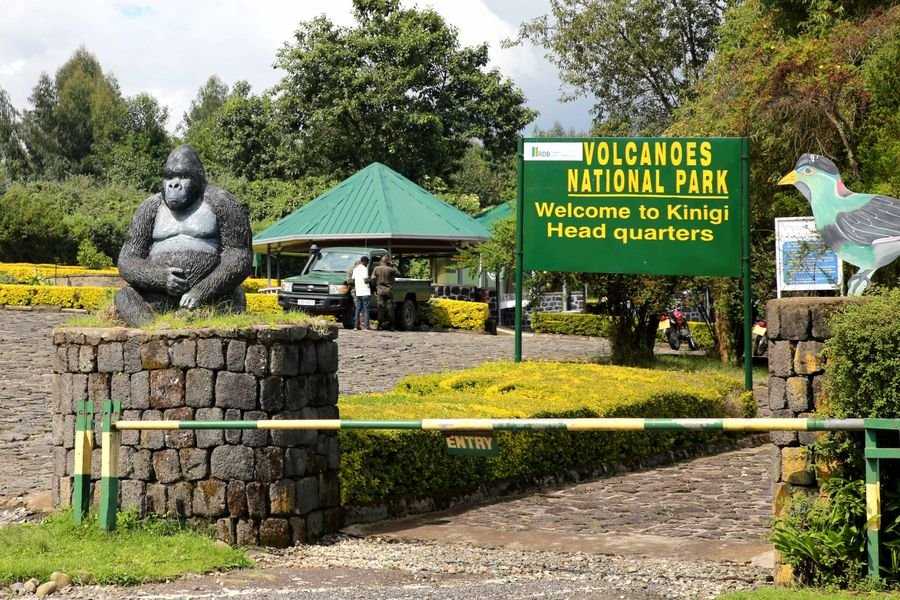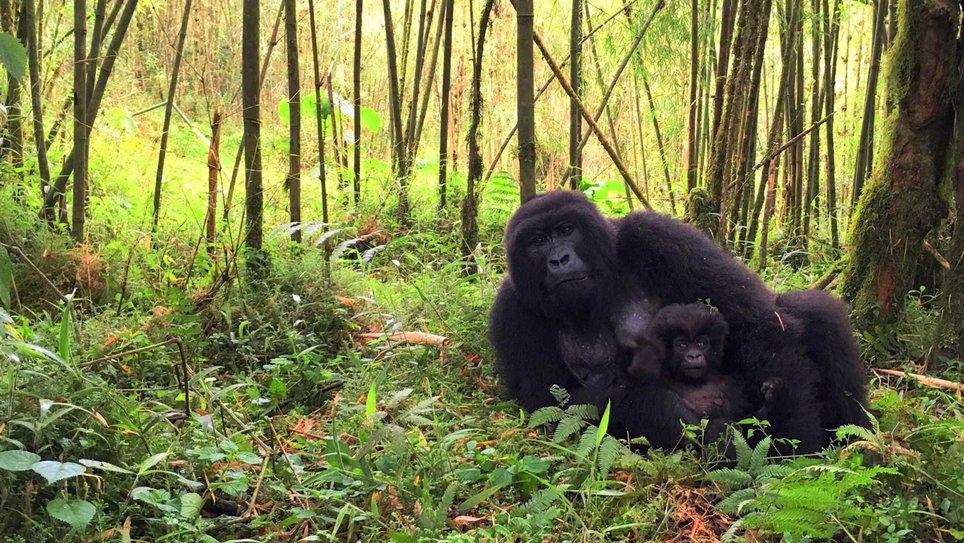
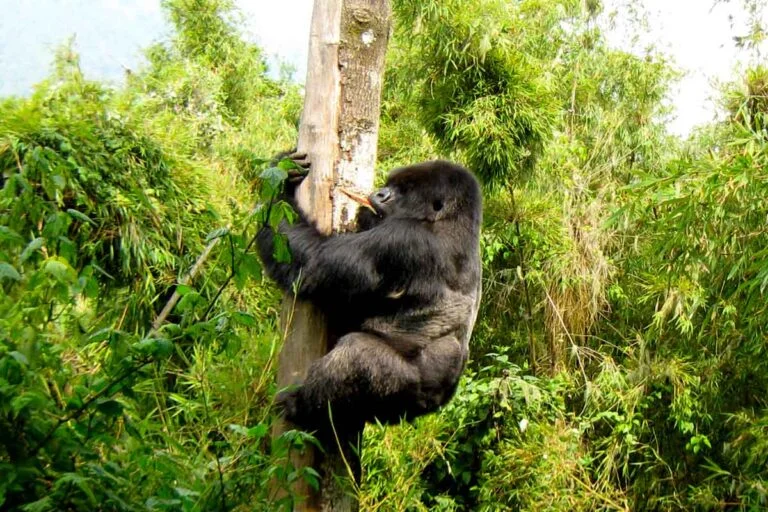
Gorilla trekking rwanda what to expect at kinigi: For anyone planning gorilla trekking Rwanda, the question of what to expect at Kinigi is usually answered badly — as a vague “you get a briefing” — when it is actually the part of the day that determines how the rest of it goes. Kinigi is where every Volcanoes National Park gorilla trek begins: registration, the briefing itself, allocation to a gorilla family, and the transfer to the trailhead all happen from the park headquarters at the foot of the Virunga volcanoes.
This article walks through the morning in order, what each stage involves, what to bring, and the rules the briefing will set out. It is a practical guide to the hours before the forest, not to the trek itself — the Rwanda gorilla trekking guide covers the trekking day and the permit in more detail.
Where Kinigi Is and Why Every Trek Starts There
Kinigi is a small town in Musanze District, in Rwanda’s Northern Province, at the base of the Virunga volcano chain. It sits a short drive from Musanze town and is the gateway to Volcanoes National Park. The park headquarters — where gorilla trekking registration and briefing take place — is at Kinigi.
The location matters because it shapes the trip. Most trekkers stay in or near Musanze or Kinigi the night before, because the morning starts early and the drive from Kigali is long enough that arriving on the day is not realistic. Staying close to Kinigi removes the risk of a delay on the road affecting the trek.
The drive from Kigali to Kinigi is usually done the afternoon before a trek, or split with a stop. The exact drive time depends on traffic, road conditions and where in Kigali you start, and should be confirmed with your operator for your specific dates rather than estimated from a general article.
Gorilla Trekking Rwanda: What to Expect at Kinigi
The Kinigi morning follows a fixed sequence. The exact start time is confirmed the day before the trek, but the pattern is consistent.
Registration and permit check
On arrival at the park headquarters, trekkers register. This is where the permit is checked and matched against the passport. Bring the passport you used to book the permit — the name on the permit must match it.
Registration is also where the group is confirmed. Permits are issued per person, and the park office knows how many trekkers are expected that day. The check is quick, but arriving with the permit and passport ready speeds it up.
The briefing itself
The briefing is delivered to all trekkers heading out that morning, usually as a group, before family allocation. It covers the rules of the trek, what to expect in the forest, safety, and the specific points that matter for the gorillas — distance, behaviour, photography rules and illness.
The briefing is not a formality. The rules it sets out are the conditions on which the trek is permitted, and rangers and trackers enforce them. The most important are set out later in this article.
Family allocation
After the briefing, trekkers are allocated to a gorilla family. Rwanda allocates visitors across the habituated families in Volcanoes National Park, with a maximum of eight visitors per family per day. The allocation takes into account the fitness and preferences of the group, the terrain and altitude of each family’s current location, and how far each family has moved.
Trekkers can state a preference — for a shorter or longer walk, for a family with infants, or for a family with a particular silverback — but the allocation is the park’s decision, not the visitor’s. The Rwanda gorilla trekking guide covers the families and their general character.
Porter hire and trailhead transfer
Porters are hired at the park headquarters before departure. A porter carries bags, steadies trekkers on difficult ground and knows the trail. The fee is set locally and paid directly — confirm current rate when booking.
After porter hire, the group transfers to its trailhead. The trailhead depends on the family allocated and can be a short drive from Kinigi or further into the park. The transfer is by vehicle, arranged by the operator or the park, and is the last stage before the walk in.
What the Briefing Covers
The briefing sets out the rules of the trek. The core points are consistent across Rwanda and Uganda, and they are the conditions on which gorilla tourism operates.
- Maximum eight visitors per family. This is a hard cap, applied at allocation and enforced on the trek.
- One hour with the gorillas. The standard encounter is limited to one hour, counted from when the group reaches the family. The four-hour habituation experience is a separate permit and a separate product, and it is offered in Uganda’s Rushaga sector rather than Rwanda.
- Minimum age of 15. No trekker under 15 is permitted to trek.
- Seven-metre distance. Visitors keep a minimum distance from the gorillas, and the guides and trackers manage the encounter so that the gorillas can move freely.
- No flash photography. Flash is not permitted, and the briefing covers the photography rules.
- No trekking when ill. Anyone with a cold, flu or other infectious illness is not permitted to trek, because of the risk to the gorillas. This is a public health rule, not a courtesy.
- Behaviour in the forest. Keep voices low, follow the guide’s instructions, do not eat or drink in the gorillas’ presence, and keep bags and equipment controlled.
- Illness and refunds. The rules on being turned away for illness at the briefing, and what happens to the permit in that case, are set by the park and should be confirmed with the operator before travel — this is a point on which the outcome varies.
What to Bring to Kinigi
The Kinigi morning is outdoors and at altitude, and the list is short but specific. The Rwanda gorilla trekking guide covers the full kit list; for the briefing itself, bring:
- Passport — the one used to book the permit
- Permit confirmation — printed or on the phone, whichever the operator has provided
- Day pack with the trekking kit — waterproof layer, water, snacks, camera, spare batteries
- Boots and gaiters — already on or in the vehicle, since the transfer to the trailhead follows the briefing
- Cash for the porter — the fee is paid at Kinigi before departure
- A warm layer — Kinigi is at altitude and the morning is cool before the walk starts
A note on packing: the briefing is not the time to repack a suitcase. Trekkers leave most luggage at the lodge and travel to the trailhead with a day pack. Confirm with the operator what is carried and what stays behind.
After the Trek
The trekking group returns from the forest to the trailhead and then back to Kinigi or to the lodge. The return is usually quieter than the morning — the briefing and allocation are the social part of the day, and the trek itself is a small group in the forest.
The rest of the day is usually free. Many trekkers use it for a cultural visit, a walk, or rest. The Uganda and Rwanda tours page covers how a trekking day fits into a longer itinerary, and the Rwanda safaris page covers the wider country.
What a Rwanda Gorilla Trekking Trip Costs
Verified costs are set out below. The permit and visa figures are fixed and confirmed; other elements vary by operator, lodge and itinerary and should be confirmed at the time of booking.
| Element | Where | Price (per person) |
|---|---|---|
| Rwanda gorilla permit | Volcanoes National Park — no low season discount | $1,500 |
| Rwanda e-visa — single entry | Applied for at irembo.gov.rw | $50 |
| Rwanda e-visa — multiple entry | Applied for at irembo.gov.rw | $70 |
| East African Tourist Visa | Uganda + Kenya + Rwanda, 90 days multi-entry; does not cover Tanzania | $100 |
| Porter fee at Kinigi | Set locally, paid at the park headquarters | Confirm current rate when booking |
| Transport from Kigali to Kinigi/Musanze | By road or by helicopter transfer | Confirm current rate when booking |
| Accommodation near Kinigi or Musanze | Lodges in and around the park | Confirm current rate when booking |
| Golden monkey permit | Volcanoes National Park | Confirm current rate when booking |
| Akagera National Park fees | Akagera National Park | Confirm current rate when booking |
Rwanda permit and park fees are set by the Rwanda Development Board and revised periodically. Verify current rates before travel (verify current requirements before travel — rules change).
Frequently Asked Questions
What happens at the Kinigi briefing?
Trekkers register and have their permits checked, attend a briefing on the rules of the trek, are allocated to a gorilla family, hire porters, and then transfer to their trailhead. The whole sequence happens at the Volcanoes National Park headquarters at Kinigi before the walk into the forest.
What time does gorilla trekking start in Rwanda?
The morning starts early, and the exact time is confirmed the day before the trek. The sequence — registration, briefing, allocation, porter hire, transfer — takes place before the walk in, so the day begins at the park headquarters rather than at the trailhead. Confirm your specific pick-up time with the operator.
Where is the Volcanoes National Park headquarters?
At Kinigi, in Musanze District in Rwanda’s Northern Province, at the base of the Virunga volcanoes. Most trekkers stay in or near Musanze or Kinigi the night before the trek.
How are gorilla families allocated?
Visitors are allocated across the habituated families, with a maximum of eight per family. The park takes into account group fitness and preferences, the terrain of each family’s current location, and how far each family has moved. Trekkers can state a preference, but the allocation is the park’s decision.
What should I bring to the Kinigi briefing?
Passport, permit confirmation, a day pack with the trekking kit, boots and gaiters, cash for the porter, and a warm layer. Most luggage stays at the lodge. Confirm with the operator what is carried to the trailhead and what remains behind.
Do I need a porter for gorilla trekking in Rwanda?
A porter is not mandatory but is strongly recommended. Porters carry bags, steady trekkers on difficult ground and know the trail. They are hired at Kinigi before departure, and the fee is set locally — confirm current rate when booking.
What are the main rules for gorilla trekking in Rwanda?
A maximum of eight visitors per family, one hour with the gorillas, minimum age 15, a seven-metre minimum distance, no flash photography, and no trekking when ill with a cold or flu. The rules are set out in the briefing and enforced by the rangers and trackers.
Can I trek gorillas if I have a cold?
No. Anyone with a cold, flu or other infectious illness is not permitted to trek, because of the risk to the gorillas. The rules on refunds or rebooking in that case are set by the park and should be confirmed with the operator before travel.
How far is Kinigi from Kigali?
Kinigi is in Rwanda’s Northern Province, near Musanze, and the drive from Kigali takes a substantial part of the day. The exact time depends on traffic, road conditions and your starting point in Kigali, and should be confirmed with your operator for your specific dates.
How to Book
The Kinigi morning works best when the night before is spent close to the park, and when the permit and the itinerary are confirmed together. Afraeka Adventures is a licensed Ugandan operator based in Entebbe and Kampala, running safaris and primate trekking in Uganda, Rwanda, Kenya and Tanzania since 2018.
Contact Afraeka Adventures at info@afraekaadventures.com or use the enquiry form on our website with your dates, group size, fitness levels and whether the trek is the main purpose of the trip or part of a longer Rwanda itinerary. Useful starting points:
- Rwanda gorilla trekking — permits, sectors and what a trekking day involves
- Rwanda safaris — itineraries across the country
- Uganda and Rwanda tours — combined itineraries
- East Africa multi-country safaris
- All tour packages
- Enquiry form