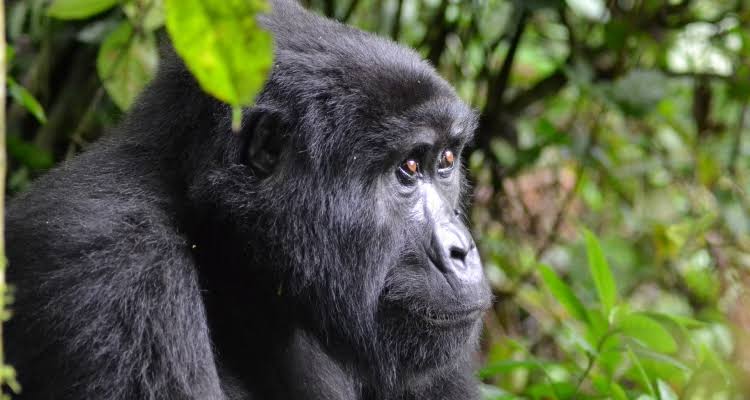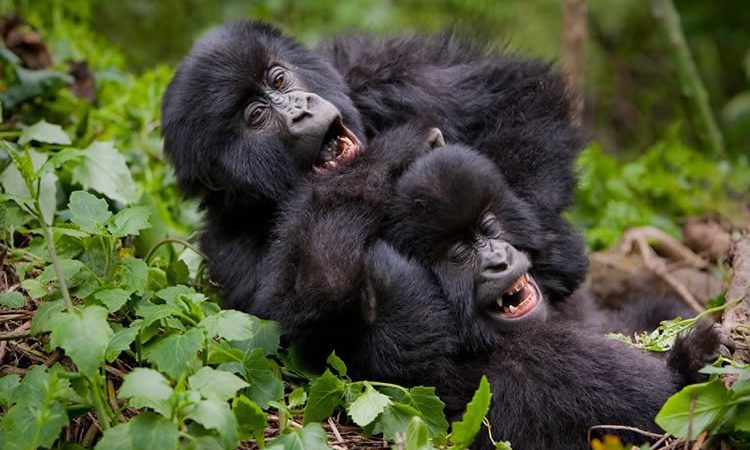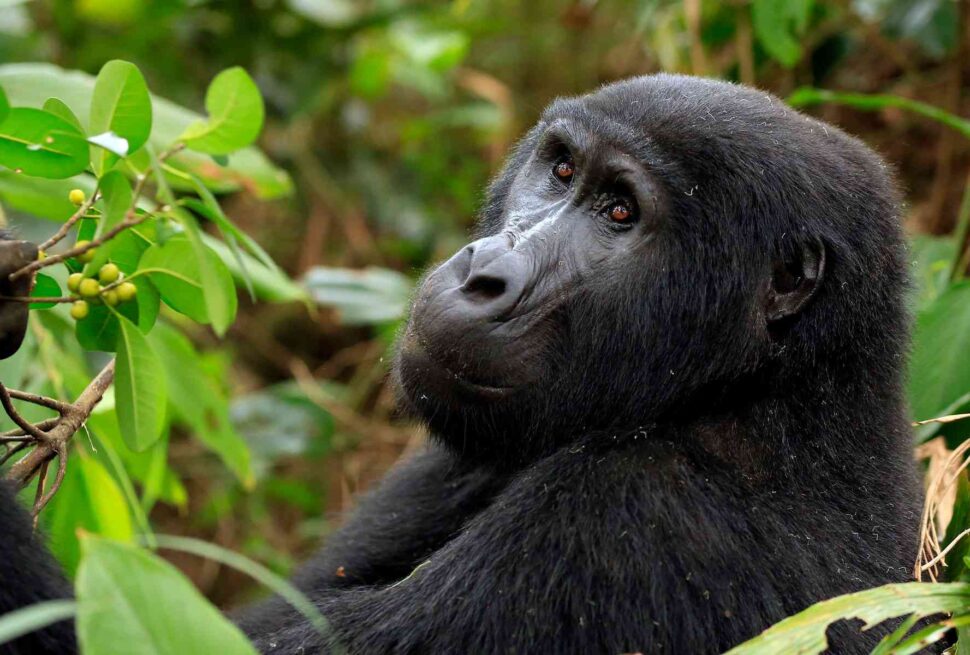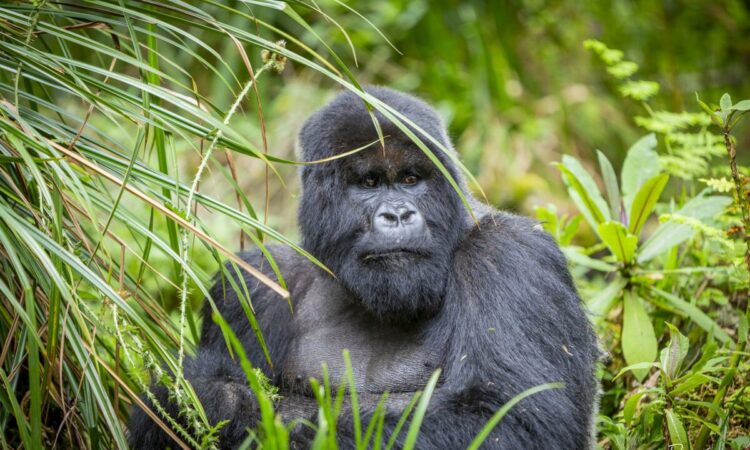

What do mountain gorillas eat? The short answer is plants — a lot of them, of many kinds, for most of the waking day. Mountain gorillas are herbivores, and the greater part of their diet is leaves, shoots, stems and roots, with bamboo featuring heavily in the Virunga volcanoes and a wider mix of forest vegetation in Bwindi. The longer answer is more interesting, because the diet changes with altitude, with season and with the park, and it is the reason a gorilla family moves the way it does.
This matters to a trekker for a practical reason. The trackers find a gorilla family by following the signs it leaves — chewed stems, stripped bark, trampled vegetation and the nests it slept in the night before. Understanding what the gorillas eat is, in effect, understanding what you are walking through.
This article covers the diet, how it varies between the two parks where mountain gorillas live, and what a trekker is likely to see. It is general wildlife information rather than a substitute for the guide’s explanation on the day, which is always more current and more local.
What Do Mountain Gorillas Eat? The Basics
Mountain gorillas are herbivorous. Their diet is dominated by plant material, and the bulk of it comes from leaves, shoots, stems, pith and roots. Fruit forms a smaller part of the diet than it does for some other great apes, and in the high-altitude Virunga volcanoes fruit is scarce enough that it is a minor component.
Insects and other small invertebrates are eaten occasionally, usually incidentally while feeding on vegetation. The proportion is small, and the diet is not meaningfully described as omnivorous. Mountain gorillas are not hunters and do not take vertebrate prey.
Water is largely taken in through vegetation rather than by drinking. Mountain gorillas do drink from streams and pools when they encounter them, but the moisture in leaves, shoots and bamboo supplies much of what they need. This is one reason a family can range widely without returning to a fixed water source.
The volume of food is considerable. A large adult gorilla eats a substantial weight of vegetation each day, and feeding occupies much of the morning and afternoon, with a rest period around the middle of the day. Widely quoted daily figures vary between sources and between individuals, so treat any specific number as an indication rather than a rule.
The Diet Differs Between Bwindi and the Virunga Volcanoes
Mountain gorillas live in two areas, and the two are not identical in habitat. That difference shows up in the diet.
Bwindi Impenetrable National Park, Uganda
Bwindi sits at a lower altitude than the Virunga volcanoes and holds a richer mix of forest types, from lowland-style forest at the edges to high-altitude forest on the ridges. The gorillas there eat a wide range of leaves, shoots, stems, roots and some fruit, and the diet reflects the diversity of the forest. Bwindi gorillas are generally described as having a more varied plant diet than their Virunga counterparts.
The vegetation itself is dense, and much of what the gorillas eat grows at the level a trekker walks through. This is part of why the forest is described as impenetrable, and part of why the trackers’ work is skilled.
Mgahinga Gorilla National Park and Volcanoes National Park
Mgahinga, in Uganda, and Volcanoes National Park, in Rwanda, sit on the Virunga volcanoes at higher altitude. Bamboo grows here, and bamboo is a major food source for the gorillas in this range. The diet also includes leaves, shoots and the distinctive high-altitude plants of the volcano slopes.
The Virunga gorillas are the population most closely associated with bamboo feeding, and bamboo shoots are a seasonal highlight. The general pattern of the diet in the Virungas is narrower than in Bwindi, in keeping with the more specialised high-altitude habitat.
Why Bamboo Matters
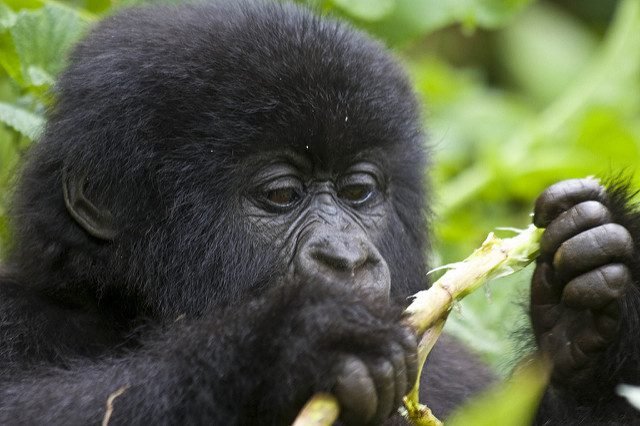
Bamboo is worth understanding because it explains a lot of gorilla behaviour in the Virunga range. It grows in stands, it regenerates quickly, and it provides a food source that is available in quantity and is relatively easy to process. Gorillas strip the outer layers and eat the soft inner pith and shoots.
Bamboo feeding is also one reason the Virunga gorillas range the way they do. A family will move between bamboo stands and other vegetation, and the trackers’ knowledge of where those stands are and when they are productive is part of what makes the trek predictable.
The relationship between bamboo and gorilla conservation is covered in more detail through the authorities that manage the parks — the Uganda Wildlife Authority for Mgahinga and Bwindi, and the Rwanda Development Board for Volcanoes National Park.
How Gorillas Feed Through the Day
A gorilla day has a rhythm, and it is mostly about food. The pattern is broadly similar across the population.
Morning feeding. The family feeds after waking, moving through vegetation and eating as it goes. The morning is one of the two main feeding periods.
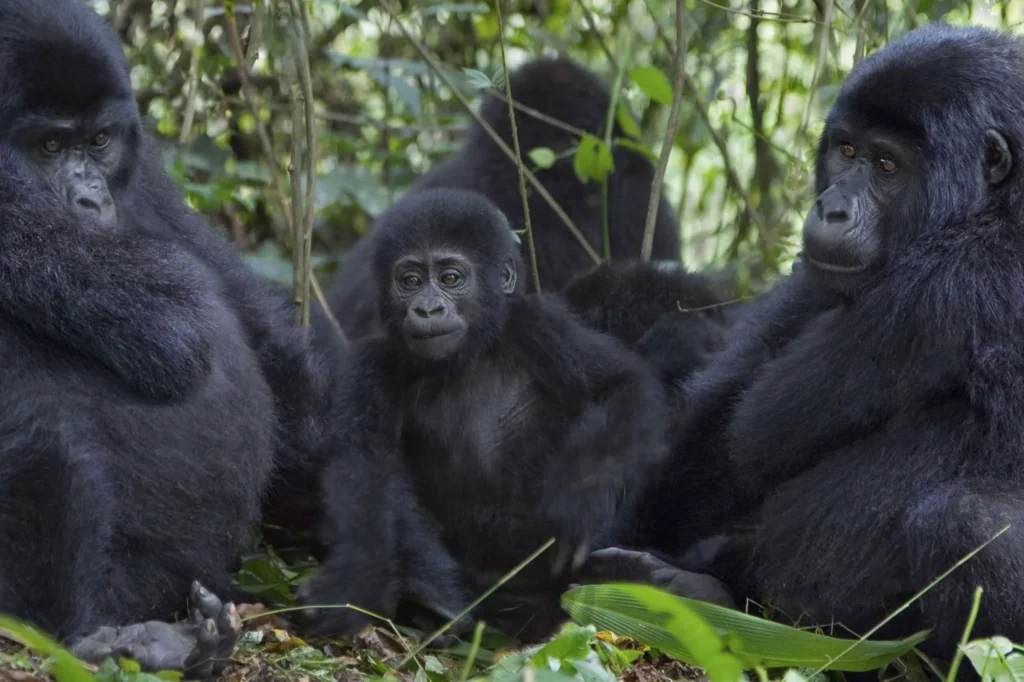
Midday rest. Around the middle of the day the family rests. Adults may sleep, infants play, and the silverback stays close. This is one of the reasons a trek can involve waiting while the family is settled.
Afternoon feeding. Feeding resumes in the afternoon, and the family moves on as it feeds.
Nesting for the night. Each gorilla builds a nest of folded vegetation to sleep in, usually on the ground and sometimes in a tree. The nests from the previous night are one of the signs trackers use to locate the family the next morning — and a reason the trek can start from a point the family left behind.
Because feeding drives movement, a family’s location on the day of a trek depends heavily on what it ate and where it went the day before. This is why the length and difficulty of a trek vary so much from one day to the next, and why no operator can promise a specific walking distance.
What You Will Actually See on a Trek
On the trek itself, the diet shows up in small details before it shows up in the gorillas.
- Chewed and stripped stems at the side of the trail — the residue of a previous feeding pass
- Discarded plant parts where a family has fed, often in a loose scatter
- Trampled vegetation along the route the family has taken
- Old nests from the previous night, on the ground or low in a tree
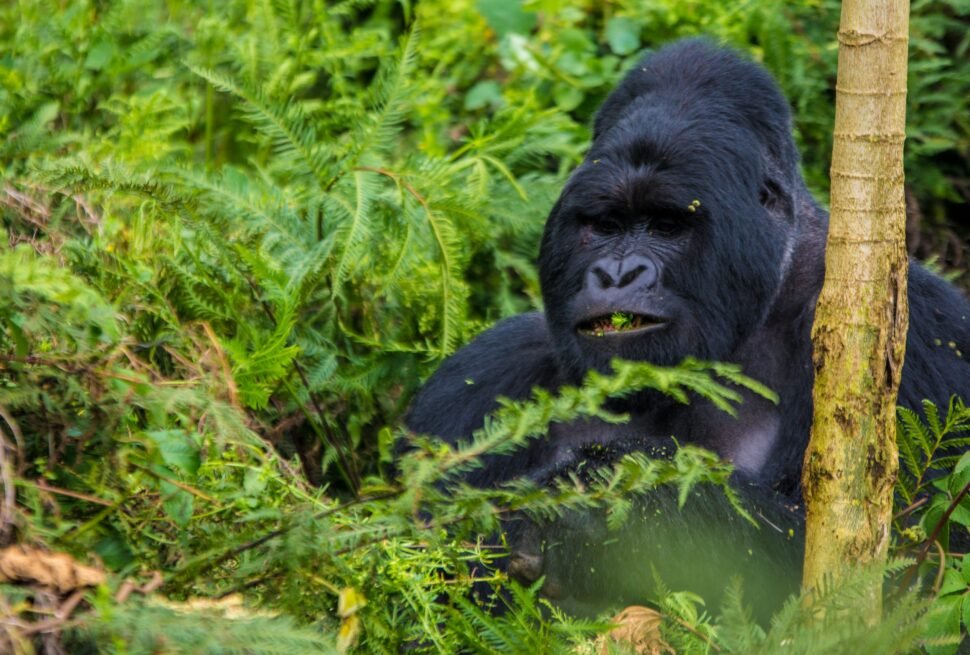
- Gorillas feeding once the family is reached — reaching for leaves, stripping stems, and processing plant material with their hands and teeth
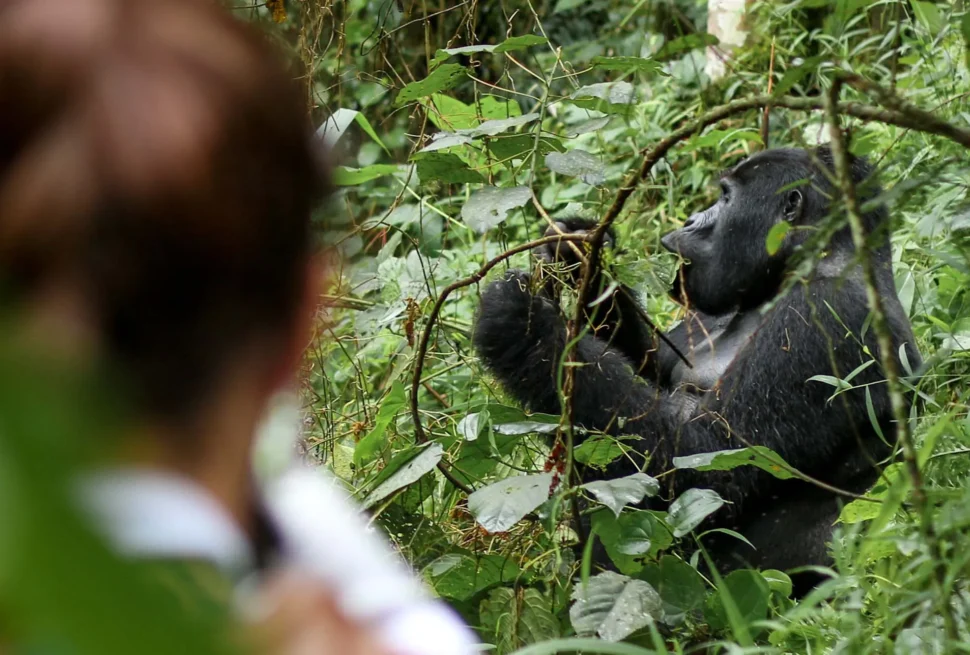
The one-hour encounter is often spent watching feeding behaviour more than anything else, particularly if the family has not yet rested. The guides and trackers manage the encounter so that the gorillas can feed without interference.
What you will not usually see is hunting. Mountain gorillas feed on plants, and the drama of a trek is in the encounter and the observation, not in a predator-prey moment. For many trekkers that is part of what makes the experience distinctive — the hour is quiet, close and observational. The Uganda gorilla trekking guide covers what the trekking day involves, and the Bwindi gorilla trekking page covers the park’s sectors.
Why the Diet Matters for Conservation
Diet and habitat are the same subject for mountain gorillas. A family needs a large area of forest with the right mix of vegetation, and the population depends on that habitat staying intact. The global population is around 1,000 individuals, and the species is confined to Uganda, Rwanda and the Democratic Republic of Congo.
That is the link between the permit system and the forest. Gorilla tourism is regulated because the habitat is finite and the population is small, and the rules that apply on a trek — eight visitors per family, one hour with the gorillas, a seven-metre distance, no trekking when ill — exist to keep human impact on the animals and their range as low as possible.
Mountain gorillas are not found in Kenya or Tanzania. Any itinerary that promises gorilla trekking in either country is wrong on the geography. The Rwanda gorilla trekking guide covers the Rwanda population and its parks.
What a Gorilla Trekking Trip Costs
Verified costs are set out below. The permit and visa figures are fixed and confirmed; other elements vary by operator, lodge and itinerary and should be confirmed at the time of booking.
| Element | Where | Price (per person) |
|---|---|---|
| Uganda gorilla permit | Bwindi Impenetrable NP and Mgahinga Gorilla NP | From $800 (From $600 in April, May and November) |
| Rwanda gorilla permit | Volcanoes National Park — no low season discount | $1,500 |
| Uganda gorilla habituation experience | Rushaga sector, Bwindi only — 4 hours | From $1,500 |
| Uganda e-visa | Applied for at visas.immigration.go.ug | $50 |
| Rwanda e-visa — single entry | Applied for at irembo.gov.rw | $50 |
| East African Tourist Visa | Uganda + Kenya + Rwanda, 90 days multi-entry; does not cover Tanzania | $100 |
| Porter fee | Set locally at the trailhead or park headquarters | Confirm current rate when booking |
| Accommodation near the trailhead | Bwindi, Mgahinga, Kinigi and Musanze | Confirm current rate when booking |
| Chimpanzee trekking permit | Kibale Forest and other forests | Confirm current rate when booking |
Permit and park fees are set by the relevant authorities and revised periodically. Verify current rates before travel (verify current requirements before travel — rules change).
Frequently Asked Questions
What do mountain gorillas eat?
Mountain gorillas are herbivores. Their diet is dominated by leaves, shoots, stems, pith and roots, with bamboo featuring heavily in the Virunga volcanoes and a wider mix of forest vegetation in Bwindi. Fruit is a smaller component, and insects are eaten only occasionally.
Are gorillas vegetarian?
The diet is overwhelmingly plant-based, and mountain gorillas are properly described as herbivorous. Small invertebrates are eaten incidentally, but the diet is not meaningfully omnivorous and mountain gorillas do not hunt vertebrate prey.
Do gorillas eat meat?
No. Mountain gorillas are not hunters and do not take vertebrate prey. Their diet is plant material, with occasional incidental invertebrates.
What do gorillas eat in Bwindi?
Bwindi sits at a lower altitude than the Virunga volcanoes and holds a richer mix of forest types. Gorillas there eat a wide range of leaves, shoots, stems, roots and some fruit, and are generally described as having a more varied plant diet than the Virunga population.
Why do gorillas eat bamboo?
Bamboo grows in stands in the Virunga range, regenerates quickly, and provides food in quantity. Gorillas strip the outer layers and eat the soft inner pith and shoots. Bamboo feeding is closely associated with the Virunga population in Mgahinga and Volcanoes National Park.
Do mountain gorillas drink water?
They drink from streams and pools when they encounter them, but much of their water comes from the vegetation they eat. Leaves, shoots and bamboo supply a large part of their moisture needs.
How much does a gorilla eat a day?
A large adult eats a substantial weight of vegetation each day, and feeding occupies much of the morning and afternoon. Widely quoted daily figures vary between sources and individuals, so any specific number should be treated as an indication rather than a rule.
Will I see gorillas eating on a trek?
Often, yes. The one-hour encounter frequently involves watching feeding behaviour, particularly if the family has not yet settled for its midday rest. Trekkers also see the signs of previous feeding — chewed stems, stripped vegetation and old nests — along the trail.
How to Book
Gorilla trekking is a permit-based activity with a fixed daily capacity, and the trekking day is shaped by where the family fed the day before. Afraeka Adventures is a licensed Ugandan operator based in Entebbe and Kampala, running safaris and primate trekking in Uganda, Rwanda, Kenya and Tanzania since 2018.
Contact Afraeka Adventures at info@afraekaadventures.com or use the enquiry form on our website with your dates, group size and whether you want to trek in Uganda, Rwanda or both. Useful starting points:
- Uganda gorilla trekking — permits, sectors and what the trek involves
- Bwindi gorilla trekking — sectors, trailheads and the forest
- Rwanda gorilla trekking — Volcanoes National Park and the Rwanda permit
- Uganda safari packages — itineraries that include a trek
- Rwanda safaris — itineraries across the country
- Uganda and Rwanda tours — combined itineraries
- East Africa multi-country safaris
- All tour packages
- Enquiry form