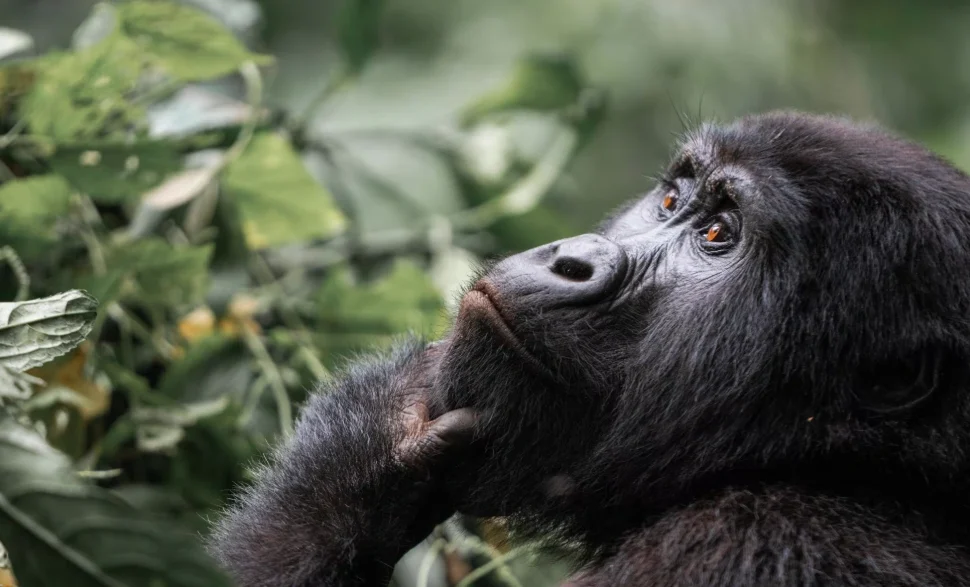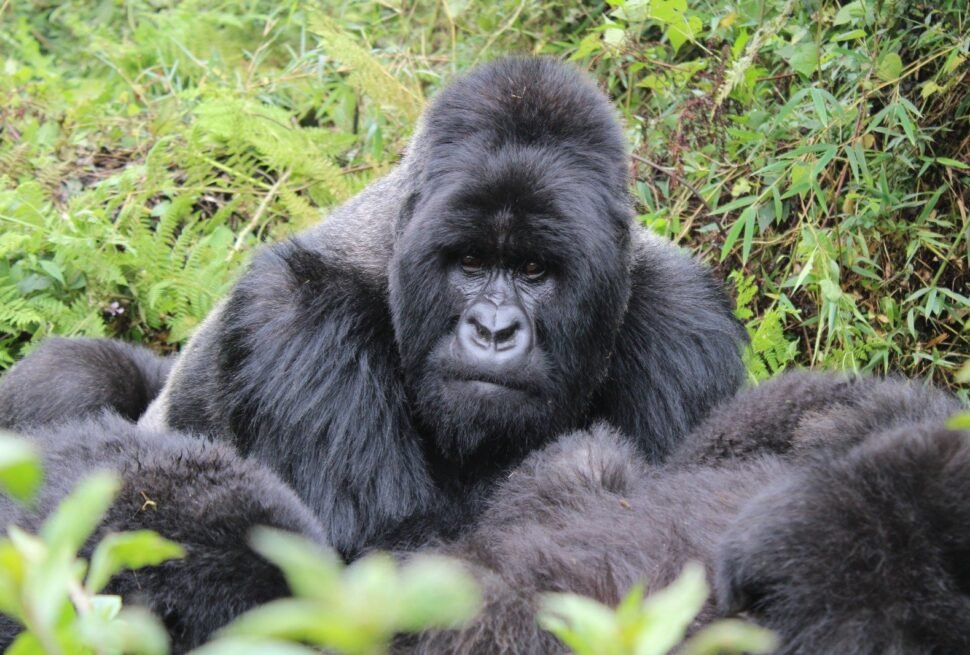
Most travellers who look into mountain gorilla trekking in Uganda come across two permits and assume one is simply a longer version of the other. It isn’t. The Gorilla Habituation Experience is a distinct product: a four-hour visit with a gorilla family that is still in the final stages of being habituated to human presence, available in one sector of one park, at a permit price that sits well above the standard trek. This guide sets out exactly what the extra time and money buy, and where the experience is not the right fit.
What the Gorilla Habituation Experience Actually Is
Habituation is the multi-year process by which a wild mountain gorilla family becomes accustomed to the quiet, predictable presence of humans. Uganda Wildlife Authority trackers and researchers visit a family daily over that period, gradually closing the distance until the gorillas carry on feeding, resting and socialising without fleeing. Only once that process is complete does a family open to standard tourism.
The habituation experience places a small number of visitors alongside that ongoing work for four hours with a family still in the late stages of habituation. It is not a tourism product layered on top of research — it is access to the research process itself, which is why the numbers are tightly limited and the rules differ from a standard trek.
Four Hours vs One Hour: What Actually Changes
On a standard trek, the hour with the gorillas is a visit. The family is located, the group is positioned, cameras come out, and sixty minutes later the group withdraws so the next group can move in. On the habituation experience, four hours means the family sets the agenda. If they feed, you watch them feed. If they move, you move with them. If they nest, you observe the process from a respectful distance.
The practical differences come down to a handful of points:
- Time in the forest with the family: one hour versus four hours.
- Pace and positioning: a standard trek is largely stationary. A habituation visit follows the family, which means more movement, more re-positioning, and more patience.
- Behaviour observed: four hours covers a much wider slice of the family’s day — feeding, travelling, resting, and interactions between individuals that a single hour rarely captures.
- Photography: changing light, changing angles, and time to wait for a clear line of sight rather than taking the first shot available.
- Predictability: less of it. A partially habituated family behaves differently from a fully habituated one, and guides may keep visitors further back or lower to the ground depending on how the family responds on the day.
The experience is also physically harder. Four hours of following a moving family through Bwindi’s terrain, often off established paths, is a considerably longer and more demanding day than the standard trek.
Where It Happens: Rushaga Sector Only
The habituation experience is offered in the Rushaga sector of Bwindi Impenetrable National Park and nowhere else. It is not available in Mgahinga Gorilla National Park, and it is not offered in Rwanda, where the published product is the standard one-hour visit to a fully habituated family in Volcanoes National Park. Standard gorilla trekking in Uganda runs across Bwindi’s sectors and Mgahinga; the habituation permit is a Rushaga-only product. Travellers who want the four-hour format need to plan their accommodation and routing around Rushaga specifically.
Permit Prices Compared
The habituation permit is the most expensive gorilla product in East Africa, and the comparison is worth making in plain numbers. Uganda’s standard permit carries a low-season rate; Rwanda’s does not; the habituation permit is not listed with a low-season discount in UWA’s published pricing, so confirm the current rate at the time of booking.
| Experience | Where | Time with gorillas | Permit price (From $X per person) |
|---|---|---|---|
| Standard gorilla trek — Uganda | Bwindi Impenetrable NP and Mgahinga NP | 1 hour | From $800 (From $600 in April, May and November) |
| Gorilla habituation experience — Uganda | Rushaga sector, Bwindi Impenetrable NP only | 4 hours | From $1,500 |
| Standard gorilla trek — Rwanda | Volcanoes NP | 1 hour | From $1,500 (no low-season discount) |
One honest comparison point: $1,500 buys one hour in Rwanda or four hours on the habituation experience in Uganda. That does not make one better than the other — Rwanda’s permit is a different product in a different park, and the logistics of each trip carry their own costs — but travellers weighing the two should know they are comparing the same money against very different amounts of time.
Permit prices are set by the respective wildlife authorities and are subject to change. Verify current rates before travel.
Who the Habituation Experience Suits — and Who It Doesn’t
This is a premium product and it is not the right choice for every traveller.
It suits: photographers who need more than sixty minutes in variable forest light; repeat visitors who have already done a standard trek and want something different; travellers specifically interested in conservation and research; and anyone comfortable with a longer, more unpredictable day in the forest in exchange for a deeper look at gorilla behaviour.
It doesn’t suit: first-time visitors on a tight budget who simply want to see mountain gorillas — a standard permit delivers that at a lower price; travellers with limited mobility or limited time in the country; and anyone who wants certainty about how close the family will be or how the encounter will unfold. A partially habituated family is not a guaranteed clear view.
The minimum age for mountain gorilla trekking is 15, and that applies here too.
Fitness, Age and Practical Preparation
Expect a longer day than a standard trek, with more time on your feet and more off-path movement. Bwindi’s terrain is steep and often slick, and the altitude is noticeable. A reasonable level of fitness matters, and hiring a porter is standard practice and worth doing. Long sleeves and trousers, sturdy boots, gloves, rain protection and a dry bag for camera gear are the basics; a packed lunch and enough water matter more here than on a one-hour visit because the day is longer.
Group-size limits differ between the standard trek and the habituation experience, and the standard rule of a maximum of eight visitors per gorilla family does not automatically describe the habituation format. Confirm the current limit with UWA or with your operator at the time of booking.
Permit numbers for this product are small and fixed per day. Availability is not guaranteed — book well in advance, particularly for the drier months of June to September and December to February.
Getting There, Permits and Visas
Rushaga sits in the southern part of Bwindi. Most travellers reach it by road from Entebbe or Kampala, or by crossing from Rwanda and driving in from that side. Road transfers are long, so build a night at the park before your trek date rather than attempting an arrival on the morning itself.
Uganda’s e-visa costs $50 and is applied for at visas.immigration.go.ug (verify current requirements before travel — rules change). Travellers combining Uganda with Rwanda and Kenya may want to look at the East African Tourist Visa, at $100 for 90 days of multi-entry travel across the three countries, though it is not the right choice for every itinerary — the Uganda visa requirements guide covers the trade-offs. Note that the Uganda–Russia visa waiver announced in October 2026 covers diplomatic and service passports only, does not apply to ordinary tourist passports, and has not yet entered into force.
For the trekking product itself, the main Uganda gorilla trekking guide covers the standard experience, park sectors, and what a trekking day looks like from start to finish.
How to Book
Habituation permits are date-specific, sold per person, and limited in number, so the earlier a date is locked in, the better. Afraeka Adventures is a licensed Ugandan operator based in Entebbe and Kampala, running gorilla and primate safaris in Uganda, Rwanda, Kenya and Tanzania since 2018.
Contact Afraeka Adventures at info@afraekaadventures.com or use the enquiry form on our website. Useful starting points:
- Uganda gorilla trekking — the standard trek explained
- Uganda safari packages — itineraries that include Rushaga
- Uganda and Rwanda combined gorilla tours — for travellers comparing both permits
- All tour packages
- Enquiry form