
Kibale Forest National Park holds the highest concentration of primates recorded anywhere in East Africa, and it is the reason chimpanzee trekking in Uganda is a serious alternative to — or an addition to — gorilla trekking rather than an afterthought. This guide covers what a trekking day at Kibale actually involves, how the standard trek differs from the full-day habituation experience, when to go, what to budget, and how to fit Kibale into a wider Uganda itinerary without wasting days in transit.
Why Kibale Forest for Chimpanzees
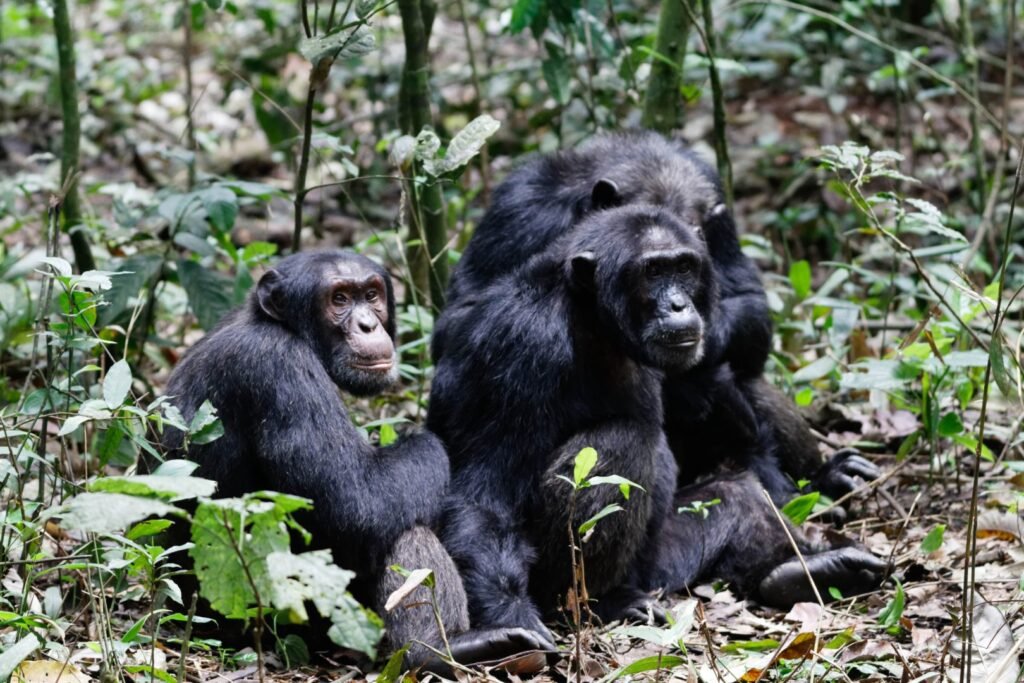
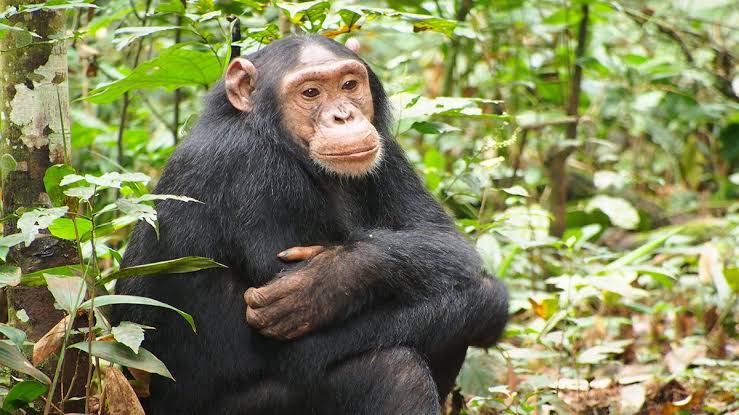
Kibale is a mid-altitude forest reserve in western Uganda, and thirteen primate species have been recorded within it. That figure is what gives the park its reputation: red colobus, black-and-white colobus, L’Hoest’s monkeys, red-tailed monkeys, grey-cheeked mangabeys and olive baboons all share the forest with a chimpanzee population that has been studied continuously for decades. The long-running research presence is precisely why chimpanzee viewing here is as reliable as it is — the communities around the Kanyanchu trailhead are habituated to human observers, and the tracking infrastructure is mature.
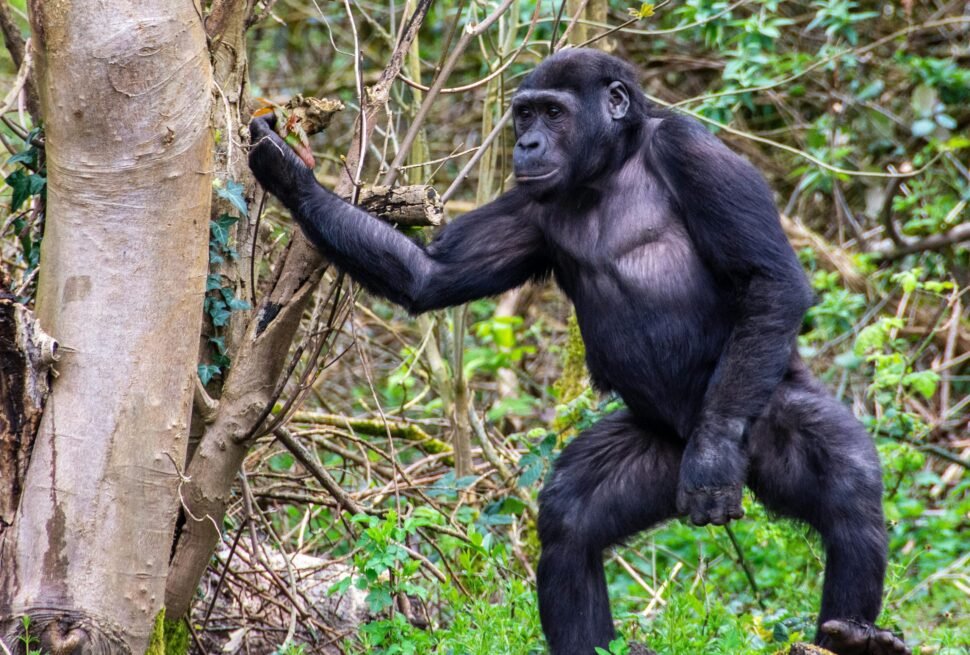
It is worth being precise about one thing: Kibale is chimpanzee country, not gorilla country. Mountain gorillas are found in Uganda only in Bwindi Impenetrable National Park and Mgahinga Gorilla National Park, in the far south-west. Kibale sits considerably further north, and the two experiences are usually combined across a single trip rather than substituted for one another.
What a Trekking Day at Kanyanchu Looks Like
Most chimpanzee trekking departs from the Kanyanchu Visitor Centre, which acts as the park’s briefing point and trailhead. The day starts early — briefing typically happens in the morning, with treks setting off in groups once permits and guide allocations are confirmed.
From there, tracking teams head into the forest following calls and fresh signs from the previous afternoon’s nest sites. Chimpanzees move overnight and travel through the day, so the walk to reach a community varies considerably: some mornings it is under an hour, others it takes considerably longer. The forest itself is easier underfoot than Bwindi’s steep ridges, but it is still a forest walk over roots, mud and fallen timber, and the humidity is high.
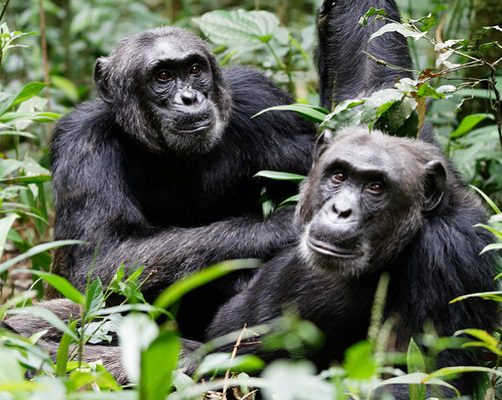
Once the community is located, the standard visit is one hour with the chimpanzees (verify current rules before travel — rules change). That hour is spent observing feeding, grooming, play and social interaction at close range, with the group positioned by guides and trackers. Chimpanzees are considerably more mobile and more vocal than gorillas, and the encounter feels more dynamic as a result — a community can shift position several times within the hour.
Standard Trek vs the Chimpanzee Habituation Experience
As with gorillas, Kibale offers two distinct products, and the difference is not simply duration.
The standard chimpanzee trek is a morning or half-day outing to a fully habituated community, with one hour with the chimpanzees.
The Chimpanzee Habituation Experience is a full-day product that puts visitors alongside researchers and trackers working with a community still in the process of habituation. It typically starts before dawn, so that the day begins with the chimpanzees leaving their nests, and continues through their travel and feeding until they nest again in the late afternoon. The appeal is the breadth of behaviour observed and the research context; the trade-off is a long day in the forest, a higher fee, and less predictability about how close the community will allow approach.
In practical terms: a standard trek suits most first-time visitors and fits neatly into a multi-park itinerary. The habituation experience suits photographers, repeat visitors, and travellers specifically interested in primate research — and it consumes an entire day that would otherwise go to another park.
When to Go
Kibale is a rainforest and can be trekked year-round, but the two drier windows — roughly December to February and June to September — give firmer trails and better photography conditions. The wetter months bring heavier mud, more leeches in some sections, and a higher chance of a longer walk to locate a community. Rain in Kibale is not a reason to cancel, but it is a reason to pack properly.
Chimpanzee viewing itself is not strongly seasonal, since the communities are resident and habituated year-round. Permit availability is the more practical constraint, and demand rises in the drier months and around Uganda’s peak holiday periods.
What It Costs
Chimpanzee permits are set by the Uganda Wildlife Authority and are revised periodically. Rather than quote a figure that may already have moved, the table below shows what is verified and flags where a current rate needs confirming at the time of booking.
| Activity | Where | Duration | Price (per person) |
|---|---|---|---|
| Standard chimpanzee trek | Kanyanchu, Kibale Forest NP | Half day, 1 hour with chimpanzees | Set by UWA — confirm current rate when booking |
| Chimpanzee Habituation Experience | Kibale Forest NP | Full day, dawn to nesting | Set by UWA — confirm current rate when booking |
| Gorilla trekking (for comparison) | Bwindi Impenetrable NP and Mgahinga NP | 1 hour with gorillas | From $800 (From $600 in April, May, November) |
| Gorilla habituation experience (for comparison) | Rushaga sector, Bwindi Impenetrable NP only | 4 hours with gorillas | From $1,500 |
Gorilla permit figures are published and current; they are included because most travellers pairing Kibale with Bwindi are budgeting for both in the same trip. Chimpanzee permit prices and any park entry fees should be confirmed directly, as they are revised more frequently.
Fitness, Age and What to Pack
Chimpanzee trekking at Kibale is generally less physically demanding than gorilla trekking — the terrain is flatter and the altitudes lower — but it is not a gentle walk. Expect several hours on foot, uneven ground, and high humidity. Anyone with reasonable mobility can manage a standard trek; the habituation experience is a longer and more tiring day and suits travellers who are comfortable being on their feet from before dawn.
Age minimums for chimpanzee trekking differ from the 15-year minimum that applies to mountain gorillas, and they are worth confirming before booking a family trip. Group sizes are also capped by UWA and differ between the standard trek and the habituation product — confirm both at the time of booking.
The packing list is close to the gorilla trekking list: long trousers and long sleeves, sturdy boots with grip, gaiters if you have them, rain jacket, a dry bag for camera gear, plenty of water, and insect repellent. Neutral colours are sensible. Gloves help with the vegetation on the walk in.
Getting There and Fitting Kibale Into an Itinerary
Kibale sits roughly midway between Fort Portal and Kamwenge in western Uganda. Most itineraries reach it by road from Entebbe or Kampala, or as a link between Queen Elizabeth National Park to the south and Murchison Falls to the north. Road transfers in this part of Uganda are long, so a night near the park before your trek date is standard practice rather than a luxury.
The most common pairing is Kibale with Queen Elizabeth National Park, which adds savannah wildlife and the Kyambura Gorge chimpanzee community, and then south to Bwindi for gorillas. Budongo Forest, near Murchison Falls, is a third chimpanzee option for travellers routing through the north. A combined Uganda and Rwanda itinerary usually places Kibale in the Uganda leg and gorilla trekking either in Bwindi or across the border in Volcanoes National Park — the Uganda and Rwanda combined gorilla tours page sets out those routes.
Entry formalities: Uganda’s e-visa is applied for at visas.immigration.go.ug and costs $50 (verify current requirements before travel — rules change). Travellers combining Uganda, Rwanda and Kenya may want to look at the East African Tourist Visa, at $100 for 90 days of multi-entry travel across the three countries; the Uganda visa requirements guide covers when it is and isn’t worth it. The Uganda–Russia visa waiver announced in October 2026 applies to diplomatic and service passports only, does not cover ordinary tourist passports, and has not yet entered into force.
How to Book
Chimpanzee permits are date-specific and capped per day, so availability is not guaranteed — book well ahead, particularly for the drier months and for the full-day habituation product, which has very limited places. Afraeka Adventures is a licensed Ugandan operator based in Entebbe and Kampala, running primate safaris and gorilla trekking in Uganda, Rwanda, Kenya and Tanzania since 2018.
Contact Afraeka Adventures at info@afraekaadventures.com or use the enquiry form on our website. Useful starting points:
- Uganda safari packages — itineraries that include Kibale
- Uganda gorilla trekking — for pairing Kibale with Bwindi
- East Africa multi-country safaris — for wider routing
- All tour packages
- Enquiry form