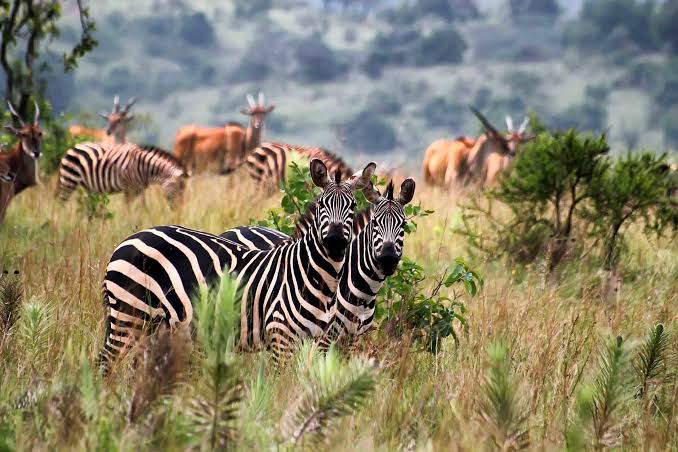
Akagera National Park vs Queen Elizabeth National Park—which one should you choose for your African safari? Both parks offer exceptional wildlife viewing, stunning landscapes, and the chance to see the Big Five. But they are located in different countries, have different ecosystems, and offer distinctly different experiences. This guide compares them across wildlife, landscapes, activities, accessibility, and overall experience to help you decide which park—or both—belongs on your itinerary.
Akagera is in Rwanda, while Queen Elizabeth is in Uganda. Both are managed through partnerships that prioritise conservation and community development, and both have compelling stories of recovery and restoration. Let’s dive into the details.
Overview: Akagera National Park
Akagera National Park is located in eastern Rwanda along the border with Tanzania. It covers approximately 1,122 square kilometres of savannah, woodland, wetlands, and lakes. The park is named after the Kagera River, which feeds a network of lakes including Lake Ihema, the largest in the park.
Akagera is one of Africa’s greatest conservation success stories. Following the Rwandan genocide in 1994, the park was devastated by poaching and habitat loss. In 2010, the Rwanda Development Board partnered with African Parks to revitalise the park. Lions were reintroduced in 2015, followed by rhinos in 2017. Today, Akagera is home to the Big Five—lion, leopard, elephant, buffalo, and rhino—as well as giraffes, zebras, hippos, crocodiles, and over 500 bird species.
The park’s varied habitats—savannah, wetlands, and lakes—offer a diverse and rewarding safari experience. Because it is less famous than East Africa’s larger parks, Akagera is rarely crowded, giving visitors a sense of exclusivity and tranquillity.
Overview: Queen Elizabeth National Park
Queen Elizabeth National Park is located in southwestern Uganda, near the border with the Democratic Republic of Congo. It covers approximately 1,978 square kilometres, making it considerably larger than Akagera. The park is named after Queen Elizabeth II and was established in 1952.
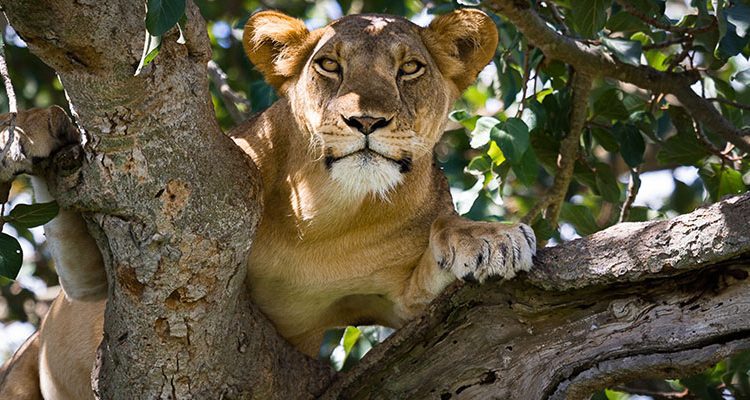
Queen Elizabeth is one of Uganda’s most popular safari destinations, known for its diverse ecosystems—savannah, wetlands, forests, and crater lakes. The park is famous for its tree-climbing lions in the Ishasha sector, as well as large populations of elephants, buffalo, hippos, and Uganda kob. The Kazinga Channel, which connects Lake George and Lake Edward, is a highlight, offering exceptional boat safaris with some of the highest hippo concentrations in Africa.
The park is managed by the Uganda Wildlife Authority (UWA) and is part of the Queen Elizabeth Conservation Area, which includes Kyambura Gorge and the Maramagambo Forest.
Wildlife Comparison
Both parks offer excellent wildlife viewing, but there are differences in species composition and sighting reliability. Here’s a comparison:
| Wildlife | Akagera National Park | Queen Elizabeth National Park |
|---|---|---|
| Lion | Yes (reintroduced 2015) | Yes (including tree-climbing lions in Ishasha) |
| Leopard | Yes | Yes |
| Elephant | Yes | Yes (large populations) |
| Buffalo | Yes | Yes (large herds) |
| Rhino | Yes (reintroduced 2017) | No (rhinos are in Ziwa Rhino Sanctuary) |
| Giraffe | Yes | Yes (Ugandan giraffe subspecies) |
| Zebra | Yes | Yes |
| Hippo | Yes | Yes (thousands along Kazinga Channel) |
| Chimpanzee | No | Yes (Kyambura Gorge) |
| Bird species | Over 500 | Over 600 |
Key differences: Akagera is the only park in Rwanda where you can see the Big Five. Queen Elizabeth does not have rhinos, but it does offer chimpanzee trekking in Kyambura Gorge and tree-climbing lions in Ishasha—a unique phenomenon found in only a few places in Africa. Queen Elizabeth also has a higher number of bird species and larger populations of hippos and elephants.
Landscapes and Scenery
Akagera’s landscapes are characterised by rolling savannah, acacia woodland, and a chain of lakes and wetlands along the Kagera River. The park is hilly in the north and flatter in the south, with the lakes providing a beautiful backdrop for boat safaris. The scenery is reminiscent of classic East African savannah, but on a smaller, more intimate scale.
Queen Elizabeth offers more varied scenery. The park includes open savannah, dense forest, papyrus swamps, and dozens of crater lakes. The Kazinga Channel is a spectacular waterway teeming with wildlife, while the Ishasha sector in the south is known for its fig tree-dotted plains and tree-climbing lions. The nearby Rwenzori Mountains—the “Mountains of the Moon”—provide a dramatic backdrop.
For sheer scenic diversity, Queen Elizabeth has the edge. For intimate, uncrowded savannah, Akagera is hard to beat.
Activities Comparison
Both parks offer a range of activities, but there are some notable differences:
| Activity | Akagera National Park | Queen Elizabeth National Park |
|---|---|---|
| Game drives | Yes (day and night) | Yes (day and night) |
| Boat safaris | Yes (Lake Ihema) | Yes (Kazinga Channel) |
| Chimpanzee trekking | No | Yes (Kyambura Gorge) |
| Tree-climbing lions | No | Yes (Ishasha sector) |
| Birdwatching | Excellent (over 500 species) | Excellent (over 600 species) |
| Night drives | Yes | Yes |
| Walking safaris | Yes (limited areas) | Yes (including crater lakes) |
| Cultural visits | Yes | Yes |
| Fishing | Yes (catch-and-release) | Yes |
Queen Elizabeth offers chimpanzee trekking in Kyambura Gorge—a unique experience that Akagera cannot match. The gorge is a 100-metre-deep valley carved by the Kyambura River, home to a habituated chimpanzee community. Trekking here is more challenging than in Nyungwe or Kibale, but it’s a rewarding adventure.
Akagera’s boat safari on Lake Ihema is excellent for hippos, crocodiles, and waterbirds, but Queen Elizabeth’s Kazinga Channel boat safari is arguably more spectacular, with larger concentrations of hippos and a greater variety of birdlife.
Both parks offer night drives, which are a thrilling way to spot nocturnal animals like leopards, genets, and bushbabies.
Accessibility and Location
Akagera is easily accessible from Kigali, Rwanda’s capital. The drive takes approximately 2 to 2.5 hours on a paved road. This makes it perfect for a short safari or an add-on to a gorilla trekking trip in Volcanoes National Park. Many travellers combine Akagera with gorilla trekking for a complete Rwandan wildlife experience.
Queen Elizabeth is located about 375 kilometres from Kampala, Uganda’s capital, a drive of approximately 6 to 7 hours. Alternatively, you can fly to Kasese or Mweya airstrip. The park is often combined with gorilla trekking in Bwindi Impenetrable National Park or chimpanzee trekking in Kibale Forest National Park, both of which are a few hours’ drive away.
For travellers already in Rwanda, Akagera is far more convenient. For those visiting Uganda’s gorillas, Queen Elizabeth fits naturally into a larger Ugandan itinerary. Our 16-Day Rwanda and Uganda Gorilla Trekking & Big Five Safari combines both countries and includes visits to multiple parks.
Crowds and Exclusivity
Akagera is significantly less crowded than Queen Elizabeth. Because Rwanda is a smaller tourism destination and Akagera is less famous than its Ugandan counterpart, you can enjoy game drives without encountering many other vehicles. This sense of exclusivity is a major draw for travellers who want a private safari experience.
Queen Elizabeth is one of Uganda’s most popular parks and can get busy, especially during peak season (June–September and December–February). The Kazinga Channel boat safaris and Ishasha sector can be particularly crowded. However, the park is large enough that you can still find solitude if you venture off the main tracks.
Conservation Stories
Both parks have inspiring conservation stories, but they are at different stages.
Akagera’s transformation is more dramatic. The park was essentially emptied of wildlife by the late 1990s, and its recovery in just over a decade is remarkable. The reintroduction of lions and rhinos, the strengthening of anti-poaching patrols, and the engagement of local communities have turned Akagera into a model for conservation-led tourism. When you visit Akagera, you are directly contributing to this ongoing success story.
Queen Elizabeth has a longer history of conservation and is part of a larger network of protected areas in Uganda. The park faces challenges such as human-wildlife conflict and habitat encroachment, but the Uganda Wildlife Authority and its partners work tirelessly to protect its ecosystems. The park’s tree-climbing lions and chimpanzees are flagship species that attract visitors from around the world.
Accommodation Options
Both parks offer a range of accommodation, from budget campsites to luxury lodges.
Akagera: Options include Magashi Camp (luxury, exclusive), Ruzizi Tented Lodge (luxury, lakeside), Karenge Bush Camp (seasonal, mid-range), and Akagera Game Lodge (mid-range). Campsites are available for self-drive travellers. Staying inside the park allows you to maximise your safari time.
Queen Elizabeth: Options include Mweya Safari Lodge (mid-range to luxury, stunning location on the Kazinga Channel), Kyambura Gorge Lodge (luxury, near the gorge), Ishasha Wilderness Camp (luxury, in the Ishasha sector), and various budget guesthouses and campsites. The park has more accommodation options overall, reflecting its larger size and popularity.
Best Time to Visit
Both parks are year-round destinations, but the dry seasons offer the best wildlife viewing.
- Akagera: June to September and December to February are the best times. The dry season concentrates wildlife around water sources, and trails are easier to navigate.
- Queen Elizabeth: June to September and December to February are also ideal. The dry season makes game drives and boat safaris more comfortable, and wildlife is easier to spot.
Both parks can be visited in the wet seasons (March–May and October–November), which offer lush scenery, fewer crowds, and excellent birdwatching. However, some roads may become difficult, and trekking can be muddy.
Which Park is Better for You?
The answer depends on your priorities:
Choose Akagera National Park if:
- You want to see the Big Five in Rwanda
- You are already in Rwanda for gorilla trekking and want to add a savannah safari
- You value exclusivity and fewer crowds
- You want a compact, easily accessible safari experience
- You are interested in a remarkable conservation success story
Choose Queen Elizabeth National Park if:
- You want to see tree-climbing lions in Ishasha
- You want to combine savannah wildlife with chimpanzee trekking in Kyambura Gorge
- You are already in Uganda for gorilla trekking and want to add a savannah safari
- You want a larger park with more diverse landscapes, including crater lakes and forests
- You want to experience the famous Kazinga Channel boat safari
Consider visiting both if:
You have time for a multi-country safari. Combining Rwanda and Uganda allows you to experience gorillas in Volcanoes or Bwindi, chimpanzees in Nyungwe or Kibale, and savannah wildlife in both Akagera and Queen Elizabeth. This offers the most comprehensive East African wildlife experience. Our 16-Day Rwanda and Uganda Gorilla Trekking & Big Five Safari is designed for exactly this kind of adventure.
Practical Considerations
Here are some practical points to consider when choosing between the two parks:
- Visas: Rwanda offers visa-on-arrival for many nationalities, while Uganda requires an e-visa for most visitors. Both countries are part of the East African Tourist Visa scheme, which allows travel between Rwanda, Uganda, and Kenya on a single visa.
- Language: English is widely spoken in both countries, along with Kinyarwanda in Rwanda and Luganda in Uganda.
- Currency: Rwanda uses the Rwandan franc (RWF), while Uganda uses the Ugandan shilling (UGX). US dollars are widely accepted in both countries.
- Health: Both parks are in malaria-risk areas, so antimalarial medication is recommended. Yellow fever certificates are required for entry if arriving from a country with yellow fever transmission.
- Safety: Both Rwanda and Uganda are generally safe for tourists, and national parks are well-managed with strict safety protocols.
For the latest entry requirements, visit the Rwanda Directorate General of Immigration and Emigration or the Uganda Wildlife Authority.
Frequently Asked Questions
Which park is better for seeing the Big Five?
Akagera is the only park in Rwanda where you can see the Big Five. Queen Elizabeth does not have rhinos, but it offers other unique wildlife experiences like tree-climbing lions and chimpanzee trekking.
Which park is less crowded?
Akagera is generally less crowded than Queen Elizabeth. It offers a more exclusive safari experience, especially outside peak season.
Can I visit both parks in one trip?
Yes. Combining Akagera and Queen Elizabeth is possible, especially if you are already planning a multi-country safari. However, it requires more time and careful logistics. A 14–16 day itinerary would allow you to experience both parks comfortably.
Which park has better birdwatching?
Queen Elizabeth has over 600 bird species, while Akagera has over 500. Both are excellent for birdwatching, but Queen Elizabeth has a slight edge in species diversity.
Which park is more accessible?
Akagera is more accessible from Kigali (2–2.5 hours), while Queen Elizabeth is about 6–7 hours from Kampala. If you are already in Rwanda, Akagera is the easier choice.
Start Planning Your Safari
Whether you choose Akagera, Queen Elizabeth, or both, we can help you design the perfect safari itinerary. Our team has extensive experience in both Rwanda and Uganda and can tailor a trip to your interests, budget, and travel dates.
Contact us today to begin planning your unforgettable African safari.
Plan Your Rwanda Safari With Afraeka Adventures
Turn this guide into a real itinerary. Our local team plans your dates, permits and lodges around your budget.
Official sources and further reading
About the author: Victoria Kayaga
Victoria Kayaga is a Ugandan-born safari expert and the founder of Afraeka Adventures, with over 7 years of experience in the East African tourism industry. She specializes in gorilla trekking, wildlife safaris and multi-country itineraries across Uganda, Rwanda, Kenya and Tanzania.