Last updated: 26 September 2026. Rates and availability are set by UWA and subject to change — confirm before booking.
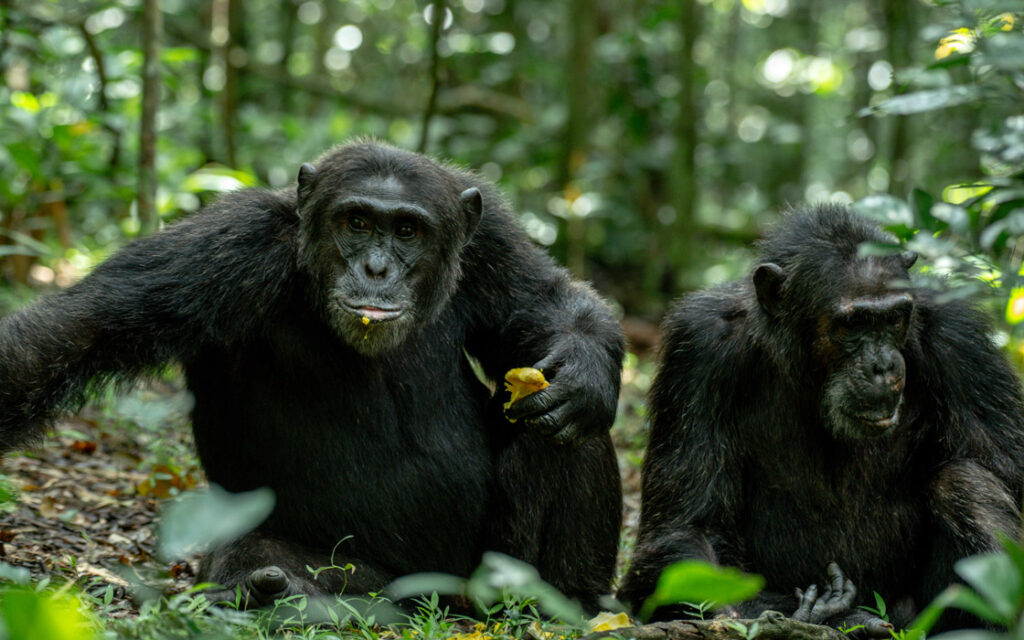
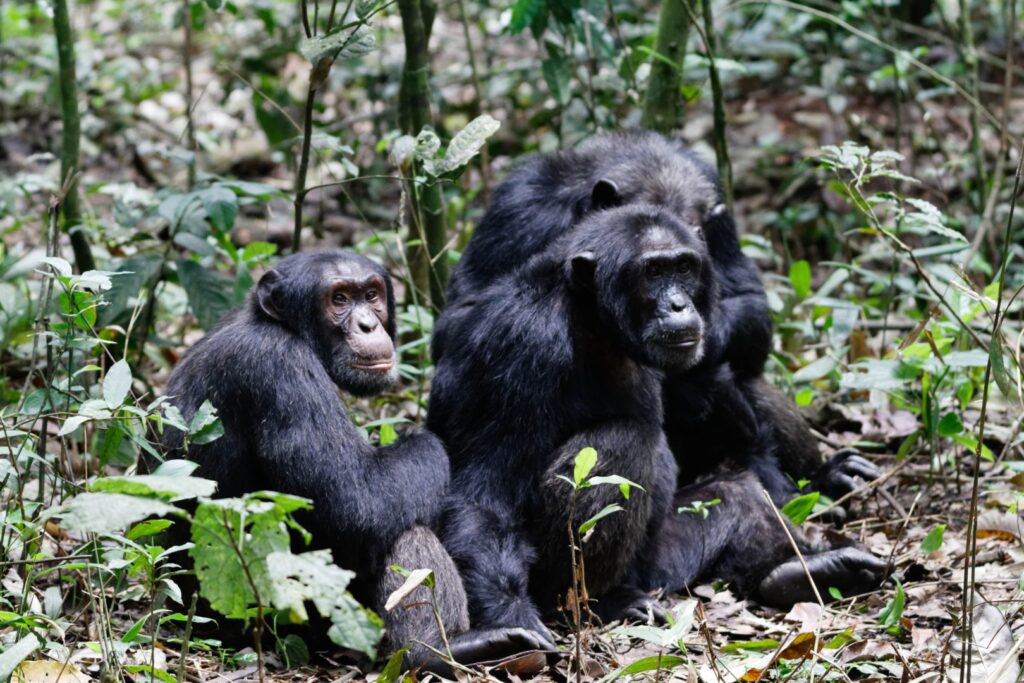
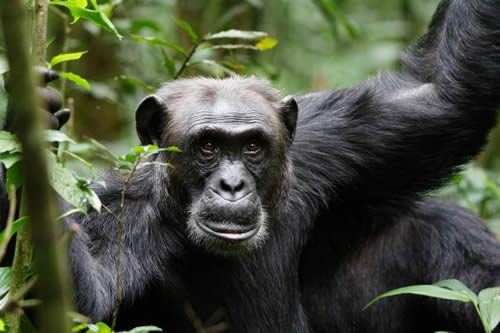
Short answer: A Kibale Forest day trip from Fort Portal is one of the easiest ways to fit a chimpanzee trek into a wider Uganda itinerary. Fort Portal sits roughly 30 to 45 minutes from the Kibale trailhead, and the standard morning chimp trek runs from around 8:00am to midday. You leave Fort Portal before dawn, trek in the morning, and are back in town by early afternoon with time for the crater lakes, tea plantations, or a slower afternoon. The day-trip format works best if your Fort Portal base is set up for an early departure and you have a permit booked in advance.
Most travellers who trek chimpanzees at Kibale stay at a lodge inside or on the edge of the forest. That is the conventional arrangement, and it works well — you are minutes from the trailhead, you avoid the pre-dawn drive, and the forest is at your doorstep. What gets overlooked is that Fort Portal, the main town in the region, is only 30 to 45 minutes away and has a wider range of accommodation, restaurants and other activities. For travellers already basing themselves in Fort Portal, a Kibale Forest day trip from Fort Portal is a straightforward way to add the chimpanzee trek without relocating.
This guide covers the practical logistics of the day trip — the drive, the timings, what fits into the day, and who the format suits. It is a companion to the wider Kibale posts on the blog, including the chimpanzee habituation experience at Kibale and the Kibale chimpanzee permit availability guide. Permit categories and current rates sit on the gorilla permits Uganda page, and the wider primate picture is on the primate tracking experiences page. The regulatory framework for chimpanzee trekking in Uganda is published by the Uganda Wildlife Authority.
Kibale day trip from Fort Portal — key facts
- Distance: roughly 30–45 minutes by road from Fort Portal to the Kibale trailhead
- Road: Fort Portal–Kamwenge road; mostly tarmac with a short murram section
- Departure time: around 6:30–7:00am from Fort Portal
- Standard trek: morning departure; typically 2–4 hours including the viewing hour
- Return to Fort Portal: early to mid-afternoon
- Minimum age: 15 years
- Vehicle: a 4×4 or SUV is recommended, especially in the wet season
- Best paired with: crater lakes, tea plantations, Bigodi Wetland Sanctuary
How far is Kibale Forest from Fort Portal?
Kibale Forest National Park is roughly 30 to 45 minutes by road from Fort Portal, depending on which trailhead you are heading to and the condition of the murram section. The main access road is the Fort Portal–Kamwenge road, which runs south-east from town and passes the park boundary. The standard trekking trailhead for the Kanyanchu area sits just off this road.
| Destination | Distance | Drive time |
|---|---|---|
| Kanyanchu trailhead (main chimp trek) | ~35 km | 30–45 min |
| Bigodi Wetland Sanctuary | ~40 km | 40–50 min |
| Kibale Forest Camp area | ~35 km | 30–45 min |
| Ndali–Kibale lodges | ~25–30 km | 25–35 min |
Drive times are approximate. Wet-season road conditions can add 15–20 minutes to the murram sections.
For travellers based in Fort Portal town centre, the drive is straightforward. Leaving at 6:30am gets you to the trailhead comfortably before the 8:00am briefing, and leaving at 7:00am still works if you are organised. The roads are quiet in the early morning, and the drive itself passes tea plantations and forest edge that make the transfer part of the experience. For travellers staying at a lodge between Fort Portal and Kibale — around the Ndali area or the crater lakes — the drive is shorter.
Afraeka tip: If you are doing a Kibale Forest day trip from Fort Portal, arrange your vehicle and driver the evening before. A 6:30am departure means a driver who has been confirmed in advance, and you do not want to be negotiating transport at that hour. Most Fort Portal hotels and guesthouses can arrange a vehicle on request, and a registered operator can provide a driver-guide for the day.
What does the day look like from Fort Portal?
A Kibale Forest day trip from Fort Portal follows a fixed sequence: an early departure from town, arrival at the trailhead for the briefing, the chimpanzee trek, and the drive back to Fort Portal by early afternoon. The structure is the same as any standard chimp trek, with the transfer times built around the fixed trekking schedule.
The day trip, hour by hour
- 6:00–6:30am — wake up and depart Fort Portal. Coffee and a packed breakfast from your hotel. The drive takes 30 to 45 minutes, and the early start means the road is quiet.
- 7:00–7:30am — arrive at the Kanyanchu trailhead. Registration, permit check, and a briefing from the ranger guides. This is where your group is confirmed and the day’s trekking plan is set.
- 8:00am — walk into the forest. The ranger leads, and the trackers have been out since dawn checking the community’s position. Walk time is typically 45 minutes to 1.5 hours.
- Contact with the community. The ranger positions the group, and the one-hour viewing window begins.
- One hour with the chimpanzees. A strict cap, enforced the same as at every Uganda chimp site. Cameras, no flash, quiet behaviour, no touching.
- Walk back to the trailhead. Usually faster than the walk in. Often includes sightings of other primates and forest birds.
- 12:00–1:00pm — back at the trailhead. Certificate handover, tips, and the drive back to Fort Portal.
- 1:00–2:00pm — arrive back in Fort Portal. Late lunch in town, and the rest of the afternoon free.
The standard Kibale trek is a morning activity, and the day-trip format is built around that. If you are doing the full-day habituation experience instead, the schedule changes entirely — that runs from dawn to dusk, which does not work as a Fort Portal day trip. The habituation experience is best done by staying at a lodge inside or near the forest. Our guide on the chimpanzee habituation experience covers the format in detail.
What can you do after the trek?
One of the advantages of the day-trip format from Fort Portal is that the afternoon is genuinely free. The trek finishes by early afternoon, and Fort Portal is surrounded by a range of short activities that fit neatly into the remaining hours of the day. Three stand out.
| Activity | Time required | Notes |
|---|---|---|
| Crater lakes drive | 2–3 hours | Scenic drive with short stops; some lakes have swimming spots |
| Tea plantation tour | 1.5–2 hours | Guided visit to a working tea estate; short walks |
| Bigodi Wetland Sanctuary walk | 2–3 hours | Community-run wetland trail; excellent birding and monkeys |
| Tooro Kingdom cultural tour | 2–3 hours | Cultural visit; can be arranged in Fort Portal |
| Fort Portal town exploration | 1–2 hours | Markets, cafés, and the palace area |
| Rest at the lodge | Flexible | Simple option after a pre-dawn start |
Timings are indicative. Wet-season conditions and road closures can affect accessibility.
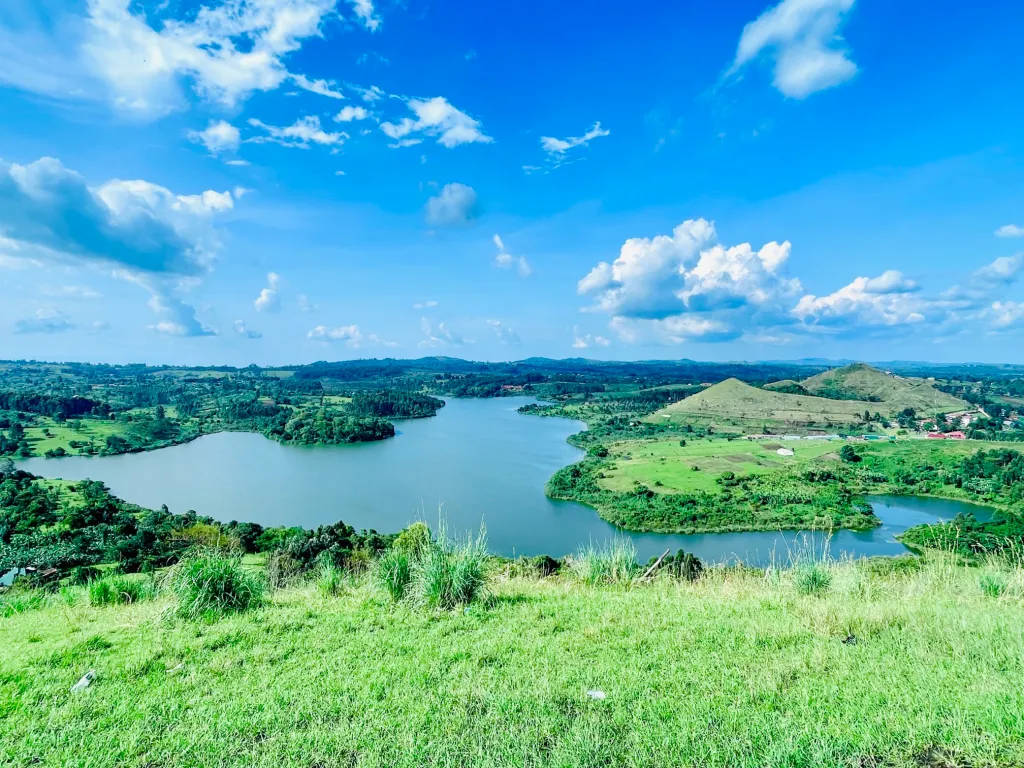
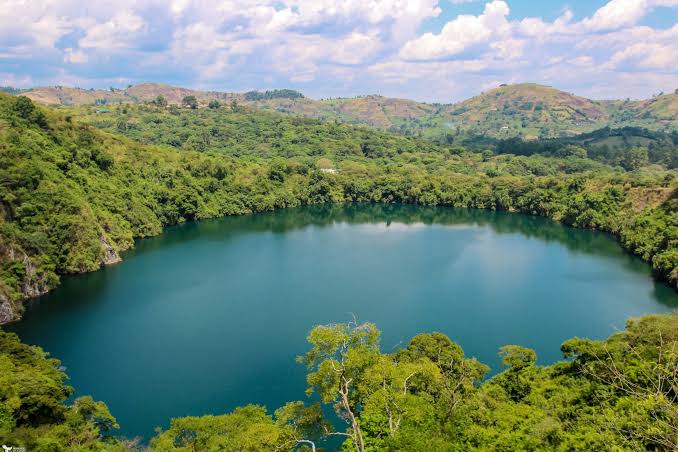
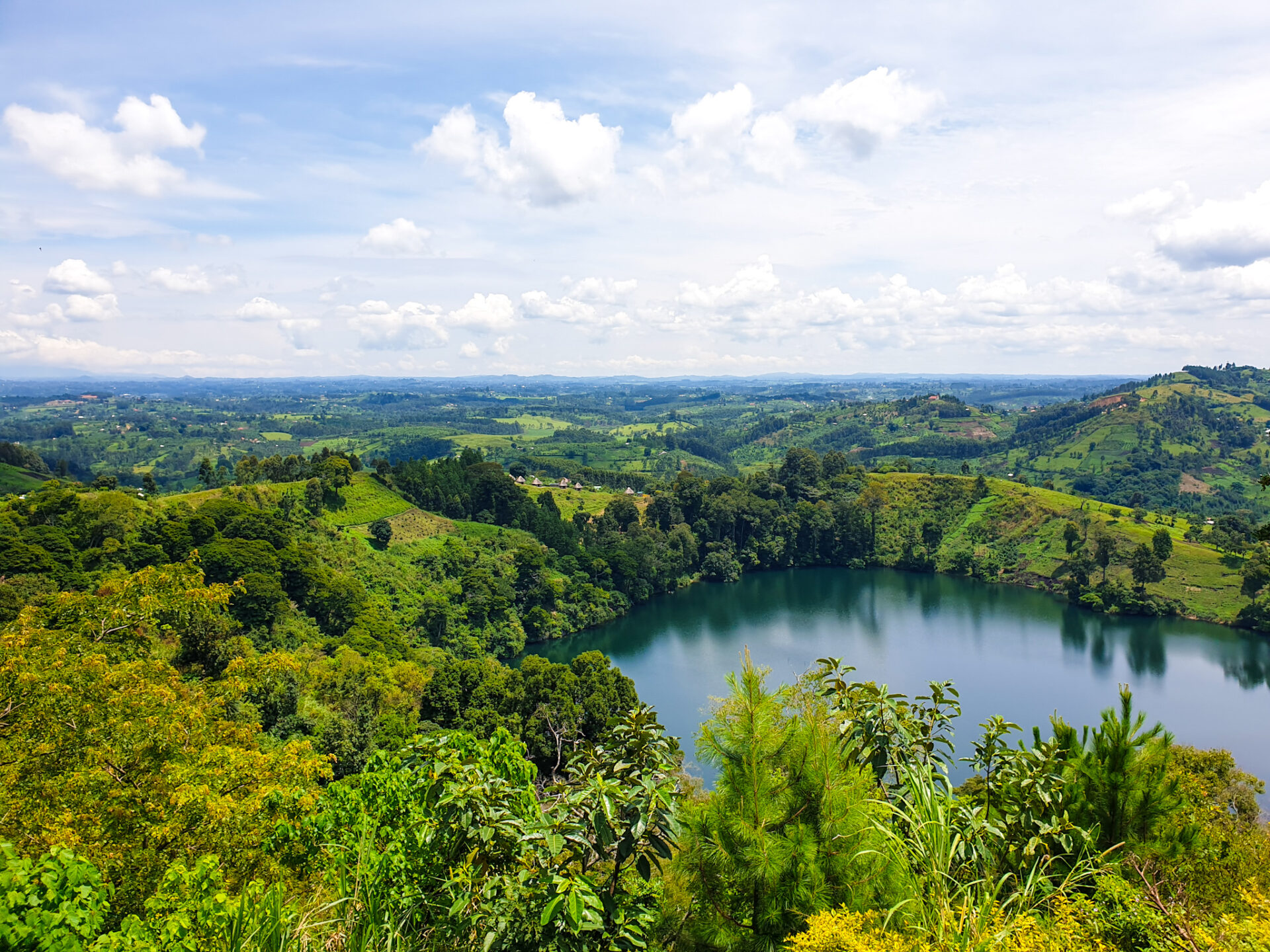
The crater lakes drive is the most popular afternoon option and pairs particularly well with the Kibale day trip. Fort Portal sits amid a cluster of volcanic crater lakes — some sixty of them — and the drive around the ring road takes in several of the more scenic ones. Some lakes have swimming spots and small cafés, and the whole loop can be done comfortably in two to three hours. The tea plantations around Fort Portal are another short afternoon activity, and Bigodi Wetland Sanctuary, on the Kibale road, is often added on the way back into town.
The wider range of activities around Fort Portal is one of the reasons the day-trip format works. Travellers who stay inside Kibale tend to focus on the forest, while travellers based in Fort Portal can combine the trek with the region’s other attractions. The Uganda Tourism Board maintains national context on the Fort Portal area and the western circuit more broadly.
Who is the day trip best for?
The Kibale Forest day trip from Fort Portal suits a specific kind of traveller, and it is worth being honest about who it does not suit before booking.
Book the day trip if you are…
- Already staying in Fort Portal for other reasons
- Combining a chimpanzee trek with the crater lakes or tea plantations
- On a shorter Uganda trip and want to fit the chimps into a single day
- Travelling independently and looking for a flexible, well-organised day
- Happy to leave at dawn and be back by early afternoon
- Not interested in the full-day habituation experience
Stay near the forest instead if you are…
- Doing the full-day habituation experience — that format requires a lodge nearby
- Waking up slowly and not wanting a 6:30am departure
- Wanting multiple treks over consecutive days
- Travelling with very young children who cannot do the trek and would be better off at a forest lodge
- Looking for a deeper, slower forest experience
- On a photography-focused trip where the light matters more than the schedule
The day-trip format is best understood as a strong logistics solution rather than a deeper experience. It gets you to the chimps and back with the minimum of fuss, and it leaves the rest of your day free. What it does not do is put you in the forest at dawn or give you the slower pacing that a lodge stay allows. Travellers who want the forest to be the point rather than a single activity should consider a lodge inside Kibale. Travellers for whom the chimp trek is one of several activities in the Fort Portal region will find the day-trip format the more efficient choice.
What vehicle do you need for the day trip?
For the Kibale Forest day trip from Fort Portal, a 4×4 or SUV is the right vehicle. The Fort Portal–Kamwenge road is mostly tarmac, but the murram section leading to the trailhead and the crater lakes roads can be rough, particularly in the wet season. A saloon car will manage the main road in the dry season, but the wet season demands the higher clearance and four-wheel drive of an SUV.
Three practical points about transport:
- A driver-guide is worth the cost. A driver familiar with the route will get you to the trailhead on time, knows the murram sections, and can advise on afternoon activities. Self-driving is possible if you are experienced on Ugandan roads.
- Confirm the vehicle the evening before. A 6:30am departure means a confirmed driver and vehicle. Do not leave transport to the morning of the trek.
- Pack for the drive. A packed breakfast, water and a warm layer are the right preparation. The early morning drive is cool, and the trailhead briefing is too.
For travellers without their own vehicle, Fort Portal hotels and guesthouses usually arrange day-trip transport on request, and local operators in Fort Portal can provide a driver-guide for the day. The cost of the vehicle is usually separate from the trekking permit, and it is worth confirming what is included when booking.
When is the best time for the day trip?
The Kibale Forest day trip from Fort Portal runs year-round, with the drier months of December to February and June to September offering the easiest conditions. The trails are firmer, the murram road to the trailhead is smoother, and the drive from Fort Portal is more predictable. The wet months bring muddier trails, slower driving, and a longer total day — but the trek still runs and the viewing remains excellent.
Three practical points on timing:
- Dry season is easier. Trail conditions and road conditions are both better. If your dates are flexible, the dry months are the safer choice for a day trip.
- Wet season adds 30–60 minutes to the day. The murram section takes longer, the walk in slows, and the return to Fort Portal is later. Plan the afternoon activities with a buffer.
- Permit availability is the main constraint. Kibale permits are more contested than Kyambura or Kalinzu, particularly for peak-season dates. Book two to four weeks ahead, and earlier for groups of four or more. Our guide on Kibale chimpanzee permit availability covers the seasonal patterns in detail.
The day-trip format works year-round, but travellers with flexibility should aim for the shoulder weeks (March, October) or the dry season. Travellers with fixed dates in the wet season should allow more buffer on the return to Fort Portal, especially if they have afternoon plans or an onward transfer.
How do you book the day trip?
You book a Kibale Forest day trip from Fort Portal by arranging the chimpanzee permit, the transport and the trailhead logistics as a single booking. The permit is the fixed part — everything else fits around it.
What to arrange before your day trip
- Kibale chimpanzee trekking permit for your date and departure
- Vehicle and driver from Fort Portal, confirmed the evening before
- Packed breakfast and water for the drive
- Confirmed departure time with the driver
- Boots, gaiters, long sleeves, gloves — the standard forest kit
- Camera with strap, flash off, spare battery
- Binoculars if you carry them — Kibale is excellent for birds and other primates
- Any mobility or fitness notes shared with the operator in advance
Two things are worth confirming explicitly when booking. First, that your permit is a standard chimpanzee trekking permit and not a habituation permit — the habituation runs the full day and does not fit a Fort Portal day trip. Second, that your driver knows the trailhead location — the Kanyanchu trailhead is the standard one, and it sits just off the Fort Portal–Kamwenge road. Current permit categories and rates are kept up to date on the gorilla permits Uganda page.
For travellers combining the day trip with the wider western Uganda circuit, the structure is usually to stay two or three nights in Fort Portal, do the Kibale trek on one morning, and use the other days for the crater lakes, tea plantations and Bigodi. Our 5-day Uganda safari and the 18-day Uganda safari show how the western circuit fits into a longer itinerary. The Uganda destinations page maps how Fort Portal connects with the rest of the country.
Common mistakes with the Kibale day trip from Fort Portal
Most of what goes wrong with the day trip comes down to a small set of avoidable mistakes, and all of them can be prevented with one careful planning conversation.
- Leaving Fort Portal too late. The 6:30am departure is real. Leaving at 7:30am risks arriving after the trek group has left for the forest.
- Not confirming the vehicle the evening before. A pre-dawn departure requires a confirmed driver. Do not leave transport to the morning of the trek.
- Booking a habituation permit by mistake. The habituation runs the full day and does not work as a Fort Portal day trip. Confirm which permit you have booked.
- Underestimating wet-season drive times. The murram section can add 15 to 20 minutes to the drive in the wet months, and the return leg is slower too.
- Scheduling a same-afternoon flight or transfer. The trekking day usually finishes by early afternoon, but a slow trek can push the return to Fort Portal to 2:00 or 3:00pm. Leave a buffer before onward travel.
- Assuming you can walk in without a booked permit. Chimpanzee trekking requires a permit, booked in advance and paid in full at booking.
- Not bringing the right footwear. The trailhead is off a murram road, and the forest trails are muddy in the wet season. Proper hiking boots with grip are essential.
- Forgetting the minimum age of 15. This applies to the standard chimpanzee trek the same as to every Uganda chimpanzee trekking site.
Can one permit cover two people?
No. One permit covers one person for one trek, and this applies to the Kibale Forest day trip from Fort Portal the same as to any other Uganda chimpanzee experience. A family of four needs four permits for the same date and departure, and each permit is tied to a named individual. There is no way to share a permit or transfer it to another person. Current permit categories and rates sit on the gorilla permits Uganda page.
Because Kibale operates multiple habituated communities and multiple daily departures, the daily permit pool is larger than at Kyambura or Mgahinga. This makes the day-trip format from Fort Portal more forgiving on availability than the equivalent at some other sites. That said, peak-season dates fill faster than the calendar might suggest, particularly for the more popular morning departure. Booking two to four weeks ahead is the safe approach, and earlier for family groups and fixed departures.
Once your permits are confirmed, the specific community you follow is confirmed at the briefing on the morning of the trek. The ranger will explain the tracking plan, and the trackers will have been out since dawn checking the community’s position. The one-hour viewing window, the seven-metre distance rule, the no-flash rule and the health exclusion apply to the Kibale day trip the same as to every other UWA chimpanzee site. The regulatory framework is set by the Uganda Wildlife Authority.
Afraeka field note: A couple staying in Fort Portal once asked us whether a Kibale Forest day trip from Fort Portal was worth doing, or whether they should relocate to a lodge inside the forest for the night. They had a tight itinerary — two nights in Fort Portal total — and did not want to add a third. We booked the day trip, arranged a driver for a 6:30am departure, and slotted their trek into the first morning. They were back in Fort Portal by 1:30pm and spent the afternoon at the crater lakes, swimming at one of the lakeside spots and eating lunch at a small café on the ring road. What they said afterwards was that the day trip had worked exactly as intended — the chimp trek in the morning, a slower afternoon, and no need to change hotels. The trade-off, they said, was that they had not seen the forest at dawn, which they would have liked. But for their itinerary, the day trip was the right call. That is the honest shape of the decision: the day trip trades the dawn hours for flexibility and a wider base, and for a lot of travellers, that is a good trade.
A question that comes up occasionally on TripAdvisor’s Uganda forum and on r/Uganda is some version of: “Is it worth staying inside Kibale, or is a day trip from Fort Portal enough?” The honest answer depends on what else is in your itinerary. If the chimp trek is the primary reason you are in the region, staying inside the forest is the deeper experience — dawn light, fewer transfers, slower pacing. If you are in the region for several activities and want the flexibility of a wider base, the day trip from Fort Portal is the more efficient choice, and it delivers the same one-hour viewing window as a lodge stay. Both are excellent, and neither is a lesser version of the trek itself.
Frequently asked questions
How far is Kibale Forest from Fort Portal?
Roughly 30 to 45 minutes by road, depending on which trailhead you are heading to. The main access road is the Fort Portal–Kamwenge road, which runs south-east from town. The Kanyanchu trailhead sits just off this road. Wet-season conditions can add 15 to 20 minutes to the murram sections.
Can you do a Kibale day trip from Fort Portal?
Yes, and it is a straightforward format. The standard morning chimp trek runs from around 8:00am to midday, and travellers leave Fort Portal at 6:30am to arrive in time for the briefing. You are back in Fort Portal by early afternoon.
What time should I leave Fort Portal for Kibale?
Around 6:30am. The drive takes 30 to 45 minutes, and the briefing is typically at 7:30am with the trek departing at 8:00am. Leaving at 7:00am is still workable if you are organised; leaving at 7:30am risks missing the trek group.
Do I need a 4×4 for the day trip?
A 4×4 or SUV is recommended, particularly in the wet season when the murram sections and the crater lakes roads can be rough. A saloon car will manage the main road in the dry season but is not ideal for the wet months.
What can I do after the Kibale trek?
The crater lakes drive, a tea plantation tour, Bigodi Wetland Sanctuary, a Tooro Kingdom cultural visit, or simply a slower afternoon in Fort Portal. The crater lakes are the most popular pairing and take two to three hours.
Is the day trip suitable for families?
The standard chimpanzee trek has a minimum age of 15, so the day trip is not suitable for families with younger children unless a separate activity is arranged for them. For families with teenagers 15 and over, the day trip works well.
How do I book the day trip?
Book the chimpanzee permit through a registered operator or UWA, and arrange the vehicle and driver through your Fort Portal hotel or a local operator. Confirm the departure time with the driver the evening before. The permit requires passport details and full payment at booking.
What if my preferred date is sold out?
Kibale operates multiple habituated communities and multiple daily departures, so availability is more flexible than at Kyambura or Mgahinga. Try the second departure, check other communities, or shift the date by one or two days. Book two to four weeks ahead for peak-season dates.
Can I do the habituation experience as a day trip from Fort Portal?
No. The habituation experience runs from dawn to dusk — roughly 6:00am to 5:00pm — which does not fit a Fort Portal day trip format. Habituation is best done by staying at a lodge inside or near Kibale Forest. The standard trek is the right format for the day trip.
Planning a Kibale day trip from Fort Portal?
Send us your dates, party size and whether you are staying in Fort Portal or at a forest lodge, and we will check Kibale permit availability, arrange the transport, and outline how the trek fits around the crater lakes or tea plantations in the afternoon. If a lodge stay inside the forest would suit you better, we will say so. No price figures until we know your route, because the permits are only one line of the total.
About the author: Victoria Kayaga is a Ugandan-born safari expert and founder of Afraeka Adventures, with 15+ years in East African tourism. Based in Kampala, she has planned chimpanzee trekking itineraries across Kibale, Budongo, Kyambura, Kalinzu and Ngamba Island for years, and she advises travellers on the logistics of combining primate trekking with the wider western Uganda circuit. More about Victoria.
Keep planning