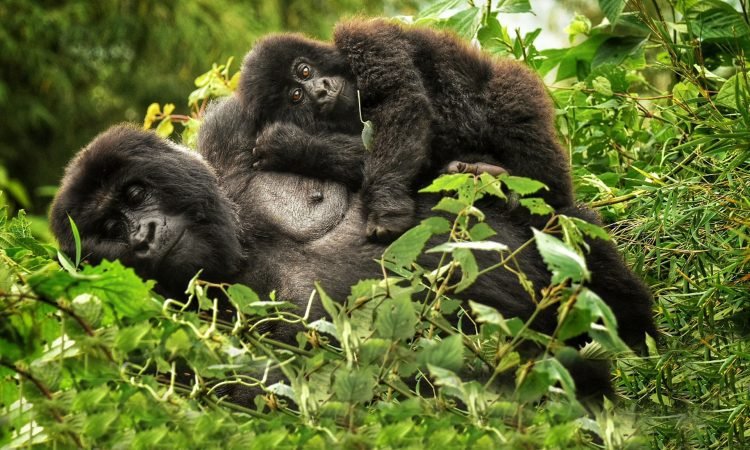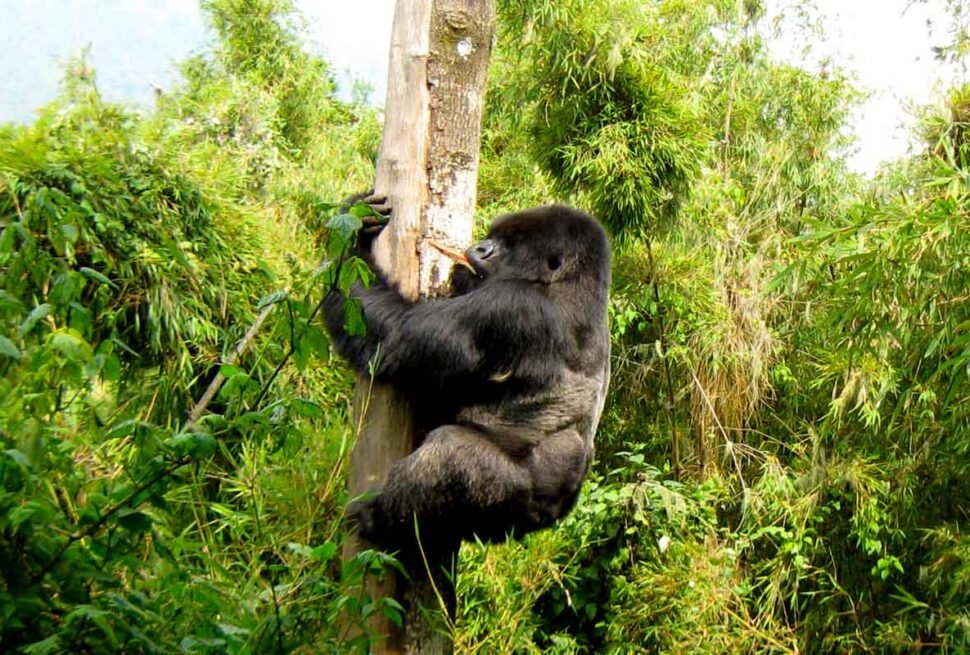

A Bwindi to Volcanoes National Park itinerary connects two of Africa’s most important mountain gorilla strongholds in a single, efficient journey. Bwindi Impenetrable National Park in Uganda and Volcanoes National Park in Rwanda sit on opposite sides of the Virunga Massif, and the drive between them takes only a few hours—including a straightforward border crossing. This makes it possible to trek gorillas in two different habitats, experience two distinct cultures, and add golden monkeys, Lake Bunyonyi, or Kigali to a single trip. This guide covers the route, the border crossing, sector choices, sample itineraries, permits, accommodation, and the practical details that make the journey smooth.
Uganda’s parks are managed by the Uganda Wildlife Authority (UWA), and Rwanda’s by the Rwanda Development Board (RDB). Both countries are part of the East African Tourist Visa scheme, which simplifies cross-border travel. For the reverse routing, see our Kigali to Bwindi safari itinerary. For a broader combined trip, see our Uganda Rwanda primate safari itinerary.
Why Bwindi to Volcanoes National Park itinerary?
Both parks protect mountain gorillas, but they offer different experiences. Combining them in a single trip has several advantages:
- Two gorilla trekking experiences: Volcanoes National Park is known for its bamboo forest and volcanic slopes; Bwindi is a dense, ancient rainforest. The habitats and family groups differ.
- Higher chance of multiple sightings: If a trek in one park doesn’t produce a sighting (rare but possible), a second trek offers another chance.
- Different landscapes: Volcanoes offers views of the Virunga peaks; Bwindi is deep forest with steep valleys and waterfalls.
- Cultural contrast: Uganda and Rwanda have different histories, languages, and food scenes.
- Efficient routing: The two parks are close to each other, and the border crossing is straightforward.
- Add-on opportunities: Golden monkeys and Lake Bunyonyi in Uganda; Lake Kivu and Kigali in Rwanda.
- Open-jaw flights: You can arrive in Kigali or Entebbe and depart from the other, avoiding backtracking.
For a comparison of gorilla trekking in each country, see our Rwanda chimpanzee trekking vs Uganda guide (the principles apply equally to gorillas).
The Route: Bwindi to Volcanoes National Park
The drive from Bwindi to Volcanoes National Park depends on which sector of Bwindi you’re staying in. Bwindi has four sectors—Buhoma, Ruhija, Rushaga, and Nkuringo—and the southern sectors are closest to Rwanda.
From Rushaga or Nkuringo (Southern Sectors)
This is the shortest and most common route for travellers heading to Volcanoes National Park. From Rushaga or Nkuringo, the drive to the Cyanika border crossing takes about one to one and a half hours through the Kigezi Highlands. After crossing into Rwanda, the drive to Volcanoes National Park (Kinigi) takes another 30–45 minutes.
Total driving time: About two to two and a half hours, including the border crossing.
From Buhoma or Ruhija (Northern and Eastern Sectors)
From Buhoma or Ruhija, the drive to the Cyanika border crossing takes about two to three hours, as you have to drive south around the forest. After crossing into Rwanda, the drive to Volcanoes National Park takes another 30–45 minutes.
Total driving time: About three to four hours, including the border crossing. An alternative is to use the Gatuna/Katuna crossing, which may be more direct from Buhoma depending on road conditions.
Which Route Should You Choose?
| Bwindi Sector | Best Border Crossing | Total Driving Time | Notes |
|---|---|---|---|
| Rushaga | Cyanika | 2–2.5 hours | Shortest route; scenic drive |
| Nkuringo | Cyanika | 2–2.5 hours | Steep descent from Nkuringo; allow extra time |
| Buhoma | Cyanika or Gatuna | 3–4 hours | Longer drive around the forest |
| Ruhija | Cyanika or Gatuna | 3–4 hours | Remote; allow extra time |
Your tour operator will recommend the best route based on your Bwindi sector and permit allocation. If you’re staying in Rushaga or Nkuringo, the Cyanika crossing is the natural choice.
The Border Crossing: Uganda to Rwanda
Crossing from Uganda into Rwanda at Cyanika or Gatuna is generally straightforward, but preparation makes it smoother. Your driver-guide will handle the process, but you’ll need:
- Passport: Valid for at least six months beyond your entry date.
- Visa: Many nationalities can obtain a visa on arrival in Rwanda, and the East African Tourist Visa covers Uganda, Rwanda, and Kenya on a single visa. Check the Rwanda Directorate General of Immigration and Emigration and Uganda’s Directorate of Citizenship and Immigration Control for current requirements.
- Yellow fever certificate: Required for entry to Rwanda if arriving from a country with yellow fever transmission. Bring a printed copy.
- Volcanoes gorilla permit: Issued by the Rwanda Development Board. Printed and accessible.
- Travel insurance and printed itinerary: For reference if asked.
Border crossings typically take 30–60 minutes, depending on queues. Cyanika tends to be quieter than Gatuna. Both crossings operate during daylight hours, so avoid arriving late at night.
For more detailed border advice, see our Uganda Rwanda combined safari itinerary 7 days.
Understanding Volcanoes National Park
Volcanoes National Park sits in northwestern Rwanda, at the foot of the Virunga volcanoes. It covers about 160 square kilometres and is part of the Virunga Massif, a transboundary conservation area shared with Uganda’s Mgahinga Gorilla National Park and the Democratic Republic of Congo’s Virunga National Park.
The park is best known for mountain gorilla trekking, but it also offers golden monkey trekking, the Dian Fossey hike, cultural visits to the Ibyiwacu Cultural Village, and the Ellen DeGeneres Campus of the Dian Fossey Gorilla Fund. The park headquarters is in Kinigi, about 20–30 minutes from the town of Musanze.
For more on the area, see our Things to Do in Musanze Rwanda guide. For a gorilla-free alternative, see our Volcanoes National Park itinerary without gorilla trekking.
Sample Itinerary: 6-Day Bwindi to Volcanoes Safari
Here’s a focused 6-day itinerary that combines Bwindi and Volcanoes National Park without rushing. It assumes you start in Entebbe or Kigali and can be extended to include more of either country.
| Day | Location | Highlights |
|---|---|---|
| Day 1 | Bwindi (Uganda) | Arrival; community walk; lodge evening |
| Day 2 | Bwindi Impenetrable National Park | Gorilla trekking; afternoon at leisure |
| Day 3 | Bwindi → Lake Bunyonyi | Transfer; boat trip; relaxation |
| Day 4 | Lake Bunyonyi → Volcanoes (Rwanda) | Cross border at Cyanika; transfer to Volcanoes |
| Day 5 | Volcanoes National Park | Gorilla trekking; cultural visit |
| Day 6 | Volcanoes → Kigali | Golden monkey trek; transfer to Kigali; departure |
This itinerary covers two gorilla treks, Lake Bunyonyi, and Kigali in a week. For a more relaxed version, add a night in Bwindi or Volcanoes, or extend to include Queen Elizabeth National Park in Uganda or Nyungwe Forest in Rwanda.
Sample Itinerary: 9-Day Bwindi to Volcanoes Safari
This 9-day itinerary is the ideal version for travellers who want to combine gorillas in both countries with chimpanzees, savannah wildlife, and cultural experiences.
| Day | Location | Highlights |
|---|---|---|
| Day 1 | Entebbe (Uganda) | Arrival; Botanical Gardens; Lake Victoria |
| Day 2 | Entebbe → Kibale | Scenic drive; afternoon forest walk |
| Day 3 | Kibale Forest | Chimpanzee trekking; Bigodi Wetland Sanctuary |
| Day 4 | Kibale → Bwindi | Scenic drive; community walk |
| Day 5 | Bwindi Impenetrable National Park | Gorilla trekking |
| Day 6 | Bwindi → Lake Bunyonyi | Transfer; boat trip; relaxation |
| Day 7 | Lake Bunyonyi → Volcanoes (Rwanda) | Cross border at Cyanika; transfer to Volcanoes |
| Day 8 | Volcanoes National Park | Gorilla trekking; cultural visit |
| Day 9 | Volcanoes → Kigali | Golden monkey trek; transfer to Kigali; departure |
This itinerary covers two gorilla treks, chimpanzees, Lake Bunyonyi, and Kigali—a comprehensive introduction to the Albertine Rift. For a 14-day version that adds savannah wildlife, see our Uganda Rwanda combined safari itinerary 14 days.
Permits and Booking
A Bwindi to Volcanoes safari typically requires the following permits:
- Uganda gorilla permit (Bwindi): Issued by the Uganda Wildlife Authority. Limited and in high demand.
- Rwanda gorilla permit (Volcanoes): Issued by the Rwanda Development Board.
- Rwanda golden monkey permit: If you’re adding golden monkeys in Volcanoes, also issued by the RDB.
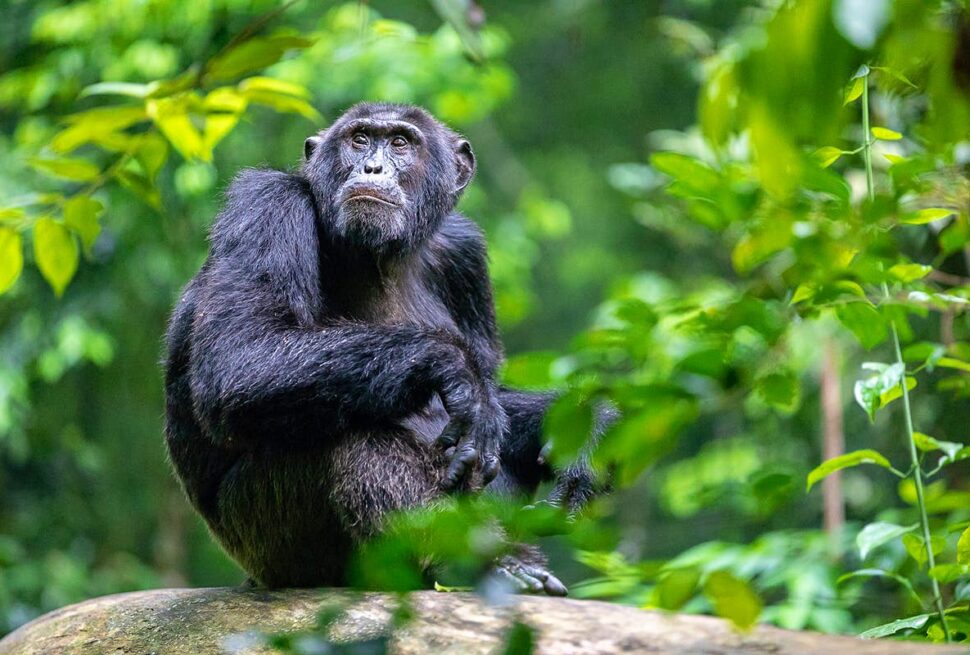
- Uganda chimpanzee permit (Kibale): If you’re adding chimpanzees, issued by the UWA.
All permits are limited and sell out months in advance, especially in peak season. Book through a single operator that handles both countries to simplify logistics. For current rates and booking procedures, visit the Uganda Wildlife Authority and the Rwanda Development Board.
If you can only get one gorilla permit, both parks are excellent choices. Bwindi has more habituated families and a wilder forest experience; Volcanoes is more accessible and has more luxury lodges. For a comparison, see our Rwanda chimpanzee trekking vs Uganda guide.
Accommodation Along the Route
Where you stay depends on your route and sector. Here are the main options:
Bwindi
Bwindi has lodges in all four sectors, ranging from simple guesthouses to luxury eco-lodges. Rushaga and Nkuringo are closest to Rwanda and offer a good range of mid-range and luxury options. Buhoma has the widest choice; Ruhija is remote and characterful. For detailed guidance, see our Rwanda safari accommodation near national parks guide.
Lake Bunyonyi
Lake Bunyonyi is a popular stopover between Bwindi and Volcanoes, with lakeside lodges ranging from budget to mid-range. It’s a good place to relax after gorilla trekking. For more on lakeside relaxation, see our Lake Kivu holiday itinerary (the principles apply).
Volcanoes National Park
Volcanoes has Rwanda’s most celebrated lodges, including Bisate Lodge, One&Only Gorilla’s Nest, and Singita Kwitonda Lodge, as well as comfortable mid-range options and a smaller number of budget guesthouses. Staying close to the park headquarters in Kinigi reduces transfer times on trekking mornings.
Best Time for a Bwindi to Volcanoes Safari
Both Rwanda and Uganda have similar seasonal patterns:
- June to September (long dry season): The best conditions for gorilla trekking, with drier trails and easier hiking. Peak season, so book permits and lodges early.
- December to February (short dry season): Good conditions with fewer crowds.
- March to May (long rainy season): Lush scenery, fewer crowds, and lower lodge rates. Trails can be muddy and slippery.
- October to November (short rainy season): Similar but shorter.
For a deeper dive into wet-weather travel, see our Rwanda rainy season safari planning guide. The drive from Bwindi to Volcanoes is on paved roads for most of the journey, so it’s comfortable year-round.
What to Expect on the Drive
The drive from Bwindi to Volcanoes is scenic and relatively short. Here’s what you’ll see:
- The Kigezi Highlands: Often called the “Switzerland of Africa,” with steep terraced hills and tea plantations.
- The border: Cyanika or Gatuna—both are well-organised but can be busy.
- Rwanda’s hills: Terraced farmland, eucalyptus forests, and the Virunga volcanoes in the distance.
- Musanze: A lively town at the foot of the volcanoes, with markets and restaurants.
- Kinigi: The village near the park headquarters, surrounded by potato fields and eucalyptus.
The journey is short enough that you can do it in a morning and still have time for an afternoon activity in Volcanoes. Most drivers stop at a petrol station or café along the way for a bathroom break and refreshments.
What to Pack for a Bwindi to Volcanoes Safari
- Clothing: Neutral-coloured layers, long-sleeved shirts, long trousers, a waterproof jacket, a warm fleece for cool mornings at altitude, and sturdy hiking boots with good grip.
- Accessories: Sun hat, sunglasses, sunscreen, insect repellent, binoculars, camera with zoom lens, and a small daypack.
- Documents: Passport, visas, yellow fever certificate, travel insurance, printed permits, and copies of your itinerary.
- Health: Antimalarial medication, any prescription medicines, a basic first-aid kit, and rehydration sachets.
- Other: Reusable water bottle, universal power adapter (Uganda uses Type G; Rwanda uses Type C and J), and a good book for downtime.
Most lodges offer laundry service, so you can pack light. Dress in layers, as temperatures vary between the cool highlands and the warmer lakeshore.
Health and Safety
- Malaria: Both Uganda and Rwanda are malaria-risk countries, including in national parks. Antimalarial medication is recommended—consult your doctor before travel.
- Yellow fever: A certificate is required for entry to Rwanda if arriving from a country with yellow fever transmission.
- Altitude: Volcanoes National Park is at high altitude (2,500–4,500 metres). Take it easy on the first day and stay hydrated.
- Travel insurance: Comprehensive insurance covering medical evacuation is strongly recommended.
- Water: Drink bottled or purified water only.
- Wildlife safety: Follow your guide’s instructions at all times. Keep a safe distance from gorillas and other wildlife.
For the latest entry requirements, visit the Rwanda Directorate General of Immigration and Emigration and Uganda’s Directorate of Citizenship and Immigration Control.
Frequently Asked Questions
How long does it take to drive from Bwindi to Volcanoes National Park?
About two to two and a half hours from Bwindi’s southern sectors (Rushaga or Nkuringo), or three to four hours from Buhoma or Ruhija, including the border crossing.
Which border crossing is best from Bwindi to Rwanda?
Cyanika is closest to Bwindi’s southern sectors and Volcanoes National Park. Gatuna/Katuna is the main road crossing and may be more direct from Buhoma or Ruhija depending on road conditions. Your guide will advise based on your itinerary.
Do I need a visa for Rwanda if I’m coming from Uganda?
Yes, unless you’re eligible for visa-free entry. The East African Tourist Visa covers Uganda, Rwanda, and Kenya on a single visa—a good option for combined trips. Check the Rwanda Directorate General of Immigration and Emigration for current requirements.
Can I trek gorillas in both Bwindi and Volcanoes in one trip?
Yes, and it’s one of the most rewarding combined safaris in East Africa. You’ll need separate permits for each park, and booking through a single operator simplifies logistics. For a detailed combined itinerary, see our Uganda Rwanda primate safari itinerary.
Which park is better for gorilla trekking?
Both are excellent. Volcanoes National Park is generally considered easier terrain and has more luxury lodges; Bwindi has more habituated families and a wilder forest experience. The best approach is to experience both.
Can I add golden monkeys or the Dian Fossey hike to my Volcanoes visit?
Yes. Golden monkey trekking is a lively, shorter trek that’s a wonderful complement to gorillas. The Dian Fossey hike takes you to the grave of the legendary primatologist. Both require separate permits or fees and can be arranged through your operator. For more, see our Rwanda golden monkey trekking itinerary.
Start Planning Your Bwindi to Volcanoes Safari
Every safari we create is tailored to your interests, budget, and travel dates. Whether you want a focused gorilla trip or a comprehensive adventure across both countries, we’ll design an itinerary that makes the most of the Bwindi to Volcanoes route.
Contact us today to begin planning your Bwindi to Volcanoes National Park safari.