Menu
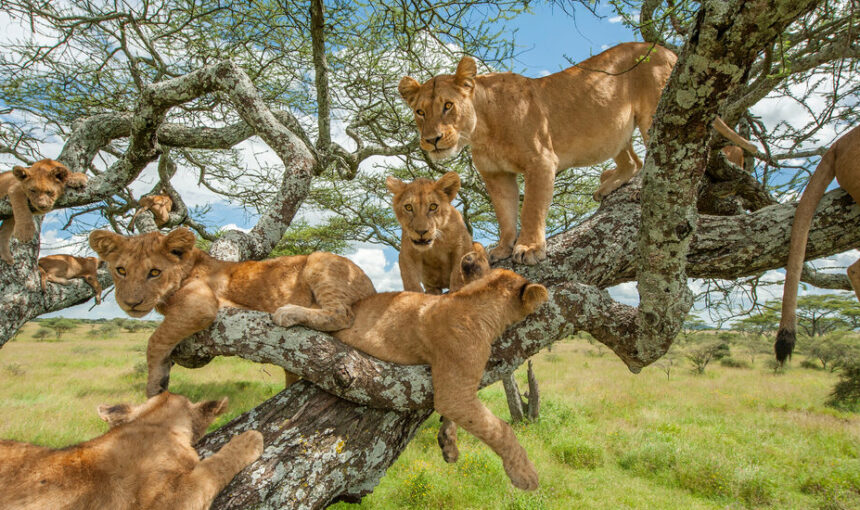
A majestic tree-climbing lion lounging in a fig tree in the Ishasha sector of Queen Elizabeth National Park during a safari with Afraeka Adventures.

Queen Elizabeth National Park 2025/2026: Wildlife, Tree-Climbing Lions & Ultimate Safari Guide

magine a national park where the savannah meets the equator, where lions lounge in ancient fig trees, and where hippos bob in a channel so dense with birdlife that it rivals the Amazon. This is Queen Elizabeth National Park—Uganda’s most biodiverse and second-largest protected area, and a crown jewel of any East African safari.

At Afraeka Adventures, we consider Queen Elizabeth National Park an essential stop on any Ugandan itinerary. Spanning nearly 2,000 square kilometers across the Western Rift Valley, this park offers an astonishing variety of ecosystems: sprawling savannahs, humid forests, sparkling crater lakes, and the famous Kazinga Channel. Whether you are tracking the elusive tree-climbing lions, cruising past hundreds of hippos, or trekking chimpanzees in a sunken gorge, Queen Elizabeth National Park delivers the quintessential African safari experience.

This comprehensive guide covers everything you need to know about visiting Queen Elizabeth National Park in 2025/2026—from its incredible wildlife and top activities to accommodation, best times to visit, and insider tips from our expert local guides.


Overview of Queen Elizabeth National Park

Established in 1952 as Kazinga National Park, it was renamed Queen Elizabeth National Park in 1954 to commemorate a royal visit by Queen Elizabeth II. Today, it spans 1,978 square kilometers (764 sq miles) and is recognized globally for its extraordinary biodiversity.

The park is a UNESCO Biosphere Reserve and a critical part of the larger Rwenzori-Virunga landscape. Its unique geography, straddling the equator and bordering Lake George and Lake Edward, creates a haven for wildlife. Queen Elizabeth National Park boasts an incredible over 600 bird species—the highest of any protected area in Africa—and supports an estimated 95 mammal species. According to the Uganda Wildlife Authority, it is the most popular savannah park in the country, and for good reason.

From the open grasslands of the Kasenyi Plains to the dense forest of Maramagambo, Queen Elizabeth National Park offers a microcosm of Africa’s wild heart, all against the stunning backdrop of the Rwenzori Mountains (Mountains of the Moon).


Wildlife in Queen Elizabeth National Park

The sheer density and variety of wildlife make Queen Elizabeth National Park a world-class safari destination. Here is what you can expect to see:

The Tree-Climbing Lions of Ishasha

The park’s most famous residents, the tree-climbing lions, are a rare phenomenon found in only a few places on Earth (Tanzania’s Lake Manyara being the other). In the southern Ishasha sector of Queen Elizabeth National Park, these lions habitually lounge in the branches of huge fig trees during the heat of the day, escaping the tsetse flies and enjoying the cool breezes. Spotting them requires patience, but our Afraeka Adventures guides know exactly where to look.

The Kazinga Channel Hippo Population

The Kazinga Channel—a 32-kilometer natural waterway connecting Lake Edward and Lake George—hosts one of the largest concentrations of hippos in Africa, often numbering over 2,000 individuals. Alongside them, you will see massive herds of elephants crossing the banks, buffalo quenching their thirst, and Nile crocodiles basking in the sun.

Savannah Giants & Plains Game

The Kasenyi Plains are the predator capital of Queen Elizabeth National Park. Here, you are almost guaranteed to see the “Big Four” (lion, elephant, buffalo, and leopard). The plains are also home to thousands of Uganda kobs, waterbucks, and warthogs, making it an extraordinary location for morning game drives.

The Birdlife Capital of Africa

With over 600 species, Queen Elizabeth National Park is a paradise for ornithologists. Key species include the rare shoebill stork (seasonally seen in the marshlands), the elegant African skimmer, the pink-backed pelican, and the iconic lesser flamingo, which gathers on the crater lakes in breathtaking numbers.


Top Activities in Queen Elizabeth National Park

A visit to Queen Elizabeth National Park is not a one-dimensional experience. Here are the must-do activities to build into your itinerary:

1. Morning & Evening Game Drives (Kasenyi Plains)

The Kasenyi sector is the classic savannah experience of Queen Elizabeth National Park. Early morning drives (starting at 6:30 AM) and late afternoon sundowner drives are the best times to see predators hunting. The big cats, including prides of lions and solitary leopards, are regularly spotted stalking the plentiful Uganda kob herds.

2. Kazinga Channel Boat Safari

This is arguably the signature experience of Queen Elizabeth National Park. A 2-hour boat cruise along the Kazinga Channel brings you within meters of hundreds of hippos, elephants drinking at the water’s edge, and a kaleidoscope of waterbirds. The sunset cruise, in particular, offers spectacular photography opportunities as the sun dips behind the Rwenzori Mountains.

3. Ishasha Tree-Climbing Lion Tracking

Venturing into the remote Ishasha sector requires a longer drive but is absolutely worth it. Instead of driving on open plains, you slowly cruise past massive fig trees, scanning the branches for the distinctive paws of a sleeping lion. This experience is unique to Queen Elizabeth National Park in Uganda.

4. Chimpanzee Trekking in Kyambura Gorge

Known as the “Valley of the Apes,” the sunken Kyambura Gorge is a dramatic 100-meter-deep rainforest corridor cutting through the savannah. It is home to a habituated troop of chimpanzees. Trekking here is challenging but deeply rewarding, offering a primate experience that complements gorilla trekking perfectly. Permits are limited, so booking through Afraeka Adventures in advance is essential.

5. Crater Lake Exploration & Nature Walks

The park is dotted with over 30 craters, formed by volcanic activity millions of years ago. The Katwe Crater Lakes and Bunyampaka Crater offer stunning scenic views. Guided nature walks in the Maramagambo Forest reveal a treasure trove of primates (including baboons and vervet monkeys), as well as the famous “Bat Cave.”


The Four Sectors of Queen Elizabeth National Park

To truly appreciate Queen Elizabeth National Park, you must understand its distinct sectors, each offering a different experience:

SectorLocationBest For
Kasenyi PlainsNorthern/North-EasternClassic game drives; highest predator density; the “must-do” savannah experience.
IshashaSouthern (remote)Tree-climbing lions; untouched wilderness; quieter, exclusive safari feel.
Mweya PeninsulaCentralThe park headquarters; best accommodation options; gateway to the Kazinga boat cruise.
Kyambura / MaramagamboEasternChimpanzee trekking; forest walks; crater lake scenic views.

Best Time to Visit Queen Elizabeth National Park

The weather in Queen Elizabeth National Park is relatively mild due to its altitude (~1,000m), but the seasons impact your experience significantly:

SeasonMonthsExperience
Peak (Dry)June – September, December – FebruaryGrasses are short; animals gather around water sources; easier game viewing. Perfect for road travel.
Green (Wet)March – May, October – NovemberLush landscape; dramatic skies; excellent birding for migratory species; fewer tourists. Roads can be slippery.

Pro-Tip from Afraeka Adventures: The “shoulder months” of late May and early November offer the best of both worlds—fewer tourists, lower lodge rates, and beautiful green scenery, with sufficient dry days for excellent game viewing in Queen Elizabeth National Park.


Where to Stay: Accommodation Options

Whether you prefer budget camping or ultra-luxury, Queen Elizabeth National Park has you covered:

  • Mweya Safari Lodge (Luxury): The iconic lodge perched on the Mweya Peninsula, offering sweeping views of the Kazinga Channel and a private pool.
  • Katara Lodge (Mid-Range/Luxury): Known for its stunning infinity pool overlooking the park.
  • Enganzi Game Lodge (Mid-Range): Excellent for sunset views over the plains.
  • Ishasha Wilderness Camp (Luxury): Mobile-tented camp in the remote Ishasha sector, perfect for exclusive lion tracking.
  • Simba Safari Camp (Budget): Great for backpackers and budget travelers looking for a classic camping experience.

How to Get to Queen Elizabeth National Park

  • By Road: The most common route is a 7-8 hour drive (approximately 420 km) from Kampala/Entebbe via Mbarara, passing through the beautiful Ankole farmlands. Alternatively, you can take the shorter but slightly rougher road via Fort Portal.
  • By Air: For those on a tight schedule or looking for luxury, Aerolink Uganda offers scheduled and private charter flights from Entebbe directly to the Kasese or Mweya airstrips, transforming Queen Elizabeth National Park into a quick weekend getaway.

Frequently Asked Questions About Queen Elizabeth National Park

Q: Is Queen Elizabeth National Park safe to visit?

A: Absolutely. The park is well-managed by the Uganda Wildlife Authority with armed rangers escorting all visitors. Afraeka Adventures provides professional guides who are intimately familiar with the terrain and wildlife behavior in Queen Elizabeth National Park.

Q: Can I see the Big Five in Queen Elizabeth National Park?

A: You can see four of the Big Five (lion, elephant, buffalo, and leopard). The rhino is not found here; you would need to visit Ziwa Rhino Sanctuary or Kenya for that.

Q: How long should I spend in Queen Elizabeth National Park?

A: We recommend a minimum of 3 days (2 nights) to do the standard game drive, Kazinga boat cruise, and a Kyambura chimp trek. If you want to include Ishasha, add at least one extra day because of the driving distance.

Q: What is the best time to see tree-climbing lions?

A: The lions in Ishasha are active at dawn and dusk but climb trees during the hottest part of the day (10 AM – 4 PM). Visiting Ishasha during the dry season makes finding them easier as the foliage is thinner in Queen Elizabeth National Park.

Q: Can I combine Queen Elizabeth with gorilla trekking?

A: Yes! This is one of our most popular itineraries at Afraeka Adventures. Queen Elizabeth National Park lies conveniently on the route to Bwindi Impenetrable Forest, making it the perfect warm-up safari before your gorilla trek.


Final Thoughts: Plan Your Queen Elizabeth Safari

Queen Elizabeth National Park is the beating heart of Uganda’s safari circuit. It offers a diverse, action-packed experience that perfectly balances the adrenaline of big-cat hunting with the serene beauty of a hippo-filled channel. Its proximity to other major parks makes it incredibly versatile for both short and extended safaris.

At Afraeka Adventures, we pride ourselves on designing the perfect Queen Elizabeth National Park experience—whether it’s a romantic sunset cruise, a family game drive, or an exclusive chimp trek in Kyambura Gorge. With our local expertise, we ensure you don’t miss a single lion in a tree or flamingo on a crater lake.


Ready to discover the wonders of Queen Elizabeth National Park?

  •  Email us: info@afraekaadventures.com
  • WhatsApp/Call: +256794144988