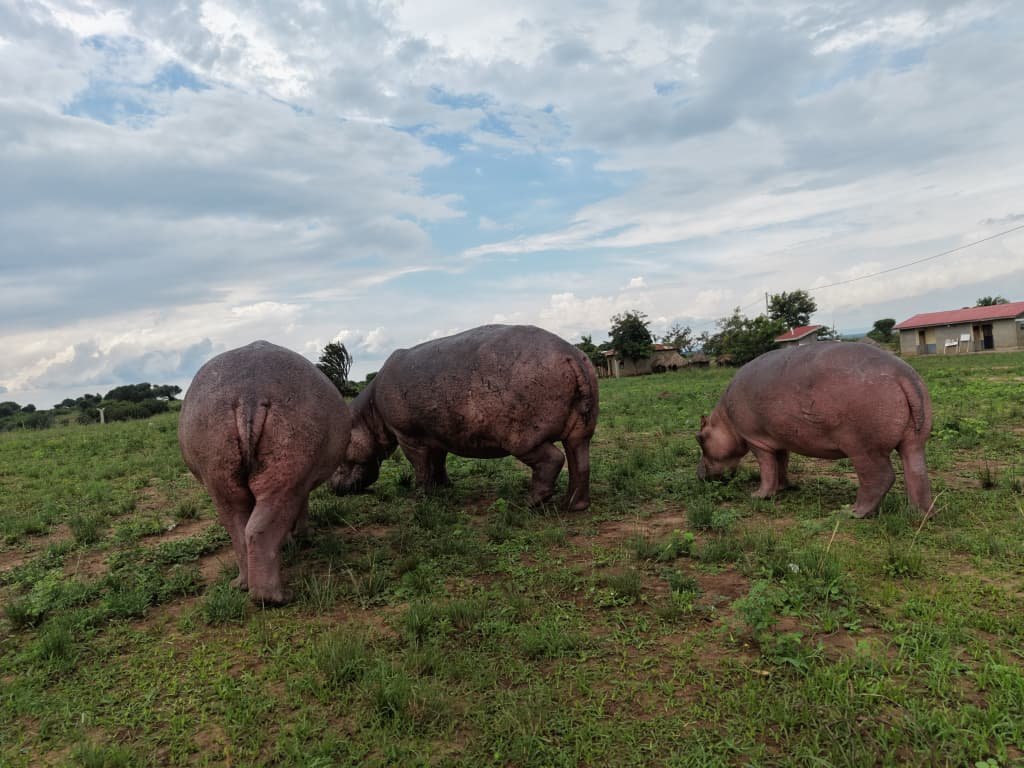
The Kashaka landing site sits on the shore of Lake George in Queen Elizabeth National Park, western Uganda. It is a working lakeside landing site where fishing life meets wild hippos, and in our photos below the hippos are grazing on open grass only a short way from the buildings and the water. This guide explains what the Kashaka landing site is, what you can see around it, and how to visit Lake George safely.
What is the Kashaka landing site?
A landing site is the place where fishing boats come ashore, where the catch is sorted and sold, and where a small community lives and trades. The Kashaka landing site is one of these lakeside settlements on Lake George, inside the Queen Elizabeth conservation area. It is not a lodge or a formal viewing platform. What makes it interesting for visitors is how close everyday village life sits to the wildlife of the park.

About Lake George
Lake George is a shallow lake of about 250 square kilometres. Its mean depth is only about 2.4 metres and its deepest point is around 4.5 metres. It lies inside Queen Elizabeth National Park and drains south-west into Lake Edward through the Kazinga Channel, which is why a day here fits naturally with a boat cruise on the channel. Rivers from the Rwenzori Mountains feed the lake. You can read the basic facts on the Lake George reference page.
The lake was designated a Wetland of International Importance in March 1988, and it was Uganda’s first Ramsar site. Its shoreline and wetlands support hippos, Nile crocodiles, elephants and the shy sitatunga antelope, and the water is rich enough in algae to look green from above.
Hippos at the Kashaka landing site
Hippos are the main reason to visit the Kashaka landing site with a camera. Hippos spend the day cooling off in water and leave it to graze on grass, mostly after dark, so seeing a group feeding on open ground in daylight is a memorable sight. The photos in this article were taken on short grass close to the shoreline, with village buildings in the background.


What you can learn from watching them:
- They graze like cattle. Hippos clip short grass with their wide lips and cover a lot of ground to feed.
- Families stay together. Younger hippos and calves keep close to the adults, especially near the water’s edge.
- The water is their safe place. When a hippo feels threatened it heads for the lake, so never stand between a hippo and the water.

Hippos are large, fast over short distances and territorial. They are one of the animals that cause the most injuries to people in Africa, so watch them from a safe distance and always with a guide. Our section on visiting safely below explains the basics.

Birds and other wildlife on Lake George
Lake George is a good birding stop as well as a hippo stop. More than 150 bird species are recorded around the lake, including the uncommon saddle-billed stork, and the open water and papyrus edges attract waterbirds all year. Keep your binoculars handy on the shore and on any boat trip. Elephants and Nile crocodiles also use the shoreline, so keep scanning the water and reeds as well as the grass.


Life at a Lake George landing site
Fishing is the main livelihood on Lake George. The catch includes tilapia, cichlids, lungfish and catfish, which boats bring ashore at landing sites like Kashaka for sorting and sale. Visiting a landing site is a chance to see how people live beside a protected area, and to see why guides stress respect for the community as well as for the animals.
- Ask before you photograph people, boats or the catch.
- Buy fish or snacks locally if you want to support the community directly.
- Follow the instructions of your guide and the Uganda Wildlife Authority rangers.
How to visit the Kashaka landing site safely
Queen Elizabeth National Park is managed by the Uganda Wildlife Authority, and the rules that protect visitors and animals apply around the lake. Because landing sites and park boundaries can differ in what is allowed and what fees apply, confirm the details of your stop with your operator before you travel.
- Go with a guide. A local guide knows where the hippos are, how they are behaving and when it is safe to stay.
- Keep a safe distance. Use a zoom lens instead of walking closer, and never approach a calf.
- Stay away from the water’s edge when hippos are on land, so you never block their route back to the lake.
- Avoid dusk and night walks without a ranger, because that is when hippos are moving between water and grass.
- Dress in neutral colours and bring binoculars, a hat, sunscreen and drinking water.

Best time to visit
Hippos live in Lake George all year, so you can look for them in any month. Western Uganda’s drier months, from June to September and from December to February, usually mean easier roads and clearer skies. The wetter months bring greener scenery and fewer visitors, but tracks can be muddy. If you are building a longer safari, ask us to plan the timing around your other activities.
Combine it with a Queen Elizabeth safari
Lake George is just one part of Queen Elizabeth National Park. Read our Queen Elizabeth National Park guide to plan the rest of your stay. If you prefer a ready-made route, see the 3-day tree-climbing lions and boat cruise tour, or the 5-day Lake Mburo and Queen Elizabeth safari. You can also browse all Uganda safari packages.
Frequently asked questions
Where is the Kashaka landing site?
It is a landing site on Lake George, inside the Queen Elizabeth conservation area in western Uganda.
Can you see hippos at the Kashaka landing site?
Yes. Our photos show hippos grazing on grass close to the shoreline and the village buildings. Sightings can never be guaranteed, but hippos are a regular sight around the lake.
Is it safe to visit the Kashaka landing site?
It is safe with a guide who keeps you at a distance from the animals. Never walk between a hippo and the water, and avoid walking at dusk or at night.
Can I add Lake George to my Uganda safari?
Yes. We can add a Lake George stop to any Queen Elizabeth itinerary. Request a free quote and tell us your dates and group size.