Menu
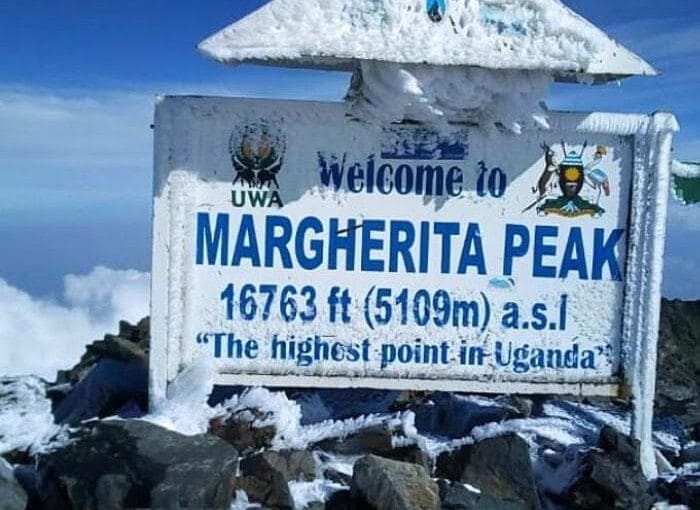
The snow-capped Margherita Peak in Rwenzori Mountains National Park, the legendary Mountains of the Moon, with Afraeka Adventures.

Rwenzori Mountains National Park 2025/2026: Hiking, Peaks & Ultimate Trekking Guide

Established as a national park in 1991 and designated a UNESCO World Heritage Site in 1994, Rwenzori Mountains National Park protects the upper slopes of the Rwenzori mountain range. Spanning an area of approximately 1,000 square kilometers along the Ugandan-DRC border, the park is a biodiversity hotspot of global significance.

The Rwenzori range is not volcanic like Kilimanjaro or Mount Kenya; it is a block of ancient crystalline rock thrust skyward by tectonic activity millions of years ago. The massif includes several peaks that rise above 4,500 meters, with Margherita Peak on Mount Stanley reaching 5,109 meters (16,763 feet) —the third-highest point in Africa.

According to the Uganda Wildlife Authority (UWA), which manages the park, the Rwenzori Mountains support over 70 mammal species, 217 bird species (including 19 Albertine Rift endemics), and an extraordinary diversity of plant life, including the iconic giant groundsel and giant lobelia. The park’s location on the equator combined with its high altitude creates a unique microclimate, feeding the massive glaciers that cap the peaks—though these are sadly retreating due to climate change.


The Iconic Peaks of Rwenzori Mountains National Park

A trek to Rwenzori Mountains National Park is defined by its legendary summits. Here are the major peaks that draw mountaineers from across the globe:

Mountain / PeakHeightNotes
Mount Stanley (Margherita Peak)5,109 mThe highest point in the Rwenzori Mountains National Park and the third-highest in Africa. Requires technical ice-axe and crampon skills.
Mount Stanley (Alexandra Peak)5,091 mThe second-highest peak on Mount Stanley; often summited as an acclimatization climb.
Mount Speke (Vittorio Emanuele)4,890 mThe second-highest mountain in the range, renowned for its dramatic glaciers and rock faces.
Mount Baker (Edward Peak)4,843 mA spectacular peak offering challenging rock climbing and breathtaking views over the surrounding valleys.
Mount Gessi (Iolanda)4,715 mA less-frequented peak for experienced climbers seeking solitude.
Mount Emin4,798 mSituated in the northeast of the range, offering rugged and remote climbing terrain.

Trekking Routes in Rwenzori Mountains National Park

Choosing the right route is critical for a successful expedition in Rwenzori Mountains National Park. Afraeka Adventures offers guided expeditions on both primary routes:

1. The Central Circuit (7–10 Days)

This is the classic and most popular route through Rwenzori Mountains National Park. It is a loop that circumnavigates the highest peaks, offering spectacular panoramic views without retracing your steps.

  • Highlights: Traverses all six vegetation zones; passes through the stunning Bujongolo Valley, Lake Kitandara, and the mystical Nyamwamba Valley.
  • Difficulty: Strenuous. Requires excellent fitness and moderate technical ability (ice-axe and crampon training provided).
  • Best For: Trekkers aiming to summit Margherita Peak and experience the full diversity of Rwenzori Mountains National Park.

2. The Kilembe Trail (6–8 Days)

Located on the southern slopes, the Kilembe Trail is a newer, less-crowded route into Rwenzori Mountains National Park. It ascends through the Kilembe Valley, offering equally breathtaking scenery and excellent wildlife viewing opportunities.

  • Highlights: Stunning views of the Kilembe Valley, access to Lake Narongo, and varied birdlife including the Rwenzori Turaco.
  • Difficulty: Strenuous to Very Strenuous.
  • Best For: Those seeking a quieter, more remote experience in Rwenzori Mountains National Park with a focus on high-altitude trekking.

Flora and Fauna: The Unique Ecosystem

One of the most extraordinary aspects of Rwenzori Mountains National Park is its incredible vertical biodiversity. As you ascend, you pass through six distinct vegetation zones:

  • Montane Forest (1,800 – 2,400m): Dense, moist forest with towering hardwoods, mosses, and ferns. Home to primates like the colobus monkey and blue monkey.
  • Bamboo Zone (2,400 – 2,600m): Thick bamboo thickets that require careful navigation.
  • Heath/Heath-Moorland (2,600 – 3,600m): A transition zone characterized by heathers and tree-heaths draped in hanging mosses—creating an enchanted, almost prehistoric atmosphere.
  • Alpine Zone (3,600 – 4,300m): This is where the magic happens. The legendary giant groundsels (Senecio) and giant lobelias dominate the landscape, towering over trekkers like alien trees.
  • High Alpine Deserts (4,300 – 4,800m): Sparse vegetation, scree slopes, and extreme conditions.
  • Glaciers and Snow (4,800 – 5,109m): Permanent ice and snow, culminating at Margherita Peak.

The park is also an Important Bird Area (IBA). Birders flock to Rwenzori Mountains National Park to spot endemic species like the stunning Rwenzori Turaco, the Rwenzori Batis, and the Scarlet-tufted Sunbird.


Best Time for a Rwenzori Trek

Visibility and trail conditions in Rwenzori Mountains National Park depend heavily on the season:

SeasonMonthsExperience
Peak / DryJune – August, December – FebruaryBest visibility; drier trails; highest success rate for summit attempts. Book through Afraeka Adventures well in advance.
ShoulderSeptember, MarchDecent weather, fewer crowds, but be prepared for occasional rain.
WetOctober – November, March – MayTrails are extremely muddy and slippery; low visibility; high risk of landslides. Only recommended for hardened adventurers.

Afraeka Insider Tip: The dry months of January and July are statistically the most successful for summiting Margherita Peak in Rwenzori Mountains National Park.


What to Pack for Rwenzori Mountains National Park

Packing correctly for Rwenzori Mountains National Park is non-negotiable. The weather can shift from equatorial heat to sub-zero blizzard conditions within hours.

  • Footwear: Sturdy, broken-in hiking boots with ankle support (waterproof are essential). Micro-spikes/crampons (provided by Afraeka).
  • Clothing: Base layers (merino wool), fleece mid-layers, a heavy waterproof down jacket (for summit night), waterproof trousers, and a Gore-Tex rain jacket.
  • Sleeping: 4-season sleeping bag (rated to -10°C or lower) and sleeping pad.
  • Tech: Headlamp with spare batteries, power bank (no electricity on the trail), and a camera with a weather-sealed body.
  • Health: High-SPF sunscreen, lip balm, altitude sickness medication (Diamox), and a comprehensive first-aid kit.
  • Hired Gear: Porters (strongly recommended) and walking sticks are available for hire at the trailhead.

Where to Stay: Accommodation & Logistics

  • Before & After Trek: Stay in Kasese Town at the Rwenzori International Hotel or Equator Snow Lodge for a comfortable pre-and-post-trek rest.
  • Inside the Park: Accommodation is strictly limited to basic mountain huts along the Central Circuit (Bujongolo, Lake Kitandara, John Matte, and Elena huts). These huts offer bunk beds and basic shelter—you must bring your own sleeping bag. Afraeka Adventures arranges all hut bookings as part of your expedition package.

Permits and Costs for Rwenzori National Park

Unlike gorilla permits, a trek in Rwenzori Mountains National Park requires a daily entry fee and a climbing/hiking permit. Fees are set by UWA and vary by duration and nationality:

CategoryFee (Per Person, Per Day)
Foreign Non-Residents~$35 – $60 (depending on the duration of the trek)
Foreign Residents~$25 – $40
East African Citizens~UGX 15,000 – 20,000

Important: These fees cover park entrance, ranger services, and rescue support. A typical 8-day expedition through Rwenzori Mountains National Park requires a package fee of $1,500 – $2,500 per person when including guides, porters, food, and equipment. Contact Afraeka Adventures for a fully customized, all-inclusive quotation.


How to Get to Rwenzori Mountains National Park

  • By Road: A 6-7 hour drive from Kampala/Entebbe to Kasese town (approx. 370 km) via the Mityana, Mubende, and Fort Portal route. The road is well-paved up to Fort Portal, with a scenic drive to the park headquarters at Nyakalengija.
  • By Air: For time-sensitive or luxury adventurers, Aerolink Uganda offers scheduled flights from Entebbe International Airport directly to the Kasese Airstrip. The airstrip is just a 20-minute drive from the park’s trailhead, making your expedition to Rwenzori Mountains National Park seamless and comfortable.

Frequently Asked Questions About Rwenzori Mountains National Park

Q: Do I need technical climbing experience to trek Rwenzori?

A: To summit Margherita Peak (5,109m) in Rwenzori Mountains National Park, yes—you need basic ice-axe and crampon skills. However, Afraeka Adventures provides full training on the mountain. If you only want to hike the Central Circuit without summiting, no technical experience is required, just excellent fitness.

Q: How fit do I need to be for a Rwenzori trek?

A: Very fit. A trek in Rwenzori Mountains National Park involves 5-8 hours of hiking per day on steep, uneven, and often wet terrain at high altitudes. We recommend cardiovascular training (running, cycling, stair climbing) for at least 3 months beforehand.

Q: Is altitude sickness a problem in Rwenzori?

A: Yes. At 5,109 meters, altitude sickness is a serious risk. Afraeka Adventures builds acclimatization days into all our itineraries for Rwenzori Mountains National Park, and our guides are trained in wilderness first aid. We recommend talking to your doctor about Diamox.

Q: Can I combine a Rwenzori trek with gorilla trekking?

A: Absolutely. Many of our guests combine an expedition in Rwenzori Mountains National Park with gorilla trekking in Bwindi or chimpanzee trekking in Kibale. This creates an unbeatable “mountains and primates” Ugandan adventure. Afraeka Adventures specializes in these seamless multi-day itineraries.

Q: Are the Rwenzori glaciers still there?

A: Yes, but they are retreating rapidly due to climate change. Scientists predict the glaciers on Rwenzori Mountains National Park could disappear entirely within the next 10-20 years. Now is the time to see them.


Final Thoughts: Conquer the Mountains of the Moon

A trek through Rwenzori Mountains National Park is not just a physical challenge—it is a journey into a magical world of giant groundsels, equatorial snows, and otherworldly landscapes that few humans will ever witness. It demands preparation, determination, and a spirit of adventure, but the reward is a perspective on the natural world that changes you forever.

At Afraeka Adventures, we do not just sell treks—we curate life-changing expeditions. Our Ugandan mountain guides have summited Margherita Peak countless times. We know the hidden lakes, the best camp spots, and the secret tricks to beating altitude sickness. Let us guide you safely to the roof of Uganda.


Ready to answer the call of the Mountains of the Moon?

  • Email us: info@afraekaadventures.com
  • WhatsApp/Call: +256794144988