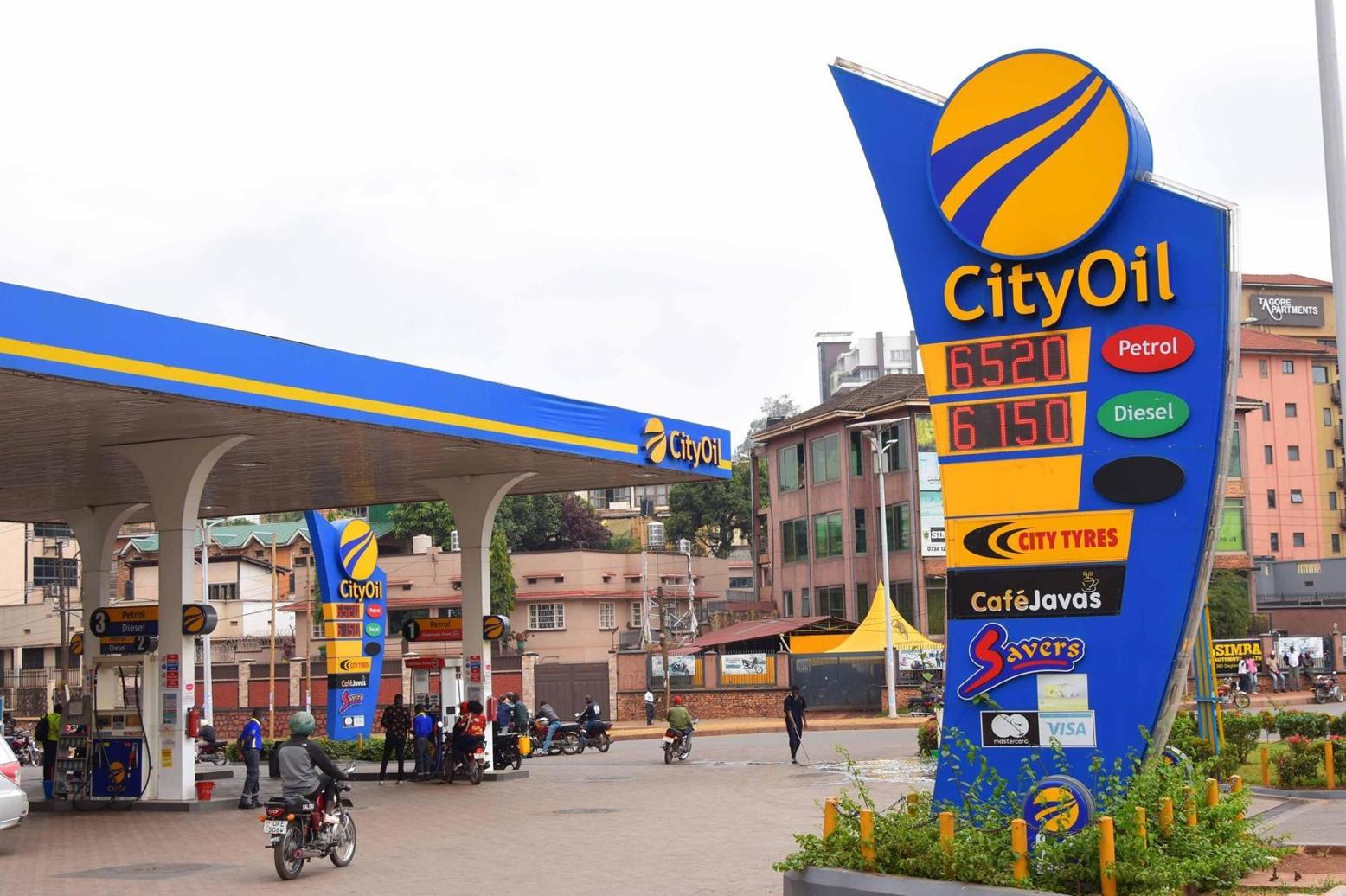
Last updated: 25 September 2026. Fuel prices in Uganda change frequently and are set at the pump by the fuel companies — confirm current rates locally before you travel and recalculate your budget using the method in this guide.
Short answer: There is no fixed Uganda self drive fuel cost for a 10 day trip, because fuel prices move. What you can do is calculate your own figure in three steps: estimate the total distance of your route, divide by your vehicle’s real-world fuel economy, then multiply by the current pump price on the day you fill up. For a typical 10 day Uganda self drive route covering around 1,800 to 2,200 kilometres in a 4×4, most travellers use between 220 and 300 litres of fuel. Multiply that by today’s pump price per litre and you have your own Uganda self drive fuel cost figure — one that stays accurate whatever the price at the pump does.
Fuel is the single most variable line in a Uganda self drive budget. It is also the line that self drive travellers most often get wrong, because they estimate it from the wrong numbers. They take a fuel price they read somewhere, multiply it by a distance they guessed, and end up either over-budgeting by 40% or under-budgeting by the same margin. The problem is not the price of fuel — it is the calculation method.
This guide is the reference for Uganda self drive fuel cost on a 10 day itinerary — how to calculate your own figure from current pump prices, what moves the number up or down, how often you will refuel on the standard western and south-western routes, and how to plan a budget that survives fuel price changes. If you have not yet chosen a route or vehicle, the Uganda destinations section maps how the main self drive circuits connect, and permit requirements for gorilla trekking along the route are kept current on the gorilla permits Uganda page. The regulatory framework that governs national park entry — the other major cost line on a self drive route — is published by the Uganda Wildlife Authority.
Uganda self drive fuel cost — key facts
- Typical 10 day distance: 1,800–2,200 km on the main western and south-western circuits
- Typical fuel use: 220–300 litres in a 4×4 over that distance
- How to calculate your own figure: Total km ÷ km per litre × current pump price
- Fuel availability: Reliable on main routes; less frequent in remote areas like Kidepo
- Fuel type: Petrol (gasoline) for most rental 4x4s; diesel for some Land Cruisers
- Payment: Cash preferred at most stations outside Kampala and Entebbe
- What moves the number: Route length, terrain, load, air conditioning, driving style
- Staleness risk: Any fixed figure becomes wrong quickly — always recalculate from current pump prices
How do you calculate Uganda self drive fuel cost for 10 days?
You calculate Uganda self drive fuel cost for a 10 day route in three steps. First, add up the total kilometres of your planned route, including the drive from Entebbe or Kampala to your first park and the return. Second, divide that total by your vehicle’s real-world fuel economy — not the manufacturer’s figure, which is optimistic — in kilometres per litre. Third, multiply the resulting litres by the current pump price per litre. The result is your Uganda self drive fuel cost, based on today’s prices, and it stays valid for as long as the pump price does not move.
Three steps to calculate your own Uganda self drive fuel cost
- Add up your total route distance. Use a route planner to total your kilometres for the full 10 day itinerary, including transfers to and from Entebbe or Kampala. Most 10 day western and south-western Uganda routes fall between 1,800 and 2,200 km, but the number depends heavily on how many parks you include and how directly you drive between them.
- Divide by your vehicle’s real-world fuel economy. A Toyota Land Cruiser in Ugandan conditions typically returns 7 to 9 km per litre. A RAV4 returns 10 to 12 km per litre. A smaller SUV or saloon returns 12 to 15 km per litre. Use the lower end of the range if your route includes significant climbing or rough terrain.
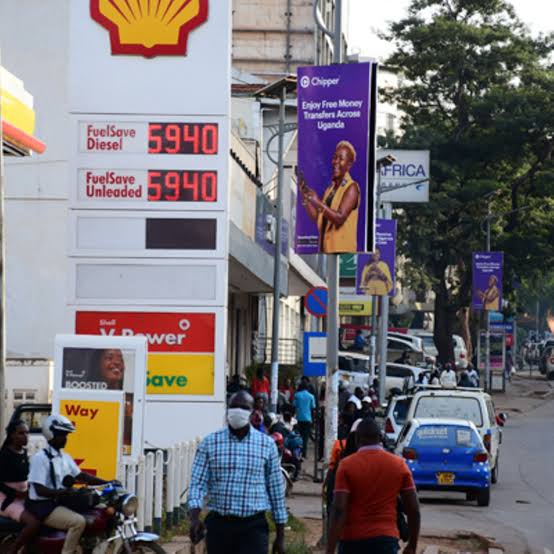
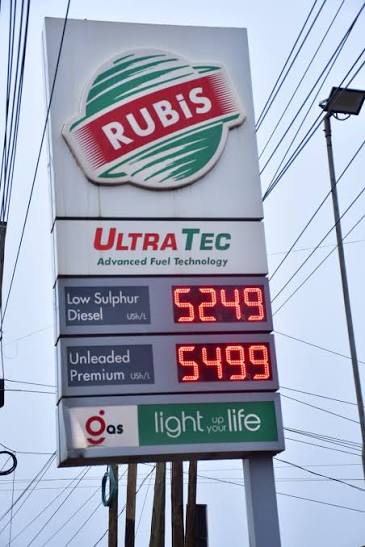
- Multiply litres by current pump price. Take the litres figure from step two and multiply by the current price per litre at a Ugandan petrol station on the day you plan to travel. Fuel prices in Uganda are published daily and vary slightly between stations and regions, so check the rate on the day, not from an article written months ago.
Two things make this calculation more accurate. First, add 10 to 15 per cent for reserve — you do not want to run low in a remote area where the next station is hours away. Second, recalculate if your route changes significantly. A 10 day itinerary that includes Kidepo Valley in the far north involves a materially longer and rougher drive than one that stays on the western circuit, and the fuel cost reflects that difference.
Afraeka tip: The single most useful thing you can do for your Uganda self drive fuel cost budget is track every fill-up. Note the litres, the price and the odometer reading in a small notebook or a phone app. By day three you will know your vehicle’s actual fuel economy on Ugandan roads, and you can adjust the remaining seven days of budget with confidence. Travellers who track from day one almost never overshoot their fuel budget; travellers who estimate from the start usually do.
Worked example: Uganda self drive fuel cost for a 10 day route
The following example is a working method, not a fixed price. The route lengths and vehicle economy figures are typical for a 10 day Uganda self drive itinerary. The fuel price shown is a placeholder — replace it with the current pump price on the day you travel, and the calculation produces your own Uganda self drive fuel cost figure for that day.
| Variable | Example figure | Notes |
|---|---|---|
| Total route distance | 2,000 km | Typical western and south-western circuit including Entebbe return |
| Vehicle real-world economy | 8 km per litre | Land Cruiser 4×4 with load, on mixed tarmac and murram |
| Total litres required | 250 litres | 2,000 ÷ 8 = 250 |
| Reserve buffer | +15% | Adds ~38 litres of safety margin |
| Total litres to budget | ~288 litres | 250 + 38 |
| Fuel price (placeholder) | Current pump price per litre | Replace with today’s rate from a Ugandan station |
| Uganda self drive fuel cost | ~288 × pump price | Recalculate whenever the pump price changes |
Route lengths and fuel economy figures are typical, not guaranteed. Actual figures depend on your specific itinerary, vehicle, load and driving conditions. Always recalculate using current fuel prices.
The reason this method matters is that the pump price changes. Uganda’s fuel prices move with international oil markets, exchange rates and local supply conditions, and a fixed figure from any article — including this one — becomes unreliable within weeks or months. What does not change is the arithmetic. Distance divided by economy gives litres; litres multiplied by today’s price gives cost. Every traveller can run that calculation in under five minutes, and it is the only approach that stays accurate.
What drives Uganda self drive fuel cost up or down?
Uganda self drive fuel cost is driven by five factors, and only one of them is under your direct control on any given day. Route length and terrain are fixed once you plan the itinerary. Vehicle economy is fixed once you choose the rental. Load and air conditioning are largely fixed. Driving style is the variable you can actually adjust, and it can shift your total fuel cost by 10 to 20%.
| Factor | Effect on fuel cost | What you can do |
|---|---|---|
| Route length | Direct — more km means more fuel | Plan a route that minimises backtracking |
| Terrain | Significant — climbing and murram use more fuel than flat tarmac | Accept the terrain; do not avoid a park because of it |
| Vehicle economy | Direct — a Land Cruiser uses more fuel per km than a RAV4 | Choose the vehicle that matches the route and your comfort needs |
| Load | Moderate — full vehicle with luggage and passengers uses more fuel | Pack light; consider a smaller vehicle for two travellers |
| Driving style | Moderate — aggressive acceleration and high speed increase fuel use | Drive smoothly; keep speeds moderate on tarmac sections |
| Air conditioning | Small but real — running A/C continuously adds a few per cent | Use A/C selectively on cooler sections |
Effects are approximate and depend on the specific vehicle, route and conditions of any trip.
The two factors that most commonly surprise travellers are terrain and vehicle choice. A route that includes the south-western highlands — Kabale, Kisoro, the Bwindi sectors and the drive up to Ruhija — involves sustained climbing that uses significantly more fuel than the equivalent distance on flat tarmac. A Land Cruiser handles that terrain better than a smaller vehicle, but uses more fuel doing it. Travellers weighing the choice between a RAV4 and a Land Cruiser should factor in both the fuel economy difference and the comfort and durability difference.
How often do you refuel on a 10 day Uganda self drive route?
On a typical 10 day Uganda self drive route, most travellers refuel every two to three days, or roughly every 500 to 700 kilometres. Main routes like the Kampala to Mbarara to Kabale corridor have frequent fuel stations, but remote areas — the far south-west near Kisoro, the Kidepo region in the north — have fewer stations and are best topped up before heading in.
Refuelling tips for a Uganda self drive route
- Fill up in major towns — Kampala, Entebbe, Mbarara, Kabale, Fort Portal, Gulu
- Top up before entering remote parks like Kidepo Valley or Mgahinga
- Prefer major-brand stations — they are more likely to have consistent fuel quality
- Keep cash for fuel — not every station outside the cities accepts cards
- Note the odometer at each fill-up to track real-world economy
- Do not let the tank drop below a quarter in remote areas
- Check fuel availability with your lodge before long stretches without stations
- Fill up the evening before a long driving day rather than the morning of
Fuel quality in Uganda is generally reliable at the major-brand stations on the main routes. Smaller stations in remote areas can occasionally have inconsistent quality, and travellers with sensitive engines — particularly diesel Land Cruisers — are advised to stick to major brands. For most rental vehicles, this is not a concern, but it is worth noting if you are in a vehicle that your rental company has flagged for fuel sensitivity.
Is fuel available across Uganda for self drive travellers?
Yes. Fuel is available across Uganda for self drive travellers, and the main tourist routes are well-served. The Kampala to Entebbe corridor, the Kampala to Mbarara to Kabale route, the Kampala to Fort Portal route and the Kampala to Gulu route all have reliable fuel stations every 50 to 100 kilometres. The remote areas — the far north for Kidepo Valley National Park, the deep south-west near Kisoro — have fewer stations, and travellers should plan to top up before entering those regions.
Three practical points about fuel availability for a Uganda self drive trip:
- Main routes are well-served. You will not struggle to find fuel on any of the standard tourist driving routes. The stations are frequent, and most take cash or card.
- Remote areas need planning. Kidepo Valley and the deep south-west have fewer stations. Plan your fuel around the major towns — Gulu or Kitgum for Kidepo, Kabale or Kisoro for the south-west.
- Fuel is priced per litre. Petrol and diesel are priced separately, and prices vary slightly by region. Petrol is more common in rental 4x4s than diesel, but confirm with your rental company.
The International Gorilla Conservation Programme documents how access infrastructure supports the conservation areas in the Virunga–Bwindi landscape, and the pattern of fuel availability follows the same routes — main corridors well served, deeper areas less so. For self drive planning on the south-western circuit, this is useful context.
How do you pay for fuel on a Uganda self drive trip?
You pay for fuel on a Uganda self drive trip in cash or by card, depending on the station. Major-brand stations in Kampala, Entebbe, Mbarara, Kabale and Fort Portal accept cards, but many stations outside the cities prefer cash. Plan to carry enough Uganda shillings to cover several fill-ups, and ask your rental company about their preferred payment method for fuel.
Three practical points about paying for fuel on a self drive trip:
- Cash is more widely accepted. Most stations accept cash, and many smaller stations are cash-only. Carry sufficient shillings, and note that larger notes may be harder to change in remote areas.
- Cards work in major towns. Kampala, Entebbe, Mbarara, Kabale and Fort Portal have card-accepting stations. Rural stations are less reliable for cards.
- Keep receipts for fuel purchases. Useful for your own tracking, and some rental agreements require evidence of fuel purchases on return.
The self drive fuel cost is not the only budget line to plan for on a 10 day Uganda trip. Park entry fees, gorilla permits where relevant, accommodation and vehicle rental all sit alongside it. The gorilla permits element — the single largest cost if you are trekking — is kept current on the gorilla permits Uganda page, and the sector-level context sits on the Uganda gorilla trekking hub.
What is a typical 10 day Uganda self drive route?
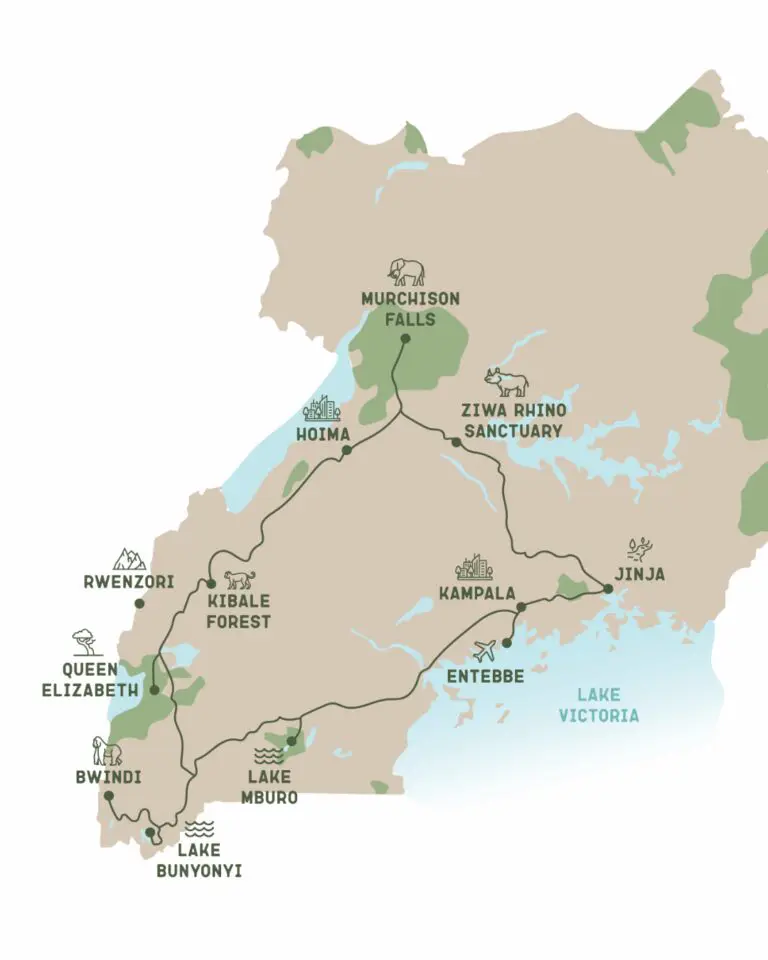
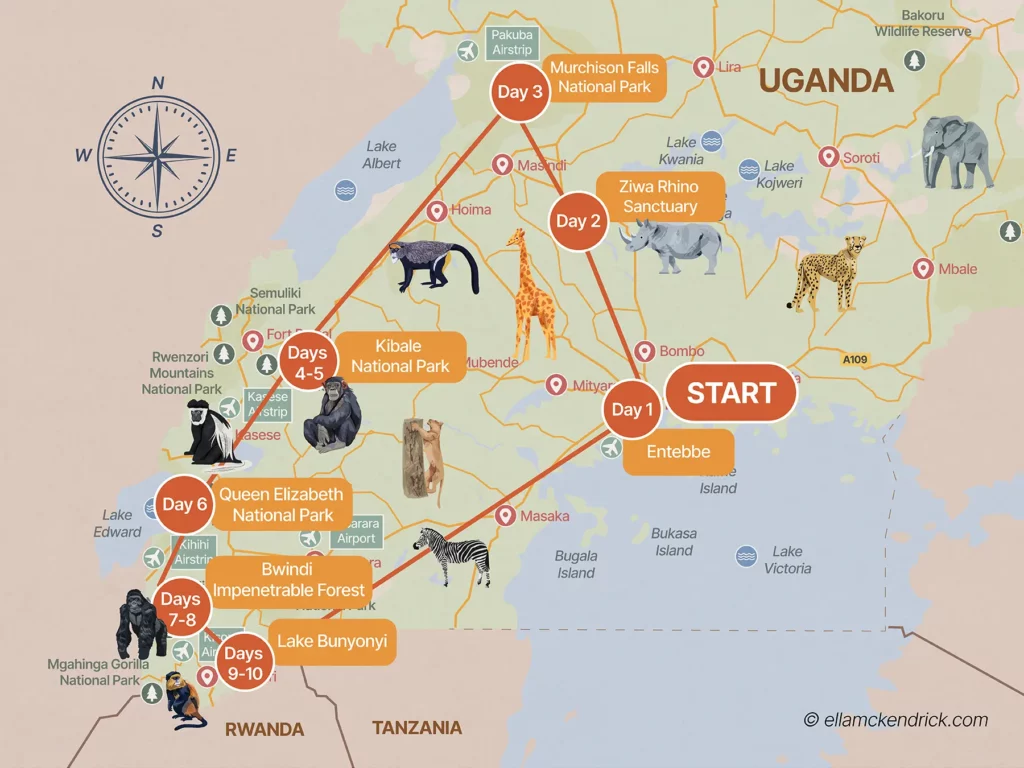
A typical 10 day Uganda self drive route covers the western and south-western circuit, starting and ending at Entebbe. It usually includes Lake Mburo, Queen Elizabeth National Park, Kibale Forest, and Bwindi or Mgahinga for gorilla trekking, with a possible extension to Lake Bunyonyi. The total distance is usually between 1,800 and 2,200 kilometres, and the driving is a mix of tarmac and murram.
A typical 10 day self drive route and its fuel implications
- Days 1–2: Entebbe to Lake Mburo. Roughly 240 km on tarmac. Easy driving, efficient fuel use.
- Days 3–4: Lake Mburo to Queen Elizabeth. Roughly 300 km, mostly tarmac. Moderate fuel use.
- Days 5–6: Queen Elizabeth to Kibale. Roughly 160 km, mix of tarmac and murram. Short day, low fuel use.
- Days 7–8: Kibale to Bwindi or Mgahinga. Roughly 300 km, sustained climbing into the south-western highlands. Higher fuel use on this section.
- Day 9: Gorilla trekking day. Minimal driving; fuel use limited to lodge access.
- Day 10: Bwindi or Mgahinga to Entebbe. Roughly 500–550 km on the return leg. Longest single driving day.
The fuel-heavy sections of the route are the climb into the south-western highlands and the long return leg to Entebbe. The first few days on tarmac are the most fuel-efficient. Travel planning around the route should factor in two things: the vehicle type that suits the mixed terrain, and the fuel top-up points along the way. Most travellers refuel in Mbarara, Kabale, Fort Portal and the Bwindi or Kisoro area, depending on the specific itinerary. Route options and the way the parks connect are mapped on the Uganda destinations page, and the driving time between key stops is covered in the logistics posts on the blog.
How should you budget Uganda self drive fuel cost against other costs?
You should budget Uganda self drive fuel cost as a variable line, not a fixed one, and treat it as one of several cost categories that together make up the trip. Vehicle rental, park entry fees, accommodation, meals, gorilla permits where relevant and fuel are the six main lines on a self drive budget. Fuel is usually the most variable of the six, and the one most affected by changes in external factors like oil prices and exchange rates.
| Cost line | Variability | How to budget it |
|---|---|---|
| Vehicle rental | Fixed per day | Confirm rate and inclusions before booking |
| Fuel | Variable with pump price and route | Calculate using the method in this guide |
| Park entry fees | Fixed per park, per person, per day | Check UWA current rates before travel |
| Accommodation | Variable by tier | Book in advance for the tier you want |
| Meals | Variable | Assume $20–40 per person per day for mid-range |
| Gorilla permits | Fixed per permit | Book and pay in advance — details on our permits page |
Cost lines are illustrative of the categories, not fixed quotes. Every line except fuel is confirmed at booking time.
The reason fuel deserves its own planning note is that it is the only line on the budget that changes with the pump price. Vehicle rental is confirmed when you book. Park fees are published and updated periodically. Permits are fixed once issued. Fuel moves with the market. If you are working to a tight total budget, the honest approach is to leave a 15 to 20% contingency on the fuel line, and to recalculate your estimate in the week before departure when you know the current pump price. The Uganda Tourism Board publishes broader travel-cost context for the country, and combined with a current pump price, that gives you everything you need to produce a realistic number.
Common mistakes with Uganda self drive fuel cost budgeting
Most of what goes wrong with Uganda self drive fuel cost budgeting comes down to a small set of avoidable mistakes, and all of them can be prevented with one careful planning conversation.
- Using a stale fuel price. Fuel prices change. Any figure you read in an article — including this one — needs to be replaced with the current pump price before you budget.
- Using the manufacturer’s fuel economy figure. Manufacturer figures are optimistic. Real-world economy in Ugandan conditions is typically 20 to 30 per cent worse than the brochure.
- Forgetting the return leg. Self drive routes involve getting back to Entebbe. The return leg is often the longest single driving day and adds significant fuel cost.
- Not accounting for terrain. Climbing routes in the south-west use significantly more fuel than equivalent distances on flat tarmac. Do not use a single economy figure for the whole trip.
- Not carrying a contingency. Fuel is the one variable line on a self drive budget. A 15 to 20% buffer keeps a price rise from breaking the trip.
- Running low in remote areas. Do not let the tank drop below a quarter in areas with few stations. Fill up before entering remote parks, not after.
- Assuming every station takes cards. Many stations outside the main towns are cash-only. Carry enough shillings for several fill-ups.
- Not tracking actual consumption. Recording litres, price and odometer at every fill-up is the simplest way to stay on budget and to know early if your estimate is off.
Can one permit cover two people?
No. One permit covers one person for one trek, and this applies on a self drive trip the same as any other. If your 10 day route includes a gorilla trek, every trekker in the vehicle needs their own permit for that trek, on top of the fuel and vehicle costs. A party of four trekking needs four permits, irrespective of the fact that the four are sharing one vehicle and one fuel tank.
The eight-visitor daily cap per habituated gorilla group applies equally, and it is worth noting for self drive travellers that the fuel cost and the permit cost are entirely separate budget lines. You cannot reduce your gorilla permit cost by sharing a vehicle, and you cannot reduce your fuel cost by choosing a different trekking sector. The two are independent, and both need to be planned. Details on how permits work, including current requirements, are kept current on the gorilla permits Uganda page.
Once you have your permits, the gorilla group you actually visit is allocated according to the trekking sector, with final group allocation managed by UWA on the morning of the trek. You will know your sector in advance because it is on your permit; you will learn your family at the briefing alongside everyone else. On a self drive trip, this also means you need to arrive at the trailhead by the pre-dawn briefing time, which affects the previous day’s driving and therefore the fuel plan. Arriving the night before the trek and staying at a lodge near the trailhead is the simplest way to make the timing work. The sector guides on the blog cover the terrain specifics for each of the Bwindi sectors.
Afraeka field note: A self drive couple once asked us to review a fuel budget they had built from a travel blog post they had found. The post quoted a fuel price that had been correct two years earlier, and had used the manufacturer’s economy figure for the vehicle — a Land Cruiser, on a route through the south-western highlands. Their budget was roughly 35 per cent under the real number. They found out on day six, in Kabale, when they topped up and realised the trip was burning more fuel than they had allowed for. The good news was that the fuel itself cost relatively little in absolute terms, so the shortfall was easy to absorb with a small adjustment to their meal budget. The wider point, which they passed on to us, is that a fuel budget built from a stale source is not a budget — it is a guess. Recalculating from the current pump price before departure is the difference between planning and hoping.
A question that comes up regularly on TripAdvisor’s Uganda forum and on r/Uganda is some version of: “How much should I budget for fuel on a self drive trip in Uganda?” The honest answer is that there is no fixed figure, because pump prices change and routes vary. What you can rely on is the method: total distance divided by real-world economy, multiplied by today’s pump price. That calculation is the same whether fuel costs are high or low, and it is the only budget line on the trip that you can recalculate at any time to be accurate. Travellers who plan this way rarely overshoot on fuel. Travellers who copy a figure from a blog post usually do.
Frequently asked questions about Uganda self drive fuel cost
How much does fuel cost for a 10 day self drive trip in Uganda?
There is no fixed figure, because fuel prices in Uganda change frequently. The method is to calculate your own: total route distance (typically 1,800–2,200 km for a 10 day western circuit), divided by your vehicle’s real-world fuel economy (7–9 km per litre for a Land Cruiser, 10–12 for a RAV4), multiplied by the current pump price. That gives you a total that stays accurate as long as you use current prices.
How many litres of fuel will I use on a 10 day Uganda self drive trip?
Most travellers on a 10 day western and south-western Uganda route use between 220 and 300 litres of fuel, depending on the vehicle and terrain. A Land Cruiser on a route with significant climbing will be toward the higher end; a RAV4 on flatter tarmac sections will be toward the lower end. Adding a 10–15% reserve buffer is advisable for remote-area driving.
Where can I refuel on a 10 day Uganda self drive route?
The main tourist routes — Kampala to Mbarara to Kabale, Kampala to Fort Portal, Kampala to Gulu — have fuel stations every 50–100 km. Remote areas like Kidepo Valley and the far south-west have fewer stations. Plan to top up in major towns and before entering remote areas. Do not let the tank drop below a quarter in areas with few stations.
Is fuel cheaper in Uganda than in neighbouring countries?
Fuel prices in Uganda are broadly comparable to those in Rwanda, Kenya and Tanzania, with slight variations depending on the region and the fuel type. Prices at the pump change frequently in all four countries. If your itinerary crosses borders, check the current prices on both sides before planning, as they can differ enough to affect your route choice.
Do I need cash for fuel on a Uganda self drive trip?
Cash is more widely accepted than cards. Major-brand stations in Kampala, Entebbe, Mbarara, Kabale and Fort Portal accept cards, but many stations outside the main towns are cash-only. Carry enough Uganda shillings to cover several fill-ups, and note that larger notes may be harder to change in remote areas.
What vehicle is cheapest for fuel on a Uganda self drive trip?
Smaller vehicles are cheaper on fuel. A RAV4 or similar returns 10–12 km per litre, while a Land Cruiser returns 7–9 km per litre in Ugandan conditions. The trade-off is comfort and durability on rough terrain. For a route that stays on tarmac and mild murram, a smaller vehicle reduces fuel cost noticeably. For routes that include the south-western highlands or Kidepo, a 4×4 is usually the right choice despite the higher fuel use.
How do I track my actual fuel use on a Uganda self drive trip?
Record the litres, the price and the odometer reading at every fill-up, in a notebook or a phone app. By day three you will know your vehicle’s actual fuel economy on Ugandan roads, and you can adjust the remaining days’ budget accordingly. Travellers who track from day one almost never overshoot on fuel.
Does driving in Uganda use more fuel than driving in Europe or North America?
Generally yes, because of the terrain, the murram roads and the higher average load. The south-western highlands involve sustained climbing, and murram roads increase rolling resistance. As a rule, expect your fuel economy in Uganda to be 20–30 per cent worse than the same vehicle on European or North American roads.
Is it cheaper to self drive or to book a guided Uganda safari?
It depends on your priorities. Self drive is usually cheaper on paper, because you are not paying a driver-guide’s daily rate. Guided safaris include the vehicle, driver, fuel and park logistics in one price, which is more expensive but also removes the planning burden. For travellers comfortable with 4×4 driving on murram roads and familiar with navigating in East Africa, self drive can be cost-effective. For travellers who value the local knowledge of a driver-guide, a guided format is usually worth the extra cost.
Planning a Uganda self drive route?
Send us your dates, your route and the vehicle you are considering, and we will tell you the total distance, the fuel stops to plan around, and the other cost lines that sit alongside fuel — park fees, permits, lodge access and the return leg. If you would rather a driver-guide handled the driving, we can quote that format instead. No price figures until we know your route, because fuel and permits are only two lines of the total.
About the author: Victoria Kayaga is a Ugandan-born safari expert and founder of Afraeka Adventures, with 15+ years in East African tourism. Based in Kampala, she has advised travellers on self drive routes, guided formats and fuel planning across Uganda’s main circuits. More about Victoria.
Keep planning
5-day Bwindi and Lake Mburo safari