Short answer: If gorilla permits are sold out for your dates, work through five moves in order — check all five permit pools, split your party, shift your trekking day by one to three days, ask about a waitlist, or shift your sector to Mgahinga. A “sold out” answer almost always refers to one sector on one date, not to Bwindi as a whole. Most travellers who hear no recover a permit within a week by working through the list rather than accepting the first answer.
Being told your permit date is gone feels final. It is not. In almost every case, “sold out” is a partial statement — one sector, one date, one group size — and the answer changes the moment any one of those variables moves. The travellers who end up trekking are the ones who ask three specific follow-up questions rather than accepting the first no.
This guide is a recovery playbook. It assumes you have already been told your preferred date is unavailable, and it works through the moves that actually recover permits, ranked by how often they succeed. Every permit in Uganda is tied to the Uganda Wildlife Authority (UWA) system, and the International Gorilla Conservation Programme tracks how that system supports conservation regionally, which is useful context for understanding why the allocation is fixed rather than flexible.
Gorilla permits sold out — key facts
- Issuing authority: Uganda Wildlife Authority (UWA)
- Permit pools: Five — Buhoma, Ruhija, Rushaga, Nkuringo and Mgahinga — each allocated separately
- Maximum visitors: 8 people per habituated gorilla group per day
- UWA system hold: Roughly seven days, then automatic release if the fee has not cleared
- Permit structure: Issued per individual, per sector, per day
- Time with gorillas: 1 hour
- Minimum age: 15 years
- Permit conditions: Subject to UWA’s current booking, cancellation and rescheduling rules
Permit fees are set by UWA and vary by traveller category. Current rates are updated on our gorilla permits Uganda page, and UWA periodically revises its tariff structure.
What does “gorilla permits sold out” actually mean?
Almost always, it means one sector on one date for one group size is full — not that Uganda has run out of gorilla permits. Bwindi Impenetrable National Park has four trekking sectors (Buhoma, Ruhija, Rushaga and Nkuringo) and each holds its own allocation. Mgahinga Gorilla National Park, to the south, is a fifth allocation entirely separate from Bwindi. A full Buhoma says nothing about Rushaga. A full Bwindi says nothing about Mgahinga.
This distinction matters because it is the difference between a lost trek and a recovered one. Travellers who accept “Bwindi is full” as a complete answer usually stop looking. Travellers who ask “which sector, which date, and how many permits do you need?” almost always find a path forward.
| Permit pool | Park | Recovery likelihood when your first choice is full |
|---|---|---|
| Buhoma | Bwindi | Low — first to fill, hardest to recover late |
| Ruhija | Bwindi | Moderate — often has space when Buhoma does not |
| Rushaga | Bwindi | High — largest concentration of gorilla groups |
| Nkuringo | Bwindi | High for small parties — smaller allocation but lower demand |
| Mgahinga | Mgahinga Gorilla NP | Highest — lowest demand of the five and frequently open at short notice |
Recovery likelihood reflects typical demand patterns, not a guarantee. Availability changes daily as holds lapse.
There is one more nuance worth knowing. Permits are issued per individual, per sector, per day — never as a group booking. That means a party of six does not need one six-permit gap. It needs six individual permits in the same sector on the same date. Those are two very different asks, and the second is often achievable when the first is not.
What should you do first when gorilla permits are sold out?
Ask specifically which sector is full, which date, and how many permits the operator checked for. That single follow-up question resolves the majority of “sold out” situations, because in most cases the original check covered only Buhoma or only one date.
Here is the triage sequence to run before assuming the trek is off:
The triage sequence — five questions in order
- Which sector was checked? If the answer is Buhoma only, the check was not complete. Ask for Ruhija, Rushaga, Nkuringo and Mgahinga as well.
- Which dates were checked? If the answer is one date, ask for the day before and the day after. Midweek dates in the same week often have different availability.
- How many permits were you searching for? If the answer is “your party size,” ask what is available as individual permits. Two gaps of three often exist where one gap of six does not.
- Was a waitlist option offered? Because UWA releases unpaid holds after roughly seven days, a waitlist occasionally converts within a fortnight.
- Is the full UWA fee ready to go if something opens? Speed matters. A hold window is short, and the traveller who can pay the same day usually wins the permit.
If the operator cannot answer questions one through three clearly, that is not a permit problem — it is an operator problem. A proper availability check covers all five permit pools, returns a result per date, and confirms the group-size requirement explicitly.
Afraeka tip: When you ask about a sold-out date, send your full flexibility up front — every date you could trek, every sector you would accept, and the exact number of permits you need. A query with three dates and five sectors returns far more useful information than a query with one and one, and it takes the same amount of time to check.
Why a sold-out date sometimes reopens within a week
Because of the UWA seven-day hold. When a permit is placed on hold, it is not yet issued — it sits in the UWA system for roughly seven days while the fee is being arranged. If the fee does not clear in that window, the hold is released automatically and the permit returns to general availability. That is why a date that was full last Tuesday is sometimes open this Tuesday.
Three practical consequences follow, and all of them work in your favour if you are patient and ready to move quickly:
- Sold out is a snapshot, not a verdict. The state of a date can change overnight because of a hold that lapsed somewhere else in the system.
- Re-checking costs nothing. It is entirely reasonable to ask again in three or four days. Serious operators expect this and do it as standard.
- Readiness beats patience. When a permit releases, the traveller who can pay the same day converts it. The traveller who needs two days to think usually loses the slot to someone else.
The Uganda Wildlife Authority is the authority that operates this system, and its rules on holds, cancellations and rescheduling apply to every booking equally. No operator can bypass them, which is why the realistic advice is to work within the mechanics rather than around them.
Splitting your party: the move most travellers never hear about
If you are travelling as a group of five or more, splitting the party is often the single fastest way to recover a sold-out booking. Permits are issued per individual, so a party of six needs six permits in the same sector on the same date — not one six-person gap. Two gaps of three, or a four-and-two split, frequently exist where a single block of six does not.
The mechanism is simple. Ask the operator to check for the largest possible sub-group, then the remainder:
- Six travellers: check for 4+2, then 3+3
- Five travellers: check for 3+2
- Seven or eight travellers: check for 4+4 or 5+3
Two things make this practical rather than theoretical. First, all sub-groups can trek on the same day in the same sector — they simply receive different gorilla group assignments at the morning briefing. Second, if the same-day split fails, the two sub-groups can often trek on adjacent days in the same sector, which is usually easier to fit into an itinerary than switching parks.
This is genuinely the most underused recovery move in permit booking, and it is the one families benefit from most. A party of eight fills a full gorilla group’s daily allocation, which is a hard ceiling. A party of six split into two groups of three rarely hits that ceiling, because the sector may hold small gaps that a single large booking cannot use.
Is Mgahinga the answer when Bwindi is sold out?
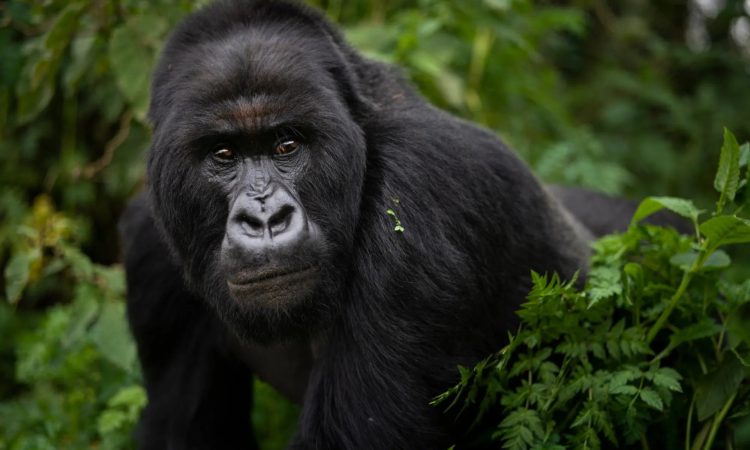
Usually, yes — Mgahinga is the single most reliable fallback when Bwindi’s sectors are full. It has its own habituated gorilla group, its own permit allocation, and markedly lower demand than any Bwindi sector. Travellers who have never considered it often end up preferring the trek once they are there.
Three things make it genuinely workable as a substitute:
- It is a separate park. A Bwindi permit cannot be used at Mgahinga and vice versa, but this cuts both ways — a full Bwindi does not affect Mgahinga’s pool at all.
- It receives far fewer trekkers. That lower demand is exactly why it has space at short notice when other sectors do not.
- It pairs well with other south-western activities. Golden monkey trekking, volcano hiking and the Batwa cultural experience all sit within the same area, which makes a Mgahinga trek easy to fold into a wider itinerary.
The Uganda Tourism Board maintains a country-level overview of the parks if you want to see how Mgahinga sits geographically, and our own Uganda destinations section maps how each region connects for route planning.
The one caveat is logistics. Mgahinga sits further south-west than most Bwindi sectors, so a last-minute switch can add a few hours of driving depending on where your lodge is. This is exactly why sector and accommodation should be confirmed together rather than booked independently.
How realistic is a waitlist for a sold-out permit?
Moderately realistic, but not reliable. Because UWA releases unpaid holds after roughly seven days, a waitlist occasionally converts within a fortnight — particularly for midweek dates in shoulder seasons, and more often for small parties than large ones.
Treat a waitlist as a genuine second chance rather than a formality, but never as a plan. The sensible approach is to waitlist your first-choice date while simultaneously securing a fallback in a different sector or on a different day. If the waitlist converts, you can usually move the fallback; if it does not, you still have a trek.
One practical note: waitlists convert best when you are ready to pay immediately. A permit that releases at 4pm on a Tuesday needs to be converted the same day. Travellers who need 48 hours to decide tend to lose the slot to someone who does not.
Should you move your travel dates instead?
If your dates are genuinely flexible, moving them is often easier than fighting for a sold-out sector. The shift does not have to be large — moving your trekking day by one or two days, ideally to a midweek day, opens up a surprising amount of availability in weeks that appeared closed.
The best windows for a date shift are the shoulder weeks between seasons. Late May into early June and late November into early December combine reasonable weather with softer demand, and permit availability at short notice is usually workable. Deep peak weeks — the middle of July, the last week of December — are harder to recover from without moving by more than a few days.
If your trekking day is fixed by flights or a wider itinerary, shifting is not always possible. In that case, focus on sector flexibility rather than date flexibility — the sector usually moves more easily than the date.
For travellers working within a fixed window, a compact itinerary makes a last-minute sector switch practical in a way that a long, heavily-booked route does not. Our 3-day Uganda gorilla safari is built around a single confirmed trekking day and is the easiest format to rebuild around whichever sector has space. The 5-day Bwindi and Lake Mburo safari adds a savannah stop and remains flexible on the Bwindi side.
What if you cannot move anything?
Then you have two honest options: shift the trek to a different park entirely, or accept that this specific trip will not include a gorilla trek and plan around other Uganda experiences. Both are reasonable, and neither is a failure.
The park shift is more achievable than most travellers expect. Rwanda’s Volcanoes National Park is a legitimate alternative reachable from the Uganda side, and our Rwanda destinations section covers how it fits logistically. Kenya and Tanzania do not offer mountain gorilla trekking, so those are not substitutes for this specific activity — but they may work as wider regional alternatives if the trek itself is what you are pivoting away from.
The pivot-within-Uganda option is stronger than it sounds. Chimpanzee trekking in Kibale, the tree-climbing lions of Ishasha, Murchison Falls, Kidepo Valley and the Rwenzori all deliver genuinely world-class wildlife and landscape experiences, and they do not have the same permit bottleneck. If your dates are locked and a gorilla permit is not recoverable, a chimpanzee trekking experience in western Uganda is a well-regarded substitute rather than a consolation prize. Our primate tracking experiences page covers the options.
If you are rebuilding the whole trip around the permit outcome, our trips page shows the full range of itineraries, and the shorter formats are easier to re-plan than the long, multi-park ones.
What should you avoid doing when permits are sold out?
Most of what goes wrong after a “sold out” answer is caused by the same handful of reactions. Avoiding them is worth more than any single recovery move.
- Accepting “Bwindi is full” as final. It usually means one sector is full. Ask for the other three plus Mgahinga.
- Only checking weekends. Peak-season Saturdays fill first. Midweek dates in the same week often have space.
- Not mentioning group size. If the operator is checking for a party of six, ask what is available in smaller blocks. Splitting often succeeds where a single block does not.
- Waiting to “think about it” when a permit releases. The hold window is short. If you can pay the same day, you usually get the permit.
- Booking a lodge before a permit. Lodges and permits run on separate systems. Confirm both together or risk a lodge that no longer matches your sector.
- Assuming a permit must match your original plan. The best recoveries are usually the sectors you had not considered, not a like-for-like swap in the same place.
- Forgetting the minimum age. Trekkers must be 15 or older. This is enforced and it affects group composition, especially for family parties.
Can one permit cover two people?
No. One permit covers one person for one trek. This is precisely why “sold out” has to be understood at party size. A party of four requires four permits in the same sector on the same date — a materially harder ask than a single spot, and the constraint that most often turns an apparent “yes, there is space” into a “no, not for your group.”
It also means the eight-visitor daily cap is a headcount, not a group booking. A party of eight fills an entire gorilla group’s allocation for that day, and there is no flexibility on that ceiling. This is where splitting the party does its real work.
Once you have your permits, the gorilla group you actually visit is allocated according to the trekking sector, with final group allocation managed by UWA on the day. You will know your sector in advance; you will learn your group at the morning briefing, alongside everyone else.
Afraeka field note: A family of five once came to us in early July after being told by two operators that “Bwindi is fully booked for the first week of August.” Both had checked Buhoma only. We ran the query across all five pools and found two permits in Rushaga on Tuesday, two on Wednesday, and one more in Nkuringo on Wednesday. A same-day split of 3+2 in Rushaga was available but the family wanted to trek together, so we moved them one day earlier and secured five permits in Ruhija as a single group. The whole recovery took forty minutes. The original “sold out” was not wrong — Buhoma was genuinely full. It was just answering a question the family had not asked. The lesson we repeat to every traveller: always ask which sector was checked, and how many pools were queried.
A question that shows up regularly on TripAdvisor’s Uganda forum and on r/Uganda is some version of: “Both operators I contacted said gorilla permits are sold out for my dates — is there really nothing left?” The answer, most of the time, is that there is something left in a sector nobody mentioned. Ask specifically about Rushaga, Nkuringo and Mgahinga, ask about midweek dates, and ask what is available for smaller blocks of your party. Three follow-up questions recover more permits than any amount of waiting.
Frequently asked questions about sold-out gorilla permits
Does “sold out” mean all of Bwindi is full?
Almost never. Bwindi has four trekking sectors — Buhoma, Ruhija, Rushaga and Nkuringo — and each holds its own permit allocation. When a sector is sold out, the other three may be open. Mgahinga Gorilla National Park is a fifth, completely separate allocation, and it is often available when Bwindi’s sectors are not.
How likely is it that a sold-out date reopens?
Reasonably likely within a week or two, because of the UWA seven-day hold. When a permit is placed on hold and the fee does not clear, the hold is released automatically and the permit returns to general availability. A date that is full today can open in a few days, which is why re-checking is worth doing.
Can I split my group to get permits when a block booking fails?
Yes, and it is one of the most effective recovery moves. Permits are issued per individual, so a party of six needs six permits in the same sector on the same date — not one six-permit block. Two gaps of three, or a four-and-two split, frequently exist where a single block does not. All sub-groups can trek the same day and receive different gorilla group assignments at the briefing.
Should I switch to Mgahinga if Bwindi is sold out?
Mgahinga is the most reliable fallback. It has its own habituated gorilla group, its own permit allocation, and markedly lower demand than any Bwindi sector, so it frequently has space at short notice. The main trade-off is logistics — it sits further south-west, which may add driving depending on where you are staying.
How realistic is a gorilla permit waitlist?
Moderately realistic but not reliable. Waitlists convert best for midweek dates in shoulder seasons and for small parties, and they depend on cancelled or released holds. Treat a waitlist as a genuine second chance, but always secure a fallback in a different sector or on a different day at the same time.
Can I move my trekking date to get a permit?
Yes, and shifting by one or two days — ideally to a midweek day — often opens availability even in weeks that appeared closed. Shoulder weeks between seasons, such as late May into early June or late November into early December, are the most forgiving for date shifts.
What if every sector is sold out for my exact dates?
If a genuine check across all five permit pools and a reasonable date window returns nothing, your realistic options are to move your travel dates, switch to a different park such as Rwanda’s Volcanoes National Park, or plan the Uganda trip around other experiences such as chimpanzee trekking, Murchison Falls, Kidepo Valley or the Rwenzori.
Do I need a separate permit for Mgahinga?
Yes. Mgahinga Gorilla National Park is a separate park with its own habituated gorilla group and its own permit allocation, independent of Bwindi’s four sectors. A Bwindi permit cannot be used at Mgahinga, and a Mgahinga permit cannot be used in Bwindi.
What should I do the moment a permit becomes available?
Pay the full UWA permit fee the same day. When a permit releases, it sits in the UWA system on a short hold, and the traveller who converts it first gets it. A trip deposit alone does not secure the permit — only the full UWA fee does, which is why Afraeka collects 100% of permit fees upfront alongside the trip deposit.
Got a sold-out date? Let us run the full check.
Send us your dates, your party size and any sector preference, and we will query all four Bwindi sectors plus Mgahinga in one pass — including a split-party check if you are travelling as a group. You will get a straight answer for each date, and a fallback plan if your first choice is genuinely closed. No price figures until we know your route, because the permit is only one line of the total.
About the author: Victoria Kayaga is a Ugandan-born safari specialist and the founder of Afraeka Adventures, based in Kampala. She has planned gorilla trekking itineraries across Bwindi, Mgahinga and the wider East African circuit for years, and she recovers sold-out permit dates for clients on a weekly basis. More about Victoria.
Keep planning
- Gorilla permits Uganda — fees and booking
- 5-day Uganda safari
- 7-day Uganda and Rwanda primate safari
- Safari destinations