Last updated: 20 September 2026
Short answer: Gorilla permit availability next month depends on three things — the sector, the date, and whether you are trekking in a peak or low season week. Permits are issued per sector, not per park, so a full Buhoma tells you nothing about Rushaga or Mgahinga. The fastest way to know what is genuinely open is to check all four Bwindi sectors plus Mgahinga on the exact dates you want, and to act the same day you find a match.
Most travellers ask about availability the way they ask about weather — is it good, is it bad, is it likely. Gorilla permits do not work like that. Availability is not a general condition; it is a specific answer to a specific question about a specific sector on a specific date. Change any one of those three and the answer changes entirely.
That is why “is next month available?” is genuinely hard to answer until you commit to a sector and a date. What this guide does instead is give you the mechanics behind availability — what drives it, when it tightens, and what levers you have when your first-choice date is gone. Every permit is tied to the Uganda Wildlife Authority (UWA) system, and understanding how that system moves is the difference between booking smoothly and booking blindly.
Gorilla permit availability at a glance
- Issuing authority: Uganda Wildlife Authority (UWA)
- Where permits are held: Bwindi’s four sectors (Buhoma, Ruhija, Rushaga, Nkuringo) and Mgahinga — each with its own allocation
- Maximum visitors: 8 people per habituated gorilla group per day
- UWA system hold: Roughly seven days, then automatic release if the fee has not cleared
- Peak season: June to September and December to February — availability tightens first
- Low season: April, May and November — the most forgiving months for last-minute searches
- Time with gorillas: 1 hour
- Minimum age: 15 years
- Permit conditions: Subject to UWA’s current booking, cancellation and rescheduling rules
Permit fees are set by UWA and vary by traveller category. Current rates are updated on our gorilla permits Uganda page, and UWA periodically revises its tariff structure.
How do you check gorilla permit availability next month?
You check gorilla permit availability next month by asking a registered operator to query the UWA system for your exact dates across all four Bwindi sectors plus Mgahinga. The answer comes back sector by sector, not park by park. A serious availability check takes minutes, not days, and it should return a clear yes or no for each sector you would realistically consider.
Three things make an availability check useful rather than decorative:
- Exact dates. “Some time in November” is not a query. UWA’s system responds to specific days. If you have a two-day arrival window, name both days.
- All sectors. A check that only covers Buhoma is a partial check. Rushaga and Nkuringo frequently have space when Buhoma does not, and Mgahinga has its own allocation entirely.
- Group size. A solo traveller asking for one permit and a party of six asking for six are two different questions. The eight-visitor daily cap per gorilla group means a large group needs its own gap, not just any gap.
If you want the wider context before you commit to a date — how the sectors differ, how the trekking day runs, how a permit sits inside an itinerary — the Uganda gorilla trekking hub covers it end to end.
Why “available” means something different in each Bwindi sector
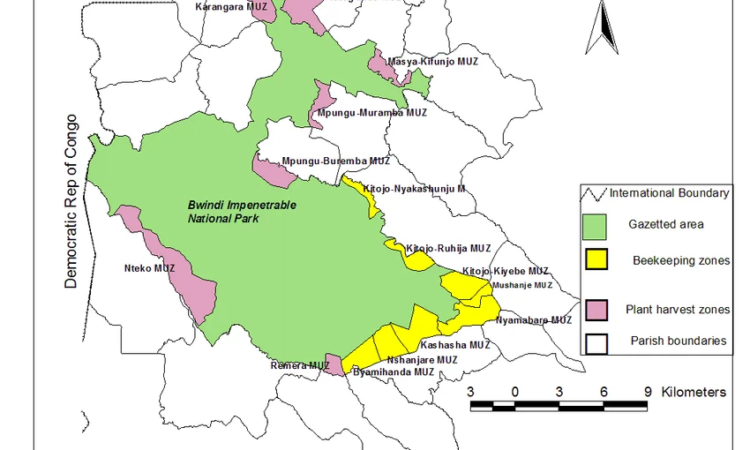
Bwindi Impenetrable National Park is not one permit pool. It is four trekking sectors — Buhoma, Ruhija, Rushaga and Nkuringo — and each holds its own allocation tied to the gorilla groups that live there. Mgahinga Gorilla National Park, to the south, is a fifth allocation entirely separate from Bwindi.
This matters more than anything else on this page. When someone tells you “Bwindi is full next month,” they are almost always saying “the sector I happened to check is full.” The other three may be wide open. Availability is a sector question, and if you only check one sector you have not checked anything.
| Sector | Park | Typical availability pattern |
|---|---|---|
| Buhoma | Bwindi | Fills first — the most written-about and most requested sector |
| Ruhija | Bwindi | Moderate demand; often has space when Buhoma does not |
| Rushaga | Bwindi | The largest concentration of gorilla groups; best odds for large parties |
| Nkuringo | Bwindi | Smaller allocation, steeper terrain, more likely to be open late |
| Mgahinga | Mgahinga Gorilla NP | Lowest demand of the five; frequently available at short notice |
Patterns reflect typical demand, not a guarantee. Availability changes daily as holds lapse.
There is a practical consequence here that travellers miss. If you have already booked your lodge, you have already narrowed your sector without realising it. A permit for Buhoma is inconvenient if you are sleeping three hours away in Rushaga. Sector and accommodation should be decided together, not one after the other.
What actually drives gorilla permit availability in any given month?
Five forces move availability up and down, and only one of them is under your control. Understanding the other four is what tells you whether to book now or wait a week.
The five forces behind any availability answer
- Season. Peak weeks in June to September and December to February carry the highest demand and tighten first. Low-season months — April, May, November — see genuine availability right up to a few weeks out.
- Group size. With a maximum of eight visitors per habituated gorilla group per day, a party of six needs six permits in one sector on one date. That is a much smaller pool of possible matches than a solo traveller’s single permit.
- The UWA seven-day hold. Permits are held in the UWA system for roughly seven days while the fee is being arranged. If it does not clear, the permit releases automatically — and availability on your target date can change overnight because of a hold that lapsed somewhere else.
- Weekday vs weekend. Weekend trekking days in peak season fill faster than midweek days. If your dates are flexible, a Tuesday often has options a Saturday does not.
- Cancellations and itinerary shifts. Permits are non-refundable and non-transferable once issued, so individual cancellations do not re-enter the pool — but they do free up lodges and flights, which indirectly moves group bookings away from certain weeks.
The seven-day hold is the one people never account for, and it is often the reason a date that was full last week is open today. Availability is not a fixed state. It is a live snapshot of a system that moves on its own schedule.
Afraeka tip: When you ask about availability, ask for three dates and all five sectors in the same message. The answer you get back will show you exactly where the real openings are, rather than a single yes or no that may or may not be the whole story.
Is next month a good month for gorilla permit availability?
It depends entirely on which month next month is. Uganda’s gorilla trekking year has two peak windows and two low-season windows, and they behave very differently at short notice.
If next month falls inside June to September or December to February, you are in peak season. Availability is tighter, some sectors may already be closed for your dates, and you should expect to make a decision within hours of getting a yes rather than days. Group bookings — family trips, milestone birthdays, multi-generational parties — dominate these weeks and they typically lock in six months or more ahead.
If next month falls inside April, May or November, you are in low season. Availability is markedly better, sometimes right up to a week or two out, and the reduced UWA tariff in these months applies. The trade-off is rain — heavier in April and May than November — and the honest answer is that a wet-weather trek is completely doable with the right gear and a flexible attitude, just less photogenic.
If next month falls in one of the shoulder weeks between seasons — late May into early June, late November into early December — you get a genuinely good combination: reasonable weather, softer demand, and the ability to book with a few weeks’ notice. These are the smartest weeks for travellers who can move their dates.
For month-by-month weather and wildlife patterns, the Uganda Tourism Board maintains a country-level overview, and our own Uganda destinations section maps how each region fits into the trekking calendar.
When do permits for next month actually sell out?
Peak-season permits for popular sectors can sell out six to twelve months ahead, which means “next month” is already late for those weeks. Mid-tier sectors in the same period often sell out four to eight weeks ahead. Low-season permits rarely sell out more than a few weeks ahead, and Mgahinga frequently has availability at short notice even in peak periods.
The practical timeline for a next-month booking looks like this:
- Peak-season dates, popular sector: likely already booked or reduced to single-permit gaps
- Peak-season dates, less-requested sector: some space still possible, especially midweek
- Shoulder weeks: realistic for solo travellers and small parties, tight for groups of six or more
- Low-season dates: usually bookable with reasonable choice of sector
None of this is a rule. It is a pattern. The seven-day hold means a week can shift a date from closed to open, and cancellations do move groups around. If a first query comes back negative, it is worth a second look in three or four days.
What if next month is already full?
You have four moves, and you should try them in this order before accepting that a date is gone.
| Move | What it involves | Realistic timeline |
|---|---|---|
| Check all five permit pools | Buhoma, Ruhija, Rushaga, Nkuringo, Mgahinga — not just one | Minutes |
| Shift the date by 1–3 days | Especially off weekends; midweek opens first | Same day |
| Split the party | Two groups of three in the same sector often fit when one party of six does not | Same day |
| Wait for a released hold | UWA releases unpaid permits after roughly seven days | Days to weeks |
That third option is the one most travellers never hear about, and it is genuinely useful for families. UWA permits are per individual, so a party of six does not need one six-person gap — it needs six individual permits in the same sector on the same date. If the sector has two gaps on Tuesday and four on Wednesday, splitting across two days is often possible, and it does not require anyone to trek alone.
If none of the four moves work for your dates, the honest answer is that the date is gone and you either shift the trip or accept a different sector. This is where a registered operator earns their keep, because the sector you do not want is often the sector you end up loving.
How does the UWA seven-day hold change availability?
The UWA seven-day hold is the single most misunderstood mechanic in the entire permit system, and it directly affects what “available” means on any given day. When a permit is placed on hold in the UWA system, it is not yet issued. It sits in a limbo state for roughly seven days, waiting for the fee to clear. If it clears, the permit becomes yours. If it does not, the hold is released automatically and the permit returns to general availability.
Three practical consequences follow from that:
- Availability is never final. A date that shows full today may open in a week, because a hold somewhere else failed to convert.
- Speed matters more than sequence. When a permit comes up, you do not have time to compare lodges for three days. The hold window is short and unforgiving.
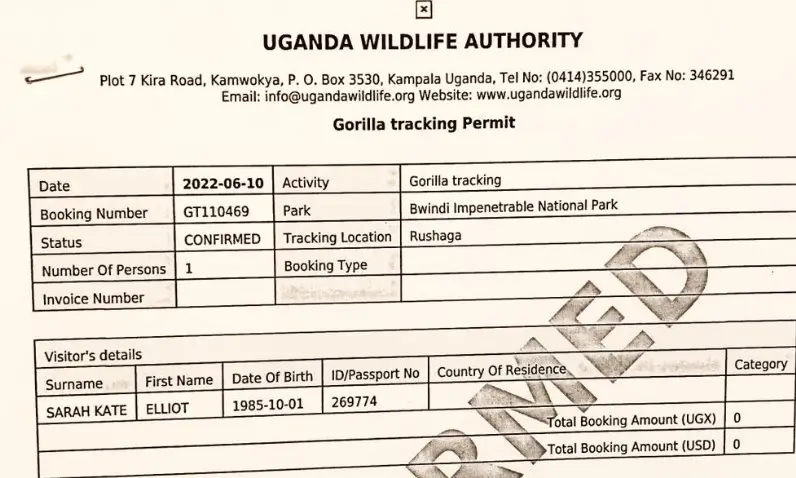
- A deposit is not a hold. Only the full UWA fee converts a hold into a permit. That is why our booking terms collect 100% of permit fees upfront alongside the trip deposit — details are on our terms and conditions page — and it is why we ask for passport details the same day a date is agreed.
The Uganda Wildlife Authority is the authority that operates this system, and its rules for holds, cancellations and rescheduling are what any booking ultimately depends on. Operators work within those rules; nobody bypasses them.
Should you book now or wait for next month’s availability to improve?
Book now if your dates are fixed, if you are travelling as a group, or if the sector matters to you. Wait only if your dates are genuinely flexible and you are willing to trek wherever space exists.
The reason is asymmetry. If you book early and nothing changes, you have lost nothing. If you wait and the date closes, your fallback is a different date or a different sector — neither of which may suit your flights or your itinerary. The cost of booking early is small; the cost of waiting too long can be the trek itself.
There is one scenario where waiting is rational: solo travellers or couples in low season with completely open dates. In April, May or November, permits are frequently available at two to three weeks’ notice, and the UWA tariff structure makes those weeks genuinely attractive. If you fall into that category and can move freely, waiting is a reasonable strategy. For everyone else, the earlier query is the better query.
If you are working within a fixed travel window and want the permit slotted into a confirmed itinerary, the 5-day Uganda safari is a common template for a permit-centric trip, and the 7-day Uganda and Rwanda primate safari shows how a permit sits inside a two-country route.
Common mistakes when checking permit availability
The same handful of errors appear constantly, and all of them cost travellers a date they could have had.
- Checking one sector. Bwindi has four permit pools, not one. Mgahinga has a fifth. A single check is not a real answer.
- Only checking weekends. Peak-season Saturdays fill first. Midweek dates in the same week often have openings.
- Assuming a full date is permanently full. The UWA seven-day hold returns permits to circulation continuously. Check again in three days.
- Waiting for a “perfect” answer. There is no perfect availability — only a fit between your dates, your sector preference, and what is open. Perfection is a strategy for missing the trek.
- Not checking group size requirements. A party of six needs six permits in one sector on one date. Confirm the operator is checking for a block, not a single spot.
- Booking a lodge before a permit. Lodge availability and permit availability are two different systems. Secure the permit first or confirm both together.
- Ignoring the minimum age. Trekkers must be 15 or older. This is enforced and it affects group composition.
Can one permit cover two people?
No. One permit covers one person for one trek. This is one of the reasons availability has to be checked at party size, not just at date. A party of four requires four permits in the same sector on the same date — a materially harder match than a single spot, and the constraint that most often turns a “yes, there is space” into a “no, not for your group.”
It also means the eight-visitor daily cap is a headcount. A party of eight fills an entire gorilla group’s allocation for that day, and there is no negotiation on that ceiling.
Once you have your permits, the gorilla group you actually visit is allocated according to the trekking sector, with final group allocation managed by UWA on the day. You will know your sector in advance; you will learn your group at the morning briefing, alongside everyone else.
What happens on the day if you booked a last-minute permit?
Nothing unusual. A permit issued this morning is identical to one issued eight months ago. Same briefing, same ranger guide, same one hour with the gorillas, same eight-person cap per group.
What changes is the shape of your trip around it. A last-minute permit is often a single-sector, single-date booking, which means your lodge and transport have to fit around what was available rather than the other way round. This is why short-notice bookings benefit from a 3-day Uganda gorilla safari or a 5-day Bwindi and Lake Mburo safari — they are compact enough to build around whatever sector has space, rather than requiring a specific overnight stop that may be fully booked.
For a short-notice trip, plan on arriving in Uganda a day before your trekking day. Bwindi is a full day’s drive from Kampala or a short flight plus a road transfer, and a permit for tomorrow morning does not help if you are still three hours away. Budget the buffer, and you will never miss a trek to traffic.
Afraeka field note: A German couple once emailed us on a Tuesday asking if “next month is possible for gorillas.” We came back with a table showing all five permit pools across their three candidate dates. Every single one was open in Mgahinga and three of four Bwindi sectors. They had been told by another operator two weeks earlier that “Bwindi is fully booked” — because that operator had only checked Buhoma. The trip happened, on the dates they wanted, in a sector they had never heard of and now recommend to everyone. The moral is not that operators are lazy. It is that a partial answer disguised as a complete one is the most expensive kind of information.
A question that shows up regularly on TripAdvisor’s Uganda forum and on r/Uganda is some version of: “I keep being told Bwindi is full for next month — is that actually true?” The answer is almost always that one sector is full, not the park. Ask specifically about Rushaga, Nkuringo and Mgahinga before accepting that a date is gone. Three quick questions can turn a closed date into an open one.
Frequently asked questions about gorilla permit availability
Can I check gorilla permit availability myself?
You can ask a registered tour operator to check the UWA system on your behalf, and that is the fastest route for most travellers. UWA issues permits directly, and you can also contact the authority yourself, but a registered operator can query all five permit pools — four Bwindi sectors plus Mgahinga — in a single request, which is difficult to organise on your own in a short timeframe.
How far in advance do gorilla permits sell out?
Peak-season permits for the most requested sectors can sell out six to twelve months ahead. Mid-tier sectors in the same periods often sell out four to eight weeks ahead. Low-season dates in April, May and November rarely sell out more than a few weeks in advance, and Mgahinga frequently has availability at short notice even in peak periods.
Why does availability change from one week to the next?
Because of the UWA seven-day hold. When a permit is placed on hold, it sits in the UWA system for roughly seven days waiting for the fee to clear. If it does not clear, the hold is released automatically and the permit returns to general availability. Availability on your target date can change overnight because a hold somewhere else failed to convert.
Can I get a gorilla permit next month in peak season?
Sometimes, but the realistic options narrow quickly. Midweek dates in a less-requested sector often still have space four to eight weeks out. If you need a specific weekend date in a specific sector during June to September or December to February, a next-month booking is unlikely unless a hold happens to release. Check all five permit pools and be flexible on the day.
What if Bwindi is fully booked for my dates?
Check Mgahinga next. It is a separate park with its own habituated gorilla group and its own permit allocation, and it often has space when Bwindi’s sectors do not. If Mgahinga is also full, shift your trekking date by one to three days, ideally to a midweek day, or split your party across two adjacent dates if the group is large.
Is it easier to get a permit in low season?
Yes, substantially. April, May and November are the most forgiving months for last-minute bookings, and the reduced UWA tariff in those months applies alongside the better availability. The trade-off is rain — heavier in April and May than November — but treks run in wet weather routinely and the forest is arguably more atmospheric.
Does a deposit hold a permit while I decide?
No. A trip deposit is a commitment to the safari, not to the permit. UWA holds a permit in its system for roughly seven days while the fee is being arranged, and only the full UWA permit fee converts that hold into an issued permit. A deposit alone does not stop the hold from lapsing.
Can I be waitlisted for a sold-out permit date?
Yes, and it is worth doing. Because UWA releases unpaid holds after roughly seven days, a waitlist occasionally converts within a fortnight. It is not a guarantee, and you should keep a fallback date or sector in reserve, but it is a genuine second chance rather than a formality.
How many permits are available per day in Bwindi?
Availability is calculated per habituated gorilla group, not per park. Each group can be visited by a maximum of eight people per day, and each trekking sector holds the groups that live within it. Rushaga has the largest concentration of groups, which is why it is often the best option for larger parties booking at short notice.
Want us to check next month for you?
Send us your dates, your party size and any sector preference, and we will query all four Bwindi sectors plus Mgahinga in one pass. You will get a straight answer for each date — yes, no, or a hold that might release — with no price figures until we know your route, because the permit is only one line of the total.
Check availability for my dates
About the author: Victoria Kayaga is a Ugandan-born safari specialist and the founder of Afraeka Adventures, based in Kampala. She has planned gorilla trekking itineraries across Bwindi, Mgahinga and the wider East African circuit for years, and she tracks UWA availability patterns month by month. More about Victoria.
Keep planning
- Gorilla permits Uganda — fees and booking
- 16-day Rwanda and Uganda gorilla trekking and big five safari
- Primate tracking experiences
- All Afraeka trips