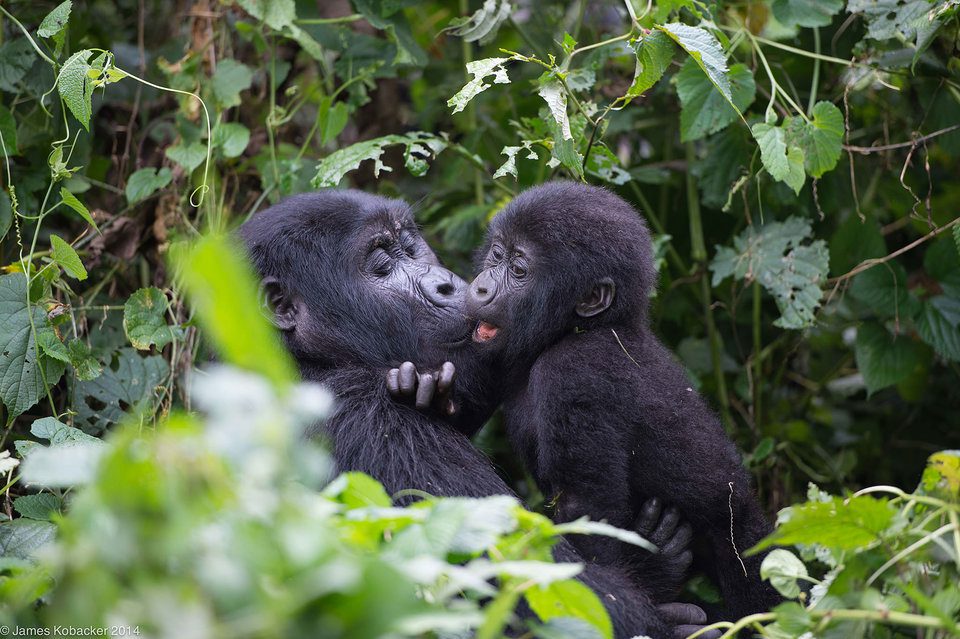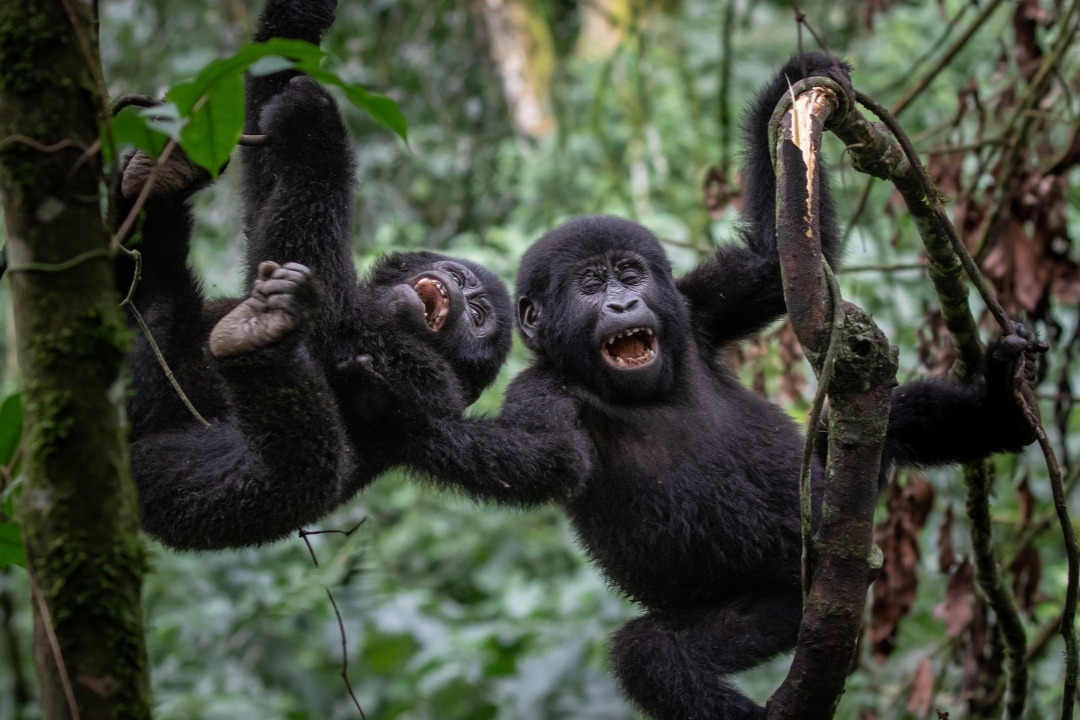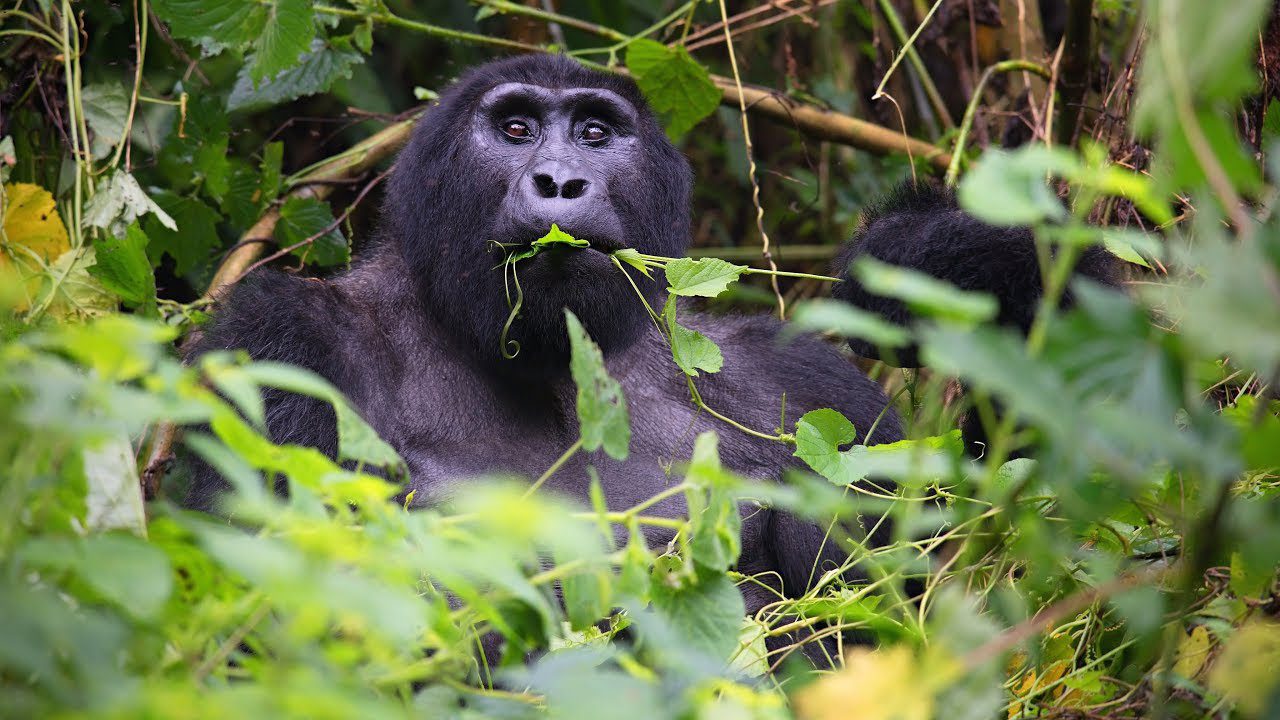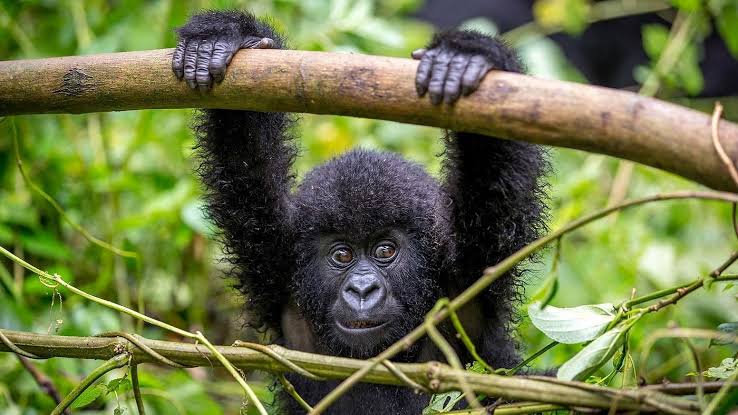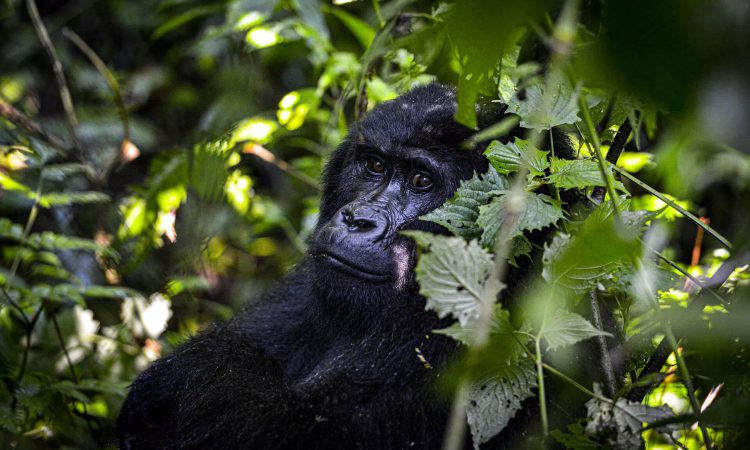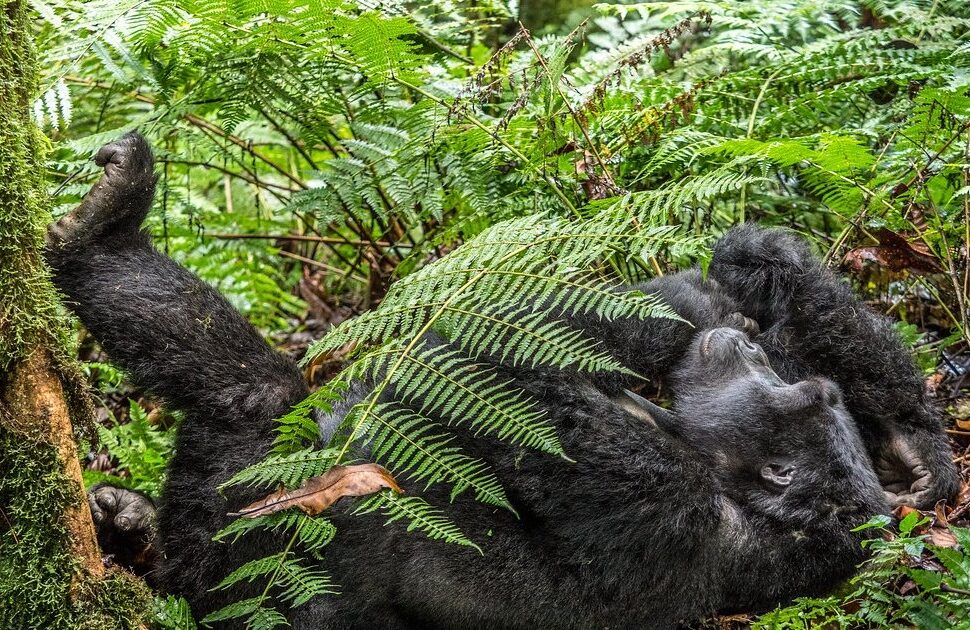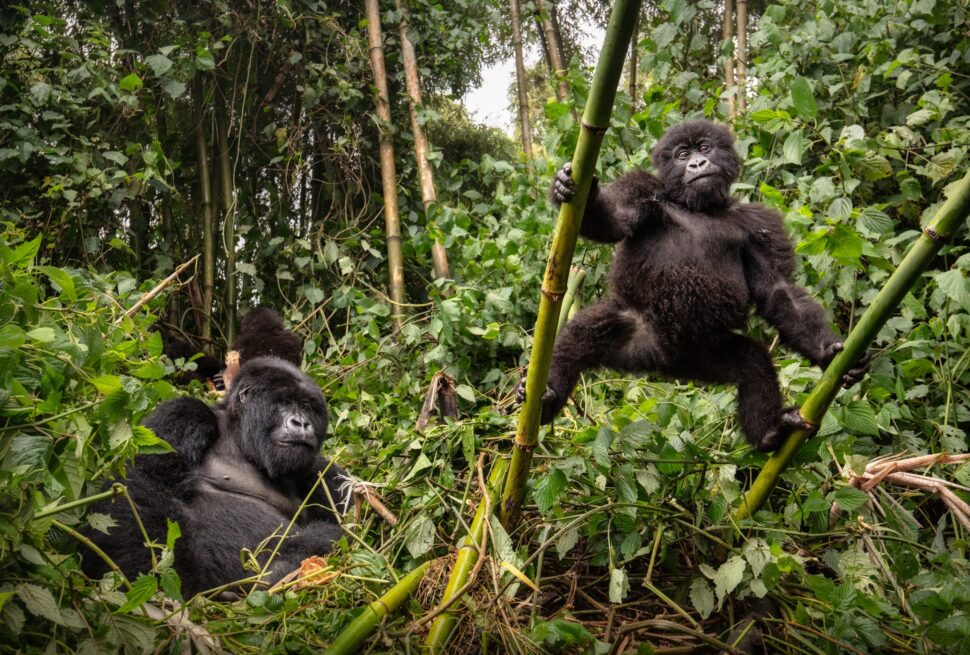
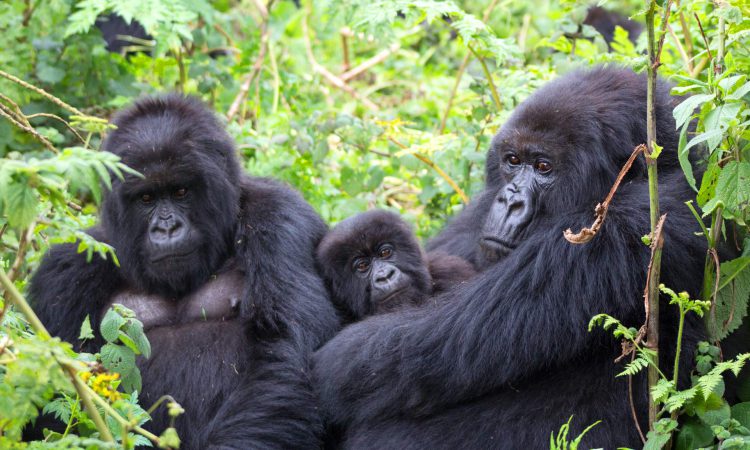
Short answer: Rushaga gorilla families are the largest concentration of habituated mountain gorilla groups in Bwindi Impenetrable National Park. The sector holds multiple families — Nshongi, Mishaya, Kahungye, Bweza, Busingye, Kutu, Mucunguzi, Bikingi and others — each with its own character, home range and trekking dynamics. More families means more daily permits, which makes Rushaga the strongest sector for large parties and short-notice bookings. You cannot pre-book a specific family; UWA allocates groups on the morning of the trek.
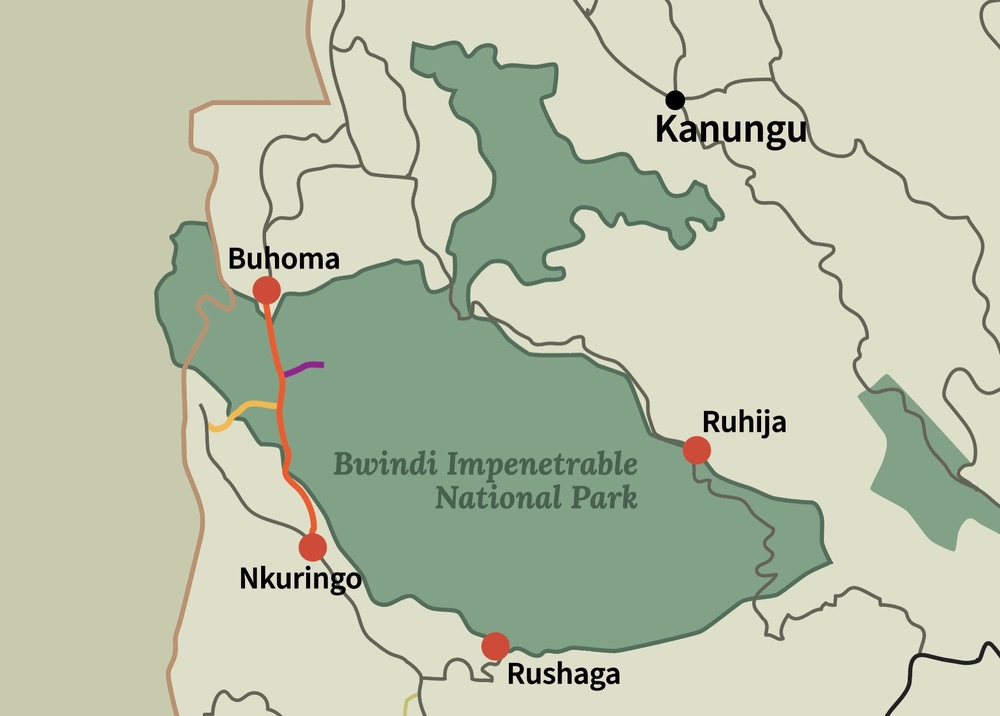
Rushaga is the sector travellers end up in when they cannot get Buhoma, and it is almost always the sector they are glad they booked. It sits in the south of Bwindi, close to the Kisoro road and roughly an hour from the Mgahinga trailhead, and it holds more habituated gorilla families than any other part of the park. That concentration is what makes Rushaga the most flexible sector in Bwindi — for large groups, for short-notice bookings, and for travellers who want a genuine choice between the character of one family and another.
This guide covers where Rushaga sits, how to reach it, the families that live there and what distinguishes them, how UWA’s allocation process actually works, and why the sector’s larger family count changes the booking calculus. If you are still comparing sectors, start with the Uganda gorilla trekking hub for the wider picture. Permit fees, categories and low-season tariffs are kept current on the gorilla permits Uganda page.
Rushaga sector at a glance
- Park: Bwindi Impenetrable National Park, southern sector
- Issuing authority: Uganda Wildlife Authority (UWA)
- Setting: Southern Bwindi, closest sector to Kisoro and Mgahinga
- Gorilla families: The largest concentration of habituated families in Bwindi, including Nshongi, Mishaya, Kahungye, Bweza, Busingye, Kutu, Mucunguzi and Bikingi
- Terrain: Moderate — some steep sections, but generally more varied and less sustained than Nkuringo or Ruhija
- Nearest airstrip: Kisoro, roughly 1–1.5 hours by road
- Road access from Kabale: Approximately 2–2.5 hours via Ntungamo or the Kisoro road
- Lodge range: Wide — mid-range, high-end and community-run options across the sector
- Best suited for: Large parties, short-notice bookings, travellers who want family variety
- Maximum visitors: 8 people per habituated gorilla group per day
- Time with gorillas: 1 hour
- Minimum age: 15 years
- Group allocation: Managed by UWA according to the trekking sector and operational arrangements
- Permit conditions: Subject to UWA’s current booking, cancellation and rescheduling rules
Permit fees are set by UWA and vary by traveller category. Current rates are updated on our gorilla permits Uganda page, and UWA periodically revises its tariff structure.
Where is Rushaga and how do you get there?
Rushaga sits in the southern part of Bwindi Impenetrable National Park in Kisoro District, on the road between Nkuringo and the Mgahinga trailhead. It is the sector most naturally combined with a Mgahinga trek, a golden monkey experience or a Lake Bunyonyi stay, because it sits within the same south-western corner of Uganda.
Three routes lead to the sector:
- From Kabale by road. Roughly 2 to 2.5 hours via the Kisoro road. The route is partly paved and partly unpaved, and it is gentler than the climb into Ruhija or Nkuringo.
- From Kisoro airstrip. Kisoro is the closest airstrip, roughly 1 to 1.5 hours by road. This is the fastest approach and the one used by most fly-in travellers combining Rushaga with Mgahinga.
- From Buhoma or Ruhija by road. Roughly 3 to 4 hours via the Kabale road and the southern ridge. This is a long transfer, which is why most travellers do not combine Rushaga with a northern sector on a single trek unless they are staying two nights in Bwindi.
Rushaga’s structural advantage is that the trailhead and most lodges sit close together, and the sector’s terrain is less extreme than Nkuringo or Ruhija. That combination — moderate trails, easy access, wide lodge choice — is part of why it has become the sector we recommend most often to travellers who cannot get Buhoma or who are booking at short notice.
If you are combining a Rushaga trek with a wider route, our Uganda destinations section maps how the parks connect, and the 5-day Uganda safari shows how a southern-sector trek slots into a compact itinerary. For a Rwanda combination, the Rwanda destinations page covers how the Volcanoes National Park side fits.
Which gorilla families live in Rushaga?
Rushaga holds the largest concentration of habituated mountain gorilla families in Bwindi. The sector’s families were habituated across different periods between the late 2000s and the 2010s, and the group structure has changed over time as silverbacks have broken away to form new families. That history is why the list is longer here than anywhere else — many of Rushaga’s families are the result of splits from earlier groups.
The habituated families most commonly cited in Rushaga are:
| Family | Character | What it means for your trek |
|---|---|---|
| Nshongi | Once the largest habituated family in Bwindi when opened to tourism; has since split | A historically significant family with a wide home range |
| Mishaya | Formed when a silverback broke away from Nshongi; known for its assertive silverback | Often found in the sector’s deeper forest; moderate to long approach |
| Kahungye | Habituated in the early 2010s; a large family with multiple silverbacks | Rich in social dynamics; good for photographers wanting group interactions |
| Bweza | Split from Nshongi; a smaller, cohesive family | Typically a quieter viewing experience with a tightly grouped family |
| Busingye | Split from Kahungye; known for ranging widely across the sector | Approach distance can vary; good fitness is helpful |
| Kutu | Split from Kahungye; a smaller family group | Often a shorter and gentler trek |
| Mucunguzi | Newer family, split from Bweza; recently habituated | Less predictable home range; trekking dynamics still developing |
| Bikingi | Habituated primarily for research; occasionally available to tourism | Availability varies; check at booking rather than assuming |
Family composition, home range and trekking character change over time as groups split, merge and move. Descriptions reflect general patterns, not a guarantee for any specific date.
Two families deserve a little more context. Nshongi was the largest habituated gorilla family in Bwindi when it was first opened to tourism, and the family’s history is closely tied to the expansion of gorilla trekking in the Rushaga sector. Mishaya took its name from the silverback who led the split from Nshongi and has long been described as one of the more assertive families in the sector. Bikingi was habituated primarily for research purposes and is not always open to tourism, so it is worth confirming availability rather than assuming it as an option.
What matters practically is that the family list is not something you choose from. It is useful background, and it helps you understand what your ranger guide is describing at the briefing — but the allocation is done by UWA on the day, not by pre-booking.
How does UWA allocate you to a Rushaga family?
UWA allocates gorilla families on the morning of the trek, not at the time of booking. The process is the same in every Bwindi sector, but it matters more in Rushaga because there are more families to be allocated across more parallel trekking groups.
How the morning allocation works
- Trackers leave before dawn. UWA trackers go into the forest at first light to locate each habituated family at the nest sites where they slept the previous night.
- Rangers assess fitness. At the briefing, rangers consider the composition of each trekking party — fitness levels, group size, any mobility notes — because the family assignment has to match the expected pace.
- Families are matched to groups. Each family is assigned to a specific trekking party, based on where the family is that morning, how far the approach is, and which party is best suited to it.
- You are told your family at the briefing. This is when you learn which group you will visit and how long the approach is expected to take.
- The trek begins. Ranger guides lead the party into the forest, following the trackers’ directions to the family’s current location.
Three things follow from this. First, you cannot pre-book a specific family, and any operator who offers to is misrepresenting the process. Second, the trek’s difficulty on any given day depends partly on which family you are assigned, which is one reason two people can trek Rushaga on the same day and have very different experiences. Third, the allocation is done thoughtfully — rangers are not assigning families randomly, they are matching group capabilities to family locations, and telling them about fitness or mobility concerns at registration genuinely helps.
Afraeka tip: Tell the rangers at registration if you have any mobility concerns, or if you are trekking with older family members. They will factor it into the family allocation, which can make a real difference to the length and steepness of your approach. Rangers want you to enjoy the trek, and they have more flexibility than most travellers realise — but they can only use it if they know what to plan for.
Why is Rushaga best for large groups and short-notice bookings?
Rushaga is the best sector for large groups and short-notice bookings because it holds more habituated gorilla families than any other part of Bwindi, which means more parallel trekking groups can operate on any given day. With a maximum of eight visitors per family per day and multiple families in the sector, Rushaga can accommodate a large party or a late booking in a way that smaller sectors cannot.
Three practical consequences follow:
- More permits per day. More families means more daily permits. A party of six has materially better odds of securing six permits in Rushaga than in Ruhija or Nkuringo, where fewer families operate.
- Better short-notice availability. When other sectors close, Rushaga often still has space because its pool of daily permits is larger. This is why travellers who get a “sold out” answer on Buhoma are usually pointed to Rushaga next.
- More flexibility on trek length. Because the families are spread across different home ranges, rangers have more choice in matching a party to a family that suits its fitness and time constraints.
This is not a minor advantage. In practical terms, it is the difference between a family of six being able to trek together on their chosen date and having to split across two days. If your dates are tight or your group is large, Rushaga should be the first sector you ask about, not the fallback.
The Uganda Wildlife Authority operates the permit allocation system that governs this, and the Uganda Tourism Board maintains country-level information on Uganda’s parks if you want the wider context. The International Gorilla Conservation Programme tracks how permit revenue supports conservation across the region.
What is a Rushaga gorilla trek actually like?
A Rushaga sector trek is moderate in difficulty — generally easier than Nkuringo or Ruhija, and comparable to Buhoma on many days, with more variation depending on which family you are assigned. The sector’s terrain is mixed, with some steep sections but fewer sustained gradients than Bwindi’s northern or southern extremes. The forest is dense, and the trails vary from well-trodden paths near the trailhead to overgrown tracks deeper in the sector.
The Rushaga trekking day
- Early morning briefing. You arrive at the Rushaga trailhead before dawn, register, and meet your ranger guide. Gorilla family allocation is confirmed here for the day.
- Ranger-led forest walk. The trackers have gone ahead at first light. Walking time varies from under an hour to several hours, depending on how far your assigned family has moved.
- One hour with the gorillas. A strict maximum of one hour in the family’s presence. Cameras, no flash, seven-metre minimum distance, and no visiting if you have a cold or other infectious illness.
- Return to the trailhead. The walk back is usually faster than the walk in, though wet-season mud can slow the descent considerably.
- Certificate and debrief. UWA issues a trekking certificate, and your guide will often share background on the family you visited.
Rushaga’s variety is both its strength and its unpredictability. On a given day you might have a short, gentle approach to a family nesting near the trailhead, or a multi-hour forest walk to a family that moved overnight. This is why we advise travellers not to book Rushaga expecting a specific level of difficulty — the sector can deliver a range of experiences, and preparation is the same regardless.
Afraeka tip: Bring layers. Rushaga’s forest is dense and humid, and treks can shift from cool misty morning to warm midday within a few hours. A light rain shell, long sleeves for nettles, and a warm layer for the briefing cover most of what the sector throws at you. Hire a porter even if you are fit — the descent on wet clay is where a steadying hand matters most.
Where should you stay in Rushaga?
Rushaga has one of the wider accommodation ranges in Bwindi, with options that span mid-range, high-end and community-run properties. Most lodges sit within a short drive of the trailhead, and the sector’s moderate terrain means the transfer to the briefing point is rarely difficult.
The options fall into three groups:
- High-end forest lodges. Several well-appointed lodges sit along the sector’s forest edge, offering en-suite cottages, views toward the forest, and full meal service. These are the properties most travellers picture when they think of a Bwindi lodge, and they fill first.
- Mid-range camps and lodges. A solid spread of comfortable mid-range options — en-suite bandas, generator or solar power, restaurant service. These are the most common category for travellers who want quality without paying the premium tier.
- Community and budget properties. Community-run camps and simpler guesthouses operate in and around Rushaga village, offering basic but comfortable accommodation. These are the value option and put money directly into the local community.
Because Rushaga combines easily with Mgahinga, Lake Bunyonyi and Kisoro town, some travellers use it as a two- or three-night base rather than a single-night stop. If you are building a south-western Uganda circuit, our adventure hiking and big game safaris sections cover the wider activities available in the region.
Our 3-day Uganda gorilla safari is built around a confirmed permit and can be adapted to Rushaga, and the trips page shows the full range of formats if you want to see how a Rushaga stay fits into a longer route.
Is Rushaga the right sector for you?
Rushaga is the right sector if you are booking at short notice, travelling as a group of four or more, or wanting the widest chance of securing a permit on your preferred dates. It is also the right sector if you want a moderate difficulty trek with real variety in family character and home range, and if you want the easiest combination with Mgahinga or Lake Bunyonyi.
It may not be the right sector if:
- You specifically want Buhoma’s gentlest terrain and shortest approach. Buhoma remains the easiest sector, though Rushaga is close behind on many days.
- You want the quietest trailhead experience. Rushaga’s larger family count means more trekkers operating from the sector on any given day. Ruhija and Nkuringo are quieter.
- You want to combine with Queen Elizabeth National Park. Rushaga is further from the Ishasha sector than Buhoma. If a trek-plus-savannah itinerary is your priority, Buhoma fits better.
- You want the highest-altitude, most birding-focused experience. That is Ruhija.
There is no wrong sector in Bwindi. Each delivers the same one hour with the same habituated mountain gorillas under the same UWA rules. The differences are terrain, access, lodging and demand — and Rushaga’s advantage is that its larger family count gives you more ways to fit a trek around your dates rather than the other way round.
Common mistakes when planning a Rushaga trek
Most of what goes wrong with Rushaga bookings comes down to the same handful of errors, and all of them are avoidable with one careful planning conversation.
- Assuming you can choose your family. UWA allocates families on the morning of the trek. Any operator offering a specific family as a guarantee is misrepresenting the process.
- Not telling the rangers about fitness concerns. Family allocation is partly based on expected pace. Rangers can only match a party to a suitable family if they know what to plan for.
- Booking the lodge before the permit. Lodges and permits run on separate systems. Confirm both together.
- Underestimating the descent. Rushaga’s descents can be slippery in the wet season, and the return leg is where most trekkers feel the day.
- Skipping the porter. The single most common regret after any Bwindi trek, and Rushaga is no exception.
- Not building in a buffer night. The drive from Kampala is a full day. Arriving the night before your trekking day is what keeps a delayed flight from becoming a missed trek.
- Forgetting the minimum age. Trekkers must be 15 or older. This is enforced and affects group composition for families.
- Not pairing Rushaga with Mgahinga. The two are close, and combining a Rushaga gorilla trek with a Mgahinga golden monkey experience is one of the strongest two-day combinations in Uganda.
Can one permit cover two people?
No. One permit covers one person for one trek, and this is why Rushaga’s larger family count matters most for group bookings. A party of six needs six permits in Rushaga on the same date. Because the sector holds more habituated families than any other in Bwindi, that is a materially easier ask here than anywhere else in the park.
The eight-visitor daily cap per habituated gorilla group is a headcount. Rushaga’s larger family count means the sector can run more parallel trekking groups on the same day, which is why it is the sector we most often recommend for large parties at short notice.
Once you have your permits, the gorilla group you actually visit is allocated according to the trekking sector, with final group allocation managed by UWA on the morning of the trek. You will know your sector in advance because it is on your permit; you will learn your group at the briefing alongside everyone else.
Afraeka field note: A family of seven once booked Bwindi five weeks before their trip and asked us to secure Buhoma. Buhoma was genuinely full on their dates, so we ran the check across all five permit pools and found seven permits available in Rushaga on the same day — plus three lodges within walking distance of the trailhead. They trekked as one group, visited Kahungye, and later told us the family dynamics were the highlight of the whole safari. The truth is that Rushaga is not a consolation prize. It is the sector with the most families, and the most families means the most chances to trek together on the date you actually want. We now suggest it first to large parties rather than treating it as a fallback.
A question that shows up regularly on TripAdvisor’s Uganda forum and on r/Uganda is some version of: “We are a group of six and can’t get Buhoma — is Rushaga worth booking instead?” The honest answer is yes, and often it is the better call regardless. Rushaga’s larger family count gives you the best odds of trekking together on your chosen date, the terrain is moderate rather than extreme, and the sector combines naturally with Mgahinga and Lake Bunyonyi. Travellers who book Rushaga as a fallback rarely regret it.
Frequently asked questions about Rushaga gorilla families
How many gorilla families are in Rushaga?
Rushaga holds the largest concentration of habituated mountain gorilla families in Bwindi Impenetrable National Park. Commonly cited families include Nshongi, Mishaya, Kahungye, Bweza, Busingye, Kutu, Mucunguzi and Bikingi. The exact number available for tourism on any given day varies with UWA’s operational arrangements, and family composition changes over time as groups split and move.
Can I choose which gorilla family I trek in Rushaga?
No. UWA allocates families on the morning of the trek, not at the time of booking. Trackers locate each family at first light, rangers assess the fitness and composition of each trekking party, and families are matched to groups based on the day’s operational situation. You will know your family at the briefing, and it is not a request system.
Which Rushaga gorilla family is best?
There is no “best” family — each has its own character and home range, and the experience depends on the day. Nshongi is historically the largest and most significant habituated family in the sector. Kahungye is known for its social dynamics with multiple silverbacks. Bweza and Kutu are smaller, cohesive families often suited to shorter treks. Mishaya is known for its assertive silverback and deeper forest home range.
Why is Rushaga the best sector for large groups?
Because Rushaga holds more habituated gorilla families than any other sector in Bwindi, so more parallel trekking groups can operate on any given day. With a maximum of eight visitors per family per day, a larger number of families means a larger number of daily permits. A party of six has materially better odds of securing permits together in Rushaga than in Ruhija or Nkuringo.
How difficult is the trekking in Rushaga?
Rushaga is moderate in difficulty — generally easier than Nkuringo or Ruhija, and comparable to Buhoma on many days. The sector’s terrain is mixed, with some steep sections but fewer sustained gradients than Bwindi’s extremes. Difficulty on any given day depends on which family you are assigned and how far the family has moved, which varies.
How do you get to Rushaga sector?
The fastest route is to fly to Kisoro airstrip and transfer by road, roughly 1 to 1.5 hours. By road from Kabale, the drive is about 2 to 2.5 hours. From Buhoma or Ruhija, the transfer is 3 to 4 hours. Rushaga is also the closest Bwindi sector to Mgahinga Gorilla National Park, which makes it the natural pairing for a two-park itinerary.
Is Rushaga good for short-notice bookings?
Yes. Because Rushaga has more habituated families than any other sector, it also has more daily permits and more flexibility for late bookings. When other sectors are sold out, Rushaga frequently has space. Travellers who receive a “sold out” answer on Buhoma are usually advised to check Rushaga next.
What should you pack for a Rushaga gorilla trek?
Waterproof hiking boots with good tread, gaiters, long trousers and sleeves, gardening gloves for nettles, a light waterproof shell, a warm layer for the morning briefing, a small daypack with water and a snack, and a camera with a strap. Hire a porter and let them carry the pack on steep or muddy sections. Rushaga’s forest is dense and humid, so layers work better than a single heavy jacket.
Can I combine Rushaga with Mgahinga?
Yes, and it is one of the strongest two-park combinations in Uganda. Rushaga is the closest Bwindi sector to Mgahinga Gorilla National Park, roughly one hour by road. A Rushaga gorilla trek paired with a Mgahinga golden monkey trek or volcano hike is a natural two-day itinerary, and both sit within the same south-western corner of Uganda.
Considering Rushaga?
Send us your dates and party size, and we will check Rushaga availability alongside Buhoma, Ruhija, Nkuringo and Mgahinga in one pass — so you can see whether the sector with the most families fits your dates. We can also arrange porters, discuss lodge options close to the trailhead, and build in a Mgahinga extension if you want a two-park trip. No price figures until we know your route, because the permit is only one line of the total.
About the author: Victoria Kayaga is a Ugandan-born safari specialist and the founder of Afraeka Adventures, based in Kampala. She has planned gorilla trekking itineraries across Bwindi’s four sectors and Mgahinga for years, and she has walked the Rushaga trail in every season. More about Victoria.
Keep planning
- Gorilla permits Uganda — fees and booking
- Uganda gorilla trekking hub
- Uganda destinations
- Rwanda destinations
- 3-day Uganda gorilla safari
- 5-day Uganda safari
- Primate tracking experiences
- Adventure hiking
- Big game safaris
- All Afraeka trips