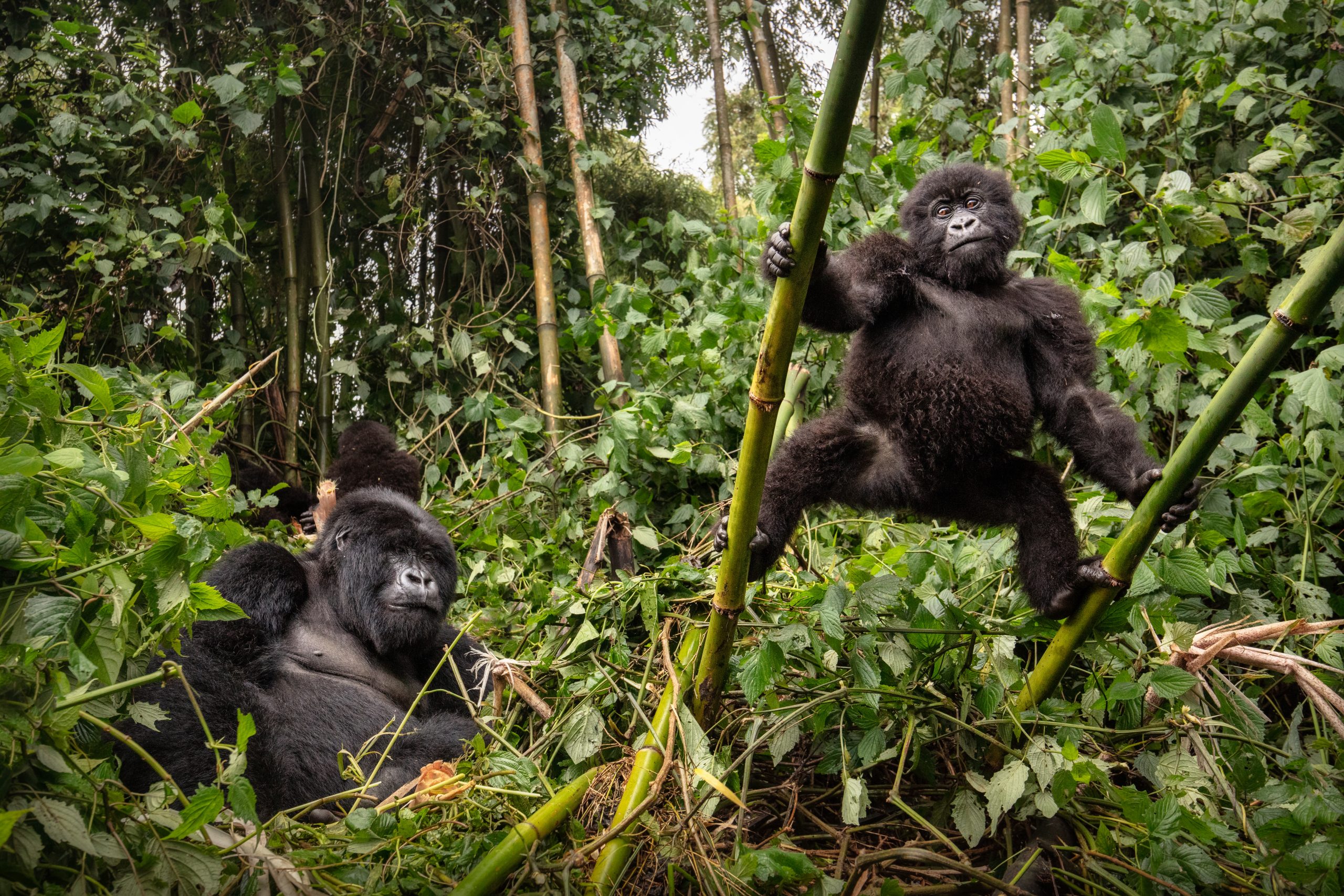
Short answer: You book a gorilla permit through a tour operator by sending your passport details, your preferred trekking date and sector, and paying the full Uganda Wildlife Authority permit fee upfront — not just a trip deposit. The operator secures the permit inside the UWA system and attaches it to a specific Bwindi or Mgahinga sector. Only the permit itself guarantees your slot.
The permit is the single hardest part of a Uganda gorilla trekking booking, and it is the part most travellers misunderstand. People assume the safari deposit covers it. It does not. People assume a permit is a ticket they can buy on arrival. It is not. A gorilla permit is a named, dated, sector-specific allocation issued by the Uganda Wildlife Authority (UWA), and the only way it becomes yours is when the full UWA fee clears.
That distinction is why knowing how to book a gorilla permit through a tour operator matters more than knowing which lodge to pick. Operators do not have secret access to permits — the allocation is the same for everyone. What they carry is the administrative risk: holding a permit in the UWA system, paying the fee on time, matching your name to the right sector, and absorbing the fallout if the hold lapses. The International Gorilla Conservation Programme tracks how the permit system supports conservation across the region, and it is a useful independent reference point for understanding why the rules exist.
Gorilla permit facts at a glance
- Issuing authority: Uganda Wildlife Authority (UWA)
- Maximum visitors: 8 people per habituated gorilla group per day
- Time with gorillas: 1 hour
- Minimum age: 15 years
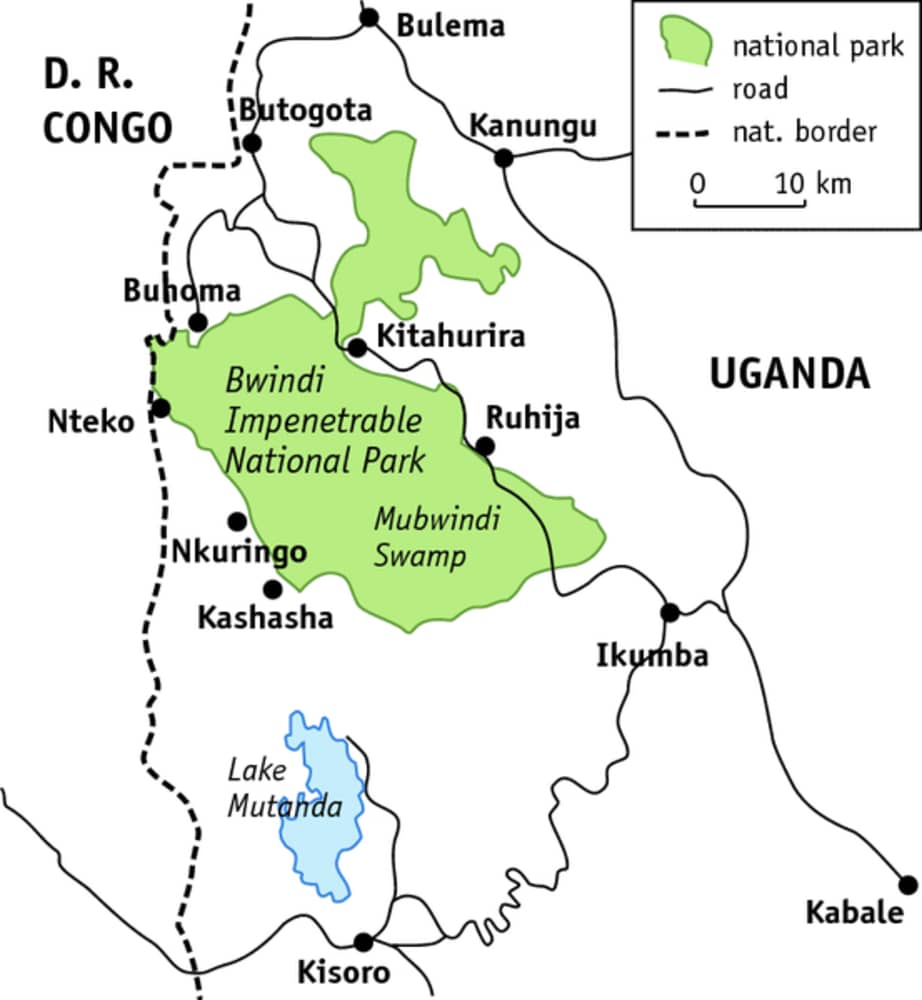
- Trekking sectors: Buhoma, Ruhija, Rushaga and Nkuringo in Bwindi; Mgahinga is also available
- Gorilla group allocation: Managed by UWA according to the trekking sector and operational arrangements
- Permit conditions: Subject to UWA’s current booking, cancellation and rescheduling rules
Permit fees are set by UWA and vary by traveller category. Current rates are updated on our gorilla permits Uganda page, and UWA periodically revises its tariff structure.
How to book a gorilla permit through a tour operator: the step-by-step process
Knowing how to book a gorilla permit through a tour operator comes down to four things you cannot easily do yourself: holding the permit in the UWA system, paying the fee in full on your behalf, matching your passport name to the correct sector and date, and absorbing the timing risk if the system releases the hold. Everything else — the vehicle, the lodge, the guide — is the safari around the permit.
Here is the sequence in practice.
The permit booking sequence
- You confirm a date and a sector preference. Most travellers name Buhoma because it is the most written-about sector, but the right answer depends on where you are sleeping and how you are arriving.
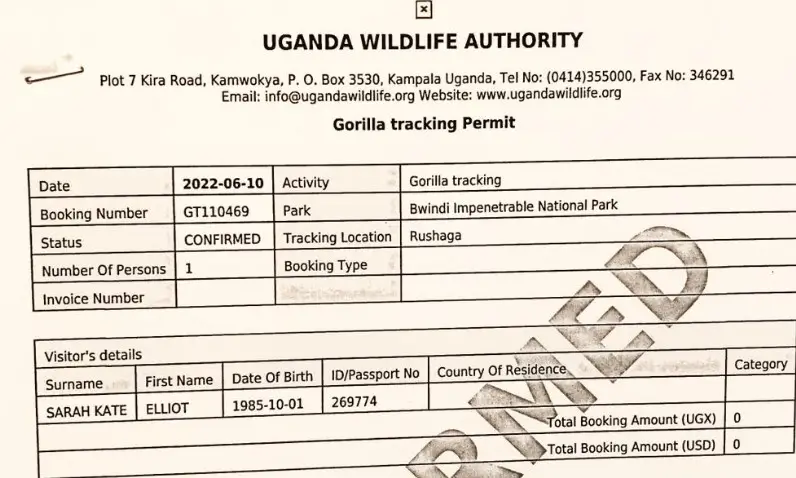
- You send passport details for every trekker. Full name exactly as printed in the passport, passport number, nationality, and date of birth. A mismatch between the name on the permit and the name in the passport can stop you at the briefing.
- The operator checks availability across sectors. Bwindi has four trekking sectors — Buhoma, Ruhija, Nkuringo and Rushaga — plus Mgahinga Gorilla National Park. Each holds its own allocation.
- The operator holds the permit in the UWA system. UWA holds a permit in its system for roughly seven days. If the UWA fee does not clear in that window, the hold is released automatically and the permit goes back into general availability.
- The full permit fee is paid. This is the step that converts a hold into a permit. A trip deposit does not do this.
- The permit is issued in your name for a specific sector and date. You receive confirmation, and your gorilla group allocation happens through UWA’s sector arrangements on the day of your trek.
That seven-day hold is the detail most people never hear about, and it is the reason a good operator will ask for permit money immediately rather than at final payment. If you delay, the hold lapses and someone else takes the slot.
Afraeka tip: Send your passport details on the same day you agree the date. The single most common cause of a lost permit in our office is a traveller who is “just checking flights” while the UWA hold quietly expires. Flights can be rebooked. A released permit usually cannot be recovered for the same date.
Can you book a Uganda gorilla permit online without an operator?
Yes, in principle. The Uganda Wildlife Authority issues permits directly, and a determined traveller can contact the authority, submit passport details, and pay the fee. In practice, most travellers book through a registered operator because the direct route assumes you already know which sector suits your itinerary, you can pay in the currency and format UWA requires, and you can absorb a lapsed hold without a fallback.
The permit fee itself is identical either way. UWA sets one tariff and it does not change because an operator is involved. What changes is who carries the administrative burden — and who is responsible if the date collapses.
If you are building a longer Uganda itinerary and want the trekking logistics handled alongside the permit, the Uganda gorilla trekking hub lays out how the sectors, seasons and trekking days fit together before you commit to a date.
How much does it cost to book a gorilla permit through a tour operator?
The fee does not change based on whether you book a gorilla permit through an operator or directly with UWA. That is the first thing to understand, and it is where most confusion lives. UWA sets one published tariff, and no legitimate operator adds a markup to the permit itself.
What varies is your traveller category. UWA distinguishes between foreign non-residents, foreign residents, and East African Community (EAC) citizens, and each pays a different rate. A foreign national living in Uganda on a work permit, residence certificate, dependent pass or student pass is a foreign resident, not an EAC citizen, and the two rates are not interchangeable. A low-season tariff also applies in specific months, which makes those dates genuinely more affordable without any reduction in what you get on the trek.
Current permit fees, including the low-season tariff and the categories they apply to, are listed on our gorilla permits Uganda page. That is the page we update first when UWA changes anything, and it is the page to check before you budget.
Where travellers get confused is in conflating the permit fee with the safari price. These are two separate numbers. The permit is a fixed government fee per person per trek. The safari price covers vehicles, guides, lodges, park entry, meals and the labour of organising all of it. An operator quoting you a total should be able to show the permit fee as a distinct line, because it is the one line that is non-negotiable and non-refundable.
Does a trip deposit secure your gorilla permit?
No. This is the most consequential misunderstanding in gorilla trekking, and it causes more failed bookings than anything else. A trip deposit is a commitment to the safari. It is not a commitment to the permit. The permit is only held once the full UWA permit fee is paid.
Our own booking terms reflect that reality. Before you commit, Afraeka collects a trip deposit plus 100% of permit fees upfront, with the balance due 45 days before departure. Once a permit has been issued it is non-refundable and non-transferable. The full terms are set out on our terms and conditions page, and they are worth reading before you pay anything, because they explain exactly where the risk sits.
The reason is structural rather than commercial. UWA releases a permit back into the system if the fee does not clear within roughly seven days. An operator holding a permit on a deposit alone would lose it, and you would arrive in Uganda without a trek. Collecting the permit fee upfront is not a cash-flow preference — it is the only way the permit survives.
Worth knowing: If a permit is issued and you later cancel, the permit fee is gone. Travel insurance rarely covers this. If your trip depends on a single fixed date, insure for it or build in flexibility before you pay.
What details does a tour operator need from you?
Five things per trekker, and one of them causes almost all the problems: your full name exactly as it appears in your passport. Permits are named documents. “Kate” on a booking form and “Katherine” in a passport is a discrepancy that can be challenged at the briefing.
Have these ready before you commit to a date
- Full name exactly as printed in your passport, for every trekker
- Passport number
- Nationality
- Date of birth
- Preferred trekking date and sector
- A contact email that you actually monitor
- Any mobility or fitness notes — trekking groups are set partly by walking pace
The fitness note matters more than people expect. Trekking groups are not set purely by who booked together. Rangers group trekkers partly by expected pace, because a gorilla group is located at a variable distance each morning and the trekking party needs to move at a speed everyone can sustain. If you have a knee problem or you are trekking with a young teenager, say so at booking rather than at the briefing.
How far in advance should you book a gorilla permit through an operator?
Three to six months ahead for peak-season dates, and six to twelve months ahead if you want a specific sector or you are booking a group of four or more. Peak season runs June to September and December to February, and those weeks fill first.
Low-season dates are more forgiving, and the reduced tariff makes them genuinely attractive if you can tolerate rain. Even then, four to eight weeks is the sensible floor. Turning up in Kampala expecting to trek tomorrow works occasionally and fails regularly.
Group size is the hidden constraint. With a maximum of eight visitors per habituated gorilla group per day, a party of six needs six permits in the same sector on the same date. That is a much harder ask than a solo traveller’s single permit, and it is the situation where booking early stops being advice and starts being a requirement.
If you are working backwards from fixed dates, our 3-day Uganda gorilla safari is the shortest itinerary that fits a permit properly, and it is the easiest one to plan around a single confirmed trekking day.
What happens if the permit date you want is sold out?
You have three moves, and you should take them in order. First, check other sectors. Bwindi’s four sectors — Buhoma, Ruhija, Nkuringo and Rushaga — each hold their own allocation, so Buhoma being full tells you nothing about Rushaga. Second, check Mgahinga, which has its own habituated gorilla group and its own permit pool. Third, shift your date by a day or two, because permit availability changes daily as holds lapse.
A good operator does all three before telling you a date is gone. If you are told “sold out” within minutes of asking about one sector, you are being given a partial answer.
| Situation | Best next move | Realistic timeline |
|---|---|---|
| Buhoma full, flexible on sector | Ask about Rushaga or Nkuringo | Same day |
| All Bwindi sectors full | Check Mgahinga’s permit allocation | Same day |
| Whole date blocked | Shift trekking day by 1–2 days | Days, as holds lapse |
| Fixed dates, no flexibility | Join a cancellation waitlist | Unpredictable — days to weeks |
Cancellations do happen, and UWA’s automatic release of unpaid holds after roughly seven days puts permits back into circulation on a rolling basis. That is why a date that was full last week is sometimes open today.
Do you need a separate permit for Mgahinga?
Yes. Mgahinga Gorilla National Park is a separate park with its own habituated gorilla group and its own permit allocation. A Bwindi permit cannot be used at Mgahinga, and a Mgahinga permit cannot be used in Bwindi. They are not interchangeable, and rangers will not swap them at the gate.
Mgahinga is often overlooked because it is smaller and receives far fewer trekkers, but for travellers already heading to the far south-west for golden monkeys or volcano hiking, it can be the more convenient trek. The Uganda Tourism Board maintains an overview of the region’s parks if you want to see how they sit geographically. For route planning, our Uganda destinations section maps how the parks connect.
Can one permit cover two people?
No. One permit covers one person for one trek. Permits are issued per individual, per sector, per day. There is no couple’s permit, no family permit, and no shared permit. If two people are trekking, two permits are issued and two fees are paid.
This also means the eight-visitor daily cap is a headcount, not a group booking. A party of eight trekkers fills an entire day’s allocation for one gorilla group.
Gorilla groups are allocated according to the trekking sector, with final group allocation managed by UWA on the day. You will have a sector on your permit; the gorilla group you visit is determined through UWA’s operational arrangements and confirmed at the morning briefing, alongside everyone else. That is also when you meet your ranger guide and trackers, and when the walking pace of your trekking party gets set.
What are the most common mistakes when booking a permit?
The same handful of errors appear again and again, and all of them are avoidable with one careful conversation before money changes hands.
- Assuming the deposit covers the permit. It does not. The UWA fee must be paid in full, upfront.
- Name mismatches. Booking under a nickname or a married name that does not match the passport.
- Booking a permit before checking the lodge. Buhoma permits are inconvenient if you are sleeping three hours away in Rushaga. Sector and accommodation should be decided together.
- Leaving it to the last minute in peak season. June to September and December to February do not reward optimism.
- Ignoring the seven-day hold. A permit is not yours because someone said they would hold it. It is yours when the fee clears.
- Forgetting the minimum age. Trekkers must be 15 or older. This is enforced, and it is not negotiable at the gate.
- Planning a trek the day after a long-haul flight. Bwindi is a full day’s drive from Kampala or a short flight plus a road transfer. Build in a night.
When should you not use a tour operator?
If you are an independent traveller already in Uganda, comfortable with UWA’s direct process, paying in the required format, and flexible enough to absorb a lapsed hold, booking direct is a legitimate choice. The fee is the same and the permit is the same document.
The case for an operator is strongest when your dates are fixed, when you are a group, when you are combining the trek with lodges and transfers, or when you simply do not want to manage a seven-day payment window from a different time zone. It is also strongest when something goes wrong — a lapsed hold, a sold-out sector, a flight delay — because the operator is the one with a fallback.
If you want the trek wrapped into a wider route, the 7-day Uganda and Rwanda primate safari shows how a permit sits inside a two-country itinerary, and our trips page shows the full range of durations available.
Afraeka field note: On a grey Buhoma morning last November, a trekker arrived at the briefing convinced his permit was for Rushaga. His operator had booked the right date and the right name — but the wrong sector, because the lodge was in Buhoma and nobody had checked the two against each other. He trekked, because a ranger found him space, but he lost two hours and a lot of goodwill. Since then we confirm sector and lodge in the same sentence, every time. It is a small habit that prevents a very bad morning.
A question that resurfaces constantly on TripAdvisor’s Uganda forum and on r/Uganda is some version of: “I paid a deposit to a tour operator — is my permit locked in?” The answer, almost every time, is no. The deposit locks in your safari. The permit fee locks in your permit. Travellers who understand that distinction before they pay rarely have problems afterwards.
Frequently asked questions about booking a gorilla permit
Can I book a Uganda gorilla permit online?
Yes — but not directly on a UWA self-service portal. You can book a Uganda gorilla permit online through a registered tour operator, who submits your passport details to the Uganda Wildlife Authority and pays the permit fee on your behalf. UWA issues the permit in the operator’s system, and your name is attached to it.
How much is a Uganda gorilla permit?
Uganda gorilla permit fees are set by the Uganda Wildlife Authority and vary by traveller category. Foreign non-residents, foreign residents, and East African Community (EAC) citizens each pay a different rate, and a low-season tariff applies in April, May and November. Current rates are listed on our gorilla permits Uganda page, which we update whenever UWA revises the tariff.
How far in advance should I book a gorilla permit?
Book three to six months ahead for peak-season dates (June to September and December to February), and six to twelve months ahead if you want a specific sector or a large group. Low-season dates in April, May and November can sometimes be secured with four to eight weeks’ notice, but never rely on it.
Does a trip deposit secure a permit?
No. A trip deposit alone does not secure a gorilla permit. The permit is only held once the full UWA permit fee is paid, which is why Afraeka collects a trip deposit plus 100% of permit fees upfront.
What happens if the permit I want is sold out?
You have three options: shift to another Bwindi sector, shift your trekking date, or join a cancellation waitlist. Sectors sell out independently, so Buhoma being full does not mean Rushaga is. A good operator checks all four Bwindi sectors plus Mgahinga before telling you the date is gone.
Can I get a last-minute gorilla permit?
Sometimes. UWA releases permits back into the system roughly seven days after they are held if the fee does not clear, and cancellations do occur. Last-minute permits are real but unpredictable — you need flexibility on date and sector, and you should expect to trek in whatever sector has space.
Do I need a separate permit for Mgahinga?
Yes. Mgahinga Gorilla National Park has its own habituated gorilla group and its own permit allocation, separate from Bwindi’s four sectors. A Bwindi permit cannot be used at Mgahinga, and a Mgahinga permit cannot be used in Bwindi.
What details do I need to give to book a permit?
You need each trekker’s full name exactly as it appears in their passport, passport number, nationality, date of birth, and the preferred trekking date and sector. Operators also ask for a contact email and any mobility notes, because the trekking groups are assigned partly by fitness.
Can one permit cover two people?
No. One permit covers one person for one trek. Permits are issued per individual, per sector, per day, and each trekker must carry their own permit to the briefing.
Ready to lock in your permit?
If you would rather not manage the seven-day hold yourself, let us handle how to book a gorilla permit through a tour operator on your behalf. Tell us your dates, your group size and the sector you are hoping for. We will check all four Bwindi sectors plus Mgahinga, confirm what is genuinely available, and explain exactly what the permit fee covers before you pay anything. Message us or request a quote — no price figures until we know your route, because the permit is only one line of the total.
About the author: Victoria Kayaga is a Ugandan-born safari specialist and the founder of Afraeka Adventures, based in Kampala. She has planned gorilla trekking itineraries across Bwindi, Mgahinga and the wider East African circuit for years. More about Victoria.
Keep planning