Last updated: September 2026
If you are trying to book a gorilla trekking permit online for a Uganda safari, the first rule to absorb is this: a Uganda gorilla permit is issued in the name of one traveller, for one sector of Bwindi or Mgahinga, for one specific date. That rule does not change whether you buy the permit through the Uganda Wildlife Authority reservations office or through a licensed Uganda tour operator — but the way the two routes handle payment is different, and it is the single biggest source of misunderstandings we see at Afraeka. Most travellers assume a deposit secures a permit. It does not.
Short answer: There is no public self-service booking button for gorilla permits. UWA’s online reservation system is used by authorised tour operators and by UWA’s own reservations office. Most travellers book through a licensed operator, who places the permit in UWA’s system in your name. The UWA permit fee is payable in full at the time of booking — a trip deposit alone does not secure a permit. Issued byUganda Wildlife Authority (UWA) Two routesDirect with UWA, or through a licensed Uganda tour operator Named on the permitOne traveller, one date, one sector PayableUWA permit fee in full at the time of booking Minimum age15 Group sizeMaximum 8 trekkers per habituated family per day Time with familyMaximum 1 hour Standard permit feeUS$800 for foreign non-residents Low-season permit feeUS$600 for foreign non-residents, April, May and November Foreign resident feeUS$700 East African citizen feeUGX 300,000
What a gorilla permit actually is
A Uganda gorilla permit is not a ticket. It is a government-issued authorisation that gives one named person the right to join one ranger-led trek to one habituated gorilla family, on one specific date, in one specific sector of Bwindi Impenetrable National Park or Mgahinga Gorilla National Park. The permit itself carries your passport name, the trek date, and the sector.
Everything else about the trek — which family you visit, what time you start, how long the walk takes — is decided on the morning of the trek by UWA rangers at the sector headquarters. You can control the date, the sector, and the number of permits. You cannot control the family. Anyone who promises you a specific family — the Bitukura group, the Oruzogo group, the Nkuringo group — is either misunderstanding the system or overpromising. Families are assigned by rangers based on fitness levels, group size, and where the family nested the night before.
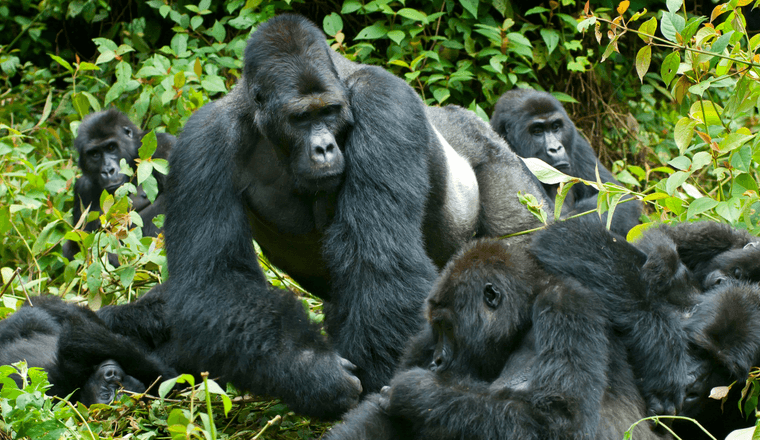
Each habituated family is visited by one group of up to eight trekkers per day, for a maximum of one hour. Because the number of habituated families is small and fixed, the total number of permits available on any given day is also small and fixed. That is why the peak-season dates sell out months in advance, and why the booking process rewards early planners.
The two routes
There is no single public “buy now” button. There are two routes, and which one suits you depends on how much of the trip you want to organise yourself and how much risk you are willing to carry if a sector is sold out.
| Route | Choose this if… | Downside |
|---|---|---|
| Through a licensed Uganda tour operator | You want the permit, the lodge, the vehicle and the driver guide handled in one booking. You want availability checked across all four Bwindi sectors. You want one point of contact if a flight changes. | You pay the operator’s service fee, though most operators build it into the lodge rate rather than the permit itself. |
| Direct with Uganda Wildlife Authority | You are an experienced independent traveller. You already have a vehicle and a lodge. You want to handle the permit yourself. | You deal with UWA’s reservations office in Ugandan business hours, usually paying by bank transfer or mobile money. The office cannot help you if the sector you want is sold out. |
Access to UWA’s online reservation system is granted to authorised, selected tour operators and to UWA’s own reservations office. Some travellers have reported booking directly with the UWA reservations office by email and paying by bank transfer; others have been told that a licensed operator is required. The position has shifted over the years and is worth confirming with UWA directly before you commit to either route.
How does the permit booking process actually work?
Most guides say “pay a deposit and your permit is confirmed”. That is not quite how UWA’s system works, and it is worth understanding before you send money.
When a permit is placed in UWA’s system in your name, the system holds it for a limited period — commonly around seven days — while payment is arranged. If the UWA permit fee does not clear inside that window, the system releases the permit back into the available pool automatically, and the booking is lost. There is no partial reservation. A permit exists, or it does not.
That means the deposit structure on your invoice matters. At Afraeka, the primate permit fee is payable in full at the time of booking confirmation, alongside the trip deposit. The balance of the safari package is due 45 days before departure. The permit is only issued in your name after the UWA fee clears, and it is non-refundable and non-transferable once issued, because UWA treats the permit as a fixed capacity allocation and does not return the fee.
If you have paid only a trip deposit and the UWA permit fee has not been paid, you do not have a permit. Ask the operator to send you the UWA reference number before you assume anything is secured.
Seven steps from first enquiry to confirmed permit
- Fix your dates and your entry point. Decide whether you are flying into Entebbe or Kigali. From Entebbe, the practical Bwindi sectors are Buhoma and Ruhija. From Kigali, they are Rushaga and Nkuringo, because the Kigali–Rushaga drive is shorter than Kigali–Buhoma. Getting this wrong is the single biggest cause of unnecessary long drives.
- Send your full name as it appears on your passport, your nationality, your date of birth, and your preferred trek date. The permit is issued in your name and the name has to match the passport exactly.
- Ask the operator to check all four Bwindi sectors for your date, plus the day either side. Availability moves weekly. A date that is closed in Buhoma is often open in Ruhija or Nkuringo on the same morning.
- Confirm the permit fee and the deposit structure. The UWA permit fee is set by UWA and does not change by operator. Ask the operator to state the UWA figure separately from their own service fee.
- Pay the UWA permit fee in full, alongside your trip deposit. This is the step most travellers miss. A trip deposit alone does not create a permit.
- Receive your written confirmation and UWA reference number. The confirmation should name the sector, the date, and the family if one has already been assigned. Keep a copy on your phone and a printed copy in your bag.
- Reconfirm 30 days before travel. Flight times and lodge bookings move. A short reconfirmation email catches most problems.
What details you need to send
The permit is issued against your passport. Every detail you send has to match the passport exactly, including spelling, punctuation, and any middle names.
- Full given name and surname, in the same order as the passport
- Any middle names, spelled exactly as on the passport
- Nationality, as printed on the passport
- Date of birth
- Passport number
- Passport expiry date
- Preferred trek date
- Second-choice trek date, if you have one
- Preferred sector and whether you will accept an alternative
- Number of permits needed
- Entry point (Entebbe or Kigali)
If you are travelling as a group, send all travellers’ details in a single message so the operator can check availability for the full group at once. A group of four is much harder to place than a group of one, and you want to know early if the group needs to split across two sectors or two days.
When to book — two views on sequencing
Permit demand has two predictable peaks. The first is the long dry season, roughly June to September. The second is the short dry season, roughly December to February. The Christmas and New Year window inside that second peak fills earliest of all — often six to twelve months ahead. The quieter months are the long rains (roughly March to May) and the short rains (roughly October to November).
As a working rule: book three to six months ahead for the dry season, six to twelve months ahead for the Christmas and New Year weeks, and as little as four to six weeks ahead for the shoulder months, if you are flexible on sector and date.
On sequencing, there is a genuine disagreement in the industry. Many operators advise booking the international flight first, so the permit date is fixed and cannot shift. A growing number of Uganda operators advise the opposite: secure the permit first, because permits are the scarce item and flights can usually be rebooked or credit-vouchered more easily than a permit. At Afraeka we lean toward the second view — permit first — but the practical answer is that both items should be booked inside the same week, before either becomes the bottleneck.
Which sector you are booking into
Bwindi has four trekking sectors, and each has its own gate, its own lodge cluster, and its own habituated gorilla families. When you book a permit, you are booking a permit for a specific sector, not for “Bwindi” as a whole.
- Buhoma — the oldest and most popular sector. Best road access from Entebbe and the widest range of lodges. Fills first in peak season.
- Ruhija — higher altitude, harder trek, fewer lodges. Often has space when Buhoma is full.
- Rushaga — the largest sector, with the largest number of habituated families. Usually the best option for late bookings and for travellers flying into Kigali.
- Nkuringo — the most difficult trek, with steep terrain. Usually has space because demand is lower.
If you are flexible on sector, you will almost always find a permit. If you are fixed on Buhoma in July, you may not.
The four permit fee tiers
Uganda sets gorilla permit fees in four tiers, and the figure you pay depends on your residency status and on the month you trek.
| Traveller | Standard season | Low season (April, May, November) |
|---|---|---|
| Foreign non-resident | US$800 | US$600 |
| Foreign resident | US$700 | — |
| East African citizen | UGX 300,000 | — |
| East African resident | UGX 300,000 | — |
The low-season tariff for April, May and November was introduced by UWA in February 2026 to spread demand through the year. The trek itself is the same — same park, same rangers, same habituated families — but the permit costs less. The trade-off is rain. April and May are the long rains, and November is the tail of the short rains. Trekking still runs, ponchos still go on, and most travellers who have done both say the low-season forest is the more atmospheric one.
If your travel dates are flexible, the low-season window is worth planning around. It is the only way to trek a habituated family in Bwindi for under US$700 as a foreign non-resident.
Mistakes to avoid
- Booking the permit before you know your entry point. Entebbe and Kigali lead to different sectors, and the drive times are very different.
- Booking Buhoma when your flight lands in Kigali. The Kigali–Buhoma drive is roughly twice as long as the Kigali–Rushaga drive.
- Assuming one permit covers a group. Each trekker needs a named permit, at any age from 15 upwards.
- Getting the passport name wrong. A mismatch between the permit name and the passport name can stop you trekking on the morning.
- Paying an operator who cannot show you a UWA reference number or written confirmation. Ask for the confirmation before you send money.
- Not asking about a second trek day. If you can afford it, two treks in two different sectors is what most travellers say they wish they had done.
What travellers ask
One question that comes up on the Uganda forum of TripAdvisor and on SafariBookings again and again is some version of: “I’ve paid the operator a deposit but I don’t have a permit number yet — is that normal?” The honest answer is that it depends on what was paid. A trip deposit alone does not create a permit. A permit only exists when the UWA fee has been paid and UWA has issued a confirmation in your name. If you have paid only a trip deposit and you are travelling in peak season, ask the operator to confirm the permit has been booked, not just reserved, and to send the UWA reference number.
The pattern we see most often at Afraeka: a traveller books a July trip in February, pays a 30% trip deposit, and assumes the permit is secured. It is not — the permit fee is a separate line and has to be paid to UWA in full. In the months between deposit and departure, a surprising number of travellers only discover this when they ask for their permit number. We now send the UWA confirmation as soon as it clears, and we invoice the permit fee as a separate line so nothing is ambiguous.
How this fits into a wider Uganda trip
The permit is one line in a longer itinerary. Most travellers pair a Bwindi trek with a night at Lake Bunyonyi, a morning at Mgahinga for golden monkeys, or a couple of days in Queen Elizabeth National Park on the way back to Entebbe. These are the starting points we use most often:
- 3-day Uganda gorilla safari — the shortest road-based option, one trek, direct drive from Entebbe.
- 5-day Bwindi and Lake Mburo — one trek, plus a slower return through Lake Mburo.
- 7-day Uganda–Rwanda primate safari — two-country primate trip.
- All Afraeka safari packages — permit-inclusive itineraries across East Africa.
Related planning pages
- Gorilla permits Uganda — the permit pillar page with current fees and rules.
- Uganda gorilla trekking hub — sectors, trek day, fitness, packing.
- Booking terms and cancellation policy — deposits, balances, and the permit refund rules.
- Uganda destinations — Bwindi, Queen Elizabeth, Murchison Falls, Kibale.
- Safari activities — gorilla trekking, chimp tracking, game drives, boat safaris.
- Contact Afraeka Adventures — send your dates and we’ll check availability across all four sectors.
Ready to book a Uganda gorilla permit?
Send us your dates, nationality and entry point. We will check availability across all four Bwindi sectors plus Mgahinga, confirm the current UWA permit fee for your month, and come back with a permit plan and a tailored quote.Request a quoteSee safari packages
Frequently asked questions
Can I book a Uganda gorilla permit online?
You can start the booking online, but the permit itself is issued by Uganda Wildlife Authority or by a licensed Uganda tour operator acting on your behalf. There is no public self-service booking button for foreign non-residents. Most travellers complete the booking by email, phone or WhatsApp with an operator, then pay the permit fee and receive a written confirmation.
How much is a Uganda gorilla permit?
The standard permit fee is US$800 for foreign non-residents. During April, May and November, the low-season fee is US$600. Foreign residents pay US$700, and East African citizens and residents pay UGX 300,000. The fee is set by UWA and does not change by operator.
How far in advance should I book a gorilla permit?
For dry-season dates between roughly June and September and December and February, book three to six months ahead. For the Christmas and New Year weeks, book six to twelve months ahead. For the quieter months, four to six weeks is often enough if you are flexible on sector. Groups of four or more should always add at least a month to these windows.
Does a trip deposit secure a permit?
No. A trip deposit secures the lodge and the logistics, but not the permit. The permit is only issued in your name once the UWA permit fee has been paid in full. UWA holds a permit in its system for a limited window — commonly around seven days — and releases it back into the pool automatically if the fee does not clear.
What happens if the permit I want is sold out?
Change the sector first, then the date. Permits are issued per sector, and demand differs between Buhoma, Ruhija, Rushaga and Nkuringo. If both sector and date are fixed, ask two or three operators to place you on a waiting list and to alert you if a cancellation comes through.
Can I get a last-minute gorilla permit?
Sometimes. Cancellations are released back into UWA’s system, and low-season months almost always have space. Contact operators by phone or WhatsApp rather than email, be flexible on sector, and have your passport details ready to send immediately if a permit becomes available. The UWA permit fee itself does not change based on how late you book.
Do I need a separate permit for Mgahinga?
Yes. Mgahinga Gorilla National Park has one habituated family and permits for it are issued separately from the four Bwindi sectors. Mgahinga has a smaller pool of demand and is sometimes available when Bwindi is full.
What details do I need to give to book a permit?
Full name exactly as it appears on your passport, nationality, date of birth, passport number, and your preferred trek date. The permit is issued in one named traveller’s name and cannot be transferred once issued.
Can one permit cover two people?
No. Each trekker needs a named permit. There is no family rate, no group rate, and no sharing of permits. Children under 15 are not permitted to trek.
Victoria Kayaga is a Ugandan-born safari specialist and the founder of Afraeka Adventures. She works on gorilla trekking, wildlife safaris and multi-country itineraries across Uganda, Rwanda, Kenya and Tanzania, with a focus on conservation and community-based tourism. Based in Kampala.