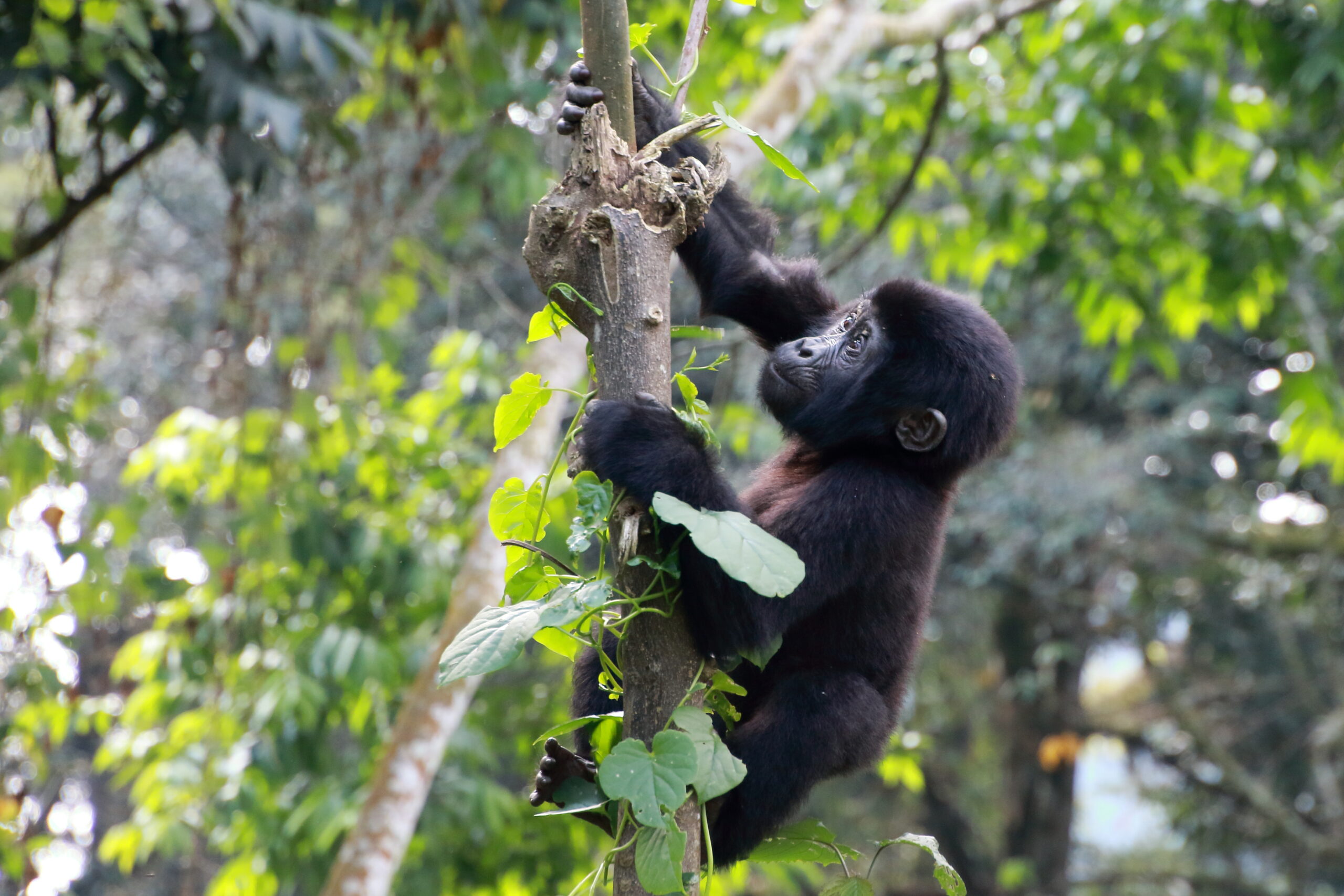
Short answer: There is no single best Bwindi sector. The right sector depends on four things — your dates, your group size, your fitness, and how you are arriving or what you are combining. Buhoma suits travellers who want the gentlest terrain and widest lodge choice. Rushaga suits groups and short-notice bookings. Nkuringo suits fit, regular hikers who want a demanding day. Ruhija suits highland-forest trekkers and birders. Any of the four will give you the same one hour with the same habituated mountain gorillas under the same UWA rules.
The question “which Bwindi sector is best for gorilla trekking” gets asked constantly, and the honest answer is that it is the wrong question in its current form. Each sector is best at something. What matters is which sector is best for you — and that depends entirely on constraints you already have, whether you have articulated them or not.
The four sectors differ in five things: terrain and altitude, the number of habituated gorilla families, lodge choice, how easy they are to reach, and how quickly their permits fill. Everything else — the permit system, the daily cap, the one-hour viewing, the UWA ranger allocation — is identical. This guide walks through a decision framework that takes you from “which sector is best” to “which sector fits me” in five steps. If you want a single sector described in depth, the individual guides on Uganda gorilla trekking cover Buhoma, Ruhija, Nkuringo, Rushaga and Mgahinga in full. Permit fees, categories and low-season tariffs are kept current on the gorilla permits Uganda page.
Bwindi sectors at a glance
- Park: Bwindi Impenetrable National Park, Uganda — a UNESCO World Heritage Site
- Issuing authority: Uganda Wildlife Authority (UWA)
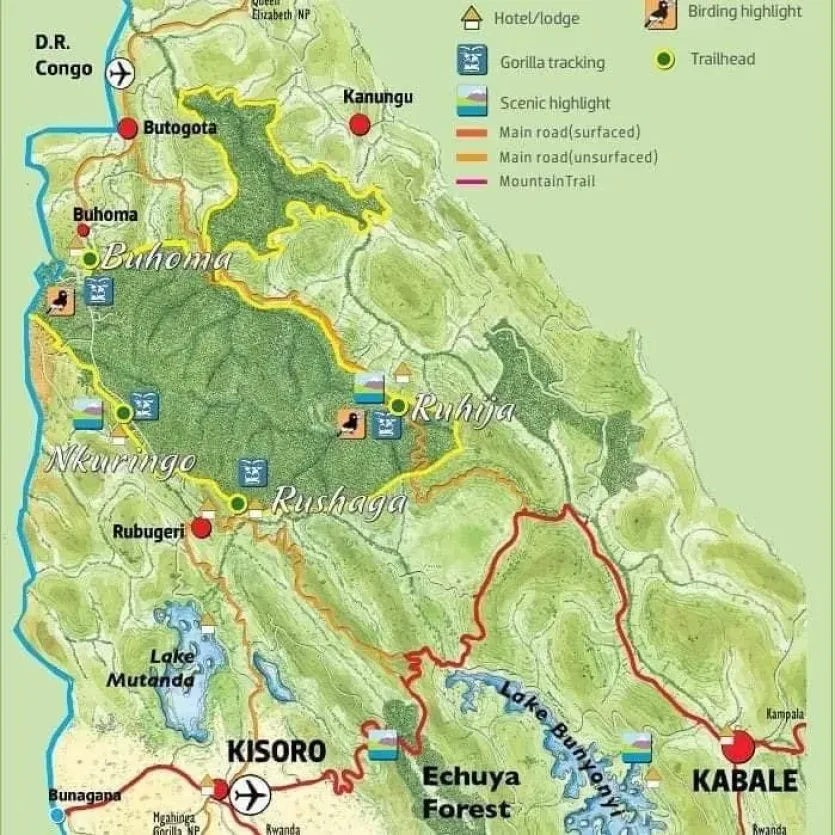
- Sectors: Four — Buhoma (north), Ruhija (east), Rushaga (south), Nkuringo (south-west)
- Adjacent park: Mgahinga Gorilla National Park, with its own separate permit allocation
- Terrain variation: Buhoma the gentlest; Nkuringo and Ruhija the most demanding
- Family concentration: Rushaga has the largest number of habituated families; Nkuringo the fewest
- Altitude: Over 2,300 metres in Ruhija; lower in Buhoma and Rushaga
- Maximum visitors: 8 people per habituated gorilla group per day
- Time with gorillas: 1 hour
- Minimum age: 15 years
- Group allocation: Managed by UWA according to the trekking sector and operational arrangements
- Permit conditions: Subject to UWA’s current booking, cancellation and rescheduling rules
Permit fees are set by UWA and vary by traveller category. Current rates are updated on our gorilla permits Uganda page, and UWA periodically revises its tariff structure.
Which Bwindi sector is best for gorilla trekking? The honest answer
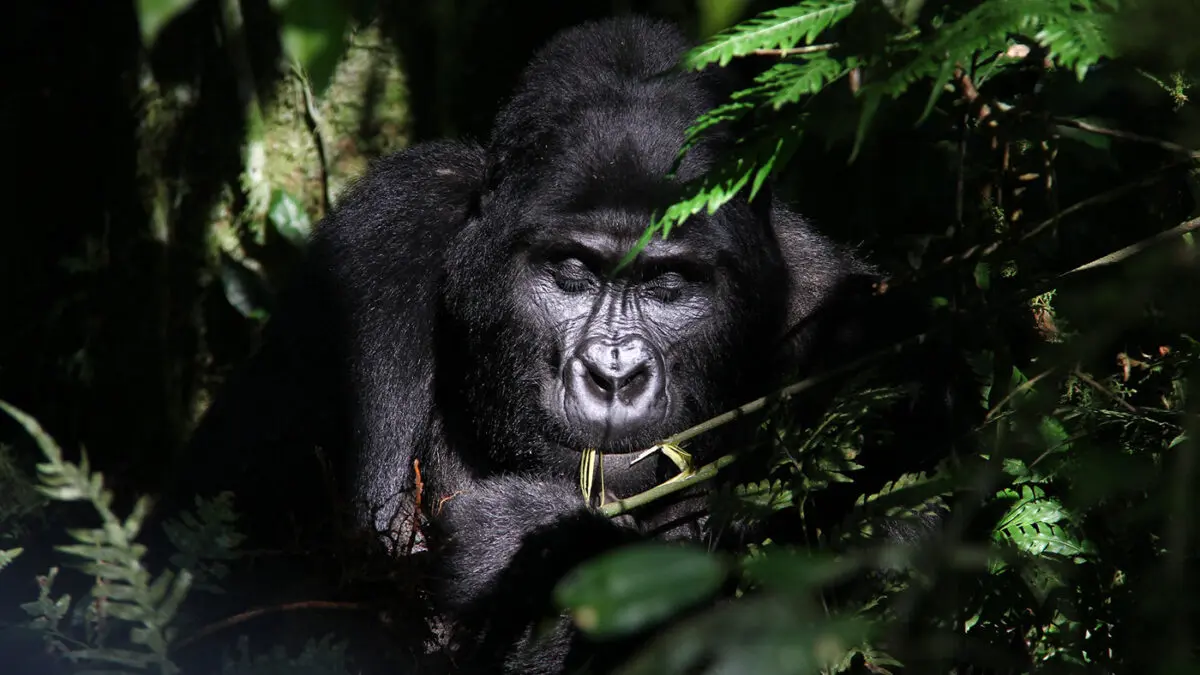
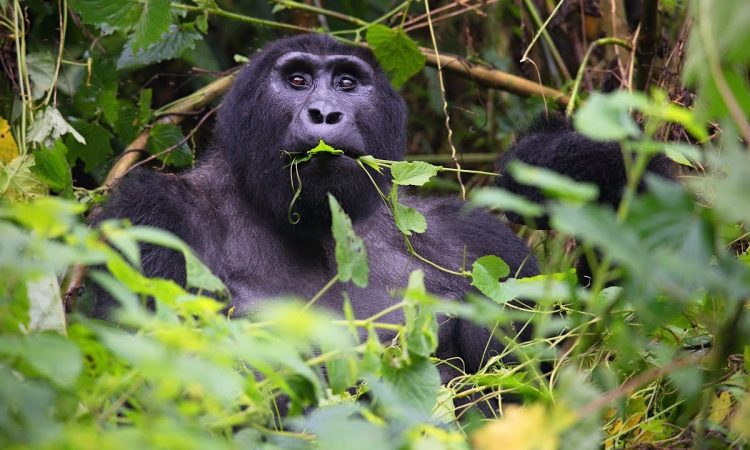
The honest answer is that the sector matters far less than most travellers believe, but the constraints around the sector matter far more. Anyone trekking any of the four Bwindi sectors will see the same mountain gorillas, spend the same one hour with them, and be bound by the same rules. What differs is the day around that hour — the length of the walk in, the steepness of the descent, the number of other trekkers at the trailhead, and how easy it was to get a permit in the first place.
So the decision is not a ranking. It is a matching exercise. Five steps will get you to an answer, and they work in this order: dates, group size, fitness, arrival and combination, then experience. The first step usually eliminates one or two sectors before the later steps matter.
The Uganda Wildlife Authority operates the permit allocation system that sets daily numbers across all four sectors, and the Uganda Tourism Board maintains wider national context on the parks. The International Gorilla Conservation Programme tracks how permit revenue supports the conservation work that makes the whole system possible.
Step 1 — Start with your dates, not your sector
Your dates decide more about which sector you end up in than any other factor. If your dates are fixed and inside the next thirty days, you are choosing from whatever sectors have permits, not from the four-way menu. If your dates are flexible and six months away, all four sectors are usually available and the other criteria matter more.
The practical sequence is this: find your dates, check permit availability across all four Bwindi sectors plus Mgahinga, and then apply the remaining criteria to whichever sectors are genuinely open. Doing it the other way round — deciding you want Buhoma first and then discovering there is no permit — is how travellers end up disappointed.
Two timing realities are worth holding in mind. Peak-season dates in June to September and December to February fill first, and Buhoma fills before any other sector within those windows. Low-season dates in April, May and November stay open longer across all four sectors, and the UWA tariff structure makes those months genuinely attractive if you can tolerate rain.
Step 2 — Match the sector to your group size
Group size is the second filter, and it has a bigger effect than most travellers expect. The maximum is eight visitors per habituated gorilla group per day, and each sector has a different number of habituated families within its allocation. That is what determines how many total permits are available per day in each sector.
Rushaga has the largest concentration of habituated families, so it has the most daily permits and the best odds for a party of six or more. Nkuringo and Ruhija have fewer families, so large groups are harder to fit. Buhoma has a moderate number of families but the highest demand, which means its allocation can close early even when permits remain in other sectors.
For a party of five or more booking inside thirty days, Rushaga should be the first sector you ask about. It is not the fallback; it is often the better call regardless. For a solo traveller or a couple, all four sectors are viable and the other criteria should drive the decision.
Afraeka tip: If your group is larger than the number of permits available in any single sector on your date, ask about splitting. Two groups of three often fit when one party of six does not, and all sub-groups can trek the same day in the same sector with different family assignments. It is not the same as trekking together, but it is usually better than moving your whole trip by a week.
Step 3 — Match the sector to your fitness
Fitness determines whether you should book Buhoma or Nkuringo, and it is the criterion travellers most often underestimate in advance. Bwindi treks are hikes at altitude on uneven forest ground, and the difference between the easiest and hardest sector is a matter of hours on your feet and metres of ascent, not a marginal adjustment.
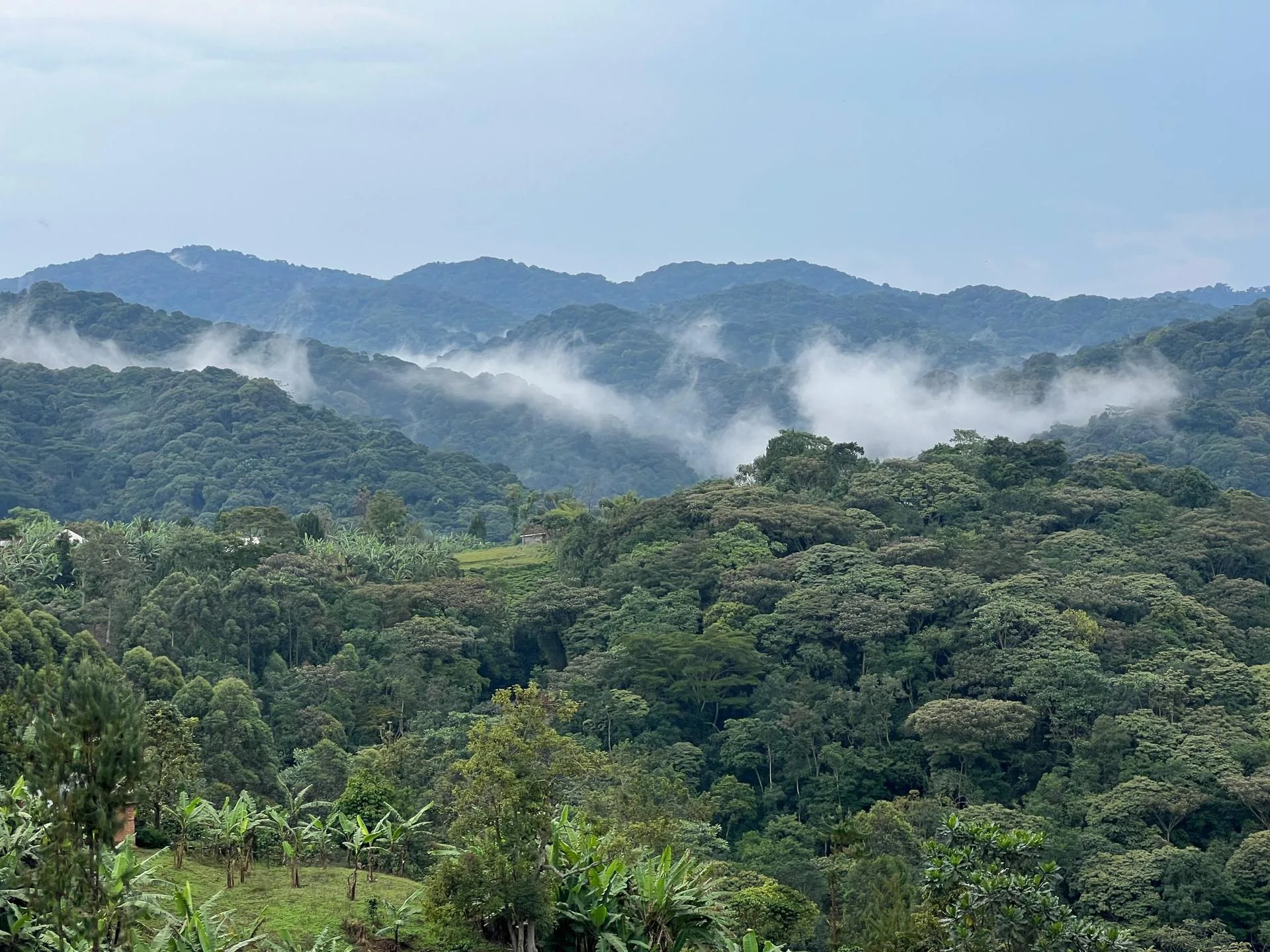
Buhoma is the gentlest sector — lower average altitude, gentler gradients, shorter average approach. Rushaga is moderate, with some steep sections but more varied terrain. Ruhija is moderate to high, with high-altitude forest, bamboo zones and steep ridges. Nkuringo is the hardest, because the sector’s ridge-and-valley geography means every trek begins with a descent into the forest and ends with a climb back to the trailhead.
If you hike, run or walk on hilly terrain regularly, any of the four works. If your fitness is gym-based or flat-ground walking, choose Buhoma or Rushaga and enjoy the day without worrying about the return climb. If you have knee, hip or ankle concerns, be aware that descents are often harder than ascents on Bwindi’s trails — a sedan chair service is available in all sectors and must be arranged in advance.
Step 4 — Match the sector to how you’re arriving and what you’re combining
Geography decides this step, and it is often the tie-breaker when the first three steps have not eliminated anything. Each sector connects naturally to different combinations, and choosing the wrong sector for your wider itinerary means hours of unnecessary driving.
| Sector | Best arrival route | Natural combination |
|---|---|---|
| Buhoma | Kihihi airstrip, or road from Kabale | Queen Elizabeth National Park via Ishasha, tree-climbing lions |
| Ruhija | Kihihi airstrip, or road from Kabale | Birding itineraries, highland forest walks, Buhoma for a second trek |
| Rushaga | Kisoro airstrip, or road from Kabale | Mgahinga Gorilla National Park, golden monkeys, Lake Bunyonyi |
| Nkuringo | Kisoro airstrip, or road from Kabale | Mgahinga, volcano hiking, quiet ridge lodges |
| Mgahinga | Kisoro airstrip | Rushaga, golden monkeys, Batwa cultural experience |
Two combinations stand out. First, Buhoma and Queen Elizabeth National Park: the Ishasha sector, with its tree-climbing lions, is roughly two hours from Buhoma by road. This is Uganda’s classic trek-plus-savannah route. Second, Rushaga and Mgahinga: the two parks are roughly an hour apart, and a Rushaga gorilla trek paired with a Mgahinga golden monkey trek or volcano hike is the strongest two-park combination in the south-west.
If you are combining Uganda and Rwanda, Rushaga and Nkuringo sit closest to the Cyanika border crossing into Rwanda’s Volcanoes National Park, which makes a two-country primate itinerary practical. Our Uganda destinations and Rwanda destinations pages map how the two sides connect.
Step 5 — Match the sector to the experience you actually want
Once dates, group size, fitness and geography have narrowed the field, the remaining choice is about atmosphere. The four sectors deliver different versions of the same trek, and the difference is real enough to matter for travellers who have a clear preference.
- If you want the classic, established experience: Buhoma. It is Bwindi’s original trekking sector, with the widest lodge choice, the shortest transfer to the trailhead, and more than thirty years of trekking history behind it.
- If you want the best odds and family variety: Rushaga. More habituated families means more parallel treks, more lodge options, and more flexibility on trek length.
- If you want a quiet, highland-forest, birding-focused experience: Ruhija. Fewer trekkers, higher altitude, and the strongest Albertine Rift birding of any sector.
- If you want the most physically rewarding trek: Nkuringo. The steepest terrain in Bwindi, with the strongest sense of having earned the hour with the gorillas.
- If you want a different park entirely: Mgahinga. A separate allocation with its own habituated family, and the lowest demand of the five permit pools.
If you are trekking a second time after a first visit, the sector you did not choose last time is usually the right answer. Travellers who trekked Buhoma first often find Ruhija or Nkuringo on a return trip more rewarding, and the contrast is part of the appeal.
The Bwindi sector decision matrix
Here is the same framework condensed into a single view. Read across your priority row and note which sector appears most often.
| Priority | Best sector | Why |
|---|---|---|
| Gentlest terrain | Buhoma | Lower altitude and gentler gradients than the other three |
| Shortest notice booking | Rushaga | Most habituated families means most daily permits |
| Large group (5+) | Rushaga | Highest number of parallel trekking groups per day |
| Widest lodge choice | Buhoma | More accommodation than any other sector |
| Hardest trek | Nkuringo | Ridge-to-valley geography with a sustained return climb |
| Best birding | Ruhija | Albertine Rift endemics and highland forest species |
| Fewest other trekkers | Nkuringo or Ruhija | Lower demand and fewer parallel groups |
| Queen Elizabeth combination | Buhoma | Two hours from Ishasha via road |
| Mgahinga combination | Rushaga or Nkuringo | Roughly one hour from the Mgahinga trailhead |
| Second-time trekker | The sector you missed | A different sector delivers a genuinely different day |
Nothing on this table is decisive on its own. The point is to see where the overlaps are — if three rows point to Rushaga and two to Buhoma, Rushaga is probably your sector.
What every Bwindi sector has in common
Whatever sector you choose, the trek itself follows an identical structure, and this is why the sector question matters less than travellers assume. The permit system, the daily cap, the one-hour viewing and the UWA ranger allocation are the same everywhere.
The trekking day — identical in every sector
- Early morning briefing. You arrive at the sector trailhead before dawn, register, and meet your ranger guide. Gorilla family allocation is confirmed here.
- Ranger-led forest walk. Trackers have gone ahead at first light to locate each habituated family. Walking time varies with how far your assigned family has moved.
- One hour with the gorillas. A strict maximum of one hour in the family’s presence. Cameras, no flash, seven-metre minimum distance, and no visiting if you have a cold or other infectious illness.
- Return to the trailhead. The walk back is usually faster than the walk in, though wet-season mud can slow the descent considerably.
- Certificate and debrief. UWA issues a trekking certificate, and your guide will often share background on the family you visited.
Three things are the same regardless of sector. The permit is issued per individual, per sector, per day. The daily cap is eight visitors per habituated gorilla group. The family you visit is allocated by UWA on the morning of the trek, not at the time of booking. Sector choice changes the day around the trek, not the trek itself.
Detailed descriptions of the individual sectors sit alongside broader primate context on the primate tracking experiences page, and the wider trail and forest options in the south-west are covered under adventure hiking.
Three travellers, three different answers
The framework is easier to trust when it is applied to specific cases. Here are three traveller profiles and the sector each should probably choose.
- A couple, booking six months ahead, arriving by road from Kampala, moderate fitness. Buhoma. The gentlest terrain, widest lodge choice, and booking early enough that Buhoma is still open. If they want to combine with Queen Elizabeth National Park, Buhoma becomes the clear answer.
- A family of six, booking five weeks ahead, want to trek together on a specific date. Rushaga. The only sector where six permits on the same date are realistically available at short notice. Any of the other three will likely require either splitting the group or moving the date.
- A solo traveller in their sixties, regular hill walker, wants a quiet trek and strong birding. Ruhija. The highland forest, lower demand and world-class birding suit this profile better than Buhoma, and the trekking terrain is manageable for someone who walks regularly on hills.
Each answer is different because the constraints are different. Change the date by six months, or the group size to two, and the answer changes. That is the framework working as intended.
For travellers building the trek into a wider route, the 3-day Uganda gorilla safari is the simplest format for a single confirmed trekking day. The 5-day Bwindi and Lake Mburo safari adds a savannah stop and remains flexible on sector. The 7-day Uganda and Rwanda primate safari shows how a Bwindi trek pairs with the Rwanda side.
Common mistakes when choosing a Bwindi sector
Most of what goes wrong in sector selection comes down to a small set of errors, and all of them are avoidable with one careful planning conversation.
- Choosing a sector before checking dates. Availability constrains sector choice, not the other way round. Check permits first, then decide.
- Assuming Buhoma is best because it is best-known. Buhoma is the most established and most accessible, but it is not the right sector for every traveller. It fills first, which is a real cost.
- Ignoring group size. A party of six will struggle to get a single-sector booking in Nkuringo or Ruhija. Rushaga is usually the better call.
- Booking a lodge before a permit. Lodges and permits run on separate systems. A lodge in Buhoma is a problem if your only available permit is in Rushaga.
- Underestimating terrain. Nkuringo and Ruhija are genuinely demanding. Read the individual guides honestly before committing.
- Treating Rushaga as a fallback. Rushaga is often the better answer for groups and short-notice bookings, not a consolation prize.
- Assuming you can choose your gorilla family. UWA allocates on the morning of the trek. Any operator offering a specific family as a guarantee is misrepresenting the process.
- Forgetting the minimum age. Trekkers must be 15 or older. This is enforced and it affects group composition for families.
Can one permit cover two people?
No. One permit covers one person for one trek, and this is the single most important constraint for anyone choosing a sector as part of a group. A party of four needs four permits in the same sector on the same date, and that is a materially harder ask than a single spot.
The eight-visitor daily cap per habituated gorilla group is a headcount, not a group booking. A party of eight fills an entire day’s allocation for one gorilla group, and there is no flexibility on that ceiling. This is why Rushaga’s larger family count matters so much for groups — it widens the total pool of daily permits available.
Once you have your permits, the gorilla group you actually visit is allocated according to the trekking sector, with final group allocation managed by UWA on the morning of the trek. You will know your sector in advance because it is on your permit; you will learn your group at the briefing alongside everyone else.
Afraeka field note: A traveller once asked us which sector was “objectively best” — as though there were a correct answer waiting to be discovered. We sent back three possible answers based on three different assumptions about his trip: a family with young teenagers, a fit solo hiker, and a couple who wanted the easiest possible day. All three answers were different, and none of them was wrong. He replied that he had not realised the question needed to be asked differently. It is a fair reaction — most travellers arrive at the sector question expecting a ranking, and the honest response is always that a ranking cannot exist because the criteria differ between people. What we can do is tell you, for your dates and your group, which sectors are genuinely open and which of those will give you the day you actually want. That is a useful answer. A ranking would not be.
A question that shows up regularly on TripAdvisor’s Uganda forum and on r/Uganda is some version of: “Which Bwindi sector should I choose if I can only pick one?” The forum consensus usually lands on Buhoma, because Buhoma is the most written about and the most recommended for first-timers. That answer is not wrong, but it is incomplete. If your dates are inside thirty days, or you are travelling as a group of five or more, or you want the strongest birding, the better answer is usually different. Ask which sectors are open for your dates first, then apply the four criteria in this guide.
Frequently asked questions about which Bwindi sector is best
Which Bwindi sector is best for first-time trekkers?
Buhoma is the most common recommendation for first-time trekkers, because it has the gentlest terrain, the widest choice of lodges, and the shortest transfer from most accommodation to the trailhead. It is also the most established sector, which makes it familiar to travellers who have read about Bwindi before booking. Rushaga is an equally strong option if you are booking at short notice or as part of a larger group.
Which Bwindi sector has the most gorilla families?
Rushaga has the largest concentration of habituated mountain gorilla families in Bwindi Impenetrable National Park. More families means more parallel trekking groups can operate per day, which is why Rushaga has the highest daily permit numbers and the best odds for large parties and short-notice bookings.
Which Bwindi sector is the easiest trek?
Buhoma is the easiest sector. It sits at lower average altitude than the others, its trails have gentler gradients, and the approach distances are typically shorter. Rushaga is moderate. Ruhija is moderate to high because of altitude and steep ridges. Nkuringo is the hardest, because every trek begins with a descent and ends with a climb back to the ridge.
Which Bwindi sector is best for birding?
Ruhija is the best sector for birding and one of the top forest birding sites in Africa. Its altitude and forest type support species that do not occur lower in Bwindi, including Shelley’s crimsonwing, Grauer’s rush warbler and the African green broadbill. The Bwindi Birding Centre operates from the sector with specialist forest guides.
Which Bwindi sector is best for older travellers?
Buhoma suits older travellers best because it is the gentlest sector. Travellers who hike regularly often manage any of the four sectors well, but anyone with knee, hip or ankle concerns should be aware that descents are often harder than ascents. A sedan chair service is available in all sectors and must be arranged in advance. Rushaga is a reasonable alternative if Buhoma is full on your dates.
Can you visit more than one Bwindi sector on the same trip?
Yes, and some travellers trek two sectors on consecutive days. The most practical pairing is Buhoma and Ruhija, which are roughly two hours apart by road, or Rushaga and Nkuringo, which sit close to each other in southern Bwindi. Each trek requires its own permit, and permits are non-transferable between sectors. Most travellers find one trek is enough, but a second trek on a different sector is a genuinely different day.
Is Rushaga as good as Buhoma?
Rushaga is not a fallback sector. It has more habituated gorilla families than any other sector in Bwindi, a wide choice of lodges, and moderate terrain that compares reasonably with Buhoma. For large groups and short-notice bookings, Rushaga is often the better sector. What Buhoma has that Rushaga does not is the shortest average transfer from lodge to trailhead, the widest lodge choice overall, and the closest combination with Queen Elizabeth National Park.
Do you need to choose a sector before booking a permit?
Yes. Permits are issued per sector, so your booking is sector-specific from the moment it is made. In practice, most travellers check which sectors have availability for their dates and then decide, rather than deciding on a sector first and hoping it is open. This is the correct order — availability constrains the sector decision.
Which Bwindi sector has the best lodges?
Buhoma has the widest range of accommodation in Bwindi, from community-run camps to high-end forest lodges. Rushaga is a close second and has grown considerably in recent years. Ruhija’s accommodation is more limited, and Nkuringo has a smaller number of high-end ridge properties. All four sectors have options at multiple price tiers, but Buhoma offers the most choice.
Still deciding which sector fits your trip?
Send us your dates, your party size, an honest sense of your fitness and whether you are combining with another park, and we will tell you which sectors are genuinely open and which of those best suits your profile. We check all four Bwindi sectors plus Mgahinga in one pass. No price figures until we know your route, because the permit is only one line of the total.
About the author: Victoria Kayaga is a Ugandan-born safari specialist and the founder of Afraeka Adventures, based in Kampala. She has planned gorilla trekking itineraries across Bwindi’s four sectors and Mgahinga for years, and she has walked every sector’s trail in every season. More about Victoria.
Keep planning
- Gorilla permits Uganda — fees and booking
- Uganda gorilla trekking hub
- Uganda destinations
- Rwanda destinations
- Primate tracking experiences
- Adventure hiking
- Big game safaris
- 3-day Uganda gorilla safari
- 5-day Bwindi and Lake Mburo safari
- 7-day Uganda and Rwanda primate safari
- All Afraeka trips