Last updated: 26 September 2026. Rates and availability are set by UWA and subject to change — confirm before booking.
Short answer: A Ngamba Island overnight stay is the fuller version of the day trip — you cross to the island on the morning boat, stay through the afternoon and evening, sleep in one of the simple bandas, and return to Entebbe the following morning. What the overnight adds is the quiet: the island after day-trippers leave, the evening feeding and nest-building, the morning feeding before the first day boat arrives, and a slower pace that day visitors do not get. Accommodation is basic — en-suite bandas with simple facilities — and capacity is very limited, so overnight slots book out months ahead.
Most travellers who visit Ngamba Island do the day trip. They leave Entebbe in the morning, spend four or five hours on the island, and are back in Entebbe by mid-afternoon. It is a good experience, and for many travellers it is exactly the right one. What it does not give you is the island when the boats have gone — the late afternoon light on Lake Victoria, the evening feeding when the chimpanzees settle for the night, and the early morning calm before the day-trippers arrive.
That is what the Ngamba Island overnight stay adds. It is not a different island, and it is not a different experience in kind. It is the same sanctuary, seen at the hours that day visitors never see it. For travellers who want more time with the chimpanzees, who care about the atmosphere as much as the animals, or who simply prefer slower travel, the overnight format is worth considering. This guide covers what the overnight stay involves, what the accommodation is like, who it suits, and how to book it. Permit categories for the wild trekking experiences sit on the gorilla permits Uganda page, and the wider primate picture is on the primate tracking experiences page. The regulatory framework for Uganda’s wildlife sites is published by the Uganda Wildlife Authority.
Ngamba Island overnight stay — key facts
- Where: Ngamba Island, on Lake Victoria
- Departure: Morning boat from Entebbe; return the following morning
- Duration: Roughly 24 hours from departure to return
- Accommodation: Simple en-suite bandas; basic facilities
- Capacity: Very limited; often just a handful of guests per night
- Meals: Dinner, breakfast and lunch included in the standard package
- Minimum age: None — families with children can stay
- Best for: Photographers, slow travellers, families, and anyone wanting the island after the day boats leave
What is the Ngamba Island overnight stay experience?
The Ngamba Island overnight stay is the extended version of the sanctuary day trip. You leave Entebbe on the scheduled morning boat, spend the day on the island much as a day visitor would — briefings, the afternoon feeding, lunch — and then, instead of boarding the return boat with everyone else, you stay. The day-trippers leave, the island quietens, and the rest of the day belongs to the small group of overnight guests.
Three things define what the overnight adds:
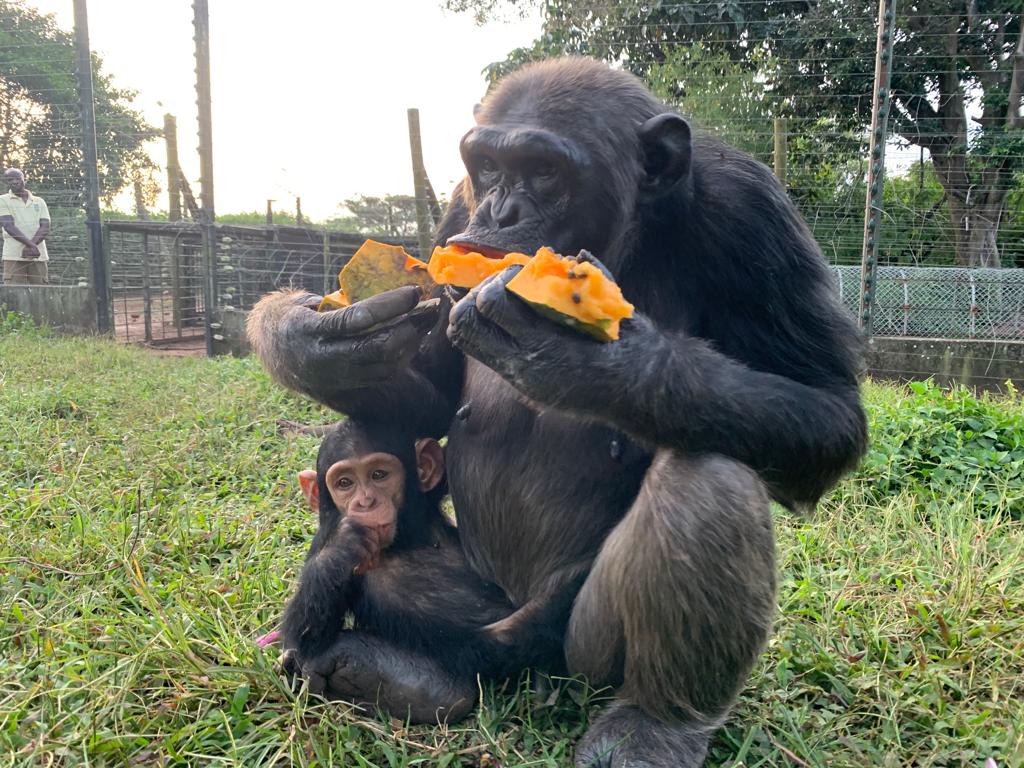
- You are on the island for the evening feeding. This is the feeding that day visitors almost never see. As the light drops, the chimpanzees come out for their evening meal, and the keepers run a session that is more relaxed than the midday feeding because there are fewer people watching.
- You stay for the nest-building. Later in the evening, the chimpanzees begin to build their nests for the night — a behaviour that happens after most day visitors have departed. Watching them build nests in the fading light is a rare view of the sanctuary, and it is the closest thing to a wild setting that Ngamba offers.
- You see the morning feeding before the day boat arrives. The overnight stay typically ends with the morning feeding, when the chimpanzees come out for their first meal of the day, before the day-trippers arrive to fill the viewing platform.
What the overnight does not change is the fundamental format. You are still on a sanctuary island, viewing chimpanzees from a platform, not trekking into a forest. The chimpanzees are still rescued animals in a semi-wild enclosure. The overnight adds time and atmosphere, not a different kind of access. For travellers who understand that and want more of it, it is a genuinely better experience than the day trip. For travellers who are looking for a wild chimpanzee encounter, the overnight does not deliver that — Kibale or Budongo does.
Afraeka tip: The single best argument for the overnight is the nest-building. It happens in the evening, after the day boat has left, and it is one of the most interesting behaviours to watch at Ngamba. If you have any interest in chimpanzee behaviour, or you are travelling with children who want more than a viewing platform, this is the moment that stays with people. It is not offered to day visitors, and it is not scheduled at a fixed time — you need to be on the island to see it.
What happens during a Ngamba Island overnight stay?
An overnight stay runs roughly 24 hours from the morning departure in Entebbe to the return crossing the following morning. The shape of the stay is similar to the day trip for the first few hours, then diverges sharply once the day boat has left.
What an overnight stay looks like, hour by hour
- Morning departure from Entebbe. Board the boat at the pier around 8:30 to 9:00am with the day-trippers. Coffee and briefing on the crossing.
- Arrival and welcome. Roughly an hour later. The sanctuary staff welcome both day visitors and overnight guests; the two groups are separated after the initial briefing.
- Morning on the island with day visitors. Briefing, the first feeding session, a tour of the sanctuary facilities. You share these with the day trip group.
- Lunch on the island. Served in the visitor pavilion, usually for both groups together.
- Afternoon free time. This is where the overnight starts to diverge. While day visitors head back to the boat, you settle into your banda. Some guests walk the island paths, birdwatch, or simply read on a deck chair overlooking the lake.
- Evening feeding. Roughly 4:30 to 5:30pm. The chimpanzees come out for their evening meal. Quiet, uncrowded, and one of the highlights of the stay.
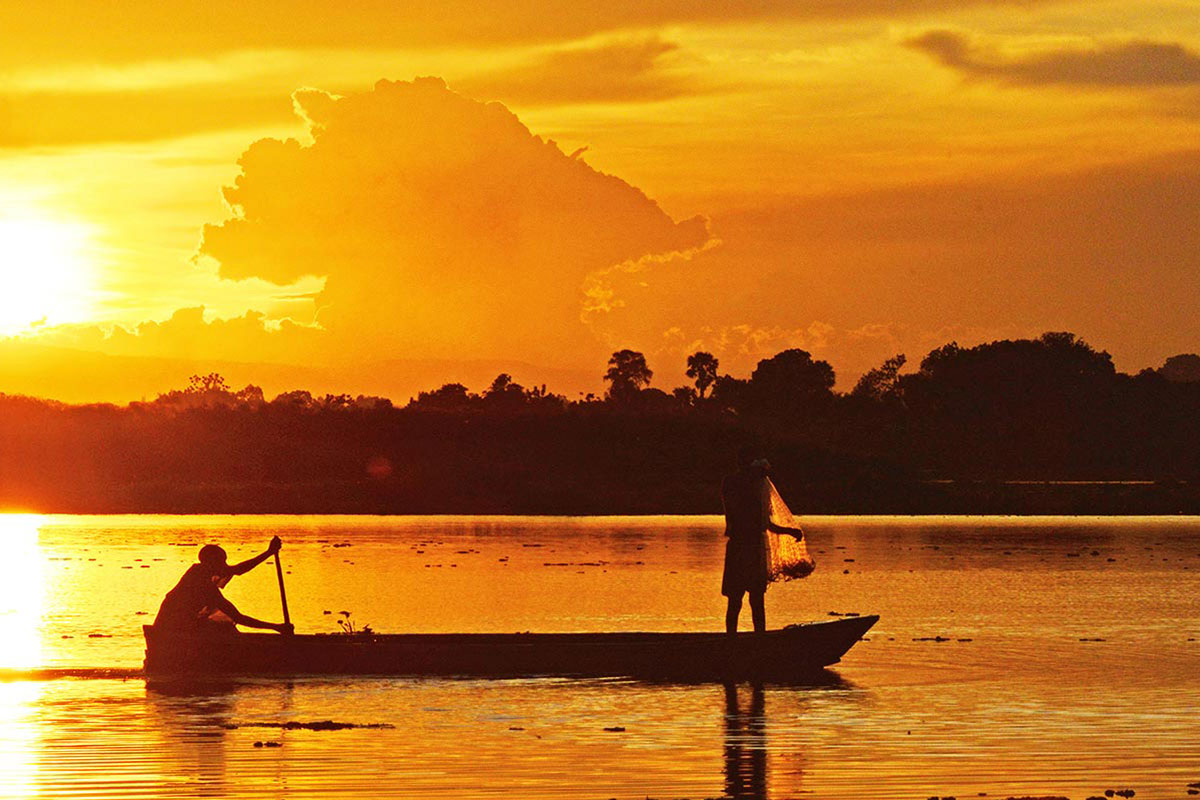
- Sunset on the lake. Dusk over Lake Victoria is often the best light of the day. The island quiets completely once the boats have gone.
- Dinner. Served in the visitor pavilion or the accommodation area. Simple, freshly prepared, and usually eaten by candlelight or with limited electricity.
- Nest-building (seasonal). Later in the evening, the chimpanzees build their night nests. Timing varies; the sanctuary staff will advise when the best viewing window is.
- Overnight in the banda. Basic en-suite accommodation with a bed, mosquito net, and cold-water shower or bucket shower. Electricity is limited, and the island is quiet after dark.
- Morning feeding at dawn. The first feeding of the day, before the day boat arrives. Often the most active time for the chimpanzees and the quietest for viewing.
- Breakfast and return crossing. Breakfast, then the boat back to Entebbe with the incoming day trip visitors. Arrival around 11:00am to 12:00pm.
The pacing of the overnight is slower than the day trip, and deliberately so. There is real downtime between activities — an hour or two in the late afternoon with nothing scheduled, time to read, walk, or swim. Travellers who want a packed itinerary may find the downtime too much. Travellers who want a genuinely restful day on the lake will find it exactly right.
What can overnight guests see that day visitors cannot?
The specific experiences that only overnight guests get at Ngamba Island are the evening feeding, the nest-building, and the dawn feeding. Everything else — the sanctuary tour, the midday feeding, the boat crossings — is shared with the day trip group.
| Experience | Day visitors | Overnight guests |
|---|---|---|
| Boat crossing | Yes (both directions) | Yes (both directions) |
| Welcome briefing | Yes | Yes |
| Mid-morning feeding | Yes | Yes |
| Sanctuary tour | Yes | Yes |
| Lunch | Yes | Yes |
| Evening feeding | No — day boat has left | Yes |
| Sunset on the lake | No | Yes |
| Nest-building | No | Yes |
| Dawn on the island | No | Yes |
| Morning feeding | Yes (as arrival day visitors) | Yes — with fewer people |
Schedules may vary by season and by the sanctuary’s daily programme. Confirm the specific activities when booking.
The evening feeding is genuinely different from the midday one. The chimpanzees are settling for the night, the keepers are more relaxed, and the platform is not shared with the day group. The nest-building is the behaviour that most travellers say stayed with them afterwards — chimpanzees build a fresh nest every night, and watching them break branches, weave them into a platform high in the trees, and settle into it is one of the more remarkable things you can see at the sanctuary.
The dawn feeding is the other overnight-only advantage. When the day boat arrives in the morning with fresh visitors, the chimpanzees are already out and feeding — meaning overnight guests see this session with fewer people around them. Travellers with cameras find this the best window of the stay.
What is the accommodation like on Ngamba Island?
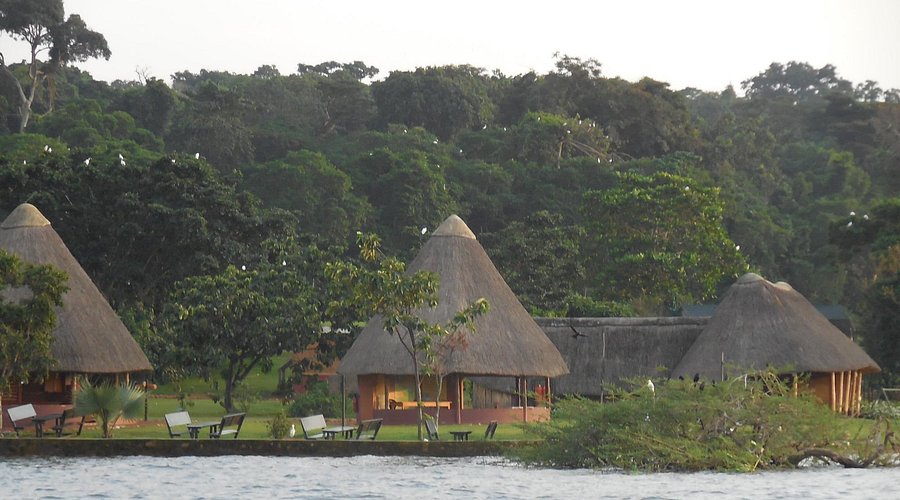
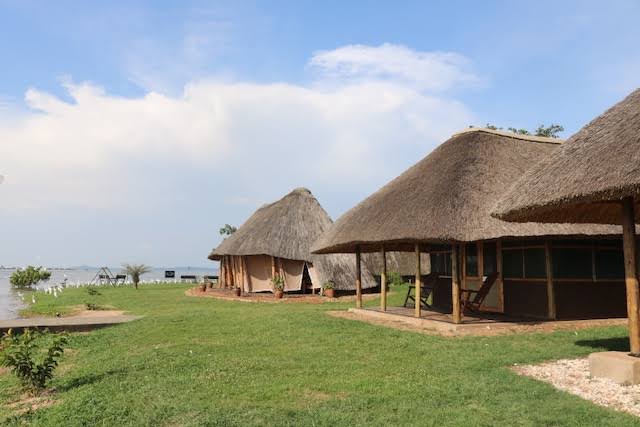
Accommodation on the Ngamba Island overnight stay is simple and functional rather than luxurious. Guests stay in en-suite bandas — small standalone rooms with a bed, mosquito net, and either a cold-water shower or a bucket shower. Electricity is limited and mostly available in the main pavilion rather than the rooms. Meals are served in the visitor pavilion, and the food is straightforward and freshly prepared.
Three practical points about the accommodation:
- It is a conservation facility, not a lodge. Ngamba is run as a sanctuary, and the visitor accommodation exists to support the overnight experience rather than to compete with Uganda’s safari lodges. Travellers expecting hotel standards should adjust their expectations.
- Basic is part of the appeal. Part of what makes the overnight stay special is that the island genuinely quiets down at night — no generators, no air conditioning, no light pollution. The simplicity is not a drawback for most guests.
- Bring what you need. A headlamp, insect repellent, a light layer for the evening, and any personal medication. The island has basic supplies but no shop, and once you are on the island you are there for the night.
The bandas sleep a small number of guests, and the island’s overall overnight capacity is limited — often just a handful of people per night. This is one of the reasons the overnight stay books out far earlier than the day trip. For travellers considering the overnight, booking several months ahead is often necessary, particularly for peak-season dates.
Is the overnight stay suitable for families?
Yes, subject to a few practical considerations. Ngamba does not have a minimum age, and families with children can stay overnight. Children tend to love the boat crossing, the evening feeding, and the sense of sleeping on an island. The quiet hours after dark suit younger children well.
Three practical points for families considering the overnight stay:
- The boat crossing is the same as the day trip. Roughly an hour each way. Bring sun protection, a light layer, and something to occupy younger children on the water.
- The overnight pace is relaxed. There is plenty of downtime in the afternoon, which is often welcome for children who have been travelling. The lack of a packed schedule is a feature rather than a flaw for family groups.
- Basic facilities are manageable but worth planning for. Cold showers, limited electricity, and simple food are all part of the experience. For children who are used to camping or similar, this is fine. For children who are not, it is worth talking through in advance.
Families doing a full Uganda itinerary often use the Ngamba overnight stay as a soft landing at the start of the trip — an easy, engaging first day after arrival in Entebbe, without the long drive to the parks. It is also a strong finish — a quiet last day before the flight home, with no game drives or long transfers.
Who is the overnight stay best for?
The Ngamba Island overnight stay suits a specific kind of traveller, and it is worth being honest about who it does not suit before booking.
Book the overnight stay if you are…
- A photographer who wants the dawn and dusk light windows that day visitors miss
- A family with children who cannot do wild chimpanzee trekking because of the minimum age of 15
- A slow traveller who prefers atmosphere and downtime to a packed itinerary
- A traveller on a long layover in Entebbe with time to spare — though a private boat is required for layovers
- Someone who wants to see the nest-building behaviour that day visitors do not see
- A traveller who has already done wild chimpanzee trekking and wants a quieter second primate experience
Stick with the day trip if you are…
- A traveller with a packed itinerary who cannot afford the extra day
- Someone who values lodge-standard accommodation — Ngamba’s bandas are basic
- A traveller whose main goal is wild chimpanzee trekking — Kibale or Budongo delivers that, Ngamba does not
- Someone who does not enjoy downtime or unplanned hours
- A traveller on a short Uganda trip with the parks taking priority
- Anyone on a layover too short to accommodate an overnight
The clearest case for the overnight is a family with young children who cannot do the wild treks, or a photographer who wants the dawn and dusk viewing windows. For both, the extra day is well spent. For travellers focused on wild primates or on packed itineraries, the day trip covers the essentials without the extra time commitment.
How do you book a Ngamba Island overnight stay?
You book the Ngamba Island overnight stay directly through the sanctuary or through a registered operator. Unlike the day trip, which usually has space on relatively short notice, the overnight stay requires advance booking — often several months ahead for peak-season dates — because the accommodation is very limited.
What to arrange before your overnight stay
- Confirmed overnight booking with the sanctuary or operator
- Boat departure time from Entebbe and pier location
- Transport to the departure pier — usually from an Entebbe hotel
- Confirm what meals are included (typically dinner, breakfast and lunch)
- Personal items — headlamp, insect repellent, light layer, medication
- Cash for any extras (souvenirs, drinks, tips)
- Sun protection and something to occupy younger children on the boat
- Confirm the return crossing time for the following morning
Two things are worth confirming explicitly when booking. First, whether the overnight package includes the evening feeding and nest-building viewings — the standard package does, but it is worth confirming. Second, the return timing — the morning boat typically leaves Ngamba around 10:00 to 11:00am, and travellers with flights the same day should confirm they can make the airport in time.
For travellers combining the overnight with the wider Uganda itinerary, the structure is usually to do the stay as the first or last activity of the trip. Arriving in Entebbe, transferring to the boat the next morning, staying on the island, and returning to Entebbe the following day works well as a start. Our Uganda destinations page maps how Entebbe connects with the rest of the country, and the Uganda Tourism Board maintains national context on the parks and activities.
Ngamba Island overnight stay vs day trip: which is right for you?
The choice between the day trip and the overnight stay comes down to how much you value the additional experiences that only the overnight provides, and whether you have the extra day to spend.
| Factor | Day trip | Overnight stay |
|---|---|---|
| Duration | Half day or full day | Roughly 24 hours |
| Evening feeding | No | Yes |
| Nest-building | No | Yes |
| Morning feeding | No | Yes — with fewer people |
| Accommodation | None | Simple en-suite bandas |
| Meals included | Usually lunch | Dinner, breakfast, lunch |
| Cost | Lower | Higher — includes accommodation and meals |
| Booking lead time | 2–4 weeks | Months ahead for peak season |
| Best for | Travellers with tight schedules | Photographers, families, slow travellers |
Rates and inclusions change over time. Confirm current pricing and what is included at the time of booking.
The honest answer for most travellers is that the day trip covers the essentials and the overnight stay is for those with the time and inclination to go deeper. If you are on a ten-day Uganda itinerary packed with parks, the day trip is the right fit. If you have a spare day at either end of the trip, or you are travelling with children who cannot do the wild treks, the overnight stay is worth the extra time and cost.
Common mistakes with the Ngamba Island overnight stay
Most of what goes wrong with the overnight stay comes down to a small set of avoidable mistakes, and all of them can be prevented with one careful planning conversation.
- Booking at short notice. The overnight capacity is very limited — often a handful of guests per night. Peak-season dates book out months ahead.
- Expecting lodge-standard accommodation. Ngamba’s bandas are simple: en-suite, cold or bucket shower, limited electricity. This is a conservation facility, not a safari lodge.
- Expecting a wild chimpanzee trek. The overnight stay is still a sanctuary visit, not a trek. You view from a platform. Travellers who want a wild encounter should book Kibale or Budongo.
- Not bringing the right personal items. Headlamp, insect repellent, a light layer for the evening, and any personal medication. The island has no shop.
- Booking the overnight the night before a flight. The morning boat returns to Entebbe around 11:00am to 12:00pm. Travellers with same-day flights need to confirm the timing works, and build in a buffer.
- Assuming all meals are included. Most packages include dinner, breakfast and lunch, but confirm when booking. Some packages are more limited.
- Missing the nest-building because of early bedtime. The nest-building typically happens after dusk. If you go to bed early, you may miss it — ask the staff for the best viewing window.
- Booking for a group larger than the island can accommodate. Because capacity is small, larger groups often need to be split across multiple nights or book very early.
Can one permit cover two people?
No. One booking covers one person for the Ngamba Island overnight stay, and this applies the same as to any other Uganda wildlife experience. A family of four needs four places on the overnight, and the fee is per person, including accommodation and meals. There is no way to share a place or transfer it to another person. Current permit categories for the wild trekking experiences sit on the gorilla permits Uganda page.
Because the overnight stay is a sanctuary visit rather than a trekking permit, the booking structure is different from the wild chimpanzee sites. The booking covers a specific night on the island, and the daily cap is the accommodation capacity rather than a species-protection limit. This is one of the reasons the overnight stay can accommodate families with children that the trekking sites cannot, and one of the reasons the overnight books out faster than the day trip.
Once your booking is confirmed, the stay runs to a fixed schedule — no family allocation, no weather-dependent tracking, no dawn positioning to be determined. The boat departs at the scheduled time, the feedings run at fixed hours, and the day ends predictably. For travellers who value the certainty, this is one of the advantages of the sanctuary format. The wider primate picture is on the primate tracking experiences page, and the regulatory context for Uganda’s wildlife sites is set by the Uganda Wildlife Authority.
Afraeka field note: A couple who had done the Ngamba day trip on a previous Uganda visit asked us whether the Ngamba Island overnight stay was worth doing on a return trip. They were not especially interested in chimpanzees — they had come for gorillas — but they had enjoyed the day trip and wondered if the overnight added anything. We booked it for them, and they sent us a message the morning after. What they said was that the overnight had been a completely different experience — not because the chimpanzees behaved differently, but because the island had. The day trip had felt like a scheduled activity; the overnight had felt like staying somewhere. The evening when the last boat left, the quiet, the sunset, the dinner by lamplight, and waking to the sound of birds on the lake had all been the point. They had come for the chimpanzees and stayed for the island. That is the case for the overnight stay in one sentence — the same island, a different day.
A question that comes up occasionally on TripAdvisor’s Uganda forum and on r/Uganda is some version of: “Is the Ngamba Island overnight stay worth the extra cost over the day trip?” The honest answer depends on what you want. If you are checking Ngamba off a list, the day trip is enough. If you want the evening feeding, the nest-building, the dawn feeding, and the quiet of the island after the boats have left, the overnight is the right choice — and for families with children who cannot do the wild treks, it is often the highlight of the whole Uganda trip. The overnight does not change the chimpanzees; it changes the island around them. That is worth paying for, if you have the time.
Frequently asked questions
What is the Ngamba Island overnight stay?
An extended version of the Ngamba Island day trip — you cross to the island on the morning boat, stay through the afternoon and evening, sleep in one of the island’s simple bandas, and return to Entebbe the following morning. The overnight adds the evening feeding, the nest-building, the dawn feeding, and quiet hours on the island after day visitors have left.
What is the accommodation like on Ngamba Island?
Simple en-suite bandas — a bed, mosquito net, cold-water or bucket shower, and limited electricity. This is a conservation facility rather than a safari lodge, and the accommodation supports the experience rather than being the main draw. Meals are served in the visitor pavilion and are freshly prepared.
What can overnight guests see that day visitors cannot?
Three things: the evening feeding, the nest-building (chimpanzees build fresh nests every night), and the dawn feeding with fewer people around. Day visitors also miss the sunset on the lake and the quiet of the island after the last boat has gone. These are the specific experiences that justify the overnight stay over the day trip.
How do I book a Ngamba Island overnight stay?
Book directly through the sanctuary or through a registered operator. Unlike the day trip, the overnight requires advance booking — often several months ahead for peak-season dates — because the accommodation capacity is very limited. Confirm what meals are included and the return crossing time for the following morning when you book.
Is the overnight stay suitable for families with children?
Yes. Ngamba has no minimum age, and families with children can stay overnight. Children tend to enjoy the boat crossing, the evening feeding, and the sense of sleeping on an island. Basic facilities — cold showers, limited electricity — are manageable but worth discussing with children in advance.
How much does the Ngamba Island overnight stay cost?
Rates vary and change over time. The overnight fee is higher than the day trip because it includes accommodation, dinner, breakfast and lunch, and the extended time on the island. Current rates should be confirmed with the sanctuary or your operator at the time of booking. Details on how we handle pricing are covered on the permits page.
How far in advance should I book the overnight stay?
Several months ahead for peak-season dates, and two to three months ahead for shoulder season. Capacity is very limited — often just a handful of guests per night — and the overnight books out well before the day trip. For fixed dates in December, January, July or August, book as early as you can.
Can I do the Ngamba overnight stay on an Entebbe layover?
Unlikely for a short layover — the overnight requires a full day and night on the island plus the crossings. For travellers with a long layover (typically 24 hours or more), it is technically possible but requires a private boat charter and careful scheduling. An overnight in Entebbe before or after the stay is usually the more practical option.
How does the overnight stay differ from wild chimpanzee trekking?
The overnight stay is still a sanctuary visit, not a trek. You view chimpanzees from a platform rather than walking into the forest with them. Wild trekking at Kibale, Budongo, Kyambura or Kalinzu involves a forest walk and a one-hour viewing window with a wild habituated community. Ngamba offers close-range viewing in a semi-wild setting, with no minimum age and no trekking.
Thinking about staying on Ngamba Island?
Send us your dates, party size and whether you have children in the group, and we will check overnight availability, recommend how the stay fits around your Entebbe arrival or departure, and outline the full day including the crossings and meals. If the day trip is a better fit for your itinerary, we will say so. No price figures until we know your route, because the stay is only one line of the total.
About the author: Victoria Kayaga is a Ugandan-born safari expert and founder of Afraeka Adventures, with 15+ years in East African tourism. Based in Kampala, she has planned primate-focused itineraries across Ngamba Island, Kibale, Budongo, Kyambura and Kalinzu for years, and she advises travellers on the family-friendly options for chimpanzee encounters in Uganda. More about Victoria.
Keep planning
- 3-day Uganda gorilla safari
- 5-day Bwindi and Lake Mburo safari
- Boat and water safaris
- All Afraeka trips