Last updated: 26 September 2026. Rates and availability are set by UWA and subject to change — confirm before booking.
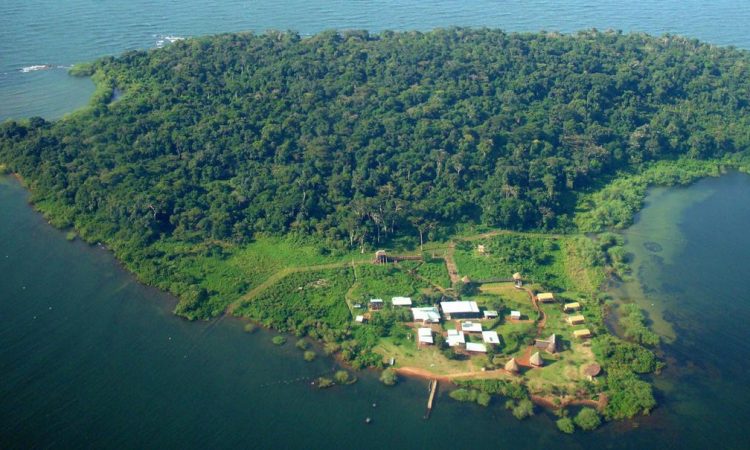
Short answer: The Ngamba Island chimpanzee sanctuary day trip runs from Entebbe across Lake Victoria to a forested island that is home to rescued chimpanzees. The boat takes roughly an hour, the day trip includes the crossing, a welcome briefing, feeding sessions viewed from a platform, and lunch on the island, with a return to Entebbe in the afternoon. It is not a trek — you do not walk into the forest with the chimpanzees — and there is no strict minimum age, which makes it the most family-friendly chimpanzee experience in Uganda. It pairs naturally with an Entebbe layover, a Lake Victoria boat trip, or the Uganda Wildlife Education Centre.
Not every traveller who wants to see chimpanzees in Uganda can trek. The minimum age of 15 rules out families with younger children. The physical demands rule out travellers with mobility limitations. The permit cost and the travel time to Kibale or Bwindi rule out travellers on a short layover or a tight budget. Ngamba Island exists for all three groups.
The Ngamba Island chimpanzee sanctuary day trip is the alternative format: a boat ride across Lake Victoria, an hour or two on a forested island, feeding sessions, and a return to Entebbe by mid-afternoon. It is not a trek, and it does not claim to be. What it delivers is close-range viewing of chimpanzees in a semi-wild setting, an excellent education on chimpanzee conservation, and access for travellers who cannot do the wild trekking experience. This guide covers what the day actually involves, how it differs from the wild trekking sites, and how to plan it as part of an Entebbe stay or a wider Uganda itinerary. Permit categories for the trekking experiences sit on the gorilla permits Uganda page, and the wider primate picture is on the primate tracking experiences page. The regulatory framework for wildlife and conservation in Uganda is published by the Uganda Wildlife Authority.
Ngamba Island day trip — key facts
- Where: Ngamba Island, on Lake Victoria
- Departure point: Entebbe (usually from the UWEC pier or a nearby jetty)
- Boat crossing: roughly 1 hour each way
- Sanctuary residents: around 50 rescued chimpanzees
- Viewing format: from platforms; not a trek into the forest
- Feeding sessions: the centrepiece of the visit, usually two per day
- Minimum age: none — families with young children can visit
- Best combined with: Entebbe layover, UWEC, Lake Victoria boat trips
What is the Ngamba Island chimpanzee sanctuary day trip?
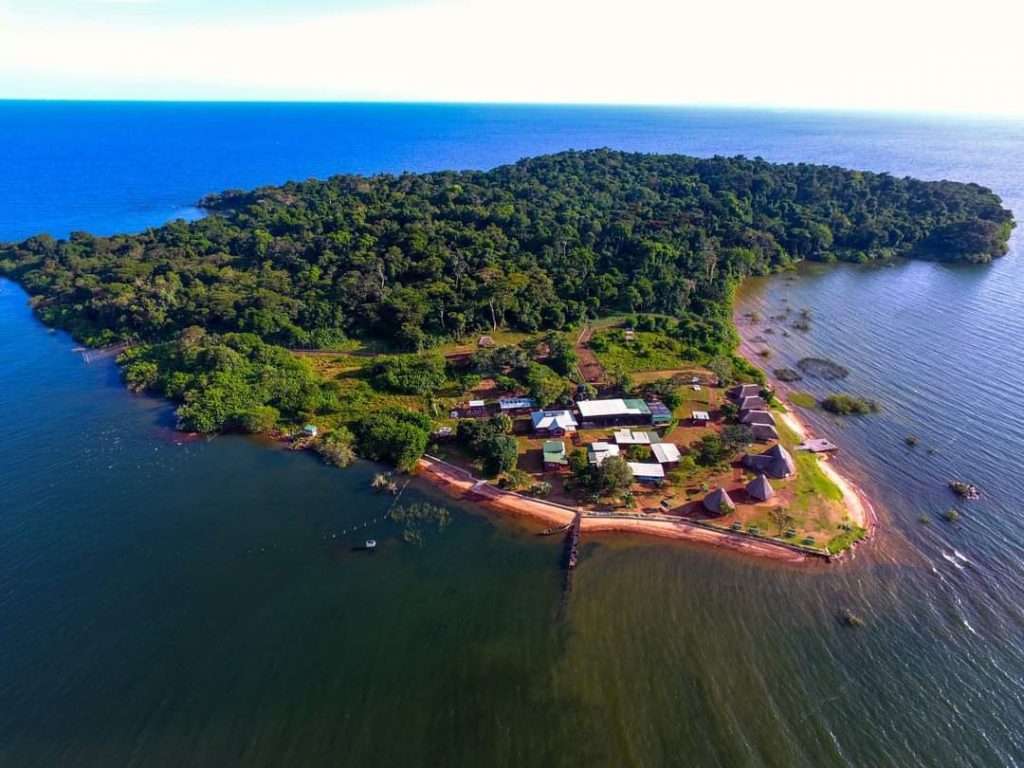
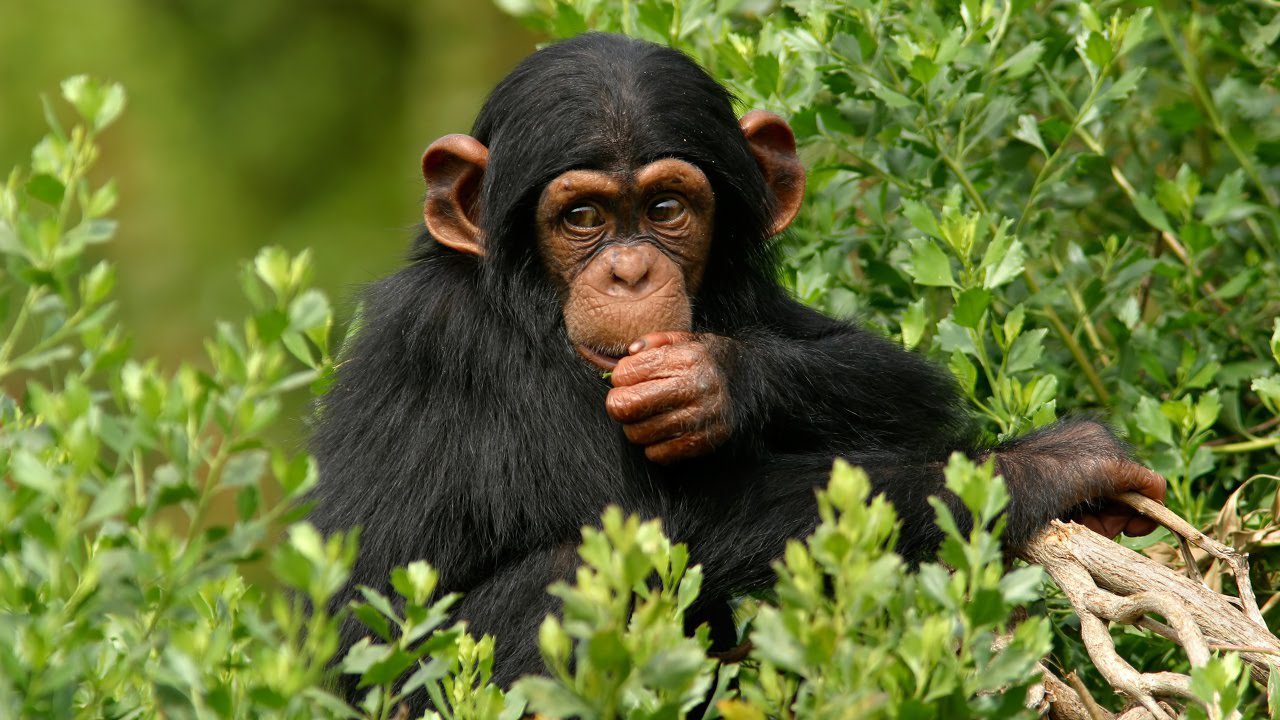
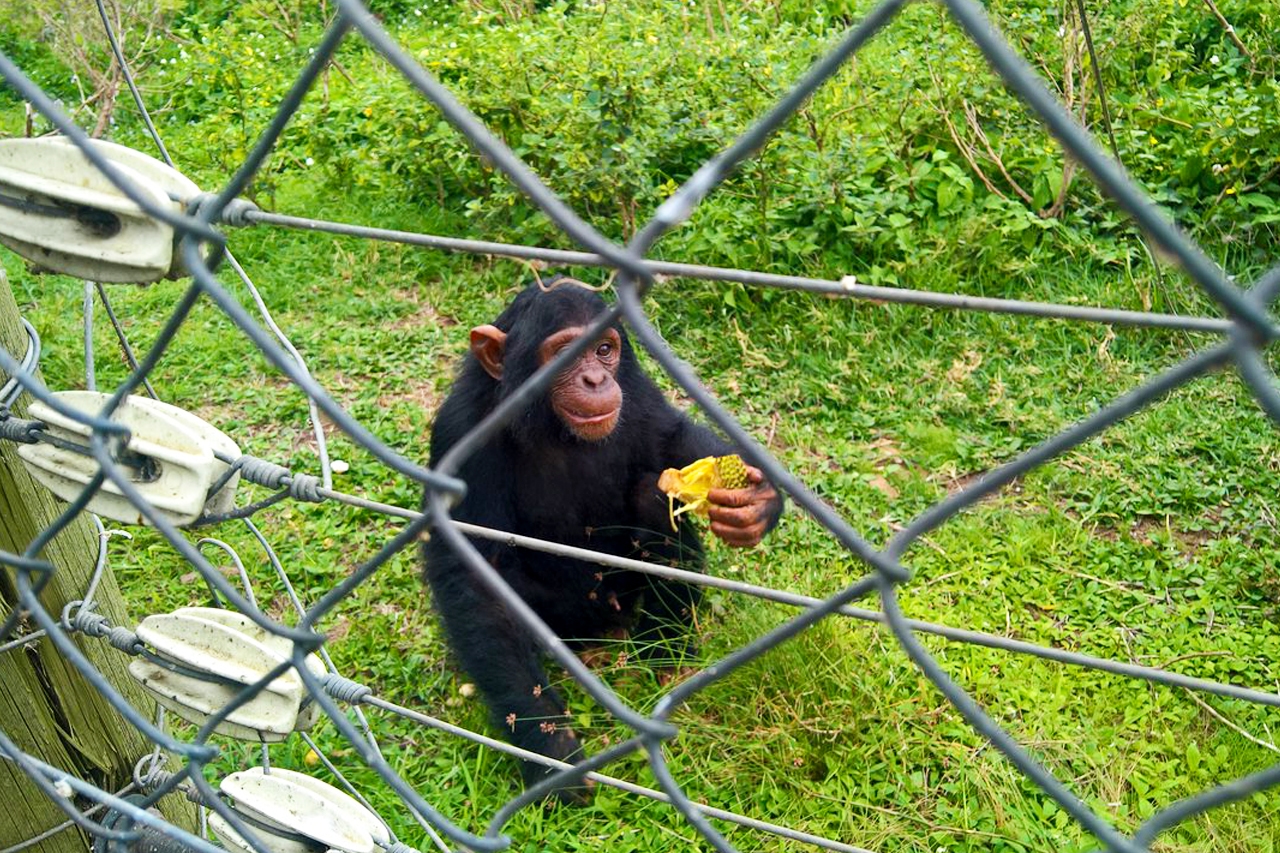
The Ngamba Island chimpanzee sanctuary day trip is a full-day or half-day excursion from Entebbe to Ngamba Island, a forested island on Lake Victoria that is home to around 50 rescued chimpanzees. The island is managed by the Chimpanzee Sanctuary and Wildlife Conservation Trust, and it functions as a sanctuary rather than a trekking site — the chimpanzees live semi-wild in a large forested enclosure, and visitors observe them from raised platforms at feeding times.
Three things define the day trip:
- You do not trek. Unlike Kibale, Budongo or Kyambura, there is no walk into the forest. The chimpanzees live in a large forested enclosure, and visitors view them from a platform while the keepers scatter food at the edge of the forest. The chimpanzees come out to feed, interact, and return to the forest.
- There is no minimum age. This is one of the most family-friendly wildlife experiences in Uganda. Children of any age can join the day trip, subject to boat capacity and safety considerations. Families with children under 15 — who cannot trek gorillas or wild chimpanzees — often make Ngamba the primate highlight of their trip.
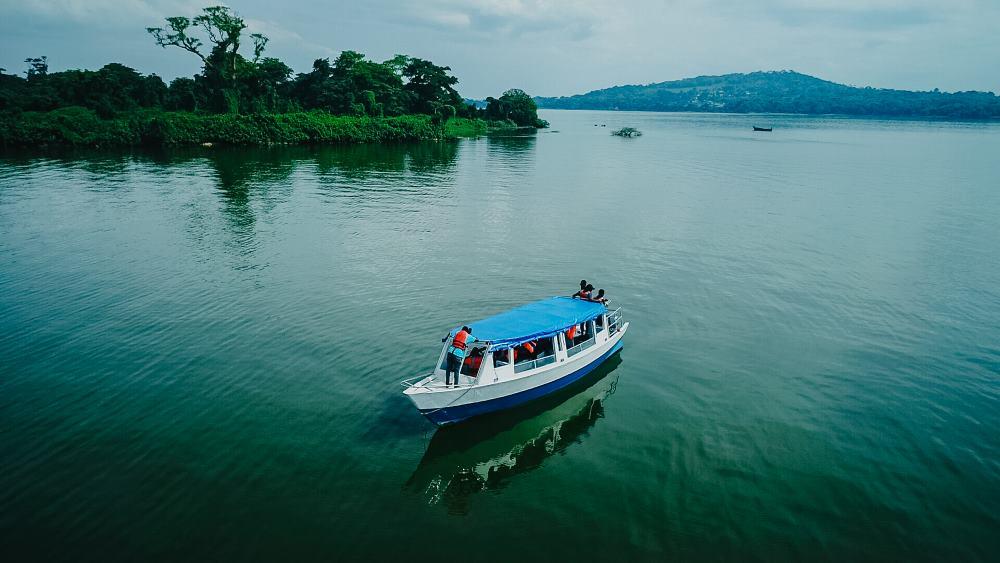
- The setting is Lake Victoria. The boat crossing is part of the experience. Travellers pass fishing villages, see birdlife on the lake, and arrive at an island that feels genuinely remote despite being an hour from Entebbe.
The sanctuary itself has a strong conservation and education component. Most of the chimpanzees at Ngamba were rescued from the illegal pet trade, from poaching situations, or from other contexts where they could not be returned to the wild. The visit includes a briefing on the sanctuary’s work, and the feeding sessions are accompanied by commentary from the keepers.
Afraeka tip: If you are doing Ngamba Island, book the morning departure rather than the afternoon. The morning boat is usually less crowded, the chimpanzees are more active earlier in the day, and you return to Entebbe in time for lunch and any afternoon plans. The afternoon departure often feels rushed because of the approaching sunset and the return crossing.
Where is Ngamba Island and how do you get there?
Ngamba Island sits in the northern part of Lake Victoria, roughly 23 kilometres from Entebbe by water. The island is accessible only by boat, and all day trips depart from Entebbe — usually from the pier near the Uganda Wildlife Education Centre or from a nearby jetty depending on the operator.
Three practical points about the crossing:
- The boat takes roughly an hour each way. The exact time depends on the vessel — speedboats are faster, larger boats are slower but more comfortable. Most day trips use a covered boat with seating and a toilet, and the crossing itself is part of the experience.
- The lake can be rough. Lake Victoria is not always calm, and the crossing can be bumpy in the afternoon when the wind picks up. Travellers prone to seasickness should take the morning departure and consider a preventative if the forecast is rough.
- Departure points vary by operator. The main departure is from the UWEC pier near Entebbe town, but some operators use their own jetty. Confirm the exact departure point when booking.
| Route | Time | Notes |
|---|---|---|
| Entebbe UWEC pier to Ngamba Island | ~1 hour by boat | Standard departure; most operators use this |
| Entebbe town to pier | 10–15 min by road | Short transfer from most Entebbe hotels |
| Kampala to Entebbe pier | 1–1.5 hours by road | Possible but adds a long early-morning drive |
| Entebbe airport to pier | 15–20 min by road | Makes Ngamba a viable layover activity |
Times are approximate. Sea conditions and vessel type affect crossing times.
Because Ngamba is a short distance from Entebbe, it is one of the few wildlife experiences in Uganda that can be done on a layover. Travellers with a long stop at Entebbe International Airport can often fit in a half-day Ngamba visit if their flight schedule allows, though this requires careful timing and a private boat — most scheduled day trips do not align with layover windows. For travellers staying overnight in Entebbe or beginning their Uganda trip there, the day trip is straightforward.
What happens during a Ngamba Island chimpanzee sanctuary day trip?
A standard Ngamba Island chimpanzee sanctuary day trip follows a fixed sequence: a morning boat departure from Entebbe, arrival at the island, a welcome briefing, a feeding session, a tour of the sanctuary facilities, lunch, a second feeding session or a return crossing, and the boat back to Entebbe. The exact schedule depends on whether you book the half-day, full-day, or overnight option.
The day trip, step by step
- Morning departure from Entebbe. Board the boat at the pier around 8:30 to 9:00am. Coffee and a briefing on the crossing.
- Arrival at Ngamba Island. Roughly one hour later. Welcome by the sanctuary staff and a short briefing on the sanctuary’s history and conservation work.
- First feeding session. The chimpanzees come out of the forest to the feeding area. Viewed from a raised platform. Keeper commentary throughout.
- Tour of the sanctuary. A walk around the visitor area, with information on the individual chimpanzees and the sanctuary’s work with rescued animals.
- Lunch on the island. Usually a buffet-style meal included in the day trip package, served in the visitor pavilion.
- Second feeding session (optional). Depending on the schedule, a second feeding may run before departure. The chimpanzees are usually less active in the afternoon.
- Boat back to Entebbe. The return crossing is usually around 3:00 to 4:00pm, arriving in Entebbe by late afternoon.
Overnight stays at Ngamba Island are available for travellers who want a slower experience. The island has simple accommodation, and staying overnight allows you to see the chimpanzees at multiple points in the day, including the evening when they build their nests. This is closer in feel to the wild trekking experience, though it remains a sanctuary rather than a trek.
The half-day option skips the second feeding and returns to Entebbe by early afternoon. It is the better choice for travellers with tight schedules, or for families with young children who may not manage the full day. The full-day option is the standard experience and includes both feedings and lunch.
How does Ngamba differ from wild chimpanzee trekking?
Ngamba Island is fundamentally different from the wild chimpanzee trekking sites at Kibale, Budongo, Kyambura or Kalinzu. It is a sanctuary, not a trekking destination. The differences are worth understanding up front, because travellers who book Ngamba expecting a trekking experience are often disappointed, and travellers who avoid it thinking it is “not a real chimpanzee experience” miss an excellent day.
| Factor | Ngamba Island | Wild trekking (Kibale, etc.) |
|---|---|---|
| Format | Sanctuary visit; platform viewing | Trek into the forest; one-hour viewing |
| Chimpanzees | Rescued; semi-wild in a forested enclosure | Wild; habituated communities in their natural home range |
| Walking required | Minimal; island paths only | Significant; hours of forest walking |
| Minimum age | None — family-friendly | 15 years |
| Duration | Half day or full day including boat | 2–9 hours depending on site |
| Setting | Lake Victoria; island sanctuary | Forests across western and north-western Uganda |
| Best for | Families, short itineraries, layovers, non-trekkers | Travellers wanting a wild forest encounter |
| Viewing distance | Close, from the platform | Seven metres minimum distance |
Ngamba is a conservation and education experience, not a wild trek. Travellers looking for a wild forest trek should book Kibale, Budongo, Kyambura or Kalinzu.
Two conclusions from this comparison. First, Ngamba is the right choice for travellers who cannot do the wild trek — families with young children, travellers with mobility limitations, travellers on a short timeline, or travellers who simply prefer a lower-effort experience. Second, Ngamba is not a substitute for wild trekking. Travellers who want the forest trek should book the wild sites, and our guides on the chimpanzee habituation experience at Kibale and on chimpanzee trekking vs gorilla trekking cover those options in more detail.
Is Ngamba Island suitable for families with children?
Yes — Ngamba Island is the most family-friendly chimpanzee experience in Uganda. There is no minimum age for the day trip, so children of any age can visit. The walking on the island is minimal, the boat crossing is part of the fun for most children, and the feeding sessions are genuinely engaging for young visitors. The sanctuary also runs educational programmes for schools and family groups.
Three practical points for families:
- Young children need supervision on the boat and island. The boat has open sections, and the island has water on all sides. Parents should keep young children close, particularly around the jetty and the boat.
- The full-day option may be long for very young children. The half-day option is often the better choice for families with toddlers or preschoolers. The full day involves a lot of sitting and waiting between activities.
- Book in advance. Family groups often fill the day-trip boats, particularly in peak season and during school holidays. Book as early as possible, especially if you need multiple child places.
The family-friendliness of Ngamba is a genuine differentiator in the Uganda primate landscape. Gorillas, wild chimpanzees, and golden monkeys all have a minimum age of 15. Ngamba is the one chimpanzee experience that a family with younger children can do together, and this is often the deciding factor for families choosing between destinations.
When is the best time to visit Ngamba Island?
Ngamba Island runs year-round, and the best conditions are in the drier months — December to February and June to September. The lake is generally calmer, the boat crossings are more comfortable, and the chimpanzees are more active in the cooler dry-season mornings. The wet months bring rougher lake conditions and more variable weather, but the day trip still runs and the sanctuary operates normally.
Three practical points on timing:
- Morning departures are best. The lake is calmer in the morning, the chimpanzees are more active, and the return crossing can be done before the afternoon wind picks up. If you are prone to seasickness, the morning departure is essential.
- Weekdays are quieter. Ngamba is popular with school groups and local visitors, particularly on weekends and during Ugandan school holidays. For a quieter visit, aim for a weekday.
- Peak season books out. The day trips run on limited boats, and peak season (December–February, June–September) fills fast. Book two to four weeks ahead if possible, and earlier for family groups or if you need a specific date.
Because Ngamba is a day trip rather than a multi-day destination, timing is more about the specific date than the season. Travellers with flexible dates should aim for a weekday morning in the dry season, but any date works if the boat has space and the lake is reasonable.
How do you book a Ngamba Island chimpanzee sanctuary day trip?
You book the Ngamba Island chimpanzee sanctuary day trip through the sanctuary directly, through a registered operator, or through your lodge in Entebbe or Kampala. The day trip packages usually include the boat crossing, the island visit, the feeding sessions and lunch. Some operators offer a private boat option, which gives more flexibility on departure times.
What to arrange before your Ngamba visit
- Confirmed day-trip booking with the sanctuary or operator
- Departure time and pier location confirmed
- Transport to the departure pier from your Entebbe or Kampala hotel
- Cash for any on-island extras (souvenirs, drinks)
- Sunscreen, hat, sunglasses for the boat crossing
- A light layer — the lake can be cool in the early morning
- Camera with strap; the platform viewing is at close range
- Motion sickness prevention if you are prone to it
Two things worth confirming when booking. First, whether the day trip includes lunch — most do, but some half-day options do not. Second, whether the boat is a shared scheduled departure or a private charter. Private charters are more expensive but offer flexibility on departure times and are the only viable option for travellers on a tight layover.
For travellers combining Ngamba with the rest of a Uganda trip, the natural structure is to do Ngamba as the first or last activity of the itinerary. Arriving in Entebbe, doing Ngamba the next morning, and then driving to the parks works well. Alternatively, returning from the parks and doing Ngamba on the day before departure works for travellers who want a low-effort final day. Our Uganda destinations page maps how Entebbe connects with the rest of the country, and the Uganda Tourism Board maintains national context on the parks and activities.
What can you combine with Ngamba Island?
Ngamba Island pairs naturally with the Entebbe area’s other attractions, most of which can be done in the same day or the days either side. Three combinations stand out.
| Activity | Where | Timing with Ngamba |
|---|---|---|
| Uganda Wildlife Education Centre (UWEC) | Entebbe, at the departure pier | Same morning or following day |
| Entebbe Botanical Gardens | Entebbe | Same day before or after the boat |
| Lake Victoria boat trip | Entebbe area | Alternative or additional lake activity |
| Kampala city tour | Kampala | Following day; Ngamba is a half or full day commitment |
| Gorilla trekking | Bwindi or Mgahinga | Ngamba as the start of a longer Uganda itinerary |
| Wild chimpanzee trekking | Kibale, Budongo, Kyambura, Kalinzu | Ngamba as a warm-up before a wild trek |
Timings are indicative. Actual schedules depend on boat departures and lodge locations.
The most natural pairing is with the Uganda Wildlife Education Centre — the two share the same area of Entebbe, and UWEC is often where the Ngamba boats depart from. A morning at Ngamba followed by an afternoon at UWEC is a full Entebbe day that suits families particularly well. The Entebbe Botanical Gardens are another close pairing, and a good way to decompress after the boat crossing.
For travellers using Ngamba as the first activity on a longer Uganda trip, the structure is often: arrive in Entebbe, overnight, Ngamba the next morning, then drive to the parks the following day. This lets you adjust to the time zone, see your first chimpanzees, and start the road journey well-rested. The trips below are the standard formats for the wider Uganda itinerary, and they all begin and end in Entebbe.
Common mistakes with a Ngamba Island day trip
Most of what goes wrong with a Ngamba visit comes down to a small set of avoidable mistakes, and all of them can be prevented with one careful planning conversation.
- Expecting a trek. Ngamba is a sanctuary, not a trekking destination. There is no walk into the forest and no seven-metre distance rule. Travellers who want a wild trek should book Kibale or Budongo instead.
- Booking an afternoon departure in the wet season. The lake is rougher in the afternoons. Morning departures are calmer, and the chimpanzees are more active.
- Not confirming the departure pier. Different operators use different departure points in Entebbe. Confirm the exact location before the day of your trip.
- Forgetting seasickness prevention. Lake Victoria can be choppy, particularly on the return crossing. If you are prone to motion sickness, take precautions before boarding.
- Underestimating the day length for young children. The full-day option is long for toddlers. The half-day option is often the better family choice.
- Booking at short notice in peak season. Day-trip boats are limited, and family groups and school groups fill them. Book two to four weeks ahead for peak dates.
- Not bringing sun protection. The boat crossing and the platform viewing are both exposed. Sunscreen and a hat are essential.
- Assuming Ngamba substitutes for wild chimpanzee trekking. It is a different experience. Both are excellent, but they serve different travellers and different goals.
Can one permit cover two people?
No. One permit or booking covers one person for the day trip, and this applies to the Ngamba Island chimpanzee sanctuary day trip the same as to any other Uganda wildlife experience. A family of four needs four places on the boat, and the day-trip fee is per person. There is no way to share a place or transfer it to another person. Current permit categories for the wild trekking experiences sit on the gorilla permits Uganda page.
Because Ngamba is a sanctuary visit rather than a trekking permit, the booking structure is different from the wild chimpanzee sites. The booking is for a place on a specific boat departure, and it includes the crossing, the island visit and lunch. The daily cap is the boat capacity, not a species-protection limit, and this is one of the reasons Ngamba can accommodate families with children that the trekking sites cannot.
Once your booking is confirmed, the day runs to a fixed schedule — no family allocation, no weather-dependent tracking, no community position to be determined at dawn. The boat departs at the scheduled time, the feeding sessions run at fixed hours, and the day ends predictably. For travellers who value the certainty, this is one of the advantages of the sanctuary format. The wider primate picture is on the primate tracking experiences page, and the regulatory context for Uganda’s wildlife sites is set by the Uganda Wildlife Authority.
Afraeka field note: A family with two children — aged 8 and 11 — once asked us whether it was worth adding a Ngamba Island chimpanzee sanctuary day trip to their Uganda itinerary, given that they could not do gorillas or wild chimps because of the age minimum. We said yes without hesitation, and they booked the morning departure. What they told us afterwards was that the day had been the highlight of their whole trip, and not for the reasons we had predicted. The boat crossing had been the adventure — their children had spent the whole hour on the bow, watching the lake, spotting birds, and trailing their hands in the water. The feeding session had been fascinating, but the crossing had been the memory. That is part of the honest case for Ngamba. The chimpanzees are the reason you go, but the day delivers more than just the chimpanzees — the lake, the boat, the island, the whole experience — and for families it is often the easiest day on a Uganda trip to make genuinely memorable for young travellers.
A question that comes up regularly on TripAdvisor’s Uganda forum and on r/Uganda is some version of: “Is Ngamba Island worth doing if I am already going to Kibale?” The honest answer is that it depends on your itinerary and your family. If you are a solo traveller or a couple doing Kibale, Ngamba is optional — the wild trekking experience is the stronger primate highlight, and Ngamba would be a second chimpanzee experience that does not add much. If you are a family with children under 15, Ngamba is essential — it is the only chimpanzee experience your whole family can do together, and it is genuinely excellent. If you have a long Entebbe layover or an extra day at the start or end of your trip, Ngamba is one of the best ways to use it.
Frequently asked questions
What is the Ngamba Island chimpanzee sanctuary day trip?
A day trip from Entebbe across Lake Victoria to Ngamba Island, a forested island home to around 50 rescued chimpanzees. The visit includes the boat crossing, a briefing on the sanctuary’s conservation work, feeding sessions viewed from a platform, and lunch on the island. It is not a trek — the chimpanzees live in a large forested enclosure.
How long does the Ngamba Island day trip take?
The full-day option runs from a morning departure in Entebbe to a return by late afternoon, roughly seven to eight hours in total. The half-day option returns by early afternoon. The boat crossing is approximately one hour each way.
Is there a minimum age for Ngamba Island?
No. Ngamba is the most family-friendly chimpanzee experience in Uganda, and children of any age can visit. This is a genuine differentiator — gorilla trekking, wild chimpanzee trekking and golden monkey trekking all have a minimum age of 15.
How does Ngamba differ from wild chimpanzee trekking?
Ngamba is a sanctuary visit, not a trek. You view chimpanzees from a raised platform rather than walking into the forest with them. The chimpanzees at Ngamba are rescued animals living semi-wild in a forested enclosure. Wild trekking at Kibale, Budongo, Kyambura or Kalinzu involves a walk into the forest and a one-hour viewing window with a wild habituated community.
Can I visit Ngamba Island on an Entebbe layover?
Possibly, but it requires a private boat charter — scheduled day trips do not usually align with layover windows. If your layover is long enough (typically eight or more hours) and you arrange a private boat in advance, a half-day visit is possible. Otherwise, an overnight in Entebbe is the more practical approach.
When is the best time to visit Ngamba Island?
The drier months of December to February and June to September are best — the lake is calmer and the chimpanzees are more active in the cooler mornings. Weekday mornings are the quietest. The day trip runs year-round.
How far in advance should I book the Ngamba day trip?
Two to four weeks ahead is usually enough, but book earlier for peak-season dates, family groups, or if you need a specific date. The day-trip boats are limited, and school groups can fill them, particularly on weekends and during Ugandan school holidays.
Is lunch included in the Ngamba Island day trip?
Most full-day packages include lunch on the island. Some half-day options do not. Confirm when you book, and bring cash for any extras — souvenirs, drinks, or additional items from the sanctuary shop.
Can I combine Ngamba Island with other Entebbe activities?
Yes. Ngamba pairs naturally with the Uganda Wildlife Education Centre (which is often the departure pier), the Entebbe Botanical Gardens, and Lake Victoria boat trips. A morning at Ngamba and an afternoon at UWEC is a common family day.
Adding Ngamba to your Uganda trip?
Send us your dates, party size and whether you have children in the group, and we will check Ngamba day-trip availability, recommend the best departure for your schedule, and outline how the day fits around your Entebbe stay or your wider Uganda itinerary. No price figures until we know your route, because the day trip is only one line of the total.
About the author: Victoria Kayaga is a Ugandan-born safari expert and founder of Afraeka Adventures, with 15+ years in East African tourism. Based in Kampala, she has planned primate-focused itineraries across Ngamba Island, Kibale, Budongo, Kyambura and Kalinzu for years, and she advises travellers on the family-friendly options for chimpanzee encounters in Uganda. More about Victoria.
Keep planning
- 3-day Uganda gorilla safari
- 5-day Bwindi and Lake Mburo safari
- Boat and water safaris
- All Afraeka trips