Last updated: 26 September 2026. Rates and availability are set by UWA and subject to change — confirm before booking.
Short answer: A Kibale and Queen Elizabeth safari combines chimpanzee trekking in Kibale Forest with big game, boat safaris and tree-climbing lions in Queen Elizabeth National Park. The two parks are roughly three hours apart by road, which makes them a natural pairing on a western Uganda circuit. A typical route runs five to seven days: two or three nights at Kibale for the chimps and the Bigodi walk, then three or four nights at Queen Elizabeth for game drives, the Kazinga Channel boat safari and the Ishasha sector. The itinerary works for travellers who want both primates and savannah in one trip without a long cross-country drive.
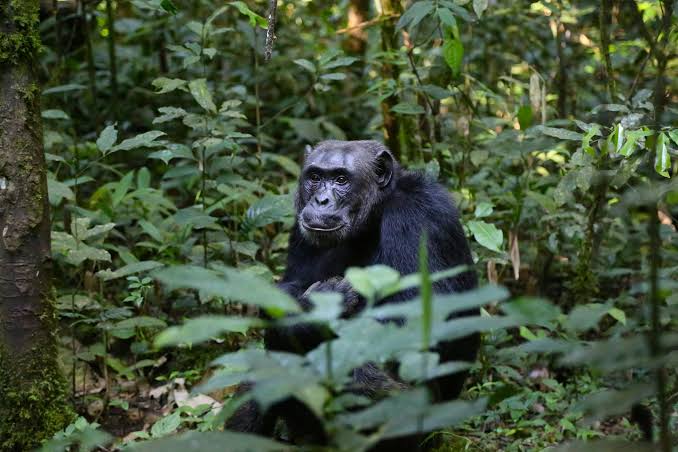
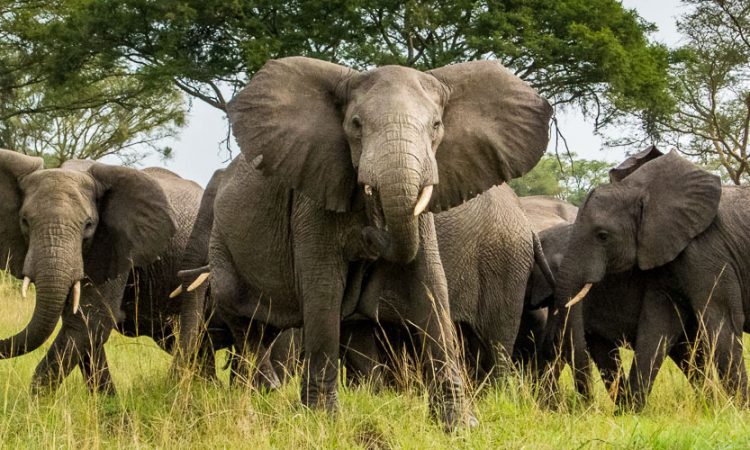
Uganda’s western circuit is built around two very different park experiences that sit close enough to combine in a single trip. Kibale Forest is the country’s primate capital — thirteen species, the highest concentration in East Africa, and the most established chimpanzee trekking programme in Uganda. Queen Elizabeth National Park is the country’s most-visited savannah park — lions, elephants, buffalo, hippos, the Kazinga Channel, and the tree-climbing lions of the Ishasha sector. Combining them gives you primates and big game on the same route, with only a three-hour drive between the two.
This guide covers how to build a Kibale and Queen Elizabeth safari — what each park contributes, how long to spend at each, how the transfer works, and what the wider circuit looks like if you want to add Bwindi or Mgahinga at the end. Permit categories and current rates sit on the gorilla permits Uganda page, and the wider primate picture is on the primate tracking experiences page. The regulatory framework for Uganda’s protected areas is published by the Uganda Wildlife Authority.
Kibale and Queen Elizabeth safari — key facts
- Distance between parks: roughly 3 hours by road
- Typical route length: 5–7 days for the two parks alone
- Kibale contributes: Chimpanzee trekking, Bigodi walk, night forest walk, forest birding
- Queen Elizabeth contributes: Game drives, Kazinga Channel boat safari, Ishasha tree-climbing lions
- Best season: Dry months (Dec–Feb, June–Sept) for easier trails and better game viewing
- Route direction: Usually Entebbe → Kibale → Queen Elizabeth → Entebbe (or on to Bwindi)
- Minimum age: 15 for chimp trekking; no minimum age for game drives and boat safaris
- Best pairing: Add Bwindi or Mgahinga at the end for gorillas
What does each park contribute to the itinerary?
The two parks contribute very different things, which is what makes the combination work. Kibale gives you primates and forest. Queen Elizabeth gives you savannah, big game, water and open landscapes. Together they cover a wider range of Uganda’s wildlife than either park can alone.
| Experience | Kibale | Queen Elizabeth |
|---|---|---|
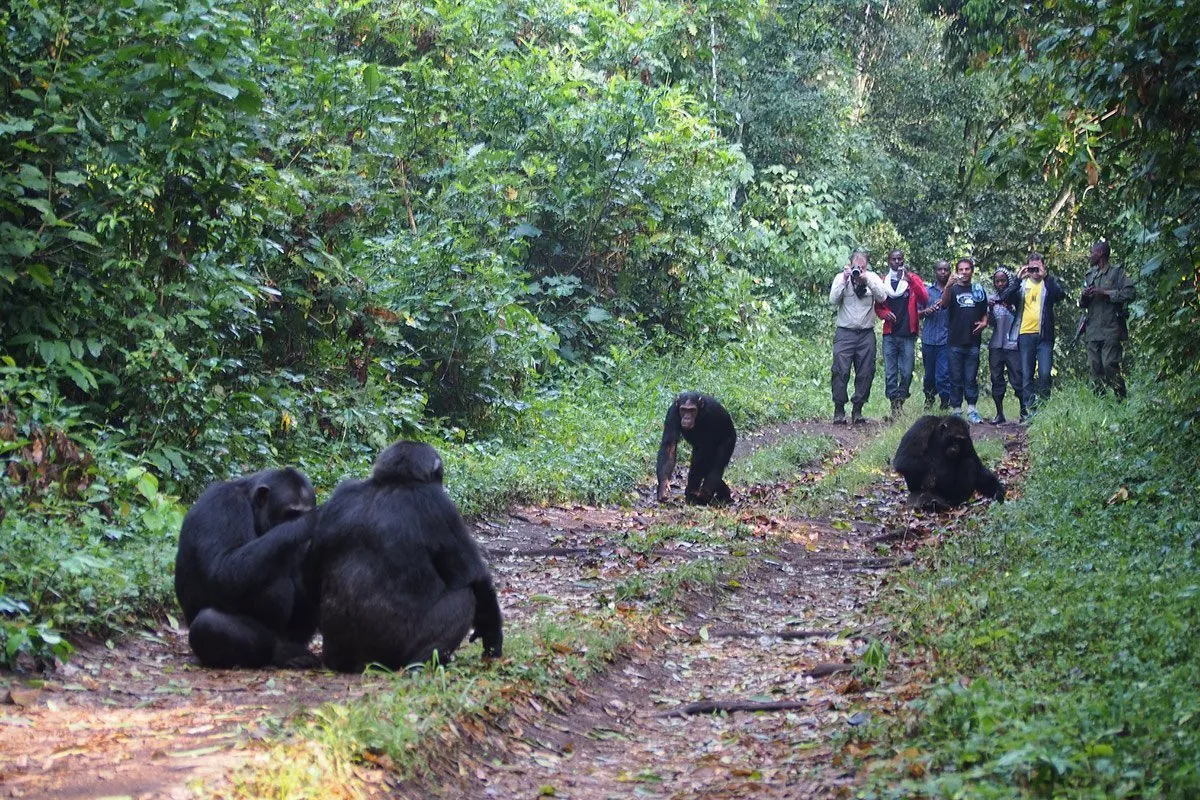
| Chimpanzee trekking | Yes — the country’s premier site | Kyambura Gorge (different format, lower success rate) |
| Other primates | 12 additional species | Kyambura chimps, vervets, baboons |
| Forest birding | Excellent — 375+ species | Good — savannah and waterbird species |
| Big game drives | No | Yes — lions, elephants, buffalo, antelope |
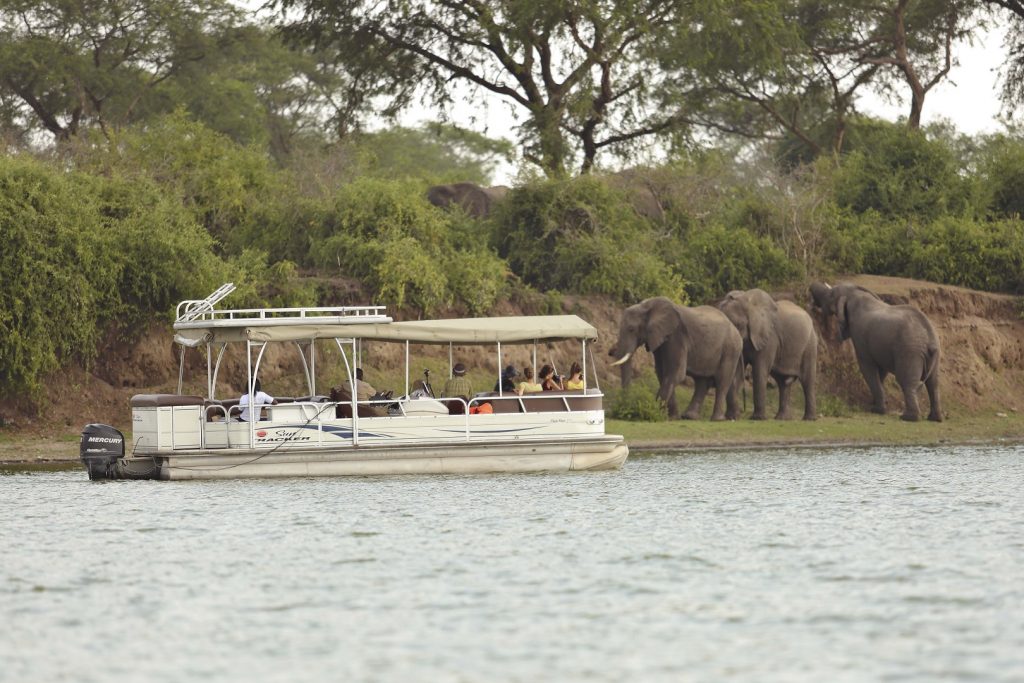
| Boat safaris | No | Kazinga Channel — hippos, crocodiles, birdlife |
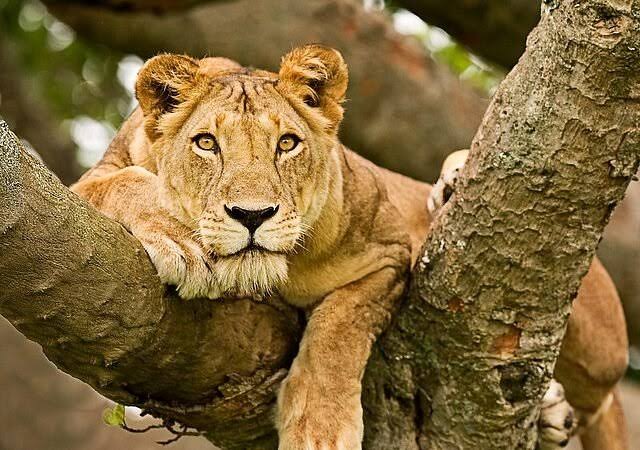
| Tree-climbing lions | No | Ishasha sector — the park’s signature |
| Night walks | Yes | Occasionally (limited) |
| Community tourism | Bigodi Wetland Sanctuary | Several community projects around the park |
The two parks cover very different wildlife and landscapes, which is the reason they are commonly combined on a western Uganda circuit.
Two things stand out from this table. First, the two parks do not compete — what one offers, the other largely does not. Kibale is a forest park with primates and no big game. Queen Elizabeth is a savannah park with big game and only one small primate-trekking site. Second, the combination is efficient: the driving between the two is only three hours, which is short enough to slot into a single day without losing the whole day to travel. Our guide on the Kibale chimpanzee permit availability covers the booking logistics for the chimp side of the trip.
What does a typical Kibale and Queen Elizabeth safari look like?
A typical Kibale and Queen Elizabeth safari runs five to seven days, starting and ending at Entebbe or Kampala. The route usually runs west from Entebbe through Fort Portal to Kibale, then south-east to Queen Elizabeth, and back to Entebbe. Variations extend south to Bwindi or Mgahinga for gorillas, or add Lake Mburo on the way back.
A 6-day Kibale and Queen Elizabeth safari, day by day
- Day 1 — Entebbe to Fort Portal or Kibale. Drive west from Entebbe (roughly 5–6 hours). Overnight at Fort Portal or at a Kibale lodge.
- Day 2 — Chimpanzee trekking day. Morning chimpanzee trek at Kibale. Afternoon Bigodi Wetland Sanctuary walk or a crater lakes drive. Optional night walk in the evening.
- Day 3 — Kibale to Queen Elizabeth. Drive south-east via Kasese or through the crater lakes region (roughly 3 hours). Afternoon arrival in Queen Elizabeth, evening at the lodge.
- Day 4 — Queen Elizabeth game drive and boat safari. Morning game drive in the Kasenyi plains. Afternoon Kazinga Channel boat safari. Big game, hippos, crocodiles, birdlife.
- Day 5 — Ishasha sector. Drive south to the Ishasha sector for the tree-climbing lions. Game drive in Ishasha; overnight in the sector or nearby.
- Day 6 — Return to Entebbe. Drive back to Entebbe (roughly 6 hours) or continue south to Bwindi or Mgahinga for the gorilla leg.
Three practical points about the route structure. First, the drive from Entebbe to Kibale is a full day, which is why most itineraries break it at Fort Portal. Second, the drive from Kibale to Queen Elizabeth is only three hours, which makes the transition straightforward and allows for an afternoon activity on the arrival day. Third, the drive from Queen Elizabeth back to Entebbe is around six hours, so the final day is mostly a transfer unless you add a stop at Lake Mburo or a night in Kampala. Our guide on the Kibale Forest day trip from Fort Portal covers the Kibale side in more detail if you are basing yourself in Fort Portal rather than at a forest lodge.
How do you transfer between the two parks?
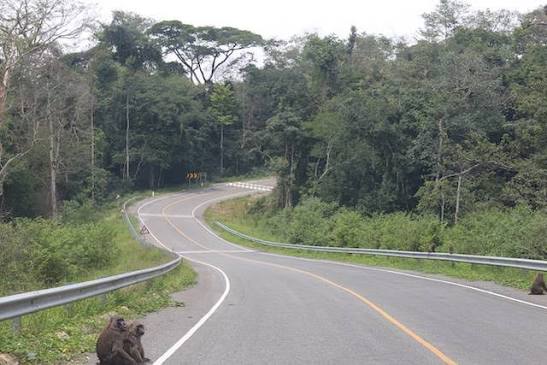
The transfer from Kibale to Queen Elizabeth takes roughly three hours by road, depending on which gate you are entering and where your lodge is located within Queen Elizabeth. There are two main routes: the southern route via Kasese (entering Queen Elizabeth through the Kikorongo or Kabatoro gate), or the northern route via Fort Portal and Kasese, which is slightly longer but on better road surfaces for the first half.
| Route | Distance | Drive time | Notes |
|---|---|---|---|
| Kibale to Kasese to Queen Elizabeth (Kikorongo gate) | ~160 km | 3–3.5 hours | Standard route; mix of tarmac and murram |
| Kibale to Fort Portal to Kasese | ~200 km | 4 hours | Longer but more tarmac; useful if you stop in Fort Portal |
| Kibale to Queen Elizabeth via the crater lakes | ~180 km | 3.5–4 hours | Scenic drive; good for photography stops |
Drive times are approximate. Wet-season murram conditions can add 30–60 minutes to the transfer.
Two practical points about the transfer. First, the standard route through Kasese is the fastest option and is where most safari vehicles go. Second, if you want to break the journey, the crater lakes drive out of Fort Portal is a reasonable route with several good stop points for photography and short walks. The transfer day is generally light, and it is common to arrive at the Queen Elizabeth lodge in time for a relaxed afternoon and an evening at the lodge before the game activities begin the following morning.
Afraeka tip: If you are transferring from Kibale to Queen Elizabeth on the same day as a morning chimp trek, do the chimp trek first and leave for Queen Elizabeth by late morning. The drive is short enough that you can be at your Queen Elizabeth lodge by mid-afternoon, with the evening free. This makes the transfer day productive rather than a pure travel day.
How many nights should you spend at each park?
The nights you spend at each park determine what you can do. Kibale needs at least two nights to do the chimp trek and one additional activity (Bigodi or a night walk). Queen Elizabeth needs at least three nights to cover the northern sector, the Kanal (Kazinga Channel) boat safari and the Ishasha sector without rushing.
| Nights at Kibale | What you can do |
|---|---|
| 1 night | Chimp trek only — rushed, transfer-heavy |
| 2 nights | Chimp trek + Bigodi walk OR night walk — comfortable |
| 3 nights | Chimp trek + Bigodi walk + night walk — full coverage |
| Nights at QE | What you can do |
|---|---|
| 2 nights | Kazinga boat safari + one game drive — basic coverage |
| 3 nights | Kazinga boat safari + Kasenyi game drives + Ishasha sector |
| 4 nights | Full coverage including crater lakes drive, night game drive, community visits |
The standard recommendation is two nights at Kibale and three nights at Queen Elizabeth, which gives a five-night total and a comfortable six-day itinerary including transfers. Adding a third night at Kibale lets you do the night walk without rushing; adding a fourth night at Queen Elizabeth lets you cover both the northern sector and Ishasha without a long single-day drive between them.
For travellers who want to extend the trip with gorillas, adding two or three nights at Bwindi or Mgahinga after Queen Elizabeth gives a nine- to eleven-day total itinerary. Our guides on the other primates in Kibale Forest and the Bigodi Wetland Sanctuary walk cover what to do with the extra time at Kibale.
What activities can you add at each park?
Both parks have activities beyond the headline experience, and choosing which to add shapes the character of the trip. Kibale’s additional activities are all primate- or forest-focused; Queen Elizabeth’s are a mix of game viewing, boat safaris, and community or cultural experiences.
| Activity | Park | Time required |
|---|---|---|
| Chimpanzee habituation experience (full day) | Kibale | Full day |
| Bigodi Wetland Sanctuary walk | Kibale | 2–3 hours |
| Kibale night forest walk | Kibale | 1.5–2 hours (evening) |
| Crater lakes drive | Near Kibale / Fort Portal | Half day |
| Tea plantation tour | Near Fort Portal | 2 hours |
| Kazinga Channel boat safari | Queen Elizabeth | 2–3 hours |
| Kasenyi plains game drive | Queen Elizabeth | 3–4 hours |
| Ishasha sector game drive | Queen Elizabeth | Half day |
| Kyambura Gorge chimpanzee trek | Queen Elizabeth | 2–4 hours |
| Crater drive in QE | Queen Elizabeth | 2–3 hours |
| Night game drive | Queen Elizabeth | 2–3 hours (evening) |
| Lake Katwe salt lake tour | Queen Elizabeth | 1–2 hours |
Activities are booked as part of the itinerary. Some require advance arrangement; others can be added on arrival at the lodge.
Two combinations stand out for the two parks. At Kibale, adding the Bigodi walk gives you forest-edge species and community tourism that the chimp trek alone does not. At Queen Elizabeth, adding the Ishasha sector to the standard northern loop gives you the tree-climbing lions, which are the park’s most distinctive wildlife experience. Both additions fit naturally into a six- or seven-day itinerary.
How does the itinerary extend with Bwindi or Mgahinga?
The most common extension of a Kibale and Queen Elizabeth safari is to continue south-west to Bwindi or Mgahinga for gorilla trekking. The drive from Queen Elizabeth’s Ishasha sector to Bwindi’s Buhoma sector is roughly two hours, which makes the transition straightforward. Adding two or three nights at Bwindi or Mgahinga turns the six-day itinerary into a nine- to ten-day trip.
Extended route with gorillas
- Days 1–2 — Kibale. Chimpanzee trekking and Bigodi walk.
- Days 3–5 — Queen Elizabeth. Game drives, Kazinga boat safari, Ishasha sector.
- Days 6–7 — Bwindi (Buhoma or Rushaga). Gorilla trekking day, plus optional community walk or Bwindi waterfall trail.
- Day 8 — return to Entebbe. Long drive back or optional flight from Kihihi airstrip.
The extended route is one of the strongest itineraries in Uganda, and it is covered in our guides on the gorilla trekking two days in a row format and the wider Uganda destinations overview. The order — Kibale, Queen Elizabeth, Bwindi — is efficient, because it moves steadily south-west and does not involve backtracking. Mgahinga can be substituted for Bwindi if you want a quieter gorilla trek with fewer crowds, and it pairs naturally with the golden monkey trek as a second primate experience.
When is the best time for a Kibale and Queen Elizabeth safari?
The best time for a Kibale and Queen Elizabeth safari is the drier months — December to February and June to September. Those months offer firmer trails at Kibale, easier game viewing at Queen Elizabeth (thinner vegetation means animals are easier to spot), and more predictable driving conditions on the murram roads.
Three practical points on timing:
- Dry season is easier. Trails are firmer, roads are more predictable, and the game viewing at Queen Elizabeth is better. The combination of the two parks in the dry months delivers the most consistent experience.
- Wet season is workable. Chimp permits and game drives are still available in April, May and November. The trails are muddier, some murram sections are slower, and the game viewing is harder in the thicker vegetation, but the trip still runs well.
- Birding is best in the wet season. If birding is a priority, the wet months bring migratory species to both parks. Kibale remains excellent for forest birds year-round; Queen Elizabeth’s waterbirds peak in the wet months.
The main practical constraint on timing is chimp permit availability at Kibale. Peak-season permits can sell out three to six months ahead, and our guide on the Kibale chimpanzee permit availability covers the seasonal booking patterns in detail. Game drives at Queen Elizabeth do not require advance booking in the same way, so the chimp permit is the schedule anchor for the trip.
Common mistakes with a Kibale and Queen Elizabeth safari
Most of what goes wrong with this combination trip comes down to a small set of avoidable mistakes, and all of them can be prevented with one careful planning conversation.
- Only one night at Kibale. One night gives you the chimp trek only. Two nights is the minimum for a comfortable visit that includes an additional activity.
- Two nights at Queen Elizabeth. Two nights only allows the boat safari and one game drive. Three nights is the minimum to cover the park properly, including Ishasha.
- Doing the transfer between parks on a rushed day. The three-hour drive is short, but combining it with a morning activity leaves little time. Either do the chimp trek first and leave by late morning, or take a relaxed transfer day.
- Booking the chimp permit after the lodges. Chimp permits are scarcer than lodge availability. Book the permit first, then match the lodges.
- Skipping Ishasha. The tree-climbing lions are one of the park’s signature experiences, and Ishasha is often overlooked by travellers who stay only in the northern sector.
- Underestimating the Entebbe–Kibale drive. The drive from Entebbe to Kibale is a full day. Break it at Fort Portal or accept a long first day.
- Not allowing a buffer day at the end. If you have a flight out of Entebbe, build in a spare night in Kampala or Entebbe before the flight. Delays on the western circuit can push you past a same-day departure.
- Choosing the wrong season for the wrong park. Dry season is best for both, but if your dates are fixed in the wet months, expect slower roads and denser vegetation. Plan the game drives accordingly.
Can one permit cover two people?
No. One permit covers one person for one activity, and this applies to the chimpanzee trekking permits on a Kibale and Queen Elizabeth safari the same as to any other Uganda primate experience. Game drives and boat safaris at Queen Elizabeth do not require permits — they are booked as part of the itinerary on a per-person basis. Chimpanzee trekking at Kibale, however, requires a permit for each trekker, and the permit is tied to a named individual. Current permit categories and rates sit on the gorilla permits Uganda page.
Because the two parks use different booking structures, it is worth understanding the difference. Kibale permits are pre-booked, paid in full at booking, and non-refundable once issued. Queen Elizabeth game drives and boat safaris are usually booked through your lodge or operator and can often be arranged on arrival. The chimp permit is the schedule anchor for the whole trip, and it should be booked first.
Once the chimp permit is confirmed, the rest of the trip fits around it. The community you follow at Kibale is allocated on the morning of the trek. At Queen Elizabeth, the game drives and boat safari are arranged through your lodge — no advance booking is required for standard activities, though the Kazinga boat safari can fill up on busy days and is worth booking ahead. The regulatory framework is set by the Uganda Wildlife Authority.
Afraeka field note: A family of five once asked us to put together a Kibale and Queen Elizabeth safari at relatively short notice — seven weeks before travel. The chimp permits were still available at Kibale, but only for a Tuesday morning, which shifted their whole itinerary. We built the trip around that Tuesday: they arrived in Fort Portal on Sunday, did the Bigodi walk on Monday, the chimp trek on Tuesday, transferred to Queen Elizabeth on Wednesday, and covered the Kazinga boat safari and Ishasha over the following three days. What could have been a scheduling problem became the anchor of the trip. Their comment afterwards was that the constraint had actually made the itinerary clearer — every day had a purpose, and nothing felt like filler. That is one of the useful things about the chimp permit being the fixed point in a Kibale and Queen Elizabeth safari. It forces the rest of the trip to be planned around a real event rather than a vague sense of “some time in the west.”
A question that comes up regularly on TripAdvisor’s Uganda forum and on r/Uganda is some version of: “Is it worth doing both Kibale and Queen Elizabeth on one trip?” The honest answer is yes, and it is one of the most efficient combinations in Uganda. The two parks are three hours apart, they cover completely different wildlife, and the combination gives you primates and big game on the same route. Travellers who have time for only one of the two tend to prioritise the chimp trek if primates are the draw, or Queen Elizabeth if game viewing is. Travellers with a week or more should do both, and the itinerary writes itself.
Frequently asked questions
How far is Kibale from Queen Elizabeth National Park?
Roughly three hours by road, via Kasese. The standard route is Kibale to Kasese to the Kikorongo gate of Queen Elizabeth. Longer routes through Fort Portal are also possible and add about an hour. Wet-season murram conditions can add 30–60 minutes to the drive.
How many days do I need for a Kibale and Queen Elizabeth safari?
Five to seven days is the standard. Two nights at Kibale for the chimp trek and Bigodi walk, three nights at Queen Elizabeth for the boat safari, game drives and Ishasha sector, plus transfer days at each end. Adding Bwindi or Mgahinga for gorillas extends the trip to nine or ten days.
Should I do Kibale first or Queen Elizabeth first?
Most itineraries do Kibale first, then Queen Elizabeth, then optionally continue south-west to Bwindi or Mgahinga. This order moves steadily south-west without backtracking. Queen Elizabeth first is also possible, but it usually means a longer return drive at the end of the trip.
Do I need to book game drives at Queen Elizabeth in advance?
Standard game drives and boat safaris are usually arranged through your lodge or operator and can often be booked on arrival. The Kazinga Channel boat safari can fill up on busy days, so booking ahead through your lodge is recommended. Chimpanzee permits at Kibale must be booked in advance.
Is the Kibale and Queen Elizabeth safari suitable for families?
Yes, with the caveat that chimpanzee trekking has a minimum age of 15. Families with children under 15 can enjoy the Queen Elizabeth side of the trip — game drives, boat safaris, community visits — but cannot do the chimp trek. The Bigodi walk and the Kibale night walk have no minimum age and can fill the Kibale days for younger children.
When is the best time to do a Kibale and Queen Elizabeth safari?
The drier months of December to February and June to September. Trails are firmer, roads are more predictable, and game viewing at Queen Elizabeth is easier in the thinner vegetation. The wet months are workable but slower, and game viewing is harder in the thicker bush.
Can I extend the trip to include gorilla trekking?
Yes. Adding two or three nights at Bwindi or Mgahinga after Queen Elizabeth is the most common extension. The drive from Queen Elizabeth’s Ishasha sector to Bwindi’s Buhoma sector is roughly two hours, which makes the transition straightforward.
Do I need a permit for game drives at Queen Elizabeth?
No. Game drives and boat safaris at Queen Elizabeth are booked through your lodge or operator — no advance permit is required. Chimpanzee trekking at Kibale does require a permit, booked in advance and paid in full at booking.
What is the minimum age for chimpanzee trekking at Kibale?
15 years, set by UWA and enforced at booking and at the briefing. Families with children under 15 cannot do the chimp trek, but can enjoy the Queen Elizabeth side of the trip. The minimum age for game drives and boat safaris at Queen Elizabeth is not set — children of any age can participate.
Planning a Kibale and Queen Elizabeth safari?
Send us your dates, party size and how many days you have, and we will build a route that fits the chimp trek, the Kazinga boat safari, the Kasenyi game drives and the Ishasha sector together — with the right number of nights at each park and the right order. If you have young children, we will show you how the Queen Elizabeth side works around the chimp age rule. No price figures until we know your route, because the permits are only one line of the total.
About the author: Victoria Kayaga is a Ugandan-born safari expert and founder of Afraeka Adventures, with 15+ years in East African tourism. Based in Kampala, she has planned western Uganda itineraries across Kibale, Queen Elizabeth, Bwindi and Mgahinga for years, and she advises travellers on combining Uganda’s parks into coherent routes. More about Victoria.
Keep planning