Last updated: 24 September 2026. Rates and availability are set by UWA and subject to change — confirm before booking.
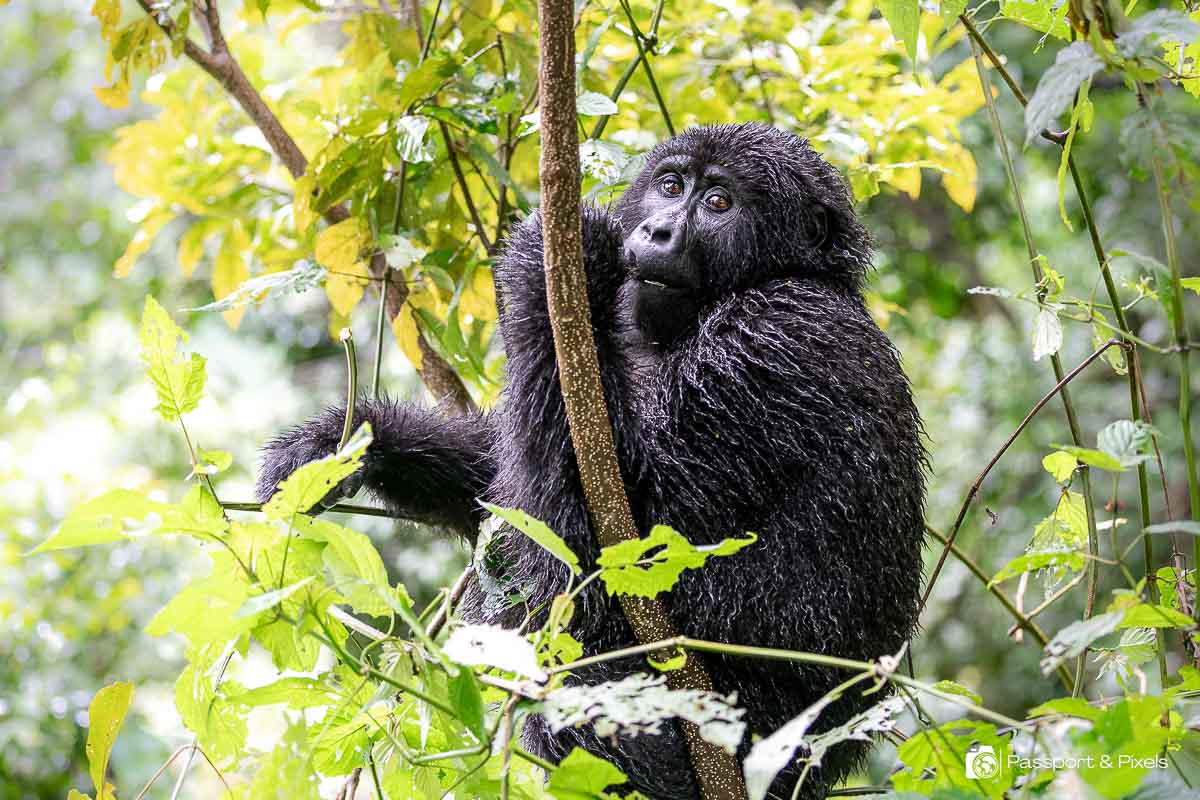
Short answer: Gorilla trekking in the rain is wetter, muddier and slower than a dry-season trek — but the viewing hour itself is completely unaffected. You get soaked, the trail turns to clay, and the descent becomes slippery. The gorillas, meanwhile, are as visible as ever: they do not hide from rain, and the forest is often quieter and more atmospheric. Gorilla trekking in the rain is not a compromise on the experience — it is a different version of it, and many travellers rate wet-season treks as the best of the year.
Every year, travellers cancel or postpone their Uganda gorilla trek when they see rain in the forecast. Almost every one of them regrets it afterwards. Gorilla trekking in the rain is not a diminished experience — the one hour with the gorillas is identical, and the forest around it is often more dramatic than in the dry season. What changes is the walking: the trails are muddier, the descent is slippery, and you finish the day soaked through unless you have packed for it. None of that is a reason to cancel. It is a reason to prepare.
This guide is the reference for gorilla trekking in the rain — what the wet season actually looks like on a trekking day, how wet you get and how to manage it, what happens to the trail conditions, and why gorilla trekking in the rain is often the more rewarding choice for travellers who have prepared for it. If you have not yet chosen a sector, the Uganda gorilla trekking hub covers the wider picture, and permit requirements are kept current on the gorilla permits Uganda page. The regulatory framework for trekking — including the rules that apply in all weather conditions — is published by the Uganda Wildlife Authority.
Gorilla trekking in the rain — key facts
- Wet seasons in Uganda: April to May (long rains) and November (short rains)
- Rainfall pattern: Often afternoon or overnight showers rather than all-day rain
- Trail conditions: Muddy and slippery, especially the descent
- Viewing hour: Unaffected — same 1 hour, same 7-metre distance
- Gorilla visibility: Unaffected — gorillas remain visible and active in the rain
- Key kit: Waterproof shell, gaiters, waterproof boots, spare socks, dry bag for camera
- Temperature: Cool to cold, particularly at higher-altitude sectors like Ruhija
- Photography: Diffuse, soft light — often better than harsh midday sun for gorilla trekking in the rain
What is gorilla trekking in the rain actually like?
Gorilla trekking in the rain is best understood as the same trek with a different set of conditions. The day begins the same way — a pre-dawn briefing at the trailhead — but the walk in is slower, the trail is muddier, and the forest is darker and more enclosed. The one hour with the gorillas is unchanged, and the gorillas themselves are entirely indifferent to the weather. What changes is everything around the viewing hour: the walking, the clothing, and the way the day feels.
The rain in Uganda’s gorilla trekking regions does not usually fall as continuous all-day drizzle. More often, it comes as heavy showers overnight and in the afternoon, with mornings that are misty and damp rather than actively raining. When it does rain during the trek, it tends to be short and heavy. So gorilla trekking in the rain is rarely a question of walking for hours through a downpour — it is more often a case of a wet trail, wet vegetation brushing against you, and one or two brief showers during the walk.
What a typical rainy-day trek looks like
- Pre-dawn briefing in the mist. The trailhead is damp and cool. Rangers confirm group allocations, and the atmosphere is quieter than in the dry season.
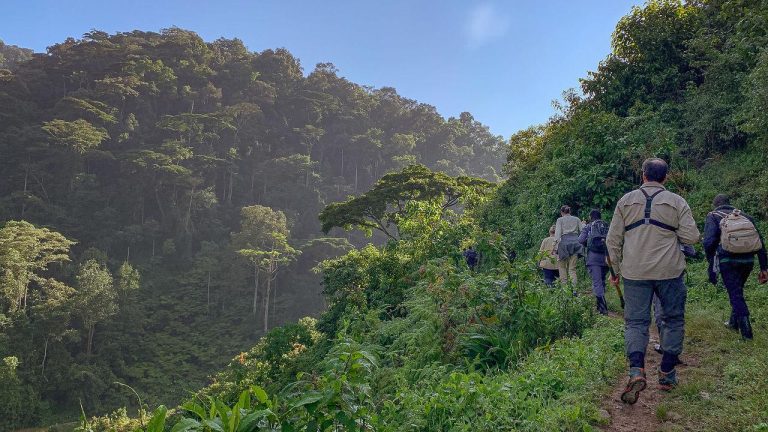
- Walk in on a muddy trail. The path is soft underfoot, and the pace is slower than usual. Gaiters and waterproof boots make a real difference on this section.
- Contact with the family. The gorillas are usually moving through wet vegetation, which they seem to prefer for feeding. The viewing hour is unaffected.
- One or two showers. Rain during the trek is common but usually short. A waterproof shell and a dry bag keep your gear protected.
- Slippery descent. This is where gorilla trekking in the rain is hardest. Wet clay on steep ground demands care, and a porter’s steadying hand is genuinely useful.
- Return to the lodge soaked. Dry clothes, a hot shower and the fact that you saw a gorilla family outweigh the fact that your boots are wet.
The honest summary is that gorilla trekking in the rain is more uncomfortable than a dry-season trek — and that is the whole difference. The wildlife is the same, the viewing is the same, and the day is memorable for the same reasons. The discomfort is a clothing and footwear problem, and it is entirely solvable with the right kit.
What are trail conditions actually like for gorilla trekking in the rain?
Trail conditions for gorilla trekking in the rain are the biggest practical difference from a dry-season trek. Bwindi’s forest trails are unpaved and rooty, and the soil is a red clay that turns into a slick, sticky surface when wet. What is a firm, walkable path in the dry season becomes a slow, careful descent in the wet season — and the difference is felt most on the return leg, not the walk in.
Three things change on the trail when it has been raining:
- Grip becomes the constraint. On dry ground, most trekkers can walk without thinking about their feet. On wet clay, every step requires attention, and boots or rubber boots with deep tread become essential rather than optional.
- Pace slows considerably. A walk that takes forty minutes on dry ground can take an hour and a half after rain, particularly on the steeper sections of sectors like Nkuringo or Ruhija. This extends the total length of the trekking day.
- The descent is the hard part. Uphill sections on wet ground are tiring. Downhill sections on wet clay are genuinely slippery. Most trekkers who struggle in wet conditions do so on the descent, not the climb.
None of this is dangerous for a prepared trekker. It is uncomfortable, slower and requires more attention than a dry-season trek. The practical upshot is that gorilla trekking in the rain rewards preparation — the right boots, the right gaiters, and a willingness to walk at a slower pace — more than any other condition on the trail.
Afraeka tip: For gorilla trekking in the rain, hire a porter even if you would not in the dry season. The descent on wet clay is where a steadying hand matters most, and the porter also carries your daypack so you can use both hands for balance. Porters are available in every Bwindi sector and can be arranged through your lodge the evening before. Our guide on how to hire a porter for gorilla trekking covers how to arrange one.
How wet do you actually get?
How wet you get during gorilla trekking in the rain depends almost entirely on what you wear. With a good waterproof shell, gaiters and waterproof boots, most trekkers stay reasonably dry through the walk itself — the visible rain is rarely heavy for long, and the forest canopy absorbs much of it. Without those items, you get soaked quickly, and the discomfort is significant.
| Condition | With proper kit | Without proper kit |
|---|---|---|
| Light rain or mist | Dry — shell keeps off the moisture | Damp — clothing absorbs moisture |
| Short heavy shower | Mostly dry — shell handles it | Wet through quickly |
| Wet vegetation brushing past | Dry legs — gaiters and long trousers protect | Soaked legs and boots within minutes |
| Muddy descent | Boots muddy but feet dry — waterproof boots hold | Boots waterlogged, feet cold and heavy |
| Overall day | Comfortable, warm, dry enough | Cold, wet, uncomfortable, distracted |
Assumes waterproof boots, gaiters and a light shell. The main difference is between packed-for-it and not.
The two items that most reliably keep you dry during gorilla trekking in the rain are gaiters and waterproof boots. Gaiters keep water from running into your boots as you walk through wet vegetation, and waterproof boots keep the mud and water out of your socks. Without both, feet become wet within the first thirty minutes, and wet feet on a long descent are miserable. With both, most trekkers arrive at the gorillas genuinely dry below the knees, and the rain becomes a manageable inconvenience rather than an experience-defining one.
Details on the wider kit list — including which shells work best for Uganda’s wet-season conditions — sit in our guide on what to pack for gorilla trekking. The short version is that the shell matters more than the trousers, and the boots matter more than the shell.
Are the gorillas still visible during gorilla trekking in the rain?
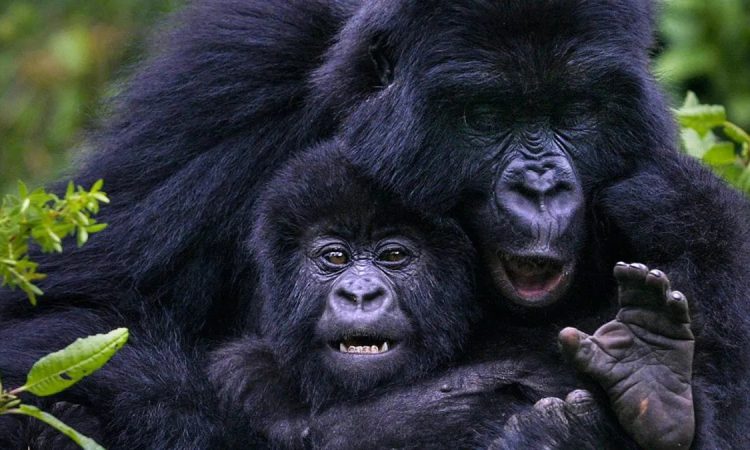
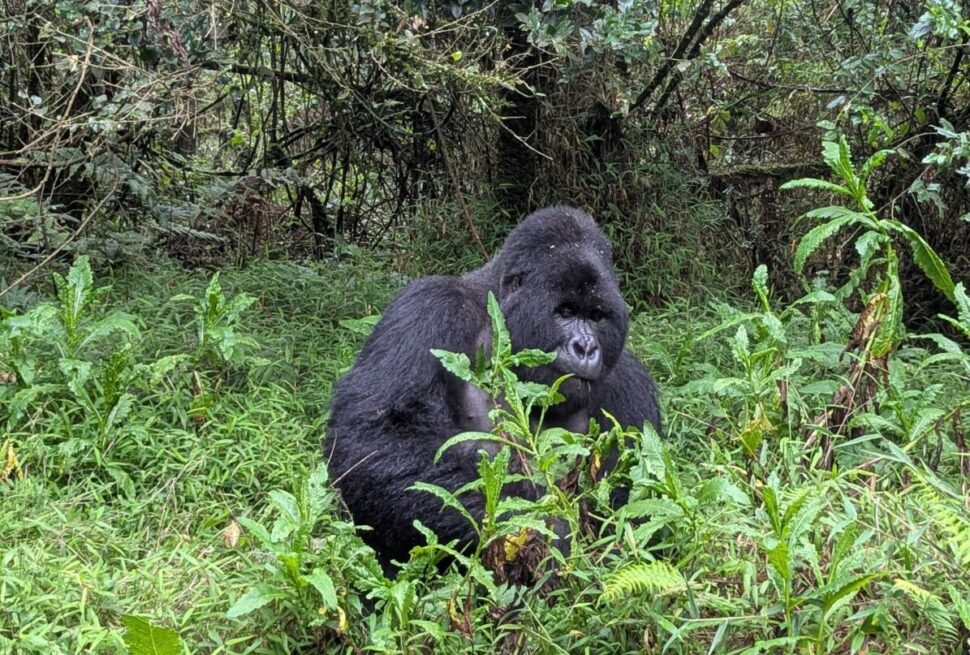
Yes. Gorillas are entirely visible during gorilla trekking in the rain — the weather does not affect how easy they are to find or how close you get. In fact, the wet season often makes the trek easier from the trackers’ perspective, because gorilla families tend to stay closer together and move less when it is wet. The rangers and trackers locate the family every morning regardless of weather, and the viewing hour is identical to any other day.
Three points about gorilla behaviour in the rain:
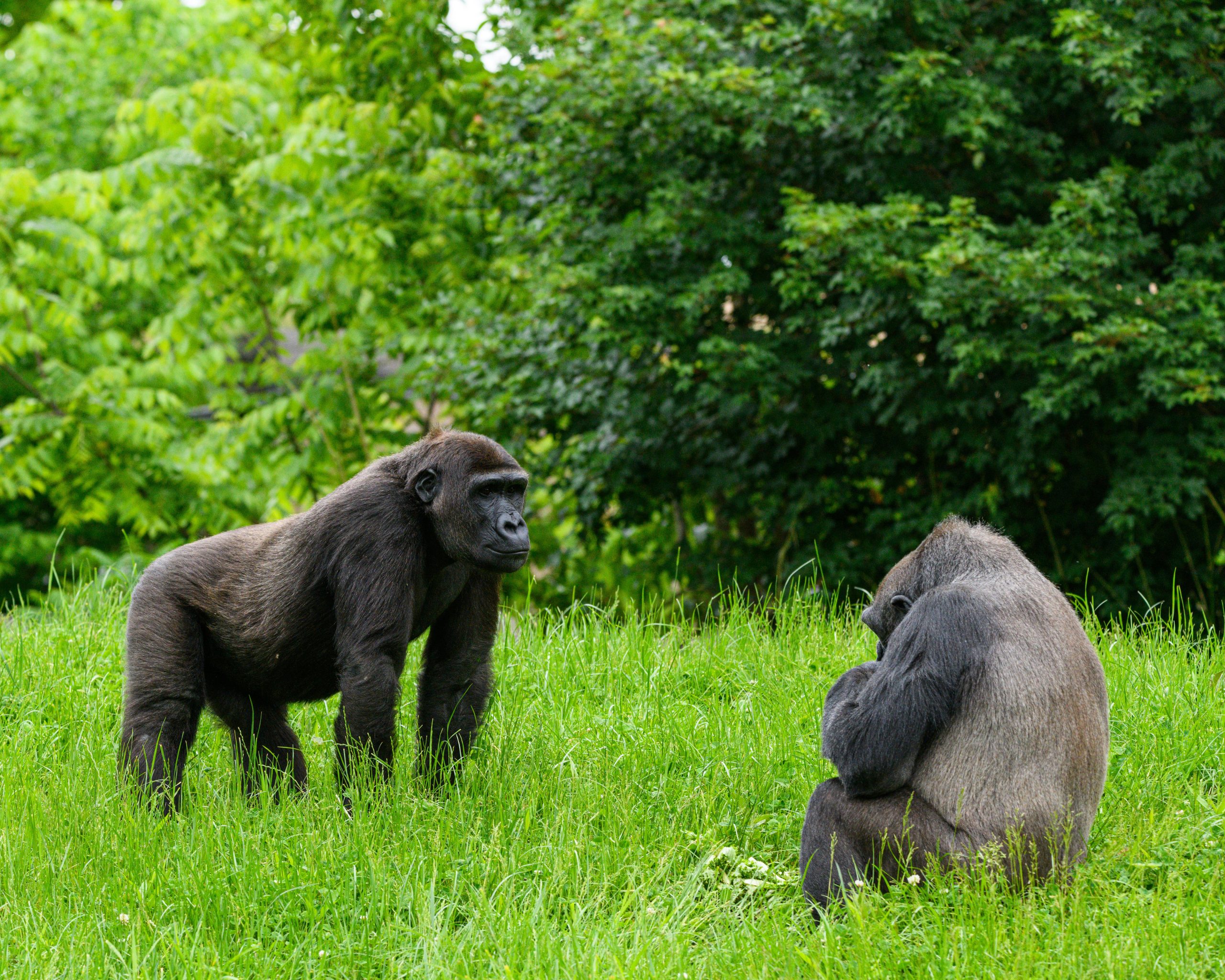
- Gorillas do not shelter from rain in the way people assume. They are forest animals and are adapted to wet conditions. They continue to feed, rest and move through their home range in all but the heaviest rain, and they are not unusually hard to find.
- Families often stay closer together. In wet conditions, gorilla families tend to huddle and move more slowly, which can make them easier to observe as a group. Some trekkers find the wet-season viewing hour more intimate because of this.
- The one-hour cap is unchanged. The viewing rules are the same in all weather — one hour with the family, seven metres minimum distance, no flash. Rain does not extend or shorten the hour.
The photographic conditions during gorilla trekking in the rain are often better than in the dry season. The soft, diffuse light under cloud cover is far easier to shoot in than harsh midday sun, and the gorillas are less likely to be in deep shadow because there is no strong light-to-shade contrast. Our guide on gorilla trekking photography covers the settings for diffuse light in more detail, and the International Gorilla Conservation Programme at igcp.org documents how gorilla behaviour shifts seasonally across the region.
Why is gorilla trekking in the rain often the better trek?
Gorilla trekking in the rain is often the better trek because the trade-off is more manageable than most travellers expect, and the rewards are unusual. The discomfort of wet clothing is a temporary, solvable problem. What you get in return is a quieter forest, softer light, an easier viewing hour and — in the wet season — lower permit demand and better availability. Travellers who have trekked in both conditions frequently describe the rainy trek as the one they remember most clearly.
Three reasons the rainy trek is often preferred:
- The forest is quieter and more atmospheric. Fewer trekkers operate in the wet season, and the trails are less crowded. The mist and damp light under the canopy produce an environment that is genuinely more dramatic than a bright dry-season morning.
- The viewing is not compromised. The hour with the gorillas is the same. What changes is the walk, and the walk is a smaller part of the day than most trekkers expect when they book.
- The wet-season tariff applies. The permit fee structure in Uganda includes lower rates in the wet-season months — April, May and November — which makes gorilla trekking in the rain the more economical option as well as the quieter one. Current rates are kept up to date on our gorilla permits Uganda page.
The Uganda Tourism Board at visituganda.com maintains seasonal context on the country’s travel calendar, and it is worth reading before deciding on a trekking date. The practical advice we give every client considering gorilla trekking in the rain is the same: as long as you are physically comfortable with a wet, muddy walk and you have packed for it, the rainy season is a genuinely good time to trek. The travellers who regret it are the ones who arrived underprepared, not the ones who trekked in the rain.
What should you pack for gorilla trekking in the rain?
The kit for gorilla trekking in the rain is a short list of specific items, and all of them matter more in the wet season than at any other time of year. What you wear on your feet and how you protect your gear are the two categories that determine whether the day is comfortable or miserable.
Essential kit for gorilla trekking in the rain
- Waterproof hiking boots with deep tread — or rubber boots
- Gaiters — the single most useful item for wet-season trekking
- A light waterproof shell or rain jacket that packs into your daypack
- Quick-drying trousers — not jeans
- A dry bag or waterproof cover for your camera and phone
- Spare socks — a fresh pair in the daypack is genuinely welcome
- A warm layer — the forest is cold and damp in the wet season
- Gardening gloves — for nettles and to keep your hands clean on the trail
- A trekking pole — useful on the wet descent
- A small towel for drying your face and hands at the end
What not to bring for gorilla trekking in the rain: heavy cotton layers that soak through, non-waterproof boots, and open-toe footwear. The pattern is simple — anything that absorbs water will make the day worse, and anything waterproof will make it better. Detailed sector-specific guidance on which items matter most for the terrain you are trekking sits in our Buhoma sector guide and the wider sector guides on the blog.
When is the rainy season in Uganda?
Uganda’s rainy seasons run from April to May (the long rains) and November (the short rains). Gorilla trekking in the rain is most likely during those months, though rain can occur at any time of year and Bwindi’s forest microclimate produces showers even in the dry season. The wettest months — April and May — also carry the lowest permit demand, which is why they are the easiest months for short-notice bookings.
| Period | Rainfall | Trekking notes |
|---|---|---|
| January to February | Dry | Peak season; permits fill earliest |
| March | Transitional | Mixed conditions; good for flexibility |
| April to May | Long rains | Wettest months; lowest permit demand; best availability |
| June to August | Dry | Peak season; gorilla trekking in the rain unlikely but possible |
| September to October | Transitional | Mixed conditions; good balance |
| November | Short rains | Wet again; low permit demand |
| December | Dry | Peak season; permits fill early |
Conditions vary year to year. Gorilla trekking in the rain is possible in any month; the seasonal windows reflect typical rainfall patterns.
The two months most travellers associate with gorilla trekking in the rain are April and May, when the long rains arrive and the forest is at its wettest. November is a shorter, less intense wet season. Outside those windows, rain still occurs but is less frequent, and most trekkers in June through September and December through February experience dry trails. If you want to avoid gorilla trekking in the rain entirely, book outside the wet-season months — but be aware that you are also booking into the periods with the highest demand and the fewest available permits.
Common mistakes about gorilla trekking in the rain
Most of what goes wrong with gorilla trekking in the rain comes down to a small set of avoidable mistakes, and all of them can be prevented with one careful planning conversation.
- Cancelling because of the forecast. The one viewing hour is unaffected by rain, and the permits are non-refundable. Cancelling a trek because of a wet forecast usually means losing the permit and the day without any gain.
- Not bringing gaiters. The single most useful item for gorilla trekking in the rain, and the most commonly forgotten. Gaiters keep water from running into your boots as you walk through wet vegetation.
- Wearing non-waterproof boots. Leather boots without treatment or mesh trail runners will be soaked within the first half hour. Waterproof boots or rubber boots are essential.
- Wearing jeans. Cotton jeans absorb water and become heavy and cold. Quick-drying hiking trousers or synthetic fabrics are the correct choice.
- Not protecting your camera. Rain and humidity damage electronics. A dry bag or waterproof cover for your camera is essential for gorilla trekking in the rain, particularly in a sector with significant rain.
- Skipping the porter. The descent on wet clay is where porters matter most. Hire one for gorilla trekking in the rain even if you would not in the dry season.
- Underestimating the pace change. Wet-season treks are slower. What feels like a two-hour walk in dry conditions can take three in the rain, and the trekking day is longer as a result.
- Assuming the rain will stop. It might, and it might not. Plan for the trek to be wet and treat any dry spell as a bonus rather than expecting one.
Can one permit cover two people?
No. One permit covers one person for one trek, and this applies regardless of the weather. A party of four needs four permits in the same sector on the same date. Each permit is tied to a named individual, and there is no way to share one or to transfer it to another person. Details on how permits work, including current requirements, are kept current on the gorilla permits Uganda page.
The eight-visitor daily cap per habituated gorilla group applies equally, and it is unaffected by weather. Rain does not reduce the number of permits available, does not change the sector you trek in, and does not shorten the viewing hour. What the wet season does affect is permit availability in your favour — because fewer travellers book during the rainy months, gorilla trekking in the rain is often easier to arrange at short notice than a dry-season trek.
Once you have your permits, the gorilla group you actually visit is allocated according to the trekking sector, with final group allocation managed by UWA on the morning of the trek. You will know your sector in advance because it is on your permit; you will learn your family at the briefing alongside everyone else. Rain does not change any of this, and the ranger briefing covers the day’s specific conditions along with the standard rules.
Afraeka field note: A couple who had booked their trek in April — the height of the long rains — arrived at their lodge genuinely worried about the weather. They had almost cancelled two weeks earlier when the forecast showed heavy rain across the entire region. We encouraged them to keep the booking and to bring the right kit. On the morning of their trek, the forest was misty but not raining; the trails were wet and slow; and the descent took nearly two hours because of the clay. They were tired, muddy and soaked when they finished. Their message that evening said the day had been one of the best of their lives — the mist in the forest had made the trek feel wild in a way they had not expected, and the gorilla family had been feeding quietly for the whole hour, unbothered by the weather and unusually close together. They had considered cancelling a wet-season trek and had not. That is the pattern we see over and over: the trekkers who come back happiest from gorilla trekking in the rain are the ones who arrived prepared, not the ones who avoided the weather.
A question that comes up regularly on TripAdvisor’s Uganda forum and on r/Uganda is some version of: “My trek is in April and the forecast says rain — should I cancel?” The honest answer is almost always no. The viewing hour is unaffected by weather, permits are non-refundable, and the wet-season trek is often more atmospheric than the dry-season equivalent. What you should do instead of cancelling is prepare: pack waterproof boots, gaiters and a shell, hire a porter, and bring a dry bag for your camera. Gorilla trekking in the rain is a wetter, slower version of the same experience. It is not a lesser one.
Frequently asked questions about gorilla trekking in the rain
Is gorilla trekking in the rain still worth doing?
Yes — the one-hour viewing with the gorillas is completely unaffected by rain, and the forest is often more atmospheric in the wet season. What changes is the walking, which is slower and muddier. As long as you are prepared with waterproof boots, gaiters and a shell, gorilla trekking in the rain is a genuinely good experience, and many travellers rate it their favourite trek.
When is the rainy season for gorilla trekking in Uganda?
Uganda’s rainy seasons run from April to May (the long rains) and November (the short rains). Gorilla trekking in the rain is most likely during those months, though Bwindi’s forest microclimate produces showers at any time of year. The wettest months also carry the lowest permit demand and the best availability for short-notice bookings.
How wet do you get during gorilla trekking in the rain?
With waterproof boots, gaiters and a light shell, most trekkers stay reasonably dry through the walk itself. Without those items, you get soaked quickly. Gaiters and waterproof boots are the two most important items — they keep water out of your boots as you walk through wet vegetation and mud. A dry bag protects your camera and phone.
Are gorillas still visible during gorilla trekking in the rain?
Yes. Gorillas remain entirely visible in the rain, and the tracking and viewing hour are unaffected by weather. In fact, gorilla families often stay closer together in wet conditions, which can make the viewing hour feel more intimate. The one-hour cap and the seven-metre distance rules are unchanged in all weather.
What should you wear for gorilla trekking in the rain?
Waterproof hiking boots or rubber boots, gaiters, quick-drying trousers, a light waterproof shell, and a warm layer for the morning briefing. Bring spare socks and a dry bag for your camera. Avoid jeans and any cotton clothing that absorbs water. A trekking pole is useful on the wet descent.
Should I cancel my trek if it’s raining?
No. Permits are non-refundable, and the viewing hour is unaffected by rain. Cancelling means losing the permit and the day without any gain in the experience. The better approach is to prepare for the conditions — pack for wet weather, hire a porter, and expect a slower day on the trail.
Is gorilla trekking in the rain dangerous?
Gorilla trekking in the rain is not dangerous for prepared trekkers, but it is harder on the body than a dry-season trek. The descent on wet clay is the most demanding part, and a fall on slippery ground can cause injury. Hire a porter for a steadying hand, use a trekking pole, wear boots with good grip, and walk at a slower pace than you would in dry conditions.
Can you take photographs during gorilla trekking in the rain?
Yes, and the soft diffuse light in wet conditions is often better for photography than harsh midday sun. The key is protecting your gear — bring a dry bag or waterproof cover for your camera, and a microfibre cloth for condensation on the lens. Flash is prohibited regardless of weather.
Is it cheaper to do gorilla trekking in the rain?
Yes. The UWA permit fee structure includes lower rates in the wet-season months of April, May and November, which applies to foreign non-resident permits. Current rates and categories are kept up to date on our gorilla permits Uganda page. In addition to the lower rate, the wet season also has the best availability for short-notice bookings.
Booking a wet-season trek?
Send us your dates and party size, and we will tell you what to expect from the conditions in your specific sector, what to pack for the wet season, and how to plan around the slower trail pace. If you would prefer to shift to a drier window, we will tell you honestly what is available. No price figures until we know your route, because the permit is only one line of the total.
About the author: Victoria Kayaga is a Ugandan-born safari expert and founder of Afraeka Adventures, with 15+ years in East African tourism. Based in Kampala, she has planned gorilla trekking itineraries across Bwindi’s four sectors and Mgahinga for years, and she has trekked every sector in every season. More about Victoria.
Keep planning