Last updated: 26 September 2026. Rates and availability are set by UWA and subject to change — confirm before booking.
Short answer: A Uganda primate safari itinerary 10 days is the format that allows a second gorilla trek, golden monkey trekking at Mgahinga, and a slower pace at every stop. Where the 7-day version covers chimpanzees at Kibale, a savannah stop at Queen Elizabeth and one gorilla trek at Bwindi, ten days adds Mgahinga Gorilla National Park for a second gorilla trek and golden monkeys, plus a night at Lake Bunyonyi or a second gorilla trek at Bwindi on a different sector. Ten days is the format that turns a primate-focused trip into a full primate circuit.
Seven days is enough to trek both chimpanzees and gorillas in Uganda. It is not enough to do it comfortably. A Uganda primate safari itinerary 10 days is what most travellers end up booking when they realise that the extra three days transform the trip — not by adding new species, but by giving each stop the space to breathe. A second gorilla trek on a different family. Golden monkeys at Mgahinga. A recovery day at Lake Bunyonyi. Ten days is the format that fits Uganda’s primate landscape properly, without racing between parks.
This guide is the reference for the 10-day Uganda primate itinerary. It covers what the extra three days add, the full day-by-day route, how the pacing works across the ten days, when the format suits you and when it does not, and how the whole route fits together from Entebbe back to Entebbe. It is a companion to our guide on the shorter 7-day Uganda primate safari format. Permit categories and rates sit on the gorilla permits Uganda page, and the wider primate context is on the primate tracking experiences page. The regulatory framework is published by the Uganda Wildlife Authority.
Uganda primate safari itinerary 10 days — key facts
- Route length: 10 days including arrival and departure days
- Parks included: Kibale Forest, Queen Elizabeth, Bwindi, Mgahinga (and often Lake Bunyonyi)
- Primate treks: Chimpanzee trek (Kibale), up to two gorilla treks (Bwindi and Mgahinga), golden monkey trek (Mgahinga)
- Permits required: Three to four, depending on whether you do one or two gorilla treks
- Best season: Dry months (Dec–Feb, June–Sept) for easier trails
- Minimum age: 15 for chimps, gorillas and wild chimps; 12 for golden monkeys
- Best for: Travellers who want a second gorilla trek, golden monkeys and a slower pace
- Driving: Substantial — roughly 30–40 hours in the vehicle across the full route
What does a Uganda primate safari itinerary 10 days include?
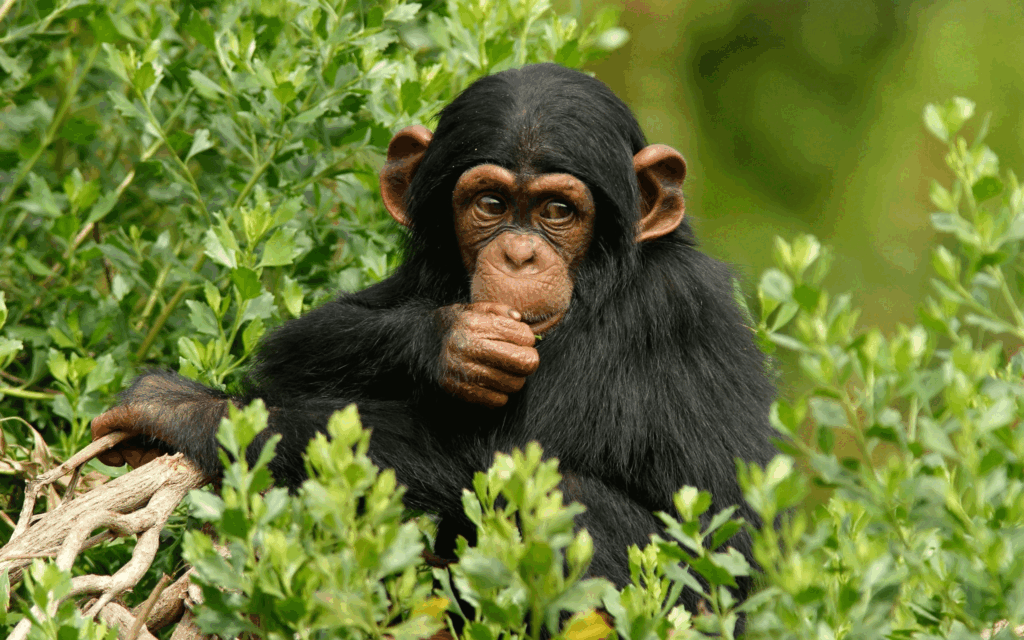
A Uganda primate safari itinerary 10 days includes the two headline trekking experiences — chimpanzees at Kibale and gorillas at Bwindi — plus the additional experiences that only fit when the trip is longer than a week. The most common additions are a second gorilla trek at Mgahinga (or a second Bwindi sector), a golden monkey trek at Mgahinga, and a recovery stop at Lake Bunyonyi. Together they turn the itinerary from a two-trek sprint into a full primate circuit.
Three things define what fits at ten days:
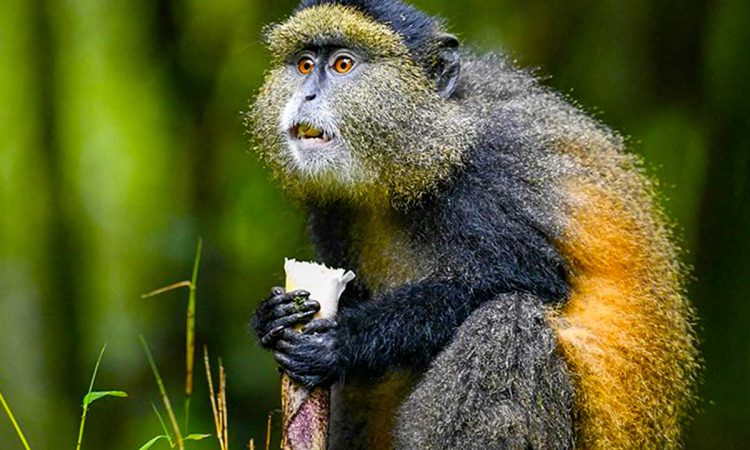
- Two primate treks plus golden monkeys. The chimp trek at Kibale, the gorilla trek at Bwindi, and the golden monkey trek at Mgahinga. Three species, three parks, three different trekking experiences. The golden monkey trek has a minimum age of 12, which extends the itinerary to families with younger teenagers.
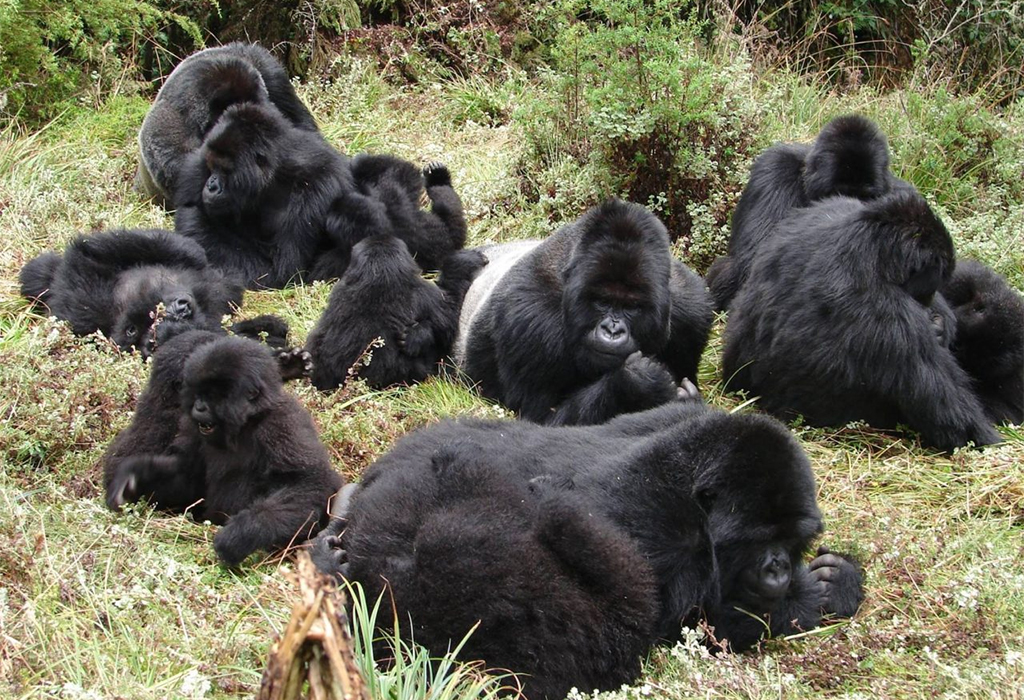
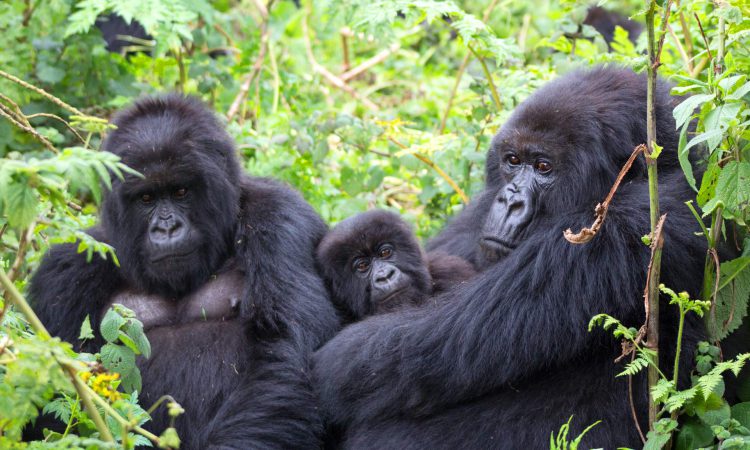
- A second gorilla trek — usually at Mgahinga. Mgahinga has one habituated gorilla family, Nyakagezi, and a second gorilla trek there gives a different mountain, a different family and a different forest. It requires a second permit, but the experience is genuinely distinct from a Bwindi trek.
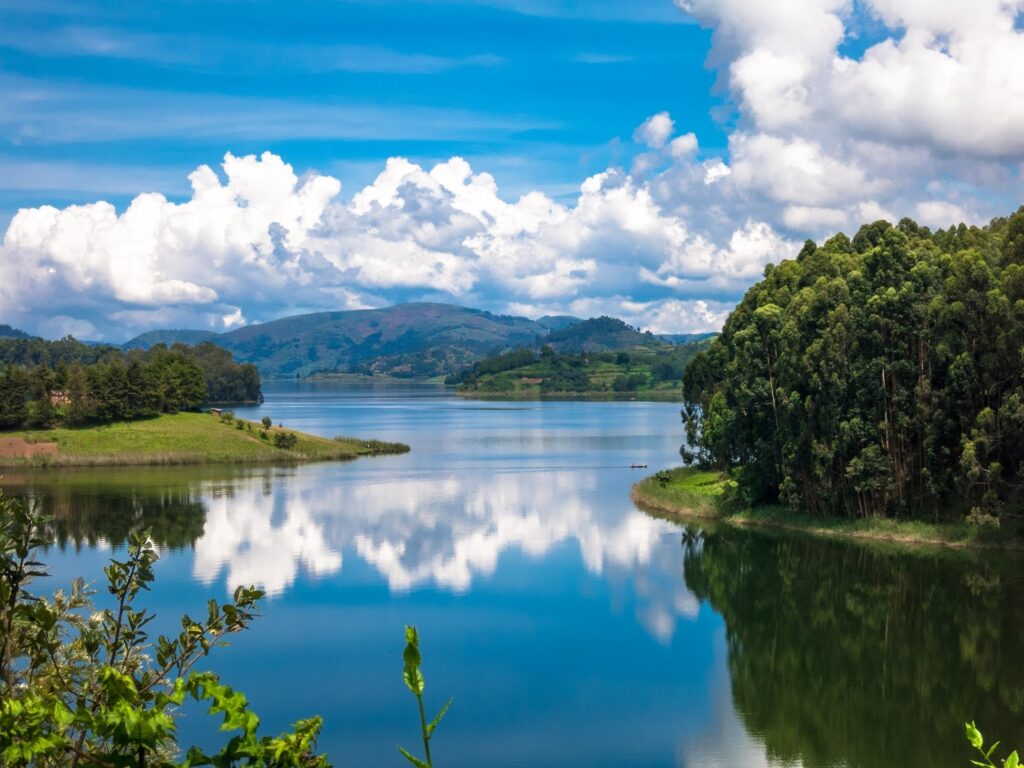
- A recovery day at Lake Bunyonyi. The lake sits between Bwindi and Mgahinga and offers canoeing, island hopping, and quiet lakeside lodges. It is the natural place to break the middle of the trip and let everyone recover from the trekking days.
What you still cannot fit at ten days: the full north of Uganda (Murchison Falls, Kidepo Valley), a Kenya or Tanzania extension, and multiple second gorilla treks across different Bwindi sectors plus Mgahinga. Those are fourteen-day-plus trips. The 10-day Uganda primate itinerary covers the primate-focused core in full, with enough time for rest and one significant addition. Our guide on the chimpanzee habituation experience at Kibale covers the full-day chimp format that can be added at the Kibale end if you want to extend further.
Afraeka tip: If you are booking a Uganda primate safari itinerary 10 days, decide early whether you want one gorilla trek or two. A second gorilla trek requires a second permit, and the second permit is often the deciding factor in which family and which sector you get. Booking both permits together, months ahead of the trip, gives you the widest choice of families and sectors. Waiting until you are on the ground almost always means accepting whatever is left.
What does the day-by-day route look like?
The standard Uganda primate safari itinerary 10 days runs from Entebbe through Kibale, Queen Elizabeth, Bwindi, Mgahinga and Lake Bunyonyi, then back to Entebbe. The route is a broad loop and does not involve significant backtracking. Here is how the days break down.
The 10-day route, day by day
- Day 1 — Arrival and transfer to Kibale. Land at Entebbe and drive west toward Fort Portal (5–6 hours). Arrive at a Kibale lodge by evening, or overnight at Fort Portal if arriving late.
- Day 2 — Chimpanzee trekking at Kibale. Morning chimp trek. Afternoon Bigodi Wetland Sanctuary walk. Optional night forest walk in the evening.
- Day 3 — Kibale to Queen Elizabeth. Drive south-east via Kasese (3 hours). Afternoon arrival and evening at the lodge.
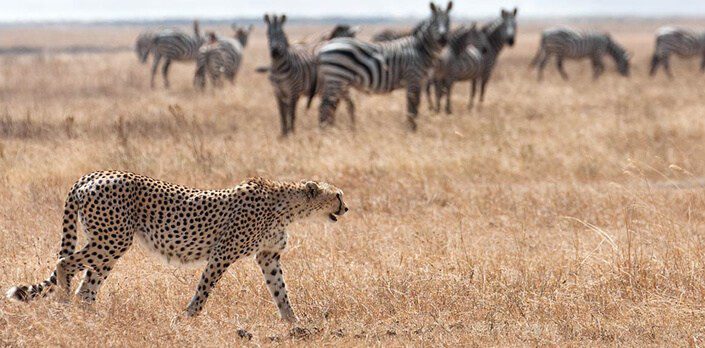
- Day 4 — Queen Elizabeth game viewing. Morning game drive in the Kasenyi plains. Afternoon Kazinga Channel boat safari.
- Day 5 — Queen Elizabeth to Bwindi via Ishasha. Drive south through the Ishasha sector for the tree-climbing lions, then continue to Bwindi (4 hours total). Arrive at your Bwindi lodge in the late afternoon.
- Day 6 — Gorilla trekking at Bwindi. Pre-dawn briefing, forest walk, one hour with the gorilla family, walk back. The hardest day of the trip.
- Day 7 — Bwindi recovery and transfer to Lake Bunyonyi or Mgahinga. Rest morning at the lodge. Afternoon drive to Lake Bunyonyi (1.5 hours) or Mgahinga (1 hour).
- Day 8 — Lake Bunyonyi or golden monkey trekking. If at Lake Bunyonyi: canoeing, island hopping, relaxation. If at Mgahinga: golden monkey trek in the morning, afternoon free.
- Day 9 — Second gorilla trek at Mgahinga. Nyakagezi gorilla family. Pre-dawn briefing, forest walk, one hour with the family. Afternoon rest or volcano hike.
- Day 10 — Return to Entebbe. Drive back to Entebbe (7–9 hours) or fly from Kisoro or Kihihi airstrip. Buffer evening in Entebbe before the international flight.
Two structural notes on this route. First, the second gorilla trek falls on day 9, which is only three days after the first one at Bwindi. That spacing is deliberate — doing two gorilla treks on back-to-back days is possible but tiring, and the Lake Bunyonyi recovery day between them is what makes the second trek enjoyable. Second, the return from Mgahinga to Entebbe is the longest single drive of the trip. Travellers with fixed flights should either build in a buffer day at Entebbe or fly from Kisoro airstrip to shorten the return leg.
What can you add at 10 days that you cannot at 7?
The extra three days transform the trip in specific ways. Understanding what the additional time allows is the key to deciding whether ten days is right for you, or whether the shorter 7-day format is enough.
| Addition | Days required | What it delivers |
|---|---|---|
| Second gorilla trek at Mgahinga | 2 | A second family (Nyakagezi), a different mountain, a second one-hour viewing |
| Golden monkey trek at Mgahinga | 1 | A third primate species; minimum age 12 |
| Lake Bunyonyi stop | 1 | Recovery day; canoeing, island hopping, quiet lodge time |
| Chimpanzee habituation experience | 1 | Full-day chimp experience at Kibale instead of the standard trek |
| Second Bwindi gorilla trek on a different sector | 1 | A second Bwindi family, useful if Mgahinga is unavailable |
These additions can be combined selectively. Two or three fit comfortably within a 10-day window. More than three push the trip to twelve days or longer.
The most common combination at ten days is: second gorilla trek at Mgahinga, golden monkey trek at Mgahinga, and one night at Lake Bunyonyi. This extends the trip from seven to ten days and delivers three primate species plus a proper recovery stop. It is the standard 10-day format and the one most travellers who book ten days end up with.
The alternative combination is to skip Mgahinga and do a second gorilla trek at Bwindi on a different sector — Buhoma and Rushaga, for example, or Rushaga and Nkuringo. This delivers two Bwindi sectors and two different Bwindi families, which is more varied than two treks at the same sector. It is a strong option for travellers who specifically want to see how Bwindi’s sectors differ. Our guides on the sector options — Kibale and Bwindi combined safari and the family-level detail on other primates in Kibale Forest — cover the choices in more detail.
How does the pacing work across ten days?
The pacing of a Uganda primate safari itinerary 10 days is the single biggest difference from the 7-day version. The extra days are not simply more activities — they are more space. Trekking days are interspersed with recovery days, transfers are broken, and the trip ends with a buffer before the flight home rather than a rushed departure.
| Factor | 7-day route | 10-day route |
|---|---|---|
| Trekking days | 2 | 3–4 |
| Recovery days | 0–1 | 2 |
| Game viewing days | 1–2 | 2 |
| Buffer day before flight | Not always possible | Yes |
| Average driving per day | Higher | Lower |
| Transfers | Back-to-back | Broken |
The 10-day format is not just more activities — it is a different experience of the same route.
Three practical consequences of the pacing. First, the trekking days are not back-to-back. There is always at least one non-trekking day between the first and second treks, which makes each trek more enjoyable. Second, the recovery day at Lake Bunyonyi is a genuine rest day — not a travel day with a stop. Third, the final day includes a buffer at Entebbe, which removes the risk of a late arrival before an international flight.
The result is a trip that feels less like a checklist of experiences and more like a journey. Travellers who have done both formats consistently describe the 10-day version as feeling almost twice as long as the 7-day version, even though it is only three days longer. The extra time changes the character of the trip, not just the number of activities.
When is the best time for a 10-day primate safari?
The best time for a Uganda primate safari itinerary 10 days is the drier months — December to February and June to September. The trails at Kibale, Bwindi and Mgahinga are firmer, the transfer roads are more predictable, and the game viewing at Queen Elizabeth is easier in the thinner vegetation. The wet months of April, May and November are workable but slower, and the longer itinerary has less room for weather-related delays.
Three practical points on timing:
- Dry season is easier. Firm trails, better road conditions, better game viewing. The 10-day itinerary flows more smoothly overall. December to February and June to September are the peak windows.
- Wet season is more affordable. Permits and lodges are more available and often less expensive in April, May and November. The trade-off is muddier trails and slower driving, and the longer itinerary has less buffer for delays.
- Peak-season permits need early booking. Both the chimp permit at Kibale and the two gorilla permits at Bwindi and Mgahinga sell out months ahead for peak-season dates. Book six to twelve months ahead for the June–September and December–February windows.
The wider country map is on the Uganda destinations page, and the country-level tourism overview sits with the Uganda Tourism Board. The 10-day format has less scheduling slack than shorter itineraries, so both permits and lodges should be booked well ahead of the departure date.
How do you book a 10-day primate safari?
You book a Uganda primate safari itinerary 10 days by confirming the permits first, choosing lodges for each stop, and arranging a vehicle and driver-guide for the full route. The permits are the schedule anchors; everything else fits around them.
What to arrange before the trip
- Gorilla permit at Bwindi — sector and date, paid in full at booking
- Second gorilla permit at Mgahinga (or a second Bwindi sector) — paid in full at booking
- Chimpanzee trekking permit at Kibale — paid in full at booking
- Golden monkey trekking permit at Mgahinga — paid in full at booking
- Lodges at each stop — matched to the permit dates and sectors
- Vehicle and driver-guide for the full 10-day route
- Queen Elizabeth game activities — game drives and the Kazinga boat safari
- Buffer night in Entebbe before the international departure
Two things are worth confirming when you book. First, the gorilla permit sectors determine the lodges — both Bwindi and Mgahinga permits need matching accommodation. Second, the second gorilla trek at Mgahinga is dependent on Nyakagezi being accessible from the Ugandan side, which is not guaranteed — the family crosses borders periodically and can be unavailable for a few days at a time. Our guide on golden monkey trekking at Mgahinga covers the Mgahinga logistics, and the wider trip options are on the trips page linked below.
The full range of Uganda primate formats — the two-park combination, the Kibale-plus-Queen-Elizabeth version, and the shorter and longer itineraries — sit across the guides in this cluster. The full trip listing sits on the primate tracking experiences page and the Uganda gorilla trekking hub.
Common mistakes with a 10-day itinerary
Most of what goes wrong with a Uganda primate safari itinerary 10 days comes down to a small set of avoidable mistakes, and all of them can be prevented with one careful planning conversation.
- Booking the second gorilla trek too late. Mgahinga has one habituated family and a small daily permit pool. It books out faster than Bwindi sectors, especially for peak-season dates.
- Doing the two gorilla treks on consecutive days. The second trek is harder when your body is still recovering from the first. A recovery day between them makes the second trek enjoyable.
- Skipping the recovery day. The Lake Bunyonyi stop is not a filler — it is what makes the second gorilla trek possible. Travellers who skip it usually finish the trip exhausted.
- Not confirming Nyakagezi availability for the Mgahinga trek. The family crosses international borders periodically. Confirm at the time of booking that a Mgahinga trek will run on your date.
- Underestimating the driving. The full route covers roughly 30–40 hours in the vehicle. Break the long transfers where possible and build in rest time.
- Booking the chimp permit before the gorilla permits. The gorilla permits are the scarcer items. Book them first and fit the chimp trek around them.
- Not building in a buffer night at Entebbe. The return from Mgahinga to Entebbe is seven to nine hours. A spare night before the flight removes the risk of a late arrival.
- Assuming a 10-day itinerary is just a longer 7-day one. The 10-day format is a different trip — with more recovery, more species and a slower pace. Travellers who try to pack the extra days with additional activities usually miss the point of the format.
Can one permit cover two people?
No. One permit covers one person for one trek, and this applies to every primate permit on the Uganda primate safari itinerary 10 days — the chimp permit at Kibale, both gorilla permits (Bwindi and Mgahinga), and the golden monkey permit at Mgahinga. A couple doing the 10-day route with both gorilla treks and the golden monkey trek needs six permits in total. Each permit is tied to a named individual, and there is no way to share one or transfer it to another person. Current permit categories and rates sit on the gorilla permits Uganda page.
Each permit type uses a separate allocation. The chimp permit pool at Kibale, the two gorilla permit pools (Bwindi and Mgahinga) and the golden monkey permit pool at Mgahinga operate independently. The daily caps apply separately to each pool, so large groups need to book all four permit types especially early. A party of eight fills a full day’s allocation at each site.
Once the permits are confirmed, the specific family or community you follow is allocated on the morning of each trek. You will know your sector or site in advance because it is on the permit; you will learn your specific family or community at the briefing alongside everyone else. The regulatory framework is set by the Uganda Wildlife Authority.
Afraeka field note: A traveller who had done the 7-day Uganda primate safari two years earlier booked the 10-day version on a return trip. His expectation was modest — he assumed the extra three days would just mean more of the same, with one additional trek added on. What he told us afterwards was that the two trips had felt completely different. The 7-day version had been a checklist: chimp trek, savannah, gorilla trek, home. The 10-day version had felt like an actual journey — with recovery days, a second gorilla trek at Mgahinga that he described as more intimate than the first, golden monkeys he had not expected to enjoy as much as he did, and a night at Lake Bunyonyi that had turned out to be one of the highlights. His comment, which we now use ourselves when clients ask whether ten days is worth the extra cost: “The 7-day trip was about seeing the animals. The 10-day trip was about the trip.” That is the honest argument for the longer format. The wildlife is the same. The experience of the trip is not.
A question that comes up regularly on TripAdvisor’s Uganda forum and on r/Uganda is some version of: “Is 10 days too long for a Uganda primate safari?” The honest answer is no — the Uganda primate safari itinerary 10 days is the format most travellers end up preferring, because it is the shortest itinerary that allows a second gorilla trek without dropping the Queen Elizabeth savannah stop. Shorter trips sacrifice either the second gorilla trek or the savannah segment. Longer trips add parks and species that go beyond the primate core. Ten days is the sweet spot for a primate-focused Uganda trip that wants to do both.
Frequently asked questions
What is included in a Uganda primate safari itinerary 10 days?
Chimpanzee trekking at Kibale, gorilla trekking at Bwindi, a second gorilla trek at Mgahinga (or a second Bwindi sector), golden monkey trekking at Mgahinga, a savannah stop at Queen Elizabeth National Park, and usually a recovery night at Lake Bunyonyi. The route runs Entebbe to Kibale to Queen Elizabeth to Bwindi to Mgahinga (or Lake Bunyonyi) and back to Entebbe.
How does the 10-day itinerary differ from the 7-day version?
The 10-day version adds a second gorilla trek (usually at Mgahinga), golden monkey trekking, and a recovery day at Lake Bunyonyi. It also spaces out the trekking days so they are not back-to-back, and it builds in a buffer night at Entebbe before the international flight. The 7-day version covers the two-trek core; the 10-day version turns it into a full primate circuit.
Is 10 days too long for a Uganda primate safari?
No. Ten days is the shortest itinerary that allows a second gorilla trek without dropping the Queen Elizabeth savannah stop. It is the format most travellers prefer for a primate-focused trip. Anything shorter sacrifices the second trek or the savannah segment; anything longer adds non-primate parks or a Rwanda extension.
Do I need separate permits for each trek?
Yes. The chimpanzee permit at Kibale, the two gorilla permits (Bwindi and Mgahinga), and the golden monkey permit at Mgahinga are all separate documents. Each is tied to a named individual, paid in full at booking, and non-refundable and non-transferable once issued.
How many gorilla treks can I do in 10 days?
Two comfortably. The standard 10-day format does one trek at Bwindi and a second at Mgahinga (Nyakagezi family). An alternative is to do two treks at Bwindi on different sectors. Doing three or more would require a longer trip or dropping the Queen Elizabeth stop.
What is the minimum age for the treks on the 10-day route?
15 years for chimpanzee trekking, gorilla trekking and wild chimpanzee trekking. Golden monkey trekking at Mgahinga has a minimum age of 12. Families with younger teenagers can do the golden monkey trek even if they cannot do the chimp or gorilla treks.
When is the best time for a 10-day primate safari?
The drier months of December to February and June to September. Trails are firmer, roads are more predictable, and game viewing at Queen Elizabeth is easier. The wet months of April, May and November are workable but slower, and the longer itinerary has less buffer for weather delays.
How far in advance should I book?
Six to twelve months ahead for peak-season dates. Both the Bwindi and Mgahinga gorilla permit pools sell out months ahead, and the Mgahinga pool is especially tight because there is only one habituated family. Book all permits together as early as possible.
Is the 10-day itinerary suitable for families with children?
The gorilla and chimp treks require all trekkers to be 15 or older. Golden monkey trekking has a minimum age of 12, and the game drives and boat safaris at Queen Elizabeth have no minimum age. Families with younger children need to plan a split itinerary, with non-trek activities running alongside the treks.
Planning a 10-day primate safari?
Send us your dates, party size and whether you want one or two gorilla treks, and we will check permit availability across Kibale, Bwindi and Mgahinga, recommend the route and the number of nights at each stop, and outline how the transfers and recovery days fit together. If ten days is not right for what you want, we will say so. No price figures until we know your route, because the permits are only one line of the total.
About the author: Victoria Kayaga is a Ugandan-born safari expert and founder of Afraeka Adventures, with 15+ years in East African tourism. Based in Kampala, she has planned primate-focused itineraries across Kibale, Bwindi, Mgahinga and Queen Elizabeth for years, and she advises travellers on the trade-offs between trip length and depth of experience. More about Victoria.
Keep planning
- 7-day Uganda and Rwanda primate safari
- 16-day Rwanda and Uganda gorilla trekking and big five safari
- 18-day Uganda safari
- All Afraeka trips