Quick answer: You can fish in Uganda all year, but the drier months are usually best: roughly December to March and June to September. River levels on the Nile are more stable, roads to the parks are in better condition, boat days on the lakes are more comfortable and fish concentrate in predictable pools. The rainy months (around March to May and October to November) still allow fishing, but heavy downpours can colour the water and make access harder. Early morning and late afternoon are the most productive times of day regardless of season.
- Peak fishing months
- December–March and June–September
- Wetter months
- March–May and October–November
- Best time of day
- Sunrise to 10 AM, then 4–6 PM
- Lake Victoria
- Fishable year-round; mornings calmest
- Murchison Falls
- Dry seasons for best water clarity and access
- Bonus
- Dry season is also peak for wildlife viewing
Uganda sits on the equator, so it does not have a cold winter or a hot summer. Instead, the year is shaped by two rainy seasons and two drier seasons, driven by the movement of the Intertropical Convergence Zone. Timing your fishing trip around these seasons can significantly improve both your catch rate and your overall experience. This guide breaks down the fishing calendar month by month, location by location, so you can plan with confidence.
Uganda’s seasons explained
Uganda has four broad seasons:
- First dry season: December–February. The driest, hottest period in most of the country. Little rainfall, clear skies, and roads in good condition.
- Long rains: March–May. The heavier rainy season. Afternoon and evening storms are frequent, and some areas receive sustained rain over days.
- Second dry season: June–September. Cooler and drier, especially in the north. Excellent overall travel conditions.
- Short rains: October–November. Shorter, lighter rains in most areas, though they can still affect road conditions and water levels.
These are generalisations. Uganda’s climate varies by region — the southwest (Bwindi, Lake Bunyonyi) is cooler and wetter year-round, while the north (Murchison Falls, Lake Albert) is hotter and drier.
How seasons affect fishing
Water levels and clarity
During the dry seasons, rivers carry less sediment and run clearer. On the Nile at Murchison Falls, lower water levels expose more rocks and structure, concentrating fish in deeper pools. Lure fishing is more effective in clear water because fish can see and chase your offering. In the rainy months, rivers rise, widen and turn muddy after storms. Fish scatter into flooded margins, making them harder to locate.
Access and roads
Uganda’s park roads are largely unpaved. In heavy rain, some tracks become difficult or impassable, especially in the delta areas of Murchison Falls and around Lake Mburo. Dry-season travel is smoother and more predictable, with shorter transfer times and fewer delays.
Comfort on the water
On Lake Victoria, afternoon squalls during the rainy seasons can produce high waves and strong winds. Morning departures are calmer in all seasons, but dry-season days tend to give longer weather windows. At Murchison Falls, fishing from wet rocks in constant rain is uncomfortable and potentially dangerous — dry-season spray from the falls is manageable; steady rain on top of it is not.
Fish behaviour
Fish feed year-round, but their activity patterns shift. In the dry season, predatory fish (Nile perch, tigerfish) concentrate in deeper pools and current breaks where food is funnelled to them. In the wet season, fish spread out as water levels rise and new feeding areas open up. This does not mean fishing is bad in the rain — some anglers report excellent catches when water is rising — but locating fish requires more experience and local knowledge.
Month-by-month fishing calendar
| Month | Season | Fishing conditions | Notes |
|---|---|---|---|
| January | Dry | Excellent | Clear water, stable levels, great on all waters |
| February | Dry | Excellent | Peak dry season, hottest month in the north |
| March | Transition to rain | Good to mixed | Rains start late in the month in some areas |
| April | Long rains | Variable | Heavy rain likely, flexible planning needed |
| May | Long rains | Variable | Rains taper off later in the month |
| June | Dry | Excellent | Cooler, drier, roads improving |
| July | Dry | Excellent | Peak second dry season, ideal conditions |
| August | Dry | Excellent | Some of the best Nile perch fishing at Murchison |
| September | Late dry | Very good | Rains may start late in the month |
| October | Short rains | Good to mixed | Lighter rains, still fishable most days |
| November | Short rains | Good to mixed | Rains taper off, transition to dry season |
| December | Dry | Excellent | Dry season begins, Christmas fishing trips popular |
Best time by fishing location
Murchison Falls National Park
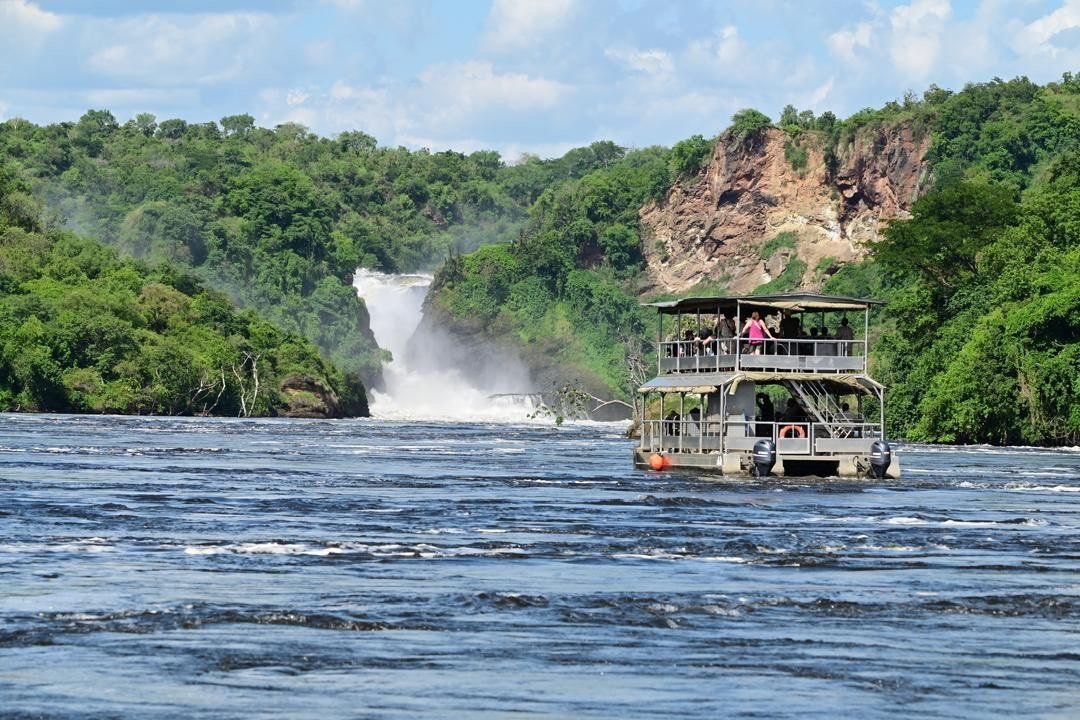
The dry seasons (December–March, June–September) are clearly the best for Murchison Falls. Water clarity improves, fish concentrate below the falls, and the terrain is safer and more accessible. The June–September window is slightly cooler, which many anglers prefer. Read our Murchison Falls sport fishing guide.
Lake Victoria (Entebbe, Ssese Islands)
Lake Victoria is fishable year-round. The lake is so large that weather patterns are partly independent of national seasons. Morning departures give the calmest conditions regardless of month. The main risk in the rainy months is afternoon storms cutting short your time on the water. See Lake Victoria fishing from Entebbe.
Jinja (source of the Nile)
Jinja is fishable all year because the Nile outflow from Lake Victoria is relatively stable. However, dry-season conditions are more pleasant for the overall trip (rafting, sightseeing). Read our Jinja fishing guide.
Lake Albert
The dry seasons are best for Lake Albert access, especially from the park side. The road from Masindi to Butiaba can be challenging in heavy rain. See Lake Albert fishing.
Lake Mburo National Park
Dry seasons combine fishing with excellent game drives. Lake Mburo is relatively accessible year-round (only 4 hours from Kampala), but the park tracks are better in dry weather. See fishing at Lake Mburo.
Lake Bunyonyi
Lake Bunyonyi in the southwest receives rain year-round, so there is no truly dry season. The lighter-rain periods (January–February, June–August) are the most comfortable for crayfish fishing and canoeing. See Lake Bunyonyi fishing.
Best time of day to fish
Regardless of the season, fish in Uganda are most active during two daily windows:
- Early morning (sunrise to ~10 AM): The most productive period. Cooler water temperatures, lower light levels and active predators. At Murchison Falls, dawn sessions often produce the biggest fish.
- Late afternoon (4–6 PM): Another feeding window as light fades. Good for tigerfish, which often feed aggressively before dusk.
- Midday (11 AM–3 PM): Hot, bright and often slow. A good time to rest, take a boat cruise or go on a game drive. Some deep-water trolling on Lake Victoria can still produce, but most river fishing slows in the heat.
Planning around wildlife and gorillas
Many anglers combine fishing with safari. The dry seasons are also the best months for game drives in Murchison Falls NP, Queen Elizabeth NP and Lake Mburo NP, because animals gather near water sources. Gorilla trekking in Bwindi is year-round but is more comfortable in the drier months (trails are less muddy). The June–September window is particularly popular for combined fishing-safari-gorilla trips.
See our fishing and gorilla trekking itinerary and our full Uganda fishing trips page.
Frequently asked questions
Can I fish in Uganda in April or May?
Yes, but these are the wettest months. Expect lost time to storms, muddy roads and coloured water. Keep your itinerary flexible, and consider having alternative activities planned (game drives, cultural visits) for days when fishing conditions are poor.
What is the single best month for fishing in Uganda?
There is no single best month, but January, February, July and August consistently offer the best combination of stable weather, clear water and concentrated fish. For AFCON 2027 visitors (June–July 2027), the timing is ideal for fishing at Murchison Falls.
Does the season affect permit prices?
No. UWA sport fishing permit fees at Murchison Falls are the same year-round. See our permit guide for current fees.
Is fishing better in the morning or evening?
Morning is generally more productive and has calmer conditions on the lakes. Late afternoon can also be excellent, especially for tigerfish. Midday is the slowest period.
Choosing dates for your fishing trip? Tell us your travel window and we will suggest the best plan for the season.