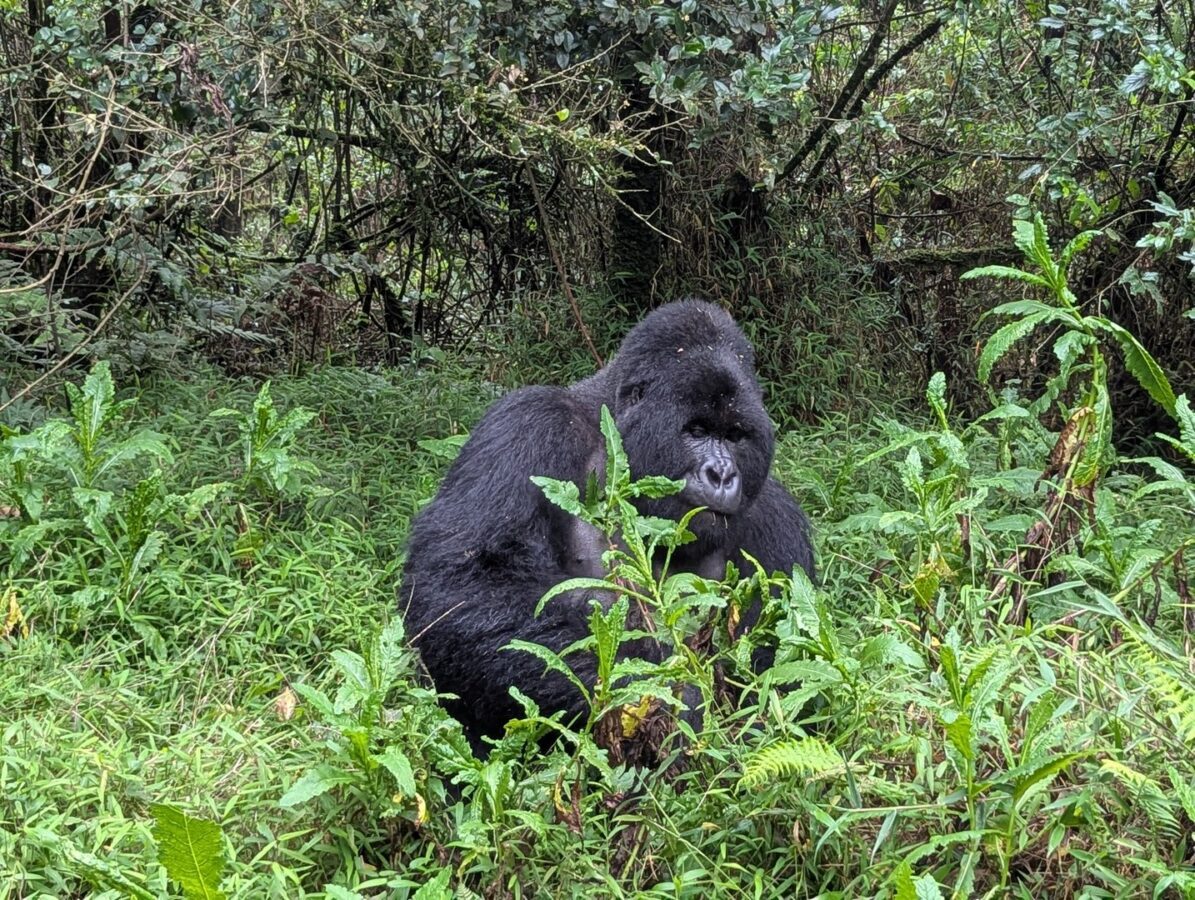
How Long Does a Gorilla Trek Take? Realistic Timings
Last updated: 25 September 2026. Rates and availability are set by UWA and subject to change — confirm before booking.
Short answer: How long does a gorilla trek take? Between four and nine hours from leaving your lodge to returning to it, with the most common total sitting around six to seven. Three parts of the day are fixed — a 30-minute briefing, a 60-minute viewing hour, and the drive from lodge to trailhead. Everything else is variable, and the walk in is the single biggest reason two treks in the same sector can finish three hours apart.
Here is what a real trekking day looks like, in the shape it usually takes. You wake at 4:30am in a cold lodge room in Bwindi. Breakfast is coffee, fruit and eggs, or a packed bag if the drive to the trailhead is long. You leave at 5:00am in the dark. The road to the trailhead is quiet and the headlights cut through morning mist. You arrive at the trailhead around 6:30am, register with your passport and permit, drink tea while the ranger guides organise the groups. At 7:00am the briefing begins — allocation, rules, radios crackle with the trackers’ updates. At 7:30am you walk into the forest. Somewhere between 8:15am and 10:30am you reach the family. You spend one hour with them. You walk back. You are back at your lodge between 12:30pm and 3:30pm, depending on the day.
That is the whole thing. The rest of this guide is about the variables — because the difference between a five-hour day and a nine-hour day is not a rare edge case. It happens every week, and it is the part of trip planning that travellers most often get wrong. Permit categories and booking mechanics are kept current on the gorilla permits Uganda page, and the wider picture sits on the Uganda gorilla trekking hub. The rules that govern the trekking day are published by the Uganda Wildlife Authority.
Gorilla trek timings — key facts
- Total day: 4–9 hours from lodge to lodge
- Most common total: 6–7 hours
- Lodge departure: 4:45–5:30am depending on sector
- Briefing: ~30 minutes at the trailhead
- Walk in: 45 minutes to 3 hours
- Time with gorillas: Strictly 1 hour
- Walk back: Usually 20–40% faster than the walk in
- Return to lodge: 12:30–3:30pm
How long does a gorilla trek take in total?
Total, a gorilla trekking day runs four to nine hours from leaving your lodge to returning to it. The wide range is not a hedge — it reflects real variability that changes day to day. Four hours is a fast trek in Buhoma when the family slept close to the trailhead. Nine hours is Nkuringo in the wet season when the family moved across the ridge overnight and your group had to climb out of a valley at the end. Both are normal days. Both end with the same one hour with the same gorillas.
What is fixed and what is variable breaks down like this:
- Fixed: the 60-minute viewing hour, the 30-minute briefing, the seven-metre distance rule, the paperwork. These do not change based on weather, group, or sector.
- Variable: the drive to the trailhead (15 minutes to 1.5 hours depending on your lodge), the walk in (45 minutes to 3 hours), the walk back (30 minutes to 3 hours), and small coordination delays at the trailhead.
The walk in and walk back together account for most of the variability. If you want to know why one traveller finishes at 12:00pm and another finishes at 3:00pm on the same day in the same park, the answer is almost always the family’s overnight movement and the sector’s terrain.
What a trekking day looks like, hour by hour
The following sequence is the standard trekking day. Timings assume a middle-of-the-range trek in Rushaga or Buhoma — adjust roughly an hour either side for the more demanding sectors.
Typical trekking day, timed
- 4:30am — wake-up at the lodge. Breakfast is served or packed. Bwindi mornings are cold; a fleece and a headlamp are standard. You will not need the fleece once you start walking.
- 5:00am — departure. The drive to the trailhead takes 15 minutes to 1.5 hours depending on where you slept. In the dark, on murram roads, in a Land Cruiser, with the windows up against the mist.
- 6:30am — arrival at the trailhead. Register with your passport and permit. Tea and coffee are usually available. The ranger guides are visible, radios in hand. Trackers have already been out since 5:30am.
- 7:00am — briefing. Around 30 minutes. Group allocation, rules refresher, family assignment for the day, an update on where the trackers have located the family. This is the moment your day gets its shape.
- 7:30am — walk in begins. The ranger leads, the trackers stay in radio contact. Pace is set to the group’s slowest trekker. Rest stops are frequent, usually every 30–40 minutes.
- 8:15am to 10:30am — the walk in. This is the widest variable. A fast group with a close family is at the gorillas in under an hour. A slower group with a family that moved overnight can walk for three hours before contact.
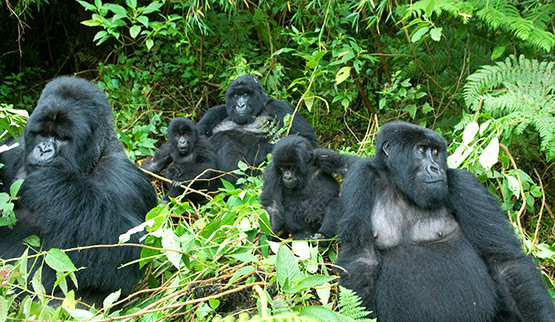
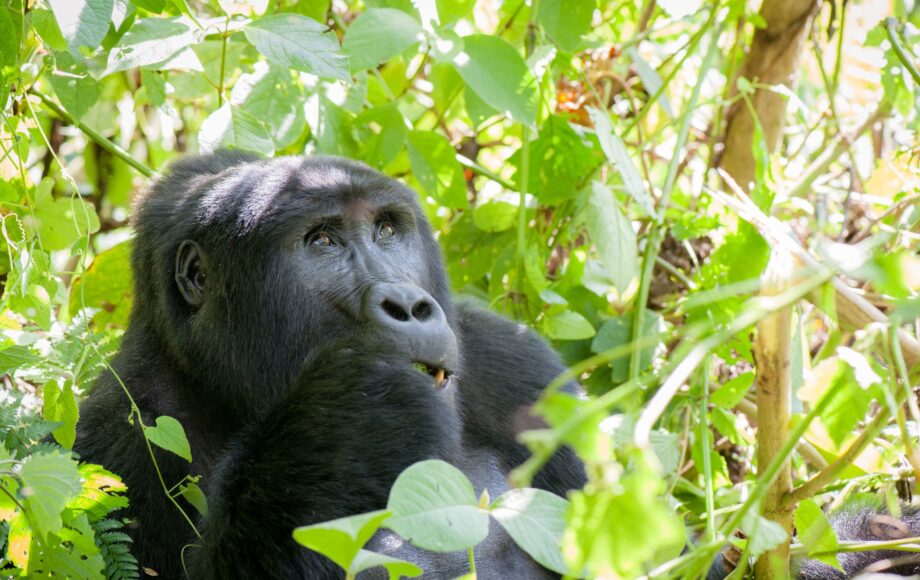
- Contact — the viewing hour begins. The ranger confirms the family is in view, sets the group’s position at seven metres, and the one hour starts. Cameras out, flash off. No talking above a whisper.
- 60 minutes later — the viewing hour ends. The ranger signals the group to move back. There is no extension, no negotiation, and no extra time for a better photograph.
- Walk back. Usually 20 to 40 per cent faster than the walk in, because the trail is familiar and mostly downhill. On Nkuringo the return is a climb out of a valley and takes longer than the approach.
- 12:00pm to 2:00pm — back at the trailhead. Certificates are issued, photos taken, tips given. Your driver is waiting.
- 12:30pm to 3:30pm — back at the lodge. Late lunch, a shower, and the rest of the afternoon free. Most travellers do very little for the remainder of the day.
The gap between arriving at the trailhead and finally reaching the gorillas is the part that catches people out. In the best case, it is an hour and a half. In the worst case, it is nearly four. Both are within the normal range of a well-organised trek.
What determines how long a gorilla trek takes
Four factors decide whether your day runs toward the short end or the long end of the range. Only one of them is under your control.
- Where the family nested overnight. This is the largest single variable. Trackers locate the family before dawn, and the walk in is planned around where they slept. Families move within their home range depending on food and weather. On some mornings they are 45 minutes from the trailhead; on others they are 2.5 hours away. This is not something you or the operator can predict or influence.
- The sector’s terrain. Buhoma and Rushaga have gentler gradients and shorter average approaches. Ruhija is at higher altitude with longer walks. Nkuringo descends into a valley on the way in and climbs out on the way back, which makes the return leg harder than the approach — the reverse of every other sector.
- Group pace. Trekking groups move at the pace of the slowest member. Rangers build groups around expected fitness, so a slower group is not a mistake — it is deliberate. If you are in a group that takes an extra hour over the same trail as another group on the same day, nothing is wrong.
- Weather. Dry season means firm trail and steady walking. Wet season means mud, slower descents, and one or two extra hours on the total day. A single heavy shower during the walk back can add thirty minutes on its own.
Of these four, only group pace is partly influenced by your own choices — and the influence is mostly about honesty at the briefing. If you tell the ranger you are a slow walker, you will be placed in a group that suits that pace, and the day will be more comfortable for everyone. If you understate your pace, the group slows and the day lengthens.
Three real scenarios
The following three scenarios are drawn from real trekking days. They cover the realistic extremes and the middle, and they show how the range from four hours to nine hours actually plays out.
| Phase | Short trek | Average trek | Long trek |
|---|---|---|---|
| Sector | Buhoma, dry season | Rushaga, mixed season | Nkuringo, wet season |
| Lodge departure | 5:30am | 5:00am | 4:45am |
| Briefing ends | 7:15am | 7:00am | 7:00am |
| Walk in | 45 minutes | 2 hours | 2.5 hours |
| Contact with family | 8:00am | 9:15am | 10:00am |
| Viewing hour | 8:00–9:00am | 9:15–10:15am | 10:00–11:00am |
| Walk back | 35 minutes | 1h 30m | 2 hours |
| Back at trailhead | 9:45am | 12:00pm | 1:15pm |
| Back at lodge | 10:30am | 12:45pm | 2:30pm |
| Total | ~5 hours | ~7h 45m | ~9h 45m |
Times are illustrative of real trekking days. Your specific day will depend on the family’s overnight movement, the sector, group pace and weather.
The long scenario is the one that catches travellers who have not planned for it. Everything runs thirty to sixty minutes slower than expected, and the compounded effect pushes the return to the lodge past 2:30pm. Anyone who booked a Lake Bunyonyi transfer or a Queen Elizabeth evening game drive for the same day has a scheduling problem. Anyone who left the afternoon open just has a longer rest.
Afraeka tip: When we advise on trekking day timing, we give the range rather than the average, and we tell travellers to block the whole day. Planning for seven hours and finishing in five is a pleasant surprise. Planning for five and finishing in nine is a stressful end to what should be an excellent day. If you want to fit something else in, make it flexible or shift it to the next day.
Which sector produces which kind of day
The sector is the most controllable factor in the total day length, because you choose it at the booking stage. Here is what to expect from each, and what to plan around it.
| Sector | Typical total | How to plan around it |
|---|---|---|
| Buhoma | 4–6 hours | Shortest days; an afternoon activity after the trek is realistic |
| Rushaga | 5–7 hours | Mid-range; leave the afternoon open but expect to be free by 2pm |
| Ruhija | 6–8 hours | Longer walks; do not book an afternoon activity with a fixed start time |
| Nkuringo | 6–9 hours | The longest days; block the whole day and plan for the return climb |
| Mgahinga | 5–8 hours | Variable; the single habituated family can be anywhere in its range |
Ranges are typical. Actual lengths depend on where the family nested the night before and the conditions on the day.
Two things follow from this. First, if you have a fixed afternoon plan, Buhoma is the safest sector — the shortest days come from there. Second, if the trekking day is the point of the trip and you have nothing else scheduled, any sector works and the longer days are simply more time in the forest. Sector guides on the blog cover the individual terrains in more detail, and the wider landscape is mapped on the Uganda destinations page. Trackers who work these sectors daily understand the movement patterns of each family, and the International Gorilla Conservation Programme documents the wider conservation effort behind the tracking teams.
How long do you spend with the gorillas?
Exactly one hour. This is the only part of the trekking day that does not flex. It does not matter whether you walked 45 minutes or three hours to reach the family, whether it is raining, or whether you have twenty more photographs you want to take. The ranger signals the end of the hour and the group moves back. Our gorilla trekking rules and regulations guide covers the viewing rules in detail, including the seven-metre distance and the no-flash rule.
Two practical things about the hour:
- It starts when contact is made, not when you arrive. The clock starts when the ranger confirms the family is in view. The walk in does not count against the hour.
- It can occasionally be shorter. If the family moves into dense vegetation where the group cannot safely follow, the ranger may end the viewing early. This is rare but it happens. There is no extension for the time lost.
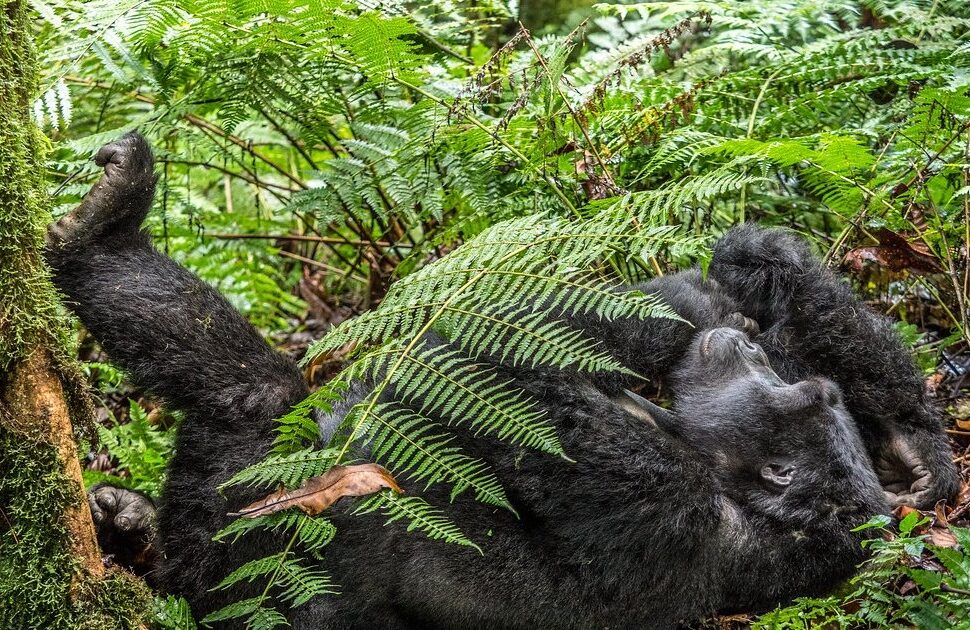
The hour feels shorter than most travellers expect. The gorillas go about their morning, the ranger positions the group for the best view, and sixty minutes pass quickly. The most common piece of advice we give — and the one travellers thank us for most often — is to put the camera down for ten minutes and simply watch.
Planning the rest of your day around the trek
What you plan for the rest of the trekking day depends on who you are and what you are doing the next morning. Three traveller types, three different plans:
- Fit solo traveller or couple, nothing else scheduled. Block the whole day and do not plan anything after 3:00pm. If you finish early, you have a free afternoon at the lodge. If the day runs long, you have not lost anything. This is the safest approach in every sector.
- Family with teenagers (all over 15). Choose Buhoma or Rushaga. Both tend to finish earlier than Ruhija or Nkuringo, which matters for teenage energy levels after a long walk. Book a relaxed lodge afternoon rather than an activity.
- Older traveller or traveller with a knee concern. Choose Buhoma. Book a porter and use the descent to slow the pace. Do not schedule anything for the same afternoon. If the total day runs to seven hours, the body will want rest, not another activity.
How to plan your trekking day
- Block the entire day for the trek — do not schedule fixed activities
- Plan the following day as the earliest point for any onward transfer
- Book a porter, especially if the descent is a concern
- Break in your boots for a month before travel
- Take a buffer day between the trek and any onward flight
- Choose Buhoma or Rushaga if the total day length is a priority
- Tell the ranger at the briefing about any fitness or pace concerns
- Carry water and a snack for the walk — the day can run to nine hours
Two further considerations apply for travellers doing back-to-back treks. If you are doing a two-day itinerary, the second day typically runs to a similar length as the first but feels longer because your body is working from a base of fatigue. Our guide on gorilla trekking two days in a row covers the logistics, and the Uganda Tourism Board maintains national context on the trekking landscape if you want to understand the wider trip-planning picture.
Common mistakes that make a trek feel longer than it is
Most of what stretches a trekking day from a manageable six hours into an exhausting nine is not the terrain — it is the preparation. These are the mistakes we see most often.
- Not eating breakfast. A five-hour walk on a cup of coffee is harder than the same walk on a proper meal. Eat at the lodge, even at 4:30am.
- Not carrying enough water. Bwindi is humid, and the walk in often happens in the warmest part of the morning. Two litres per person is the sensible minimum.
- Wearing new boots. Blisters on the walk in make the walk back feel twice as long. Break boots in for at least a month before travel.
- Skipping the porter. The porter carries your daypack and steadies you on the descent, which meaningfully shortens the felt duration of the return leg even when the trail is the same.
- Understating fitness at the briefing. Rangers build groups around expected pace. If you say you are faster than you are, the group slows and the day lengthens for everyone including you.
- Scheduling anything for the same afternoon. The most common avoidable error. Leave the afternoon open.
- Wearing jeans or cotton. Wet cotton trousers are heavy, cold, and slow you down. Quick-dry hiking trousers are the right choice.
- Not booking a buffer day before onward travel. A long trekking day plus a night-time transfer is a poor combination. Build in the extra night.
Can one permit cover two people?
No. One permit covers one person for one trek, and this applies regardless of how long the day runs. A party of four needs four permits in the same sector on the same date. Each permit is tied to a named individual, and there is no way to share one or to transfer it to another person. Details on how permits work, including current requirements, are kept current on the gorilla permits Uganda page.
The eight-visitor daily cap per habituated gorilla group applies equally, and it is one of the reasons trekking groups are usually built at a consistent size rather than pooling a single large party onto one family. The one-hour viewing cap is unaffected by group size, and the total trekking day is affected only marginally by group size beyond a small amount of extra coordination at the briefing.
Once you have your permits, the gorilla group you actually visit is allocated according to the trekking sector, with final group allocation managed by UWA on the morning of the trek. You will know your sector in advance because it is on your permit; you will learn your family at the briefing alongside everyone else. Sector choice has a much bigger effect on the length of the trekking day than family allocation does — Nkuringo and Ruhija produce the longest days, Buhoma the shortest, and that is the variable most worth planning around.
Afraeka field note: At 11:20am one morning, three hours into what the briefing had called a “typical” Buhoma trek, a small group finally reached their family in a valley the trackers had not expected them to enter. The family had moved in the night, further than usual, and the ranger had to reroute the walk in. The viewing hour was superb — the family was feeding quietly and the mist was still in the trees — but the walk back took another ninety minutes, in the rain, over wet clay. The group reached the trailhead at 2:15pm. One traveller in the group had booked a 4:00pm transfer to Lake Bunyonyi and made it with twenty minutes to spare; another had spent the entire walk in watching his watch, worried about his afternoon schedule, and later told us that he remembered almost nothing of the forest. The trek went well. The timing went exactly as the range had suggested it might. The only thing that had gone wrong was the expectation.
Frequently asked questions
How long does a gorilla trek take in total?
Four to nine hours from leaving your lodge to returning to it, with six to seven being the most common. The one-hour viewing window is fixed. The rest — the walk in, the walk back, and the drive to the trailhead — varies with the family’s overnight movement, the sector, group pace and weather.
What time does a gorilla trek start?
You leave your lodge between 4:45am and 5:30am. The briefing at the trailhead starts around 7:00am and lasts about 30 minutes. The walk into the forest begins around 7:30am. The pre-dawn start is unavoidable — trackers need to locate the family before groups are dispatched, and the walk needs to happen before the heat of the day.
What is the shortest a gorilla trek can be?
The shortest realistic total is around four to five hours. This happens in Buhoma or Rushaga in the dry season when the family has nested close to the trailhead and the group walks at a steady pace. Back at the lodge by 10:30 or 11:00am is possible but not common.
What is the longest a gorilla trek can be?
The longest realistic total is around nine hours. This happens in Nkuringo or Ruhija in the wet season when the family has moved far from the trailhead and the descent is slow. Back at the lodge at 3:30 or 4:00pm is the realistic upper end. Anything beyond nine hours is unusual.
Can I do a gorilla trek in half a day?
You can finish a trek by lunchtime in Buhoma or Rushaga if the family is close and the pace is steady — but you cannot guarantee it in advance. The actual length is not known until the morning of the trek, so plan the whole day. If you finish early, that is a bonus.
Do you get food during the trek?
Not during the walk itself, but you should carry snacks. The lodge will pack breakfast if you are leaving before the kitchen opens, and a packed lunch is standard for the trailhead. Water is essential — two litres per person minimum. You can eat during the walk in and walk back, at a distance from the gorillas.
What happens if you arrive late to the briefing?
UWA will do their best to accommodate you, but arriving after the briefing has ended can mean missing your group allocation for the day. If a permit has been issued and you are physically present at the trailhead, the rangers will usually find a way to include you — but the safest approach is to leave the lodge with enough margin, especially in the wet season when roads are slower.
What if someone in your group can’t keep pace?
Rangers build groups around expected pace, and most treks are already planned around the slowest member. If a trekker is struggling, the ranger will usually slow the group or, in the case of a serious difficulty, arrange additional porters. This is one of the reasons honesty at the briefing matters — placing a slow trekker in a fast group is what causes problems.
Is a gorilla trek longer than a chimpanzee trek?
Yes, usually. A chimpanzee trek in Kibale typically runs two to four hours total, with less steep terrain and shorter walks. Gorilla treks run longer because the terrain is more demanding and the families range over wider areas. Both have a strict one-hour viewing window.
Planning a trek and want to get the timing right?
Send us your dates, your sector preference and anything you have scheduled around the trek, and we will tell you realistically how long the day is likely to run in your sector and how to structure the rest of the trip. If you need a tighter day, we will suggest a gentler sector or a porter arrangement to help. No price figures until we know your route, because the permit is only one line of the total.
About the author: Victoria Kayaga is a Ugandan-born safari expert and founder of Afraeka Adventures, with 15+ years in East African tourism. Based in Kampala, she has planned gorilla trekking itineraries across Bwindi’s four sectors and Mgahinga for years, and she advises every client on realistic trekking-day timings before they book. More about Victoria.
Keep planning
- 3-day Uganda gorilla safari
- 5-day Bwindi and Lake Mburo safari
- Primate tracking experiences
- All Afraeka trips