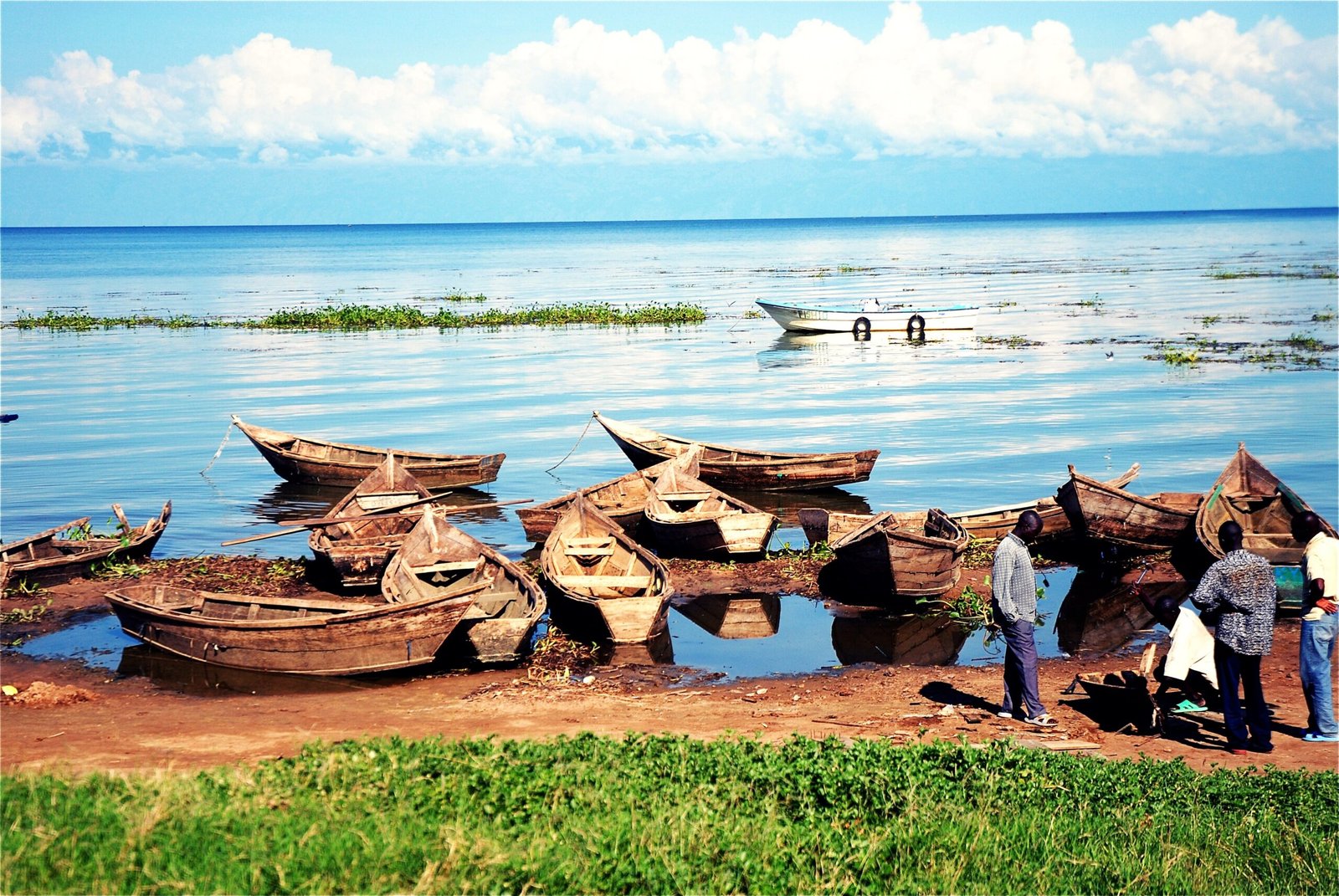
Quick answer: Visiting a fishing village or landing site is one of the best cultural experiences in Uganda. You can watch boats come in at dawn, see how fish are sorted, weighed and sold at busy open-air markets, and learn how communities around Lake Victoria, Lake George, Lake Albert and the Ssese Islands depend on the water for their livelihoods. Go with a local guide, ask before taking photos, and visit in the morning when the catch arrives.
- Where
- Landing sites on Lake Victoria, Lake George, Lake Albert, Ssese Islands
- Best time to visit
- Early morning, when boats return with the catch
- What you see
- Boats landing, fish markets, drying racks, boat building, net mending
- Etiquette
- Go with a local guide, ask before photos, buy something if you can
- Combine with
- Fishing trips, boat cruises, Queen Elizabeth NP, safaris
Fishing in Uganda is not only a sport — it is a way of life for millions of people. Uganda’s lakes and rivers support one of the largest freshwater fishing industries in Africa, and the landing sites where fishermen bring their catch ashore are busy, colourful, noisy hubs of commerce and community. A visit to one shows you a side of Uganda that most tourists never see: the real, working relationship between people and water that has sustained communities for generations.
What happens at a landing site
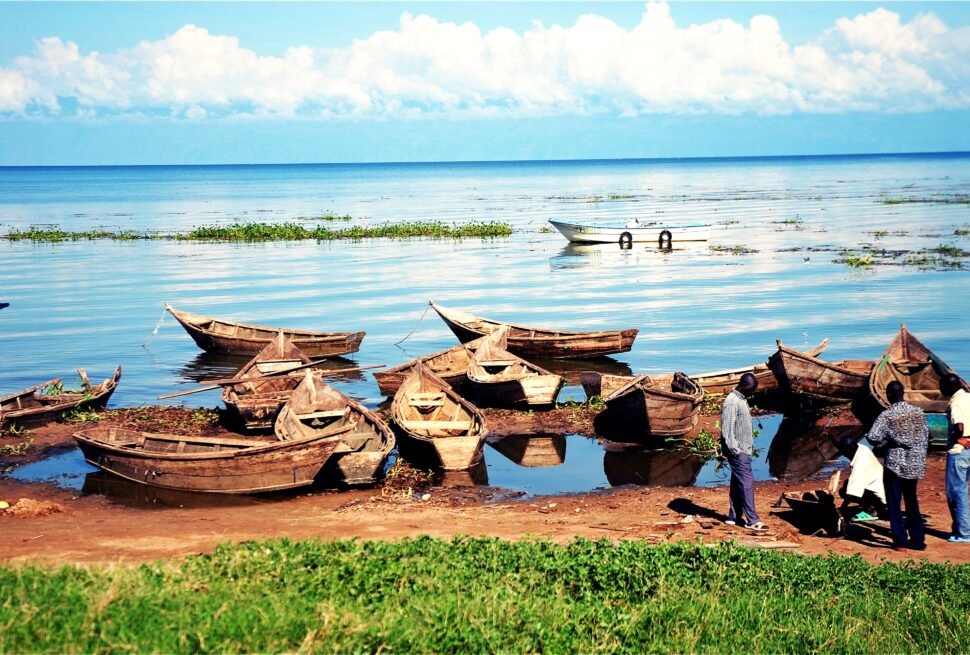
A landing site (known locally as a “landing”) is the point on a lakeshore or riverbank where fishing boats launch, return and offload their catch. Uganda has hundreds of registered landing sites, each one a micro-economy built around fish.
The daily rhythm
- Pre-dawn departure: Many fishing crews leave in the dark, paddling or motoring out to their fishing grounds before first light.
- Morning return: Boats begin returning from around 6–8 AM, loaded with the night’s catch. This is the busiest and most atmospheric time to visit.
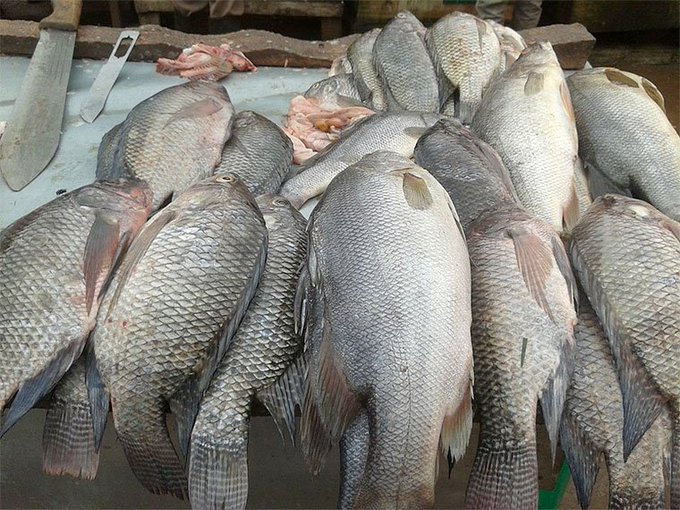
- Sorting and weighing: Fish are sorted by species and size on the beach or at covered market areas. Traders — many of them women — negotiate prices and buy in bulk.
- Processing: Some fish go straight to market fresh. Others are sun-dried on large wooden racks, smoked in brick kilns, or salted for preservation and transport to distant markets.
- Boat maintenance: Between fishing trips, crews repair nets, mend boats and build new ones. Wooden boat building is a traditional skill passed down through generations.
- Community life: Landing sites are social centres. Families live nearby, children play on the shore, small shops and restaurants serve the fishing community, and the whole area hums with activity.
Where to visit fishing villages in Uganda
Lake Victoria landing sites (near Entebbe and Kampala)
The easiest to reach. Landing sites along the northern shore of Lake Victoria — around Entebbe, Ggaba and Kasenyi (near Kampala) — handle enormous volumes of fish daily. The scale is impressive: rows of boats, mountains of fish, and markets that supply much of Kampala’s seafood.
A Lake Victoria village visit pairs naturally with a Lake Victoria fishing charter from Entebbe. Fish in the morning, visit a landing site in the afternoon to see where the commercial catch ends up.
Lake George and Queen Elizabeth National Park
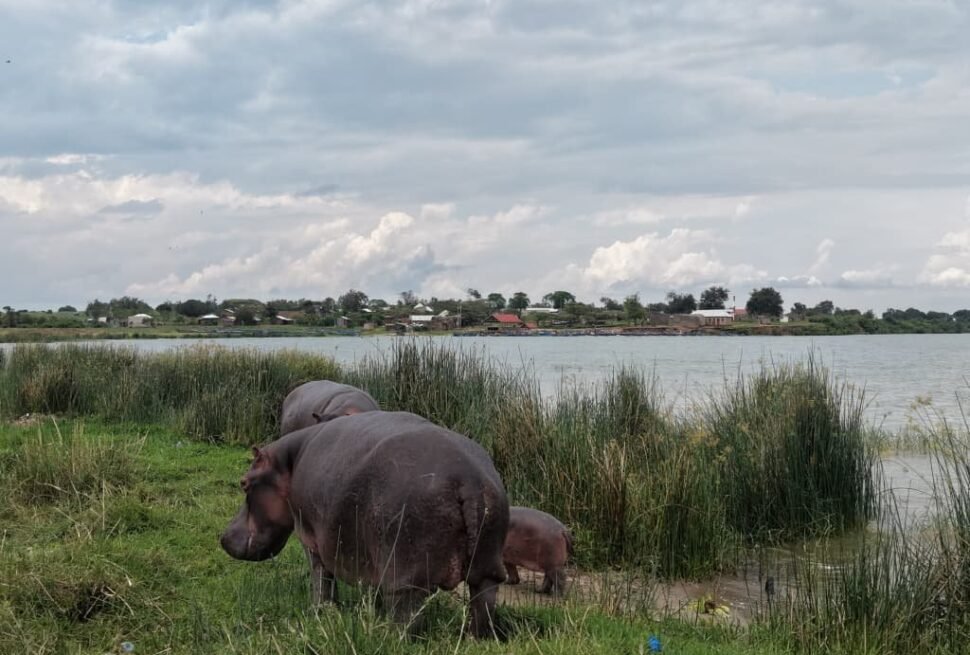
Fishing communities inside and near Queen Elizabeth National Park live alongside hippos and elephants — a surreal juxtaposition. The Kazinga Channel, which connects Lake George and Lake Edward, is lined with fishing villages where the daily catch includes tilapia and catfish, and where hippos lounge metres from the boats.
The boat cruise on the Kazinga Channel passes several fishing villages and landing sites. You see the boats, the drying racks, the children waving from shore — all with hippos in the foreground.
Ssese Islands
The fishing villages on Bugala and the smaller Ssese Islands show a slower, more traditional way of life. Wooden boats are still built by hand on the beach, and fishing is the primary livelihood. The pace is unhurried, and the island setting adds a layer of beauty.
Read our Ssese Islands fishing guide.
Lake Albert (Butiaba and the rift valley)
Lake Albert’s landing sites along the eastern shore offer a more remote and less-visited experience. The rift valley setting is dramatic — steep escarpments rising behind the villages, with the Congo mountains visible across the lake. Fishing communities here work the deep, open waters of Lake Albert for Nile perch and tilapia.
Read our Lake Albert fishing guide.
Jinja and the Nile
Fishing villages near Jinja work the Nile where it leaves Lake Victoria. The mix of flowing river and lake-margin fishing creates a distinctive scene. Jinja also has a strong cultural tourism infrastructure, making guided visits easy to arrange.
Read our Jinja fishing guide.
What makes a fishing village visit special
- Authenticity: Landing sites are working places, not tourist attractions. What you see is real daily life, not a performance.
- Sensory richness: The smell of drying fish, the sound of negotiations in Luganda or Runyoro, the colours of the boats and the market — it is an immersive experience.
- Human connection: Fishermen are often happy to talk about their work, their boats and their catches. With a guide to translate, conversations flow easily.
- Understanding conservation: Seeing how communities depend on fish helps visitors understand why catch and release matters in sport fishing, and why sustainable fisheries management protects both livelihoods and ecosystems.
- Photography: The visual material is extraordinary — boats on the water at dawn, fish laid out in geometric patterns on drying racks, weathered faces and hands at work. (Always ask permission first.)
Respectful visiting tips
- Go with a local guide. A guide introduces you, explains what you see, translates conversations and ensures you do not inadvertently cause offence. Many landing sites are not set up for independent tourists.
- Ask before photographing people. Some people are happy to be photographed; others are not. A smile and a gesture go a long way. Offer to show them the photo on your screen.
- Visit in the morning. The best action happens between 6 and 10 AM, when boats return and the market is busiest. By midday, the main activity is over.
- Buy something if you can. Fresh fish for your lodge kitchen, a cold drink from a local shop, or locally made crafts. Your money goes directly into the community.
- Dress modestly. Fishing villages are conservative communities. Cover shoulders and knees. Wear closed shoes that can handle wet, muddy ground.
- Keep valuables secure. Landing sites are busy, crowded places. Normal precautions apply.
- Respect working space. Do not block boats, markets or processing areas. Stay out of the way of people carrying heavy loads of fish.
- Do not negotiate prices for entertainment. If you are buying fish, negotiate respectfully as locals do. Do not haggle for the sake of it — these are people’s livelihoods.
The economics of fishing in Uganda
Understanding the scale helps explain what you see:
- Lake Victoria is Africa’s largest lake and one of the world’s most productive freshwater fisheries. It supports an estimated 3 million people around its shores in Uganda, Kenya and Tanzania.
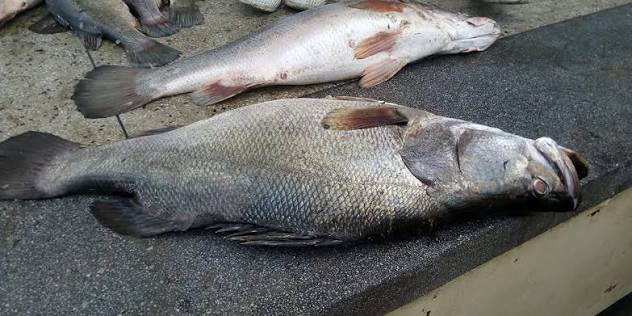
- Nile perch is a major export: processed and shipped to Europe, Asia and the Middle East. The industry generates significant foreign exchange for Uganda.
- Tilapia is the primary food fish for domestic consumption. It appears on tables across the country, grilled, fried or stewed.
- Silverfish (mukene) — small sardine-like fish — are dried in vast quantities on the lakeshore and sold as a protein-rich food across East Africa.
- Women play a central role in fish processing and trade. At many landing sites, the traders buying and reselling fish are predominantly women.
Conservation concerns
Uganda’s fisheries face real pressures: overfishing, illegal methods (undersized nets, poison), pollution and habitat degradation. The Uganda Wildlife Authority and local Beach Management Units work to regulate catches and protect breeding stocks. As a visitor, you can support sustainable practices by:
- Practising catch and release when sport fishing
- Choosing operators who follow UWA regulations
- Supporting community tourism that benefits fishing families directly
Making it part of your trip
A fishing village visit works as a half-day addition to many Uganda itineraries:
- Entebbe arrival/departure day: Visit a Lake Victoria landing site before or after your Lake Victoria charter.
- Queen Elizabeth NP: The Kazinga Channel boat cruise passes fishing villages. Add a guided walk through one.
- Ssese Islands: Island fishing villages are part of the fabric of your stay.
- Any multi-day safari: Ask your driver-guide about roadside landing sites you pass en route.
See our Uganda fishing trips page for complete trip options.
Frequently asked questions
Is it safe to visit a fishing village?
Yes, especially with a local guide. Landing sites are public, working places — busy but not dangerous. Take normal precautions with valuables in crowded areas.
Can I go out fishing with local fishermen?
Sometimes, by arrangement through your guide or lodge. Safety standards on local boats vary considerably — always check with your guide, insist on life jackets, and be realistic about conditions. A sport-fishing charter is safer and more comfortable for a fishing experience.
Do I need to pay to visit a landing site?
Landing sites are public places — no entry fee. Guided community visits and cultural experiences may have a fee that directly supports local people. Your guide will explain what is included.
Can children visit?
Yes. Children usually enjoy the boats, the market and the bustle. Keep them supervised near the water (hippos and crocodiles may be present at some lakeside sites) and explain respectful behaviour in advance.
Want to add a fishing village visit to your trip? We arrange guided community experiences at landing sites across Uganda.