Last updated: 24 September 2026. Rates and availability are set by UWA and subject to change — confirm before booking.
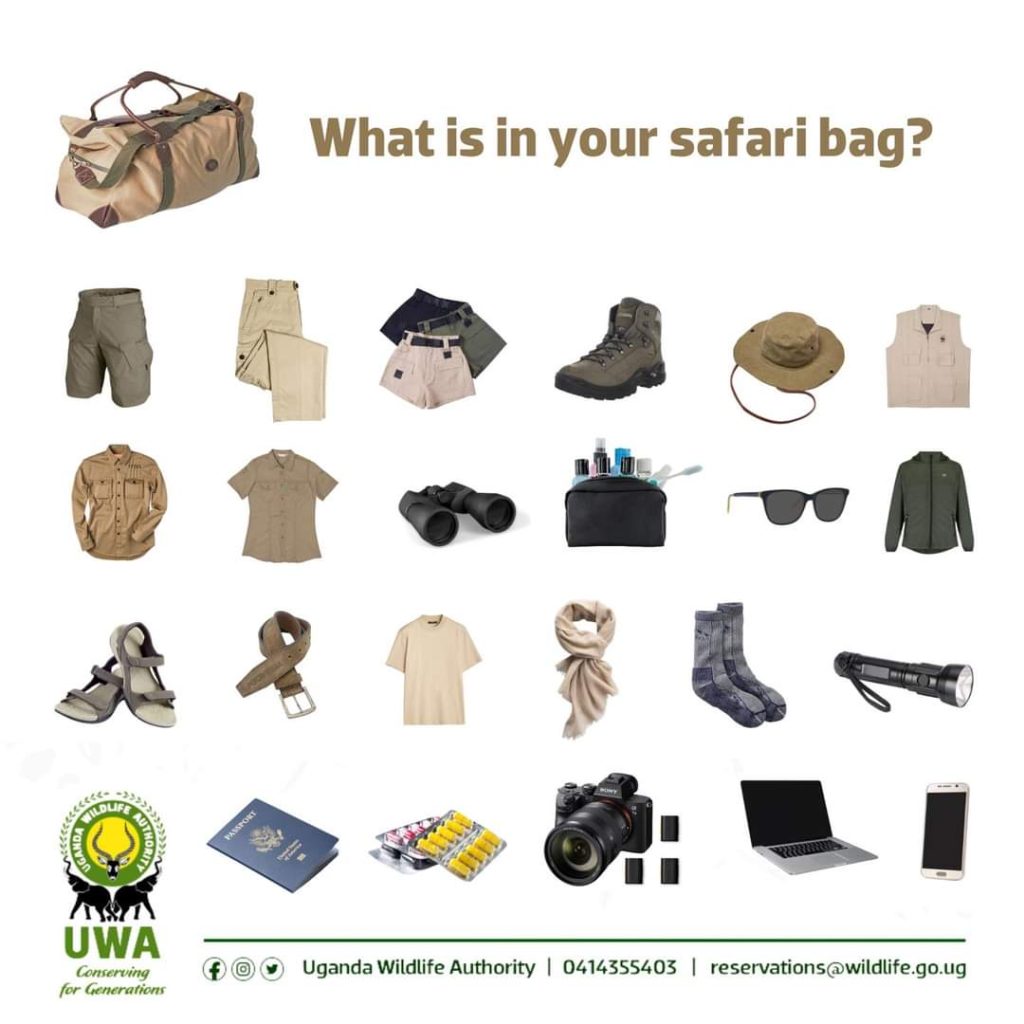
Short answer: For gorilla trekking in Bwindi, pack waterproof hiking boots with deep tread, gaiters, long trousers and long sleeves, gardening gloves for nettles, a light waterproof shell, a warm layer for the morning briefing, a small daypack, plenty of water, and a camera with a strap. Hire a porter to carry the daypack on the trail. What you should leave behind: flash photography gear, drones, heavy camera equipment you are not comfortable carrying all day, and any expectation that the trek will be short.
The gear question comes up on every traveller forum, and the honest answer is that what to pack for gorilla trekking is less about having the right equipment and more about not forgetting the two or three items that make the biggest difference. Most travellers get it roughly right and then improvise. Travellers who get it exactly right tend to describe the trek as comfortable rather than just achievable — and the difference between those two experiences usually comes down to footwear, gaiters and gloves.
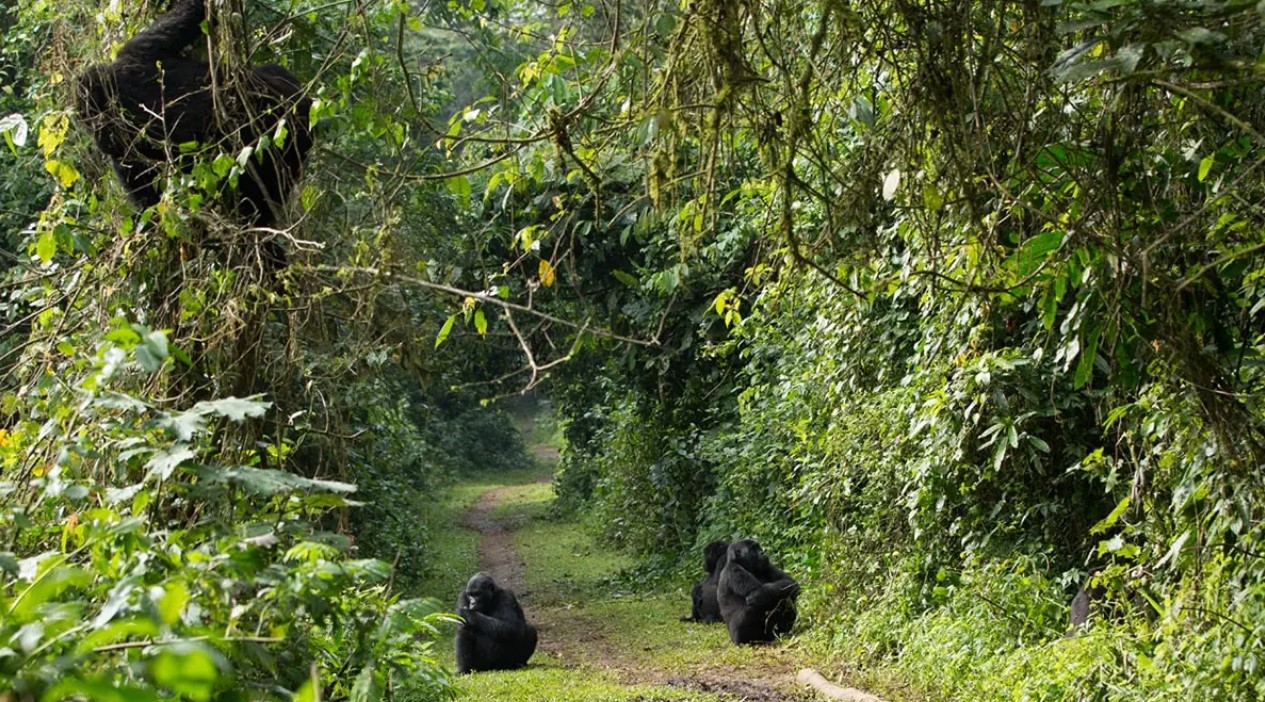
This guide is the reference for what to pack for gorilla trekking in Bwindi — the boots and gaiters, the clothing layers, the accessories and the camera gear, plus the items most trekkers forget and the items most trekkers regret bringing. If you have not yet chosen a sector, the Uganda gorilla trekking hub covers the wider picture, and permit requirements are kept current on the gorilla permits Uganda page.
What to pack for gorilla trekking — key facts
- Most important item: Waterproof hiking boots with deep tread, broken in before travel
- Second most important: Gaiters to keep mud, water and nettles out of your boots and trousers
- Clothing: Long trousers and long sleeves — no shorts, no bare arms
- Hands: Gardening gloves for nettles and thorny vegetation
- Weather protection: A light waterproof shell — Bwindi is often wet
- Warmth: A warm layer for the cold, misty morning briefing
- Carry: A small daypack with water and snacks — or let a porter carry it
- Do not bring: Drones, flash equipment, or heavy gear you cannot carry all day
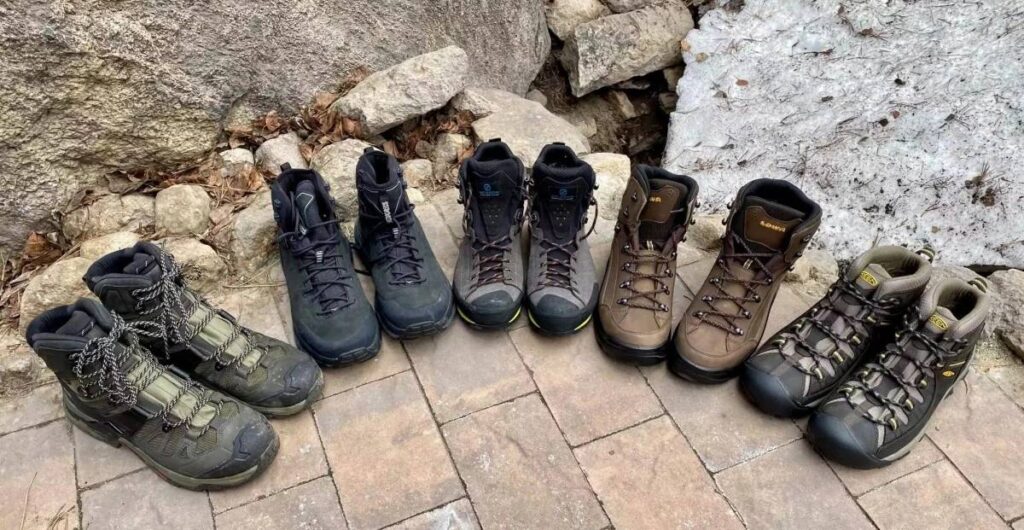
What footwear should you pack for gorilla trekking?
The footwear to pack for gorilla trekking is waterproof hiking boots with deep tread and good ankle support. This is the single most important item on the kit list, and it is the one most likely to make or break the day. Boots should be broken in thoroughly before travel, and they should have enough grip for wet clay on steep, uneven ground — trail runners with light tread are not sufficient in the wet season.
Three points about footwear for gorilla trekking:
- Waterproofing matters more than you expect. Even in the dry season, Bwindi’s forest trails are often muddy, and stream crossings are common. Waterproof boots keep your feet dry, which keeps you warm and prevents blisters. Non-waterproof boots become heavy and cold quickly when wet.
- Break boots in for at least a month. New boots cause blisters, and blisters on a trekking day are avoidable and miserable. Wear your boots on training walks in the weeks before travel, ideally on hills or uneven ground.
- Bring a spare pair of socks. A fresh pair of socks in your daypack is a small item that becomes very welcome if your feet get wet during the walk in. Wool or synthetic socks dry faster than cotton.
Trail shoes with aggressive tread can work in the dry season, but they do not protect your ankles from roots and rocks the way proper hiking boots do. Given that gorilla treks involve walking on uneven ground with roots, mud and steep sections, we recommend proper boots for all seasons. The specific demands of different sectors — particularly the higher-altitude Ruhija sector and the steeper Nkuringo terrain — make this even more important. If your fitness level is at the lower end and you want to understand how gear supports the day, our gorilla trekking fitness level guide covers the wider picture.
What clothing should you pack for gorilla trekking?
Clothing for gorilla trekking should be long trousers, long sleeves, and layers. Shorts and short-sleeved shirts are not advisable — the forest has nettles, thorny vegetation and insects, and long clothing is the simplest protection. Layers work better than a single heavy garment because Bwindi’s forest shifts between cool and humid as you move through different elevations and shade.
The clothing kit list breaks down into four categories:
Clothing to pack for gorilla trekking
- Long trousers. Not shorts. Lightweight hiking trousers or comfortable walking trousers with some stretch work best. Jeans become heavy and stiff when wet and are not recommended.
- Long-sleeved top. A breathable long-sleeved hiking shirt or light fleece as a base layer. Cotton holds sweat and dries slowly; technical fabrics are better.
- Warm layer. A fleece or light insulated jacket for the morning briefing, which starts before dawn and is genuinely cold in Bwini’s higher sectors. This is the item most trekkers forget.
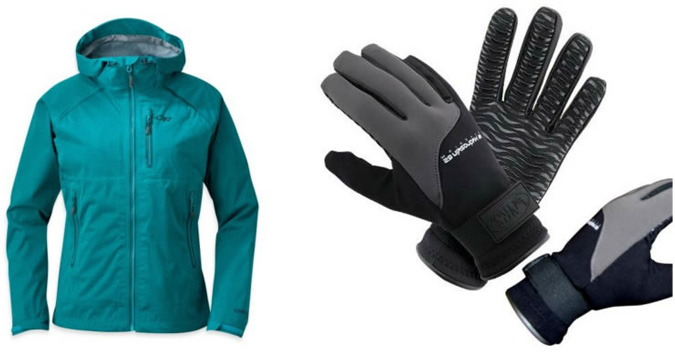
- Waterproof shell. A lightweight rain jacket that packs into your daypack. Even in the dry season, rain showers are possible, and the forest canopy drips long after rain has stopped.
What to avoid: shorts, short sleeves, jeans, heavy cotton items, and any clothing that will not dry quickly if it gets wet. Bwindi’s forest is humid, and even on a dry day a lightweight shell and quick-drying layers make the trek more comfortable. If you are trekking in the wet season — which in Uganda means primarily April to May and November — waterproofing becomes the priority, and a poncho or larger waterproof shell is worth considering. Guidance on sector-specific conditions sits in the sector guides on the blog, including our Buhoma sector guide.
What gear and accessories should you pack for gorilla trekking?
The gear and accessories to pack for gorilla trekking are the small items that make the day comfortable and that most trekkers either forget or do not know about. Three stand out: gaiters, gardening gloves, and a trekking pole if you use one. None of these are optional in a practical sense — they are the items most likely to make the difference between a smooth day and a frustrating one.
Gear and accessories for a gorilla trek
- Gaiters — essential for mud, water and nettles
- Gardening gloves — protect hands from nettles and thorny vegetation
- Trekking pole — optional, but useful on steep or slippery sections
- Small daypack — 20 to 30 litres is plenty
- Water — 1.5 to 2 litres per trekker
- Snacks — nuts, energy bars, dried fruit
- Camera with strap — strap is essential on steep ground
- Binoculars — optional, useful for birding and for spotting wildlife on the walk
- Small towel — for drying hands and face after the trek
- Basic first aid — blister plasters, painkillers, personal medication
- Sun protection — hat and sunscreen, even on cloudy days
- Insect repellent — for the lower forest sections
Two items deserve a specific note. Gaiters are underused by first-time trekkers, and they are the single cheapest addition to your kit that produces an outsized improvement to the day. They keep mud, water, small stones and nettles out of your boots and trousers, and they are widely available at outdoor shops and through most Bwindi lodges. Gardening gloves — the rubberised or leather kind, not surgical gloves — are the second. Nettle stings on the trail are common, and gloves protect your hands when you need to grip vegetation for balance.
What not to bring: drones (prohibited in Uganda’s national parks, with no exception for gorilla trekking), flash photography equipment (prohibited during the viewing hour), and heavy camera equipment that you are not comfortable carrying for several hours. Serious photographers should plan their kit around a single body and a single lens rather than a full kit bag. More detail on the rules that govern photography and equipment during the trek sits in our gorilla trekking rules and regulations guide.
Afraeka tip: Test your full kit on a training walk before you travel — boots, gaiters, gloves, daypack, everything. A practice walk tells you three things you cannot learn in a shop: whether your boots are actually broken in, whether your daypack straps sit comfortably on a long walk, and whether your gaiters stay in place as you move. Trekkers who test their kit at home arrive in Bwindi comfortable; trekkers who do not often discover small problems on the trail that could have been fixed in advance.
What should go in your daypack on the trek?
Your daypack on the trek should contain water, snacks, a waterproof shell, your warm layer once the morning has warmed up, any personal medication, and your camera if it is not around your neck. A 20 to 30 litre pack is sufficient for a gorilla trek — you do not need a large pack, and a smaller one sits more comfortably on your back. Many trekkers hire a porter to carry the daypack, which frees up both hands for balance on steep ground.
The contents of a daypack for a gorilla trek are best thought of as a single layer of defence against three specific problems:
- Weather. The waterproof shell and warm layer cover the temperature swings and rain that Bwindi’s forest produces.
- Hydration and energy. Water and snacks keep you going through a day that can run four to nine hours, most of it on your feet.
- Small emergencies. Blister plasters, painkillers, personal medication and a small towel address the minor issues that can otherwise become significant on a long trail.
What to leave out of your daypack: heavy camera bodies you will not use, spare clothing you will not change into, laptops or other electronics, and anything you would be uncomfortable losing if your pack got wet. Gorilla trekking is a full day in a damp forest, and the lighter your pack, the more comfortable the trek. If you want to understand how a porter fits into this — and why most trekkers use one to carry the daypack — our guide on how to hire a porter for gorilla trekking covers the practical details.
What do most trekkers forget to pack for gorilla trekking?
The items most trekkers forget to pack for gorilla trekking are the warm layer, the gaiters, the gardening gloves, and the spare pair of socks. These four items come up again and again in post-trek feedback, and all four are small, inexpensive and packable. The pattern is consistent: trekkers arrive in Bwindi having focused on their boots and their camera, and having overlooked the smaller items that shape the day.
| Item | Why it is often forgotten | What it actually does |
|---|---|---|
| Warm layer | Trekkers picture Uganda as hot and do not consider a dawn briefing at 2,000+ metres | Keeps you comfortable for the cold, misty morning briefing and the first hour of the trek |
| Gaiters | Not commonly used by trekkers outside mountain hiking | Keeps mud, water, stones and nettles out of your boots and trousers |
| Gardening gloves | Most travellers do not think of gloves as trekking kit | Protects your hands from nettles and thorns when you grip vegetation for balance |
| Spare socks | Feels unnecessary until feet get wet | Dry socks reduce blister risk and improve comfort if the walk in crosses streams |
| Trekking pole | Travellers unsure whether they will need one often leave it at home | Reduces strain on knees and hips on steep or slippery sections, especially on descents |
| Insect repellent | Bwindi’s altitude makes mosquitoes less of a concern than at lower elevations | Useful on lower forest sections and in the lodges at dusk |
These are the items most often commented on in post-trek feedback as having been missed rather than regretted.
The warm layer is the most consistently forgotten item. Uganda is often pictured as a hot country, and it is — at lower elevations. But Bwindi’s trailheads sit between roughly 1,500 and 2,600 metres depending on the sector, and the briefing starts before dawn. Temperatures at that hour are cold enough that a fleece or light jacket makes a real difference, and the item is small enough to carry comfortably once the morning warms up.
What do trekkers regret packing for gorilla trekking?
The items trekkers most often regret packing for gorilla trekking are heavy camera gear, shorts, jeans, and new boots that have not been broken in. The pattern here is the opposite of the forgotten items: these are things that seemed sensible in advance but became burdensome, uncomfortable or unusable on the day.
- Heavy camera equipment. Serious photographers often pack multiple bodies, long lenses and tripods. On a gorilla trek, all of this becomes weight on a steep and humid trail, and much of it goes unused. A single body and a single lens is the practical optimum.
- Shorts and short sleeves. Travellers used to warm-weather hiking sometimes pack shorts on the assumption that Bwindi will be hot. The forest has nettles, thorny vegetation, insects and damp undergrowth, and long clothing is the correct kit.
- Jeans. Heavy cotton trousers become stiff and cold when wet, dry slowly, and restrict movement on steep sections. Hiking trousers with some stretch are a better choice.
- New boots. Boots that have not been broken in cause blisters, and blisters on a gorilla trek are the most common preventable problem on the trail. Break in your boots for at least a month before travel.
- More than one waterproof layer. A single good shell is enough. Trekkers who pack a poncho and a jacket and a waterproof trouser set end up carrying items they never use.
- Electronics you will not use. Laptops, tablets and drone equipment have no place on a gorilla trek. Drones are prohibited in Uganda’s national parks, and no other electronics are needed on the trail.
The general principle is to pack for the specific day you are going to have, not for a hypothetical trek. Gorilla trekking is a half-day to full-day forest hike at altitude, and the kit list is narrower than a multi-day trek or a general East Africa safari. The adventure hiking section covers the wider hiking options in Uganda if you are planning a longer or more demanding trip.
Do you need different gear in different Bwindi sectors?
The gear you need does not change dramatically between Bwindi’s sectors, but the emphasis does. Lower-altitude sectors like Buhoma and Rushaga are typically warmer and less exposed, so the warm layer matters less. Higher-altitude sectors like Ruhija and Nkuringo are cooler, mistier and often wetter, so waterproofing and warm layers matter more. Mgahinga, at around 2,200 metres at the trailhead and rising, sits closer to the Ruhija profile.
What changes by sector:
- Warm layers. More important in Ruhija, Nkuringo and Mgahinga; less critical in Buhoma and Rushaga.
- Waterproofing. More important in the higher and wetter sectors; the dry-season trails in Buhoma and Rushaga are usually less muddy.
- Gaiters. Essential in all sectors in the wet season; strongly recommended in all sectors year-round for the nettle protection.
- Trekking pole. More useful in the steeper sectors — particularly Nkuringo, where the return climb is the hardest part of the day.
If you are unsure which sector suits your kit and your fitness, the Uganda destinations section maps how the sectors connect geographically, and our sector guides cover the terrain in detail. The kit list itself — boots, gaiters, layers, gloves, daypack, water, camera — is the same across all sectors. What changes is which items you reach for most.
Can one permit cover two people?
No. One permit covers one person for one trek, and this applies regardless of what you pack. A party of four needs four permits in the same sector on the same date. Each permit is tied to a named individual, and there is no way to share one or to transfer it to another person. Details on how permits work, including current requirements, are kept current on the gorilla permits Uganda page.
The eight-visitor daily cap per habituated gorilla group applies equally, and it has a practical effect on what you pack. Because a party of eight fills an entire day’s allocation for one gorilla group, there is no scenario in which a larger group can be accommodated by splitting across families on the same day. Packing and permit planning are separate decisions, and neither can be optimised around the other.
Once you have your permits, the gorilla group you actually visit is allocated according to the trekking sector, with final group allocation managed by UWA on the morning of the trek. You will know your sector in advance because it is on your permit; you will learn your family at the briefing alongside everyone else. Your kit list is the same either way — the gear does not change based on which gorilla family you visit.
Afraeka field note: A trekker once asked us, a week before his Buhoma trek, whether he should pack “light or heavy” — meaning how much gear to bring. He was an experienced hiker and expected to carry everything himself. We suggested he pack for a half-day mountain walk and leave the rest at his lodge. On the day he carried his own daypack, wore the boots he had broken in over the previous month, and used the gaiters and gloves he had almost left at home. His message afterwards was short: the gaiters and gloves had been the two items he had nearly skipped, and both had turned out to be essential. He had used the gloves to grip vegetation on a steep descent and the gaiters to keep mud out of his boots on the walk in. Neither had been in his original plan. The lesson is not that every trekker needs the full kit list — it is that the small items almost always earn their place, and the big items almost always get left behind.
A question that comes up regularly on TripAdvisor’s Uganda forum and on r/Uganda is some version of: “Do I really need gaiters and gloves, or are they overkill?” The honest answer is that both are genuinely useful and both are small enough to carry without regret. Gaiters keep mud, water and nettles out of your boots and trousers; gloves protect your hands when you grip vegetation for balance on steep ground. Neither is essential in the sense that the trek cannot be completed without them — travellers do trek without either. But they are the two cheapest additions to the kit list that most reliably improve the day, and most trekkers who use them come back saying the same thing.
Frequently asked questions about what to pack for gorilla trekking
What is the most important item to pack for gorilla trekking?
Waterproof hiking boots with deep tread, broken in before travel. Boots are the single most important item on the kit list, and they are the item most likely to make or break the day. Waterproofing matters more than most trekkers expect, and new boots that have not been worn in cause blisters. Test your boots on training walks in the weeks before travel.
Do I need gaiters for gorilla trekking?
Yes — strongly recommended. Gaiters keep mud, water, small stones and nettles out of your boots and trousers, and they are especially useful in the wet season. They are also the cheapest addition to your kit that produces an outsized improvement to the day. Most trekkers who use them come back saying they were glad they had them.
Should I wear shorts or long trousers for gorilla trekking?
Long trousers. The Bwindi forest has nettles, thorny vegetation and insects, and long clothing is the simplest protection. Shorts and short sleeves are not recommended. Lightweight hiking trousers with some stretch are the best choice; jeans become heavy and stiff when wet and are not suitable for the trail.
Do I need gardening gloves for gorilla trekking?
Yes — they are one of the most useful items on the kit list and one of the most commonly forgotten. Gardening gloves protect your hands from nettles and thorny vegetation when you grip plants for balance on steep or slippery sections. Rubberised or leather gardening gloves work best. The value is real, and the item is small and cheap.
What camera gear should I bring for gorilla trekking?
A single camera body and a single lens is the practical optimum. Bring a strap, turn the flash off before reaching the gorillas, and avoid heavy equipment you are not comfortable carrying for several hours on a humid trail. Flash photography is prohibited, and drones are prohibited in Uganda’s national parks. A low-light lens helps with the dim forest canopy.
What should go in my daypack for a gorilla trek?
Water (1.5 to 2 litres), snacks, a waterproof shell, a warm layer once the morning warms up, any personal medication, and your camera if it is not around your neck. A 20 to 30 litre pack is sufficient. Many trekkers hire a porter to carry the daypack, which frees up both hands for balance on steep ground.
What do most trekkers forget to pack for gorilla trekking?
The warm layer, gaiters, gardening gloves and a spare pair of socks. Uganda is often pictured as hot, and trekkers underestimate the cold of the dawn briefing at altitude. The other commonly forgotten items are the small accessories — gloves, gaiters — that most travellers do not think of as trekking kit until they need them.
What should I not bring on a gorilla trek?
Leave behind drones (prohibited in Uganda’s national parks), flash photography equipment (prohibited during the viewing hour), heavy camera kits you will not use, laptops and unnecessary electronics, shorts and short sleeves, jeans, and new boots that have not been broken in. Pack for the specific day you are going to have, not for a longer trek.
Do I need different gear for different Bwindi sectors?
The kit list itself is the same across sectors. What changes is emphasis — higher-altitude sectors like Ruhija and Nkuringo are cooler and wetter, so warm layers and waterproofing matter more. Buhoma and Rushaga are warmer and drier. The essential items are identical; the ones you reach for most depend on the sector and the season.
Want a gear check before your trek?
Send us your dates, your sector and what you are planning to bring, and we will tell you what to adjust — which layers to add, whether your boots are right for the season, and what to leave behind. We can also arrange a porter to carry your daypack so you can enjoy the trail with both hands free. No price figures until we know your route, because the permit is only one line of the total.
About the author: Victoria Kayaga is a Ugandan-born safari expert and founder of Afraeka Adventures, with 15+ years in East African tourism. Based in Kampala, she has planned gorilla trekking itineraries across Bwindi’s four sectors and Mgahinga for years, and she advises every client on kit before their trek. More about Victoria.
Keep planning