Last updated: 25 September 2026. Rates and availability are set by UWA and subject to change — confirm before booking.
Short answer: Budongo Forest chimpanzee trekking is the quieter, less-visited alternative to Kibale — a chimpanzee trekking experience in a mature mahogany forest in north-western Uganda, reached via Masindi and easily combined with Murchison Falls National Park. The trekking runs from two main sections, Kaniyo Pabidi and Busingiro, with a small number of permits per day. The minimum age is 15, the viewing rules follow the same UWA standard as Kibale, and the experience is generally less crowded and more intimate than the more famous Kibale trek.
Most travellers who want to trek chimpanzees in Uganda book Kibale. It has the largest concentration of habituated communities, the most established infrastructure, and the widest range of permit options. What Kibale does not have is quiet. On a busy morning, the Kibale trailhead can feel like a small industry — multiple groups, staggered departures, and a well-oiled logistics operation that is efficient but rarely intimate.
Budongo is the opposite. It is the second major chimpanzee-trekking destination in Uganda, and it operates at a much smaller scale. The forest is older, the crowds are thinner, and the trek itself often has the quality of a private walk through a mahogany forest rather than a scheduled wildlife experience. For travellers whose Uganda itinerary already includes Murchison Falls — which is one of the country’s premier safari destinations — Budongo is a natural pairing that adds a primate day without a long detour. This guide covers what Budongo Forest chimpanzee trekking actually involves, how it compares with Kibale, and how to plan it as part of a wider northern circuit. Permit categories and current rates sit on the gorilla permits Uganda page, the wider primate picture is on the primate tracking experiences page, and the regulatory framework for chimpanzee trekking is published by the Uganda Wildlife Authority.
Budongo Forest chimpanzee trekking — key facts
- Location: Budongo Forest Reserve, north-western Uganda
- Trekking sections: Kaniyo Pabidi and Busingiro
- Nearest town: Masindi; also reached from Murchison Falls
- Chimpanzee population: Several hundred across the reserve
- Minimum age: 15 years
- Trek duration: Typically 2–4 hours including the walk
- Best combined with: Murchison Falls National Park
- Permit type: Standard chimpanzee trekking permit — habituation not offered
What is Budongo Forest chimpanzee trekking?
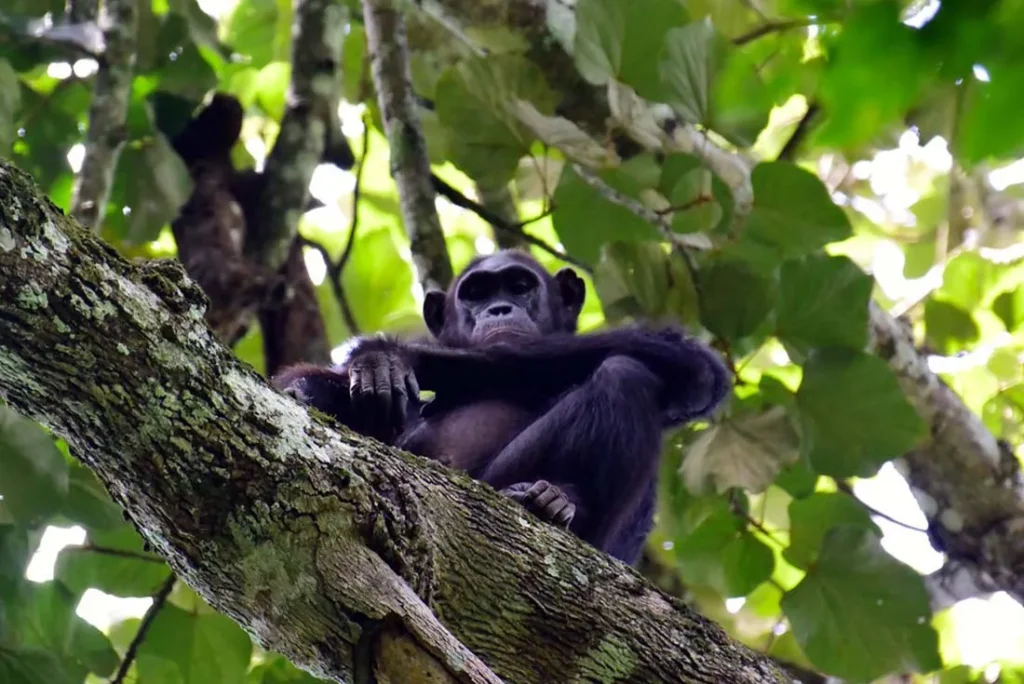
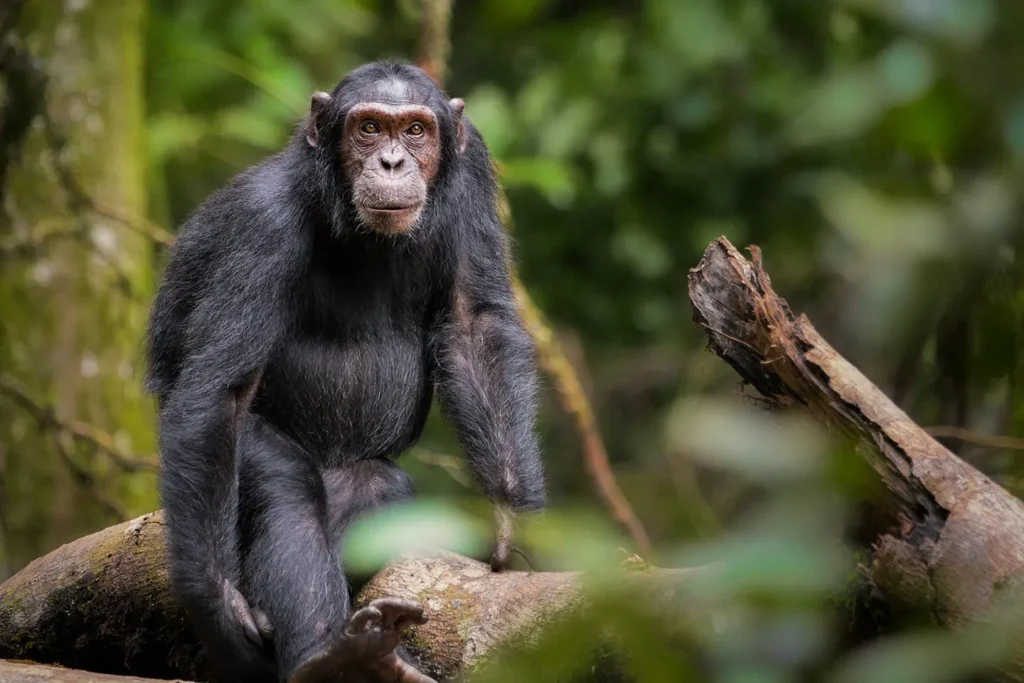
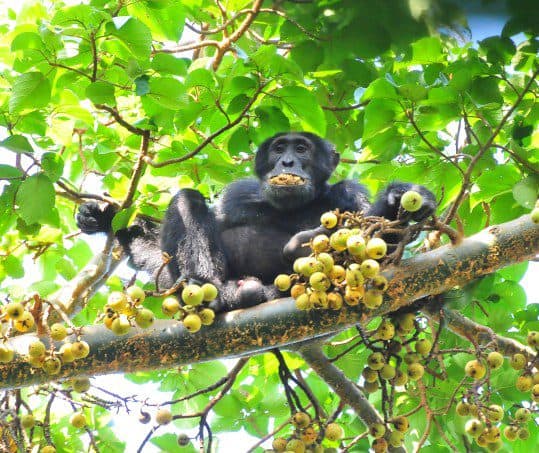
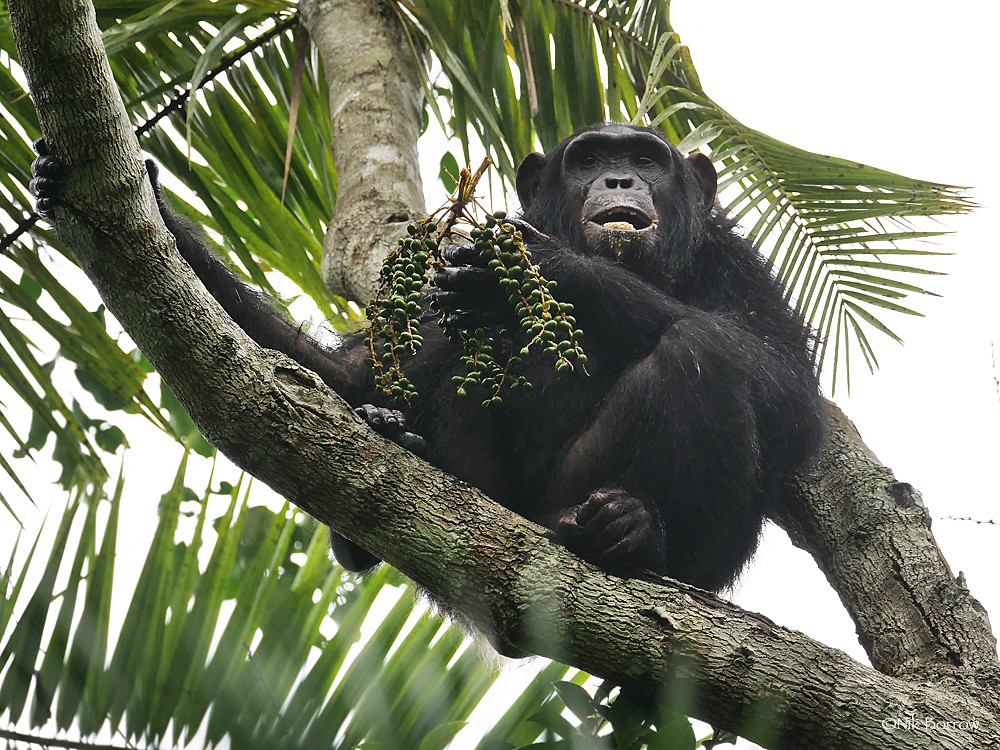
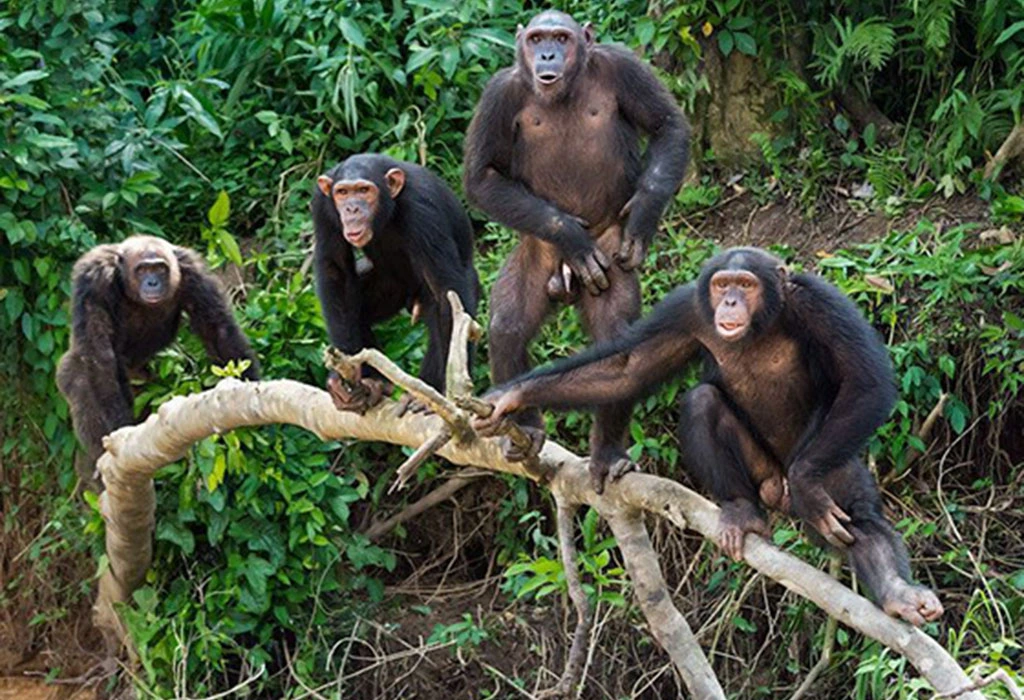
Budongo Forest chimpanzee trekking is a habituated chimpanzee trekking experience in the Budongo Forest Reserve in north-western Uganda. The reserve is a protected area of mature tropical forest, famous for its mahogany trees, and one of the longest-running chimpanzee research sites in Africa. The trekking experience itself follows the standard UWA format — a briefing, a walk into the forest with a ranger and trackers, a one-hour viewing window with a habituated community, and the walk back.
What makes Budongo distinctive is not the format — which is the same across all Uganda chimpanzee trekking — but the context in which it happens. Three things are worth understanding up front:
- Budongo is a mahogany forest. The trees are enormous — some of the oldest mahogany specimens in East Africa — and the forest floor beneath them is relatively open compared to Kibale’s denser understory. This gives the trek a different atmosphere: cathedral-like, quieter, with wider sightlines.
- Budongo is quiet. Far fewer trekkers visit Budongo than Kibale, and the daily permit numbers are smaller. On some mornings, the trekkers in the forest number fewer than ten across all sections combined.
- Budongo pairs with Murchison. The forest sits roughly on the road from Masindi to Murchison Falls, which is one of Uganda’s top safari destinations. Adding a Budongo trek to a Murchison itinerary is a one-day detour, not a separate trip.
The reserve has been a chimpanzee research site since the 1960s, and continuous behavioural research has been running since 1990. The habituated communities are well-known to researchers and trackers, and the trekking programme benefits from decades of accumulated knowledge about the individuals and their ranging patterns.
Afraeka tip: If you are choosing between Budongo and Kibale, think about what you want from the day. Kibale gives you the widest permit availability, the most habituated communities, and the option of the full-day habituation experience. Budongo gives you a quieter forest, a smaller trekking group, and a natural pairing with Murchison Falls. Both deliver the same one-hour viewing window and the same rules. Neither is a lesser trek.
Where is Budongo Forest and how do you get there?
Budongo Forest Reserve sits in north-western Uganda, roughly 30 kilometres south-west of Murchison Falls National Park. The two main trekking sections are Kaniyo Pabidi, near the Masindi–Murchison road, and Busingiro, further south. Kaniyo Pabidi is the more commonly used site for travellers coming from or going to Murchison.
Three practical points about access:
- From Kampala. The drive is roughly four to five hours via Masindi, on a mix of tarmac and murram. Most travellers break the journey at Masindi or continue directly to Murchison.
- From Murchison Falls. The Kichumbanyobo gate is roughly 30 minutes from Kaniyo Pabidi. This makes Budongo an easy add-on for travellers based in or passing through Murchison.
- From Entebbe or Kampala by air. There is no scheduled air service to Budongo. Travellers arriving by air typically fly to Pakuba or Bugungu airstrips for Murchison and reach Budongo by road.
| Route | Time | Notes |
|---|---|---|
| Kampala to Kaniyo Pabidi | 4–5 hours | Via Masindi; mix of tarmac and murram |
| Murchison Falls (Kichumbanyobo) to Kaniyo Pabidi | 30–45 min | Natural add-on for Murchison itineraries |
| Masindi to Kaniyo Pabidi | 45–60 min | Common overnight stop for travellers heading north |
| Entebbe to Budongo (road) | 5–6 hours | Long day; often broken at Masindi |
Drive times are approximate and depend on road conditions. A capable 4×4 is recommended for the murram sections, especially in the wet season.
Most itineraries pair Budongo with a night or two at Murchison, which sits on the Nile and offers big game, boat safaris and the famous top-of-the-falls walk. The Budongo trek slots neatly into the transfer day between Masindi and Murchison, or into a rest day at the park.
How does Budongo compare with Kibale for chimpanzee trekking?
Budongo Forest chimpanzee trekking differs from Kibale in scale, availability and character. Kibale is the larger and more established programme; Budongo is the smaller, quieter alternative. The trekking experience itself — briefing, walk, one-hour viewing window, walk back — is the same in both. What differs is everything around it: forest type, crowd size, permit options and location on the Uganda map.
| Factor | Budongo | Kibale |
|---|---|---|
| Location | North-west, near Murchison Falls | West, near Fort Portal |
| Forest type | Mature mahogany forest; more open understory | Dense tropical rainforest |
| Scale | Smaller, quieter trekking programme | Larger, more established programme |
| Trekking sections | Kaniyo Pabidi and Busingiro | Multiple trailheads from the main park |
| Habituation experience | Not offered | Yes — full-day format available |
| Pairing | Murchison Falls | Queen Elizabeth, Bwindi |
| Crowd level | Low | Higher in peak season |
| Best for | Travellers doing the northern circuit | Travellers wanting maximum permit choice and habituation |
Both forests follow the same UWA trekking rules: one-hour viewing window, seven-metre distance, no flash, health exclusion. Permits are separate allocations.
Two things follow from this comparison. First, if the habituation experience is specifically what you want, Budongo is not the right choice — Kibale is the only place in Uganda where that runs. Second, if your Uganda itinerary already includes Murchison Falls, Budongo is the more convenient option because it does not require a detour to the south-west. Travellers doing both Murchison and Bwindi will usually do Budongo for chimps and one of the Bwindi sectors for gorillas, keeping the itinerary on the northern-then-southern axis.
Chimpanzee trekking at Kibale is covered in more detail in our guide on Kibale chimpanzee permit availability, and the full-day format is covered in the chimpanzee habituation experience guide. Those posts also explain the permit booking mechanics that apply equally to Budongo.
What happens on a Budongo chimpanzee trekking day?
A Budongo Forest chimpanzee trekking day follows the standard Uganda format: a pre-trek briefing at the trailhead, a walk into the forest with a ranger and trackers, a one-hour viewing window with the habituated community, and the walk back to the trailhead. What is distinctive about Budongo is the pace and the atmosphere — smaller groups, quieter forest, and a shorter overall day than the Kibale equivalent.
The Budongo trekking day, step by step
- Morning briefing at the trailhead. Kaniyo Pabidi or Busingiro, depending on your booking. The briefing covers the community being trekked, the rules, and the day’s conditions.
- Walk into the forest. The ranger leads, trackers stay ahead on radio. Budongo’s more open understory often makes the walking easier than Kibale — but the walk length depends on where the community nested overnight.
- Contact with the community. The ranger confirms the family is in view and positions the group at seven metres. The one-hour viewing window begins.
- One hour with the chimpanzees. A strict cap, enforced the same as in Kibale. Cameras, no flash, quiet behaviour, no touching.
- Walk back to the trailhead. Usually faster than the walk in, and often including birding — Budongo is one of Uganda’s best forest birding sites.
- Certificate and return. UWA issues a trekking certificate. The driver is waiting at the trailhead for the onward journey.
The total day runs two to four hours, which is shorter than the equivalent at Kibale. This is partly because Budongo’s trekking sections are smaller and the trails are shorter, and partly because the rangers at Budongo tend to work with smaller groups and more flexible timing. If you are doing Budongo as a stop on a transfer day between Masindi and Murchison, the trek fits neatly into the morning before continuing to the park.
Two things about the day are worth planning for. First, the forest is quiet, and the group sizes are small — often fewer than eight trekkers across the whole section, sometimes just your party. Second, the birding is genuinely exceptional. Budongo has over 360 recorded bird species, including several Albertine Rift endemics, and the walk in and out is often as rewarding for birders as the chimpanzee hour itself.
When is the best time for Budongo Forest chimpanzee trekking?
Budongo Forest chimpanzee trekking runs year-round, but the best conditions are in the drier months — December to February and June to September. Those periods have firmer trails, easier walking, and better visibility through the forest. The wet months of March to May and October to November bring muddier trails and a denser, greener forest that is beautiful but harder underfoot.
Two practical points on timing:
- Peak season demand is lower than Kibale. Budongo does not fill as fast, and permits are often bookable with four to eight weeks’ notice even in the dry months. For groups of four or more, book two to three months ahead.
- The trek pairs with Murchison in any season. Murchison is a year-round destination, and the Budongo trek can be added to a Murchison itinerary in any month. In the wet season, plan for slower road sections and muddier trails.
If your priority is the chimpanzee experience itself and you have complete flexibility, either Budongo or Kibale will deliver. If your priority is combining chimpanzees with big game in a single northern itinerary, Budongo is the more practical choice — it slots into a Murchison trip, while Kibale requires a separate westbound leg.
How do you book Budongo Forest chimpanzee trekking?
You book Budongo Forest chimpanzee trekking through a registered operator or directly with UWA, the same way as Kibale. The permit is for a specific section (Kaniyo Pabidi or Busingiro) and a specific date. The full permit fee is payable at booking — a trip deposit alone does not hold a chimpanzee permit — and permits are non-refundable and non-transferable once issued. Current rates and categories are kept up to date on the gorilla permits Uganda page.
What to arrange before your Budongo trek
- Chimpanzee trekking permit for your chosen section and date
- Transport to the trailhead — Kaniyo Pabidi or Busingiro
- Lodge or overnight stop at Masindi or Murchison, depending on the itinerary
- Packed breakfast and water for the morning
- Boots, gaiters, long sleeves, gloves — the standard forest kit
- Camera with strap, flash off, spare battery
- Any mobility or fitness notes shared with the operator in advance
- Park entry fees for the reserve confirmed at booking
Two things are worth confirming explicitly when you book. First, that you are booking a Budongo permit, not a Kibale permit — they are separate allocations and separate sections. Second, that the trekking section is confirmed — Kaniyo Pabidi is the usual choice for travellers coming from Murchison, while Busingiro works better for some Masindi-based itineraries. If you are combining Budongo with the wider Uganda primate circuit — Bwindi and Mgahinga for gorillas — book the Budongo permits at the same time so availability can be managed as a single plan. The full primate options across the country sit on the primate tracking experiences page.
What can you combine with Budongo?
Budongo Forest chimpanzee trekking is best combined with Murchison Falls National Park — the two are roughly 30 minutes apart by road, and together they make one of the strongest northern Uganda itineraries. Three combinations stand out.
| Combination | Why it works | Typical length |
|---|---|---|
| Budongo + Murchison Falls | The classic northern pairing; 30 minutes apart | 3–5 days |
| Budongo + Murchison + Ziwa Rhino Sanctuary | Rhino tracking on the way north; adds a third experience | 4–6 days |
| Budongo + Murchison + Bwindi or Mgahinga | Full primate and big-game circuit; requires a longer trip | 10–14 days |
Itinerary lengths are indicative. Actual lengths depend on start point, pacing and how many parks are included.
The Murchison pairing is the natural one. Murchison offers big game — lions, elephants, giraffes, buffalo — plus boat safaris on the Nile and the walk to the top of the falls. Adding a Budongo chimpanzee trek converts the trip into a primate-plus-savannah itinerary, which is a fundamentally different experience from a gorilla-focused trip in the south-west. Ziwa Rhino Sanctuary, roughly two hours south of Budongo on the main Gulu road, is a natural third stop for travellers coming from Kampala.
For the full picture of what Uganda offers on the primate side, our guide to primate tracking experiences covers chimpanzees, gorillas, golden monkeys and the smaller primates. The wider country is mapped on the Uganda destinations page, and the country-level tourism overview sits with the Uganda Tourism Board.
Common mistakes with Budongo Forest chimpanzee trekking
Most of what goes wrong with a Budongo trek comes down to a small set of avoidable mistakes, and all of them can be prevented with one careful planning conversation.
- Assuming Budongo is “the same as Kibale.” The trek format is the same, but Budongo is smaller, quieter, mahogany forest rather than dense rainforest, and it does not offer the full-day habituation experience.
- Booking Budongo when you wanted habituation. Habituation runs only at Kibale. If that is what you want, book Kibale instead.
- Not confirming the trekking section. Kaniyo Pabidi and Busingiro are different trailheads. Confirm which one your permit is for, especially if you are arriving from Murchison or Masindi.
- Underestimating the walk. Budongo’s understory is more open than Kibale’s, but the walk in can still take one to two hours if the community has moved. The standard forest kit applies.
- Skipping the birding. Budongo has over 360 bird species. If you are carrying binoculars, the walk in and out is often more rewarding for birds than for chimps.
- Not building the trek into a Murchison itinerary. Budongo is 30 minutes from the Murchison gate. If your itinerary already includes Murchison, Budongo should be added as a stop, not treated as a separate trip.
- Assuming permits are always available at short notice. Budongo is quieter than Kibale, but peak-season dates and larger groups still benefit from early booking. Two to three months ahead for a group of four or more is sensible.
- Forgetting the minimum age. Trekkers must be 15 or older. This applies to Budongo the same as to every other Uganda chimpanzee trekking site.
Can one permit cover two people?
No. One permit covers one person for one trek, and this applies to Budongo Forest chimpanzee trekking the same as to any other Uganda chimpanzee experience. A party of four needs four permits on the same date and section, and each permit is tied to a named individual. There is no way to share one or transfer it to another person. Current permit categories and rates sit on the gorilla permits Uganda page.
The daily cap at Budongo applies per habituated community, similar to the gorilla system. Because Budongo has fewer habituated communities than Kibale and a smaller overall trekking programme, the daily permit numbers are lower — but demand is also lower, so availability tends to be more forgiving at short notice.
Once you have your permits, the specific community you follow is confirmed at the briefing on the day. You will know your trekking section in advance because it is on the permit; the community allocation is managed by the rangers. The overall shape of the day — briefing, walk in, one-hour viewing, walk back — is the same as at any other Uganda chimp trekking site, and the rules are identical. The full picture of how Budongo fits into the wider country is mapped on the Uganda destinations page, and the regulatory framework is set by the Uganda Wildlife Authority.
Afraeka field note: A couple who had trekked chimpanzees at Kibale two years earlier booked Budongo for a return trip specifically because they wanted to compare the two. Their notes afterwards were specific. The Budongo forest was much more open — they could see a hundred metres through the mahogany trunks in places, whereas Kibale had been closed in on all sides. Their trekking group was smaller, four people including themselves, and they spent the walk in with the ranger pointing out bird calls that the Kibale ranger had not had time for. The one-hour viewing was equally good in both forests. What they remembered most, they said, was the silence on the walk in — the absence of other trekkers, the absence of other groups, the sense that the forest belonged to the chimpanzees rather than to the visitors. That is the specific value of Budongo. It is not “better” than Kibale. It is quieter, and for some travellers that is the whole point.
A question that comes up occasionally on TripAdvisor’s Uganda forum and on r/Uganda is some version of: “Should I trek chimpanzees at Budongo or Kibale?” The honest answer is that both deliver the same one-hour viewing under the same rules, and the choice comes down to itinerary and atmosphere. Kibale is the more established, busier option, with the widest permit availability and the full-day habituation experience. Budongo is the quieter alternative, in a mahogany forest, easily paired with Murchison Falls. Travellers doing the northern circuit — Murchison, Kidepo, the Nile — usually choose Budongo. Travellers focused on the western and south-western parks usually choose Kibale. Neither is wrong, and both are genuinely excellent.
Frequently asked questions
Where exactly is Budongo Forest?
Budongo Forest Reserve sits in north-western Uganda, roughly 30 kilometres south-west of Murchison Falls National Park and about 45 to 60 minutes from Masindi. The two main trekking sections are Kaniyo Pabidi, on the Masindi–Murchison road, and Busingiro, further south. Kaniyo Pabidi is the more commonly used section for travellers coming from Murchison.
Is Budongo better than Kibale for chimpanzee trekking?
Neither is better — they are different. Budongo is a quieter, more intimate trek in a mature mahogany forest, and it pairs easily with Murchison Falls. Kibale is larger, more established, and offers the full-day habituation experience. Both deliver the same one-hour viewing window and the same UWA rules. Choose based on itinerary and atmosphere, not on quality.
How long does the Budongo chimpanzee trek take?
Two to four hours including the walk in, the one-hour viewing window, and the walk back. This is shorter than the equivalent at Kibale, partly because the trekking sections are smaller and partly because the rangers often work with smaller groups. The trek fits neatly into a morning on a transfer day between Masindi and Murchison.
What is the minimum age for Budongo chimpanzee trekking?
15 years, set by UWA and enforced at booking and at the briefing. The same rule applies at every Uganda chimpanzee trekking site. Families travelling with younger children should plan an alternative activity for them — Budongo’s birding and forest walks are options, subject to operator guidance.
Do I need to book Budongo permits in advance?
Budongo is quieter than Kibale and permits are often available with four to eight weeks’ notice, even in dry season. For groups of four or more, book two to three months ahead. For peak-season dates with fixed departures, three months is safer. The full permit fee is payable at booking, and permits are non-refundable once issued.
Can I combine Budongo with Murchison Falls?
Yes, and it is the natural pairing. Kaniyo Pabidi is roughly 30 minutes from the Kichumbanyobo gate of Murchison Falls National Park. Most travellers do the Budongo trek on the transfer day between Masindi and Murchison, or as a morning activity from a Murchison lodge. The combination is one of the strongest in Uganda.
Is Budongo good for birding?
Yes — exceptionally. Budongo has over 360 recorded bird species, including several Albertine Rift endemics. The walk in and out of the trek is often as rewarding for birders as the chimpanzee hour itself. Bring binoculars if you carry them at all.
Does Budongo offer the chimpanzee habituation experience?
No. The full-day habituation experience runs only at Kibale Forest. Budongo offers the standard chimpanzee trekking format — briefing, walk in, one-hour viewing window, walk back. If habituation is specifically what you want, book Kibale instead.
How does Budongo compare in cost to Kibale?
Permit categories and pricing are set by UWA and change over time. Current rates for chimpanzee trekking across Uganda are kept on the gorilla permits Uganda page. In general, the two sites operate in the same permit tier; specific numbers should always be confirmed at the time of booking.
Thinking of adding Budongo to a northern Uganda trip?
Send us your dates, party size and any Murchison plans you have, and we will check Budongo permit availability for Kaniyo Pabidi or Busingiro, confirm how the trek fits into your itinerary, and outline the whole route with everything included. If Kibale suits your plans better, we will say so. No price figures until we know your route, because the permits are only one line of the total.
About the author: Victoria Kayaga is a Ugandan-born safari expert and founder of Afraeka Adventures, with 15+ years in East African tourism. Based in Kampala, she has planned primate-focused itineraries across Budongo, Kibale, Bwindi and Mgahinga for years, and she advises travellers on choosing between the northern and western chimpanzee sites. More about Victoria.
Keep planning