Luxury Rwanda safari market is small, expensive and unusually concentrated. Almost every high-end itinerary is built around one fixed cost — the gorilla permit — and then layered with lodging, guiding and transfers that vary enormously in price for reasons that are not always obvious from a brochure. Understanding where the money actually goes is the difference between paying for genuine quality and paying for a label.
This guide sets out how Rwanda’s luxury tier is structured, which parts of a premium itinerary are worth the spend, and which parts are a matter of personal preference. It deliberately does not recommend specific properties — the site already carries a dedicated guide to lodges in Volcanoes National Park, and duplicating that list here would serve neither page well.
Why Rwanda’s Luxury Tier Looks Different From Kenya’s or Tanzania’s
In Kenya and Tanzania, a luxury safari is largely a lodging decision. You choose a conservancy or a camp, and the wildlife experience — game drives, guides, vehicles — is broadly similar across the top tier. Price tracks the property, the season and the exclusivity of the location.
Rwanda inverts this. The gorilla permit is fixed at $1,500 per person, carries no low-season discount, and is the same whether you stay in a modest guesthouse or the most expensive lodge in the country. It is not negotiable, not discounted, and not bundled. That single line item often accounts for a large share of a short Rwanda trip’s total cost, which means the lodging premium is being paid on top of an already substantial base.
The practical consequence: Rwanda rewards shorter, denser trips than East Africa’s savannah parks. Three to five nights is a normal luxury Rwanda itinerary. A ten-night version is possible, but it usually means adding Akagera or Nyungwe rather than extending time in the gorilla park.
How Lodging Around Volcanoes National Park Is Structured
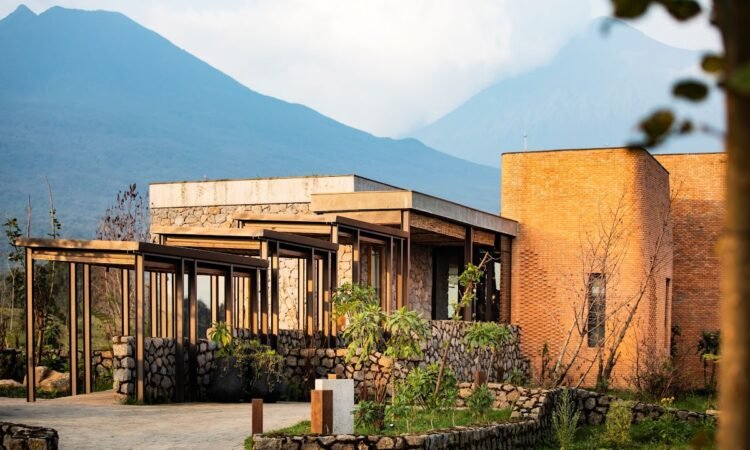
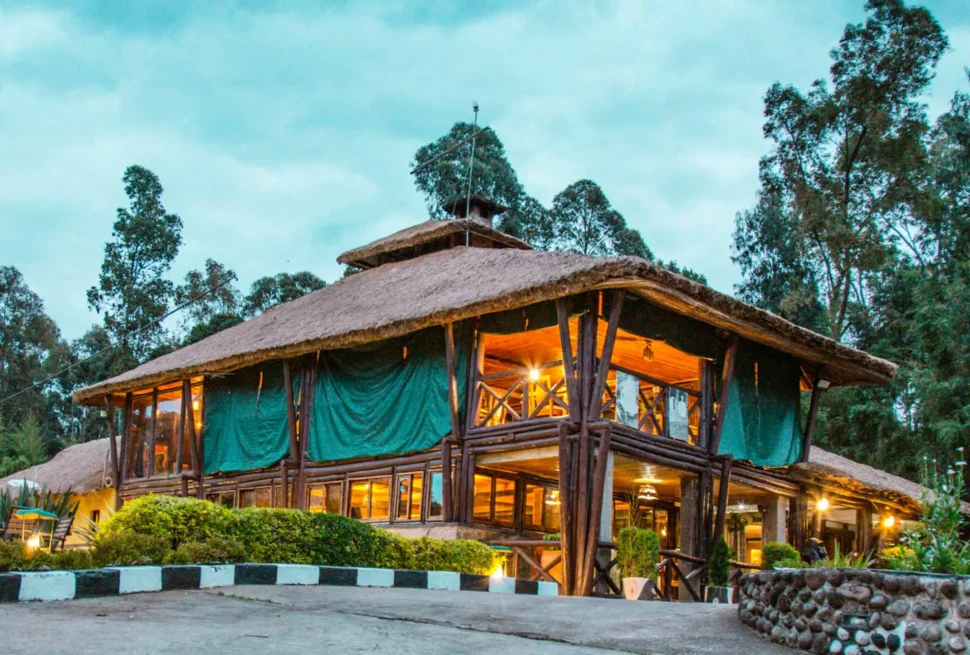
Accommodation near Volcanoes National Park clusters around Kinigi and the park’s southern approach, and it divides into recognisable tiers rather than a single luxury bracket. The useful distinctions are not star ratings but access, privacy and service model.
Park-adjacent lodges at the top tier trade on proximity to the park headquarters, larger private units, and higher staff-to-guest ratios. The genuine value here is the short transfer on trekking morning, when an early start matters more than it sounds — a 4:30am departure from a distant property is a materially different experience from a ten-minute drive.
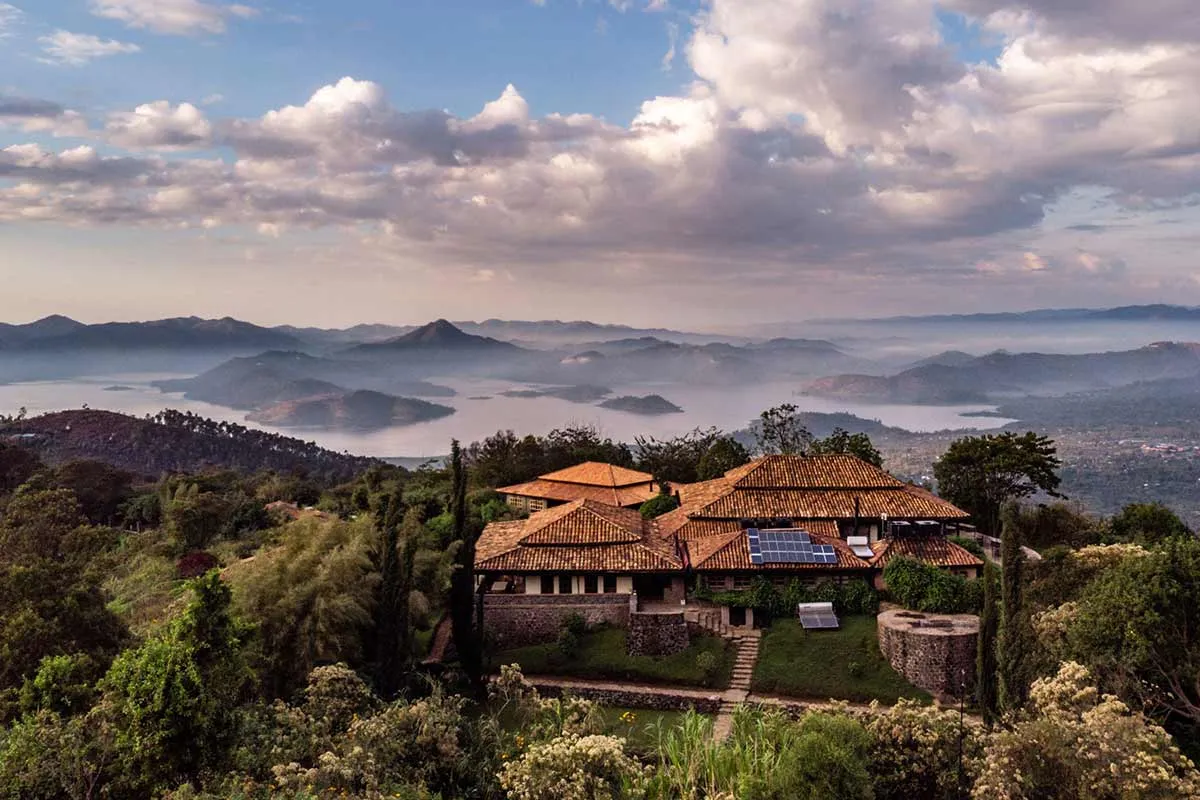
Smaller, higher-privacy properties further from the gate trade proximity for exclusivity — fewer rooms, quieter grounds, and often a more tailored service style. These suit travellers who value the property itself as part of the trip rather than purely as a base.
Established mid-tier lodges sit below both and are frequently excellent, particularly for travellers whose budget is concentrated on permits rather than rooms. Several are within comfortable reach of the park.
The honest advice: proximity and service consistency matter more in Volcanoes than architectural show. Trekking mornings are early and the rest of the day is largely spent recovering or moving on. A lodge that gets the 4am logistics right is worth more than one with a more impressive lobby. For a property-by-property breakdown, the site’s existing guide to the Rwanda safari options and lodges is the better reference — this post is about how to judge them, not which to pick.
Beyond the Gorilla Trek: Experiences That Justify the Premium
A luxury Rwanda itinerary that consists of one trek and two nights in a good room is expensive but thin. The premium is better justified by what surrounds the trek.
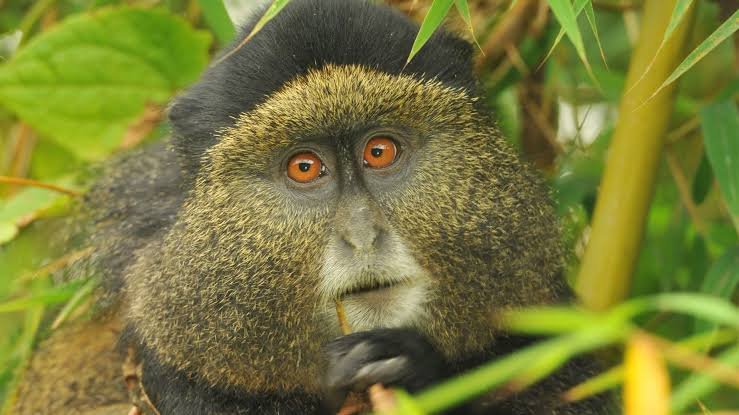
Golden monkey trekking runs out of the same park infrastructure and can be added on the morning before or after the gorilla trek without a second park transfer. Permits are set by the Rwanda Development Board and should be confirmed at the time of booking. It is a shorter, lower-altitude walk than the gorilla trek and pairs well with a lodge-based itinerary.
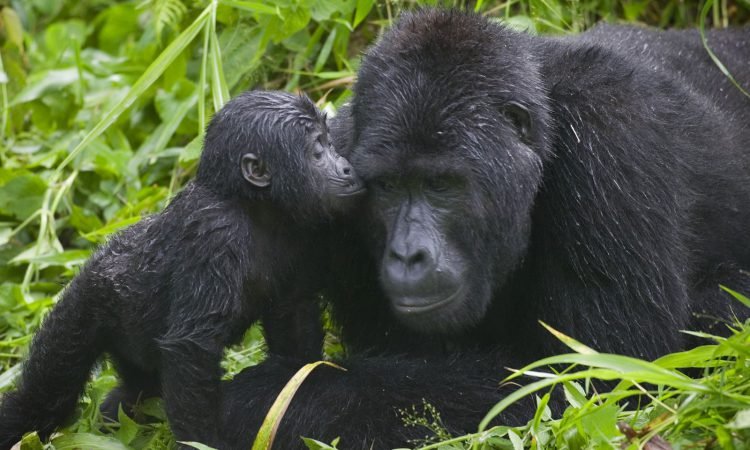
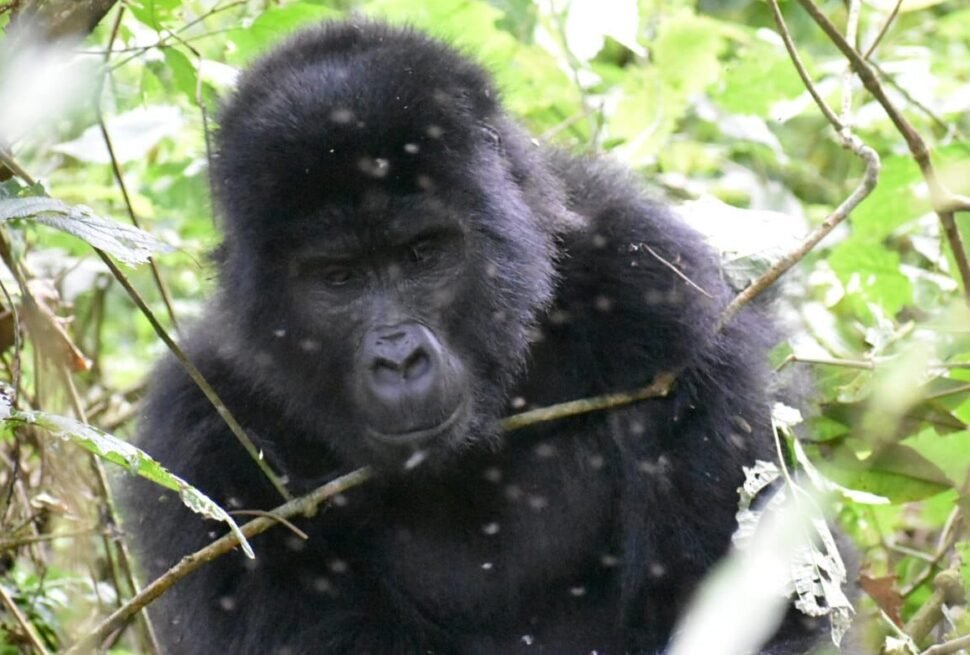
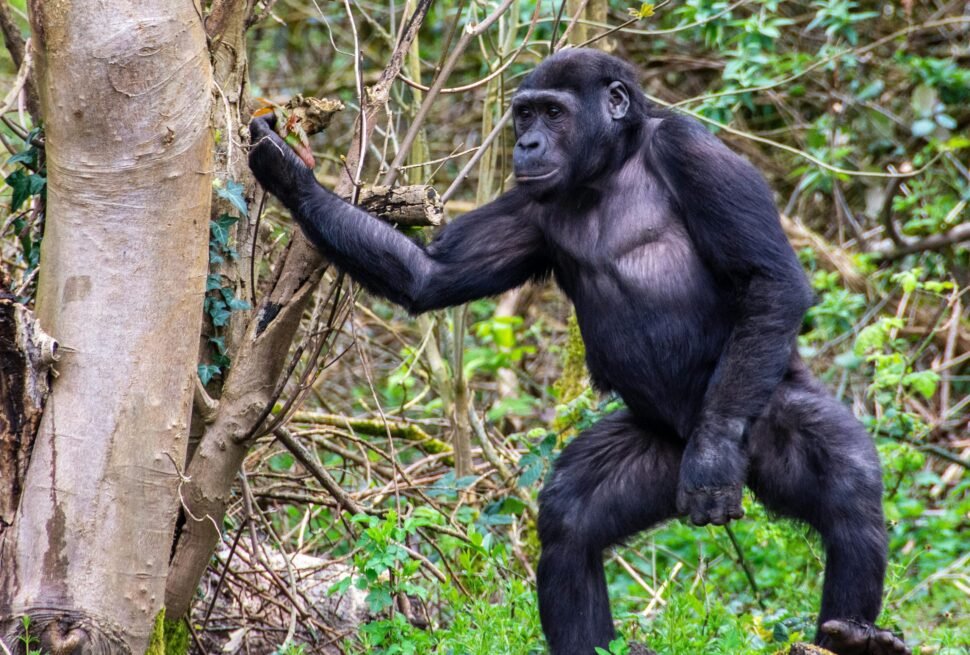
A second gorilla trek on a different habituated family is possible and is the single most requested upgrade among travellers who have already trekked once. It doubles the permit cost and requires a second permit date, which is why it needs to be planned rather than added on arrival. The Rwanda gorilla trekking guide covers the trekking product in detail.
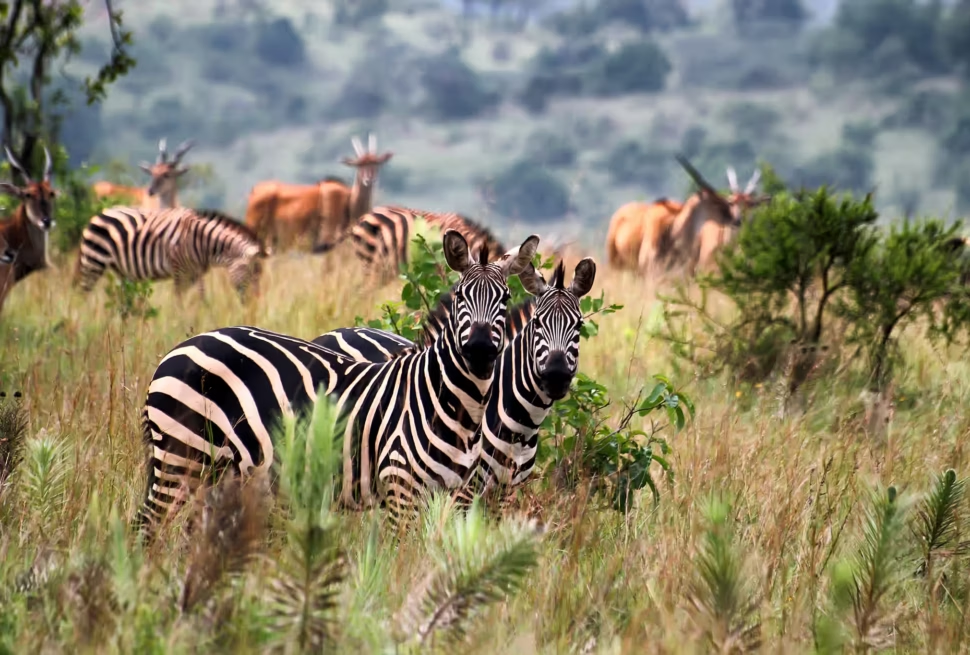
Akagera National Park adds savannah game viewing — elephant, buffalo, lion, rhino, giraffe and zebra — in a completely different landscape in eastern Rwanda. Reaching it involves a real transfer, so it adds nights rather than a half-day. Two nights is the realistic minimum for predators and rhino to be a genuine possibility.
Nyungwe Forest in the south-west adds chimpanzees, a long primate list and exceptional birding. It is the most substantial addition to a Rwanda itinerary and the one that most changes the shape of a trip.
Kigali is often treated as a transit point. A private city day covering the Genocide Memorial and the craft and coffee side of the city is a legitimate part of a luxury itinerary rather than filler, though the site’s dedicated Kigali posts cover that ground.
On transfers: some itineraries use helicopter transfers between Kigali and the parks. Availability and cost should be confirmed directly rather than assumed, and road transfers to Volcanoes remain the standard option.
Where the Money Actually Goes
The table below separates the costs that are published and fixed from those that vary by property and operator. Quoting a single figure for “a luxury Rwanda safari” would be misleading, so the structure is set out instead.
| Element | Where | What drives the cost | Price (per person) |
|---|---|---|---|
| Gorilla trekking permit — Rwanda | Volcanoes National Park | Fixed by the Rwanda Development Board; no low-season discount | From $1,500 |
| Gorilla trekking permit — Uganda (for comparison) | Bwindi Impenetrable NP and Mgahinga NP | Reduced in April, May and November | From $800 (From $600 in April, May and November) |
| Gorilla habituation experience — Uganda (for comparison) | Rushaga sector, Bwindi Impenetrable NP only | Four hours with a semi-habituated family | From $1,500 |
| Golden monkey trekking permit | Volcanoes National Park | Set by the Rwanda Development Board | Confirm current rate when booking |
| Luxury lodge accommodation | Volcanoes NP, Kigali, Akagera, Nyungwe | Property tier, room category, season, board basis | Confirm current rates when booking |
| Private guide and vehicle | Countrywide | Days required, vehicle type, whether guiding is exclusive | Confirm current rates when booking |
Two observations that matter more than any single figure. First, the gorilla permit is the one number that cannot be improved by negotiating — it is the same for every operator and every property. Where a quote varies substantially between suppliers, the difference is in lodging, guiding, transfers and margins, not in the permit. Second, low-season discounts on Rwanda permits do not exist. Travellers wanting a lower permit cost should be looking at Uganda, where the permit drops in April, May and November, or at a combined itinerary.
Permit prices are set by the respective wildlife authorities and revised periodically — verify current rates before travel.
Structuring a Luxury Rwanda Safari Itinerary
Three shapes work well, and each assumes the gorilla permit anchors the dates.
Four nights: Kigali, Volcanoes, out. One night in Kigali, two or three nights near the park, a gorilla trek plus a golden monkey trek. This is the shortest version that does not feel rushed, and it suits travellers adding Rwanda to a longer East Africa trip.
Six nights: adding Akagera. The gorilla leg plus two nights in Akagera for savannah game. This is the most balanced Rwanda-only itinerary and the one that most justifies the airfare.
Eight to ten nights: adding Nyungwe. The full circuit — Kigali, Nyungwe, Volcanoes, Akagera, or some variation. This is a genuine Rwanda trip rather than a gorilla visit with extensions, and it works best with a private guide and vehicle throughout.
For travellers combining Rwanda with Uganda, a combined itinerary often puts gorilla trekking in one country and chimpanzee trekking in the other, which avoids paying twice for the same experience at different price points. The Uganda and Rwanda combined gorilla tours page sets out those routes.
Timing and Permit Scarcity
Rwanda’s drier windows, broadly June to September and December to February, are when the top-tier lodges fill and when gorilla permits are hardest to secure. Permits are capped per day and per family, with a maximum of eight visitors per gorilla family, and availability is not guaranteed at short notice.
For a luxury itinerary this matters more than it does for a budget one, because the lodge and the permit need to align on the same dates. Booking the permit first and the lodge second is the correct order, not the reverse. Travellers with fixed dates around Christmas and New Year should be planning several months ahead.
The wetter months bring thinner crowds, better lodge availability and muddier trails. Since Rwanda’s permit cost does not change with the season, the trade-off is comfort and availability rather than money — a different calculation from Uganda.
Visas and Entry
Rwanda’s e-visa costs $50 for single entry or $70 for multiple entry and is applied for at irembo.gov.rw (verify current requirements before travel — rules change). Travellers combining Rwanda with Uganda and Kenya may want to weigh the East African Tourist Visa, at $100 for 90 days of multi-entry travel across the three countries, though it does not suit every routing; the Uganda visa requirements guide covers the trade-offs.
One clarification worth repeating because it circulates widely: the Uganda–Russia visa waiver announced in October 2026 covers diplomatic and service passports only. It does not apply to ordinary tourist passports and has not yet entered into force.
Current permit and park information is published by the Rwanda Development Board — check before travel, as rates and conditions are revised periodically.
How to Book
Luxury Rwanda itineraries are built around permit dates, and permits are date-specific and capped — so the earlier a trip is planned, the better the choice of both permit dates and lodges. Afraeka Adventures is a licensed Ugandan operator based in Entebbe and Kampala, running safaris and primate trekking in Uganda, Rwanda, Kenya and Tanzania since 2018.
Contact Afraeka Adventures at info@afraekaadventures.com or use the enquiry form on our website. Useful starting points:
- Rwanda safaris — the wider picture, including lodge options
- Rwanda gorilla trekking — the main trekking product
- Uganda and Rwanda combined gorilla tours — for travellers comparing both countries
- Uganda safari packages — if Uganda is also on the route
- East Africa multi-country safaris
- All tour packages
- Enquiry form