
East Africa safari cost is usually discussed badly — as a single per-day figure that implies all four countries sell the same product at different prices. They do not. The costs that are fixed by governments are small and knowable, the costs that vary are large and depend on choices the traveller makes, and the biggest single difference between the four countries is a permit that exists in only two of them.
This article separates the two. It sets out the fixed costs that are confirmed, explains the variable costs that make up most of any safari budget, and compares the four countries on the things that actually drive the total. Where a figure is not confirmed, this article says so rather than estimating it — a cost guide that invents numbers is worse than one that is honest about the gaps.
The East Africa multi-country safaris page covers itineraries that combine countries. This article covers what they cost and why.
East Africa Safari Cost: The Short Answer
Three things are true of almost every East Africa safari budget.
Most of the money does not go to permits. For a typical itinerary, the majority of the spend is accommodation, vehicle and guide, fuel and internal flights. Park fees and permits are a visible, fixed slice, but they are usually not the largest line.
The fixed costs are small and knowable. Gorilla permits, visas and the main park fees are set by governments and published. They are the same for every licensed operator, which is why two quotes for the same itinerary should not differ on those lines at all.
The variable costs are where quotes diverge. Lodge standard, group size, vehicle type, internal flights and season are what separate a quote from another quote. They are also what a traveller can actually control.
That is the architecture. The rest of this article fills it in.
The Fixed Costs: What Is Confirmed
These are set by the relevant authorities and are identical for every licensed operator. They are the lines on a quote that should be verifiable.
| Fixed cost | Country | Price (per person) |
|---|---|---|
| Gorilla permit — standard | Uganda | From $800 |
| Gorilla permit — low season (April, May, November) | Uganda | From $600 |
| Gorilla habituation experience | Uganda — Rushaga sector, Bwindi only | From $1,500 |
| Gorilla permit | Rwanda — no low season discount | $1,500 |
| Uganda e-visa | Uganda | $50 |
| Rwanda e-visa — single entry | Rwanda | $50 |
| Rwanda e-visa — multiple entry | Rwanda | $70 |
| Kenya eTA | Kenya | From $30 |
| East African Tourist Visa | Uganda + Kenya + Rwanda, 90 days multi-entry; does not cover Tanzania | $100 |
Three observations follow from that table, and they matter more than the individual figures.
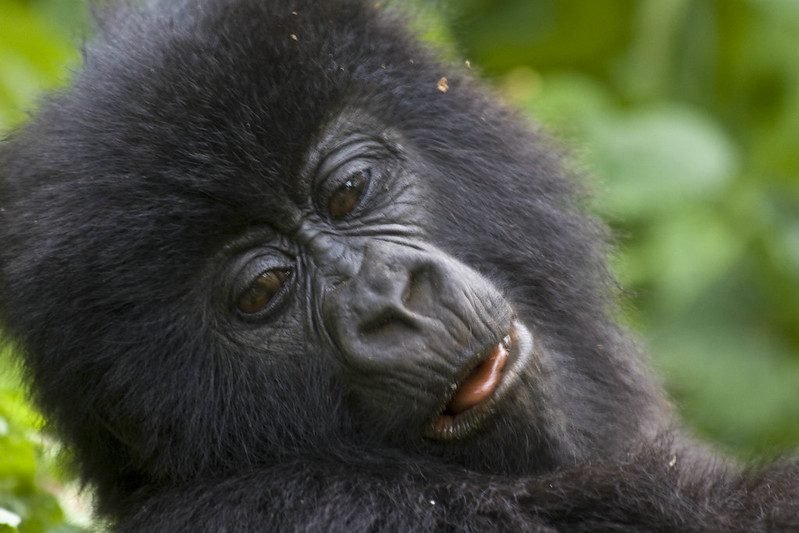
The gorilla permit is the largest single fixed cost, and it exists in only two countries. Mountain gorillas are found in Uganda, Rwanda and the Democratic Republic of Congo only. They are not in Kenya or Tanzania. A Kenya or Tanzania safari therefore has no gorilla permit line at all — which makes those itineraries structurally cheaper on fixed costs, but also means they do not include the thing the permit pays for.
Uganda and Rwanda differ by $700 per person on the permit. That is the single biggest price difference between the two gorilla destinations, and it is a fixed, published figure rather than a matter of operator margin. The $600 low season rate in Uganda widens the gap to $900 in April, May and November.
The visa arithmetic is small but not trivial. A single-country trip costs $30 to $70 in visa fees. The $100 East African Tourist Visa replaces three separate visas for Uganda, Kenya and Rwanda and allows multiple entries over 90 days, but it does not cover Tanzania — a Tanzania leg needs a separate visa.
The Variable Costs: Where Most of the Money Goes
These are the lines that make up the bulk of a safari budget, and the lines on which two quotes for the same itinerary can differ enormously.
Accommodation and meal basis
This is usually the largest single line. The same park can be visited staying at a basic camp on a bed-and-breakfast basis or at a high-end lodge on full board, and the difference between those two is larger than every permit and visa on the trip combined.
Meal basis matters as much as the room. Full board includes meals at the lodge; bed and breakfast means paying for meals separately, often at lodge prices. A quote that looks cheaper may simply be on a lower meal basis.
Vehicle type and group size
A pop-up roof Land Cruiser and a safari van are not the same product, and a vehicle carrying six passengers is a different cost per person from one carrying two. Group size is one of the biggest levers a traveller has: a private vehicle for two costs far more per person than a shared departure for six.
Internal flights versus road transfers
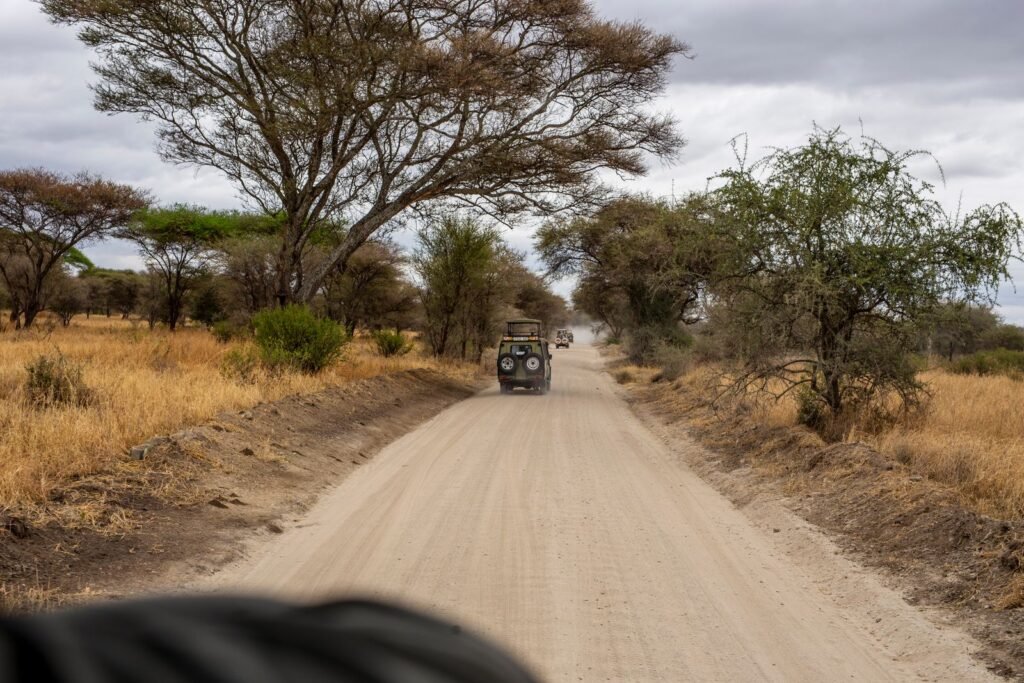
East Africa is large in travel terms. Road transfers between parks take most of a day, and internal flights remove that time at a cost. The choice between flying and driving is one of the main determinants of both the budget and the shape of the itinerary.
Park and conservancy fees
Park fees are set by each country’s wildlife authority and vary by park, by season and by whether the visitor is resident or non-resident. In Kenya they also vary between the main reserve and the conservancies.
Kenya park and conservancy fees are not confirmed in this article. Neither are Tanzania park fees. Both should be confirmed with the relevant authority or the operator before a budget is finalised, rather than estimated from a general guide.
Season
Season affects lodge rates more than it affects permits. Uganda’s gorilla permit is the exception — it drops to $600 in April, May and November — but elsewhere the season shows up in accommodation pricing and availability rather than in fixed fees.
Why the Gorilla Permit Is the Biggest Single Variable
The permit deserves its own section because it is the one fixed cost that is large enough to reshape a whole comparison.
A Uganda permit at $800 and a Rwanda permit at $1,500 are both published, both fixed, and both for the same activity: one hour with a habituated mountain gorilla family. The $700 difference per person is not a difference in quality or in what the hour involves. It is a pricing decision by each country’s park authority.
For a couple trekking once each, that difference is $1,400. For a family of four, it is $2,800. On a Uganda itinerary, that is a meaningful share of the total; on a Rwanda itinerary, the permit is the single largest line before accommodation.
In the low season months of April, May and November, the Uganda permit drops to $600, widening the gap to $900 per person against Rwanda. That low season saving is real money on a fixed cost, and it is covered in more detail in gorilla trekking in low season.
Rwanda’s permit has never been discounted by season. That is a pricing policy rather than a temporary position, and it should be treated as fixed when budgeting.
The Four Countries Compared
This comparison is deliberately about structure rather than about totals, because totals require figures for Kenya and Tanzania that are not confirmed here.
| Country | Gorilla permit | What shapes the total |
|---|---|---|
| Uganda | From $800 (From $600 in April, May and November) | Broadest mix of activities — gorillas, chimpanzees, savannah parks, mountains — which makes multi-park itineraries and their transfer costs the main variable |
| Rwanda | $1,500 — no low season discount | Highest fixed permit cost in the region; short internal distances and a compact circuit, but the permit dominates the budget before accommodation |
| Kenya | Not applicable — no mountain gorillas | Park and conservancy fees, lodge tier, and internal flights between Nairobi, the Mara and Amboseli |
| Tanzania | Not applicable — chimpanzees only, in the west | Park fees, larger distances between the northern parks, and lodge tier; rewards longer trips |
Two structural points are worth drawing out.
Kenya and Tanzania are cheaper on fixed costs but not necessarily cheaper overall. Removing the gorilla permit removes the largest single fixed line, but the lodge, vehicle and flight costs that make up the rest of the budget are not automatically lower. Whether a Kenya safari is cheaper than a Uganda safari depends on the standard of accommodation and the flight choices, not on the permit.
Rwanda is the most permit-heavy destination. A Rwanda gorilla itinerary carries $1,500 per person before anything else is added. That does not make it poor value — the trek is the same encounter and the logistics are short — but it does mean the permit is the number to start from when budgeting.
Budget Tiers: What Changes Without Changing the Parks
Most of the difference between a budget safari and a high-end safari is not the parks visited. It is the accommodation, the vehicle and the group size, and those choices are available in every one of the four countries.
The lower-cost end usually means shared departures, basic or mid-range camps, bed and breakfast or half board with meals paid separately, road transfers rather than internal flights, and a larger group in a shared vehicle. The parks and the wildlife are the same.
The higher-cost end means private vehicles, higher-tier lodges on full board, internal flights in place of long drives, smaller groups and more time in each park. The wildlife is the same; the time and comfort are not.
The honest framing is that a safari budget buys comfort, time and privacy rather than access. The parks do not sell a premium wildlife experience at a higher gate price — the gorilla permit is the one exception, and there the price is set by country rather than by tier.
How to Reduce the Cost Without Cutting the Experience
- Travel in the Uganda low season. April, May and November drop the permit to $600. The trade-off is wetter trails, covered in the low season article.
- Trek in Uganda rather than Rwanda. The $700 per-person difference is the largest single saving available on a gorilla trip, and the encounter itself is the same format.
- Increase group size in a shared vehicle. Cost per person falls with more passengers. This is the biggest lever on vehicle and guide costs.
- Choose road transfers over internal flights on shorter legs. Flights save time, not money. On a tight itinerary they may be worth it; on a longer one they are a choice rather than a necessity.
- Pick the meal basis deliberately. Full board and bed and breakfast are different products, and a cheaper quote may simply include fewer meals.
- Use the East African Tourist Visa for a three-country trip. At $100 it replaces three separate visas for Uganda, Kenya and Rwanda. It does not cover Tanzania.
- Book permits in advance. Permits are date-specific and availability is capped. Late booking does not produce a discount; it produces a date you did not want (book in advance).
What an East Africa Safari Costs
Verified fixed costs are set out below. The variable elements are listed without figures because they depend on choices that cannot be generalised — confirm current rate when booking.
| Element | Where | Price (per person) |
|---|---|---|
| Uganda gorilla permit — standard | Bwindi Impenetrable NP and Mgahinga Gorilla NP | From $800 |
| Uganda gorilla permit — low season | Bwindi and Mgahinga, April, May and November | From $600 |
| Uganda gorilla habituation experience | Rushaga sector, Bwindi only — 4 hours | From $1,500 |
| Rwanda gorilla permit | Volcanoes National Park — no low season discount | $1,500 |
| East African Tourist Visa | Uganda + Kenya + Rwanda, 90 days multi-entry; does not cover Tanzania | $100 |
| Uganda e-visa | visas.immigration.go.ug | $50 |
| Rwanda e-visa — single entry | irembo.gov.rw | $50 |
| Kenya eTA | etakenya.go.ke | From $30 |
| Tanzania visa | Separate visa required; not covered by the EATV | Confirm current rate when booking |
| Chimpanzee trekking permit | Kibale Forest and other forests | Confirm current rate when booking |
| Kenya park and conservancy fees | Masai Mara, Amboseli and conservancies | Confirm current rate when booking |
| Tanzania park fees | Serengeti, Ngorongoro and others | Confirm current rate when booking |
| Uganda park entry fees | Bwindi, Mgahinga, Queen Elizabeth, Murchison Falls | Confirm current rate when booking |
| Accommodation and meal basis | All four countries | Confirm current rate when booking |
| Vehicle, guide and fuel | All four countries | Confirm current rate when booking |
| Internal flights | All four countries | Confirm current rate when booking |
| Travel insurance with medical evacuation | Varies by insurer and trip | Confirm current rates with your insurer |
Permit and park fees are set by the relevant authorities and revised periodically — the Uganda Wildlife Authority for Uganda, the Rwanda Development Board for Rwanda and the Kenya Wildlife Service for Kenya. Verify current rates before travel (verify current requirements before travel — rules change).
Frequently Asked Questions
How much does an East Africa safari cost?
There is no single figure. The fixed costs are known — gorilla permits from $800 in Uganda and $1,500 in Rwanda, visas from $30 to $100 — but most of the budget is accommodation, vehicle, guide and flights, which vary enormously by standard, group size and season. A quote is the only reliable answer for a specific itinerary.
Which East African country is cheapest for safari?
It depends on what is being compared. Kenya and Tanzania have no gorilla permit, so they are cheaper on fixed costs for a classic safari. Uganda’s gorilla permit is $700 less than Rwanda’s, which makes Uganda the cheaper gorilla destination. Overall cost depends more on lodge standard and group size than on country.
Is Uganda cheaper than Kenya?
Not necessarily overall. Uganda’s gorilla permit is a substantial fixed cost that a Kenya safari does not carry, but lodge, vehicle and flight costs in Kenya can be lower or higher depending on the itinerary. A Uganda safari is cheaper than a Rwanda gorilla safari on the permit line; a comparison with Kenya depends on the standard of the trip.
Why is Rwanda so expensive for gorilla trekking?
The Rwanda permit is $1,500 per person and has never been discounted by season. That is a pricing decision by the Rwanda Development Board, not a difference in the encounter — the trek format is the same. The permit is the single largest line on a Rwanda gorilla itinerary.
How much is a gorilla permit compared with a Kenya safari?
The two are not directly comparable, because Kenya has no mountain gorillas and therefore no gorilla permit. The comparison is between a Uganda or Rwanda gorilla itinerary and a Kenya savannah itinerary, and the totals depend on accommodation, group size and flights rather than on the permit alone.
What percentage of a safari cost is lodges?
Accommodation is usually the largest single line on a safari budget, ahead of park fees and permits for most itineraries. The exact proportion depends on the standard chosen and the length of the trip, and no general percentage can be applied reliably.
Can you do an East Africa safari on a budget?
Yes. The parks and the wildlife are the same at every price point — a budget buys less comfort, time and privacy rather than less access. Shared departures, mid-range camps, road transfers and the Uganda low season all reduce cost without changing what you see.
How much should I budget per day?
No per-day figure is given here, because it would be misleading. A per-day average conceals the structure of a safari budget, which is driven by fixed permit costs, lodge tier and internal flights. A quote built around a specific itinerary is the only reliable basis for a budget.
How to Book
The most useful starting point is the fixed costs — permit dates and visa type — because those are known, published and constrain everything that follows. Afraeka Adventures is a licensed Ugandan operator based in Entebbe and Kampala, running safaris and primate trekking in Uganda, Rwanda, Kenya and Tanzania since 2018.
Contact Afraeka Adventures at info@afraekaadventures.com or use the enquiry form on our website with your dates, group size, the countries you want to include and the standard of accommodation you have in mind. Useful starting points:
- East Africa multi-country safaris — itineraries that combine countries
- Uganda safari packages
- Rwanda safaris
- Kenya safaris
- Uganda gorilla trekking — permits and the trekking day
- Rwanda gorilla trekking — the Rwanda permit
- Uganda visa requirements — the e-visa and EATV arithmetic
- All tour packages
- Enquiry form