Last updated: 26 September 2026. Rates and availability are set by UWA and subject to change — confirm before booking.
Short answer: A 2 day gorilla trekking fly-in safari from Entebbe is the shortest gorilla format that actually works, but only if the flights run to schedule. You fly from Entebbe to Kihihi or Kisoro airstrip on the morning of day one, transfer to your Bwindi lodge, trek gorillas on the morning of day two, then fly back to Entebbe in the afternoon. The format saves two days of road driving, but it is genuinely tight: the trek-to-flight window on day two is the tightest part, and any delay to the trek risks missing the return flight. The fly-in option suits travellers on a short window who are willing to pay for flights and accept the weather risk.
The gorilla trekking experience itself is identical whether you drive or fly. The one hour with the gorillas is the same one hour, under the same UWA rules, in the same forest. What differs is everything around it — the transport, the time commitment, the cost, and the risk. A road trip to Bwindi is two long drives of eight to nine hours each way, wrapped around one day of trekking. The fly-in version replaces those drives with two one-hour flights, which is what makes a 2 day gorilla trekking fly-in safari from Entebbe possible in the first place.
This guide covers how the fly-in format actually works — the airstrips, the flight operators, the luggage rules, the day-by-day route, the risks, and who the format genuinely suits. It is not a marketing pitch for flying: the road version is cheaper, more reliable, and better for most travellers. But the fly-in version is the right answer for a specific type of trip, and this guide explains when. Permit categories and rates sit on the gorilla permits Uganda page, and the wider gorilla context is on the Uganda gorilla trekking hub. The regulatory framework for Uganda’s protected areas is published by the Uganda Wildlife Authority.
2 day gorilla fly-in safari — key facts
- Airstrips: Kihihi (for Buhoma and Rushaga) and Kisoro (for Rushaga, Nkuringo and Mgahinga)
- Flight time: roughly 1 hour to 1 hour 15 minutes each way
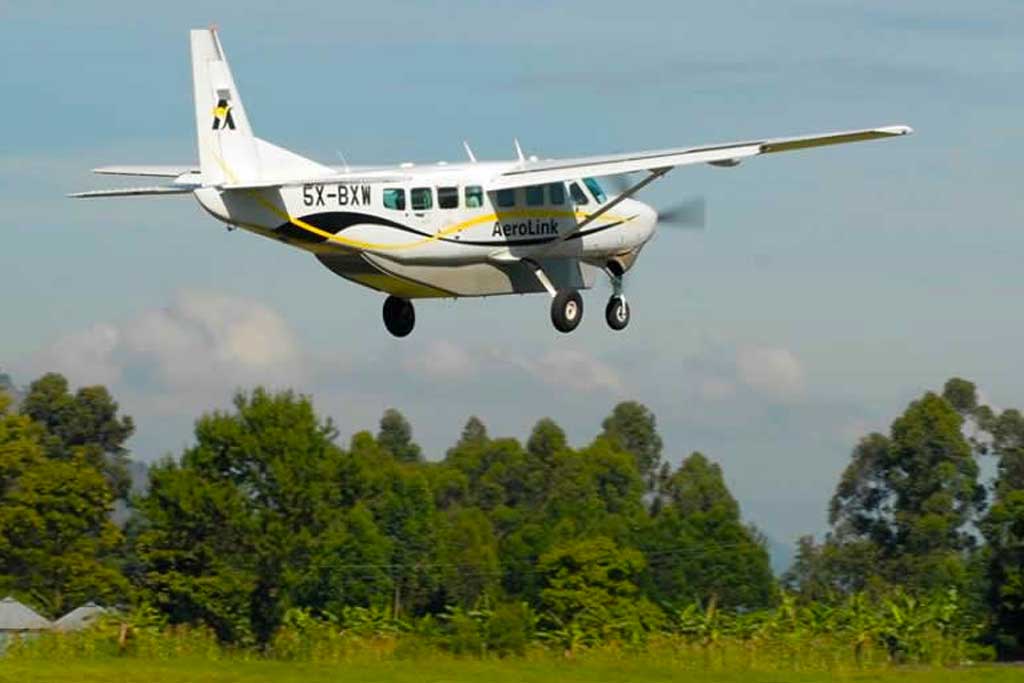
- Aircraft: light single-engine or twin-engine, typically 12–14 seats
- Luggage limit: usually 15kg per person in soft-sided bags
- Operators: Aerolink, Bar Aviation, MAF, Kampala Executive Aviation
- Typical day 1: morning flight out, afternoon at the Bwindi lodge
- Typical day 2: gorilla trekking morning, afternoon flight back to Entebbe
- Main risk: weather delays to light aircraft, and a tight trek-to-flight window on day two
What is a 2 day gorilla trekking fly-in safari from Entebbe?
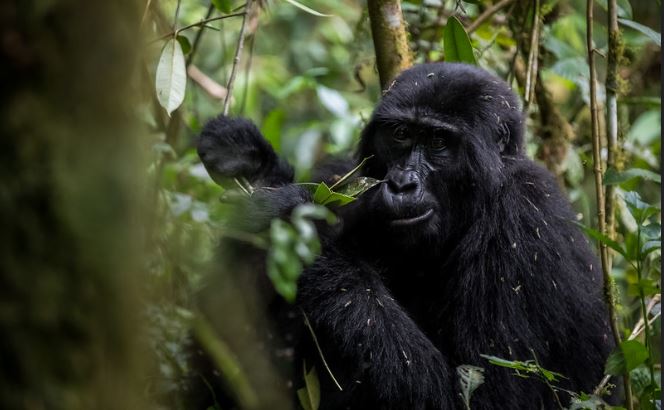
A 2 day gorilla trekking fly-in safari from Entebbe is a gorilla trekking itinerary that uses scheduled light aircraft to reach Bwindi instead of driving. You fly from Entebbe (or Kajjansi) to Kihihi or Kisoro airstrip on the morning of day one, transfer by road to your Bwindi lodge, trek gorillas on the morning of day two, and fly back to Entebbe that afternoon. The gorilla trek itself is the same experience as any other Bwindi trek — the same one hour, the same rules — but the transport around it is completely different.
Three things define the fly-in format:
- Two flights replace two long drives. A road-based gorilla trip from Entebbe involves two drives of eight to nine hours each way. The flights replace those drives with two one-hour sectors, which is what makes a two-day itinerary possible. The time saved is roughly two full days of driving.
- The schedule is set by the flights, not by the trek. The morning flight out and the afternoon flight back are fixed by the operator’s schedule. The trekking day fits between those two flights, which is why the day-two timing is so tight.
- The cost profile is different. Flights are significantly more expensive than a road transfer, but they save two days. Whether the fly-in is worth it depends on how those two days are valued — a traveller with a fixed schedule will often find the flights cheaper than the alternatives.
The wider context on how a fly-in safari sits within Uganda’s gorilla options is on the Uganda gorilla trekking hub. What matters for this post is understanding the format’s genuine constraints, because the fly-in version is a real option — not a gimmick — but it needs to be planned with the same honesty as the road version.
Afraeka tip: If you are booking a 2 day gorilla trekking fly-in safari from Entebbe, choose the lodge closest to the trailhead for your sector. The transfer from the airstrip to the lodge and from the lodge to the trailhead eats into the two days, and a lodge that is closer to the briefing point materially increases the chance that the day-two trek-to-flight window works. In Buhoma, that means a lodge near the Buhoma trailhead. In Rushaga, a lodge on the Rushaga side.
How do the flights work?
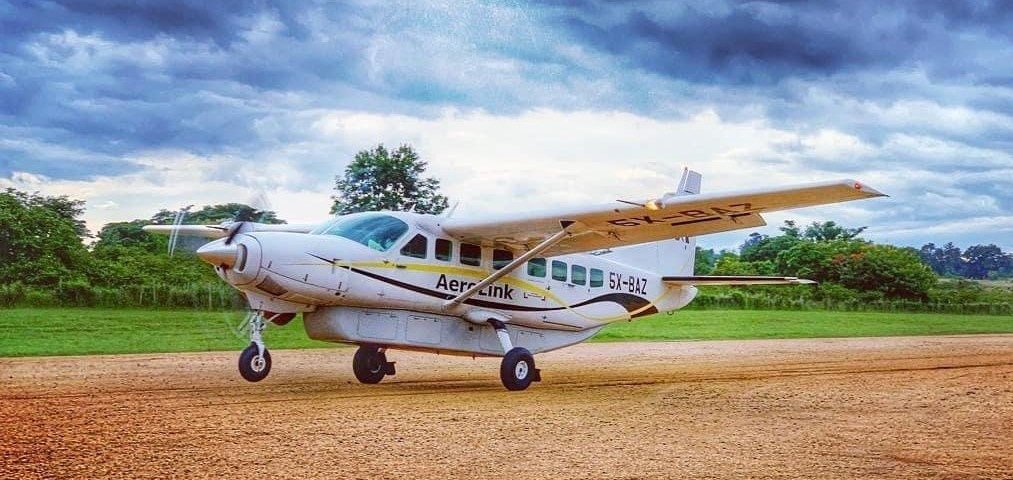
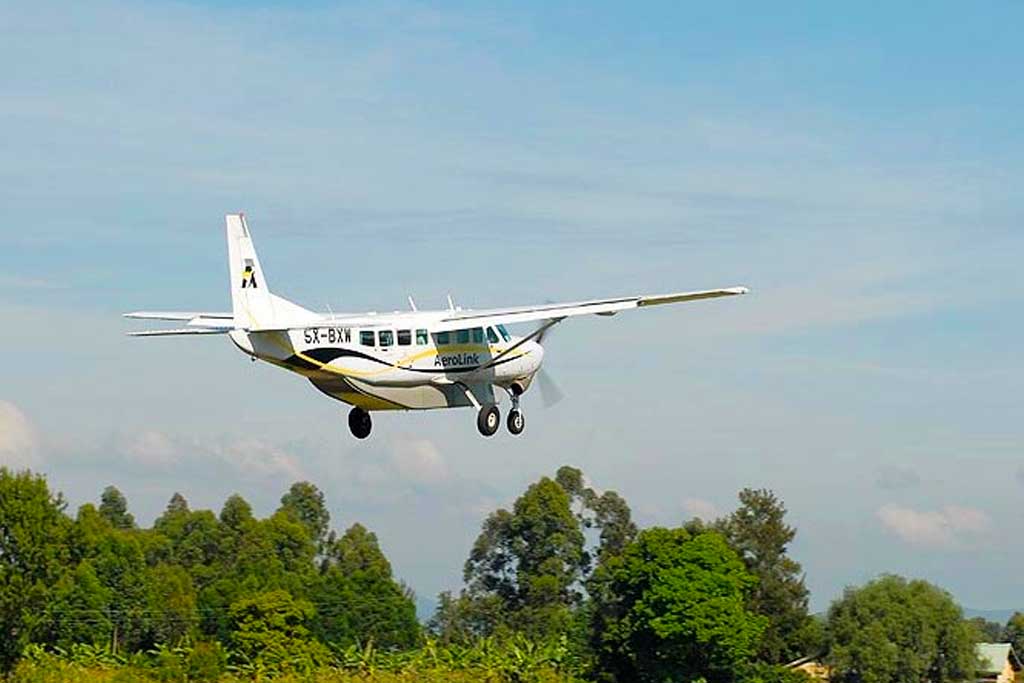
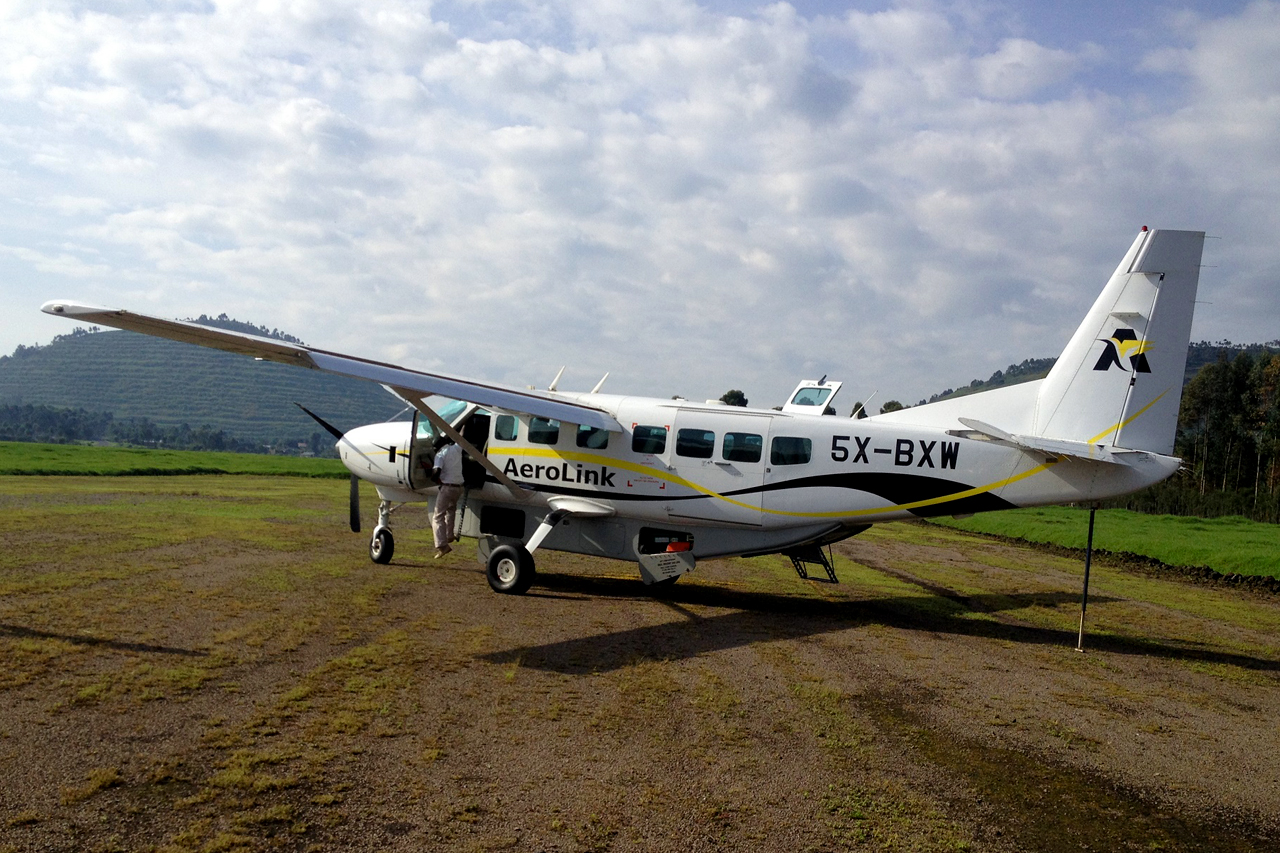
The flights on a fly-in gorilla safari are operated by several scheduled charter companies, all using light single-engine or twin-engine aircraft. The two main operators on the Entebbe–Bwindi route are Aerolink and Bar Aviation, with MAF and Kampala Executive Aviation offering additional services. The aircraft are typically Cessna Caravans or similar, carrying 12 to 14 passengers.
| Route | Flight time | Serves |
|---|---|---|
| Entebbe or Kajjansi to Kihihi | ~1 hour | Buhoma, Rushaga (northern and central Bwindi) |
| Entebbe or Kajjansi to Kisoro | ~1 hour 15 minutes | Rushaga, Nkuringo, Mgahinga (southern Bwindi) |
| Kihihi to Kisoro (inter-sector) | ~20 minutes | Not offered on all schedules |
Flight schedules vary by operator and season. Confirm at the time of booking.
Three practical points about the flights:
- Baggage is limited. Standard luggage allowance on light aircraft is 15 kilograms per person, in soft-sided bags. Hard cases and wheeled suitcases generally do not fit. Travellers doing the fly-in version need to pack accordingly, or arrange to leave excess luggage in Entebbe.
- Flights depart on fixed schedules. The morning departure from Entebbe is usually around 7:00 to 8:00am, arriving at the airstrip around 8:15 to 9:15am. The return flight from Bwindi is usually in the mid-afternoon, though exact timing depends on the operator.
- Weather can affect the schedule. Light aircraft do not fly in poor visibility or high winds. In the wet season, delays of an hour or more are not unusual, and occasional cancellations do happen. This is the single biggest risk of the fly-in format.
The morning flight out is generally reliable — early-morning conditions are usually clear. The return flight is the one to watch: it is scheduled after the trekking day, when afternoon weather can be more unpredictable. Our guide on the gorilla trek timing covers how long the trekking day can run, which matters for the return flight window.
Which airstrip serves which Bwindi sector?
The airstrip you fly into determines which Bwindi sector is practical, and the sector determines your trekking terrain. Choosing the right airstrip is the second decision in planning a 2 day gorilla trekking fly-in safari from Entebbe, after the permit.
| Airstrip | Sectors served | Transfer time from airstrip |
|---|---|---|
| Kihihi | Buhoma, Rushaga | Buhoma ~1.5 hours; Rushaga ~2 hours |
| Kisoro | Rushaga, Nkuringo, Mgahinga | Rushaga ~1 hour; Nkuringo ~1 hour; Mgahinga ~45 minutes |
Transfer times are approximate and depend on road conditions. The murram sections can be slower in the wet season.
Two practical consequences. First, if your gorilla permit is for Buhoma, you are flying into Kihihi — the transfer to Buhoma is roughly 1.5 hours. Second, if your permit is for Rushaga, Nkuringo or Mgahinga, Kisoro is the closer airstrip. The Kisoro airstrip is closer to the trekking sectors, which shortens the transfers and makes the day-two timing more comfortable.
The sector choice also affects the trekking terrain. Buhoma and Rushaga are the gentler sectors and better suited to travellers who are concerned about the physical demands of the trek. Nkuringo is the hardest sector, with a ridge-and-valley geography that makes the return climb the most demanding in Bwindi. Our guide on the Nkuringo sector difficulty covers the terrain in detail. For a fly-in safari with a tight schedule, the gentler sectors are generally the safer choice — the trek is more likely to finish on time.
What does the day-by-day route look like?
The 2 day gorilla trekking fly-in safari from Entebbe has a fixed structure set by the flight schedule. Here is how the days break down.
The 2-day fly-in route, day by day
- Day 1, 5:30am — transfer to Entebbe or Kajjansi. Leave your Entebbe hotel or the airport area for the departure point. Some operators fly from Entebbe International, others from Kajjansi airfield.
- Day 1, 7:00–8:00am — flight departs. One hour to Kihihi or one hour fifteen to Kisoro. Light aircraft, seat allocation on the day.
- Day 1, 8:15–9:15am — arrive at the airstrip. Met by your driver-guide. Transfer to your Bwindi lodge (1.5 to 2 hours depending on sector).
- Day 1, 11:00am–12:00pm — arrive at the lodge. Lunch, settle in, and a free afternoon for a community walk, the Buhoma waterfall trail, or simply rest.
- Day 1, evening — dinner and briefing. Early night. The trekking day starts before dawn the following morning.
- Day 2, 6:00–6:30am — trekking day. Depart the lodge for the trailhead. Pre-dawn briefing, forest walk, one hour with the gorillas, walk back.
- Day 2, 12:00–1:00pm — finish the trek. Certificate handover at the trailhead. Return to the lodge for a quick shower and lunch.
- Day 2, 1:30–2:30pm — transfer to the airstrip. Drive from the lodge back to Kihihi or Kisoro. This is the tightest part of the itinerary.
- Day 2, 3:00–4:00pm — return flight to Entebbe. One hour in the air. Arrive back at Entebbe or Kajjansi by late afternoon.
- Day 2, evening — buffer in Entebbe. If you have an international flight the following day, a night in Entebbe is strongly recommended.
Two structural notes on this route. First, the trekking day is the only full day in the itinerary — everything else is transfer. That is the essential shape of the fly-in format: two flights, two road transfers, one trek. Second, the day-two trek-to-flight window is the format’s tightest constraint. The trek needs to finish by 1:00pm for the return flight to work comfortably, and a slow trek or a prolonged family viewing can put that at risk. Travelers doing the fly-in version should be aware that the return flight is not guaranteed if the trek runs long.
What are the risks of the fly-in format?
The 2 day gorilla trekking fly-in safari from Entebbe has three specific risks that travellers should understand before booking. They are manageable, but they are real, and no operator can fully eliminate them.
- Weather delays. Light aircraft do not fly in poor visibility or high winds. The morning flight is usually reliable, but the afternoon return flight can be delayed or cancelled in the wet season. If the return flight is cancelled, you are transferred by road to Entebbe the following day — which pushes the trip to three days and may affect onward travel.
- Trek-to-flight timing. The trekking day is not perfectly predictable. A family that has moved further into the forest overnight, a slow group pace, or a wet-season descent can push the finish time later than expected. If the trek finishes after the return-flight window, the operator either holds the flight, arranges a road transfer, or the traveller accepts an overnight and a next-day flight.
- Luggage restrictions. The 15-kilogram soft-bag limit catches travellers who are continuing from a longer Uganda trip with more luggage. Excess luggage can usually be stored in Entebbe, but this needs to be arranged in advance.
None of these risks are unusual, and none of them are specific to Bwindi — they apply to all light-aircraft safaris in East Africa. What matters is that travellers on a fly-in safari plan for them: build in a buffer day at the end of the trip if possible, do not book an international flight immediately after the return, and confirm the excess-luggage arrangement at the time of booking. Our guide on gorilla permit availability covers the permit side of the planning, which is the fixed anchor for the rest of the itinerary.
Afraeka tip: If the return flight is critical to onward travel, book a flight that departs after 4:00pm, not one at 3:00pm. The later flight gives the trekking day more room and reduces the risk that a slow trek or a delayed descent puts the flight at risk. The extra hour on the ground at the airstrip is more than worth it if it means the trip runs to plan.
Who is the fly-in format best for?
The 2 day gorilla trekking fly-in safari from Entebbe is not the right choice for every traveller. It is a specific format for a specific kind of trip, and the honest answer depends on your budget, your timeline and your appetite for risk.
Book the fly-in format if you are…
- On a fixed, short timeline — a business trip with two spare days, or a stopover that cannot stretch further
- Adding a gorilla trek to a longer East Africa trip and cannot afford the two extra road days
- Comfortable paying the flight premium for the time savings
- Willing to accept weather risk and to build in a buffer day for the return
- Packing light and comfortable with the 15kg soft-bag limit
- Willing to work with a private driver-guide on the ground for the transfers
Consider the road version instead if you are…
- Travelling on a budget — the road version is significantly cheaper
- Wanting maximum reliability — road transfers are not affected by weather
- Wanting a slower-paced trip with more time at the lodge and in the forest
- Travelling with children or older relatives who prefer not to fly in light aircraft
- Planning a longer Uganda trip where the extra days are available and the road driving is part of the experience
- Not wanting to worry about the trek-to-flight window on day two
The road version remains the standard for most travellers, and the 3-day road itinerary is the format most gorilla trekkers book. The fly-in version is for the specific case where two extra days are genuinely not available and the traveller is willing to pay for the difference. Our guide on the two-day gorilla trekking format covers the alternative — the road version compressed into two days, which is possible but leaves no recovery time at all.
How do you book a 2 day gorilla fly-in safari?
You book a 2 day gorilla trekking fly-in safari from Entebbe by confirming the permit first, then the flights, then the lodge and ground logistics. The permit is the fixed anchor; the flights are the second fixed point; the lodge and transfer are chosen around both.
What to arrange before the trip
- Gorilla permit at Bwindi — sector and date, paid in full at booking
- Return flights — Entebbe to Kihihi or Kisoro, confirmed seats on a scheduled service
- Lodge at Bwindi — chosen for proximity to the trailhead
- Ground transfers — airstrip to lodge, lodge to trailhead and back, lodge to airstrip
- Luggage arrangements — excess bags stored in Entebbe
- Weather contingency — what happens if the return flight is delayed
- Buffer night in Entebbe before the international departure if possible
- Any mobility or fitness notes shared with the operator in advance
Two things are worth confirming when you book. First, the flight operator’s policy on delayed treks — some will hold the flight briefly if the trek is running late, others will not. Second, whether the return flight is scheduled from Kihihi or Kisoro, and whether the operator offers any flexibility on the return time. Our guide on the Kibale and Bwindi combined safari shows how the fly-in format integrates with the wider western Uganda circuit if you are adding a Kibale stop, and the full trip options are on the trips page linked below.
Common mistakes with the fly-in format
Most of what goes wrong with a 2 day gorilla trekking fly-in safari from Entebbe comes down to a small set of avoidable mistakes, and all of them can be prevented with one careful planning conversation.
- Booking a morning return flight on day two. The trekking day is unpredictable. A morning return flight does not give enough buffer. Book a flight that departs after 4:00pm or accept the risk of a road transfer.
- Packing a hard suitcase. The 15-kilogram soft-bag limit is real. Hard cases generally do not fit on the light aircraft. Pack accordingly or arrange storage in Entebbe.
- Choosing the wrong airstrip for the sector. Kihihi serves Buhoma and Rushaga; Kisoro serves Rushaga, Nkuringo and Mgahinga. Match the airstrip to your permit sector.
- Choosing a lodge far from the trailhead. The fly-in format has no slack in the day-two timing. A lodge 45 minutes from the trailhead adds an hour of driving across the two-day window.
- Booking a same-day international flight after the return. The return flight can be delayed by weather. Build a buffer night at Entebbe, or accept the risk that a delayed flight affects your onward departure.
- Not confirming the luggage storage arrangement. Excess luggage must be stored at Entebbe in advance. Do not assume the operator will handle it on the day.
- Underestimating the ground transfers. The road transfers from the airstrip to the lodge and from the lodge to the trailhead are a real part of the itinerary. They add three to four hours of driving across the two days.
- Travelling with children under 15. The minimum age for gorilla trekking is 15. Families with younger children cannot do the trek at all, regardless of the format.
Can one permit cover two people?
No. One permit covers one person for one trek, and this applies to the 2 day gorilla trekking fly-in safari from Entebbe the same as to any other gorilla trekking format. A couple doing the fly-in route needs two permits; a family of four needs four. Each permit is tied to a named individual, and there is no way to share one or transfer it to another person. Current permit categories and rates sit on the gorilla permits Uganda page.
Because the daily cap applies per habituated gorilla family, the permit count is the constraint that shapes the fly-in itinerary. A party of six needs six permits on the same date and in the same sector, which is a much tighter booking than a solo traveller’s single permit. Book early, and book the permits together with the flights so the two fixed points in the itinerary can be aligned.
Once the permits are confirmed, the specific gorilla family you visit is allocated on the morning of the trek. You will know your sector in advance because it is on the permit; you will learn your family at the briefing alongside everyone else. The one-hour viewing window, seven-metre distance rule, no-flash rule and health exclusion apply to every fly-in trekker the same as to any other. The regulatory framework is set by the Uganda Wildlife Authority, and the wider country map is on the Uganda destinations page.
Afraeka field note: A traveller once booked a 2 day gorilla trekking fly-in safari from Entebbe on a fixed schedule — she had a conference in Kampala on day three and could not move it. The permit was for Rushaga, so we flew her into Kisoro and based her at a lodge 40 minutes from the trailhead. The trek ran slightly long — the family had moved overnight and the descent was slow — and she finished at the trailhead at 1:45pm. Her return flight was at 4:00pm and she made it with twenty minutes to spare. What she told us afterwards was that the itinerary had worked, but the margin had been smaller than she had expected — and that if the trek had taken another hour, she would have missed the flight and the conference. She asked us to put a note in her file for future trips: always build the extra buffer. That is the honest constraint of the fly-in format. It works, and it works well, but the trek-to-flight window is tighter than the marketing suggests.
A question that comes up occasionally on TripAdvisor’s Uganda forum and on r/Uganda is some version of: “Can I do gorilla trekking in two days from Entebbe?” The honest answer is yes, but only with the fly-in format, and only with careful timing. The road version cannot be done in two days — the drives alone eat the whole window. The fly-in version fits a flight out on day one, a trek on day two, and a flight back, but the return flight must be late enough in the afternoon to accommodate a long trek. Travellers who need maximum reliability should choose the road version and accept the extra days. Travellers on a fixed schedule who are willing to accept the weather and timing risk will find the fly-in version a genuinely useful option.
Frequently asked questions
How long is the flight from Entebbe to Bwindi?
Roughly one hour to Kihihi airstrip and one hour fifteen minutes to Kisoro airstrip. The aircraft are light single-engine or twin-engine models, typically 12 to 14 seats. Flights depart in the morning from Entebbe or Kajjansi and return in the afternoon.
Can I do a 2 day gorilla trekking safari from Entebbe?
Yes, but only with the fly-in format. The road version requires two full days of driving and cannot fit into a two-day window. The fly-in version works by replacing the drives with one-hour flights, but the schedule is tight and the trek-to-flight window on day two is the main constraint.
What is the luggage limit on Bwindi flights?
Usually 15 kilograms per person, in soft-sided bags. Hard cases and wheeled suitcases generally do not fit in the light aircraft. Excess luggage can be stored at Entebbe if arranged in advance.
Which airstrip should I fly into for Bwindi?
Kihihi for Buhoma and Rushaga. Kisoro for Rushaga, Nkuringo and Mgahinga. The Kisoro airstrip is closer to the southern sectors, which shortens the ground transfers and makes the day-two timing more comfortable.
What happens if the return flight is delayed or cancelled?
Light aircraft do not fly in poor visibility or high winds, so weather delays are possible. If the return flight is cancelled, the operator usually arranges a road transfer to Entebbe the following day. This pushes the trip to three days and may affect onward travel.
Is the fly-in format more reliable than driving?
No — it is less reliable. Road transfers are not affected by weather, and a road-based trip runs to a predictable schedule. The fly-in format is faster but depends on the flights running on time, which is why the format is best for travellers who can accept some schedule risk.
Can I book the fly-in safari if I have a fixed international flight out of Entebbe?
Yes, but build in a buffer night at Entebbe before the international flight. A weather delay on the return could otherwise affect your onward departure. If the international flight is critical, the buffer night is essential.
What time does the return flight from Bwindi depart?
Usually in the mid-afternoon, but the exact time depends on the operator and the route. Book a return flight that departs after 4:00pm if possible, to give the trekking day more room.
Is the fly-in format suitable for families?
Families with children aged 15 and over can do the fly-in format, provided they are comfortable with light aircraft. The minimum age for gorilla trekking is 15. Families with younger children cannot do the trek at all, regardless of the format.
Planning a fly-in gorilla trek?
Send us your dates, your party size and the sector you are considering, and we will check permit availability, confirm the flight schedules from Entebbe, and outline how the two days fit together — including the trek-to-flight window on day two. If the road version would suit you better, we will say so honestly. No price figures until we know your route, because the permits and flights are only two lines of the total.
About the author: Victoria Kayaga is a Ugandan-born safari expert and founder of Afraeka Adventures, with 15+ years in East African tourism. Based in Kampala, she has planned fly-in and road-based gorilla trekking itineraries across Bwindi’s four sectors and Mgahinga for years, and she advises travellers on the trade-offs between speed, cost and reliability. More about Victoria.
Keep planning
- 3-day Uganda gorilla safari
- 7-day Uganda and Rwanda primate safari
- 16-day Rwanda and Uganda gorilla trekking and big five safari
- All Afraeka trips