Last updated: 26 September 2026. Rates and availability are set by UWA and subject to change — confirm before booking.
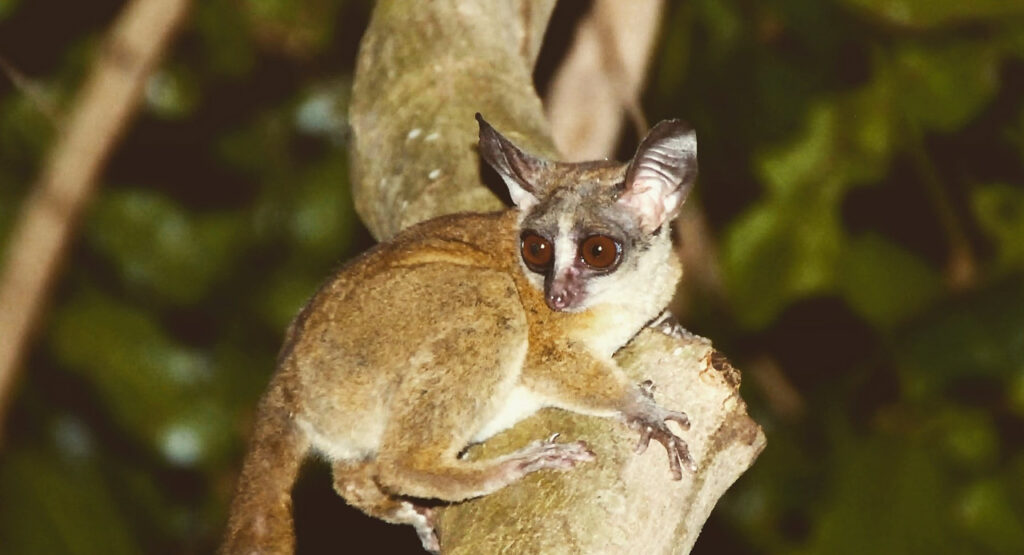
Short answer: A Kibale night forest walk is a guided walk of one and a half to two hours after dark, focused on the nocturnal primates and wildlife that the daytime treks do not see. The main targets are galagos (bushbabies) and pottos — small, nocturnal primates that live in the trees and only come out at night — along with owls, nightjars and other night-active species. The walk is easy underfoot, requires no permit, has no minimum age, and is arranged through your lodge or a local operator. It pairs naturally with the daytime chimp trek and the Bigodi walk on a two- or three-night Kibale stay.
Most travellers who visit Kibale do the daytime activities — the chimpanzee trek, the Bigodi Wetland Sanctuary walk, the forest birding — and stop there. What they miss is that the forest changes completely after dark. The diurnal primates settle into their night nests, the birds fall silent, and a different set of animals becomes active. Galagos and pottos, both nocturnal primates, emerge from their daytime hiding places in the trees. Owls begin hunting. The forest sounds are entirely different.
The Kibale night forest walk is the only way to see any of this. It is short, gentle, and one of the more unusual experiences Uganda offers — a small group walking a forest trail by headlamp, looking for primates that most visitors never see. This guide covers what the walk involves, what you are likely to encounter, how to book it, and how it fits into a wider Kibale stay. Permit categories and rates for the daytime treks sit on the gorilla permits Uganda page, and the wider primate picture across Uganda’s sites is on the primate tracking experiences page. The regulatory framework for Uganda’s protected areas is published by the Uganda Wildlife Authority.
Kibale night forest walk — key facts
- When: After dark, usually departing around 7:30–8:00pm
- Duration: 1.5–2 hours on the trail
- Main targets: Galagos (bushbabies) and pottos — both nocturnal primates
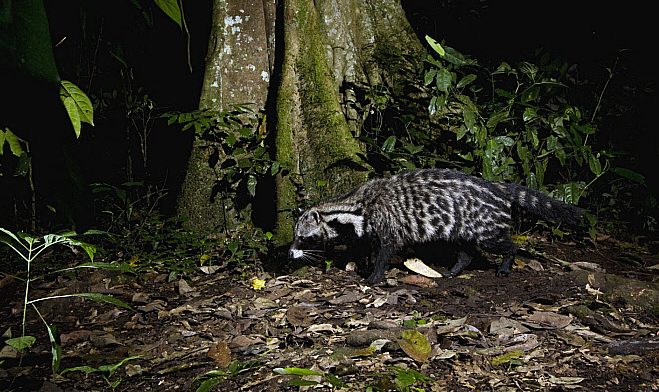
- Other wildlife: Owls, nightjars, genets, civets, occasionally small antelope
- Terrain: Easy forest trails; slow pace; headlamp required
- Minimum age: None — but children should be comfortable with darkness and uneven ground
- Booking: Arranged through your lodge or a local operator; no advance permit required
- Best paired with: The chimp trek and Bigodi walk on a 2–3 night Kibale stay
What is a Kibale night forest walk?
A Kibale night forest walk is a guided forest walk conducted after dark, focused on the nocturnal primates and other night-active wildlife of Kibale Forest and its edges. The walk is led by a local ranger or guide, uses headlamps and torches, and follows forest and forest-edge trails at a slow pace. The goal is not distance — it is observation. The guide is scanning the trees with a spotlight for the reflections of animal eyes, and calling the group’s attention to what the light finds.
Three things define the walk:
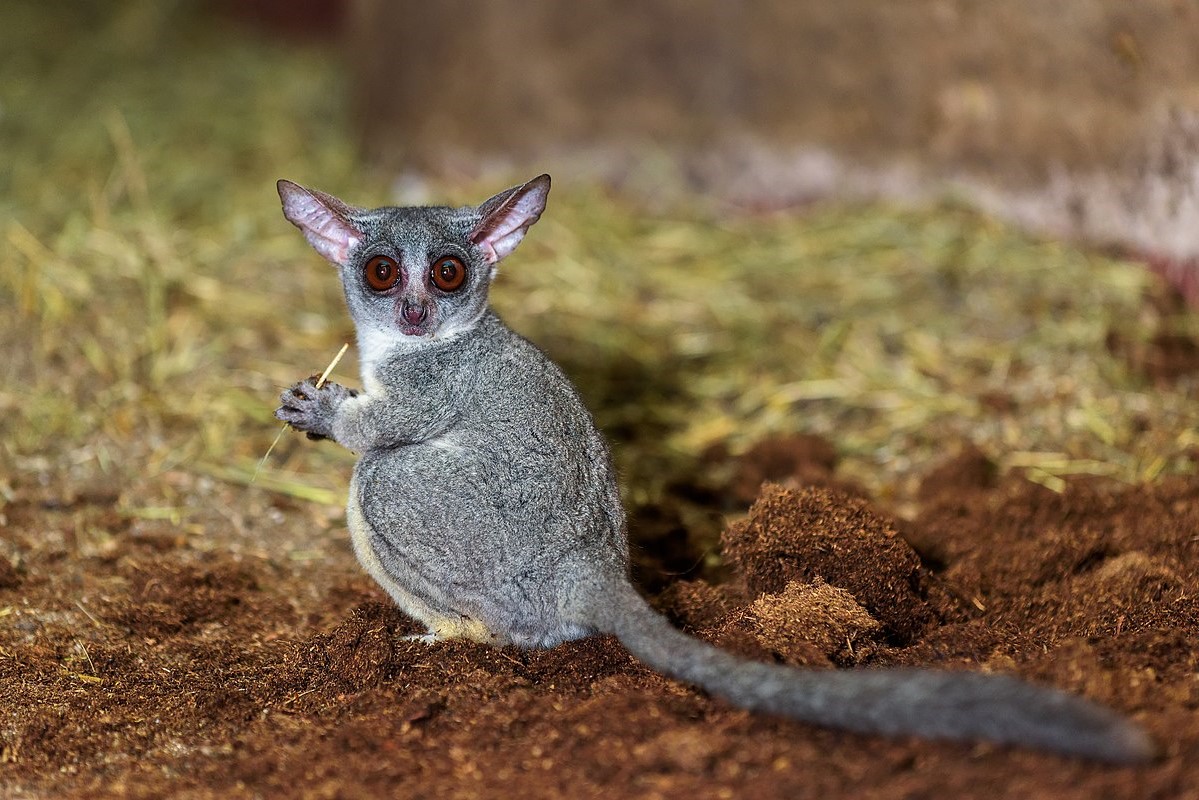
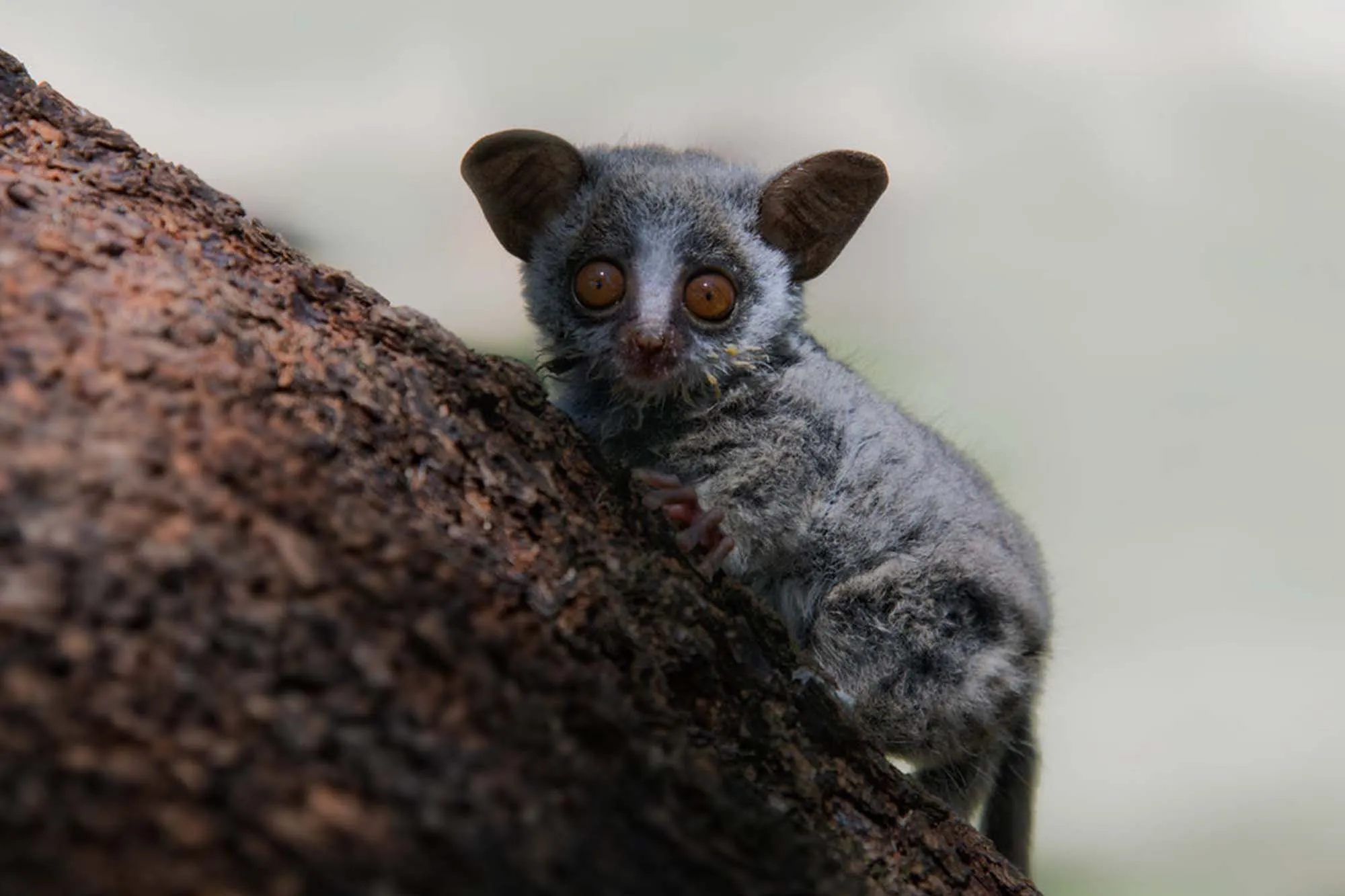
- It is focused on nocturnal primates. Galagos (also called bushbabies) and pottos are the two main targets. Both are small, tree-dwelling primates that are active at night and completely absent from the daytime experience. Galagos are more common and easier to find; pottos are shyer and less reliably seen.
- The walk is short and gentle. Most walks run 1.5 to 2 hours on forest and forest-edge trails. The pace is slow, the terrain is easy, and the walk is suitable for travellers with limited fitness. It is not a trek in the sense of distance or difficulty.
- It reveals a different forest. The species you see at night are almost entirely different from the daytime list. Chimpanzees and diurnal monkeys are asleep in their nests; the nocturnal animals are only active in the dark.
The walk is not a UWA-permitted trekking experience in the same category as the chimp trek or gorilla trek. It is a guided forest activity arranged through lodges and local operators, with no advance permit and no daily cap. This makes it more accessible on short notice and more suitable for families and mixed-fitness groups.
Afraeka tip: The success of a Kibale night forest walk depends heavily on the guide. A good guide knows where the galagos are likely to be on a given night, can imitate their calls, and can direct a spotlight on a small primate in the canopy from twenty metres away. Ask your lodge who is guiding the walk and, if possible, book with a guide who has worked the forest for years. The difference between a good walk and a poor one is almost entirely the guide.
What nocturnal primates can you see on the walk?
The two principal nocturnal primates at Kibale are the galago and the potto. Both are small, tree-dwelling, and entirely nocturnal. They belong to a group called the lorisiforms, which are among the oldest living lineages of primates — their body plan has changed less over evolutionary time than almost any other group. Seeing them is genuinely different from watching the better-known monkeys and apes.
| Species | Size | Where seen | Likelihood |
|---|---|---|---|
| Galago (bushbaby) | Very small — 150–300 g | Mid-storey and canopy; forest edge | Common; usually the main target |
| Potto | Small — 800–1,600 g | Canopy; slow-moving | Less common; shyer |
| Tree hyrax | Small | Tree holes and trunks | Common; often heard before seen |
| Owls (several species) | Variable | Canopy and forest edge | Common |
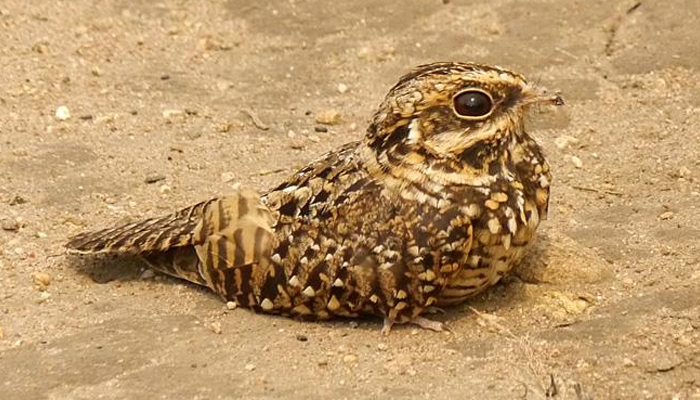
| Nightjars | Small | Forest floor and forest edge | Occasional |
| Genet | Small | Forest edge and trails | Occasional |
| Civet | Medium | Forest edge | Occasional |
| Duiker (small antelope) | Medium | Trails and clearings | Occasional |
Sightings vary by night, season and guide. The galago is the most reliably seen nocturnal primate; the potto is less predictable.
Galagos are small, agile and remarkably quick. Watching one leap between branches in the beam of a spotlight is one of the more striking sights of a Kibale stay. They are also vocal — their calls are the source of the “bushbaby” name, which comes from the infant-like cry that some species make. Pottos are slower and more deliberate, gripping branches with an almost sloth-like caution, and they are more difficult to find because they tend to stay hidden in the canopy rather than moving openly.
The walk also delivers birds and other wildlife. Owls are commonly seen perched in the canopy or on low branches, and the tree hyrax — a small, primitive mammal that is the closest living relative of the elephant — is often heard calling from tree holes before it is seen. For travellers interested in the wider ecology of Kibale, the night walk adds a dimension that daytime activities cannot provide.
What happens during the walk?
A Kibale night forest walk follows a simple structure: meet the guide after dinner, receive a short briefing, walk into the forest with headlamps, scan for wildlife, and return to the lodge. The walk is not scheduled to a strict timeline — the guide follows the animals, and the pace is set by what is found.
The walk, step by step
- Meet at the lodge around 7:30pm. After dinner. The guide confirms the group, checks headlamps and torches, and gives a short briefing on what to expect and how to behave on the trail.
- Walk into the forest. Follow the guide along forest and forest-edge trails. The pace is slow, and the group stays close together — the guide needs to keep everyone in the beam of the spotlight and needs a quiet group.
- Spotting and observation. The guide scans the trees with a spotlight for the reflections of animal eyes. When something is found, the group stops and the guide positions the light on the animal. Observation time at each sighting can be 5 to 15 minutes depending on what is found.
- Listening for calls. The walk is not just visual. Galago calls, tree hyrax calls, and the calls of night birds are often heard before they are seen. The guide will pause to listen and identify sounds.
- Return to the lodge. The walk finishes back at the lodge, usually around 9:30 to 10:00pm. Most travellers return to their room or the bar for a nightcap before bed.
Two practical points about the walk. First, the group stays quiet — loud talking disturbs the wildlife and reduces what you see. The guide will ask for quiet on the trail, and groups that respect that rule consistently see more. Second, the walk is not physically demanding. The trails are gentle, the pace is slow, and the total distance covered is usually less than two kilometres. Travellers with knee or fitness concerns manage the walk comfortably, provided they are comfortable walking on uneven ground after dark.
When is the best time for the walk?
The Kibale night forest walk runs year-round, and the best conditions are in the drier months — December to February and June to September. Trails are firmer, mud is minimal, and the walk is more comfortable. The wet months bring muddier trails and a slightly harder walk underfoot, but the nocturnal wildlife is equally active and the walk still runs.
Three practical points on timing:
- Moonless nights are often best. On moonless nights the animals rely more on sound than sight, and they are less wary. Some guides prefer walking near the new moon. On bright moonlit nights, some species stay hidden in denser cover.
- After rain is productive. The forest is often more active after rain — frogs call, insects emerge, and the animals that feed on them become more visible. Wet nights can deliver some of the best sightings.
- Schedule on a non-trekking day. The chimp trek starts before dawn, and the night walk finishes late. Doing both on the same day leaves little recovery time. If your itinerary allows, put the night walk on a day when you are not trekking chimpanzees.
The walk is easiest to book on arrival at your Kibale lodge. There is no advance permit and no daily cap in the way that the chimp trek has. For groups of four or more, it is worth mentioning the night walk to your lodge when you check in, so a guide can be assigned to you on the night you want.
How do you book a Kibale night forest walk?
You book a Kibale night forest walk through your lodge or a local operator. It is not a UWA-permit activity, so there is no advance booking required through the national park system. Most Kibale lodges offer the walk as a standard evening activity, and can arrange a guide with a few hours’ notice.
What to arrange before your night walk
- Confirm the walk with your lodge — usually the evening before or on arrival
- Check what the fee includes — some lodges bundle the guide fee, others charge separately
- Bring or borrow a headlamp or torch — the guide has a spotlight, but you should have your own
- Wear closed shoes with grip and long trousers
- Bring a light waterproof shell in the wet months
- Pack insect repellent — mosquitos are active after dark
- Confirm the meeting time and place — usually the lodge reception after dinner
- Cash for guide tips, customary but optional
Two things are worth confirming when you book. First, whether the guide is a UWA ranger or a lodge guide — either is fine, but the experience differs slightly. UWA rangers tend to focus on the broader park ecology, while lodge guides often have deeper local knowledge of specific animals. Second, the group size — night walks work best with small groups, and it is worth asking how many people will be on your walk. Groups of more than six reduce the quality of the experience.
For travellers combining the night walk with the chimp trek and the Bigodi walk, the structure is a two- or three-night Kibale stay. Our guides on the other primates in Kibale Forest and the Bigodi Wetland Sanctuary walk cover how the three fit together. The full itinerary options are on the Uganda destinations page and the trips listed below.
Is the walk suitable for families and less-fit travellers?
The Kibale night forest walk is one of the most family-friendly and least physically demanding activities in the Kibale area. There is no minimum age, no permit, no permit-booking lead time, and no fitness requirement beyond comfort walking on uneven ground after dark. For families with children under 15 — who cannot do the chimp trek — the night walk is one of the few forest activities everyone can do together.
Three practical points for families and less-fit travellers:
- Children should be comfortable with darkness. The walk takes place after dark on forest trails with headlamps. Most children aged 8 and over find it exciting rather than scary, but younger children may find it unsettling. Parents should judge based on the child.
- The terrain is gentle. The trails are firm and the pace is slow. Travellers with knee or fitness concerns manage the walk comfortably, provided they are steady on uneven ground and comfortable with the dark.
- Falling asleep is fine. For very young children who tire, some lodges allow families to do a shorter version of the walk — 45 minutes to an hour — before returning to the lodge. Ask when booking.
For less-fit travellers and older visitors, the night walk is often more accessible than the chimp trek. There is no pre-dawn start, no long walk to find the animals, and no sustained climbing. What it requires is a willingness to walk slowly in the dark and a headlamp with a working battery.
How does the walk pair with the rest of a Kibale stay?
The Kibale night forest walk pairs naturally with the other Kibale activities: the chimp trek in the morning, the Bigodi walk in the afternoon, and the night walk in the evening. Together, the three cover the widest possible range of Kibale’s wildlife, and they are best spread across two or three nights.
| Day | Morning | Afternoon | Evening |
|---|---|---|---|
| Day 1 | Arrive, settle in | Bigodi Wetland Sanctuary walk | Rest |
| Day 2 | Chimpanzee trek | Rest or crater lakes drive | Night forest walk |
| Day 3 | Forest birding or relaxation | Depart | — |
Structure assumes a three-night stay. A two-night stay can combine the chimp trek and the night walk without the Bigodi walk, or the chimp trek and the Bigodi walk without the night walk.
Two practical points about the pairing. First, the night walk is best on a day when you are not also doing the chimp trek, so you are not exhausted from a pre-dawn start. Second, if you are short on time, the night walk is the more distinctive activity — it covers species that no other activity on the itinerary will deliver. The Bigodi walk, while excellent, covers forest-edge species that overlap with what you may see on the chimp trek.
The wider primate picture across Uganda’s sites sits on the primate tracking experiences page. The community tourism side of the region is covered by the Uganda Tourism Board.
Common mistakes with the Kibale night forest walk
Most of what goes wrong with a Kibale night forest walk comes down to a small set of avoidable mistakes, and all of them can be prevented with one careful planning conversation.
- Skipping the walk because it is not a trek. The night walk is not a lesser version of the chimp trek — it is a completely different experience, with different species and a different atmosphere. Travellers who skip it miss the only chance to see nocturnal primates at Kibale.
- Not bringing a headlamp. The guide has a spotlight, but each trekker should have their own headlamp or torch. Walking in the dark without personal light is uncomfortable and unnecessary.
- Talking loudly on the trail. Loud groups see less. The guide will ask for quiet, and the group should respect it. This is one of the most important points for a successful walk.
- Doing the walk on the same day as the chimp trek. Possible but tiring. The chimp trek starts before dawn; the night walk finishes late. Leave a day between them if you can.
- Not wearing long trousers. Mosquitoes and insects are active after dark. Long trousers and sleeves, plus insect repellent, make the walk more comfortable.
- Expecting guaranteed potto sightings. Galagos are common and reliably seen; pottos are shyer and less predictable. Set expectations accordingly — the walk is about what is found on the night, not a guaranteed species list.
- Booking a large group. Night walks are best in small groups — ideally under six people. Larger groups reduce visibility and increase noise. Ask when booking how many people will be on the walk.
- Assuming the walk is included in the chimp permit. The night walk is a separate activity with its own fee. It is not part of the chimp trekking permit or the Bigodi entrance fee.
Can one permit cover two people?
The Kibale night forest walk does not use permits, so the question of sharing does not apply directly. The walk is paid for on a per-person basis, and each visitor pays their own fee. There is no way to enter on someone else’s payment. This is one of the structural differences from the UWA-managed trekking experiences — the night walk operates like the Bigodi walk, on a first-come, per-person basis, without a daily cap or an advance booking system.
For travellers comparing the night walk with the chimp trek, the difference matters in two ways. First, the night walk is easier to book at short notice — there is no permit pool and no seasonal booking window. Second, the night walk has no minimum age, which makes it accessible to families with children. The chimp trek has a minimum age of 15, and the permit must be booked in advance and paid in full at booking. Current permit categories and rates for the chimp trek sit on the gorilla permits Uganda page.
Once the night walk is confirmed with your lodge, the guide assigns the walk to a ranger or local guide, and the group forms on the evening. There is no family allocation, no weather-dependent trekking, no fixed viewing window. The walk runs to the guide’s lead, and the experience depends on what the forest delivers on the night. The regulatory framework for Uganda’s protected areas is set by the Uganda Wildlife Authority.
Afraeka field note: A traveller who had done the Kibale chimp trek three times and the Bigodi walk twice once asked us whether the Kibale night forest walk was worth adding to a fourth visit. He had already seen most of the daytime species and did not expect the night walk to deliver much new. He booked it anyway. On the walk, his guide found a galago within twenty minutes, then a second one, then a tree hyrax calling from a hole in a trunk, and finally a potto in the canopy — the species he had specifically given up on. His message to us afterwards was short: “The night walk was the one I should have done first.” That is the pattern with this walk. Travellers who book it as an afterthought often find it the most memorable activity of the stay, precisely because it delivers species no other activity will.
A question that comes up occasionally on TripAdvisor’s Uganda forum and on r/Uganda is some version of: “Is the Kibale night walk worth doing?” The honest answer is yes, especially if you are staying more than one night at Kibale. The walk is short, inexpensive, easy underfoot, and delivers a category of wildlife — the nocturnal primates — that no daytime activity can. Travellers who do it alongside the chimp trek and the Bigodi walk get the widest possible species coverage of any Kibale stay, and travellers who do it as their only evening activity find it one of the more atmospheric hours of the trip.
Frequently asked questions
What is the Kibale night forest walk?
A guided forest walk after dark, focused on the nocturnal primates and other night-active wildlife of Kibale Forest and its edges. The walk runs 1.5 to 2 hours and uses headlamps and a spotlight. The main targets are galagos (bushbabies) and pottos, along with owls, nightjars and other nocturnal species.
What nocturnal primates can you see on a Kibale night forest walk?
The two principal species are the galago (bushbaby) and the potto. Galagos are smaller, faster, and more commonly seen; pottos are larger and shyer, and less reliably found. Tree hyraxes, owls, nightjars, genets and civets are also seen on the walk. Sightings vary by night.
Do I need a permit for the Kibale night forest walk?
No. The night walk is not a UWA-permit activity. It is arranged through your lodge or a local operator, paid for on a per-person basis, and does not have a daily cap or advance booking requirement. This is different from the chimp trek, which requires a permit booked in advance.
How long does the Kibale night forest walk take?
1.5 to 2 hours on the trail, usually departing around 7:30 to 8:00pm and finishing around 9:30 to 10:00pm. The pace is slow and the walk covers less than two kilometres.
Is the Kibale night forest walk physically demanding?
No — it is one of the least physically demanding activities in the Kibale area. The trails are gentle, the pace is slow, and the walk is short. Travellers with knee or fitness concerns manage it comfortably, provided they are steady on uneven ground after dark. A headlamp with a working battery is the main requirement.
Is the Kibale night forest walk suitable for children?
There is no minimum age, but children should be comfortable with darkness and uneven ground. Most children aged 8 and over find the walk exciting rather than unsettling. For younger children, some lodges offer a shorter version of the walk. Parents should judge based on the child’s comfort with the dark.
How do I book the Kibale night forest walk?
Book through your lodge or a local operator, usually on arrival or the evening before. Most Kibale lodges offer the walk as a standard evening activity and can arrange a guide with a few hours’ notice. Confirm the meeting time, the fee, and the group size when booking.
When is the best time for a Kibale night forest walk?
Year-round, with the drier months of December to February and June to September being more comfortable underfoot. Moonless nights are often more productive for wildlife; after-rain nights can also be very active. The walk runs in all seasons.
Can I do the night walk on the same day as the chimp trek?
It is possible but not recommended. The chimp trek starts before dawn and finishes by midday; the night walk runs after dark. Doing both on the same day is tiring. If your itinerary allows, put the night walk on a day when you are not trekking chimpanzees.
Adding a night walk to your Kibale stay?
Send us your dates, party size and how many nights you have at Kibale, and we will build an itinerary that fits the chimp trek, the Bigodi walk and the night walk together, with the right order and the right timing for each. If you are travelling with children or have fitness concerns, we will show you what works. No price figures until we know your route, because the walk is only one line of the total.
About the author: Victoria Kayaga is a Ugandan-born safari expert and founder of Afraeka Adventures, with 15+ years in East African tourism. Based in Kampala, she has planned primate-focused itineraries across Kibale, Bwindi, Mgahinga, Budongo and Kyambura for years, and she advises travellers on the full range of Kibale activities, including the night forest walks. More about Victoria.
Keep planning
- 5-day Uganda safari
- 7-day Uganda and Rwanda primate safari
- 5-day Bwindi and Lake Mburo safari
- All Afraeka trips