Last updated: 2 October 2026. Access, road conditions and park arrangements are managed by UWA — confirm before you travel.
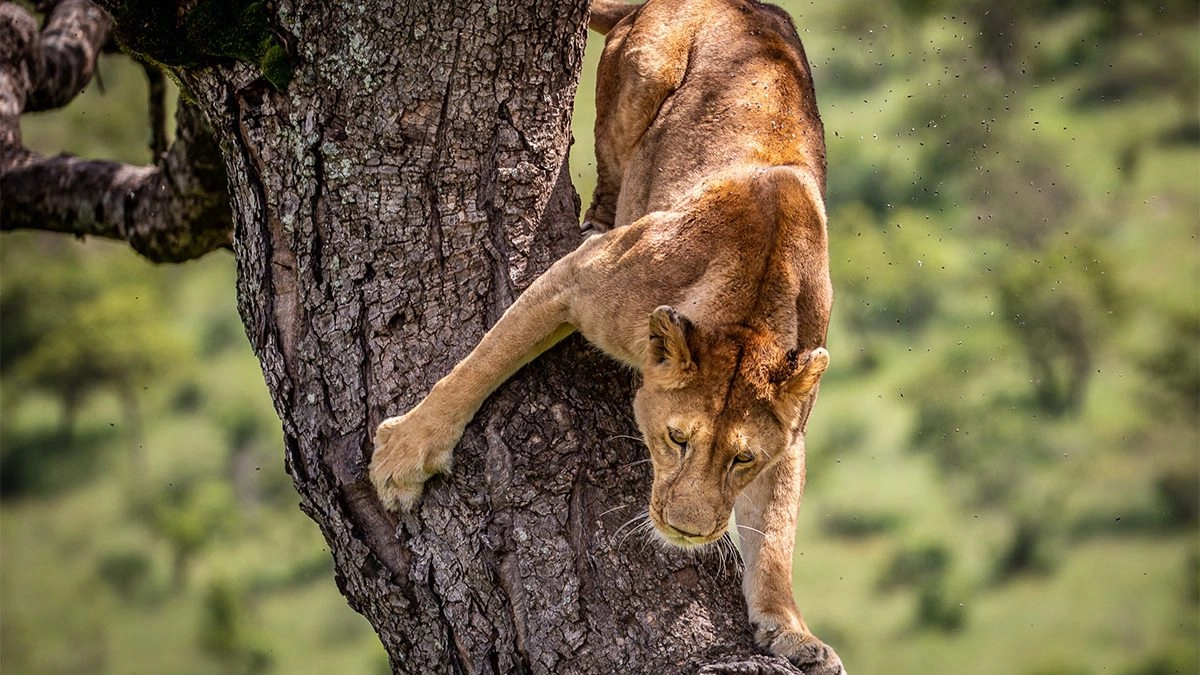
Short answer: Tree climbing lions Ishasha refers to the lions of the Ishasha sector in Queen Elizabeth National Park, southern Uganda, which regularly rest in the branches of large fig trees. It is one of only two places in Africa where this behaviour is documented — the other is Lake Manyara in Tanzania. The Ishasha sector sits on the DRC border, about two hours south of the park’s main Mweya area, and is usually visited on the drive between Queen Elizabeth and Bwindi.
Lions do not normally climb trees. They are heavy, they hunt on the ground, and trees offer them no obvious advantage over the shade and cover they can find at ground level. Yet in the Ishasha sector of Queen Elizabeth National Park, lions regularly climb fig trees and spend hours in the branches — sometimes a whole pride at once. It is a genuine behavioural anomaly, documented in only two places in Africa, and it draws travellers to a quiet, less-visited corner of Uganda’s most popular park.
This guide covers where Ishasha is, why the lions climb, when to see them, how to fit the sector into a Queen Elizabeth or Bwindi itinerary, and the common mistakes travellers make when planning a visit. The wider country picture is on our Uganda destinations page. Queen Elizabeth National Park is managed by the Uganda Wildlife Authority.
Tree climbing lions Ishasha — key facts
- Location: Ishasha sector, southern Queen Elizabeth National Park
- Border: Runs along the Ishasha River, which forms the DRC border
- Behaviour: Lions rest in large fig trees, particularly Ficus sycomorus
- Only other location: Lake Manyara National Park, Tanzania
- Best time of day: Morning and late afternoon, in the cooler hours
- Best season: Dry months — December to February and June to September
- Distance from Mweya: Roughly two hours south by road
- Fits with: The drive between Queen Elizabeth and Bwindi
- Recommended stay: One or two nights, or a half-day transit stop
- Terrain: Open savannah, woodland, and riverine forest along the Ishasha River
What are tree climbing lions Ishasha?
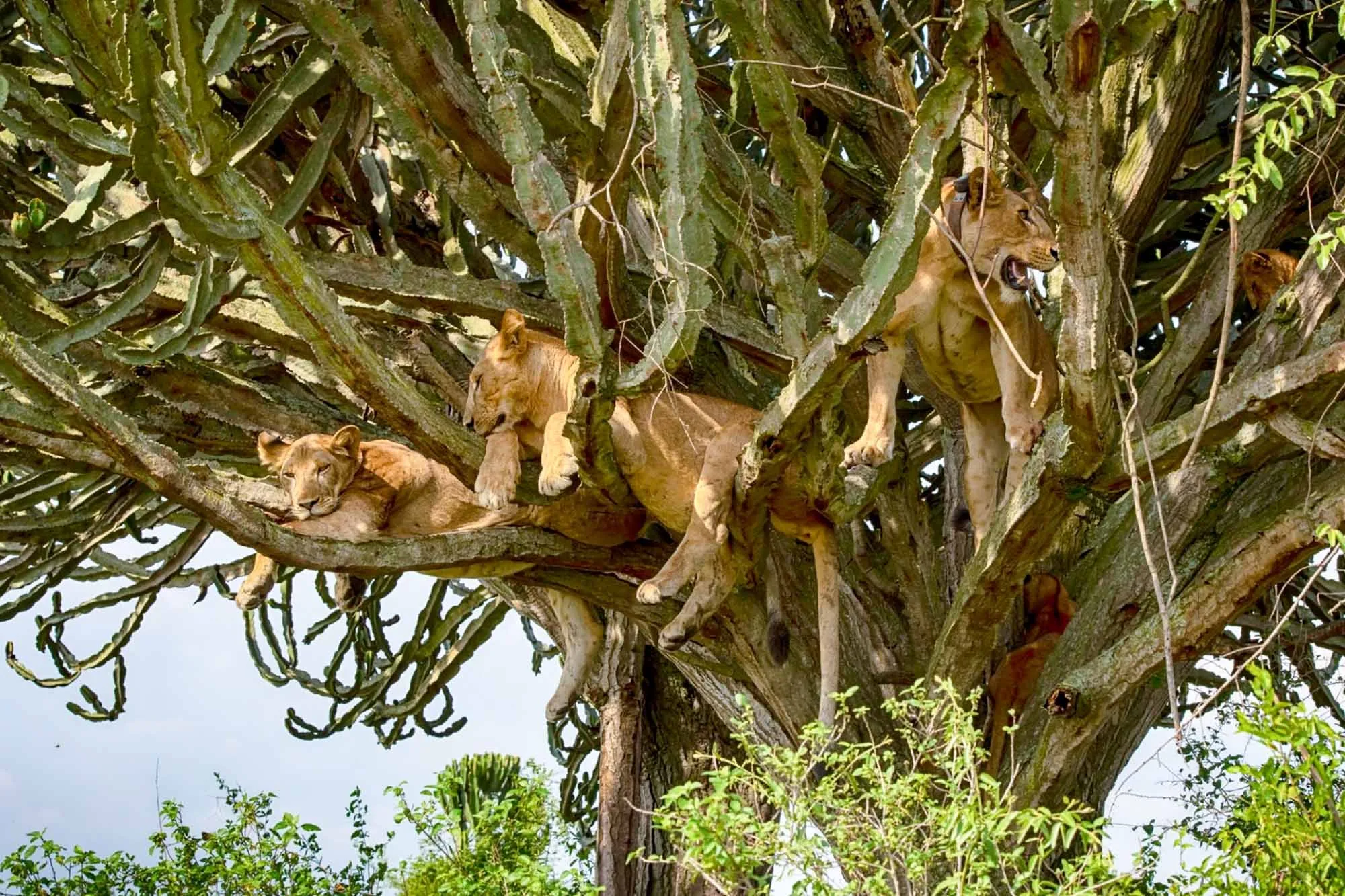
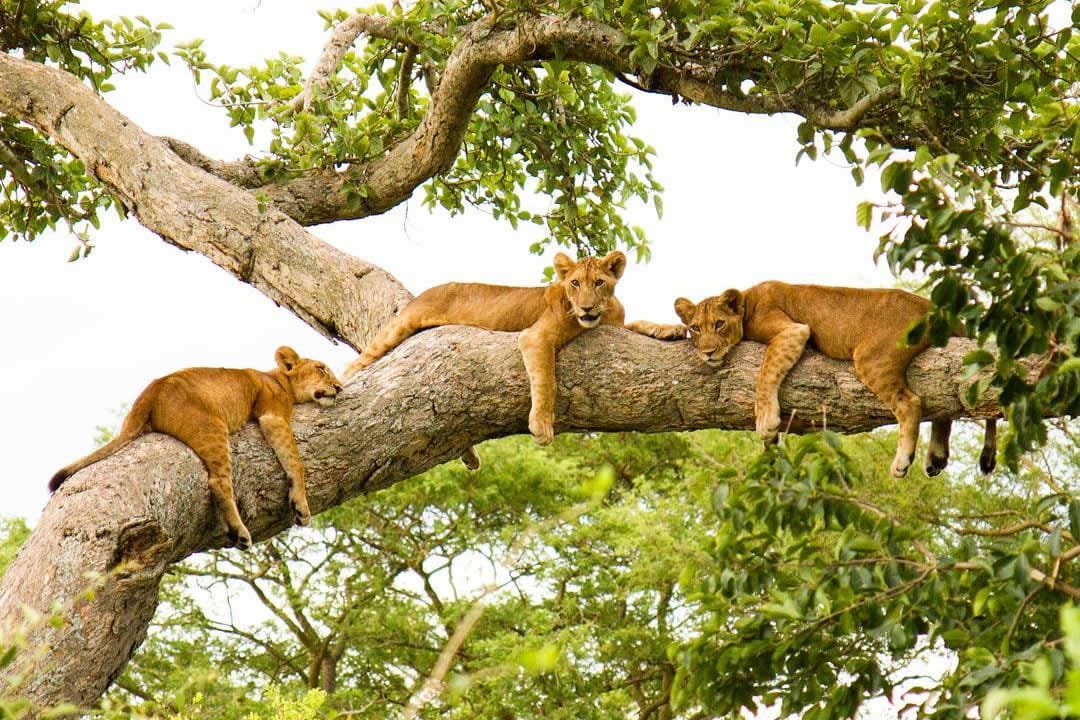
Tree climbing lions Ishasha is the name given to a population of lions in the Ishasha sector of Queen Elizabeth National Park that regularly rest in the branches of large trees. The behaviour has been documented in this population for decades, and it is unusual enough that Ishasha is one of only two places in Africa — the other is Lake Manyara in Tanzania — where lions are known to climb trees as a matter of routine.
Three things define the experience:
- It is a specific population, not a general lion behaviour. The Ishasha lions climb; lions elsewhere in Queen Elizabeth and across most of Africa do not. The behaviour is learned and cultural, passed within this population, not instinctive to lions as a species.
- The sector is small and quiet. Ishasha is around 100 square kilometres and receives a fraction of the visitors of the Mweya area in the north. Game drives here are uncrowded, and it is common to have a tree-climbing lion sighting to yourself.
- It is on the way to Bwindi. The sector sits directly on the main road between Queen Elizabeth’s northern sector and Bwindi Impenetrable National Park. Travellers heading to gorilla trekking pass through it, which makes it easy to build in.
The result is a wildlife experience that is genuinely rare and logistically convenient. The lions are not guaranteed — they are wild, and no sighting is ever certain — but the behaviour is documented consistently enough that most travellers who spend a night in Ishasha see at least one lion in a tree.
Afraeka tip: Plan for at least one full night in the Ishasha sector, not just a transit drive through. The lions are more likely to be in trees in the early morning and late afternoon, and a midday transit gives you the worst odds. An overnight stay puts you in the sector during the hours that matter.
Where is the Ishasha sector?
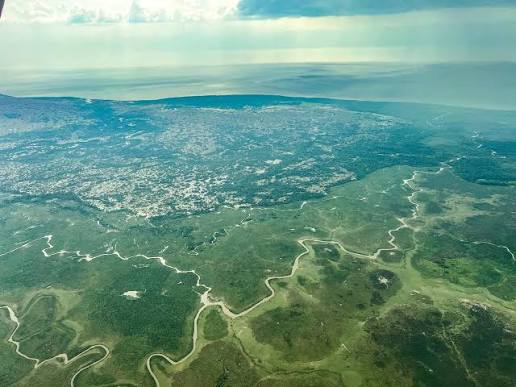
The Ishasha sector is the southernmost part of Queen Elizabeth National Park, in western Uganda, running along the Ishasha River — which forms the border with the Democratic Republic of Congo. It sits roughly two hours south of the Mweya peninsula, the park’s main northern hub, and about two hours north of the Buhoma sector of Bwindi Impenetrable National Park.
Three location points matter for planning:
- It is on the road to Bwindi. The main road south from Queen Elizabeth to Bwindi passes through Ishasha. Travellers heading to gorilla trekking from Queen Elizabeth do not need a detour — they drive through the sector.
- It is a small sector. Ishasha is roughly 100 square kilometres, much smaller than the northern Mweya sector. This makes it easy to cover in a half-day or a full day of game drives.
- It sits on the DRC border. The Ishasha River is the international boundary. This is a managed border area, and travel within the park is safe and normal, but travellers should follow ranger guidance and stay on designated routes.
Ishasha is also close to the Ishasha airstrip, which is served by charter flights from Entebbe and from other Ugandan parks. Travellers flying between Queen Elizabeth and Bwindi sometimes route through Ishasha rather than driving, though the drive is the more common option and passes through the best game-viewing areas.
Why do the Ishasha lions climb trees?
The honest answer is that nobody knows for certain. Several theories have been proposed, and the behaviour is likely explained by a combination of factors rather than a single cause. It is worth being clear about that — anyone who states a definitive reason is overselling the science.
Three explanations are most commonly discussed:
- Escaping heat and insects. The most widely accepted factor. Fig trees offer cooler, breezier conditions than the ground, and the elevation reduces exposure to tsetse flies and other biting insects at ground level. In Ishasha’s heat, a tree branch is simply a more comfortable place to rest.
- Vantage point for prey and threats. From a tree, a lion can see across the open savannah — useful for spotting prey and for monitoring other predators. This is a secondary benefit rather than the main driver, but it plausibly reinforces the behaviour.
- Learned cultural behaviour. The strongest evidence is that tree climbing in Ishasha is learned, not innate. Lion cubs in the sector learn the behaviour from their mothers, and the trait has persisted across generations. This is why it is confined to this population and not seen in lions elsewhere in the park.
The practical implication is that the behaviour is real, persistent and predictable enough to plan around — but it is not a guarantee. The lions climb when they choose to, and on any given game drive they may be on the ground, in the shade, or somewhere else entirely.
How do you see them?
The best way to see tree climbing lions Ishasha is on a game drive in the sector, in the early morning or late afternoon. The lions are most likely to be in trees in the cooler hours, and a guide who knows the sector will drive the areas where the prides have been seen recently.
Three practical points on seeing them:
- Morning and late afternoon are best. The lions climb to rest, not to hunt. They are most often in trees in the cooler parts of the day. Midday game drives are less productive for tree sightings.
- A local guide matters enormously. The Ishasha lions move around the sector, and the prides are not in the same trees every day. Guides who work the sector daily know where the lions have been and where they are likely to be. Self-drive travellers without a guide are far less likely to find them.
- The sighting is not guaranteed. Even with a good guide and the right timing, the lions may be on the ground, hidden in thick bush, or in a part of the sector that is not accessible. Most travellers who spend a night in the sector see at least one lion in a tree — but no operator can promise it.
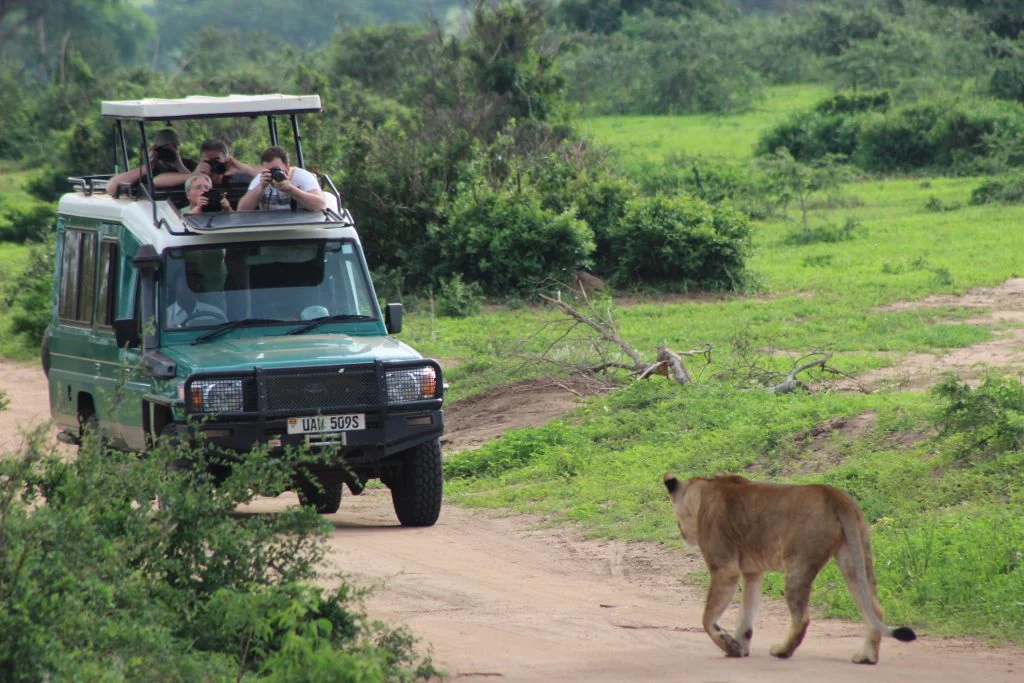
Ishasha also offers strong general game viewing alongside the lions. The sector holds large herds of elephant, buffalo, Uganda kob, topi and — in the riverine forest along the Ishasha River — good birdlife. The tree climbing lions are the headline, but a game drive in Ishasha is worthwhile even without them.
How do you get to Ishasha?
Ishasha is reached by road from the northern sector of Queen Elizabeth National Park (roughly two hours south from Mweya), from Bwindi (roughly two hours north from Buhoma), or by charter flight to the Ishasha airstrip. Most travellers arrive by road on the transfer between Queen Elizabeth and Bwindi.
Three practical points on access:
- The road from Mweya to Ishasha is straightforward. It is a maintained park road, and the drive takes roughly two hours in normal conditions. The road passes through the park and can be slow if wildlife is on the road — which is part of the point.
- The road from Ishasha to Bwindi is scenic but slower. The drive north to Buhoma takes roughly two hours and passes through the Ishasha sector itself. Travellers heading to gorilla trekking can combine the game drive with the transfer.
- Charter flights serve the Ishasha airstrip. The airstrip is served by charter operators connecting Queen Elizabeth and Bwindi. This is an option for travellers short on time, but the road option gives better game viewing.
Travellers planning the wider Queen Elizabeth circuit should also read our Uganda vs Kenya safari guide for comparison, and our Uganda safety guide for the practical side of travel in the region. The wider country picture sits with the Uganda Tourism Board.
When is the best time to see tree climbing lions Ishasha?
The best time is the dry season — December to February and June to September. The grass is shorter, the game is more visible, and the road conditions in the sector are firmer. The wet months of March to May and October to November make the grass taller and the roads muddier, which reduces visibility and access.
Three timing points:
- Dry season improves visibility, not behaviour. The lions climb year-round. The difference is that the dry season makes them easier to see in the trees and makes game drives more comfortable.
- Morning is the best window. Within any day, the early morning is the most productive for tree sightings. Late afternoon is the second-best window. Midday is when the lions are most likely to be on the ground or in thick shade.
- Ishasha is year-round. The sector is open in all seasons and game drives operate throughout. The wet season is quieter and greener, with the trade-off of more difficult driving.
Ishasha’s dry season windows align with the rest of Uganda’s, which makes it easy to slot into a broader itinerary. Travellers combining Ishasha with gorilla trekking at Bwindi will find the same months work for both — and the transfer between the two passes directly through the sector.
Common mistakes with an Ishasha visit
Most of what goes wrong with a tree climbing lions Ishasha visit comes down to timing and unrealistic expectations. Both are avoidable with planning.
- Transiting through Ishasha without stopping. The sector is on the road to Bwindi, and many travellers drive through without doing a game drive. That wastes the opportunity — the lions are not visible from the transit road itself.
- Doing a midday game drive only. Midday is the worst time for tree sightings. Plan for a morning or late afternoon game drive, ideally both.
- Expecting a guaranteed sighting. The lions are wild and no sighting is guaranteed. Most travellers who spend a night in the sector see them, but it is not a certainty, and guides cannot promise it.
- Not using a local guide. The lions move around the sector. Guides who work Ishasha daily know where the prides are. Self-drive travellers without a guide find them far less often.
- Underestimating the transfer times. Ishasha is roughly two hours from both Mweya and Buhoma. Travellers who plan a quick stop often find they have no time for a proper game drive.
- Visiting in the wet season without a 4×4. The sector’s roads become difficult after heavy rain. A 4×4 is strongly advised in the wet months.
- Skipping the wider game viewing. Ishasha has strong elephant, buffalo and antelope viewing alongside the lions. Travellers who focus only on the lions miss the rest of the sector.
- Not staying overnight. A single night in the sector gives you two good game drive windows — an afternoon on arrival and a morning before departure. A transit stop gives you one, and often a poor one.
The summary is that Ishasha rewards travellers who plan to spend a night in the sector, drive at the right times, and use a guide. It punishes travellers who treat it as a transit road with a tick-box on it.
Frequently asked questions
Where can you see tree climbing lions Ishasha?
In the Ishasha sector of Queen Elizabeth National Park, in southern Uganda, on the border with the DRC. It is one of only two places in Africa where lions regularly climb trees — the other is Lake Manyara National Park in Tanzania.
Why do the Ishasha lions climb trees?
The most widely accepted explanation is heat and insect avoidance — fig trees are cooler and breezier than the ground and reduce exposure to biting flies. Vantage point and learned cultural behaviour within the population are also factors. There is no single definitive cause.
Is it guaranteed you will see lions in trees in Ishasha?
No. The lions are wild and no sighting is guaranteed. Most travellers who spend at least one night in the sector see a lion in a tree, but it is not certain, and no operator can promise it.
What is the best time of day to see tree climbing lions Ishasha?
Early morning and late afternoon. The lions climb to rest in the cooler hours. Midday game drives are much less productive for tree sightings because the lions are more likely to be on the ground or in thick shade.
How do you get to the Ishasha sector?
By road from the northern sector of Queen Elizabeth National Park (roughly two hours south from Mweya), from Bwindi (roughly two hours north from Buhoma), or by charter flight to the Ishasha airstrip. Most travellers drive through on the transfer between Queen Elizabeth and Bwindi.
How long should you spend in Ishasha?
At least one night. An overnight stay gives you two game drive windows — an afternoon on arrival and a morning before departure. A transit stop usually gives you only one, often at the worst time of day.
Are the Ishasha lions dangerous?
No more than lions elsewhere, provided you follow ranger and guide instructions. Game drives in the sector are conducted in vehicles at a safe distance, and the lions are habituated to vehicles. Do not attempt to approach lions on foot.
When is the best season for tree climbing lions Ishasha?
The dry months — December to February and June to September. Visibility is better, roads are firmer, and game drives are more comfortable. The lions climb year-round, so the season affects visibility rather than behaviour.
Planning a Queen Elizabeth safari?
Send us your dates and route, and we will tell you how to fit Ishasha into the trip — whether as an overnight in the sector or as a game drive on the transfer to Bwindi. We work with guides who know the sector and can give you the best chance of a tree-climbing sighting.
About the author: Victoria Kayaga is a Ugandan-born safari expert and founder of Afraeka Adventures, with 15+ years in East African tourism. Based in Kampala, she has arranged Queen Elizabeth and Bwindi itineraries for years, and advises travellers on how to fit the Ishasha sector into a western Uganda trip. More about Victoria.
Keep planning
- 7-day Uganda and Rwanda primate safari
- 16-day Rwanda and Uganda gorilla trekking and big five safari
- 18-day Uganda safari
- All Afraeka trips