Rwanda gorilla Permit booking is the part of a trip that determines everything else. Lodges, flights and transfers can all be rearranged around a date; a permit cannot be created for a date that is already full, and the daily allocation is capped. Travellers who plan accommodation first and permits second routinely end up shifting their whole trip by a week, or trekking in a month they did not choose.
This guide covers the booking process itself — who issues permits, what the price does and does not include, how far ahead to plan, and the mistakes that cost travellers dates. For the trekking experience itself, the Rwanda gorilla trekking guide covers the day in detail; this post is about getting the permit in the first place.
Why the Rwanda Gorilla Permit Comes Before Anything Else
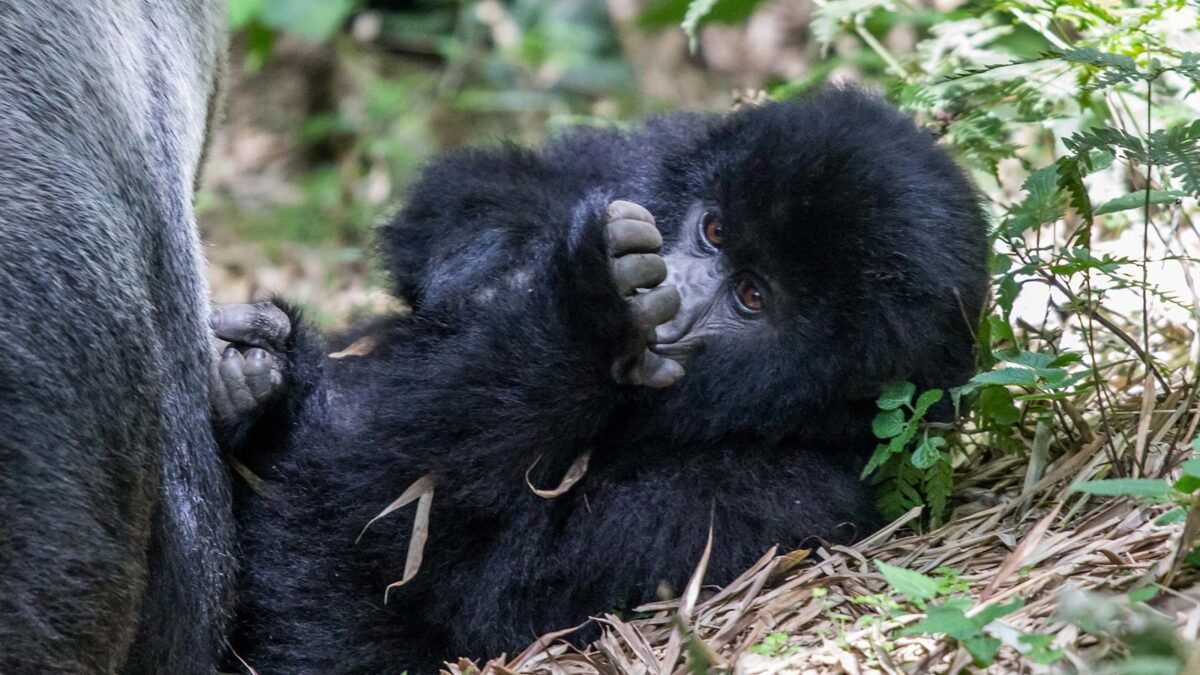
Mountain gorilla trekking in Rwanda takes place in Volcanoes National Park only, and it is the country’s sole gorilla trekking park. Permits are issued per person, per date, and access to each habituated gorilla family is capped at a maximum of eight visitors per gorilla family. That cap is not a commercial limit — it is a conservation rule — and it does not flex.
The practical result is that a small number of permits exist for any given day, and they are allocated on a first-come basis. Availability is not guaranteed at short notice, and no operator can conjure a permit for a sold-out date. Any supplier suggesting otherwise should be treated with caution.
This is also why permit dates, not travel dates, anchor a well-planned Rwanda itinerary. Once the permit is confirmed, everything else is built around it.
What the Permit Costs, and What Else Enters the Budget
Rwanda’s permit price is fixed and published, which makes this the one line of a gorilla trip that can be budgeted with certainty before speaking to anyone.
| Element | Where | What it covers | Price (per person) |
|---|---|---|---|
| Gorilla trekking permit — Rwanda | Volcanoes National Park | One trek, one hour with a habituated gorilla family | From $1,500 (no low-season discount) |
| Gorilla trekking permit — Uganda (for comparison) | Bwindi Impenetrable NP and Mgahinga NP | One trek, one hour with a habituated gorilla family | From $800 (From $600 in April, May and November) |
| Gorilla habituation experience — Uganda (for comparison) | Rushaga sector, Bwindi Impenetrable NP only | One visit, four hours with a semi-habituated family | From $1,500 |
| Rwanda e-visa | Applied for online before travel | Entry to Rwanda | $50 single entry / $70 multiple entry |
| East African Tourist Visa | Uganda, Kenya and Rwanda | 90 days, multi-entry | $100 |
Two points worth absorbing. First, Rwanda’s permit carries no low-season discount — the price is the same in the wettest week of the year as in the driest, so there is no financial reason to avoid the shoulder months. Uganda’s permit, by contrast, drops to $600 in April, May and November. Second, the comparison row is not a recommendation either way; a Uganda permit at $800 and a Rwanda permit at $1,500 buy the same one hour with the same species in the same massif, and the decision usually turns on routing and logistics rather than on the wildlife.
Permit prices are set by the Rwanda Development Board and revised periodically — verify current rates before travel.
Who Issues Permits and How Booking Works
Rwanda’s gorilla permits are issued by the Rwanda Development Board (RDB). Permits can be arranged through a licensed tour operator or directly, and the right route depends on how the rest of the trip is being organised.
Through a licensed operator. This is how most travellers book, and the practical advantages are real: the operator holds current availability information, can align the permit date with lodging and transfers in the same transaction, and handles the park formalities on the day. The permit price itself is not negotiable, so an operator cannot discount it — what varies is the service built around it.
Directly with the RDB. Possible, and worth considering for travellers building an independent trip who only need the permit and will handle everything else themselves. The trade-off is that availability checks, payment and any date changes are then your responsibility, and a permit held without matching accommodation is not much use in peak season.
Either way, confirm the current booking process and payment terms at the time of enquiry, since these are administrative matters that can change. Verify before travel — rules change.
How Far in Advance to Book
There is no published figure for how far ahead permits sell out, because it varies by date. The safe advice is directional rather than numeric: plan months ahead, not weeks.
The driest and most popular periods — broadly June to September and December to February — are the first to fill, with the December holiday period the tightest of all. If your trip depends on a specific date, treat the permit as the constraint and start the process as early as the trip is realistic.
Travellers with flexibility have a genuine advantage here. The wetter months offer thinner demand and much better availability, and since Rwanda’s permit price does not change with the season, the only cost of shifting dates is weather and trail conditions — not money. Availability is not guaranteed at any time of year, though, so flexibility reduces risk rather than eliminating it.
What the Permit Does Not Include
A common source of confusion, and worth being explicit about: the permit covers the trek and the time with the gorillas. It does not include transport to Volcanoes National Park, accommodation, meals, guiding beyond the trek itself, porter fees, or park entry where separately charged.
In practice, a Rwanda gorilla trip is the permit plus a set of variable costs — lodging, a vehicle and guide, transfers, and any additional activities. Those vary widely by standard and are quoted per itinerary rather than published. The Rwanda safari cost breakdown works through how the fixed and variable halves of the budget fit together.
Also not included: a second trek. Trekking a second habituated family on a different morning requires a second permit at the full rate, and both dates need to be secured at the same time. The site’s guide to Rwanda’s gorilla families explains how families differ, which matters if a second trek is being considered.
The Rules That Come With a Permit
A permit is issued subject to park rules, and a few of them affect booking decisions rather than just behaviour on the day.
Minimum age is 15. This applies to mountain gorilla trekking and is not negotiable. It shapes family itineraries — a younger child cannot trek regardless of permit availability.
Eight visitors per gorilla family, maximum. This is the figure that makes advance booking essential rather than advisable.
One hour with the gorillas. The standard visit is a fixed hour, managed by guides and trackers. It is not extended for photography or for late arrivals.
Fitness and health. The trek involves walking at altitude through forest terrain, and guides assess whether visitors are fit to proceed. Anyone unwell on the day may be excluded — which is another argument for not treating the permit as a transferable commodity. Confirm current health and fitness requirements at the time of booking.
Permits are issued for a named person and a specific date. Changing either after issue is not straightforward, so confirm names and dates carefully before payment.
Common Booking Mistakes
Booking the lodge first. The most expensive mistake. Lodges can be changed; a sold-out permit date cannot be fixed by paying more.
Leaving the permit until the itinerary is “finalised.” The itinerary is finalised by the permit, not before it.
Assuming a low-season discount exists. It does not, in Rwanda. Travellers looking for a reduced permit should look at Uganda’s April, May and November rate instead, or at a combined itinerary — the Uganda and Rwanda combined gorilla tours page covers trips that pair one country’s permits with the other’s parks.
Misreading the visa position. Rwanda’s e-visa costs $50 for single entry or $70 for multiple entry and is applied for at irembo.gov.rw (verify current requirements before travel — rules change). The East African Tourist Visa at $100 covers Uganda, Kenya and Rwanda for 90 days multi-entry and is roughly cost-neutral for a two-country trip, but it does not cover Tanzania. Separately, and often misunderstood: the Uganda–Russia visa waiver announced in October 2026 covers diplomatic and service passports only, does not apply to ordinary tourist passports, and has not yet entered into force. No gorilla trip should be budgeted on the assumption of visa-free entry on that basis.
How to Book
Permits are date-specific and capped, so the earlier a date is confirmed the better the choice — particularly for June to September and the December holiday period. Afraeka Adventures is a licensed Ugandan operator based in Entebbe and Kampala, running safaris and primate trekking in Uganda, Rwanda, Kenya and Tanzania since 2018, and can confirm current availability and build the rest of the itinerary around a confirmed permit date.
Contact Afraeka Adventures at info@afraekaadventures.com or use the enquiry form on our website. Useful starting points:
- Rwanda gorilla trekking — what the trekking day involves
- Rwanda’s gorilla families — how families differ, and second treks
- Rwanda safari cost breakdown — the full budget, fixed and variable
- Rwanda safaris — the wider picture
- Uganda and Rwanda combined gorilla tours
- All tour packages
- Enquiry form